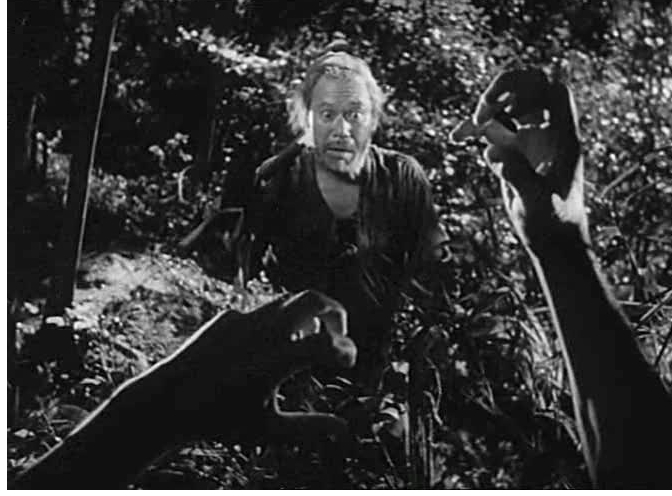
Not for every taste, Donna Rosebud suggests at times a throwback to 60s Underground whimsy. But local independent J.P. Somersaulter, who shot this in high-contrast black and white over five years, has some rather novel fantasy notions up his sleeve. His eponymous heroine–mayor, musician, doctor, philosopher, and mother of seven, among other accomplishments–dreams about the real world while inhabiting a telepathic alternate universe where sync sound is unnecessary. Like other animators who’ve turned to live action Frank Tashlin, Walerian Borowczyk, David Lynch–Somersaulter has some pretty elastic notions about reality, and you might want to try bending along with him. (Music Box, Friday, August 14) Read more
Coinciding with the Film Center’s Jim McBride retrospective (whose most provocative program, on Thursday, August 20, combined the flaky sex comedy Hot Times and a brilliant Twilight Zone episode about Elvis, The Once and Future King) is the release of McBride’s least personal and most commercial movie to date. Rewriting a hackneyed crooked-cop story by Beverly Hill Cop’s Daniel Petrie Jr., he gets tense, sexy performances from Dennis Quaid and Ellen Barkin and makes the most of his New Orleans locations. But as in some Cajun cooking, it’s the spices rather than the meat that imparts the essential McBride flavor: offbeat secondary casting (the late, great Charles Ludlam’s eye-rolling defense attorney) and a use of props ranging from the surreal (Mardi Gras floats in a warehouse) to the homey (Quaid’s squeaking gator doll). (Old Orchard, River Oaks, Water Tower) Read more
The brilliant but neglected satirist Frank Tashlin once defined his subject matter as “the nonsense ofwhat we call civilization,” and these three features, which open a rare, monthlong retrospective at the Gene Siskel Film Center, encapsulate two sides of his genius. Realism dominates in The First Time (1952, 89 min.), a black-and-white comedy about new parents (Robert Cummings and Barbara Hale); Tashlin evokes Tristram Shandy by having the baby narrate, but the details about parenthood and its economic squeezes are painfully authentic. (One of the writers, Hugo Butler, also worked with Luis Bunuel and Jean Renoir.) Tashlin got his start as an animator for Disney and Warners before turning to live action, and his sense of the fantastic is evident in Son of Paleface and Hollywood or Bust, both in color. Bob Hope’s wildest comedy, Son of Paleface (1952, 96 min.) takes place in a cartoonlike universe swarming with detail–the movie equivalent of Mad comics, which first hit newsstands that same year. In Hollywood or Bust (1956, 95 min.) movie-mad Jerry Lewis wins a convertible in a lottery, and he and Dean Martin drive cross-country to Los Angeles, hoping to meet Anita Ekberg (the bust of the title).Read more
From the Chicago Reader (December 20, 2002). For the record, I regard Downsizing as Payne’s best film to date, even if it’s less perfectly shaped than Election, but representing as much of a leap from About Schmidt as that film was from Citizen Ruth. — J.R.
I was so offended by the cynicism and class condescension of Citizen Ruth, Alexander Payne’s first feature, that I’ve remained suspicious of his work even as he’s emerged as a more skillful director in Election and this still more ambitious and accomplished film. It’s a very free adaptation of a Louis Begley novel, transposed from Manhattan to Payne’s native Nebraska, in which Jack Nicholson has been asked to put on some weight and finally act his age. The problem is he’s still Jack Nicholson, exuding his know-it-all charisma even when playing a clueless asshole and not nearly as inventive as he was in a much less showy part in The Pledge. The contrivance here by which he bares his soul — by mouthing letters to an African boy he’s helping to support from afar — is bogus and forced, and even the more observant moments in this odyssey of a bored and boring widower can’t entirely escape the jeering tone that remains Payne’s stock-in-trade. Read more
A reflective autobiographical film about filmmaker Hou Hsiao-hsien’s youth in the late 40s and early 50s; largely filmed in the same places in Taiwan where the events originally happened, this unhurried family chronicle carries an emotional force and a historical significance that may not be immediately apparent. Working in long takes and wide-screen, deep focus compositions that frame the characters from a discreet distance, Hou allows the locations to seep into our own memories and experience, so that, as in Olmi’s The Tree of Wooden Clogs, we come to know them almost as intimately as touchstones in our own lives. Yet paradoxically, the unseen Chinese mainland carries as much weight in the film as the landscape of Taiwan: Hou’s Christian family left in 1948, and the revolution that followed made it impossible for them to return. Subtly interweaving everyday details with processes and understandings that evolve over years, the film conveys a density of familial detail that we usually encounter only in certain novels, and a sense of the tragic within hailing distance of Ozu. (Film Center, Art Institute, Columbus Drive at Jackson, Friday, September 11, 8:00, and Sunday, September 13, 5:00, 443-3737) Read more
Significantly, when Vietnamese filmmaker Trinh T. Minh-ha gives herself a director’s credit in her remarkable meditation on West African life and architecture, she places an X over the word “directed.” Why? Because a central aspect of her project is the dislocation of the authority by which we generally presume to understand the alien, and redirection and indirection are equally descriptive of what she is up to. A composer and a poet, she pans and cuts in irregular rhythms, continually stopping and starting, and rather than “direct” our focus and interpretation like an anthropologist, she interweaves three distinctly accented female voices speaking English, each of which conveys a different kind of discourse, traversing the images at different angles. Like the separate typefaces in Mallarme’s poem “A Throw of the Dice Will Never Abolish Chance,” these voices and mesmerizing recordings of African music encircle and commingle with their subjects rather than attempt to capture them in linear/colonial/narrative fashion. (Sample: “The house is composed like the human body. The earth or clay is the flesh, the water the blood, the stones the bones, and the placid surface of the walls the skin.”) The results are both beautiful and instructive, a duet between filmmaker and subject, disclosures and enclosures, which remains perpetually fresh and unpredictable over the film’s 134 minutes. Read more
I’d like to beat the drum a little for a terrific new book just published by University of California Press, Catherine Benamou’s It’s All True: Orson Welles’s Pan-American Odyssey, which is far and away the definitive book on It’s All True, Welles’s doomed documentary project about Latin America in the 1940s. Maybe the fact that the same publisher is bringing out a book of mine about Welles in a couple of months gives me a special interest in the subject; I should also note that Benamou, who’s been working on her book for well over two decades, is an old friend. (She also arranged recently for the purchase of two major Welles collections by the University of Michigan, which are going by the name “Everybody’s Orson Welles.” I was privileged to be the first visitor to this mountain of material in Ann Arbor last summer, which is where I collected the stills used on my own book jacket.)
Some readers may be put off a bit by Catherine’s academic language, but the fact remains that so much fresh and even startling information is available here—information that corrects countless myths—that if you care about Welles at all, you can’t afford to ignore this book.
From the Chicago Reader (November 10, 2006). — J.R.
Pere Portabella: Cinema From the Spanish Underground
The first North American retrospective of Catalan filmmaker Pere Portabella started last week at the Gene Siskel Film Center, and it’s one of the year’s biggest cultural events. None of his films has ever been screened in Chicago, and none has ever been released anywhere on DVD or VHS. All five of his features are showing here (though none of his ten shorts), and if you don’t see them now, chances are you never will.
Most of Portabella’s films can be classified as experimental, though they have little in common with the films usually given that label, which tend to be nonnarrative and shot in 8- or 16-millimeter or on video. All of his features are in 35-millimeter and use narrative, though they never tell a complete story. They all have rich sound tracks that go in and out of sync with the images, sometimes reinforcing what we see, sometimes contradicting it. They all drift smoothly, often unexpectedly, from narrative to reverie and from fiction to documentary, interjecting rude shocks along the way. They’re full of comic incongruities as well as creepy interludes, and they’re all intensely physical experiences — sounds and images that assault or caress. Read more
From the Chicago Reader (January 26, 2001). — J.R.
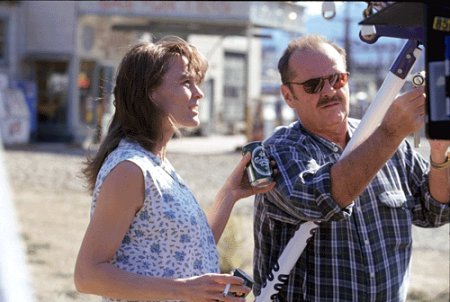
The Pledge
***
Directed by Sean Penn
Written by Jerzy Kromolowski and Mary Olson-Kromolowski
With Jack Nicholson, Patricia Clarkson, Benicio Del Toro, Dale Dickey, Aaron Eckhart, Helen Mirren, Tom Noonan, Robin Wright Penn, Vanessa Redgrave, Mickey Rourke, and Sam Shepard.
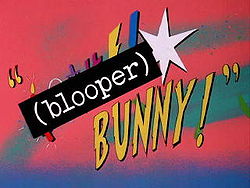
Blooper Bunny
***
Directed by Greg Ford and Terry Lennon
Written by Ronnie Scheib, Ford, and Lennon
With Bugs Bunny, Daffy Duck, Elmer Fudd, and Yosemite Sam.
The Wedding Planner
**
Directed by Adam Shankman
Written by Pamela Falk and Michael Ellis
With Jennifer Lopez, Matthew McConaughey, Bridgette Wilson- Sampras, Justin Chambers, and Judy Greer.
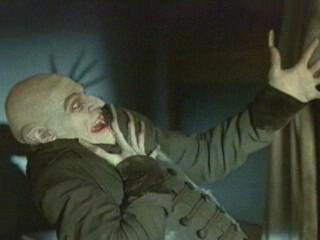
Shadow of the Vampire
*
Directed by E. Elias Merhige
Written by Steven Katz
With Willem Dafoe, John Malkovich, Catherine McCormack, Eddie Izzard, Cary Elwes, and Udo Kier.
I can’t say that The Pledge, The Wedding Planner, Blooper Bunny, and Shadow of the Vampire have much in common, apart from the fact that they’re showing in Chicago this week. Yet all four do, to different degrees, feed off other movies. Frankly, that’s what I like most about The Wedding Planner — a romantic comedy starring Jennifer Lopez and Matthew McConaughey that aspires to and achieves the goofiness of a studio musical of the early 50s. Read more
My latest column for Caimán Cuadernos de Cine, submitted in early February 2024:
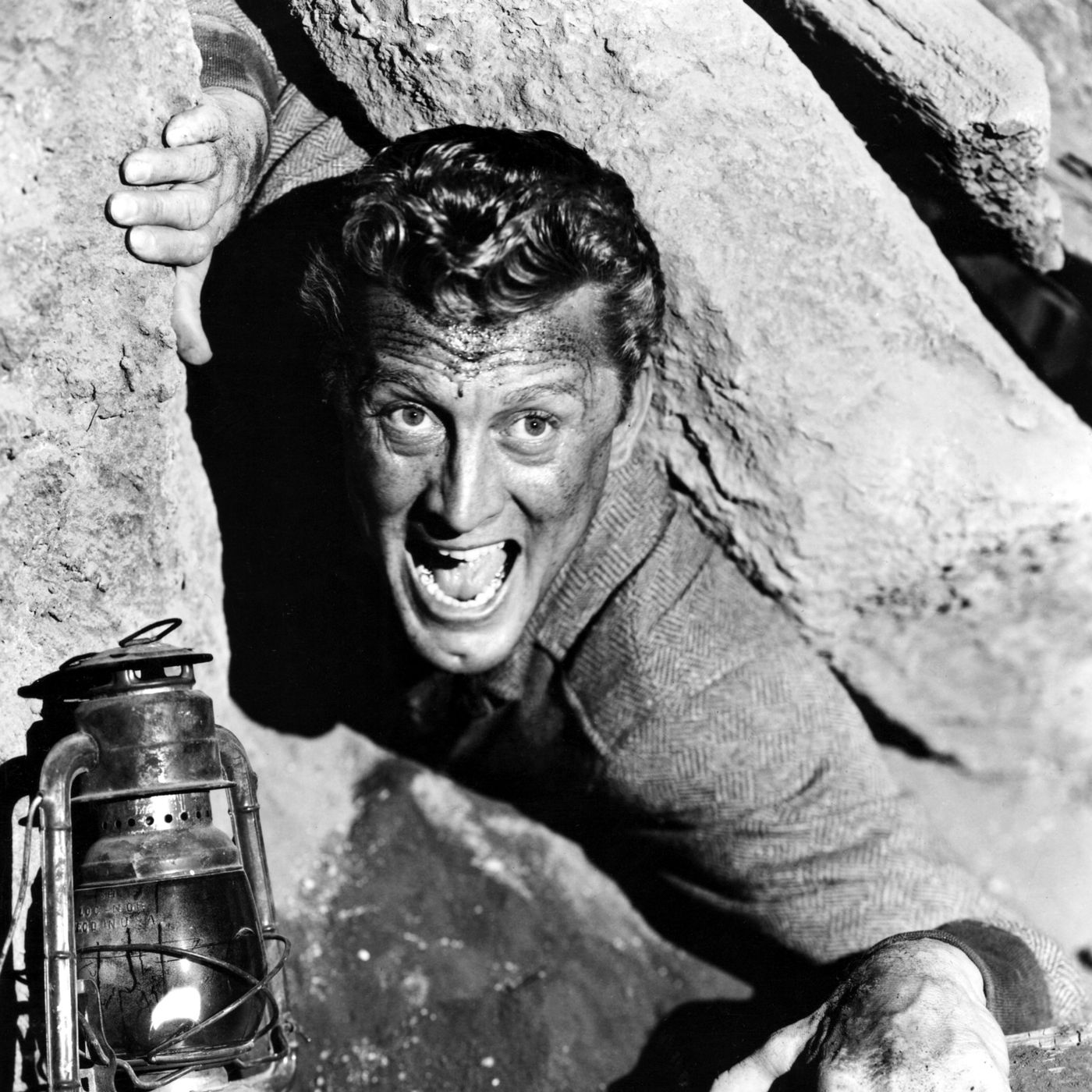
A short Paris holiday — mostly devoted to seeing old friends, but also including a Zoom lecture on Billy Wilder’s Ace in the Hole for students in Atlanta. It’s a temporary escape from the viper’s nest of Trumpland, and I’m sufficiently solipsistic as an American to think I’m far enough away from the bad vibes of Billy Wilder to experience them differently, as an egotistical form of self-hatred.
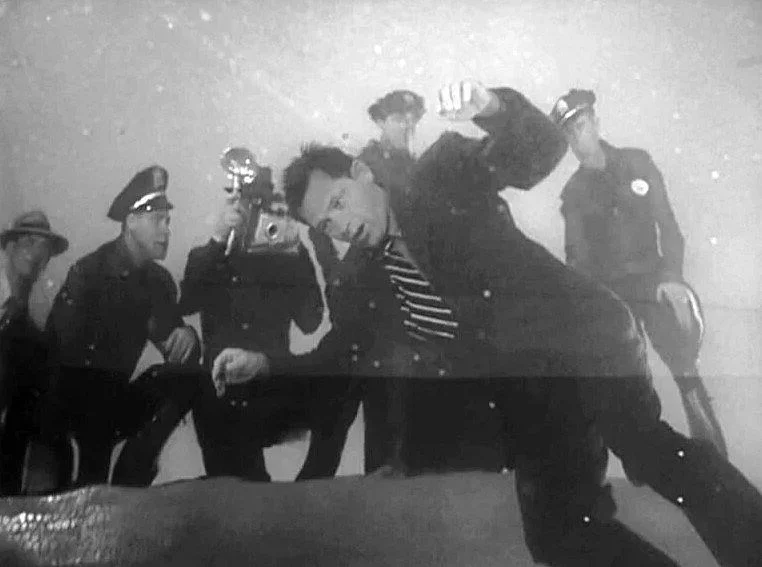
Kirk Douglas, a disgruntled counterpart to the nasty reporters of The Front Page (a later Wilder project, reflecting his own past as a Viennese scandal-monger), is stuck in a dull position at a New Mexico newspaper until he gains exclusive access to a man trapped in a remote desert cave. Eventually he causes the man’s death by delaying his rescue, meanwhile trumping (pun intended) his big-city competitors and attracting many credulous, sensation-hungry tourists. Simultaneously celebrating and castigating this antihero’s ruthlessness is the quintessential Wilder “touch”.
Douglas’s self-hatred recalls William Holden’s failing screenwriter who becomes a gigolo (related to another seedy part of Wilder’s European background) in Sunset Boulevard, whose success made Ace in the Hole possible. Each antihero is killed after his self-hatred becomes most evident, literally facing us as a fallen corpse at the film’s end,
A man believing Trump was sent to Earth by Jesus was recently asked if he minded being called a disciple. Read more
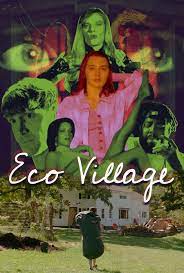
It’s inevitable that today’s counterculture has to learn the same hard lessons that my generation learned half a century ago, but in a style all its own. For me, two of the key lessons of Eco Village are (1) utopian communes are apt to turn into nightmares once the return of the repressed (i.e., whatever one is escaping from) rears its ugly head, and (2) in any competition between leftist politics and sadomasochism, the latter is always likelier to win, if only because, alas, loud and ugly heads (such as Trump’s or Fassbinder’s or von Trier’s) are more apt to sell tickets than quiet acts of compassion, Fortunately, the style brought by writer-director Phoebe Nir and her cast (lead actress Sidney Flanigan and many others) to these lessons gives this scattershot picture a punch of its own, and lots of songs to slide us past all the narrative clutter.
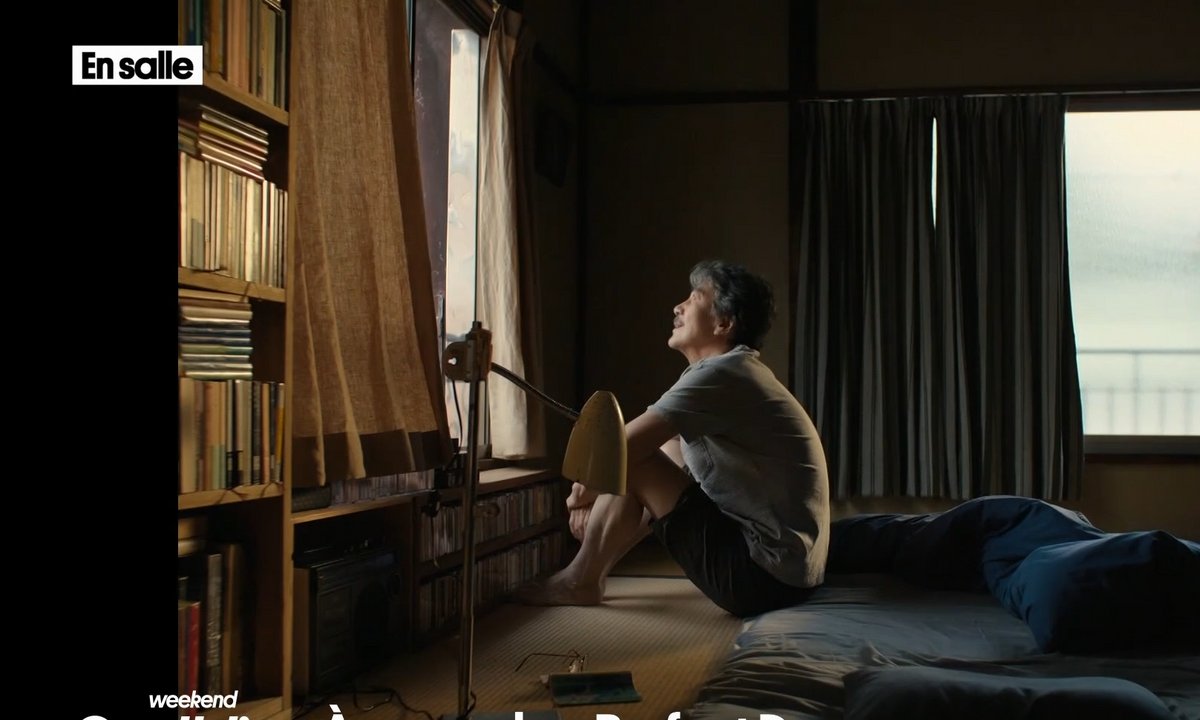
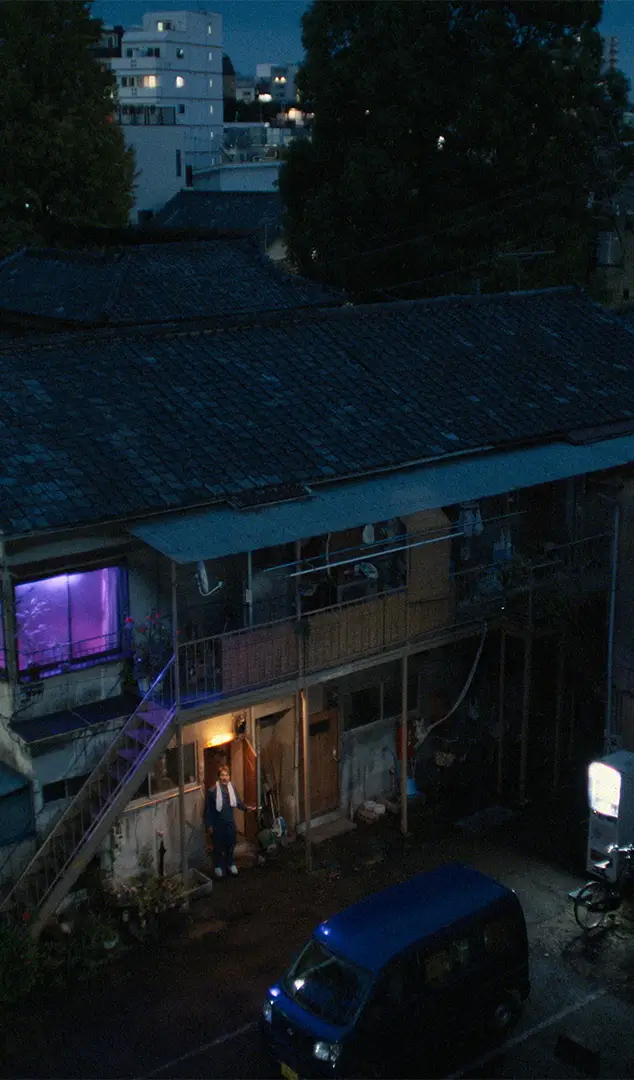
I hope you’ll forgive me for writing to you and posting on my web site at the same time. As I wrote to you earlier, when you asked me if I’d seen Wim Wenders’ Perfect Days and if so, what I thought of it, I have a screener but hadn’t yet screened the film until your note offered me a final push. It seems that every year, I wind up seeing movies that should have appeared on my ten-best lists well past the polls’ deadlines. And I probably put off seeing this one because of what has seemed so uneven about what I’ve seen of Wenders’ more recent work. In any case, like you, I’ve read no reviews of the film apart from Beatrice Loayza’s in Cinema Scope, and now I’m sorry that I’ve read this one, even though some of its objections seem warranted– like the insistence on keeping piss and shit invisible in the stylish public bathrooms being cleaned by the enlightened hero.
What Loayza seems to miss is precisely what impressed you and me the most: the sheer gorgeousness of the images. I can’t even think of any other film that does more with the color blue (too bad that it couldn’t be cited in William H.Read more
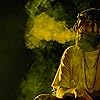
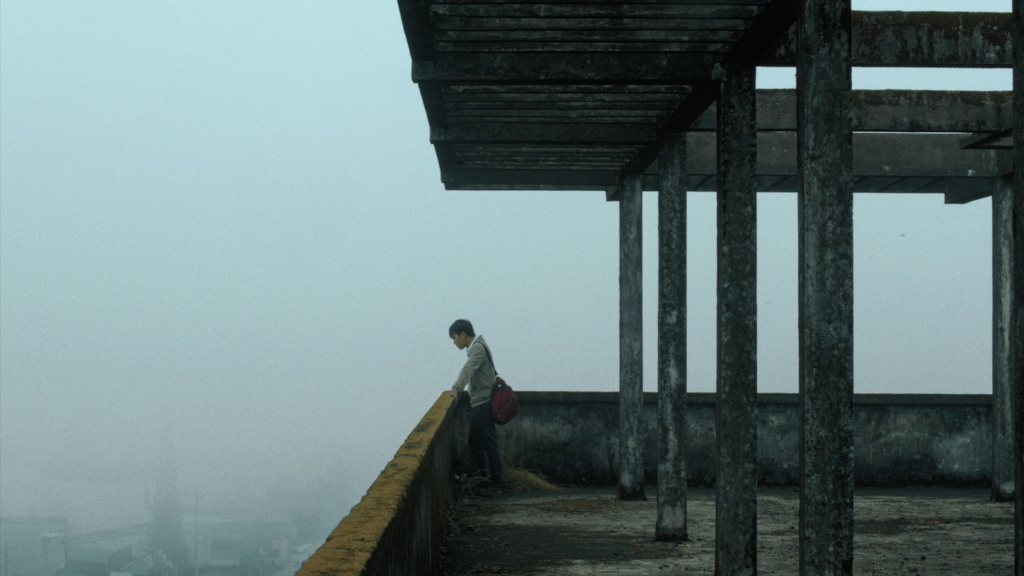
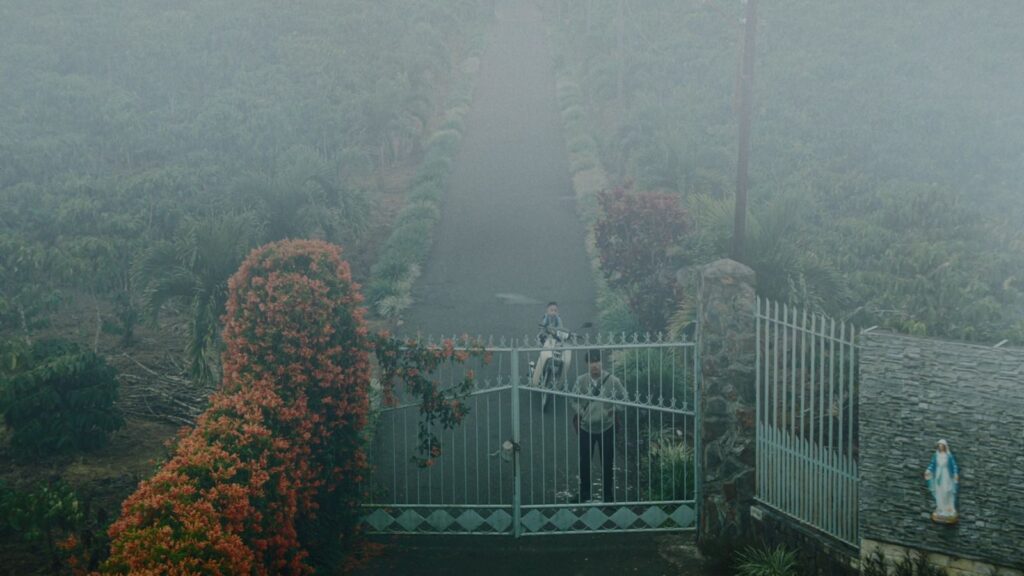
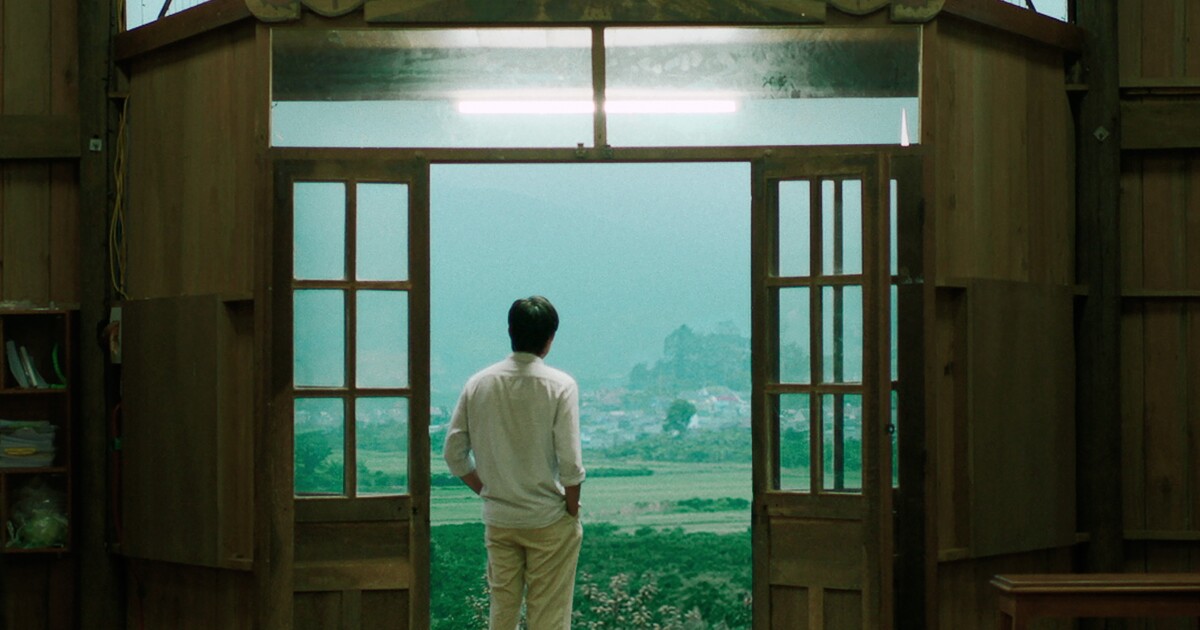
Once again, I discover that the best movie of 2023 is one that I couldn’t see in 2023. It’s a first feature by a Vietnamese writer-director, Phạm Thiên Ân. It won the camera d’or in Cannes, and is so stunningly original that that itseems to have reinvented cinema on its own terms. At the same time, it illustrates Robert Bresson’s maxim that it took the advent of sound cinema to give us silence whiledemonstrating Raoul Ruiz’s contention that drama doesn’t have to be based on conflict. As the film’s title suggests, the struggle (or journey) of the young hero (Lê Phong Vũ) is internal, so it seems natural that his dreams and memories are often indistinguishable from his other activities.
A three-hour film that feels like a meditative bath without ever becoming in the least bit dull, Inside the YellowCocoon Shell proposes a psychic adventure in which butterflies are able toblossom, like the baby wrapped in a yellow blanket that the hero holds, and like the hero himself when he lies down in a stream.
If the above description sounds pretentious, the fault is mine, not the film’s.The best films often turn out to be the ones that challenge whatever we might want to say about them.Read more
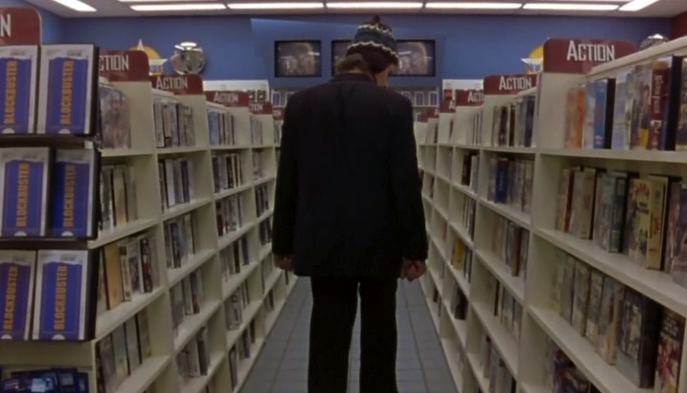
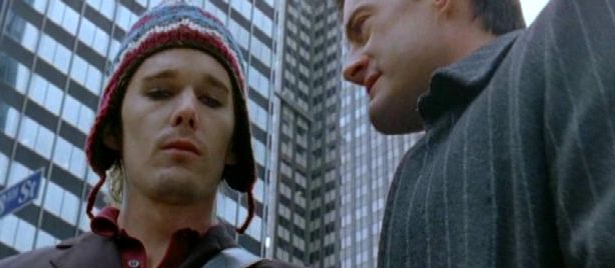
It’s fitting that the most existential of plays should function as a kind of test, and fortunate that the first Michael Almereyda picture to get full mainstream exposure should also turn out to be his best to date. But what’s being tested isn’t either Shakespeare or Almereyda but the present moment: that is, the film asks how and how much we’re capable of living in the world Shakespeare wrote about. Wittily and tragically updating the play’s action to corporate America in general and New York in particular, Almereyda is no Orson Welles, but he begins to seem like one when he’s castigated for not doing his Shakespeare like Kenneth Branagh; the censure recalls all the times square and professional Laurence Olivier was used as a reproach to Welles’s hip “amateurism.” This is gloriously amateurish, the way all of Almereyda’s best movies are, so it’s rewarding to see how Julia Stiles’s Ophelia harks back to Suzy Amis in Almereyda’s Twister, how some of the intimate interiors recall Another Girl Another Planet (his second-best movie), and how the use of video as a kind of Greek chorus to the action, an Almereyda specialty, bears special fruit in a postmodernist climate where “To be or not to be” is recited in the action section of a Blockbuster and Hamlet (Ethan Hawke, better than you’d expect) lards his video production of The Mousetrap with all sorts of found footage. Read more
From Movies of the Fifties, edited by Ann Lloyd (London: Orbis Publishing, 1982). Prior to this, it was published in one of the “chapters” of The Movie in 1981 or 1982, but I’m no longer clear about which one. — J.R.
For two centuries, Japan chose to isolate itself from the rest of the world. Then, in 1894, the American Commodore Perry sailed into Tokyo Bay and ‘rediscovered’ the Japanese islands. Yet nothing was known about Japanese cinema in the West for almost another century. The difference was that whereas Perry had come upon a country that appeared technologically backward, the west encountered a cinema that was, on the evidence of the films that began to be shown in the Fifties, every bit as advanced as its own.
By and large western recognition and appreciation of Japanese films can be said to have dated from the appearance of key movies at the Venice and Cannes Film Festivals.Akira Kurosawa’s Rashomon (1950) won the Golden Lion at Venice in 1951 and the same honor was bestowed upon four films by Kenji Mizoguchi in the succeeding years. The films were: Saikaku Ichidai Onna (1952, The Life of Oharu),Ugetsu Monogatari (1953, Tales of the Pale and Silvery Moon After the Rain), Sansho Dayu (1954, Sansho the Bailiff ) and Yokihi (1955, The Empress Yang Kwei-Fei). Read more