Cowritten by Yehuda Safran (a lecturer in the philosophy of art with whom I was sharing a flat in Hamstead at the time), and published in the Winter 1974/75 issue of Sight and Sound. It seems fair to say that this review (from the 1974 London Film Festival) is in some ways more Yehuda’s than mine. Note: This film has more recently been called Part-Time Work of a Domestic Slave in some English-speaking countries. -– J.R.
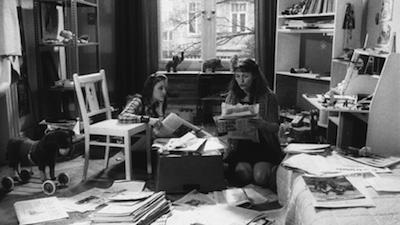
‘Roswitha feels an enormous power within her,’ Alexander Kluge remarks offscreen at the outset of his latest feature, ‘and cinema teaches her that this power exists.’ The task of making the invisible visible is essentially the project of a director more concerned with social and political history than with film history, who seems to regard his work as a translation of ideas into sounds and images rather than the other way round. What matters is what the words and images ‘say’ and imply in relation to each other -– not their independent formal qualities, but their capacity of modify and explicate a complex experience.
What do Kluge’s opening words say and imply? That film is a means of translating potentiality into actuality, feeling into thought, experience into understanding –- the very problem that Roswitha Bronski (Alexandra Kluge, the director’s sister) is struggling to cope with over the film’s duration. Read more
The concluding chapter of my book Movie Wars: How Hollywood and the Media Limit What Films We Can See (Chicago: A Cappella Books, 2000). Due to the length of this Conclusion, it’s being posted in two parts. — J.R.
Q: In Chapter Five, you argue that the cable channel Turner Classic Movies does a more responsible job of preserving our film heritage than the American Film Institute, citing what they’ve recently done in “restorations, revivals, documentaries about film history, and even in presenting foreign-language movies.” Of course TCM has vastly more economic and material resources at its disposal than the AFI does, which suggests that big business versus state funding isn’t always the enemy.
A: Yes, and I’d stand by that comparison — although I wouldn’t go so far as to claim that TCM has any sort of edge over the Cinémathèque Française, especially when it comes to varied and knowledgeable programming of world cinema (which includes certain categories like experimental film that TCM completely ignores). I had to wait for years in Chicago before I could get TCM, and friends of mine in New York and Los Angeles had comparable problems. Now that we have it, it’s certainly a boon to get the sort of balance between structured and unstructured programming of older films that the Cinémathèque has often specialized in. Read more
The concluding chapter of my book Movie Wars: How Hollywood and the Media Limit What Films We Can See (Chicago: A Cappella Books, 2000).
Due to the length of this Conclusion, it’s being posted in two parts. — J.R.
Conclusion: The Audience Is Sometimes Right
“What is your feeling towards your audiences — towards the public?”
“Which public? There are as many publics as there are personalities.”
— Gilbert Burgess, “A Talk with Mr. Oscar Wilde” (1895)
QUESTION: Aren’t you laying yourself open throughout this book to the charge of sour grapes?
ANSWER: What do you mean?
Q: I mean attacking critics like Janet Maslin and David Denby because you’d so obviously like to have their jobs yourself.
A: If that’s really your impression of what lies behind my arguments, then my arguments have failed. There’s a hefty price tag for whatever prestige and power comes with writing for The New York Times and The New Yorker, and I consider myself fortunate that I don’t have to worry about paying it. Film critics for those publications — including Vincent Canby and Pauline Kael as well as Maslin and Denby — ultimately wind up less powerful than the institutions they write for, and insofar as they’re empowered by those institutions, they’re disempowered as independent voices. Read more
Written for the Fall 2015 issue of Film Quarterly. — J.R.
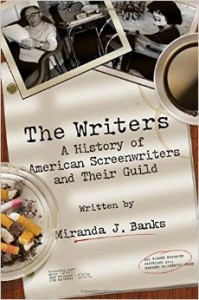
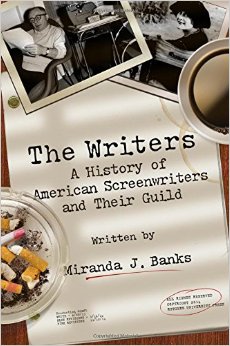
The Writers: A History of American Screenwriters and
Their Guild by Miranda J. Banks
This is clearly a creditable, conscientious, intelligent, and
useful book, but I feel obliged to confess at the outset that
I don’t feel like I’m one of its ideal or intended readers. The
subtitle loosely describes its contents, but “A Business
History of Hollywood Screenwriters and Their Guild”
would come much closer to the mark, even if it might make
the book less marketable to me and some others. And the
unexceptional simplification of the title and subtitle is part of
what gives me some trouble: it’s the business of Hollywood,
after all, to convince the public that “American screenwriters”
and “Hollywood screenwriters” amount to the same
thing. And the moment that any meaningful distinction
between the two collapses, then the studios, one might argue,
have already won the battle.
I don’t expect my own bias about this matter to be shared
by many of Film Quarterly’s readers. Writers who blithely
and uncritically toss about terms like “Indiewood” designed
to further mystify the differences between studio work and
independent work probably don’t think they’re working for
the fat cats, but from my vantage point as a journalist who
thinks that these distinctions deeply matter, they’re the worst
kind of unpaid publicists. Read more
From Rouge No. 2 (2004). — J.R.
Snakes and Ladders
(Le Jeu de l’Oie: La Cartographie, short, France, 1980) |
|
|
|
|
|
|
 |
|
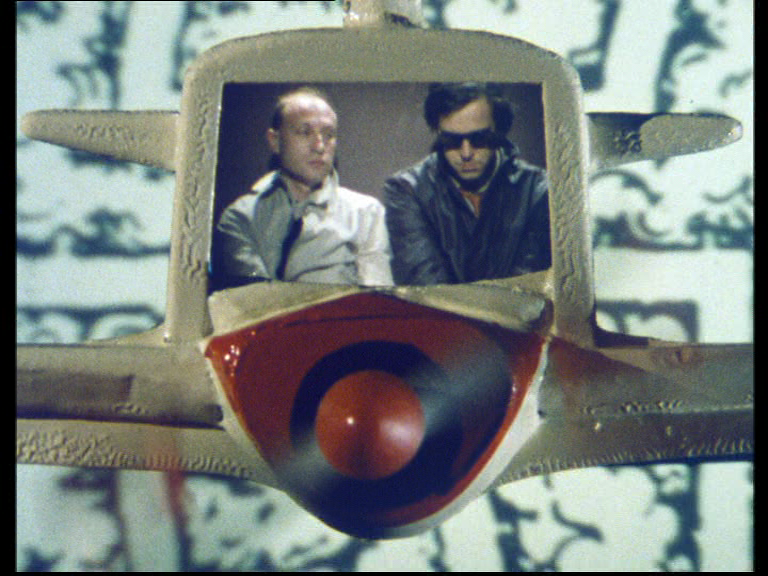
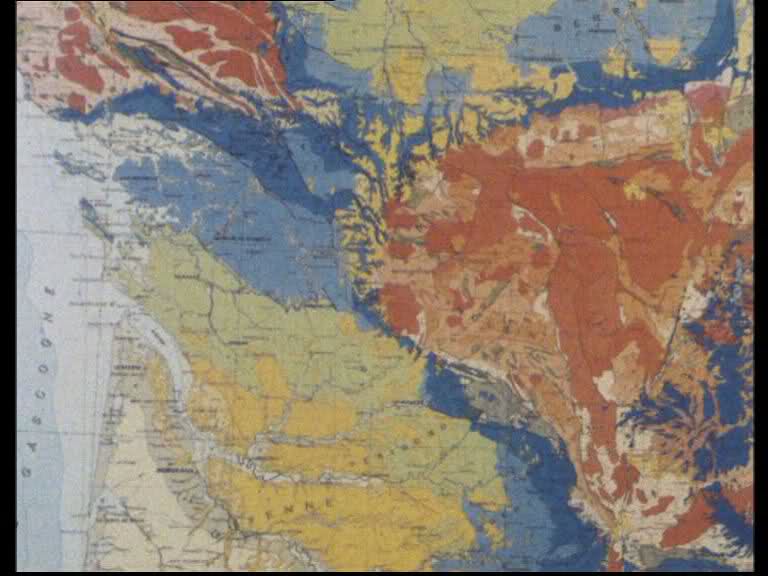
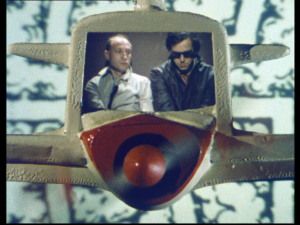
In the delightful Snakes and Ladders, ‘a didactic fiction about cartography’ made for French television to promote a map exhibition at the Centre Pompidou in Paris – a Borgesian metaphysical fantasy whose hero progressively discovers that France is a life-size board game (devoted to Snakes and Ladders or ‘The Goose’s Game’) – one has to deal with tatty special effects of Edward D. Wood Jr calibre, along with the brilliant conceits and two separate off-screen narrators, male and female. 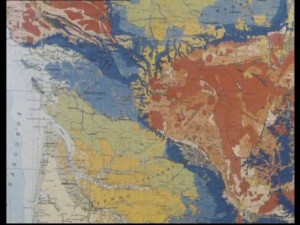 At the outset, the troubled hero (Pascal Bonitzer) – who is found to be vomiting out dice on one occasion, and shaken as dice by an enormous hand on another – discovers that ‘he is the victim of the worst kind of nightmare, the didactic nightmare.’ Some form of didacticism seems evident in every Ruiz project but, as with Borges, it is a didacticism that often parodies itself and becomes camp, yielding precisely the kind of nightmare that ensues when, through a delirium of literalism, thought becomes flesh and the universe becomes a brain dreaming of thoughts yet unborn. At the outset, the troubled hero (Pascal Bonitzer) – who is found to be vomiting out dice on one occasion, and shaken as dice by an enormous hand on another – discovers that ‘he is the victim of the worst kind of nightmare, the didactic nightmare.’ Some form of didacticism seems evident in every Ruiz project but, as with Borges, it is a didacticism that often parodies itself and becomes camp, yielding precisely the kind of nightmare that ensues when, through a delirium of literalism, thought becomes flesh and the universe becomes a brain dreaming of thoughts yet unborn.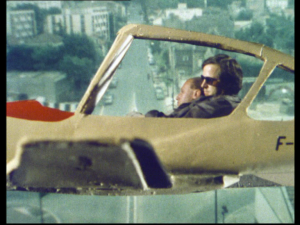 |
Read more
From Rouge No. 2 (2004). — J.R.
|
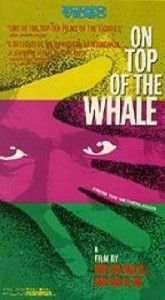
The Roof of the Whale aka On Top of the Whale
(Hek dak van de Valvis/Le Toit de la baleine, Netherlands/France, 1981) |
|
|
|
|
|
|
|
|
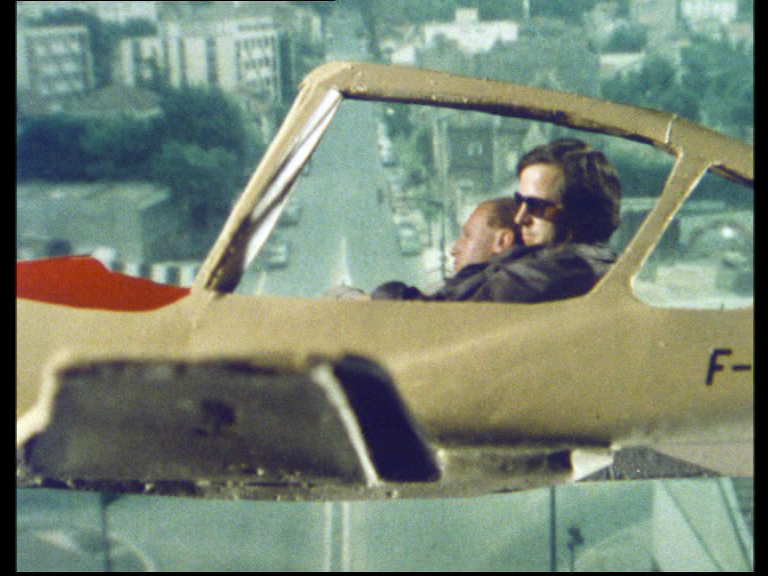
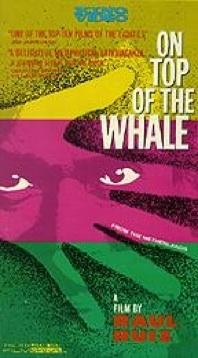
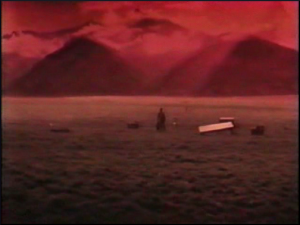
The Roof of the Whale – the film of Ruiz’s with the most pronounced ideological/political/polemical thrust – deals brilliantly with the plight of an anthropologist trying to learn the language of an obscure Patagonian Indian tribe whose last surviving members he has discovered. Beautifully and inventively shot in colour by Henri Alekan, the film proceeds less as narrative or as drama than as a prodigious stream of visual, verbal and conceptual ideas centring around this theme. The performances are either minimal to the point of indifference or deliberately curtailed (so that, for instance, Willeke van Ammelrooy, who plays the anthropologist’s wife, appears to have learned her speeches in English phonetically) and, despite periodic bursts of portentous music, suspense exists only on a purely formal level.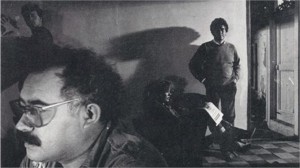 Two sample narrative ideas, neither of which lead anywhere in particular: in a weird parody of Lacanian psychoanalysis, the anthropologist’s child – a creature of indeterminate gender – becomes pregnant after gazing into a mirror; as an apparent gloss on this event, his or her mother remarks that poetry is dangerous because ‘metaphors become a religion, and religion is the opiate of the masses’. Two sample narrative ideas, neither of which lead anywhere in particular: in a weird parody of Lacanian psychoanalysis, the anthropologist’s child – a creature of indeterminate gender – becomes pregnant after gazing into a mirror; as an apparent gloss on this event, his or her mother remarks that poetry is dangerous because ‘metaphors become a religion, and religion is the opiate of the masses’. |
Read more
From the January 1, 1988. — J.R.
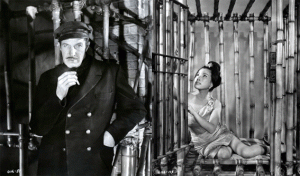
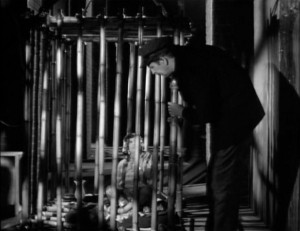
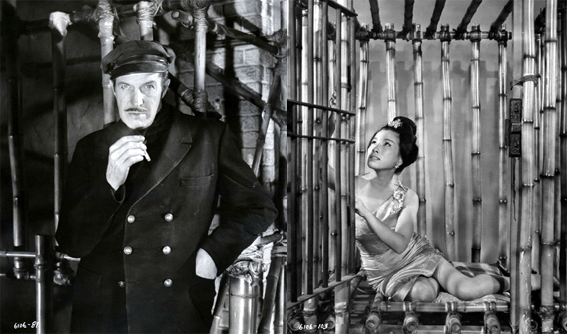
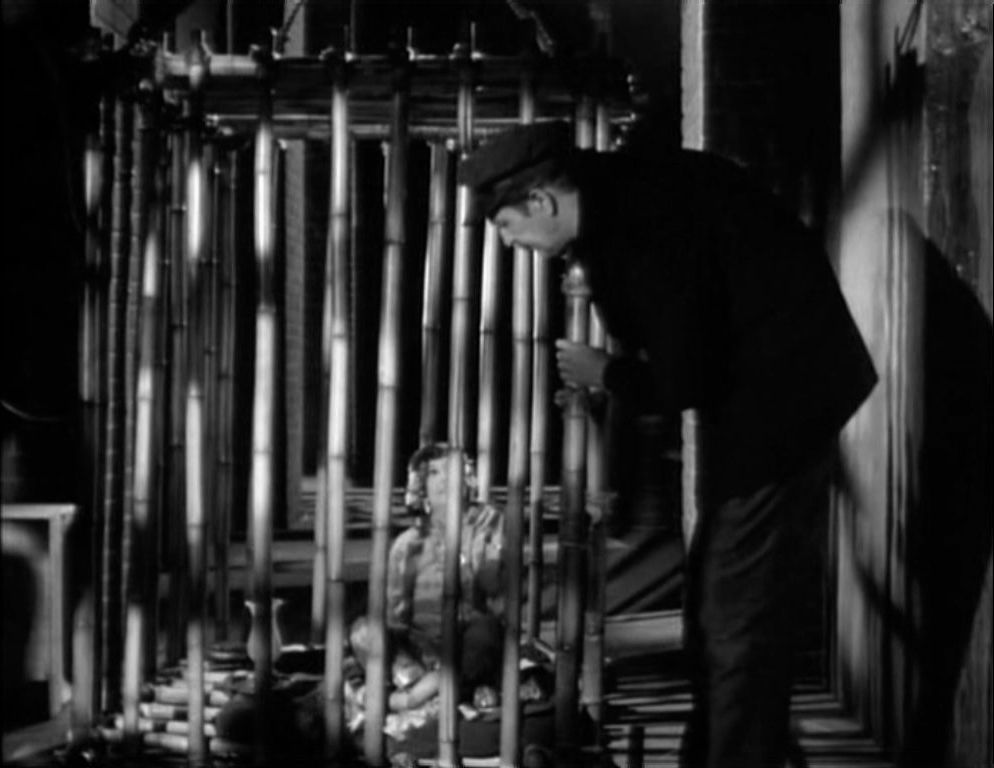
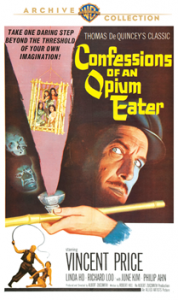
Despite the title, this film has virtually nothing to do with Thomas De Quincey’s book. But it happens to be one of the most bizarre, beautiful, and poetic Z-films ever made, and probably the only directorial effort of Albert Zugsmith that is almost good enough to be placed alongside his best films as a producer (e.g., Touch of Evil, The Tarnished Angels, Written on the Wind). Vincent Price stars as the black-clad 19th-century adventurer, involved in a San Francisco tong war and with runaway oriental slave girls; Linda Ho, Richard Loo, and June Kim also figure in the cast, and Robert Hill is responsible for the singularly pulpy script. A claustrophobic fever dream with strange slow-motion interludes and memorable characters, this is the kind of film that you remember afterward like a hallucination; not to be missed. Also known under the titles Souls for Sale and Evils of Chinatown (1962). (JR)
 Read more
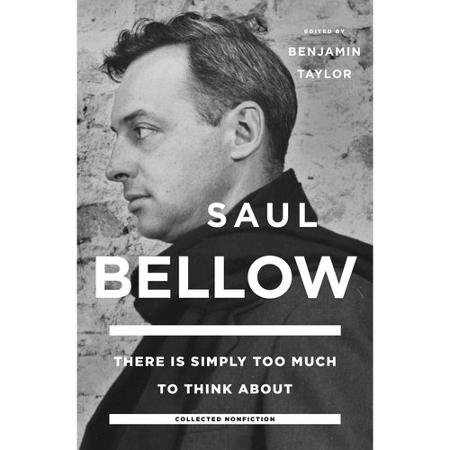
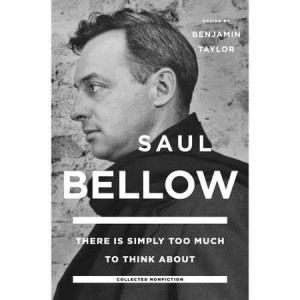 I’m very glad that I recently purchased Saul Bellow’s collected nonfiction — a handsome, interesting, and useful book, even if I tend to regard Bellow as the most overrated of all the “major” contemporary American novelists (certainly talented and smart, but not terribly interesting when it comes to formal inventiveness). And among the many valuable discoveries to be made here is the fact that Bellow served as a film critic for the magazine Horizon in 1962-1963, a stint which yielded four separate columns — on Morris Engels’ Lovers and Lollipops, on Luis Buñuel’s Viridiana, and two think pieces, “The Mass-Produced Insight” (which quotes from his pal Manny Farber) and “Adrift on a Sea of Gore” (mostly about Richard Fleischer’s Barrabas).
I was especially interested in Bellow’s appreciative remarks about Buñuel. But here is where the attentions of his otherwise careful editor, Benjamin Taylor, come up woefully short. Listing some of the more notable items in Buñuel’s filmography, Bellow comes up with two very puzzling titles, The Roots (1957) [sic] and Stranger in the Room (1961) [sic]. The second of these, which he discusses in some detail, sounds like he might be thinking of La Fièvre Monte à El Pao (1959), while the first is most likely La Mort en Ce Jardin (1956). Read more
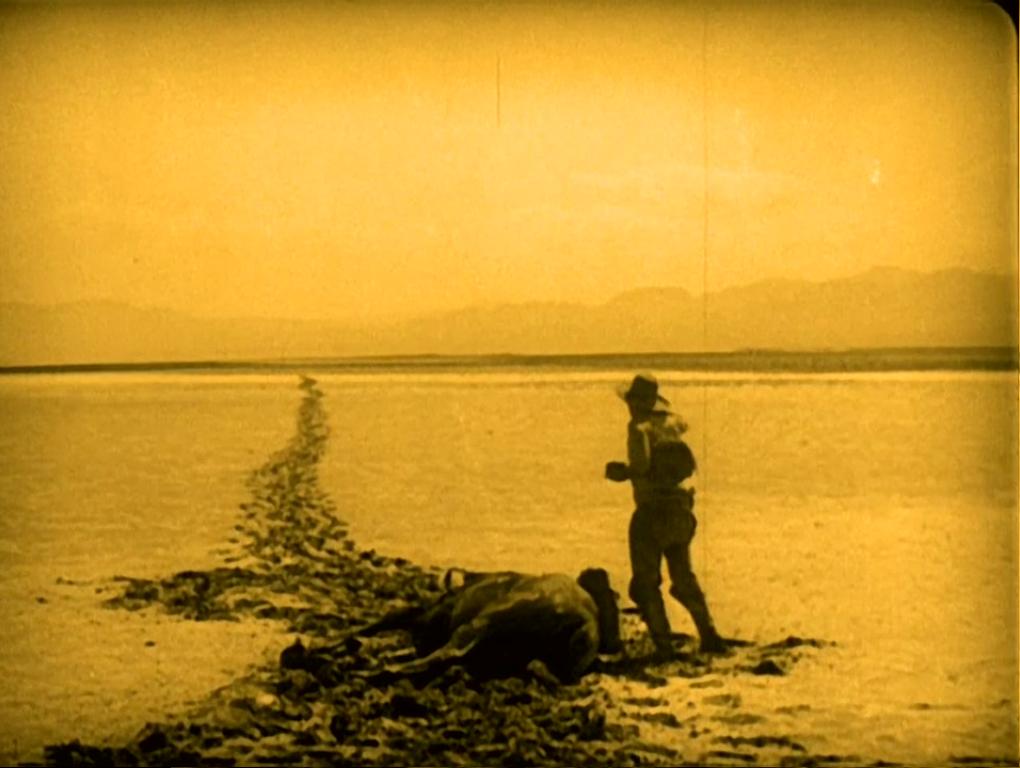
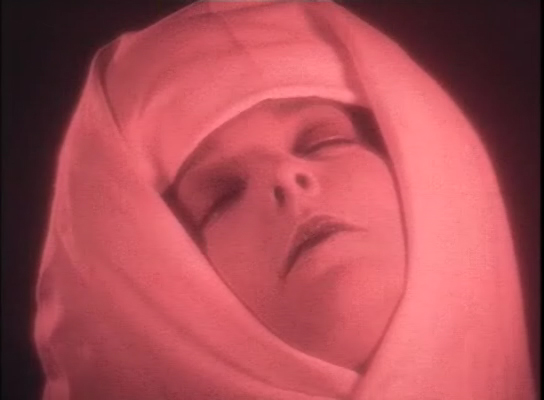
I hadn’t originally intended to watch this film again, for the umpeenth time, when it was shown late last night on Turner Classic Movies, but as soon as I noticed the exquisite tinting and the (uncredited but fabulous) music score on the print they were showing, I couldn’t resist. (Apparently — or at least hopefully — the same print is available for online viewing.)
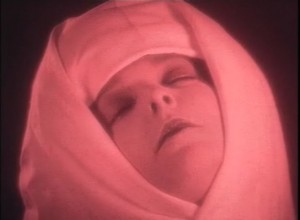
I can’t think of another film in the history of cinema in which hands are more expressive, in a multitude of ways — a motif that may be even more telling than the gradual evolution of Mac and Trina’s wedding photo, half of which eventually becomes the wanted poster for Mac’s arrest.
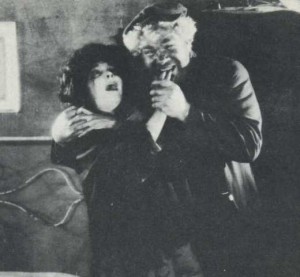
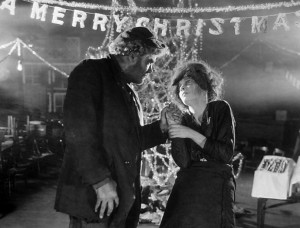
Too much of the writing about Greed (mine included) has been concentrated on the legend of the filming and the subsequent cutting and not enough about what remains, entirely visible and triumphant, in what remains and is fully visible.
A lot has been written about the relationship between the fates of Greed and The Magnificent Ambersons in terms of their eviscerations, and not enough about the major differences between the ways that they’re edited in their surviving forms.(Perhaps the most neglected but significant common point between the films is the unerring sense of camera angles in the staging of both films.) Read more
From the February 1, 2000 Chicago Reader. — J.R.

Here’s one very sick and messed-up movie. As misogynistic as anything I’ve seen in ages, it’s tricked up with enough fancy cinematography (by Guy Dufaux) to guarantee it sub-Hitchcockian credentials of the sort that some reviewers eagerly hand out to Brian De Palma. A surveillance specialist for the British secret service (Ewan McGregor) who’s haunted by the loss of his wife and little girl years earlier obsessively tracks a psychopathic murderer (Ashley Judd) across the U.S. The first couple of times he and we watch her take her clothes off through his surveillance equipment, grisly murders follow; after that we get more grisly stuff but less cheesecake. Writer-director Stephan Elliott (The Adventures of Priscilla, Queen of the Desert), adapting a novel by Marc Behm, shows how much he likes The Conversation, Bob Rafelson’s Black Widow, and Basic Instinct by serving up pastiches of them all and hoping everything somehow fits together. (To all appearances, the plot was resolved with a coin flip.) According to this movie’s view of femininity, Genevieve Bujold as a reform school official is womanly, therefore evil, and K.D. Lang as a secret service contact is androgynous, therefore OK. Read more
Written for Rouge No. 4 (2004). The film can be accessed here. — J.R.
The Gaze of Antonioni
Jonathan Rosenbaum
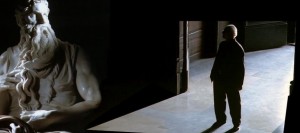
Surfacing without press screenings at a few theatres in the Landmark arthouse chain in the US for two weekend screenings in mid-August, Michelangelo Antonioni’s 17-minute Lo Sguardo di Michelangelo may conceivably be his most interesting film since Red Desert (1964). It’s hard to be sure of this after only one look at it – the film was abruptly withdrawn after qualifying for an Oscar nomination – but I thought afterwards that I might have just seen one of the first truly durable reflections to date on digital cinema.
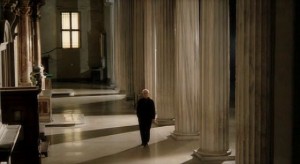
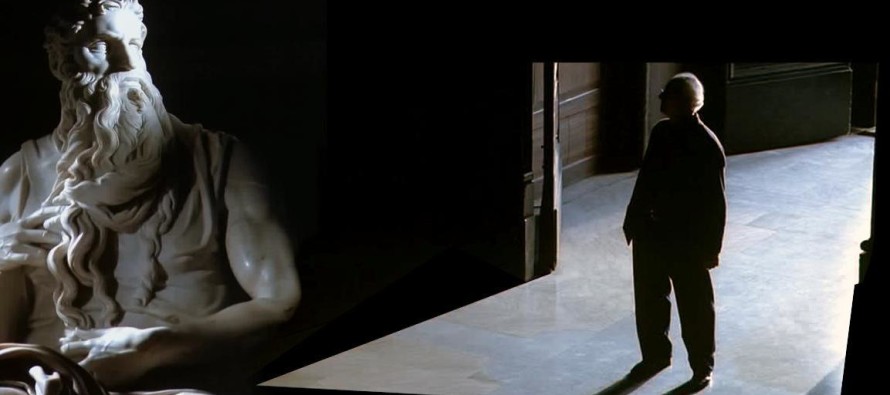
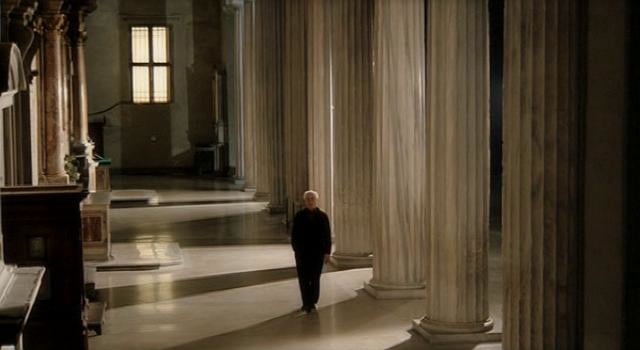
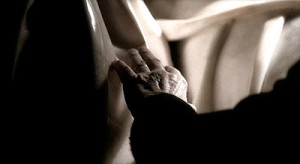
Mislabelled Michelangelo Eye to Eye in English when a more accurate English title might be The Gaze of Michelangelo, this beautifully filmed meditation is preceded by an intertitle – the only words in the film apart from the credits – explaining that Antonioni has been confined to a wheelchair since his stroke in 1985, but through the ‘magic of movies’ shows himself visiting the sculpture on foot. The action consists of Antonioni – walking without a cane, and looking like Antonioni prior to his stroke – entering the St. Pietro church in Rome to look at and then touch and caress portions of the restoration of Michelangelo’s Moses, then leaving again. Read more
From the July-August 1974 Film Comment. Portions of this column (one of my best, and crankiest) have appeared elsewhere, including on this site, but this is the full version. -– J.R.
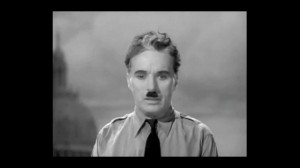
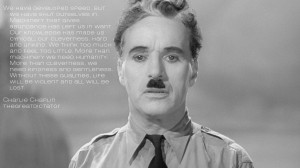
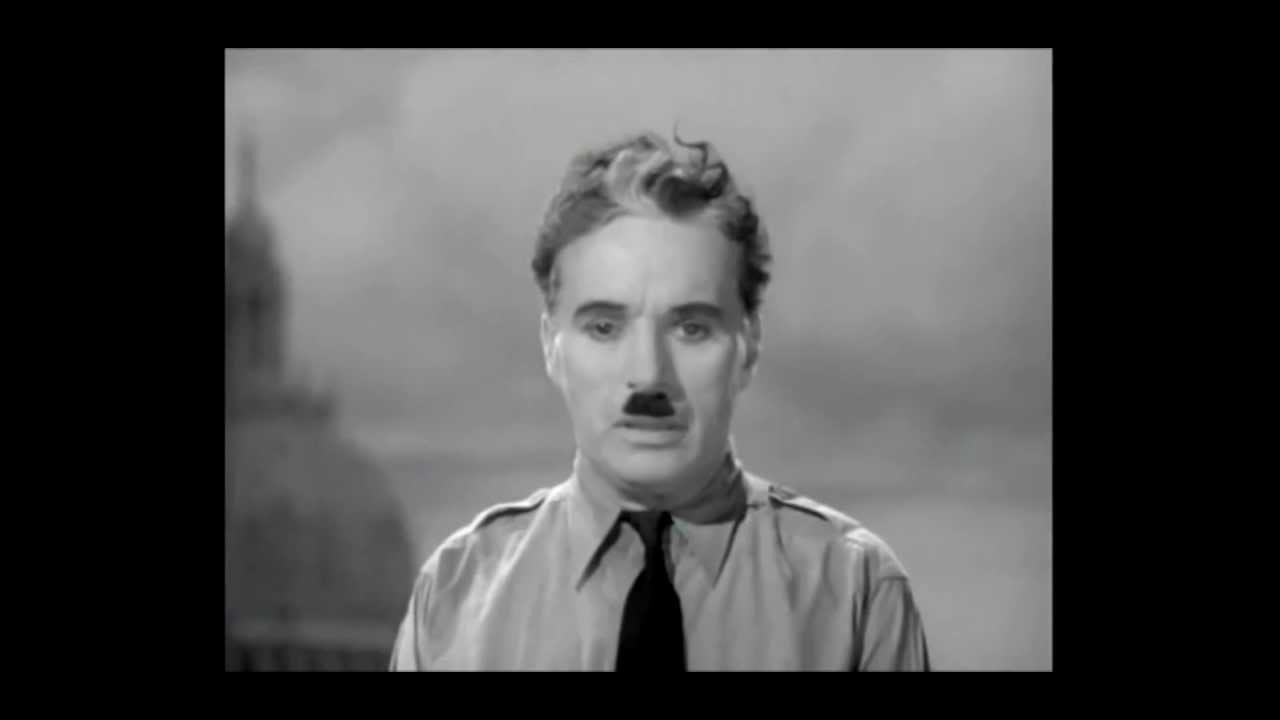
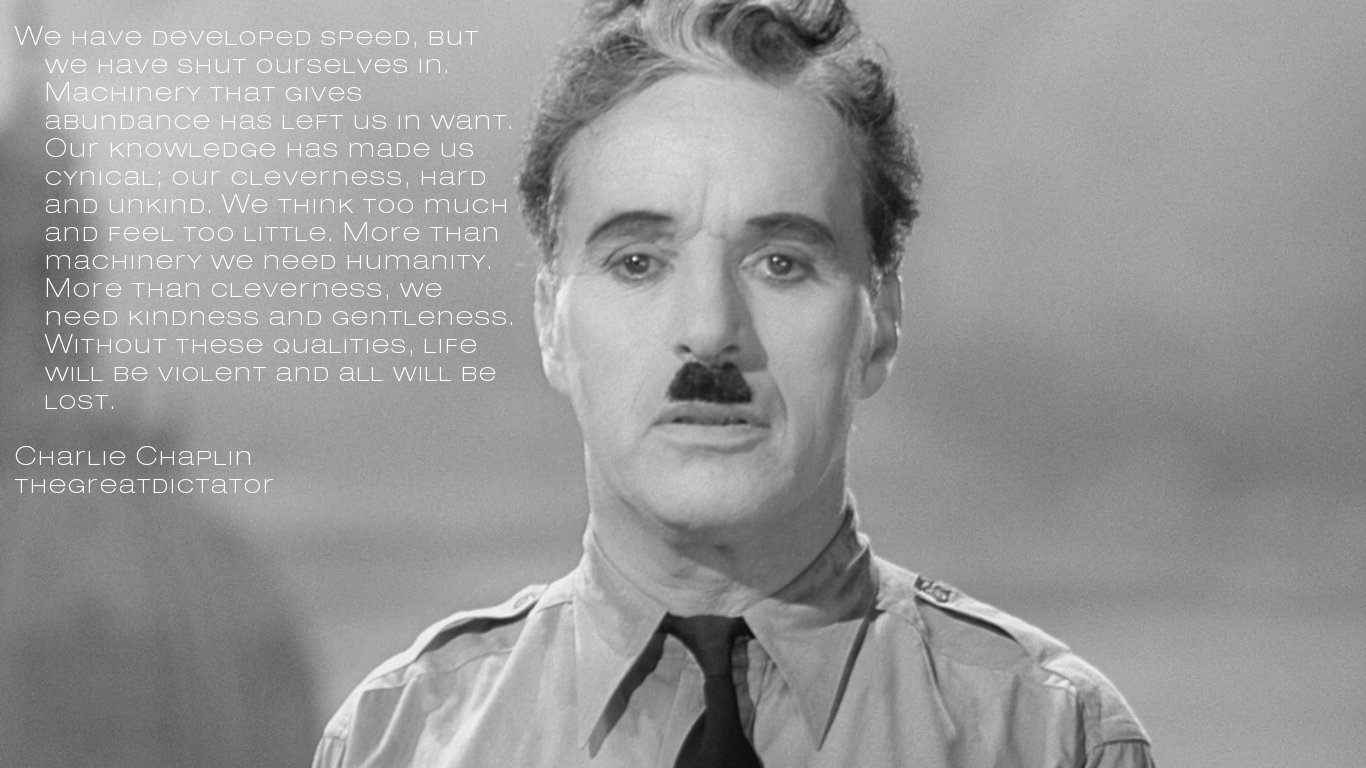
February 16: Chaplin’s THE GREAT DICTATOR. As a friend has pointed out, Chaplin doesn’t really belong to the history of cinema; he belongs to history. What for another artist might only come across as misjudgment, naïveté or bad taste often registers in a Chaplin film as personal/ historical testimony of the most candid and searing sort. Thus the total inadequacy of his impassioned speech at the end of THE GREAT DICTATOR — as art, as thought, as action, as anything — becomes the key experience that the film has to offer, revealing the limitations of human utterance in face of the unspeakable. For roughly two hours, ChapIin has been trying to defeat Hitler by using every trick that he knows; finally exhausting his capacities for comedy and ridicule, and realizing that neither is enough, he turns to us in his own person and tries even harder, making a direct plea for hope. But while he effectively annihilates the Tramp before our eyes, he simultaneously recreates him in a much more profound way, exposing the brutal fact of his own helplessness. Read more
From the Chicago Reader (March 7, 1997). Note: The film is now available with English subtitles. — J.R.
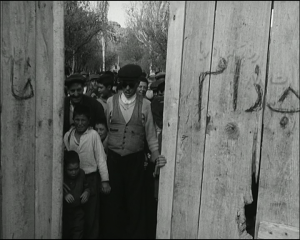
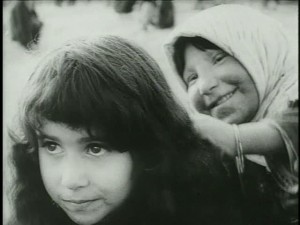
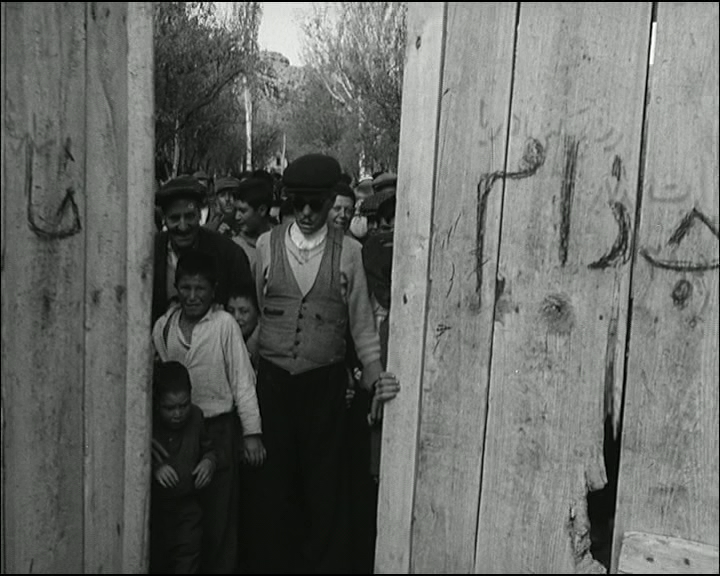
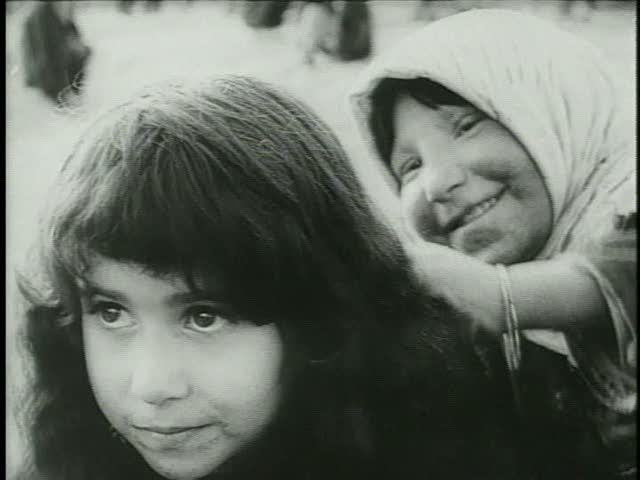
The most powerful Iranian film I’ve seen is this 22-minute black-and-white 1962 documentary made by Forugh Farrokhzad (1935-1967), commonly regarded as the greatest 20th-century Persian poet. It’s her only film and its subject is a leper colony in northern Iran. Part of what’s so special about it is its seamless adaptation of the techniques of poetry to the techniques of film, in which framing, editing, sound, and narration all play central roles. At once lyrical and extremely matter-of-fact — without a trace of sentimentality or voyeurism, yet profoundly humanist — Farrokhzad’s view of everyday life in the colony (children at school and at play, people eating, various medical treatments) is spiritual, unflinching, and beautiful in ways that have no apparent Western counterparts; to my eyes and ears, it registers like a prayer. This extremely rare film has never been subtitled, but at a symposium on Farrokhzad’s life and work, Chicago filmmaker Mehrnaz Saeed-Vafa will follow a video screening of The House Is Black with a discussion in English. Preceding this will be the premiere of a video documentary in English that I haven’t seen, Mansooreh Saboori’s I Shall Salute the Sun Once Again, and a discussion with Saboori. Read more
The following was commissioned by and written for Asia’s 100 Films, a volume edited for the 20th Busan International Film Festival (1-10 October 2015). — J.R.
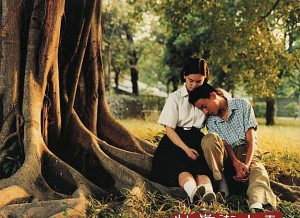
A Brighter Summer Day was inspired by a true incident, a touchstone from Yang’s youth: the killing of a 14-year-old girl by a male high school student in Taipei on June 15, 1961. Yang frames the film with recitations over the radio of the names of students graduating from the same school in 1960 and ’61. The title comes from the lyrics of the Elvis Presley song “Are You Lonesome Tonight?”, phonetically transcribed by the hero’s sister so that a younger friend, Cat, can learn to sing them.
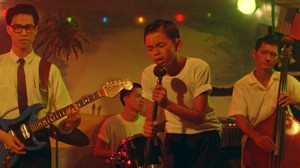
This song is only one of many cherished artifacts belonging to the film’s characters that come from somewhere else. A samurai sword found by the hero, Si’r, in his family’s Japanese house becomes the murder weapon, and a tape recorder left by the American army in the 50s records Cat’s version of the Elvis song. An old radio that for most of the picture doesn’t work eventually broadcasts the list of graduating students. And a flashlight Si’r steals in the first extended scene from a film studio next to the school, where he periodically hides in the rafters to watch movies being shot, makes a fascinating progress through the film. Read more
Written for the catalogue of Il Cinema Ritrovato, June 24 through July 4, 2015. — J.R.
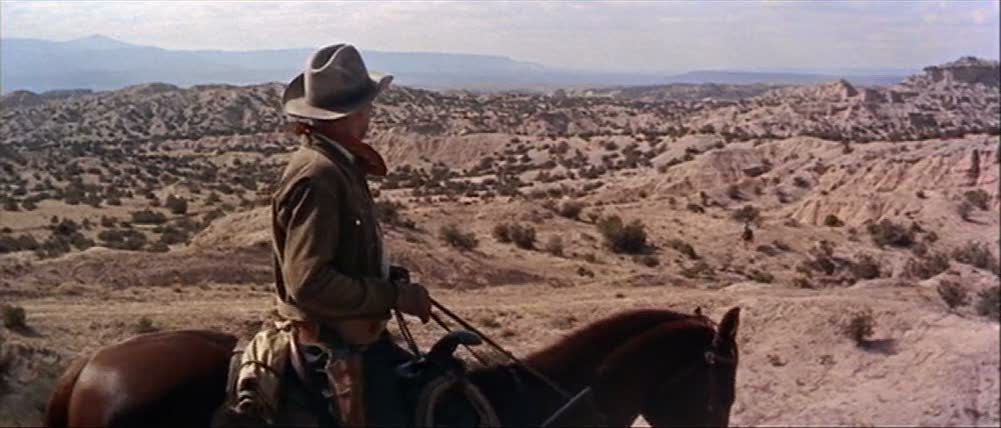
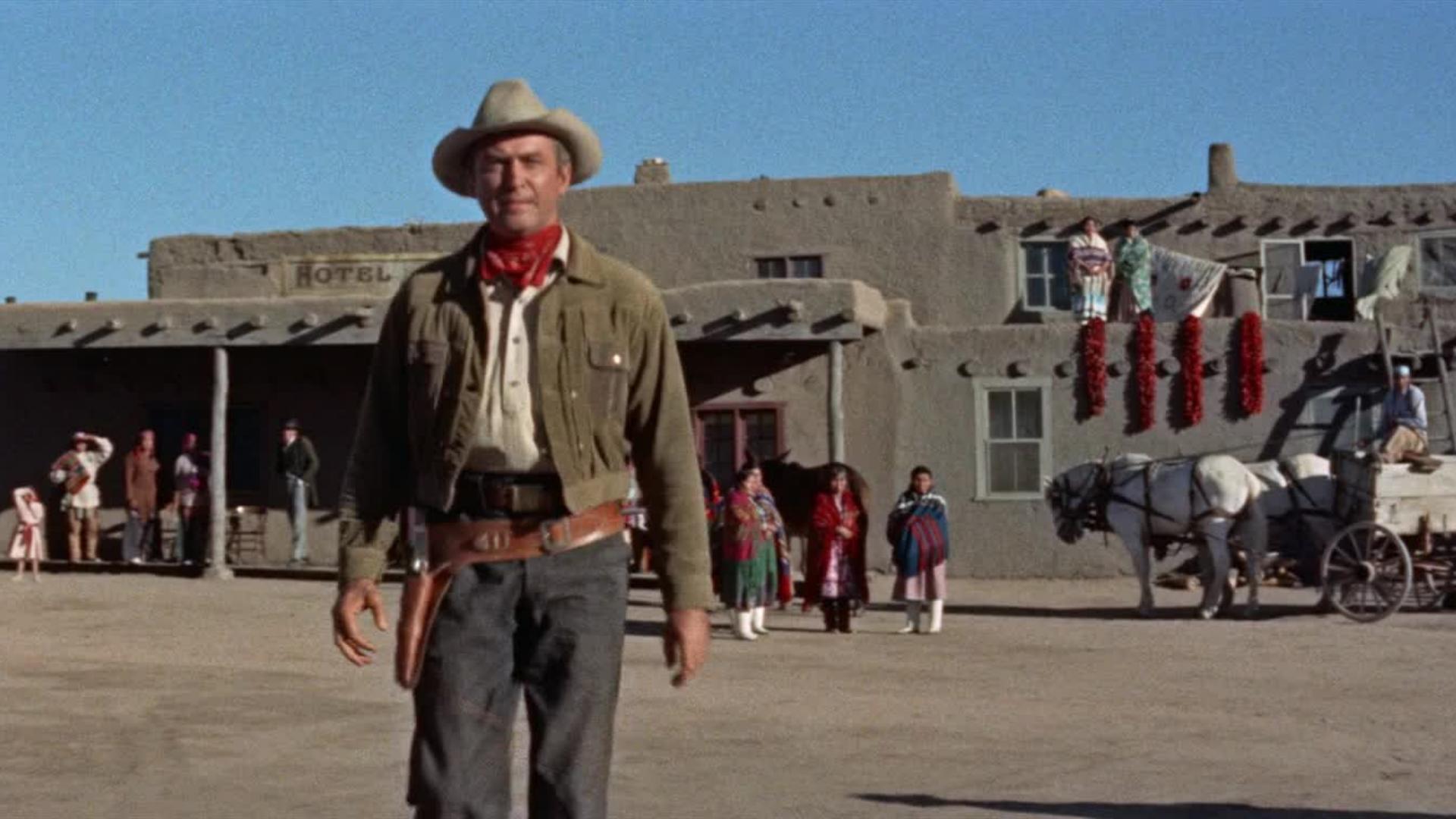
THE MAN FROM LARAMIE
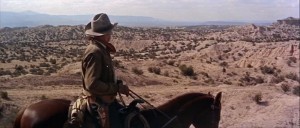
USA, 1955
T. it.: L’ Uomo di Laramie. Sog.; Thomas T. Flynn. Scen.: Philip Yordan, Frank Burt. F. (CinemaScope): Charles Lang. M.: William Lyon. Mus.: George Duning, Lester Lee. Int.: James Stewart (Will Lockhart), Arthur Kennedy (Vic Hansbro), Donald Crisp (Alec Waggoman), Cathy O’Donnell (Barbara Waggoman), Alex Nicol (Dave Waggoman), Aline MacMahon (Kate Canady)., Wallace Ford. Prod.: William Goetz Productions.
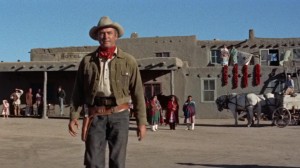
“Anthony Mann brought a touch of Oedipus Rex to almost everything he did—he was fascinated by families exploding from the inside—but in this 1955 western it’s more than a touch: he’s clearly aiming for classical resonance. Yet the film is never pretentious, perhaps because Mann is able to create characters complex enough to support the grand emotions, and because the landscape—animistic, enveloping—becomes mythic in his wide-screen framing. It’s one of Mann’s cleanest, clearest films, constructing an elaborate but ultimately lucid network of character relationships, all of them perverse. With James Stewart, Arthur Kennedy, and Donald Crisp. 104 min.” (Dave Kehr in the Chicago Reader)
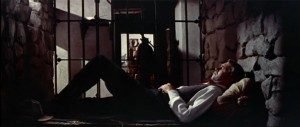
This is the eight and last of Anthony Mann’s features starring James Stewart, made over a mere six years (1950-1955)—a fascinating body of work that, like Alfred Hitchcock’s uses of Stewart over roughly the same period (in Rope, Rear Window, and Vertigo) as well Cecil B. Read more