From the Chicago Reader (November 7, 2003). — J.R.
Elephant
**** (Masterpiece)
Directed and written by Gus Van Sant
With Alex Frost, Eric Deulen, John Robinson, Elias McConnell, Jordan Taylor, Carrie Finklea, Nicole George, Brittany Mountain, Bennie Dixon, Nathan Tyson, Alicia Miles, Kristen Hicks, Timothy Bottoms, and Matt Malloy.
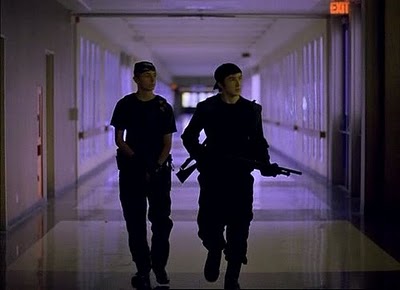
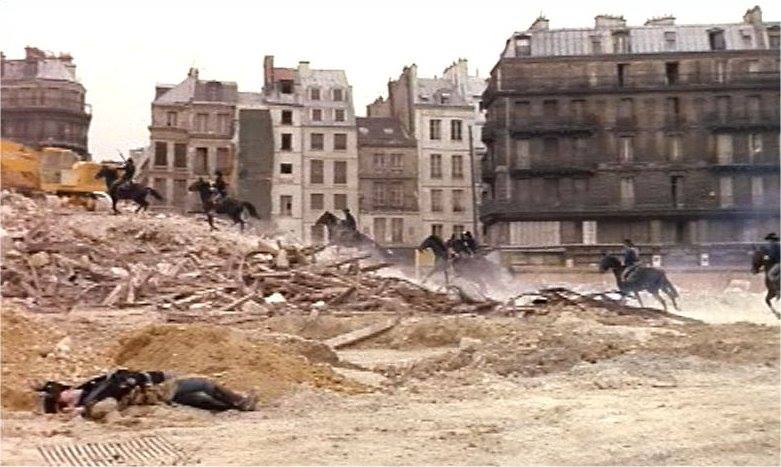
Gus Van Sant’s startling and brilliant Elephant — a film that follows the activities of several high school students before and during a massacre like the one at Columbine — has its flaws, yet its virtues so outshine them that the years he’s spent lost in the wilderness can be forgiven. His four previous features weren’t exactly dead on arrival, though his 1998 remake of Psycho came alarmingly close. But the filmmaker responsible for such fresh early shorts as The Discipline of DE (1978) and My New Friend (1987) and such exciting early features as Mala Noche (1985), Drugstore Cowboy (1989), and My Own Private Idaho (1990) was almost nowhere in evidence in Good Will Hunting (1997), Psycho, or Finding Forrester (2000) and only faintly discernible in the experimental feature Gerry (2001). (In between were two satirical features, the uneven 1993 Even Cowgirls Get the Blues and the more successful 1995 To Die For.) Read more
From the Chicago Reader (December 1, 1987). — J.R.
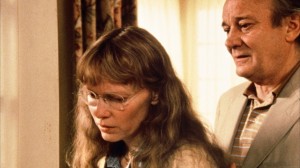
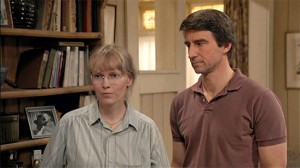
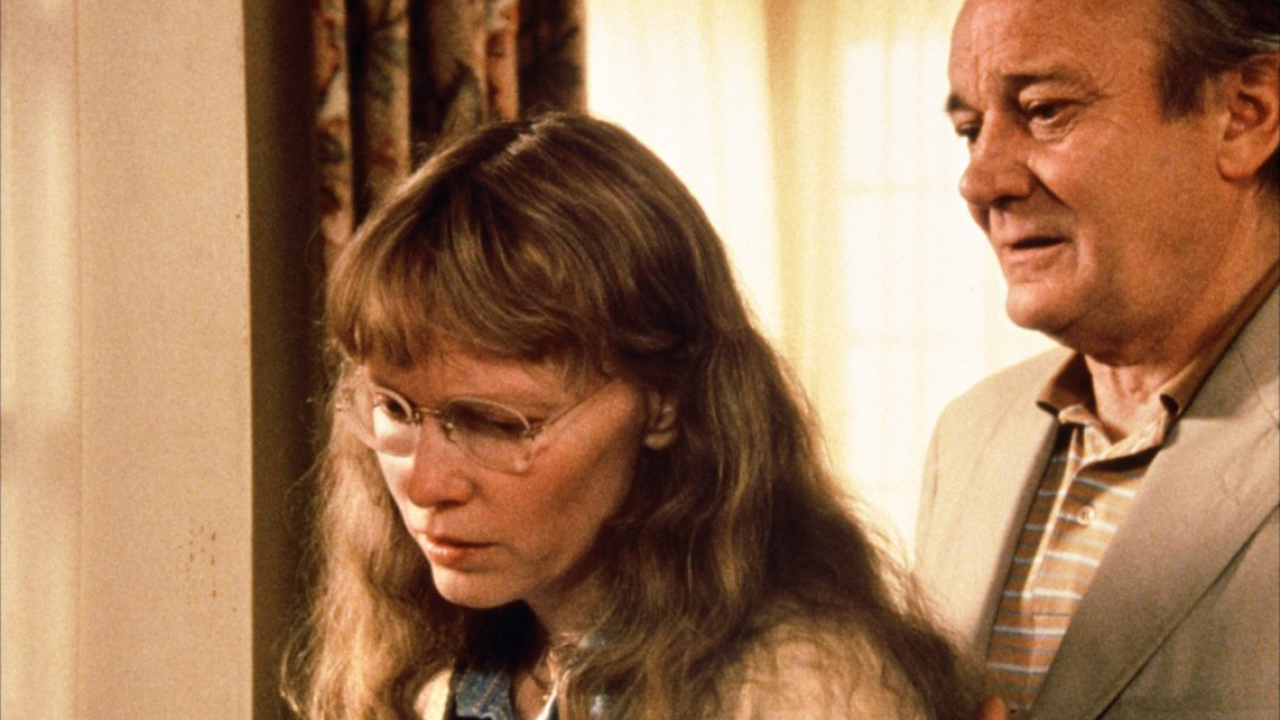
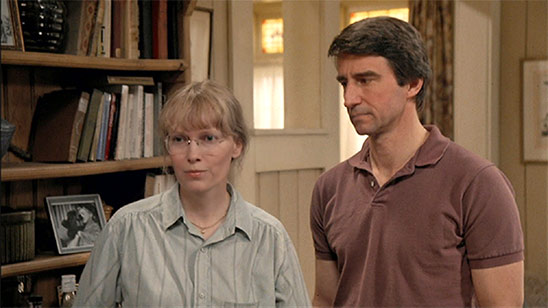
Woody Allen’s worst film and second pure noncomedy — a desperate low-energy recycling operation — features four (or, arguably, five) cases of unrequited love among six characters stagebound in a New England summer house for about 18 hours: a suicidal depressive (Mia Farrow), loved by both her flamboyant mother (Elaine Stritch) and a middle-aged widower (Denholm Elliott), loves only an unfulfilled writer (Sam Waterston), who loves only the suicidal depressive’s best friend (Dianne Wiest), who doesn’t know who or what she wants. To add a little contrast, the mother is happily married to a physicist (Jack Warden), but just to make sure that we don’t jump to any wrong conclusions about this, the latter imparts to us the helpful wisdom that the meaninglessness of the universe is more depressing than the threat of nuclear annihilation (perhaps the key to Woody’s no-sweat politics). Wiest remarks at another point that she’s married to a radiologist, but she won’t let him x-ray her because she doesn’t want him to know what’s inside her. Most of the writing is on this glib and wretched level, and the laws of diminishing returns and what James Agee once called rigor artis set in with a stultifying vengeance. Read more
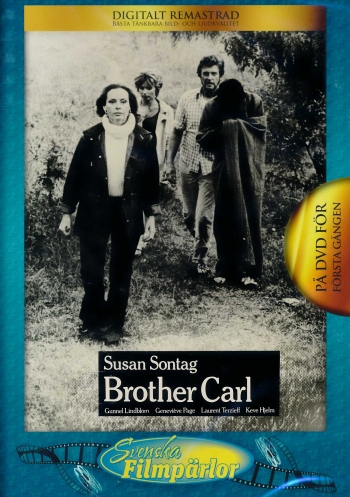
From the Chicago Reader (November 1, 1992). Too bad that this hasn’t been made widely available either online or on disc–although I’ve just discovered that a Swedish DVD exists (see below). I much prefer it to Sontag’s previous feature, Duet for Cannibals, which recently came out in both formats. — J.R.
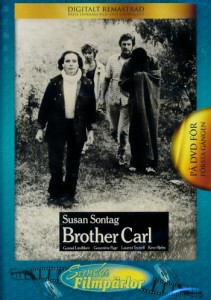
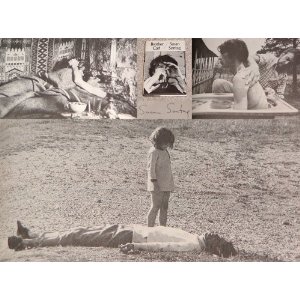
Susan Sontag’s seldom-seen second feature — filmed in Sweden like her first (Duet for Cannibals) but in English and with a cast of Swedish and French actors — shows the influence of Bergman’s Persona, Dreyer’s Ordet, and Whale’s Frankenstein as it depicts two tortured relationships, a suicide, and a miracle. The major characters include an unhappily married couple, a mainly mute former dancer (Laurent Terzieff) who occasionally suggests Nijinsky, and an autistic child. The results can’t exactly be called the work of a natural filmmaker, but they’re fascinating for anyone interested in following the themes and formal concerns of Sontag’s fiction as well as some of her essays, including “On Silence”. This is no masterpiece, but it certainly deserves more attention than it’s received (1971). (JR)
 Read more
From the Chicago Reader (January 14, 2005). — J.R.
Yasujiro Ozu Retrospective
at the Gene Siskel Film Center
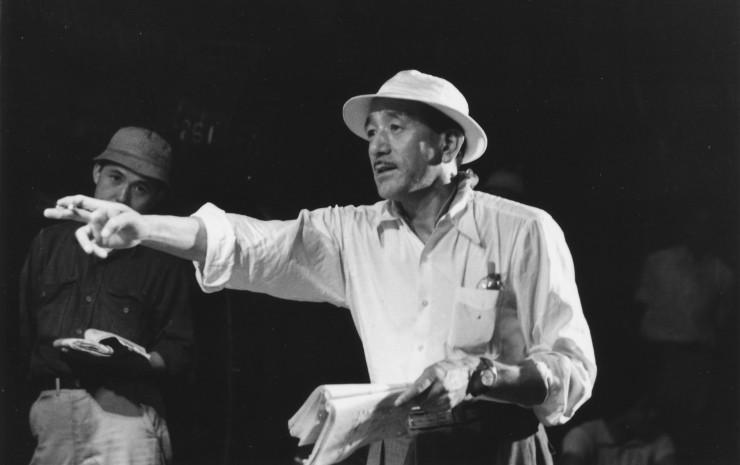
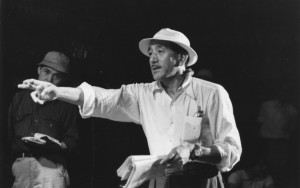
It’s no longer controversial to assert that Yasujiro Ozu (1903-’63) is one of the greatest filmmakers ever — certainly one of the top dozen and possibly the greatest of those who’ve focused on family life. But getting a fix on his work remains far from easy. Only 34 of his 50-odd films appear to have survived, and two features exist only in fragments. The Gene Siskel Film Center’s retrospective, which started last week and runs through March 3, includes 25 features, and some of his other works, including a seldom-shown documentary short, might be screened later if the features draw big enough crowds.
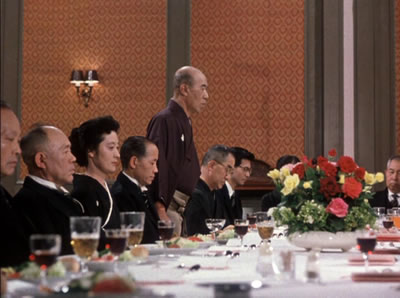
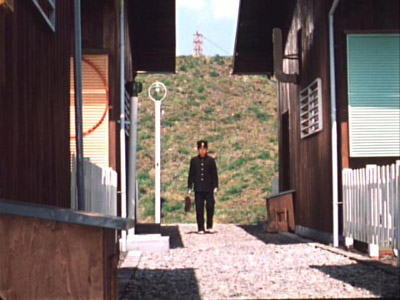

One of the films showing this week, Tokyo Story (1953) — the first Ozu film to have been seen widely in the West, and still the best known and most highly regarded — is a good starting point for viewers unfamiliar with his work. (So are Equinox Flower and Good Morning, two gorgeous color films from the late 50s, showing later this month.) But it has led many critics to make unfair broad generalizations about Ozu’s style and content, to claim that his films are slow and conservative, his technique minimalist. Read more
I no longer remember if this was at the Miss America
Pageant, and I’m not even 100% sure it was Bert Parks,
but I do remember that either Bert or someone much
like him decided to show what a regular guy he was by
singing the Elvis anthem “Blue Suede Shoes” on TV. But
because this was American TV in the mid-50s, he had to
clean up the already stupid hyperbolic lyrics (“You can burn my
house, steal my car, drink my liquor from an old fruit jar”) by
replacing the last line with, “Drink my soda from a soda jar”.
Who ever heard of a soda jar before that moment, or since
that moment either? Bert or his lyricist or their censor must
have invented the soda jar in order to make this Elvis homage
or watered-down Elvis ripoff sound more proper, but even so,
soda jars have been lodged in my brain ever since. [3/26/20] Read more
From the Chicago Reader (March 9, 1990). — J.R.
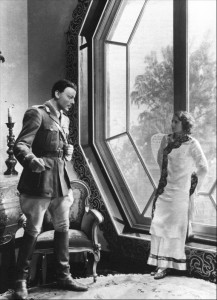
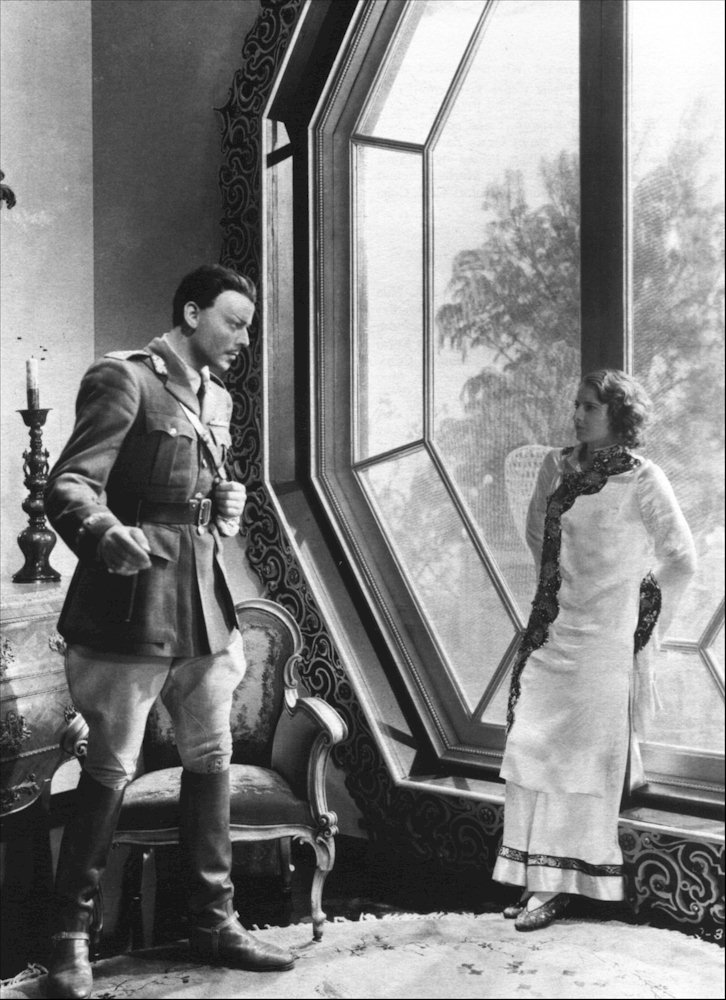
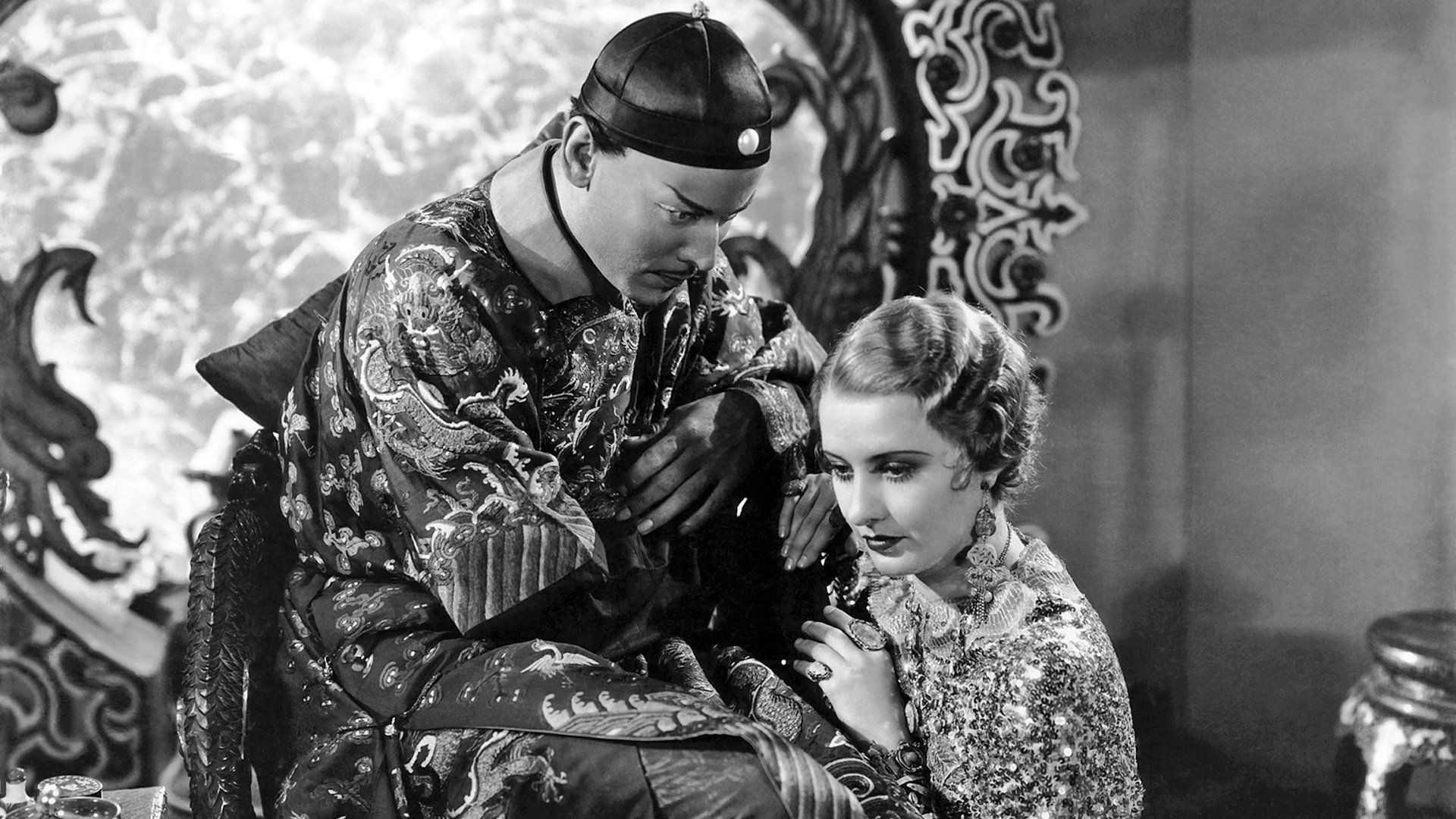
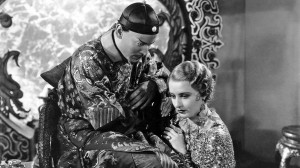
Frank Capra’s very atypical drama about an American missionary (Barbara Stanwyck) being taken prisoner by a Chinese warlord (Nils Asther) is not only his masterpiece, but one of the great love stories to come out of Hollywood in the 30s–subtle, delicate, moody, mystical, and passionate. Joseph Walker shot it through filters and with textured shadows that suggest Sternberg; Edward Paramore wrote the script, adapted from a story by Grace Zaring Stone. Oddly enough, this perverse and beautiful film was chosen to open Radio City Music Hall in 1933; it was not one of Capra’s commercial successes, but it beats the rest of his oeuvre by miles. With Walter Connolly and Lucien Littlefield; Stanwyck and Asther, both extraordinary, have perhaps never been better. A newly struck 35-millimeter print will be shown. (Film Center, Art Institute, Columbus Drive at Jackson, Saturday and Sunday, March 10 and 11, 4:15, 443-3737)
 Read more
Published by DVD Beaver in June 2006. Soirry if some of the links no longer work. — J.R.
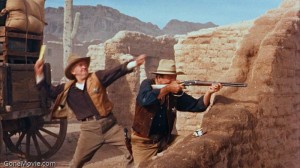
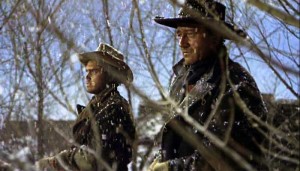
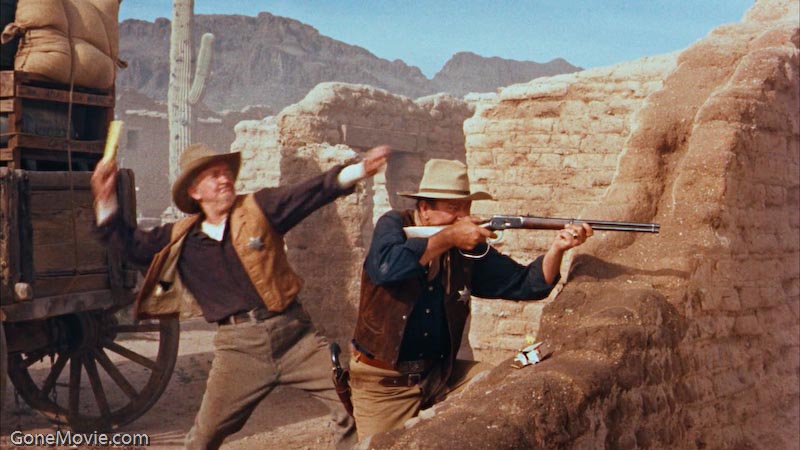
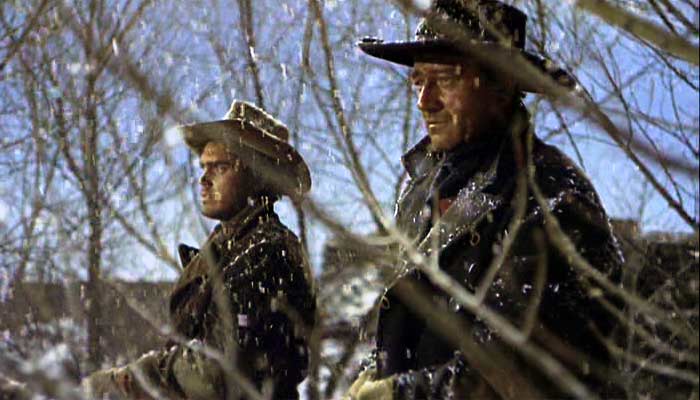
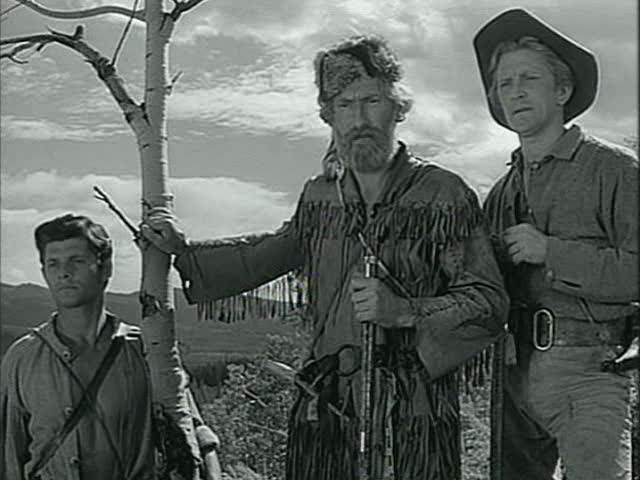
It might be argued that many of the most famous and celebrated westerns qualify as eccentric in one way or another. Rio Bravo mainly consists of friends hanging out together; its memorable action bits are both infrequent and usually over in a matter of seconds. The Searchers often feels like medieval poetry, and its director John Ford once complained that parts of its score seemed more appropriate for Cossacks than for cowboys. Even High Noon has so many titled angles of clocks and reprises of its Tex Ritter theme that you might feel like you’re trapped inside a loop, and it’s hard to think of many sequences more mannerist than the opening one in Once Upon a Time in the West.
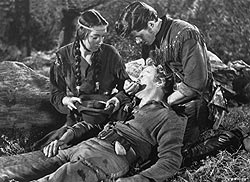
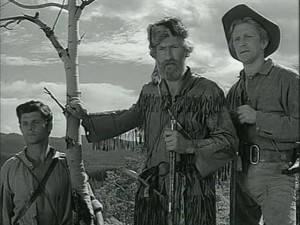
The dozen favorites that I’ve listed here are all basically auteurist selections. I’ve restricted myself to only one per director (although I’ve cited other contenders and/or noncontenders by the same filmmakers), and included both ones that are available on DVD and ones that aren’t but should be — or, in some cases, will be. The order is alphabetical:
Read more
Commissioned by BFI Video for an April 2015 release. — J.R.
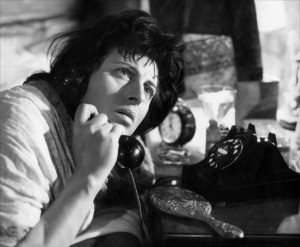
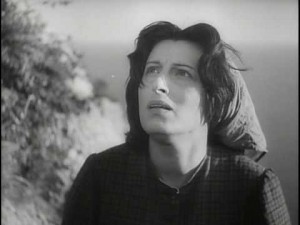
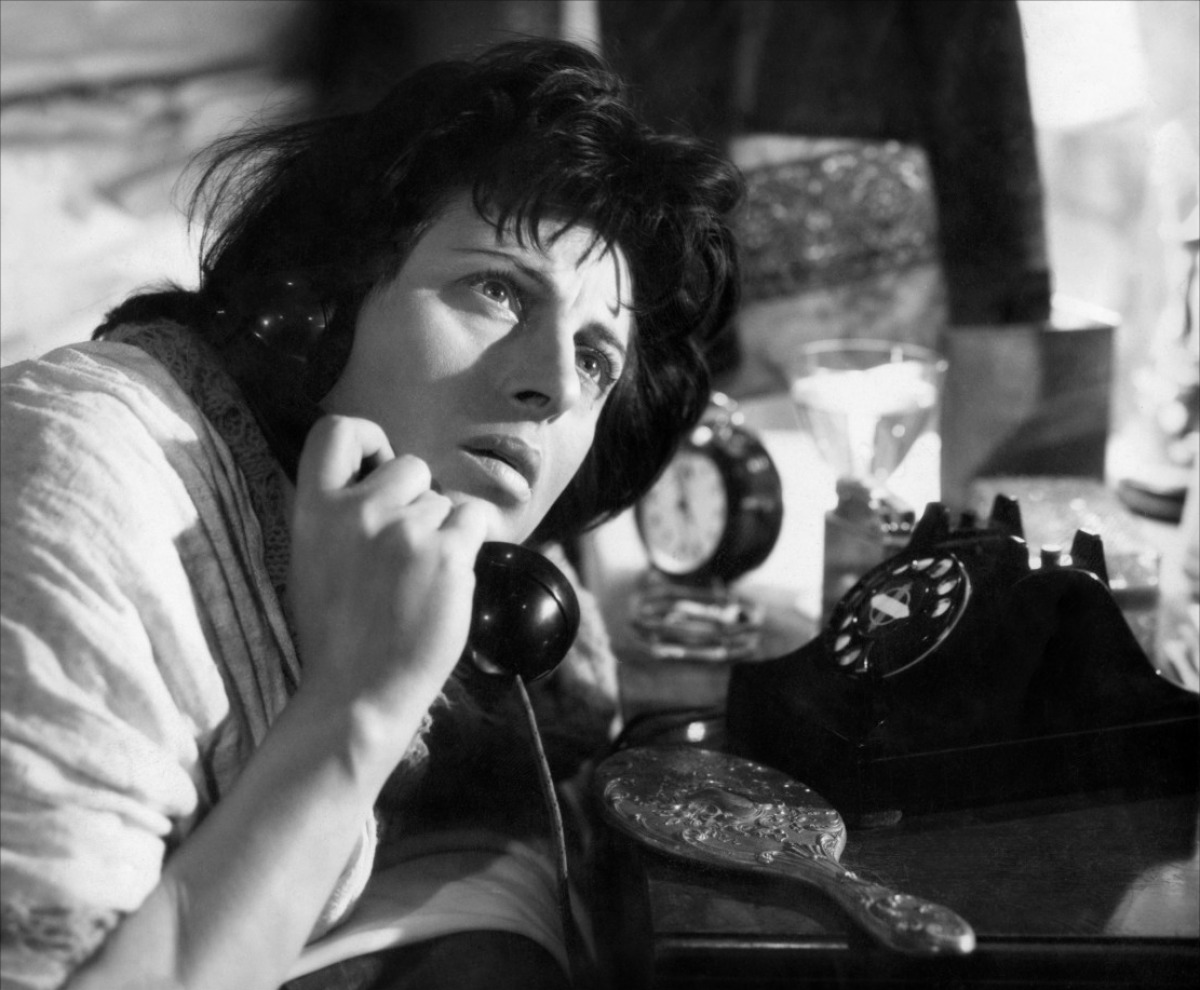
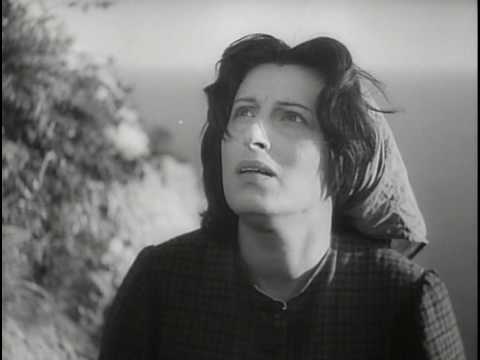
L’amore: Due storie d’amore (Love: Two Love Stories, 1947-1948), as it was originally known, is the first feature of Roberto Rossellini to have been completed after his celebrated war trilogy of Rome Open City (1945), Paisà (1946), and Germany Year Zero (1947), although in fact its first episode, A Human Voice (a one-act play by Jean Cocteau), was shot just before Germany Year Zero, and its second, The Miracle, was shot afterwards. A sort of two-part concerto-showcase for Anna Magnani, designed as a single feature, it was originally released outside in Italy only in truncated form due to a failure to clear the rights for the Cocteau play. Gavin Lambert noted in his review of the second film for Monthly Film Bulletin in 1950, ‘Although The Miracle is strong enough to stand on its own, and can fairly be judged as a film in itself, the fact that it is now shown partially out of context has meant some shifting of emphasis: it appears as an isolated tour de force, whereas if it had followed La Voix Humaine, the dedicatory tribute would have been reinforced, the spotlight focused even more sharply on Magnani.’ Read more
Published by DVD Beaver in March 2006; I’ve updated several links. — J.R.
| Consider the following not so much a definitive list — offerings and preferences keep changing — as a starting point for checking out some of the weirdest and most pleasurable musical comedies in my personal pantheon. The order is chronological. |
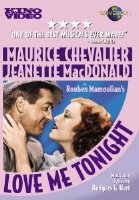 (CLICK COVER FOR MORE) Love Me Tonight (Rouben Mamoulian, 1932) (CLICK COVER FOR MORE) Love Me Tonight (Rouben Mamoulian, 1932) |
A controversy used to rage about whether this was “imitation Lubitsch with too many camera angles” (as Andrew Sarris once put it) or a lighthearted send-up of Ernst Lubitsch (as Tom Milne argued in his book on Mamoulian). Since the movie costars Maurice Chevalier and Jeanette MacDonald, the same leads as Lubitsch’s previous The Love Parade and The Smiling Lieutenant, and Lubitsch himself was production chief at Paramount when it was made, these issues can’t be resolved simply. But my own preference for this masterpiece over the Lubitsch films that influenced it comes easy, and not only because it’s appeared on DVD ahead of them. It has a wonderful Rodgers and Hart score and a singular impulse to encompass nothing less than the entire world in its musical numbers. Towards the beginning, “Isn’t it Romantic?” passes from Chevalier (a tailor in Paris) to a customer to a composer passing on the street to a cab driver to soldiers on a train to a Gypsy fiddler in the countryside to MacDonald singing on a distant balcony; and plenty of non-singers are allowed to take over bits of subsequent songs, like the reprise of “Mimi”. |
Read more

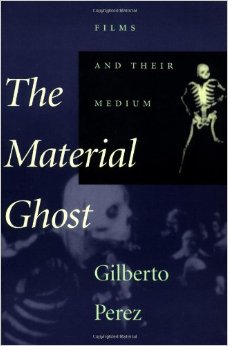
I can’t remember the first time I met Gil Perez, but the first time I got in touch with him, which must have been in the late 60s, it was to reprint a remarkable essay of his about Murnau that had appeared in Sight and Sound for an anthology I was editing called Film Masters, a book that for various complex reasons never came out (although, if memory serves, it twice reached the galley-proof stage). I do recall that Gil was still a theoretical physicist at the time, in the U.S. but still relatively fresh from Havana, and he was most likely making his academic transition to film studies and film theory when we eventually met in New York. (See his Introduction to his magisterial 1998 The Material Ghost, “Film and Physics,” for more details.) Years later, circa the early 80s, we became neighbors in Hoboken, living only a few blocks apart, and we remained loosely in touch for the remainder of his life, during his various stints at William Paterson, Princeton, Harvard, Missouri, and, most permanently, Sarah Lawrence, where he ran the film history program.
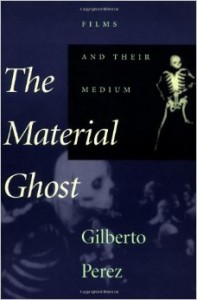
A slow and methodical writer, but also a prolific one, Gil wrote frequently about film for the The Hudson Review, The Yale Review, and the London Review of Books and less often for film and academic journals, and I was often envious of the way he was both welcome and able to hold his own as a public intellectual with a literary sensibility in those and similar venues, such as The Nation. Read more
https://www.youtube.com/watch?v=8yr8hEyFYcg

The Portuguese title of this beautiful, wordless 15-minute documentary means “One Century of Power,” and the black and white footage comes from one of his earliest films, Hulha Branca (1932). [7/8/15]
 Read more
A column for Caiman Cuadernos de Cine, written November 16, 2016. — J.R.
En Movimiento: The Man Who Would Be King
Errol Morris: “If you could give Charles Foster Kane advice, what would you say to him?”
Donald J. Trump: “Get yourself a different woman.”
— from a 2003 interview
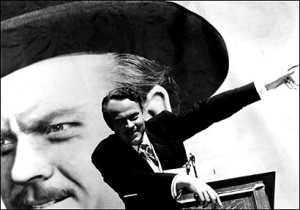
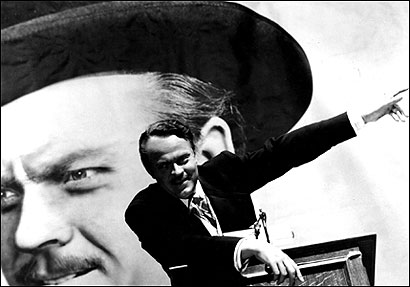
It isn’t surprising that Citizen Kane is Donald Trump’s favorite movie. Thanks to the input of Herman J. Mankiewicz, an unhappy cynic, Orson Welles’ first feature is the only one he ever made that views corruption from a corrupted viewpoint; all the others see corruption from a vantage point of baffled innocence. As an actor who specialized in playing corrupt authoritarian figures — tycoons (Kane, Arkadin, Charles Clay), racists (Kindler, Quinlan), conniving magicians (Cagliostro, Welles himself in Follow the Boys and F for Fake), power-mad officials (Colonel Haki in Journey into Fear, Cesare Borgia in Prince of Foxes, the Advocate in The Trial), a sly racketeer (Harry Lime), and several dissolute rulers—before achieving his best role as Falstaff, an innocently jovial jester to a prince, which failed to engage the mass audience to the same degree (as did his more innocent heroes in The Lady from Shanghai and Othello) — Welles as an anti-authoritarian writer and director only confused matters for the general public by undermining what he celebrated as a performer. Read more
From Film Comment (May-June 1974). Apart from my responses here to Malle, Whale, and Fejos, I no longer identify with most of what I wrote here, over 41 years later. Much of this -– especially my reactions to Ferreri and The Great Garrick — was strongly influenced at the time by my friendship with the late Eduardo de Gregorio. — J.R.
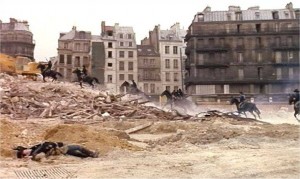
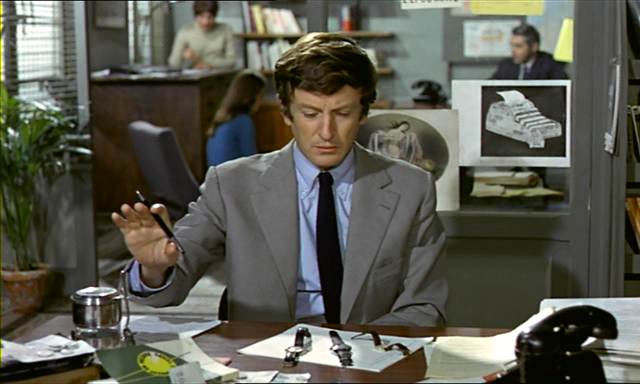
The word is out that Marco Ferreri’s TOUCHE PAS LA FEMME BLANCHE (DON’T TOUCH THE WHITE WOMAN) isn’t making it at the box office. The notion of staging a semi-political, semi-nonsensical Western in Les Halles seems to be bewildering French audiences, even when they laugh, and neither the presence of Michel Piccoli, Marcello Mastroianni, Philippe Noiret, and Ugo Tognazzi, nor the singular glace of Catherine Deneuve as the white woman, appears to have turned the trick. Our local Philistine, Thomas Quinn Curtiss in the International Herald Tribune, was distinctly sourced by the experience: “The subject is certainly serviceable for caricature, but Ferreri’s hand is so clumsy that the result is rather a burlesque of the cow operas of his homeland…All is grotesque, but nothing is funny in this wild, tasteless travesty that consistently misses its targets.” When I mentioned liking the film to a French colleague on the phone, I can almost swear I heard an audible shudder creep across the lines. Read more
Written for Kino Lorber’s Blu-Ray of the film, released on November 10, 2015. — J.R
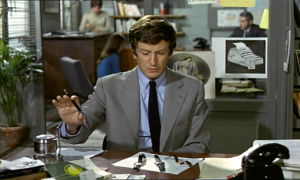
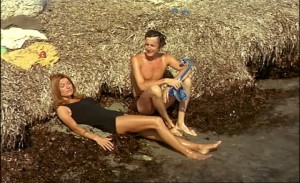
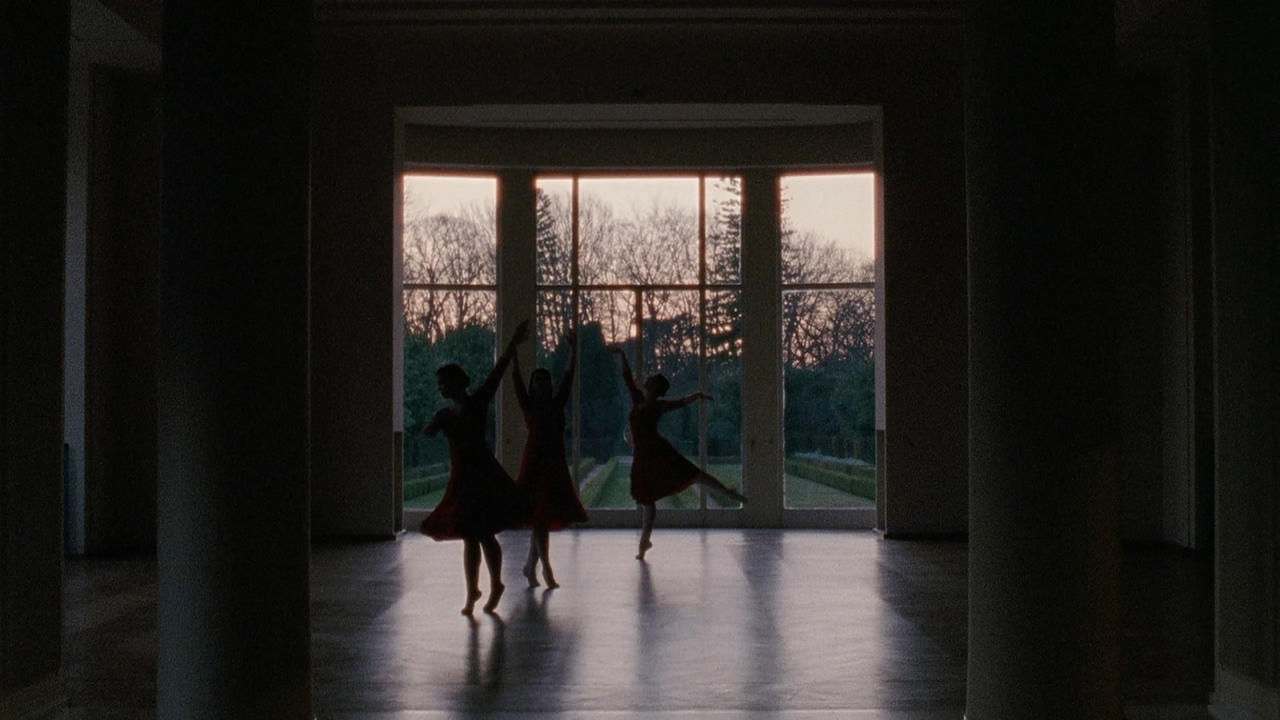
Alain Resnais (1922-2014) was the most experimental and adventurous of all the French New Wave directors, but he has rarely been recognized as such, perhaps because he stood apart from his (mainly younger) colleagues in other respects as well. Unlike Godard, Rivette, Truffaut, Chabrol, and Rohmer, he wasn’t a critic or a writer, although as a teenager during the German Occupation of France he was already serving as a mentor to their own critical mentor, André Bazin, by introducing him to silent cinema in general and Fritz Lang in particular. He also preceded them all as a director in the eight remarkable non-fiction shorts he made between 1948 and 1958, the first of which (Van Gogh) won him his only Oscar. Indeed, the moment one compares these innovative shorts to the early sketches of Godard, Rivette, et al., the clearer it becomes that Resnais was already a courageous radical, both formally and politically, long before such a position even occurred to his colleagues. And one could argue that he was also already a film critic and film historian on his own elected turf, namely sound and image, even if he didn’t exhibit his exquisite cinematic taste in writing. Read more
Written for my “En movimiento” column in Caimán Cuadernos de Cine in July 2015. — J.R.
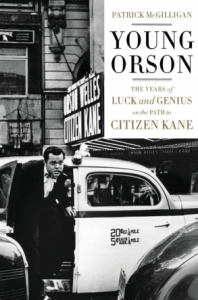
En movimiento: Young Orson
Jonathan Rosenbaum
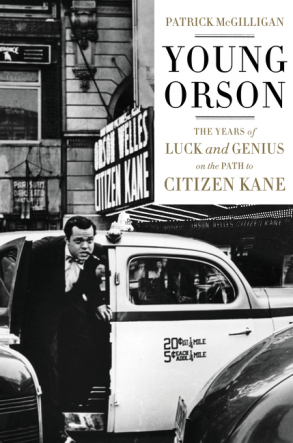
Out of all the discoveries that have come my way in the wake of the Welles centennial, the most interesting and exciting so far has been Patrick McGilligan’s Young Orson: The Years of Luck and Genius on the Path to Citizen Kane, a biography that comes to 785 pages, at least in the bound uncorrected proofs sent to me by HarperCollins in mid-July. (The official publication date is November 17.) As I wrote in a blurb solicited by the publisher, “In many ways, Patrick McGilligan’s Young Orson is my favorite of all the Welles biographies to date. Not only because he’s read all the others, and makes judicious calls about how far we should trust them, but because his own prodigious research has turned up so much rich, fresh, and clarifying material. The overall portrait of Welles’s character and background that emerges, uncharacteristically sympathetic, is both dense and persuasive — and a page-turning pleasure to read.” I’m especially impressed by how much McGilligan has turned up about Welles’s parents, his guardian, and his childhood in general. Read more