
Okay. I have to confess that Michael Jackson wasn’t an especially important figure to me, and in that respect it’s theoretically possible that I belong to some cranky minority that isn’t mourning his death around the clock. But even if he were as important to the history of music and art as Charlie Parker or Elvis Presley or Frank Sinatra or Igor Stravinsky, I’d still find the sudden cable news blackout of everything currently happening in the world apart from his death a bit excessive and disturbing, and more than just a little infantile. It’s the same thing that happened in TV-Land when Sinatra and Reagan (two other revered entertainers) croaked, and one can sense a rather sickening feeling of happiness and excitement in the airways, uniting CNN, MSNBC, and, yes, even Fox News on the same euphoric wavelength that declares, in effect, and at long last, Iran doesn’t matter, the whole Middle East doesn’t matter, national health care doesn’t matter, Governor Mark Sanford (who had everyone totally obsessed yesterday) doesn’t matter, Sonia Sotomayor doesn’t matter, global warming doesn’t matter, even Farah Fawcett doesn’t matter, because Michael is dead. What a blessed sense of release is to be found in this seeming collective grief, suddenly recognizing that we no longer have to worry or even think about the rest — or so, at least, assume CNN, MSNBC, and Fox News…. Read more
From the Chicago Reader (October 21, 1988). — J.R.
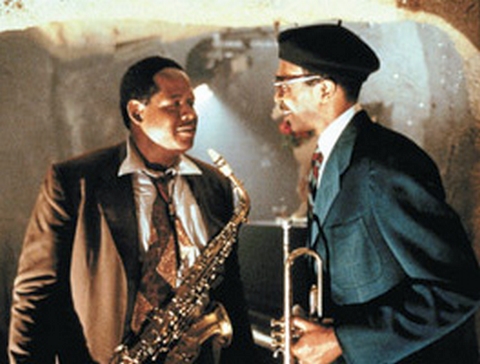
BIRD
*** (A must-see)
Directed by Clint Eastwood
Written by Joel Oliansky
With Forest Whitaker, Diane Venora, Michael Zelniker, Samuel E. Wright, Keith David, and Damon Whitaker.
CELEBRATING BIRD
** (Worth seeing)
Directed by Gary Giddins and Kendrick Simmons
Written by Gary Giddins.
Two telling documents that we have about Charlie Parker, both from the early 50s:
(1) During a live radio broadcast from Birdland on March 31, 1951, there’s an electrifying moment when Parker leaps into his solo on “A Night in Tunisia,” combining cascading machine-gun volleys of notes — wailing 16th notes and dovetailing triplets — into what sound like two successive melodic somersaults, each one in a separate direction, that miraculously turn the rhythm around with shifting accents — an awesome tumble in midair over four free bars until he triumphantly splashes into the next chorus.
To understand the genius of that moment — a fusion of passionate acrobatics and spontaneous formal patterning — it might help to detect the evidence of rage that one hears just before the number begins. Symphony Sid Torin, an obnoxiously loquacious disc jockey, has been blathering at length about “Round Midnight,” the previous number played by Parker, Dizzy Gillespie, and Bud Powell, which he has repeatedly called “Round About Midnight.” Read more
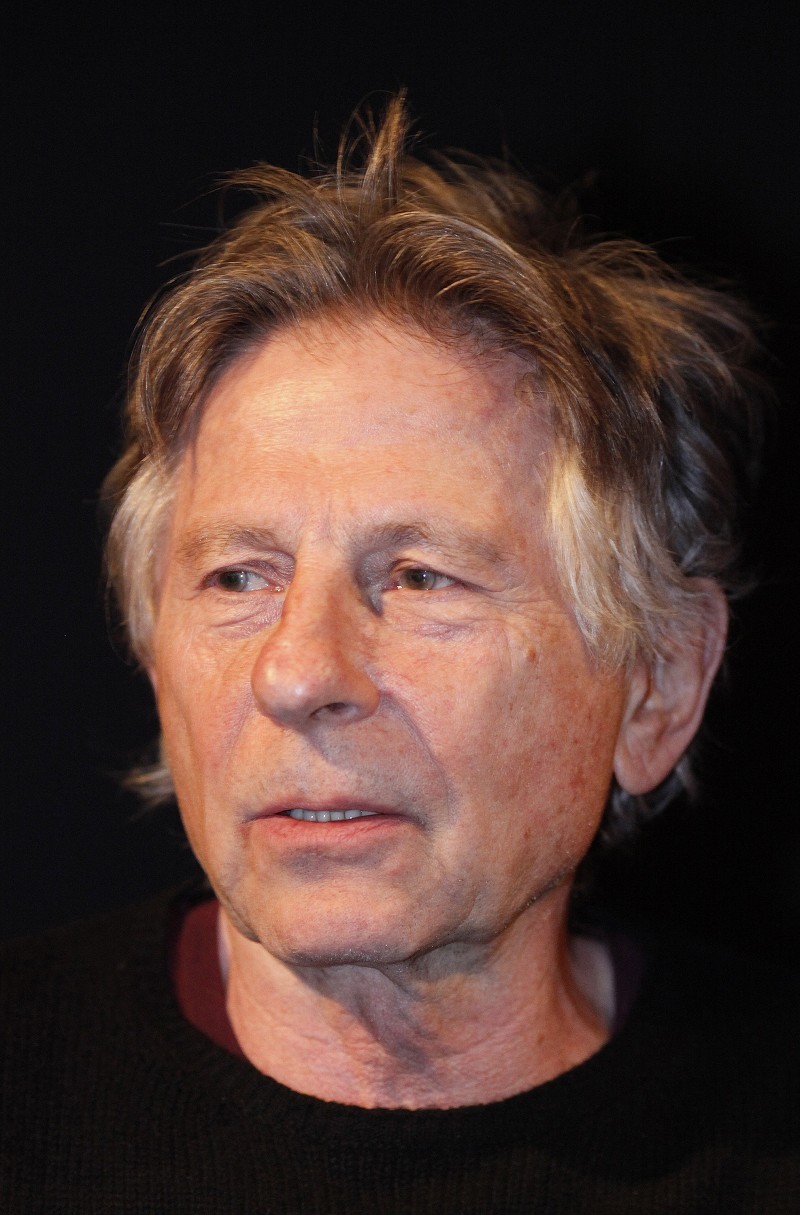
American lynch mobs never die; they only become more self-righteous about their savagery. [9/28/09]
Postscript: Some readers of the above have asked me for some elaboration. By way of partial explanation, I can offer both an op-ed article by Robert Harris in the New York Times and my own briefer statement for the Times‘ Room for Debate blog. And, to quote myself again, from Richard Roeper’s blog: “I’m not claiming that artists deserve any special privileges of any kind. But if Polanski wasn’t famous, he wouldn’t have been arrested in Switzerland in the first place. The only reason why anyone’s writing about him now is because he’s famous. Focusing on a crime 30-odd years ago, however reprehensible, when so many other and bigger and more recent crimes are around and relevant (and unpunished) sounds to me like hysteria/exploitation/journalism/sensationalism/ entertainment — anything but impartial justice.” [10/2/09] Read more
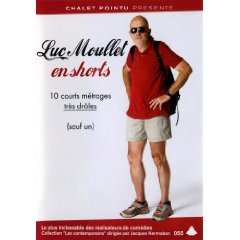
This is plainly a bumper season for Luc Moullet, who recently had an exhaustive retrospective in Paris, the release of a DVD featuring ten of his best shorts (some of which might be considered his best films), and the publication of no less than three books by him: a book-length interview with Emmanuel Burdeau et Jean Narboni (130 pages) and a long-overdue collection of his film criticism (372 pages), both published by Capricci (who were kind enough to send me copies), and a study of King Vidor’s The Fountainhead (Le Rebelle de King Vidor: les arêtes vives) published by Yellow Now that I haven’t ordered because the cost of postage from French Amazon and FNAC virtually doubles the 11,88-Euro price.
By luck, the two Capricci books and Luc Moullet en shorts (which I did pay for, postage and all) both arrived in today’s mail, and in some ways the real jewel in the bunch — or at least the item I’ve been spending the most time with so far — is the collection, Pige Choisies (De Griffith à Ellroy), which interestingly enough uses the titles of two of his best shorts, Essai d’Ouverture and Le ventre de l’Amérique, in his Table of Contents. Read more
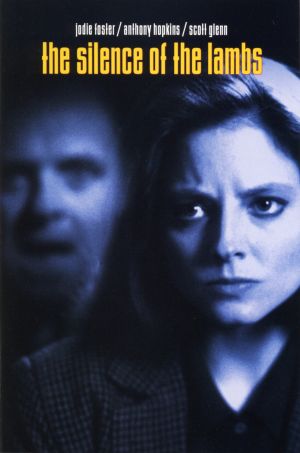
This article appeared in the February 22, 1991 issue of the Chicago Reader, about three months after the UN Security Council authorized the use of “all means necessary” to eject Iraq from Kuwait and roughly a month after the U.S. Congress cheerfully authorized our going to war, with all flags waving. I’ve rarely felt as alienated from the taste and desires of the mass audience as I did when I reviewed The Silence of the Lambs — an experience made all the more painful by my admiration for much of Jonathan Demme’s previous work — at least until the release of No Country for Old Men during a second and (ultimately, but not initially) much less popular Gulf war. And it wasn’t until I saw John Gianvito’s The Mad Songs of Fernanda Hussein that I found my own emotions about the war reflected in an American feature. —J.R.
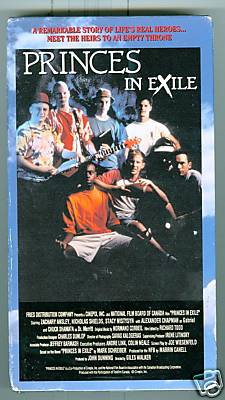
PRINCES IN EXILE
Directed by Giles Walker
Written by Joe Wiesenfeld
With Zachary Ansley, Nicholas Shields, Stacie Mistysyn, Andrea Roth, Gordon Woolvett, Chuck Shamata, and Alexander Chapman.
THE SILENCE OF THE LAMBS
Directed by Jonathan Demme
Written by Ted Tally
With Jodie Foster, Anthony Hopkins, Scott Glenn, Anthony Heald, Brooke Smith, and Ted Levine. Read more
I can happily report that some portions of the following — which originally appeared in the December 24, 1993 issue of the Chicago Reader—are out of date, because all the films reported here as unavailable (I Want To Go Home, The Decalogue, The Lovers of Pont-Neuf) have subsequently become available. —J.R.
We all know what political correctness is — though the nuances of the term may vary depending on whether you’re inside or outside academia and whether or not you regard it as exclusively the preserve of the left. (Personally, I consider Rush Limbaugh and Andrea Dworkin both charter members of the club.) Commercial correctness in movie ideology, however, has yet to be defined, even though it currently engulfs both the entertainment industry and the audience.
Political correctness can be defined as the demand by members of an oppressed minority—or at least those like Limbaugh who consider themselves equivalent to members of an oppressed minority—to be treated with respect. Commercial correctness, on the other hand, can be defined as the demand of members of a reigning majority—or at least those who consider themselves equivalent to members of a reigning majority—that minority works and positions be treated without respect. Read more
It’s depressing to recall that Karl Hess: Toward Liberty (1979) wound up winning an Oscar, but this was of course on the eve of Ronald Reagan’s first landslide election as Big Daddy/Rich Uncle. This polemic appeared in the October 8, 1980 issue of The Soho News, and might be considered one of the first glimmers of a more extended argument that would eventually yield the book Movie Wars: How Hollywood and the Media Limit What Films We Can See two decades later. I’ve often speculated, incidentally, if my final sentence might have had anything to do with my never having been invited to the Telluride Film Festival — the current codirector of which, Tom Luddy, was working for Coppola at the time. (I can still recall an angry phone call from Tom during this period that insisted I was dead wrong in taking Coppola as part of the problem rather than as part of the solution. Much later, I should add, in 1987, Tom himself produced one of Godard’s most underrated and neglected features, King Lear.) –J.R.
Hollywood or Bust
by Jonathan Rosenbaum
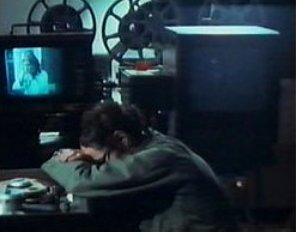
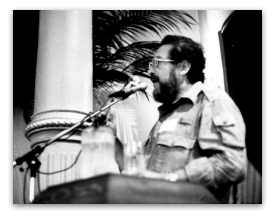
What do you want to know about the Seventh Annual Student Film Awards — presented by the Academy of Motion Picture Arts and Sciences and AT&T — that a critic could possibly tell you? Read more
This is the last in a series of four essays I wrote in 2008 about Fassbinder films for Madman, the Australian DVD label. The others, on The Bitter Tears of Petra von Kant, Ali: Fear Eats the Soul, and Martha, have already been posted on this site. — J.R.
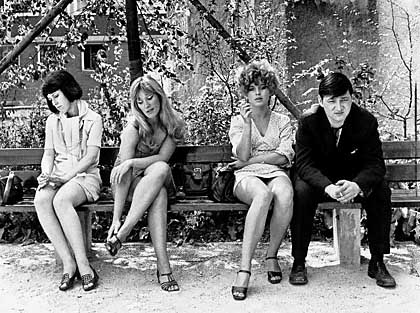
Katzelmacher is only the second feature of Rainer Werner Fassbinder, yet the gulf that separates it from its predecessor, Love is Colder Than Death, is enormous. His first feature, shot over 24 days in April 1969, was later described by its writer-director as the first of his “cinema” films, apparently because its minimal story about petty gangsters seems conceived in relation to genre films. It premiered at the Berlin Film Festival in June, where it was roundly booed and received mixed reviews; it seems fairly safe to conclude that if Fassbinder had made nothing else, most of us would never have heard of him.
This is no doubt why Fassbinder’s somewhat mysterious epigraph for Katzelmacher, credited to his friend and collaborator Yaak Karsunke, reads like a directive to himself: ”It’s better to make new mistakes than to perpetuate the old ones to the point of unconsciousness.” Another directive, more ironic, crops up in one of the film’s final lines of dialogue — “We need a bit of order here” —- which has formal as well as political implications. Read more
This appeared in the November 1974 issue of Monthly Film Bulletin. The ironic aftermath of the final sentence in my review is that another five years would pass before the release of Malick’s second feature, and then 20 more before the release of his third. — J.R.
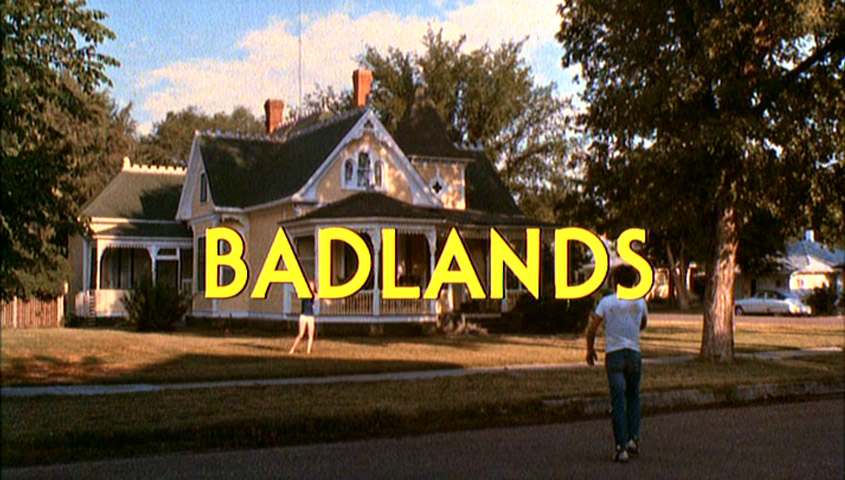
Badlands
U.S.A., 1973 Director: Terrence Malick
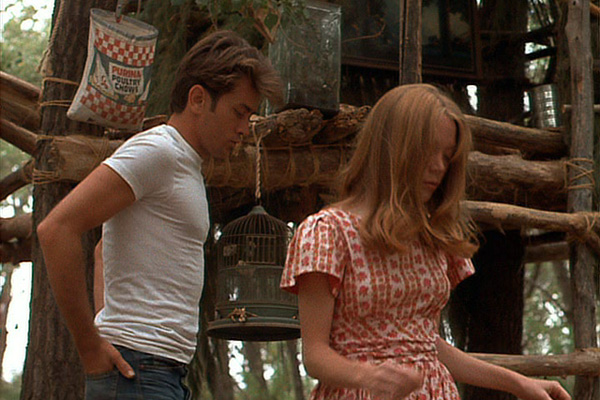
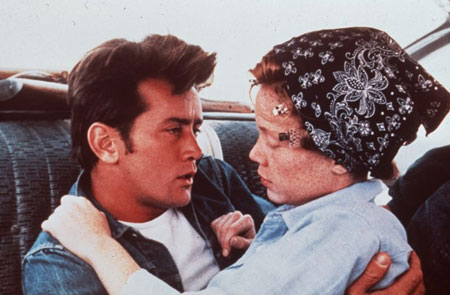
It would hardly be an exaggeration to call the first half of Badlands a revelation -– one of the best literate examples of narrated American cinema since the early days of Welles and Polonsky. Compositions, actors, and lines interlock and click into place with irreducible economy and unerring precision, carrying us along before we have time to catch our breaths. It is probably not accidental than an early camera set-up of Kit on his garbage route recalls the framing of a neighborhood street that introduced us to the social world of Rebel Without a Cause: the doomed romanticism courted by Kit and dispassionately recounted by Holly immediately evokes the Fifties world of Nicholas Ray -– and more particularly, certain Ray-influenced (and narrated) works of Godard, like Pierrot le fou and Bande à part. Terrence Malick’s eye, narrative sense, and handling of affectless violence are all recognizably Godardian, but they flourish in a context more easily identified with Ray. Read more

I had a very pleasant time this past weekend in Little Rock attending the Arkansas Literary Festival and promoting my collection Essential Cinema there, at a very well-attended session hosted by the editor-in-chief of the Oxford American, Marc Smirnoff. I also enjoyed gobbling a good many hush puppies at Flying Fish, a hangout not far from my hotel on the river front. There was even an hour or two on Sunday, after the rain slackened, when I could take an old-fashioned streetcar ride across the Arkansas River to North Little Rock and back. This is where my grandfather, Louis Rosenbaum, once operated a movie theater called the Princess, roughly between 1916 and 1918, before he moved with his wife and son to Florence, Alabama and continued his career in movie exhibition there for another four decades. (My father had a dim memory of taking a streetcar from North Little Rock to Little Rock to see Intolerance when he was in the first grade.)
The only sour note I can recall during the weekend was making the mistake of opening a local newspaper while having breakfast Saturday morning and reading the lead letter to the editor, opposite the editorial page. This letter maintained that (1) hallucinogenic drugs were and should be illegal and (2) the worst of these drugs was socialized medicine, which, in spite of the wistfully misplaced idealism and delusions of people who believed in it, never worked and couldn’t work. Read more

I’m really tired of hearing from American reviewers that Kathryn Bigelow’s The Hurt Locker “isn’t political”. This specious and even insulting claim is clearly part of their effort to convince people to see the movie, and I’m at least sympathetic to that part, since the film is far and away the best new American commercial feature I’ve seen in months — the best constructed and the most thoughtful and entertaining. It’s also the best commercial American film about the so-called “war in” (I prefer “occupation of”) Iraq, at least since In the Valley of Elah, on which writer Mark Boal also furnished much of the material.
First of all, the notion that any American film made today with an Iraqi setting could possibly be apolitical in any shape or form strikes me as being extremely naïve and myopic. Secondly, I can’t imagine what could make the notion of an apolitical film on this subject sound even remotely attractive. Are we really that helpless and hopeless? And are we so blinkered in our perceptions of what politics consists of that we think it’s limited to how we vote in elections? (Spoiler ahead, so if you haven’t yet seen the film, you might want to stop reading here.) Read more
From the Chicago Reader (January 28, 2005). — J.R.

Notre musique
*** (A must-see)
Directed and written by Jean-Luc Godard
With Sarah Adler, Nade Dieu, Godard, Rony Kramer, Mahmoud Darwich, Jean-Christopher Bouvet, Simon Eine, Juan Goytisolo, Peirre Bergounioux, George Aguilar, Leticia Gutierrez, Jean-Paul Curnier, and Gilles Pequeux.
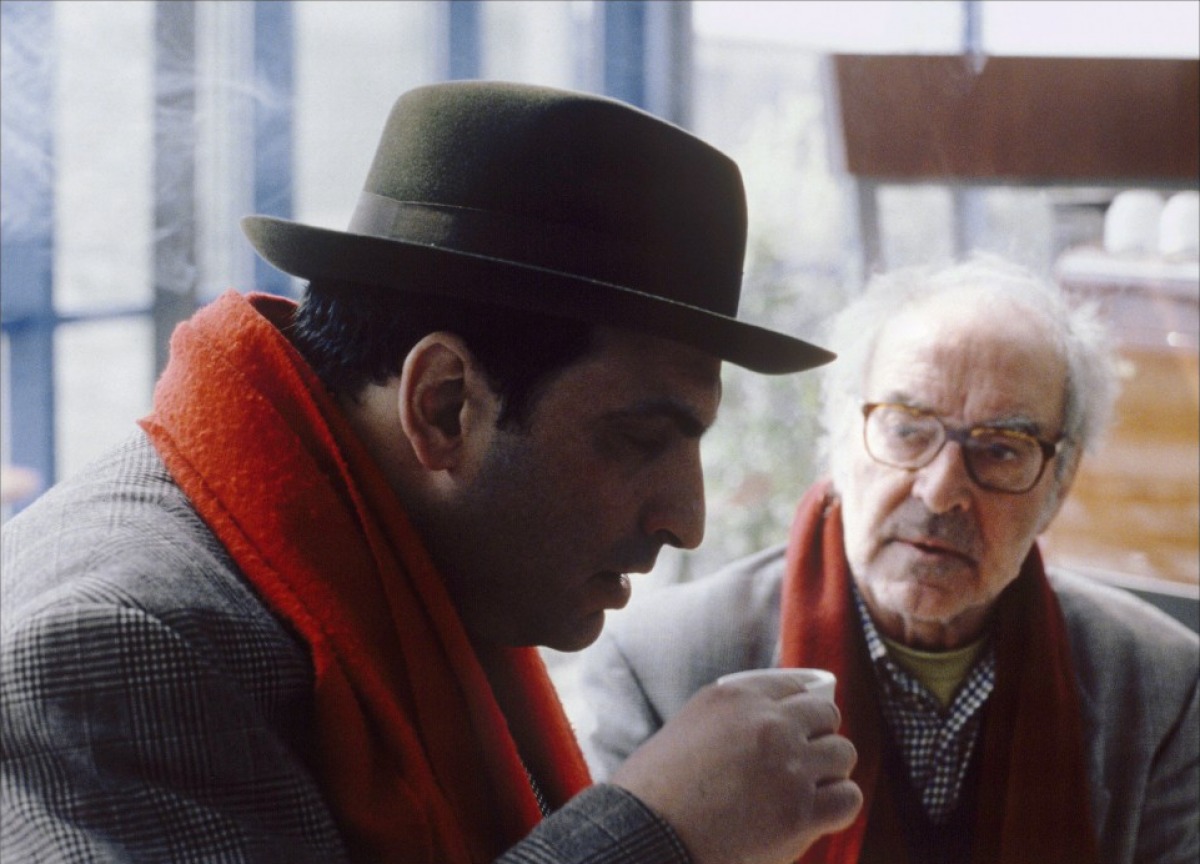
Jean-Luc Godard has had a tendency to be combative and obscure. He’s a lot calmer and steadier in his latest feature, Notre musique, opening this week at the Music Box. He’s also been making an effort to express his intentions clearly and simply in interviews, including those with the mainstream American press. Yet some viewers will probably still feel excluded and puzzled by his methods as a filmmaker and his habits as a thinker, however beautiful and powerful the results.
Even if one can deal with Godard’s compulsive use of metaphor and abstraction and his Eurocentric perspective — all standard in much of his late work — there’s something morose and emotionally remote about this film. Around a sense of futility, a disenchantment with the world, he builds a kind of poetics that’s akin to some of the excesses associated with German romanticism. The issue isn’t whether such despair is warranted, but what one does with it. Read more
From Monthly Film Bulletin, May 1975 (Vol. 42, No. 496). Blythe Danner was a classmate of mine at Bard College, where I had the privilege of seeing what a gifted actress she already was (I remember especially her performance of one of the lead roles in Jean Genet’s The Maids) and the pleasure of accompanying her once or twice on the piano when she performed as a jazz singer (in particular, on “‘Round Midnight”). — J.R.

Lovin’ Molly
U.SA., 1973Director: Sidney Lumet
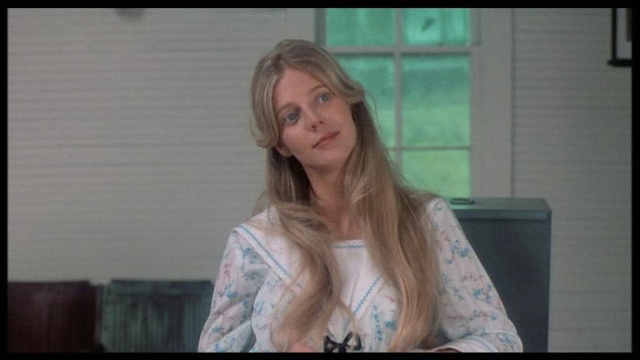

Bastrop, Texas. The lives of three characters, narrated by each in
turn. 1925, Gid (Anthony Perkins): Gid and Johnny (Beau Bridges)
are friends whocompete for the favors of Molly (Blythe Danner),
who likes themboth. When Gidproposes to Molly, she replies
that she’d rather have sex with him for its own sake, not as part
of a marriage contract, and invites himto join her in a nude swim,
but he refuses. She goes to a dance with Eddie (Conrad Fowkes),
another local boy, and Johnny picks a fight with him. Gid sleeps
with her for the first time, and is shocked to discover she isn’t a
virgin. On a train to the Panhandle to sell his father’s cattle, Gid
attacks Johnny for sleeping with Molly and not proposing to her, but
then discovers that Eddie slept with her first. Read more
I’m still a long way from seeing all the features to date of the prolific and often brilliant Romanian filmmaker Radu Jude, but what’s really exceptional about this one is it’s the very first I don’t much care for. At 170 minutes, it seems a good hour longer than it needs to be. Not so much an adaptation of the Bram Stoker novel or a commentary on its diverse movie versions (though it intermittently fluctuates between both and various self-referential conceits), it’s also a compendium of crude and adolescent sexual gags and diverse swipes at capitalism, but even a few striking visual effects and moments of more cultivated wit can’t compensate for all the dross and hammy overstatements. Jude’s Kontinental 25, playing at the same Chicago festival, is every bit as repetitious but much more substantial and interesting. (Jonathan Rosenbaum)
Read more
From the Chicago Reader (November 25, 2005). — J.R.
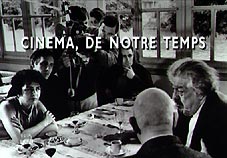
Jean Renoir, The Boss: The Direction of Actors
**** (Masterpiece)
Directed by Jacques Rivette
With Jean Renoir and Michel Simon

In 1966 Jacques Rivette made a three-part TV documentary titled Jean Renoir, Le patron (Jean Renoir, the Boss), and its 90-minute centerpiece has rarely been seen since. “A Portrait of Michel Simon by Jean Renoir, or A Portrait of Jean Renoir by Michel Simon, or The Direction of Actors: Dialogue,” screening on DVD this week at Alliance Francaise, is a missing link that’s key to understanding Rivette’s work. It’s a raw record of the after-dinner talk between one of the world’s greatest directors and his greatest actor, both in their early 70s, punctuated by clips from the five films they worked on together — Tire-au-Flanc (1928), On Purge Bébé (1931), La Chienne (1931), Boudu Saved From Drowning (1932), and Tosca (1941). It also includes occasional remarks by Rivette, the documentary’s producers (Janine Bazin and Andre S. Labarthe), and the stills photographer (the distinguished Henri Cartier-Bresson). The joy Renoir and Simon clearly share at being reunited is complemented by Rivette’s determination to exclude nothing, so that the “direction of actors” applies to him as much as to his two principals, each of whom can be said to be directing the other. Read more