While lack of feeling is ascribed more often to Stanley Kubrick, Brian De Palma qualifies more as a detached formalist. Here the relative absence of directorial emotion works hand in glove with the slickness and cynicism (as well as craft) of this big-scale 1987 adaptation by David Mamet of the 60s TV series, shellacked with a grandiloquent Ennio Morricone score. The results are watchable enough, with a particularly adept use of Sean Connery, Chicago locations, and period details. But De Palma’s vulgar habit of copying and thereby reducing sequences from better directors is even more offensive when he turns to Eisenstein instead of the usual Hitchcock; his Odessa Steps hommage to Potemkin is the worst kind of kitschy student exercise. There’s much more of Kevin Costner (as Eliot Ness) here than there is of Robert De Niro (as Al Capone), though Costner is quite effective in setting the Reaganite law-and-order tone. Still, it’s a pity to have Charles Martin Smith eliminated so early in the proceedings. 119 min. (JR) Read more
It’s almost impossible to imagine an uninteresting film about Chuck Berry, but Taylor Hackford’s overextended and poorly edited documentary (1987) makes a stab at being one. There are, to be sure, some very enjoyable sequences — in particular some excerpts from a three-way conversation between Berry, Bo Diddley, and the volatile Little Richard — but a good deal of this film is devoted to a 60th birthday celebration concert for Berry that pairs him with Linda Ronstadt, Julian Lennon, Etta James, and others and tends to reduce him to a show-biz icon, the George Jessel of rock. What one misses most of all are some glimpses of the earlier Chuck Berry, as seen in the black-and-white rock movies of the 50s, when the intensity of his music and his jackrabbit moves had more satanic majesty. Berry is still a dynamite performer when he wants to be, but he’s done the same tunes so many times that he knows he can get away with relatively little, and too much of this film shows him at half-throttle. The film also skimps on certain portions of his career — most noticeably his brushes with the lawt — that are treated in fuller detail in his autobiography. Read more
Set mainly in and around an establishment called the Blue Water Grill in Texas, this is a small film, but within its own terms a delightful and virtually perfect one. The charactersthe dreamy grill owner (Gene Hackman), who compulsively watches home movies of his long-vanished wife; his grumpy yet serene father-in-law (Burgess Meredith); a slightly retarded handyman (Elias Kotias); and a bus driver (Teri Garr) who has her sights set on the grill owner — all seem to come out of Erskine Caldwell and Tennessee Williams, but Bill Bozzone’s capable script, Peter Masterson’s deft direction, and Fred Murphy’s handsome photography all show them off to best advantage, and the movie’s playlike story moves effortlessly. Funny and appealing, this is the kind of quiet and assured Hollywood movie that used to be more common in the 50s; the local flavor is caught perfectly, and every member of the cast shines. (JR) Read more
Despite the apparent havoc wreaked on this film by David Begelman–who eliminated 29 minutes from Michael Cimino’s cut and reedited the remainder more for action than for the meditative rhythms the director (who reportedly used Visconti’s The Leopard as a model) had in mind–this is one of Cimino’s best films, with a fine sense of spectacle and landscape, following the bloody career of Salvatore Giuliano (effectively played by Christopher Lambert), the violent and idealistic Robin Hood of the Sicilian peasantry in the 40s. The rhetorical self-importance of Cimino’s films makes them resemble Stalinist epics, and the nonstop wallpaper music of David Mansfield certainly doesn’t help this one. But the uncredited dialogue of Gore Vidal has a cynical, bantering polish that helps to keep things in perspective, and the film’s visual sweep commands respect even when it becomes hyperbolic, which is fairly often. (Steve Shagan receives sole credit for the script, adapted from Mario Puzo’s novel.) What emerges might be described as great moments from Michael Cimino’s The Sicilian. With Terence Stamp, Joss Ackland, John Turturro, Richard Bauer, and Barbara Sukowa in her first English-speaking role. (JR) Read more
Ridley Scott’s 1987 feature takes a conventional romantic police thriller script, written by Howard Franklin, and dresses it up like a Christmas tree. A happily married rookie police detective from Queens (Tom Berenger) is assigned to protect a wealthy and attractive Manhattan woman (Mimi Rogers) who is the material witness to a homicide by (you guessed it) a psycho who’ll stop at nothing (Andreas Katsulas). Despite class barriers and the detective’s devotion to his plucky wife (Lorraine Bracco), he and the witness fall in love and have an affair. While the actors show some sensitivity and Scott works up a modicum of suspense and involvement, the real interest of this picture is the radiance of the imagesa mastery of lighting and decor second only to Scott’s Blade Runner, with atmospheric textures so dense you can almost taste them. Unfortunately, this mastery bears only the most glancing relationship to the story at hand, and Scott becomes guilty of the sort of formalism that used to be charged (less justly) against Josef von Sternberg. But even though the movie doesn’t leave much of a residue, it looks terrific while you’re watching it: Manhattan has seldom appeared as glitzy or as glamorous. With Jerry Orbach, John Rubenstein, and a nice rendition of the Gershwin title tune by Sting. Read more
Richard Cheech Marin has expanded his video spoof of Bruce Springsteen’s anthem of the 80s, Born in the U.S.A., into a throwaway comedy that really delivers. Written, directed by, and starring Cheech himself and cheerfully indifferent to technique, the film follows a Mexican-American and his comic misadventures with the Immigration and Naturalization Service. The picture gets a respectable number of laughs out of the parallel multiple misunderstandings of the non-Spanish-speaking hero stranded in Tijuana and his equally monolingual Mexican cousin in LA, with plenty of healthy digs at the crassness of white Americans in dealing with Latinos on both sides of the border; it’s down-home ethnic humor with lots of sentiment and sincerity. (Chong appears only as a painting of Christ on the cross with eyes that open and shut.) With a supporting cast including Daniel Stern, Kamala Lopez, Paul Rodriguez, and Jan-Michael Vincent. (JR) Read more
Coming from the same director (Stephen Frears), writer (Hanif Kureishi), and producers (Tim Bevan and Sarah Radclyffe) who gave us My Beautiful Laundrette, this lively film about social and political turmoil in Thatcher England bears the same relationship to that earlier film as Richard Pryor Live on the Sunset Strip has to Richard Pryor Live in Concerti.e., a spontaneous gathering of forces whose energies and inspirations hit a raw nerve is succeeded by a more deliberate and self-conscious effort to bring the same powers into play. In this case, the return of corrupt, old-fashioned Rafi (Shashi Kapoor) to London to visit his son Sammy (Ayub Khan Din) and daughter-in-law Rosie (Frances Barber) reveals to him the cataclysmic changes the country has been undergoingrace riots, sexual warfare, and political upheavalsand he never quite recovers from the shock, even after he goes to see his old girlfriend Alice (Claire Bloom). When Sammy throws a dinner party for Rafi, he remarks to Rosie, We’ll round up the usual social deviants, communists, lesbians, and blacks, with a sprinkling of the mentally subnormal, and the rather stylized landscape of interracial couples, bombed-out streets, and multisexual adventurers goes beyond the relative naturalism of My Beautiful Laundrette to create a world more akin to the scene of 50s turmoil in the underrated Absolute Beginners. Read more
Not for every taste, Donna Rosebud suggests at times a throwback to 60s Underground whimsy. But local independent J.P. Somersaulter, who shot this in high-contrast black and white over five years, has some rather novel fantasy notions up his sleeve. His eponymous heroine–mayor, musician, doctor, philosopher, and mother of seven, among other accomplishments–dreams about the real world while inhabiting a telepathic alternate universe where sync sound is unnecessary. Like other animators who’ve turned to live action Frank Tashlin, Walerian Borowczyk, David Lynch–Somersaulter has some pretty elastic notions about reality, and you might want to try bending along with him. (Music Box, Friday, August 14) Read more
Coinciding with the Film Center’s Jim McBride retrospective (whose most provocative program, on Thursday, August 20, combined the flaky sex comedy Hot Times and a brilliant Twilight Zone episode about Elvis, The Once and Future King) is the release of McBride’s least personal and most commercial movie to date. Rewriting a hackneyed crooked-cop story by Beverly Hill Cop’s Daniel Petrie Jr., he gets tense, sexy performances from Dennis Quaid and Ellen Barkin and makes the most of his New Orleans locations. But as in some Cajun cooking, it’s the spices rather than the meat that imparts the essential McBride flavor: offbeat secondary casting (the late, great Charles Ludlam’s eye-rolling defense attorney) and a use of props ranging from the surreal (Mardi Gras floats in a warehouse) to the homey (Quaid’s squeaking gator doll). (Old Orchard, River Oaks, Water Tower) Read more
From the Chicago Reader, June 30, 2006.
The brilliant but neglected satirist Frank Tashlin once defined his subject matter as “the nonsense of what we call civilization,” and these three features, which open a rare, monthlong retrospective at the Gene Siskel Film Center, encapsulate two sides of his genius. Realism dominates in The First Time (1952, 89 min.), a black-and-white comedy about new parents (Robert Cummings and Barbara Hale); Tashlin evokes Tristram Shandy by having the baby narrate, but the details about parenthood and its economic squeezes are painfully authentic. (One of the writers, Hugo Butler, also worked with Luis Bunuel and Jean Renoir.) Tashlin got his start as an animator for Disney and Warners before turning to live action, and his sense of the fantastic is evident in Son of Paleface and Hollywood or Bust, both in color. Bob Hope’s wildest comedy, Son of Paleface (1952, 96 min.) takes place in a cartoonlike universe swarming with detail–the movie equivalent of Mad comics, which first hit newsstands that same year. In Hollywood or Bust (1956, 95 min.) movie-mad Jerry Lewis wins a convertible in a lottery, and he and Dean Martin drive cross-country to Los Angeles, hoping to meet Anita Ekberg (the bust of the title). Read more
From the Chicago Reader (December 20, 2002). For the record, I regard Downsizing as Payne’s best film to date, even if it’s less perfectly shaped than Election, but representing as much of a leap from About Schmidt as that film was from Citizen Ruth. — J.R.
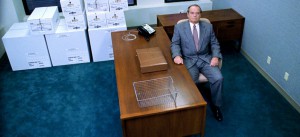
I was so offended by the cynicism and class condescension of Citizen Ruth, Alexander Payne’s first feature, that I’ve remained suspicious of his work even as he’s emerged as a more skillful director in Election and this still more ambitious and accomplished film. It’s a very free adaptation of a Louis Begley novel, transposed from Manhattan to Payne’s native Nebraska, in which Jack Nicholson has been asked to put on some weight and finally act his age. The problem is he’s still Jack Nicholson, exuding his know-it-all charisma even when playing a clueless asshole and not nearly as inventive as he was in a much less showy part in The Pledge. The contrivance here by which he bares his soul — by mouthing letters to an African boy he’s helping to support from afar — is bogus and forced, and even the more observant moments in this odyssey of a bored and boring widower can’t entirely escape the jeering tone that remains Payne’s stock-in-trade. Read more
A reflective autobiographical film about filmmaker Hou Hsiao-hsien’s youth in the late 40s and early 50s; largely filmed in the same places in Taiwan where the events originally happened, this unhurried family chronicle carries an emotional force and a historical significance that may not be immediately apparent. Working in long takes and wide-screen, deep focus compositions that frame the characters from a discreet distance, Hou allows the locations to seep into our own memories and experience, so that, as in Olmi’s The Tree of Wooden Clogs, we come to know them almost as intimately as touchstones in our own lives. Yet paradoxically, the unseen Chinese mainland carries as much weight in the film as the landscape of Taiwan: Hou’s Christian family left in 1948, and the revolution that followed made it impossible for them to return. Subtly interweaving everyday details with processes and understandings that evolve over years, the film conveys a density of familial detail that we usually encounter only in certain novels, and a sense of the tragic within hailing distance of Ozu. (Film Center, Art Institute, Columbus Drive at Jackson, Friday, September 11, 8:00, and Sunday, September 13, 5:00, 443-3737) Read more
Significantly, when Vietnamese filmmaker Trinh T. Minh-ha gives herself a director’s credit in her remarkable meditation on West African life and architecture, she places an X over the word “directed.” Why? Because a central aspect of her project is the dislocation of the authority by which we generally presume to understand the alien, and redirection and indirection are equally descriptive of what she is up to. A composer and a poet, she pans and cuts in irregular rhythms, continually stopping and starting, and rather than “direct” our focus and interpretation like an anthropologist, she interweaves three distinctly accented female voices speaking English, each of which conveys a different kind of discourse, traversing the images at different angles. Like the separate typefaces in Mallarme’s poem “A Throw of the Dice Will Never Abolish Chance,” these voices and mesmerizing recordings of African music encircle and commingle with their subjects rather than attempt to capture them in linear/colonial/narrative fashion. (Sample: “The house is composed like the human body. The earth or clay is the flesh, the water the blood, the stones the bones, and the placid surface of the walls the skin.”) The results are both beautiful and instructive, a duet between filmmaker and subject, disclosures and enclosures, which remains perpetually fresh and unpredictable over the film’s 134 minutes. Read more
I’d like to beat the drum a little for a terrific new book just published by University of California Press, Catherine Benamou’s It’s All True: Orson Welles’s Pan-American Odyssey, which is far and away the definitive book on It’s All True, Welles’s doomed documentary project about Latin America in the 1940s. Maybe the fact that the same publisher is bringing out a book of mine about Welles in a couple of months gives me a special interest in the subject; I should also note that Benamou, who’s been working on her book for well over two decades, is an old friend. (She also arranged recently for the purchase of two major Welles collections by the University of Michigan, which are going by the name “Everybody’s Orson Welles.” I was privileged to be the first visitor to this mountain of material in Ann Arbor last summer, which is where I collected the stills used on my own book jacket.)
Some readers may be put off a bit by Catherine’s academic language, but the fact remains that so much fresh and even startling information is available here—information that corrects countless myths—that if you care about Welles at all, you can’t afford to ignore this book.
Read more
From the Chicago Reader (November 10, 2006). — J.R.
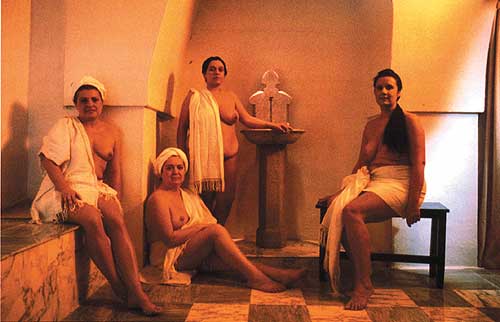
Pere Portabella: Cinema From the Spanish Underground
The first North American retrospective of Catalan filmmaker Pere Portabella started last week at the Gene Siskel Film Center, and it’s one of the year’s biggest cultural events. None of his films has ever been screened in Chicago, and none has ever been released anywhere on DVD or VHS. All five of his features are showing here (though none of his ten shorts), and if you don’t see them now, chances are you never will.
Most of Portabella’s films can be classified as experimental, though they have little in common with the films usually given that label, which tend to be nonnarrative and shot in 8- or 16-millimeter or on video. All of his features are in 35-millimeter and use narrative, though they never tell a complete story. They all have rich sound tracks that go in and out of sync with the images, sometimes reinforcing what we see, sometimes contradicting it. They all drift smoothly, often unexpectedly, from narrative to reverie and from fiction to documentary, interjecting rude shocks along the way. They’re full of comic incongruities as well as creepy interludes, and they’re all intensely physical experiences — sounds and images that assault or caress. Read more