From the Chicago Reader (January 26, 2001). — J.R.
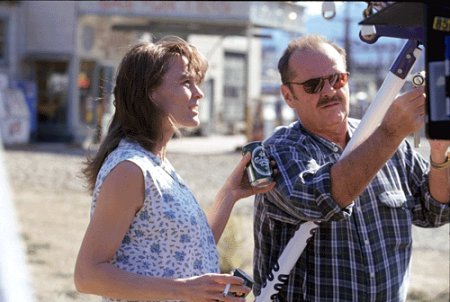
The Pledge
***
Directed by Sean Penn
Written by Jerzy Kromolowski and Mary Olson-Kromolowski
With Jack Nicholson, Patricia Clarkson, Benicio Del Toro, Dale Dickey, Aaron Eckhart, Helen Mirren, Tom Noonan, Robin Wright Penn, Vanessa Redgrave, Mickey Rourke, and Sam Shepard.
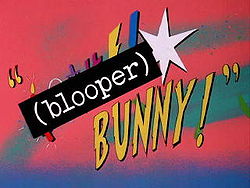
Blooper Bunny
***
Directed by Greg Ford and Terry Lennon
Written by Ronnie Scheib, Ford, and Lennon
With Bugs Bunny, Daffy Duck, Elmer Fudd, and Yosemite Sam.
The Wedding Planner
**
Directed by Adam Shankman
Written by Pamela Falk and Michael Ellis
With Jennifer Lopez, Matthew McConaughey, Bridgette Wilson- Sampras, Justin Chambers, and Judy Greer.
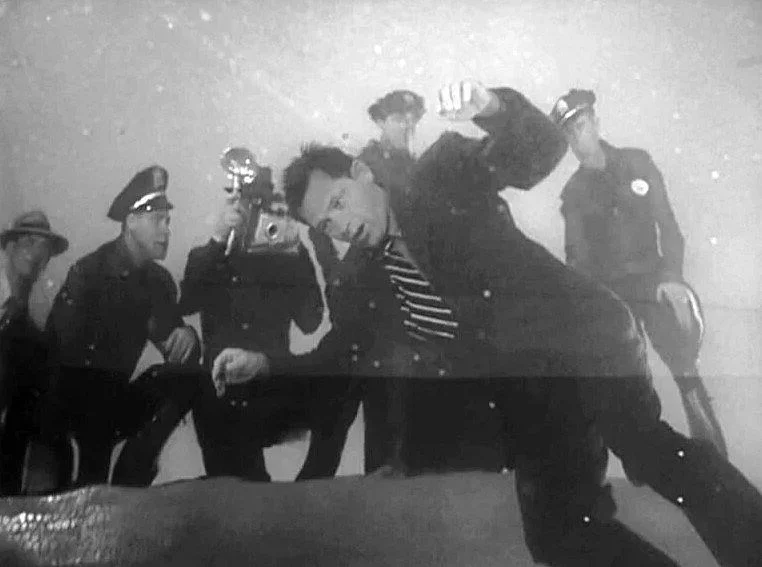
Shadow of the Vampire
*
Directed by E. Elias Merhige
Written by Steven Katz
With Willem Dafoe, John Malkovich, Catherine McCormack, Eddie Izzard, Cary Elwes, and Udo Kier.
I can’t say that The Pledge, The Wedding Planner, Blooper Bunny, and Shadow of the Vampire have much in common, apart from the fact that they’re showing in Chicago this week. Yet all four do, to different degrees, feed off other movies. Frankly, that’s what I like most about The Wedding Planner — a romantic comedy starring Jennifer Lopez and Matthew McConaughey that aspires to and achieves the goofiness of a studio musical of the early 50s. Read more
My latest column for Caimán Cuadernos de Cine, submitted in early February 2024:
A short Paris holiday — mostly devoted to seeing old friends, but also including a Zoom lecture on Billy Wilder’s Ace in the Hole for students in Atlanta. It’s a temporary escape from the viper’s nest of Trumpland, and I’m sufficiently solipsistic as an American to think I’m far enough away from the bad vibes of Billy Wilder to experience them differently, as an egotistical form of self-hatred.
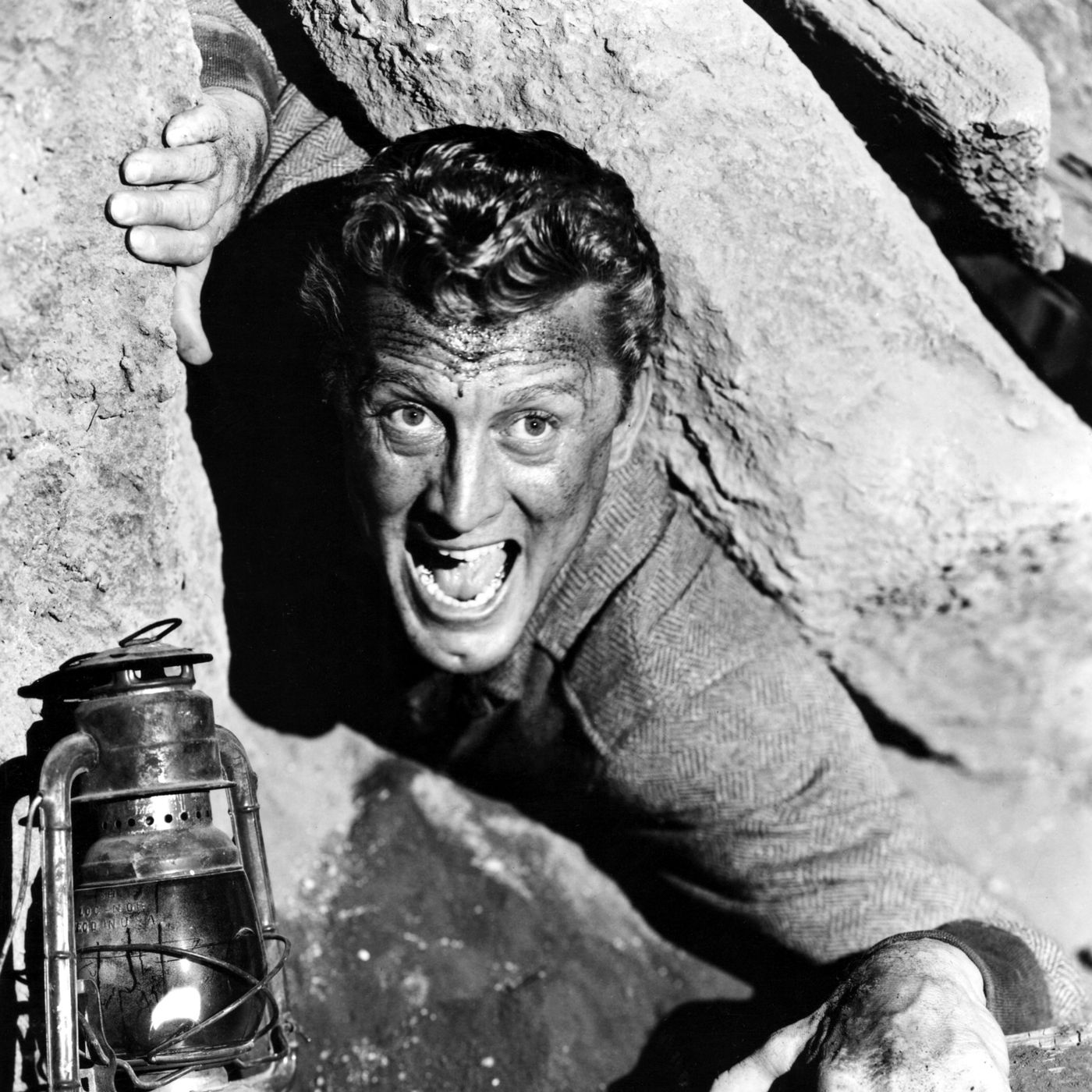
Kirk Douglas, a disgruntled counterpart to the nasty reporters of The Front Page (a later Wilder project, reflecting his own past as a Viennese scandal-monger), is stuck in a dull position at a New Mexico newspaper until he gains exclusive access to a man trapped in a remote desert cave. Eventually he causes the man’s death by delaying his rescue, meanwhile trumping (pun intended) his big-city competitors and attracting many credulous, sensation-hungry tourists. Simultaneously celebrating and castigating this antihero’s ruthlessness is the quintessential Wilder “touch”.
Douglas’s self-hatred recalls William Holden’s failing screenwriter who becomes a gigolo (related to another seedy part of Wilder’s European background) in Sunset Boulevard, whose success made Ace in the Hole possible. Each antihero is killed after his self-hatred becomes most evident, literally facing us as a fallen corpse at the film’s end,
A man believing Trump was sent to Earth by Jesus was recently asked if he minded being called a disciple. Read more
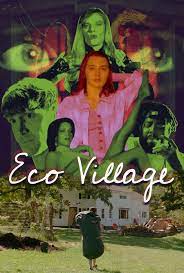
It’s inevitable that today’s counterculture has to learn the same hard lessons that my generation learned half a century ago, but in a style all its own. For me, two of the key lessons of Eco Village are (1) utopian communes are apt to turn into nightmares once the return of the repressed (i.e., whatever one is escaping from) rears its ugly head, and (2) in any competition between leftist politics and sadomasochism, the latter is always likelier to win, if only because, alas, loud and ugly heads (such as Trump’s or Fassbinder’s or von Trier’s) are more apt to sell tickets than quiet acts of compassion, Fortunately, the style brought by writer-director Phoebe Nir and her cast (lead actress Sidney Flanigan and many others) to these lessons gives this scattershot picture a punch of its own, and lots of songs to slide us past all the narrative clutter.
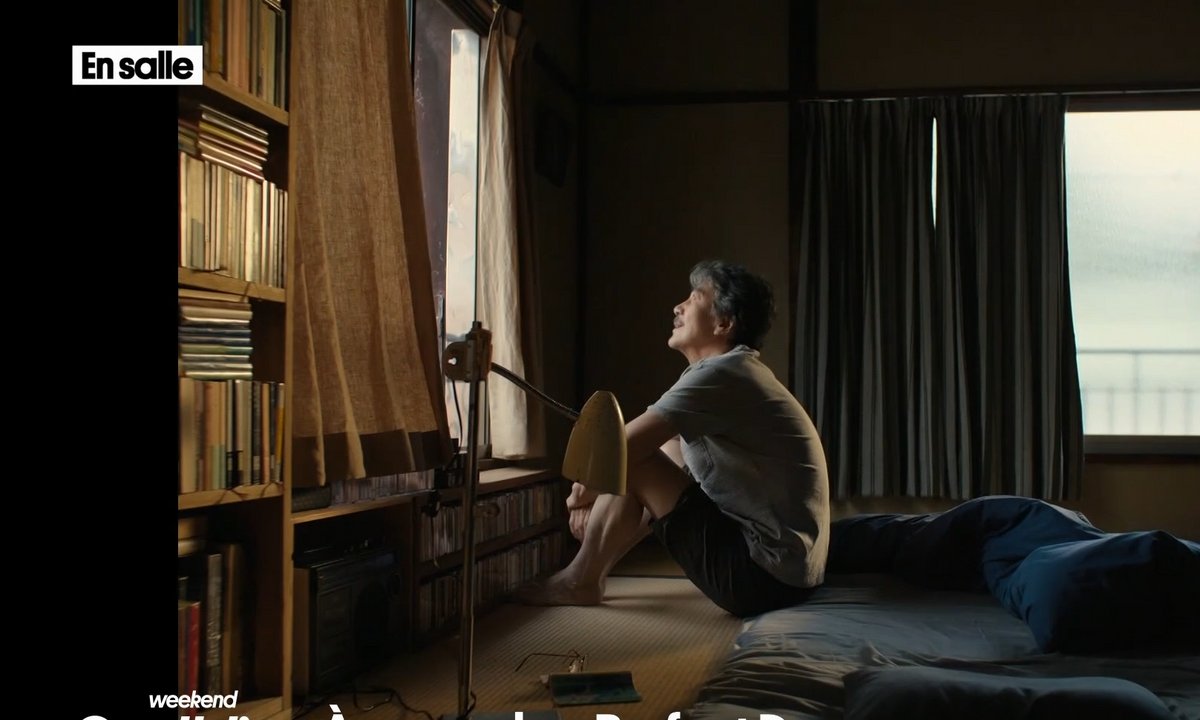
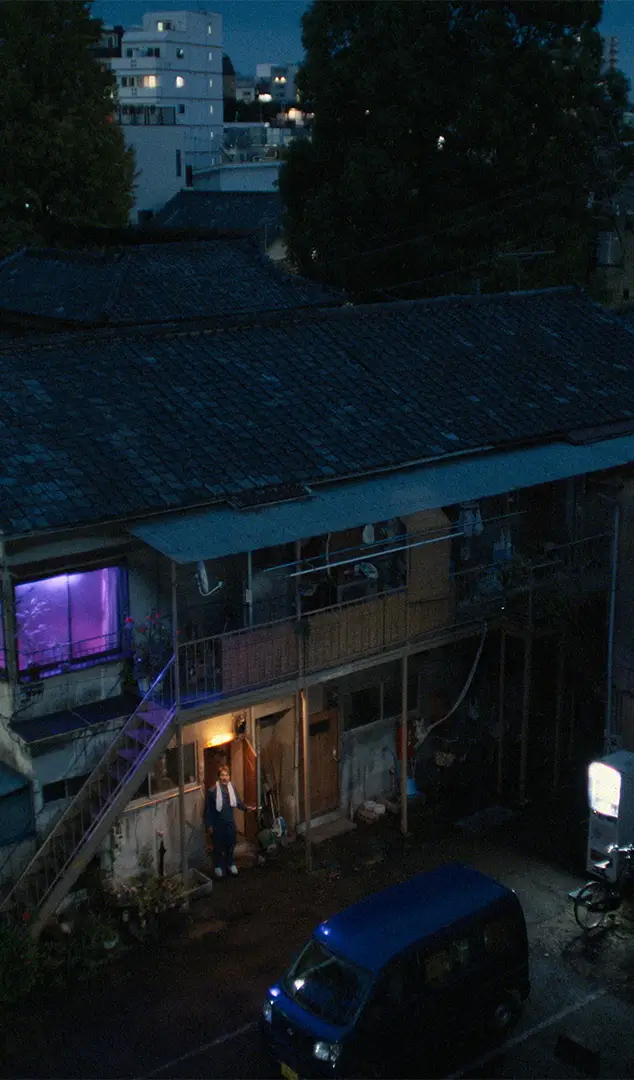
I hope you’ll forgive me for writing to you and posting on my web site at the same time. As I wrote to you earlier, when you asked me if I’d seen Wim Wenders’ Perfect Days and if so, what I thought of it, I have a screener but hadn’t yet screened the film until your note offered me a final push. It seems that every year, I wind up seeing movies that should have appeared on my ten-best lists well past the polls’ deadlines. And I probably put off seeing this one because of what has seemed so uneven about what I’ve seen of Wenders’ more recent work. In any case, like you, I’ve read no reviews of the film apart from Beatrice Loayza’s in Cinema Scope, and now I’m sorry that I’ve read this one, even though some of its objections seem warranted– like the insistence on keeping piss and shit invisible in the stylish public bathrooms being cleaned by the enlightened hero.
What Loayza seems to miss is precisely what impressed you and me the most: the sheer gorgeousness of the images. I can’t even think of any other film that does more with the color blue (too bad that it couldn’t be cited in William H.Read more
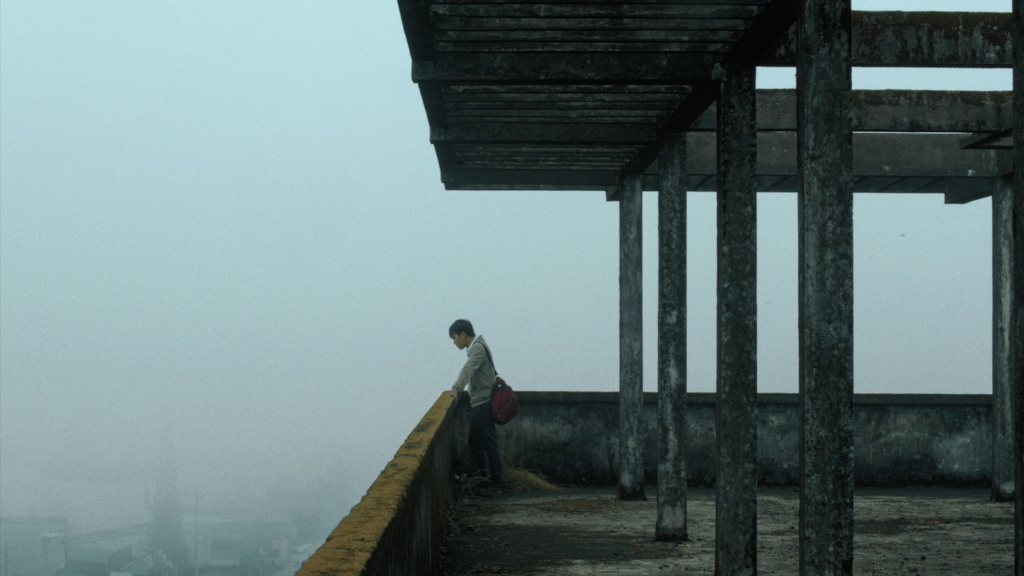
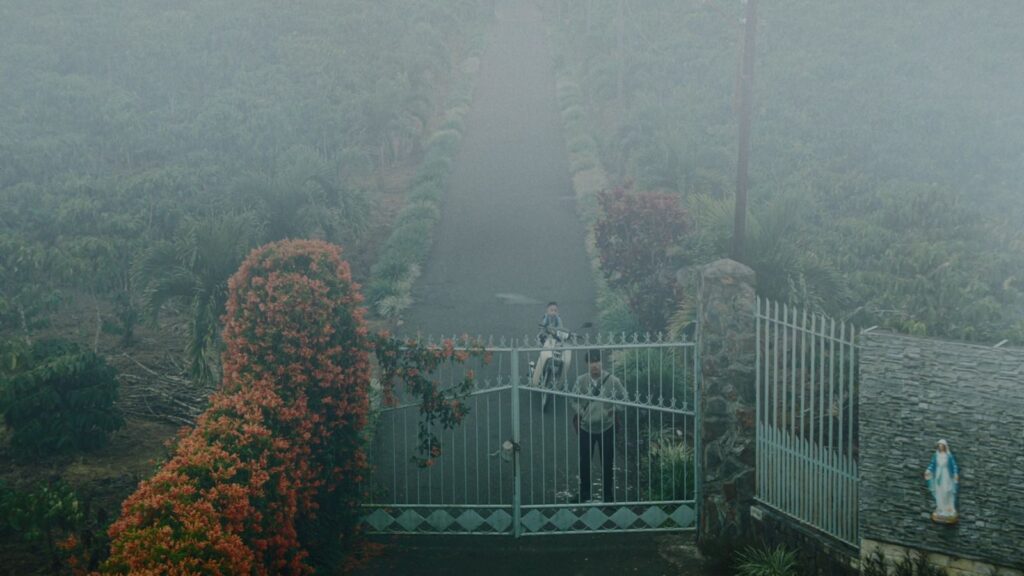
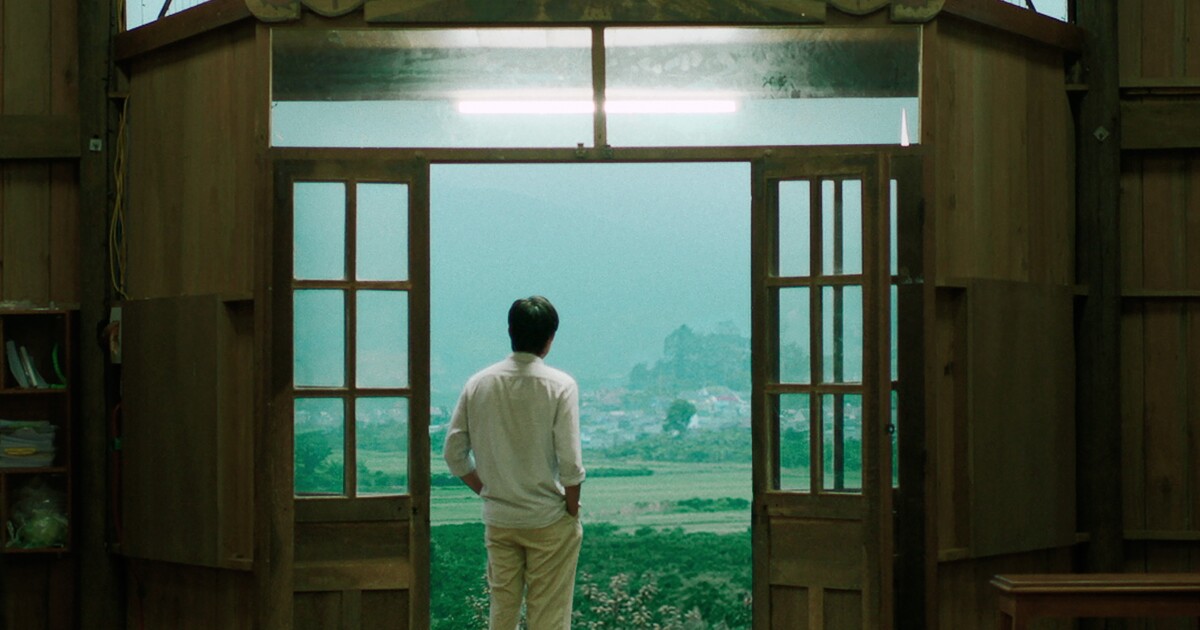
Once again, I discover that the best movie of 2023 is one that I couldn’t see in 2023. It’s a first feature by a Vietnamese writer-director, Phạm Thiên Ân. It won the camera d’or in Cannes, and is so stunningly original that that itseems to have reinvented cinema on its own terms. At the same time, it illustrates Robert Bresson’s maxim that it took the advent of sound cinema to give us silence whiledemonstrating Raoul Ruiz’s contention that drama doesn’t have to be based on conflict. As the film’s title suggests, the struggle (or journey) of the young hero (Lê Phong Vũ) is internal, so it seems natural that his dreams and memories are often indistinguishable from his other activities.
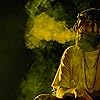
A three-hour film that feels like a meditative bath without ever becoming in the least bit dull, Inside the YellowCocoon Shell proposes a psychic adventure in which butterflies are able toblossom, like the baby wrapped in a yellow blanket that the hero holds, and like the hero himself when he lies down in a stream.
If the above description sounds pretentious, the fault is mine, not the film’s.The best films often turn out to be the ones that challenge whatever we might want to say about them.Read more
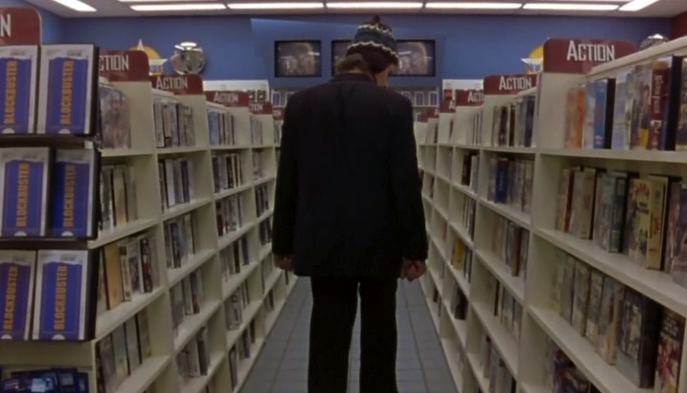
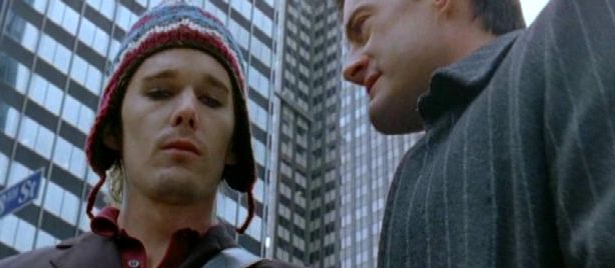
It’s fitting that the most existential of plays should function as a kind of test, and fortunate that the first Michael Almereyda picture to get full mainstream exposure should also turn out to be his best to date. But what’s being tested isn’t either Shakespeare or Almereyda but the present moment: that is, the film asks how and how much we’re capable of living in the world Shakespeare wrote about. Wittily and tragically updating the play’s action to corporate America in general and New York in particular, Almereyda is no Orson Welles, but he begins to seem like one when he’s castigated for not doing his Shakespeare like Kenneth Branagh; the censure recalls all the times square and professional Laurence Olivier was used as a reproach to Welles’s hip “amateurism.” This is gloriously amateurish, the way all of Almereyda’s best movies are, so it’s rewarding to see how Julia Stiles’s Ophelia harks back to Suzy Amis in Almereyda’s Twister, how some of the intimate interiors recall Another Girl Another Planet (his second-best movie), and how the use of video as a kind of Greek chorus to the action, an Almereyda specialty, bears special fruit in a postmodernist climate where “To be or not to be” is recited in the action section of a Blockbuster and Hamlet (Ethan Hawke, better than you’d expect) lards his video production of The Mousetrap with all sorts of found footage. Read more
From Movies of the Fifties, edited by Ann Lloyd (London: Orbis Publishing, 1982). Prior to this, it was published in one of the “chapters” of The Movie in 1981 or 1982, but I’m no longer clear about which one. — J.R.
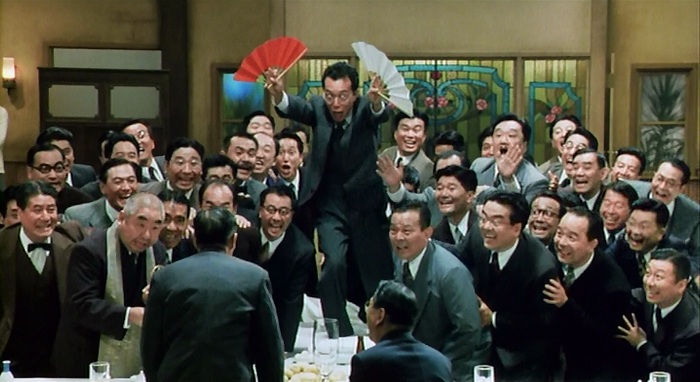
For two centuries, Japan chose to isolate itself from the rest of the world. Then, in 1894, the American Commodore Perry sailed into Tokyo Bay and ‘rediscovered’ the Japanese islands. Yet nothing was known about Japanese cinema in the West for almost another century. The difference was that whereas Perry had come upon a country that appeared technologically backward, the west encountered a cinema that was, on the evidence of the films that began to be shown in the Fifties, every bit as advanced as its own.
By and large western recognition and appreciation of Japanese films can be said to have dated from the appearance of key movies at the Venice and Cannes Film Festivals.Akira Kurosawa’s Rashomon (1950) won the Golden Lion at Venice in 1951 and the same honor was bestowed upon four films by Kenji Mizoguchi in the succeeding years. The films were: Saikaku Ichidai Onna (1952, The Life of Oharu),Ugetsu Monogatari (1953, Tales of the Pale and Silvery Moon After the Rain), Sansho Dayu (1954, Sansho the Bailiff ) and Yokihi (1955, The Empress Yang Kwei-Fei). Read more
From Film Comment, July-August 2000; slightly tweaked in April 2023.
MADADAYO Akira Kurosawa, Japan, 1993
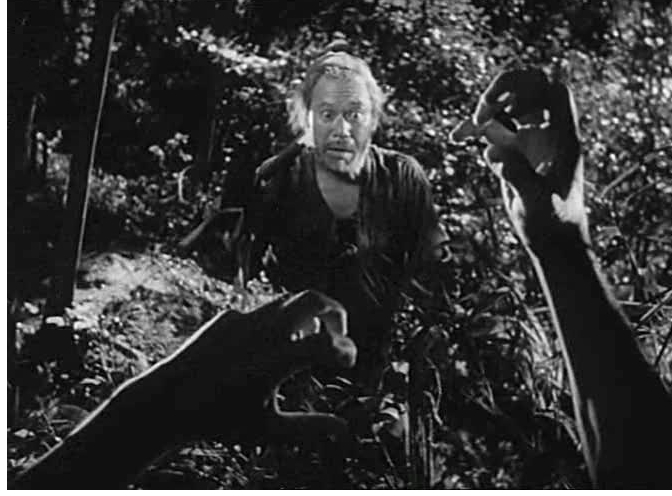
Given the unwarranted abuse that has greeted the final works of so many major filmmakers – an honor roll stretching from Anatahan to Eyes Wide Shut that also takes in the precious, misunderstood last features of Dreyer, Ford, Hitchcock, Ivens, Lang, Renoir, Preston Sturges, and Tati – one shouldn’t be too quick about dismissing Kurosawa’s curious swan song, released when he was 83, five years before his death. Based on several books by the popular sketch and essay writer Hyakken Uchula and parcelled out in a series of separate episodes, Madadayo focuses on the declining years of a retired German professor (Tatsuo Matsumura) and his interactions with his adoring former students (all male), his wife (Kyoko Kagawa), and two household cats. The title literally means “not yet” – a child’s teasing, sing-songy reply to the question “Are you ready?” is a game of hide-and-seek. And by essentially saying this for 134 minutes, not once but many times, and at a snail’s pace, all the way up through the concluding dream sequence, this limpid octogenarian’s film is bound to try some people’s patience. For those who locate Kurosawa’s achievement exclusively in the samurai action films he made with Toshiro Mifune in the Fifties and Sixties, it may be an outright insult.Read more
My review of Thomas Pynchon’s lamentable Inherent Vice, for Slate (August 3, 2009). Much less lamentable — actually quite good in spots — is Pynchon’s more recent Bleeding Edge, which I prefer to everything of his since Vineland. But even more lamentable, in my opinion, is Paul Thomas Anderson’s adaptation of Inherent Vice, which even after a second viewing strikes me on most counts as his worst film to date. (I’d been hoping for something more transformative, such as Norman Mailer’s superb film adaptation of his own worst novel, Tough Guys Don’t Dance.) Despite a few glancing virtues (e.g., Josh Brolin’s Nixonesque performance) and the (so far) unsubstantiated enthusiasm of many of my smarter colleagues, Anderson’s film strikes me as being just as cynical as its source and infused with the same sort of misplaced would-be nostalgia for the counterculture of the late 60s and early 70s, pitched to a generation that didn’t experience it, as Bertolucci’s The Dreamers. [Postscript, January 27, 2015: The first semiplausible defense of the film that I’ve read can be found here.] [A second postscript, January 23, 2023: It’s too bad that it’s impossible for most of us now to know whether Pynchon has retired or if he has another book in the works.]Read more
From the Chicago Reader (February 11, 1994). — J.R.
*** BLUE
(A must-see)
Directed by Krzysztof Kieslowski
Written by Kieslowski and Krzysztof Piesiewicz
With Juliette Binoche, Benoit Regent, Florence Pernel, Charlotte Very, Helene Vincent, Emmanuelle Riva, and Philippe Volter.
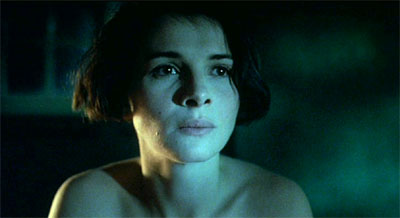
Indisputably the work of a master, to a much greater degree than anything else around at the moment, Krzysztof Kieslowski’s first feature without reference to his native Poland is sufficiently contemporary and allegorical to take the future of Europe, and a “unified” Europe at that, as one of its themes. Palpably concerned with loss and regeneration, suffering and transcendence, Blue calls to mind some of the better late works of Ingmar Bergman in its powerful sense of dramatic concentration; it doesn’t have quite the undertow of neurosis that presumably made those films so exemplary for Woody Allen, but it does have a much bolder grasp of the movements and vagaries of consciousness.
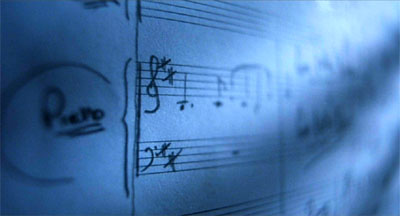
In the opening moments of Blue the leading character, Julie (Juliette Binoche), loses both her husband, a famous French composer, and her five-year-old daughter in a car crash; the remainder of the film charts her mental and spiritual recovery. The film’s remarkable economy is already apparent in the opening shot — a close-up of the spinning right front wheel of the car, seen from behind, as it speeds down a highway. Read more
From the Summer 2018 issue of Cinema Scope. — J.R.
1. Second Thoughts First
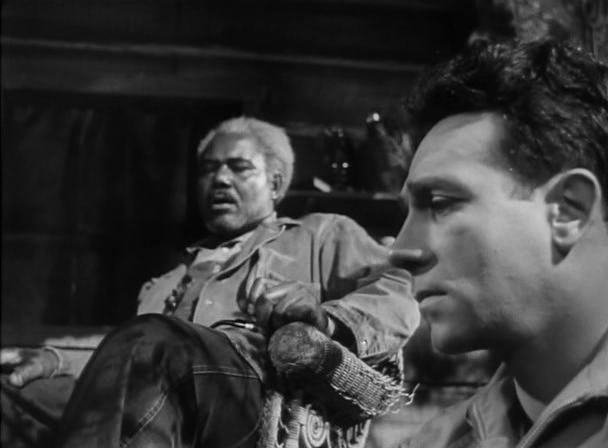
In the introduction to my forthcoming collection Cinematic Encounters: Interviews and Dialogues, I make the argument that although Truffaut’s book-length interview with Hitchcock doesn’t qualify precisely as film criticism, it nonetheless had a decisive critical effect on film taste. By the same token, on Criterion’s very welcome Blu-ray edition of Frank Borzage’s Moonrise (1958), Peter Cowie’s interview with Borzage critic/biographer Hervé Dumont — whose book on the director should be shelved and considered alongside Chris Fujiwara’s book for the same publisher (McFarland) on Jacques Tourneur — primed me perfectly for my second look at this masterpiece, and made it register far more powerfully this time. It certainly performs this task better than Philip Kemp’s accompanying essay, which, in spite of much useful information, falters in its insistence on framing Moonrise through the lens of film noir, and even more when, while rightly praising the character of Rex Ingram’s Mose, the author remarks that “It would be hard to think of another American film of the period where a black man acts as adviser and mentor to a white Southerner.” It’s not so hard, really, if one thinks of Clarence Brown’s Intruder in the Dust (1949) and/or Tourneur’s Stars in My Crown (1950); and it’s even quite easy if, following Dumont’s lead on Moonrise, one regards the Tourneur masterpiece neither as a noir (a lazy escape hatch) nor as a western (as Jacques Lourcelles does), but as a discreet form of German Expressionism, implicitly favouring thoughtful philosophy and metaphysics over simple gloom and doom. Read more
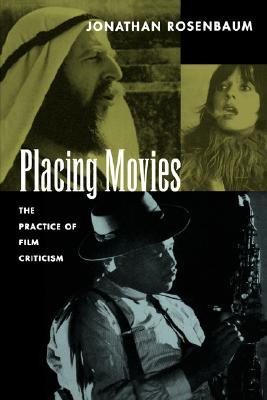
This is the Introduction to the fifth section of my first collection, Placing Movies: The Practice of Film Criticism (University of California Press, 1993). I’ve taken the liberty of adding a few links to some of the pieces of mine mentioned here which appear on this web site. — J.R.
From a journalistic standpoint, what movies are about is always important, but the roles that should be played by content in criticism are not always easy to determine. Ever since I started writing regularly for the Chicago Reader in 1987, my principal professional safety net — what helps to guarantee that I’ll remain interested in my work on a weekly basis, even if the movies of a given week are not interesting — is my option of writing about the subject matter of certain films. This almost invariably involves a certain amount of short-term research, because even if I already know the subject fairly well, a refresher course in certain specifics is generally necessary. (A good example of this would be the reading and listening I had to do in order to nail down many of my facts and examples for “Bird Watching,” in spite — or should I say because? Read more
From Film Quarterly (Summer 1979). Sad to say, the Aldrich and Ophüls books are now so scarce that I couldn’t even find their jacket illustrations on the Internet until a reader, Luke Aspell, generously furnished them to me. –- J.R.
ROBERT ALDRICH. Edited by Richard Combs. London: British Film lnstitute, 1978. $3.25.
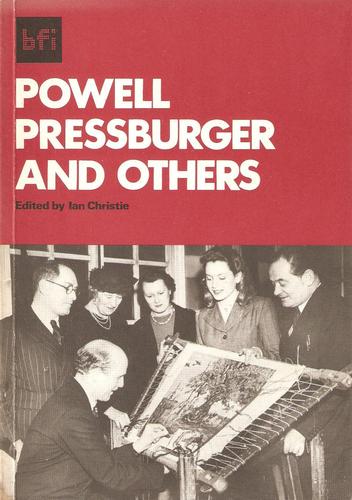
POWELL, PRESSBURGER AND OTHERS. Edited by Ian Christie. London: British Film lnstitute, 1978. $4.50.
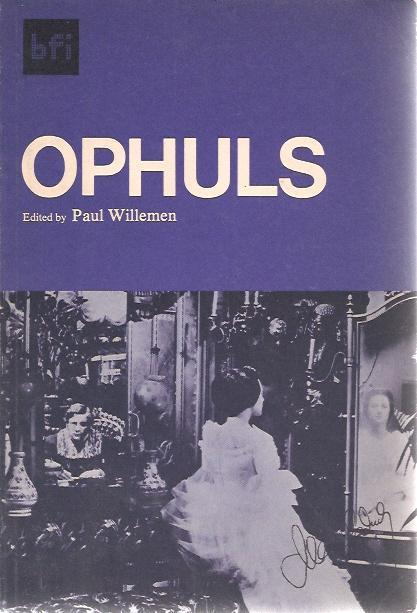
OPHÜLS. Edited by Paul Willemen. London: British Film lnstitute, 1978. $3.50.
Perhaps the most striking difference between the current batch of British Film Institute monographs and the previous series issued under the now-defunct aegis of Cinema One (a joint effort of the BFI and the English publisher Secker & Warburg) is the relation of each to academic film studies. The Cinema One books, designed as popular laymen’s introductions to relatively obscure subjects, were lavishly illustrated with stills and frame enlargements, appeared both in paperback and hardcovers, and rarely proceeded beyond the format of one critic per subject.
The new line of BFI books, which appear only in paperback, are much closer to academic “casebooks”: the texts are usually longer, illustrations are omitted (apart from black-and-white stills on the covers), and the critical perspectives in most cases are multiple. Read more
My column for Caíman Cuadernos de Cine, submitted on March 21, 2019. — J.R.
It’s tiresome to keep hearing from several American colleagues what a lousy year 2018 supposedly was for movies — “movies” being virtually equated with Hollywood crap in much the same way that “the world” is often equated with the U.S. (with Cuarón, Farhadi, Pawlikowski, and a few others occasionally accorded the dubious status of honorary Americans, usually on the basis of their Oscars). Given how much non-American cinema one can see nowadays via streaming, this is an inexcusable way of allowing the big companies to keep their stranglehold on what passes for film culture, making it easier than ever to miss out on what matters.
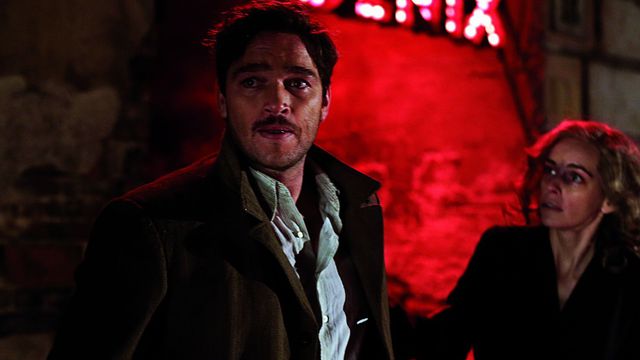
Even so, I’m embarrassed to admit that I didn’t recognize the brilliance of Christian Petzold until recently, when I saw Transit (2018) — having previously seen only his Ghosts (2005) and Barbara (2012). Having now accessed, in swift succession, his Phoenix (2014), Yella (2007), Jerichow(2008), and Barbara again — I feel that it’s the dreamlike, hallucinatory surfaces (both aural and visual) of Yella, Phoenix, and Transit more than the literal places and spaces of Jerichow and Barbara that best capture Pertzold’s investigations into historical and existential identity. Read more
`Commissioned by Re:Voir in France in 2021 for a currently available DVD. — J.R.
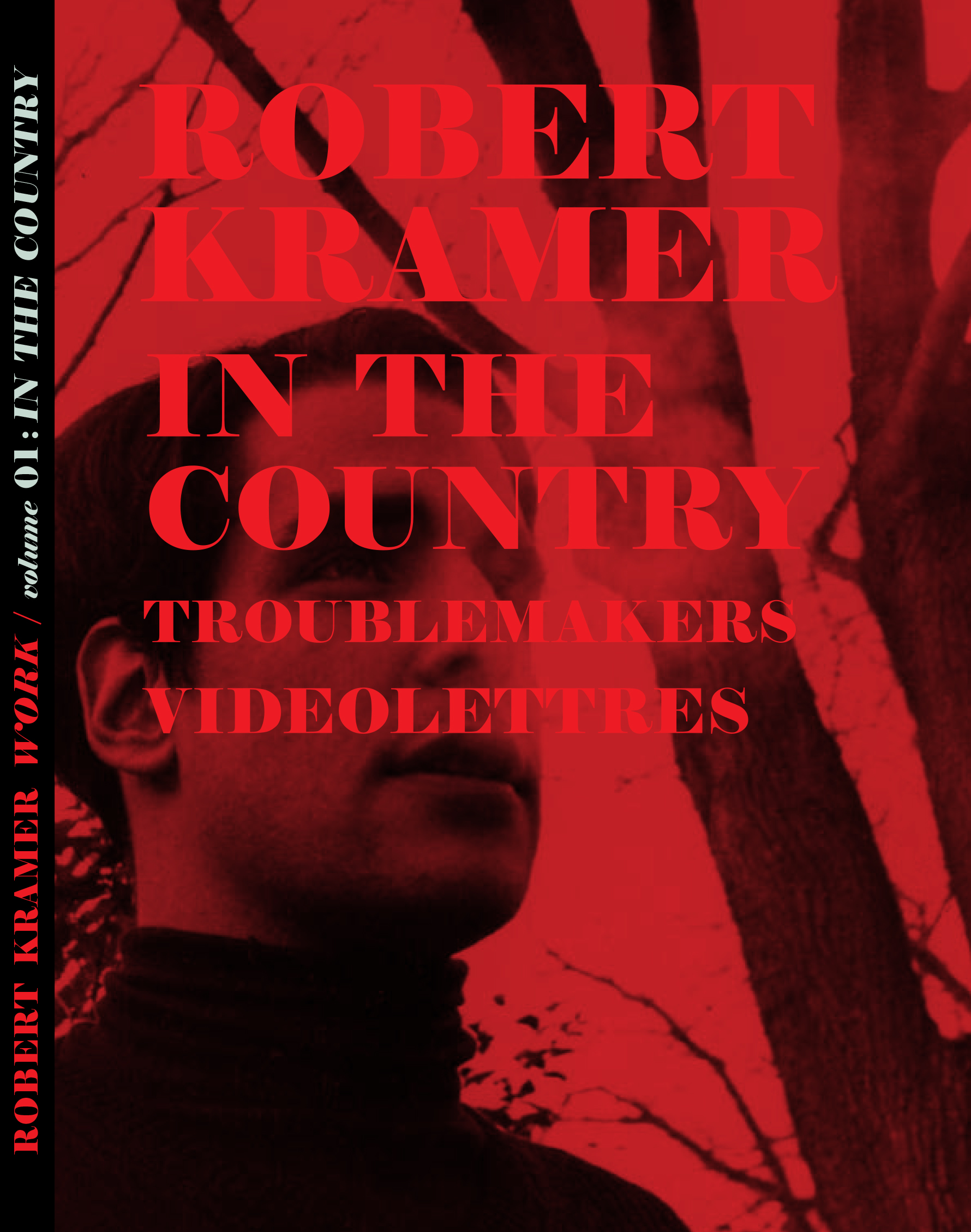
Seen as a troubled diptych, Troublemakers(filmed in Newark during the fall of 1965, two years before the riots) and In the Country(1966)offer, respectively, public and private glimpses of the political frustrations faced by young white radicals in the United States during this volatile period. Robert Kramer–producer, writer, and director of the second film–receives no credit on the first, but he’s one of the more vocal radicals appearing in it, expressing some of the same disillusionment with mainstream, workaday politics that the second film is also wrestling with. The son of a Park Avenue heart specialist and a textile designer, Robert attended private schools, Swarthmore College, and Stanford, carrying around his privilege like an albatross, as a guilt-ridden handicap to overcome.
The implicit hope that led members of the SDS (Students for a Democratic Society) — including the very young Tom Hayden, Kramer, and filmmakers Norman Fruchter (sound) and Robert Machover (camera and editing) — to join and/or recruit the efforts of black activists in their Newark ghetto and the explicit bitterness of a nameless, fictional white radical couple (William Devane and Catherine Merrill) retreating to and brooding within their privileged rural isolation need to be viewed as reverse sides of the same countercultural coin. Read more