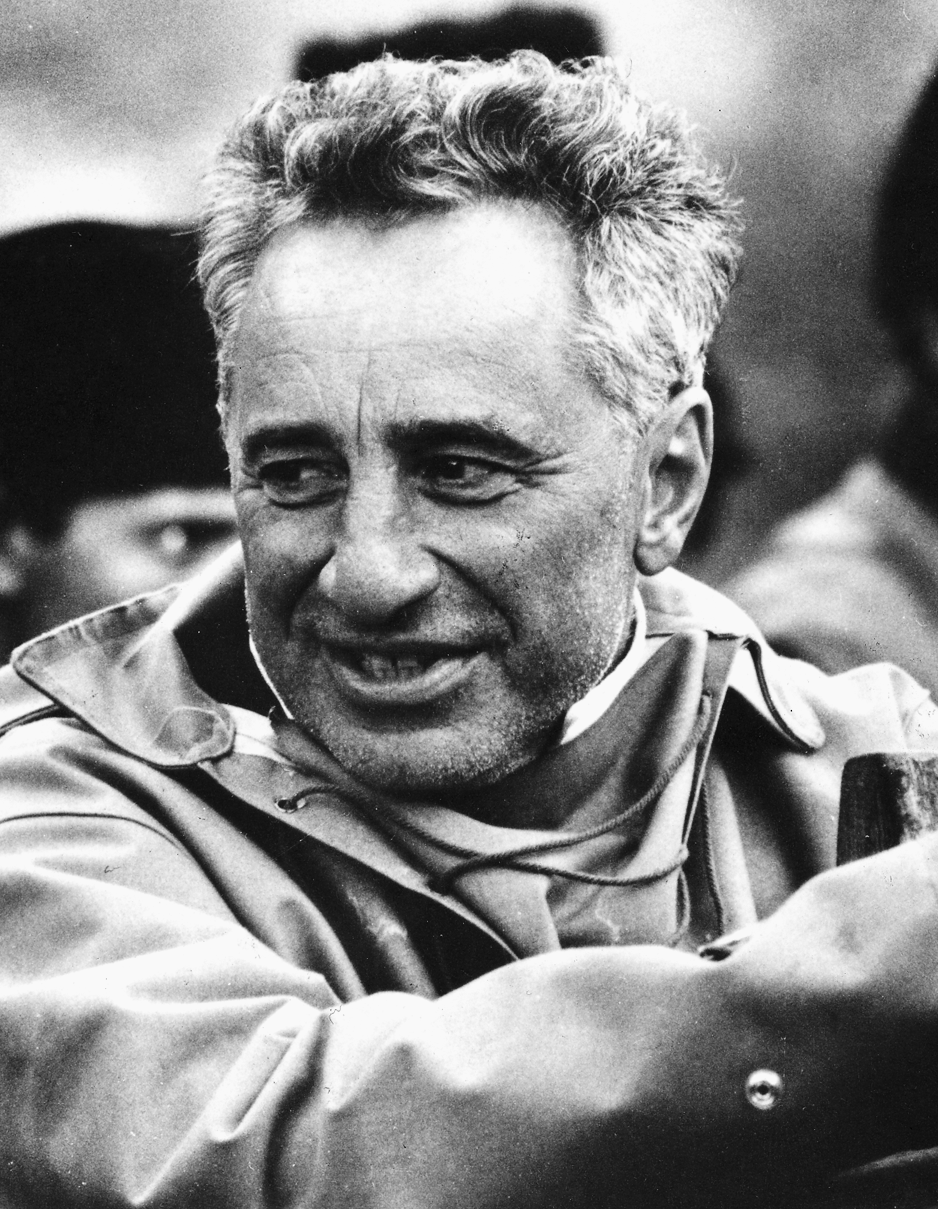
I wrote the Preface to this 1973 article in 2009 for its eventual reprinting in Kazan Revisited, edited by Lisa Dombrowski (Middletown, CT: Wesleyan University Press, 2011). Note (early 2013): My favorite Kazan film, Wild River, has been released on Blu-Ray, and it looks better than ever. — J.R.
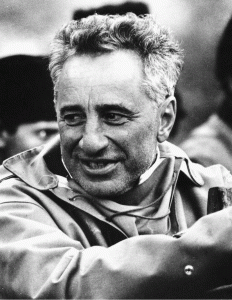
Preface (2009): Rereading this essay 36 years after I wrote it for Richard Roud’s two-volume critical collection, Cinema: A Critical Dictionary – The Major Filmmakers (New York/The Viking Press, 1980), I can’t say that many of my positions or preferences regarding Kazan’s work have changed. But in a few cases I’ve been able to amplify some of my original impressions. For my 2007 essay “Southern Movies, Actual and Fanciful: A Personal Survey” (to be reprinted in my 2010 University of Chicago Press collection, Goodbye Cinema, Hello Cinephila), for instance, I discovered that Kazan hired speech consultant Margaret Lamkin for his stage production of Cat on a Hot Tin Roof, and then again for Baby Doll, to ensure that all the southern accents heard were letter-perfect. And the significance of Kazan having given the names of former friends or colleagues to the House Un-American Activities Committee in 1952 — not in 1954, as my article stated — became a more prominent feature in his career profile when he was given a Lifetime Achievement Award in 1999, almost half a century later, from the Motion Picture Academy of Arts and Sciences. Read more
Written for the January/February 2011 Film Comment. — J.R.
Chef-d’oeuvre?
(Luc Moullet, France)
Although ostensibly a short essay inquiring how masterpieces are identified and proclaimed in several art forms (with various apt comparisons and wry asides), this is ultimately a 13-minute defense of the short film itself — the form in which Moullet himself has created the greatest number of masterpieces (and about which he has written often as a critic, most recently in the French magazine Bref). The finale is a presentation of Méliès’ most famous short, Le Voyage dans la lune (1902), with Moullet’s own brilliant audio commentary.—Jonathan Rosenbaum Read more
From the Chicago Reader (September 26, 1997). — J.R.
Medea
Rating *** A must see
Directed by Lars von Trier
Written by Carl Dreyer, Preben Thomsen, and von Trier
With Kirsten Olesen, Udo Kier, Henning Jensen, Solbjaig Hojfeldt, and Prehen Lerdorff Rye.
Sunday
Rating *** A must see
Directed by Jonathan Nossiter
Written by James Lasdun and Nossiter
With David Suchet, Lisa Harrow, Jared Harris, Larry Pine, and Joe Grifasi.
It’s been disconcerting to read, over the past several weeks, of no fewer than four Hollywood projects in the works that purport to be by and/or about Orson Welles. Three of these are based on Welles scripts that he never found the money to produce: The Big Brass Ring (an original with a contemporary setting), The Dreamers (an adaptation of two Isak Dinesen stories), and The Cradle Will Rock (an autobiographical script set in the 30s). Yet all have been extensively rewritten, and the fourth — as recently reported by Todd McCarthy in Daily Variety — is a series of whole-cloth inventions about the making of Citizen Kane, presumably with a few facts thrown in, called RKO 281, written by Chicago playwright John Logan.
Why is all this money, effort, and media attention being expended on “celebrating” Welles when nobody is showing the slightest interest in making available unseen Welles features like Don Quixote and The Other Side of the Wind? Read more
From the Chicago Reader (August 30, 1996). — J.R.
Foxfire
Rating *** A must see
Directed by Annette Haywood-Carter
Written by Elizabeth White
With Hedy Burress, Angelina Jolie, Jenny Lewis, Jenny Shimizu, Sarah Rosenberg, and Peter Facinelli.
Escape From L.A.
Rating *** A must see
Directed by John Carpenter
Written by Carpenter, Debra Hill, and Kurt Russell
With Russell, Stacy Keach, Steve Buscemi, Peter Fonda, George Corraface, and Cliff Robertson.
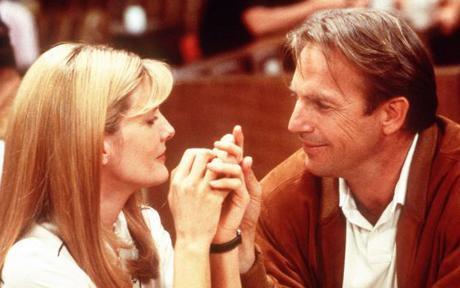
Tin Cup
Rating ** Worth seeing
Directed by Ron Shelton
Written by John Norville and Shelton
With Kevin Costner, Rene Russo, Cheech Marin, and Don Johnson.
It’s already pretty clear from reviews and head counts that Escape From L.A. is something of a box-office loser and Tin Cup something of a winner. And although I wrote what follows about Foxfire before I knew its commercial fate, my suspicions were confirmed with such a vengeance that it’s no longer playing in Chicago (keep your eyes peeled for a second run). All three films are worth seeing — at least if you’re willing to settle for something good, not great, during the usual prefall slump — but my preference for Foxfire and Escape From L.A. over Tin Cup isn’t simple contrariness. If you go to movies in the hope of finding something beautiful or imaginative or different, as I do, there’s simply no contest.
Read more
From the January 29, 1988 Chicago Reader. –J.R.
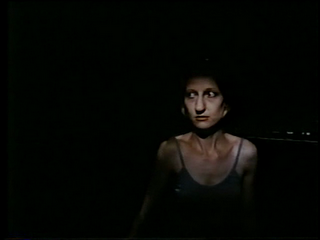
SLEEPWALK
*** (A must-see)
Directed by Sara Driver
Written by Driver and Lorenzo Mans
With Suzanne Fletcher, Ann Magnuson, Dexter Lee, Steven Chen, Tony Todd, Richard Boes, and Ako.
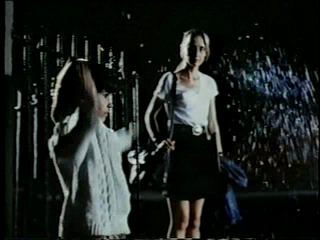
The French term fantastique — which emcompasses science fiction, comic strips, Surrealism, sword and sorcery tales, and many other forms of fantasy — suggests an attitude toward the imagination that is distinctly different from the Anglo-American model. In our more empirical culture, reams of verbiage are devoted to distinguishing science fiction from fantasy, and legislating certain laws of etiquette to govern both — rules of internal consistency and narrative coherence decreeing that all breaches with recognizable reality stem from the same premises, whether these premises be scientific, purely fanciful, or some mixture of the two.
The French tend to be freer and looser about such matters, which helps to explain why such films as Les visiteurs du soir, Picnic on the Grass, Last Year at Marienbad, Je t’aime, je t’aime, Alphaville, Fahrenheit 451, Celine and Julie Go Boating, and Deathwatch pose to English and American temperaments certain problems that are not posed by The Wizard of Oz, Things to Come, It’s a Wonderful Life, 2001: A Space Odyssey, The Exorcist, Star Wars, Close Encounters of the Third Kind, and Blade Runner. Read more
From the Chicago Reader (November 24, 1995). — J.R.
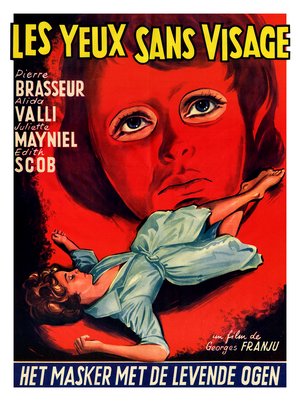
Eyes Without a Face
**** (Masterpiece)
Directed by Georges Franju
Written by Jean Redon, Pierre Boileau, Thomas Narcejac, Claude Sautet, Pierre Gascar, and Franju
With Edith Scob, Pierre Brasseur, Alida Valli, Juliette Mayniel, Béatrice Altariba, François Guerin, Alexandre Rignault, and Claude Brasseur.
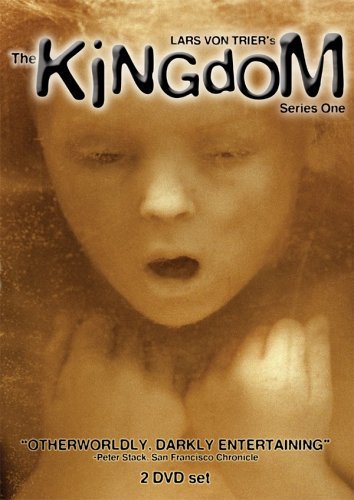
The Kingdom
** (Worth seeing)
Directed by Lars von Trier and Morten Arnfred
Written by von Trier, Niels Vorsel, and Tomas Gislason
With Ernst Hugo Jaregard, Kirsten Rolffes, Ghita Norby, Soren Pilmark, Holger Juul Hansen, Annevig Schelde Ebbe, Jens Okking, Otto Brandenburg, Baard Owe, and Birgitte Raabjerg.

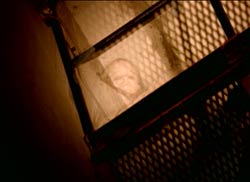
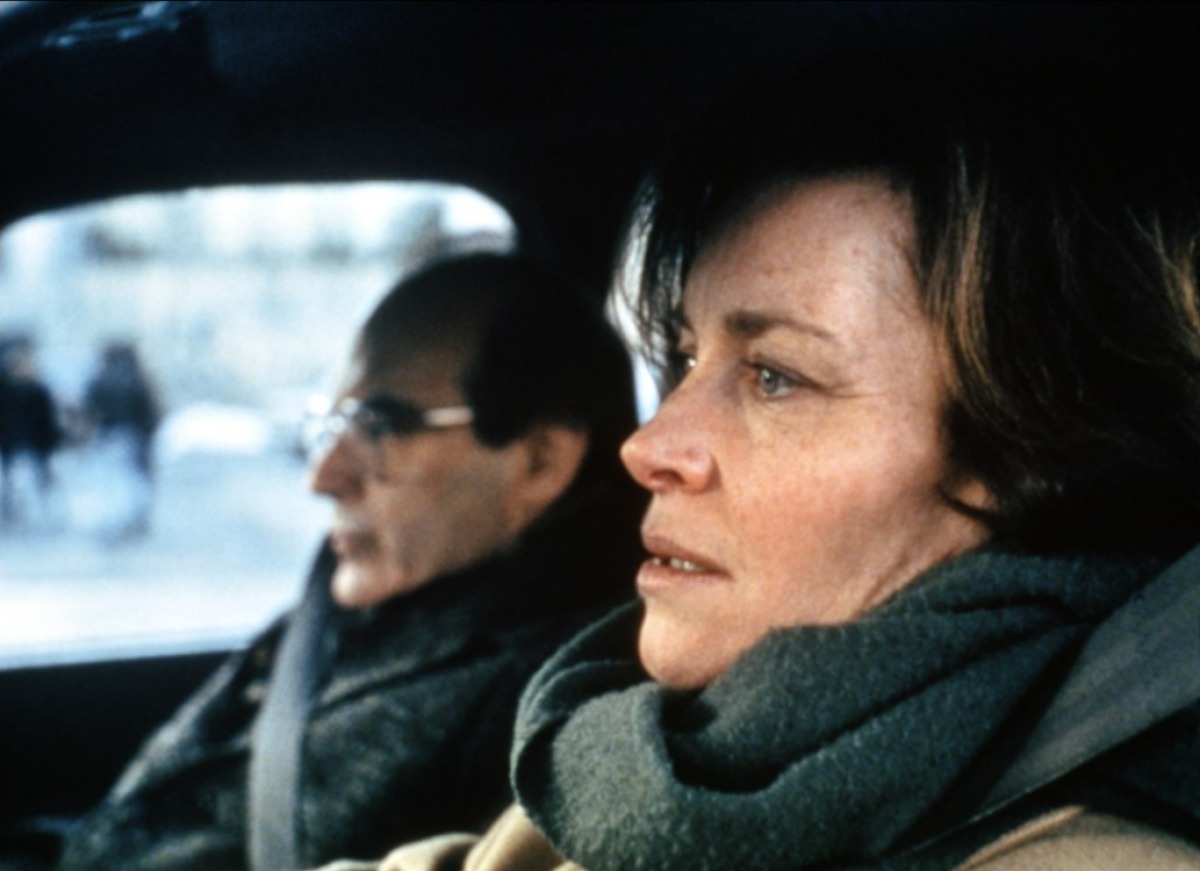
They’re both arty European fantasy meditations on the medical profession — that’s about all that Georges Franju’s Eyes Without a Face (1959) and Lars von Trier’s The Kingdom (1993) have in common, apart from the fact that they’re both opening here the day after Thanksgiving. The differences between them are much more instructive. Franju’s Les yeux sans visage is a poetic, compact (88 minutes) black-and-white French horror picture about skin grafting that premiered inauspiciously in the United States 32 years ago in a dubbed and reportedly mangled version known as The Horror Chamber of Dr. Faustus; happily, Facets Multimedia is showing it in its original form and subtitled. Read more
From The Independent: Film and Video Monthly, November 1985 — J.R.

Having attended festivals of many shapes and sizes around the world, I can think of none that is more conducive to the serious viewing of original, offbeat work than the Rotterdam Film Festival. While Rotterdam lacks the global media coverage and accompanying hoopla of a Cannes, Toronto, Venice, Filmex, or Berlin, the festival offers filmmakers a congenial and sympathetic setting. Significantly, American independents as diverse as Jim Jarmusch and Mark Rappaport — as well as European figures like Manoel de Oliveira and Raul Ruiz — made their mark there long before they were treated to New York Film Festival premieres.
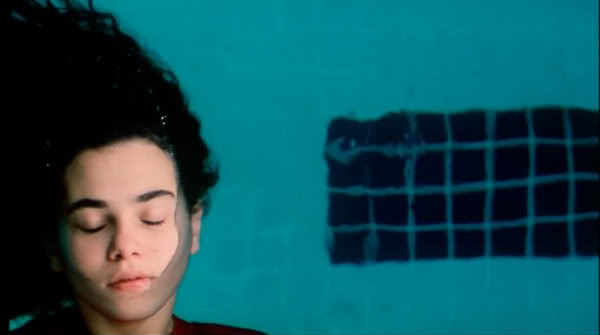
A cash prize is awarded each year to a film selected by the Dutch critics. Most recently, it went to Ruiz’s Manoel à l’ïle des merveilles (see two stills above), a French-Portuguese television co-production shot in 16mm, comprising three 50-minute episodes. However, the overall spirit of the festival is anything but competitive, and as a rule the critics prize will go to a film that the critics feel is deserving of special attention rather than an audience favorite. Read more
From the Chicago Reader (January 29, 1993). Since writing this, I’ve come to like Basic Instinct much more than I did. — J.R.
BODY OF EVIDENCE
* (Has redeeming facet)
Directed by Uli Edel
Written by Brad Mirman
With Madonna, Willem Dafoe, Joe Mantegna, Anne Archer, Julianne Moore, Stan Shaw, Charles Hallahan, Lillian Lehman, Mark Rolston, Jeff Perry, and Jurgen Prochnow.
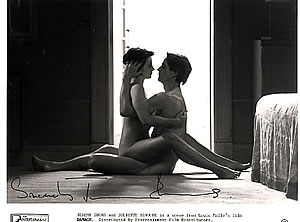
DAMAGE
* (Has redeeming facet
Directed by Louis Malle
Written by David Hare
With Jeremy Irons, Juliette Binoche, Miranda Richardson, Rupert Graves, Ian Bannen, Leslie Caron, Peter Stormare, Gemma Clark, and Julian Fellowes.
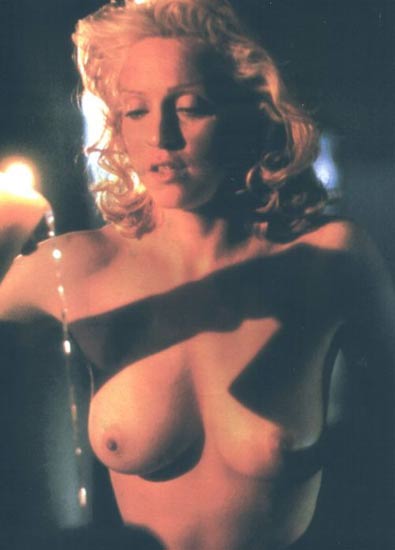

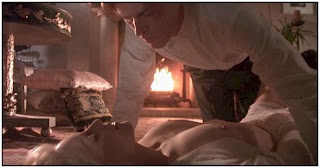
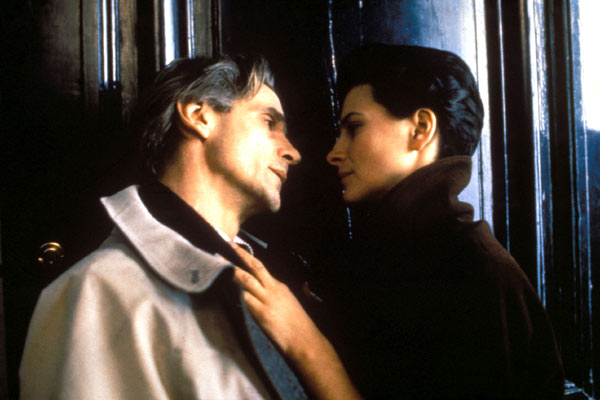
The pointed absence of scenes of sexual intercourse in such recent releases seemingly calling for them as The Crying Game, The Hours and Times, and Scent of a Woman is curious when weighed against a tendency in some other movies, including two that opened recently, to highlight transgressive or dangerous sex. In Body of Evidence it’s not only bondage and sadomasochism but sex leading to the male partner’s cardiac arrest, an effect the female partner may have intended. In Damage it’s not only illicit sex between an older, prominent government official and his son’s fiancee, who has incest in her past, but also the unconventionality of their couplings: they often remain partly clothed, and the positions they assume border on the pretzellike. Read more
This is a story, never before published, written during my teens — most likely in early 1960, when I was a junior at a boarding school on a farm in Vermont, age 17. I’ve done some light editing. The illustrations, which I realize are not always consistent with one another or precisely congruent with the story, are all gleaned from the Internet.
This story is the second in a series of three to be posted, all fantasies and all written when I was in high school. (The other two stories can be accessed here and here.) I feel today that they were written by someone else, but it’s clear that all three of them are interconnected, including in certain ways that I might not have been fully aware of at the time. I like them in spite of their obvious flaws, and hope that visitors to this site will at least find them intriguing. — J.R.
Don’t Look Back
By Jonathan Rosenbaum
/Hey Jim you got that fire going yet? Good…kick that log in; that’ll help it,,,nothing like a good campfire once it’s really going, Say Joe are the Barneses here yet? Well -– we can start without them I guess –-
I guess you’re all wondering why I called you all together here tonight. Read more
I still haven’t recovered from the rude shock of hearing about the suicide of Chantal Akerman on October 6, 2015.
The following was originally published in Retrospektive Chantal Akerman, a publication of the Viennale/Austrian Filmmuseum, 2011, and the second issue of the online Lola (lolajournal.com), 2012. — J.R.
Does one’s integrity ever lie in what he is not able to do? I think that usually it does, for free will does not mean one will, but many wills conflicting in one man [sic]. — Flannery O’Connor
If I have a reputation for being difficult, it’s because I love the everyday and want to present it. In general people go to the movies precisely to escape the everyday. — Chantal Akerman
A yearning for the ordinary as well as the everyday runs through Akerman’s work like a recurring, plaintive refrain. It is a longing that takes many forms: part of it is simply her ambition to make a commercially successful movie; another part is the desire of a self-destructive, somewhat regressive neurotic — Akerman herself in Saute ma ville (1968), La chambre (1972), Je, tu, il, elle (1974), and L’homme à la valise (1983); Delphine Seyrig in Jeanne Dielman, 23 Quai de Commerce, 1080 Bruxelles (1975); Aurore Clement in Les rendez-vous d’Anna (1978); Circé Lethem in Portrait d’une jeune fille de la fin des années 60 à Bruxelles (1993) — to go legit and be like “normal” people. Read more
From the November 1, 1995 Chicago Reader. — J.R.
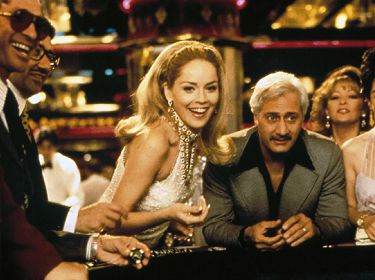
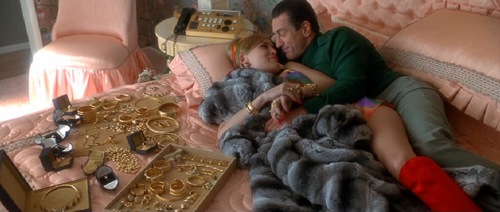
Simultaneously quite watchable and passionless, Martin Scorsese’s three-hour dissection of power in Las Vegas (1995), set principally in the 70s, sometimes comes across like an anthology of his previous collaborations with Robert De Niro — above all GoodFellas, though here the characters are high rollers to begin with. By far the most interesting star performance is by Sharon Stone as a classy hooker destroyed by her marriage to a bookie (De Niro, in the least interesting star performance) selected by the midwest mob to run four casinos. There’s an interesting expositional side to the film, with De Niro and Joe Pesci’s characters both serving as interactive narrators, but the film never becomes very involving as drama, and the appropriation of Georges Delerue’s theme from Godard’s Contempt is the tackiest hommage since the use of Singin’ in the Rain in A Clockwork Orange. With James Woods, Don Rickles, Alan King, Kevin Pollak, and L.Q. Jones. (JR)
Read more
Written for the January/February 2011 Film Comment. — J.R.
Dave Brubeck: In His Own Sweet Way
(Bruce Ricker, U.S.)
Ironically, the most popular American jazz musician is also one of the most undervalued among the cognoscenti. As the leading distributor of jazz documentaries (and Clint Eastwood’s jazz consultant), Bruce Ricker may be the ideal filmmaker to re-introduce Brubeck to a wider public. Although he regrettably doesn’t include a full performance of any song before the final credits, Ricker conveys what a wonderful person Brubeck is and gives a fine notion of some of the richness of his music.—Jonathan Rosenbaum
Read more
From the Chicago Reader (February 11, 2000). — J.R.
My Best Fiend
Rating * Has redeeming facet
Directed and written by Werner Herzog.
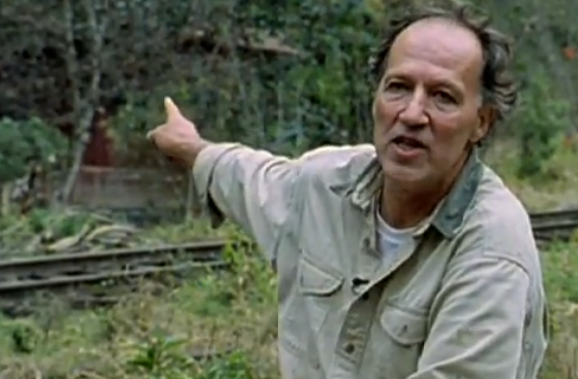
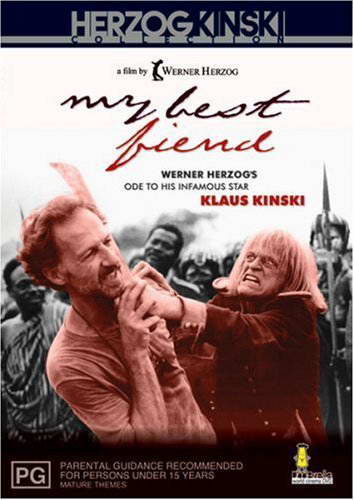
What’s the difference between artistry and bravado? This isn’t a question I generally feel inclined to ask, but I’m compelled by the work of Werner Herzog, who scrambles the two until it’s difficult to tell which is which. My Best Fiend — Herzog’s documentary feature about his tumultuous collaborations with Klaus Kinski, the mad actor with whom he made some of his most notable films — also compels questions about Kinski’s bravado and artistry, and suggests that it might not always be easy to distinguish his from Herzog’s.
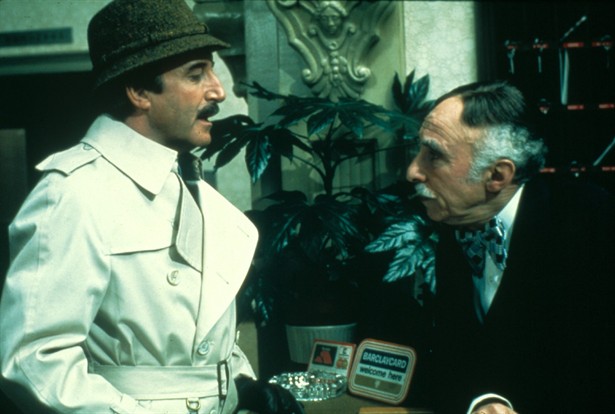
One might call My Best Fiend, which is playing this week at Facets, the art-movie equivalent of writer-director Blake Edwards’s Trail of the Pink Panther. Edwards and Peter Sellers reportedly were at each other’s throats throughout their many collaborations on Pink Panther comedies — largely, it appears, because of Sellers’s hyperbolically neurotic behavior. Herzog and Kinski had a similarly volatile relationship, which ended only after Kinski died, in 1991. Herzog got his revenge by releasing outtakes of his difficult star, much as Edwards continued to fiddle around with unreleased footage of Sellers as Inspector Clouseau in Trail of the Pink Panther. Read more
Jean Grémillon remains one of the major French filmmakers whose films are most egregiously unavailable on DVD, especially when it comes to versions with English subtitles — although I’m delighted to report that Criterion’s Eclipse brought out three of his greatest ones, all made during the Occupation, including the two that are discussed here and Remorques. This article appeared in the October 25, 2002 issue of the Chicago Reader. –— J.R.
Lumière d’été **** (Masterpiece)
Directed by Jean Grémillon
Written by Jacques Prévert and Pierre Laroche
With Madeleine Renaud, Pierre Brasseur, Madeleine Robinson, Paul Bernard, Georges Marchal, and Marcel Lévesque.
Le ciel est à vous **** (Masterpiece)
Directed by Jean Grémillon
Written by Albert Valentin and Charles Spaak
With Madeleine Renaud, Charles Vanel, Jean Debucourt, Léonce Corne, Albert Rémy, and Robert le Fort.

A friend and colleague, critic and teacher Nicole Brenez, says that the best film criticism consists of films critiquing one another. This may sound a mite abstract, but two very different masterpieces by the great, neglected Jean Grémillon, Lumière d’été and Le ciel est à vous, seem to offer a concrete example of this, as a critique of Jean-Luc Godard’s In Praise of Love, which I wrote about last week. Read more
From Cinema Scope #46 (Spring 2011). — J.R.
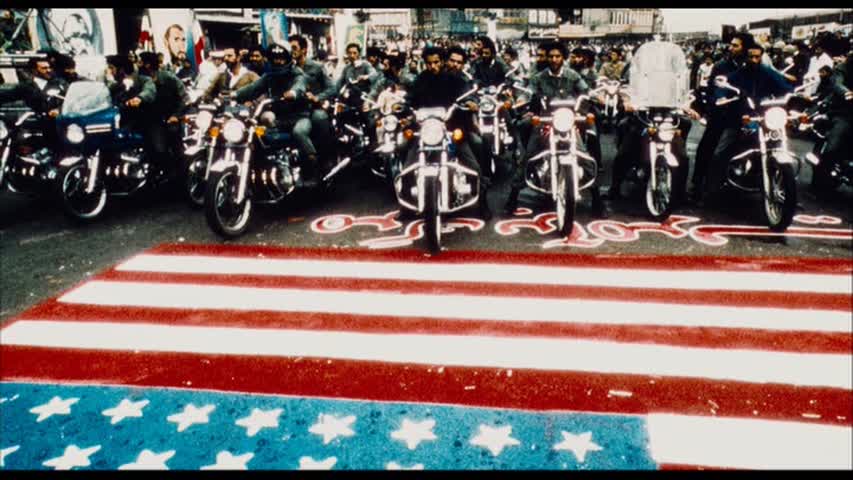
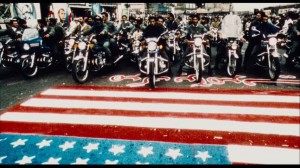
Underneath the Persian credits, over heavy metal music, the camera roams around inside a colour photograph, grazing over pointillist surfaces and male faces — finally pulling back to reveal the Islamic Revolution Guard Corps in 1983, getting ready to drive their motorcycles over a huge replica of the American flag on the pavement in front of them. Cut to black and the film’s title, The Hunter.
Cut to a highway tunnel, then to a rifle being loaded in the woods, then to the same title hero (played by the writer-director, Rafi Pitts) holding the rifle in front of a raging campfire at night. Cut to an overhead shot of a busy Tehran freeway — then to a sinister carwash that seems to be located in the general vicinity of Hell, smoky fumes rising from the spray. And finally to the hero being told by a potential employer that as a convict he doesn’t qualify for a day job, he has to take the night shift. But as we discover a little later, his wife Sara already has a day job, meaning that when he takes the night watchman job, he’ll have little time to spend with her and their six-year-old daughter. Read more