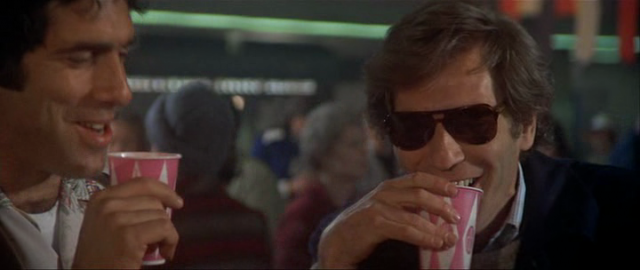
From the Chicago Reader (May 13, 2005). — J.R.

Crash
*** (A must see)
Directed by Paul Haggis
Written by Haggis and Bobby Moresco
With Don Cheadle, Sandra Bullock, Matt Dillon, Jennifer Esposito, William Fichtner, Brendan Fraser, Terrence Dashon Howard, Chris “Ludacris” Bridges, Thandie Newton, Ryan Phillippe, Larenz Tate, Nona Gaye, and Michael Pena
Mindhunters
** (Worth seeing)
Directed by Renny Harlin
Written by Wayne Kramer and Kevin Brodbin
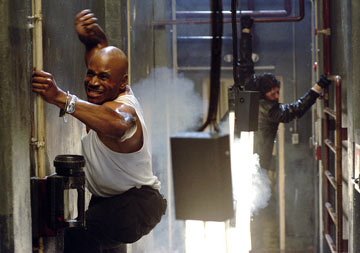
With Eion Bailey, Clifton Collins Jr., Will Kemp, Val Kilmer, Jonny Lee Miller, Kathryn Morris, Christian Slater, LL Cool J, Patricia Velasquez, and Cassandra Bell
Monster-in-Law
* (Has redeeming facet)
Directed by Robert Luketic
Written by Anya Kochoff and Richard LaGravenese
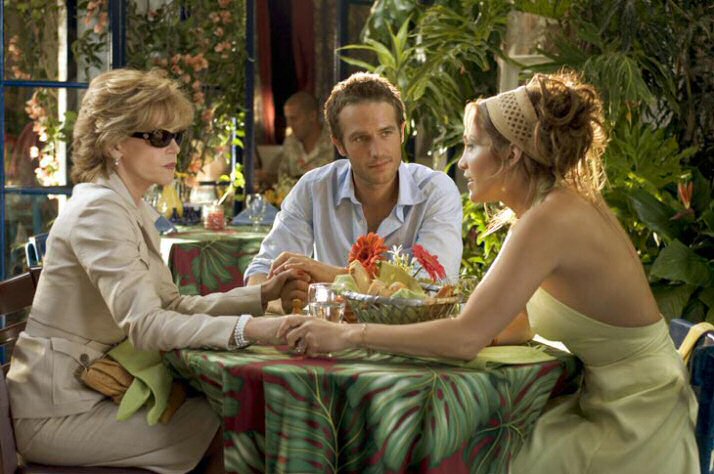
With Jane Fonda, Jennifer Lopez, Michael Vartan, and Wanda Sykes
We tend to make trade-offs between reality and fantasy when we watch movies, buying into some questionable premises because we want to honor others. Despite shared assumptions and conventions, we have different thresholds for what we find believable — or an acceptable version of what’s real. We’ll settle for a certain amount of contrivance, but our tolerance has limits, determined in part by age, taste, and experience and in part by whether we like the rest of the movie enough to stretch our standards. Read more
From the Chicago Reader (June 19, 1998). — J.R.
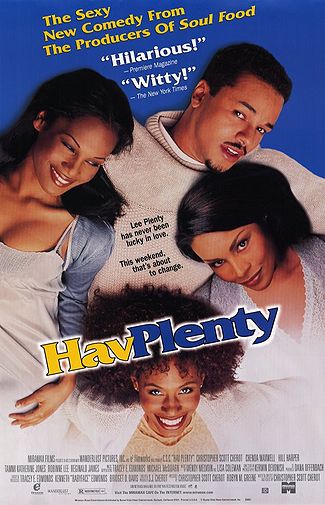
Hav Plenty
Rating *** A must see
Directed and written by Christopher Scott Cherot
With Chenoa Maxwell, Cherot, Tammi Catherine Jones, Robinne Lee, and Reginald James.
Mr. Jealousy
Rating *** A must see
Directed and written by Noah Baumbach
With Eric Stoltz, Annabella Sciorra, Chris Eigeman, Carlos Jacott, Marianne Jean-Baptiste, Brian Kerwin, Peter Bogdanovich, and Bridget Fonda.
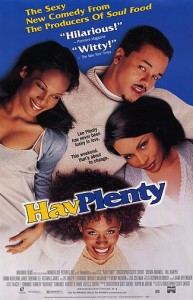
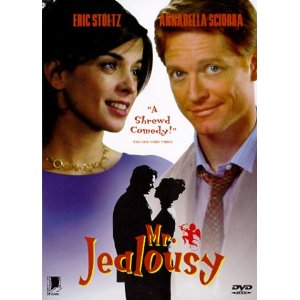
Two eclectic, youthful, and surprisingly upbeat romantic comedies open this week, both by writer-directors; both about blocked novelists, relationships, fear of commitment, jealousy, self-torturing neurosis, betrayal, and ultimate fulfillment; and both set in upscale, urban east-coast milieus. I had a good time at Christopher Scott Cherot’s Hav Plenty and Noah Baumbach’s Mr. Jealousy both times I saw them, though I couldn’t believe in either all the way through, and neither made me laugh out loud very often. Presented as hand-crafted self-portraits that have agreed to play by certain commercial rules and genre conventions, both teem with eccentric tics and personal energies, giving us the pleasure of contact with an individual intelligence — something that seldom happens with bigger-budget fare.
The eccentric tics in Hav Plenty begin with the title — which conflates the first name of heroine Havilland Savage (Chenoa Maxwell) and the last name of hero Lee Plenty (Cherot) — and include Philippians 4:12 (“I know what it is to be in need, and I know what it is to have plenty. Read more
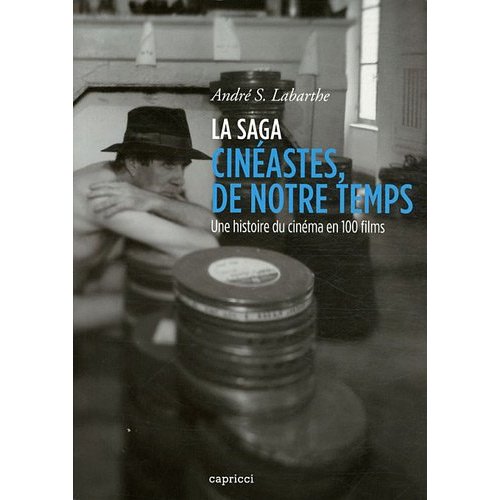
Some of the most successful and fruitful ongoing enterprises related to film history have been either ignored or taken for granted (which sometimes amounts to the same thing) due to their omnipresence. In book publishing, the two most outstanding examples that come to mind are, in France, the series of monographs devoted to film directors issued by Seghers(which finally expired many years ago, I believe in the 70s or 80s) and, in the U.K., the BFI Classics and BFI Modern Classics, launched in 1992 and, to be the best of my knowledge, still going strong.
Considerably more formidable is the series of 80-odd French television documentaries about filmmakers produced by Janine Bazin (the widow of André Bazin) and André S. Labarthe, initially called Cinéastes de notre temps when it was produced by the ORTF between 1964 and 1972, and revived as Cinéma, de notre temps when it was produced by Arte between 1990 and 2003, the year that Janine Bazin died, and then taken up again by Cinécinéma in 2006. Some of the more interesting of the earlier documentaries were remarkable in the various ways that they stylistically imitated their subjects, as in the programs on Cassavetes, Samuel Fuller, and Josef von Sternberg. Read more
From the Chicago Reader (January 14, 2000); also reprinted in my collection Essential Cinema. — J.R.
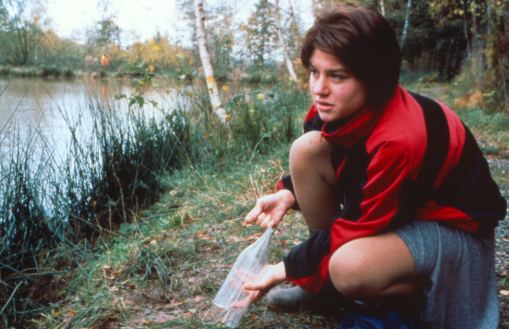
Rosetta
Rating **** Masterpiece
Directed and written by Luc and Jean-Pierre Dardenne
With Emilie Dequenne, Fabrizio Rongione, Anne Yernaux, Olivier Gourmet, and Bernard Marbaix.
By Jonathan Rosenbaum
I saw Rosetta three weeks ago, and haven’t recovered from it since. In fact, I didn’t see any film since the Dardennes’, except films for work. It moves me to the heart of my heart, this film about the necessity of life, the impossibility of morality, the soil of human experience. [A teaching colleague] told me that he couldn’t watch it because he thought too much about [Robert Bresson’s] Mouchette, but precisely, it’s at last Mouchette today, our Mouchette, the one we deserve, without any heaven and any transcendence. Her scream, ‘Mama! Y’a d’la boue! Y’a d’la boue!’ [‘Mama! It’s full of mud! It’s full of mud!’] haunts me, I can’t forget it, it’s exactly the despair of being in life without any pathos, any margin, just real life in the immediacy of the impulse. — E-mail from film critic Nicole Brenez
The 80s practically ended with the euphoric takeover of Tiananmen Square by more than a million demonstrators led by students, many with access to fax machines, though a brutal government crackdown followed. Read more
From the Chicago Reader (May 11, 1990). — J.R.
LAST EXIT TO BROOKLYN
* (Has redeeming facet)
Directed by Uli Edel
Written by Desmond Nakano
With Stephen Lang, Jennifer Jason Leigh, Burt Young, Peter Dobson, Jerry Orbach, and Alexis Arquette.
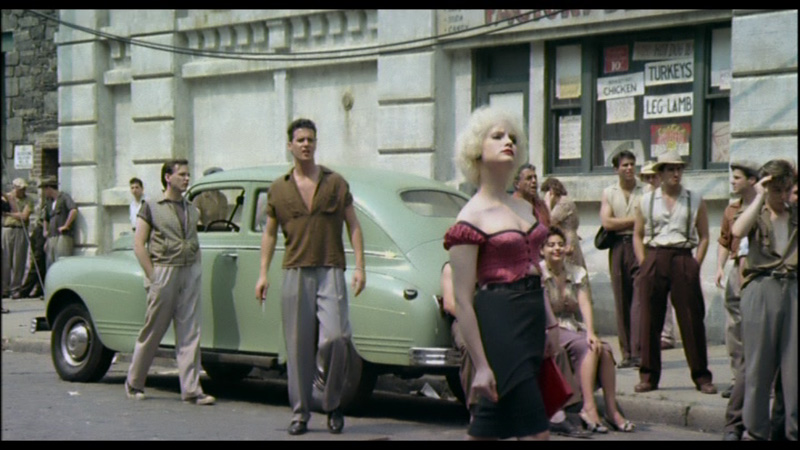
After making the rounds of Europe late last year, this West German feature, an adaptation in English of Hubert Selby Jr.’s famous short-story collection of 1964, has finally reached our shores, and it proves to be at least as much of a mixed blessing as the book itself was a quarter of a century ago. Although shot on location in Brooklyn’s Red Hook district, adapted by an American (Desmond Nakano, who scripted Boulevard Nights about a decade ago), and featuring an all-American cast, this is very much a European picture in style and ambience, with more emphasis on mood and atmosphere than on plot and action.
Uli Edel, the director, whose best-known previous effort in the U.S. is Christiane F. (1980), and who has been interested in adapting this book since the early 70s, employs a somewhat distanced theatrical style in lighting, production design, and staging that registers a bit like Rainer Werner Fassbinder’s did, though without the political irony that gave Fassbinder’s style its edge. Read more
From the Chicago Reader (December 20, 1991). — J.R.
HOOK
** (Worth seeing)
Directed by Steven Spielberg
Written by Jim V. Hart, Malia Scotch Marmo, and Nick Castle
With Dustin Hoffman, Robin Williams, Julia Roberts, Bob Hoskins, Maggie Smith, Caroline Goodall, and Charlie Korsmo.
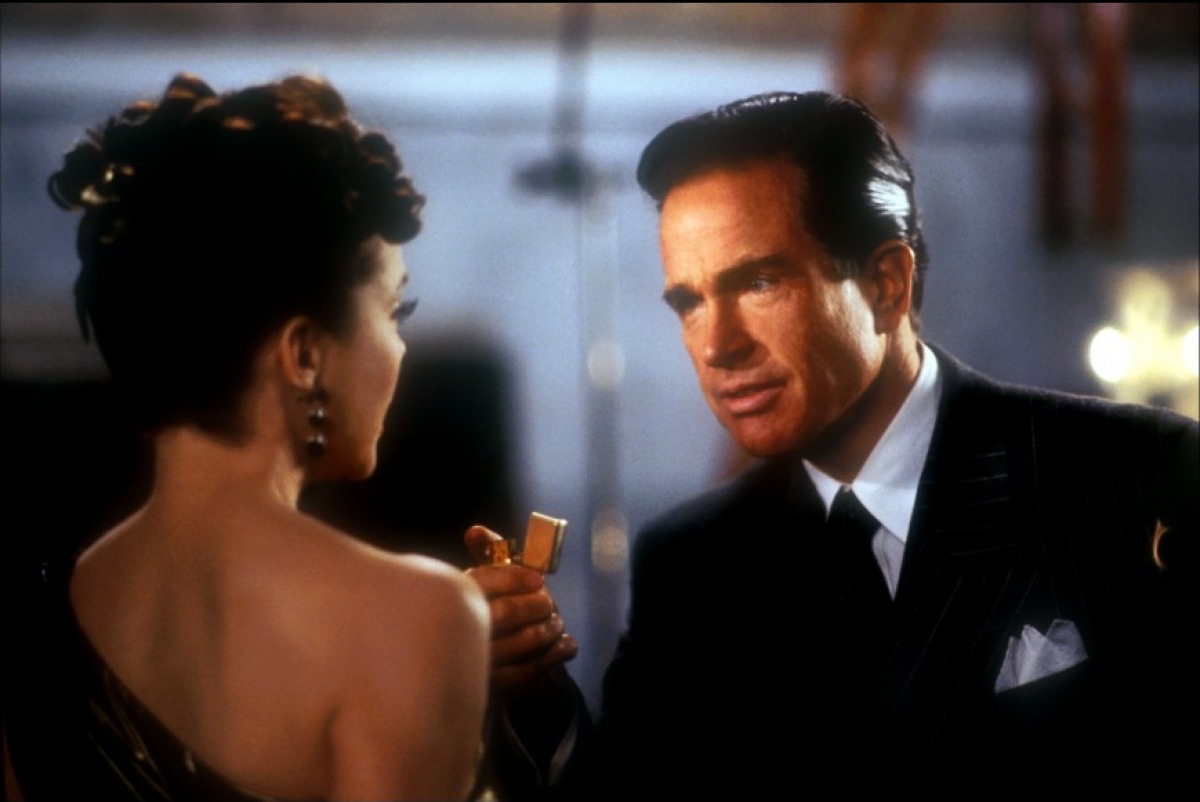
BUGSY
*** (A must-see)
Directed by Barry Levinson
Written by James Toback
With Warren Beatty, Annette Bening, Harvey Keitel, Ben Kingsley, Elliott Gould, Joe Mantegna, and Bebe Neuwirth.
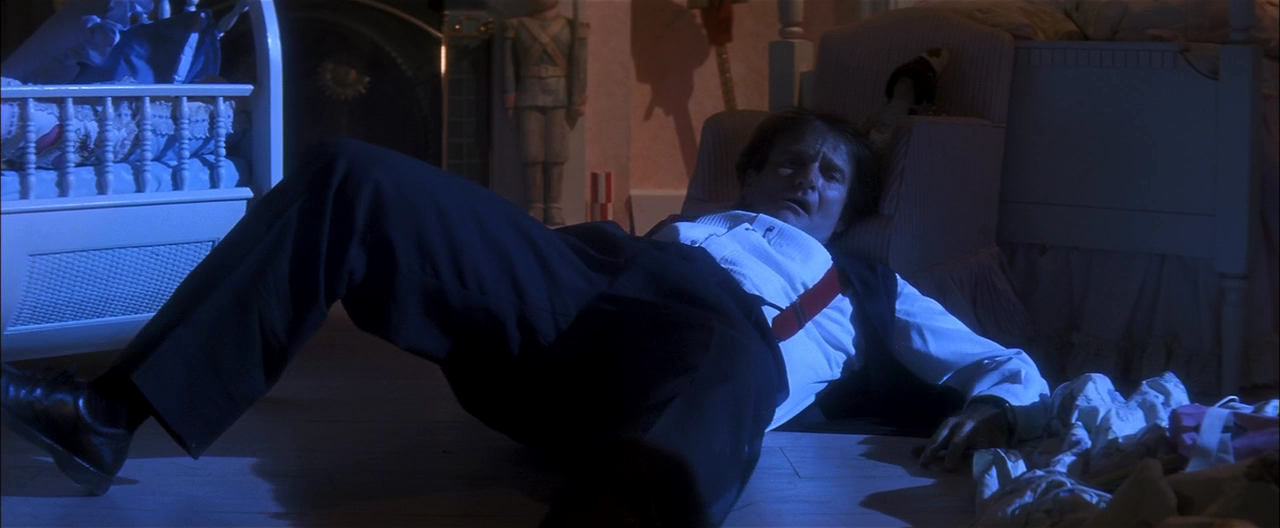
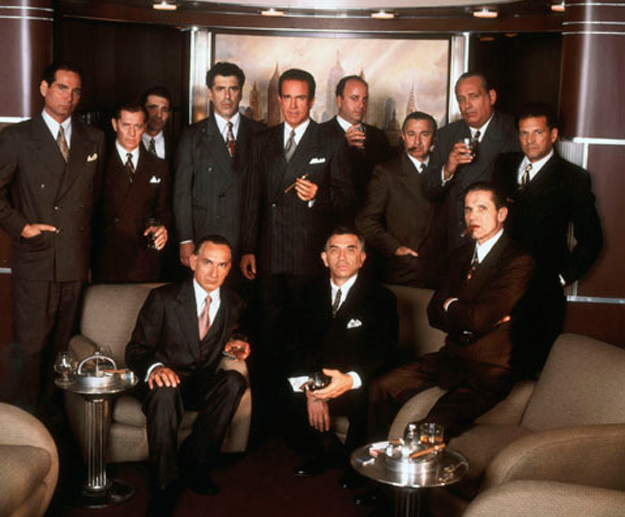
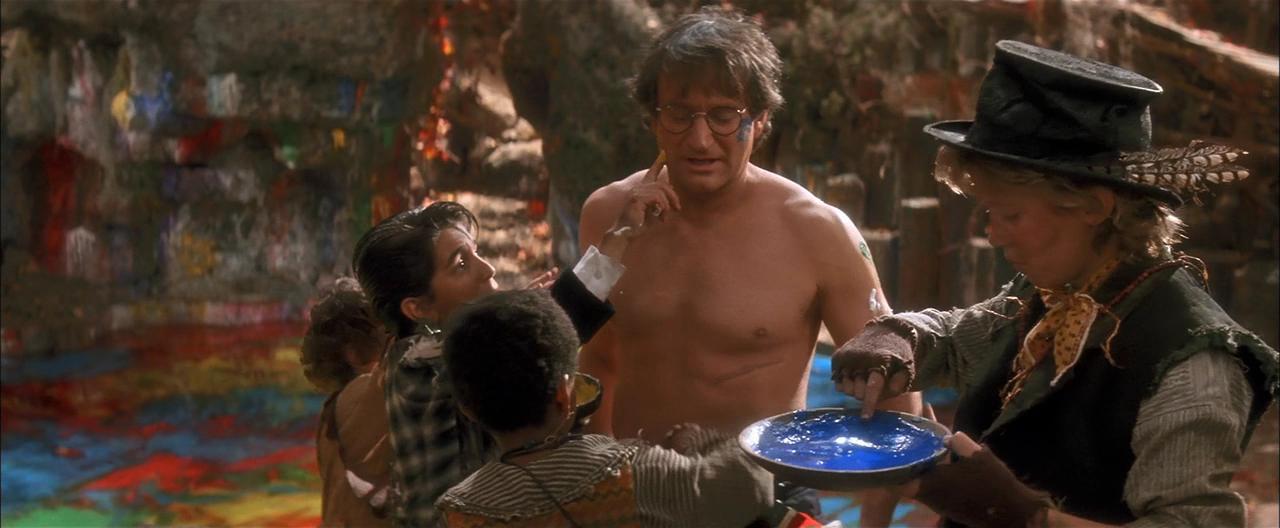
Wistful self-portraits of their respective stars — Steven Spielberg and Warren Beatty, two aging boy wonders lusting after the old magic — Hook and Bugsy are also lengthy meditations on investments, financial as well as spiritual. Coincidentally both projects were conceived seven years ago and have been gestating ever since: Spielberg started planning a straight version of J.M. Barrie’s Peter Pan in 1984, then decided to concoct an updated sequel set in the present, and the same year Beatty commissioned James Toback to write an original screenplay about Bugsy Siegel, which started out as an epic about his entire life and was gradually whittled down to cover only the end of his life in the 1940s. Hook is contrived to move from gloom to joy, while Bugsy charts a slow downward spiral into melancholy; but both movies leave one with a sense of failed purposes — and of an obstinate will to believe that exceeds the meaning or logic of any actual belief. Read more
From the Soho News (September 17, 1980). The owners of this newspaper at the time, if I’m not mistaken, were owners of South African gold mines, and I doubt that this article enhanced my job security — although I remained there as a freelancer for another 14 months.
I haven’t (yet) gone back to Bad Timing to see how wrong I might have been. — J.R.

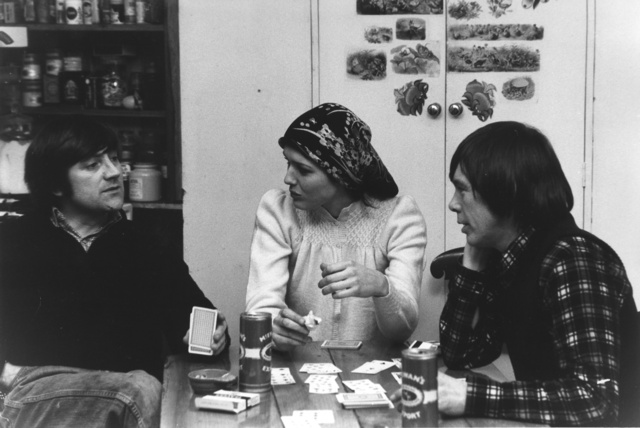
My Childhood
Written and Directed by Bill Douglas
My Ain Folk
Written and Directed by Bill Douglas
My Way Home
Written and Directed by Bill Douglas
The Gamekeeper
Written and Directed by Ken Loach
Based on the novel by Barry Hines
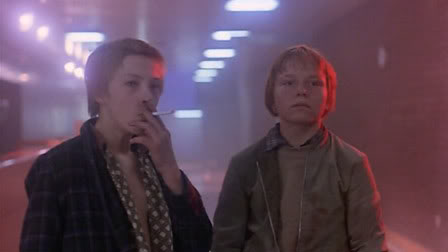
Bloody Kids
Written by Stephen Piliakoff
Directed by Stephen Frears
Long Shot
Written by Maurice Hatton, Eoin McCann and the cast
Directed by Maurice Hatton
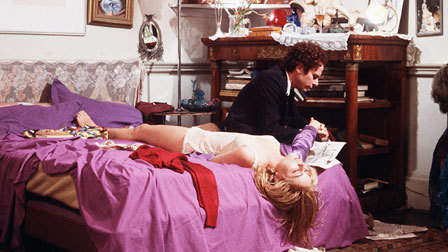
Bad Timing: A Sensual Obsession
Written by Yale Udoff
Directed by Nicolas Roeg
“British Film Now” –- a package of nine programs (at the Paramount Theater on Broadway at 61st) consisting of eleven features selected by Richard Roud, to be shown over six days preceding the 18th New York Film Festival -– is being presented by the Film Society of Lincoln Center and the British Film Institute, with financial assistance from the British Council and the Cultural Department of the British Embassy, the British Film Producers Association, and Amcon Group Inc. Read more

Though Pere Portabella is a major talent in experimental narrative film, working atypically in 35-millimeter, he’s still relatively unknown because his early features could be shown only clandestinely in Franco’s Spain and none is commercially distributed. The Silence Before Bach is his most pleasurable and accessible film to date, above all for its diverse performances of the title composer’s work. Gracefully leapfrogging between fact and fiction in at least two centuries and several countries, it recalls some playful aspects of his Warsaw Bridge (1989) while juxtaposing past and present as if they were attractions in a theme park. In Spanish, Italian, and German with subtitles. 102 min. (JR)
 Read more
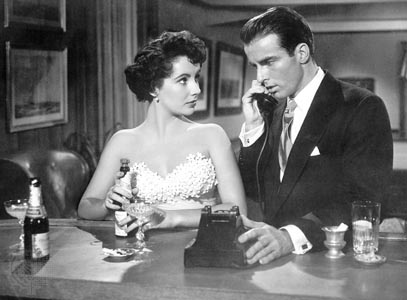
George Stevens’s overblown, Oscar-laden adaption of An American Tragedy (1951, 122 min.) is hopelessly inadequate as a reading of Dreiser’s great novel, and as usual Stevens seems too preoccupied with the story’s monumentality to have much curiosity about its characters. But William C. Mellor’s cinematography and the star power of Montgomery Clift and Elizabeth Taylor manage to keep this going. Michael Wilson and Harry Brown wrote the script, and Shelley Winters gives a good performance in a thankless part. (JR) Read more
Written for the FIPRESCI web site in Spring 2007. — J.R.

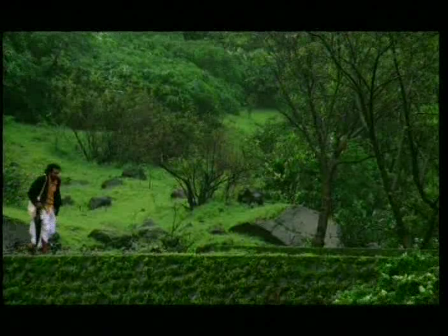
Now that 35-millimeter appears to be a format whose pleasures are being overlooked or forgotten, especially in the realm of short films, the sensual pleasures of Amit Dutta’s 22-minute To Be Continued (Kramasha) seem all the more precious. A good many of these have a lot to do with camera movements (tracks and pans and cranes, which include not only Resnais-like explorations of architectural ruins and ancient statuary, but also, at one strange juncture, semicircular, pendulum-like oscillations around portions of a tree, on the edges of which many people are seated); multilayered deep-focus compositions reflecting diverse aspects of the same ruins (with door frames and window frames often serving as lenses, and eccentric overhead angles often predominating); vibrant colors; and a musical feel for editing.
It must be admitted that this surfeit of delights poses certain narrative problems for some spectators. On a first viewing, one has the impression that some of the narrative premises keep shifting and developing so rapidly that one often feels stranded. But the principal reason for this is that the viewer’s imagination is constantly being solicited to add details to the onscreen images: when one hears sounds (thunder and rain, a purring cat) that don’t correspond to what one sees, yet another layer to the complex mix is added. Read more
From The Soho News (September 3, 1980). –- J.R.
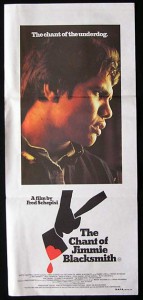
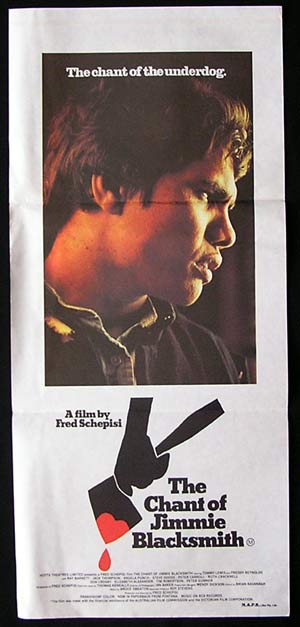
The Chant of Jimmie Blacksmith
Written and directed by Fred Schepisi
Based on the novel by Thomas Keneally
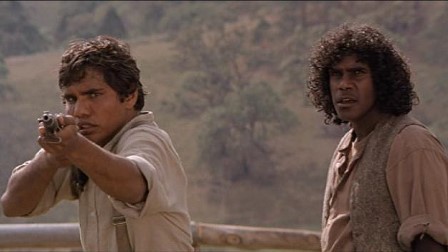
For a good 80 percent or so of its running time, the experience
of seeing The Chant of Jimmie Blacksmith affords a
salutary, beautiful shock. Films that are even halfway honest
about racism — Mandingo and Richard Pryor Live in
Concert are the most recent examples that spring to mind
— are so unexpected that they’re often accused of being racist
themselves, perhaps because of the deeply rooted taboos that
they expose and violate.
There’s no question that Fred Schepisi’s powerhouse Australian
movie — adapted from a novel by Thomas Keneally (who plays a
small but significant role as a lecherous cook), and “based on real
events that took place in Australia at the turn of the century”
(just before the federation of Australian colonies) – is agit-prop,
ideologically slanted. But then again, it’s hard to think of any
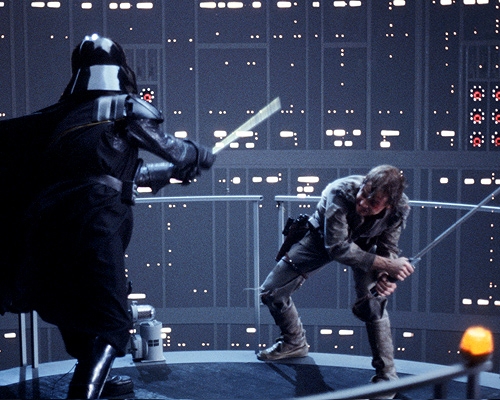
other current release — including, say, The Empire Strikes
Back and Dressed to Kill -– that isn’t.
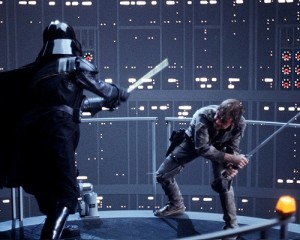
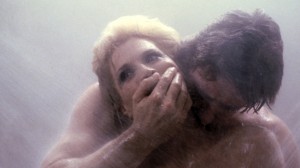
The aforementioned hits perform in part the not-so-innocent
task of turning contemporary objects of confusion and disgust
(recent architecture and sex, respectively) into occasions for
exhilarated lyricism. Read more
This is a story initially written, as I recall, during the summer of 1959, as I was preparing to leave Alabama for a boarding school in Vermont, although the version I’m posting here, most likely revised, was printed in the school’s literary magazine in June 1961, around the time of my high school graduation. I’ve done some light editing. The illustrations, which I realize are not always precisely congruent with the story, are gleaned from the Internet. This story is the last in a series of three to be posted on this site, all fantasies and all written when I was in high school . — J.R.
The Change
By Jonathan Rosenbaum
It happened near the end of summer, which is when I guess a lot of changes take place. The three of us, Mickey, George and I, were out at Mickey’s family camp on the lake, swimming and doing our best to forget that we only had two more days before we went off to start our first year at college.
The sun was hot and white that day, but the lake was dark and cool. Read more
My 27th column for Caiman Cuadernos de Cine, formerly known as Cahiers du Cinéma España, which appeared, I believe, in their July-August 2012 issue. — J.R.

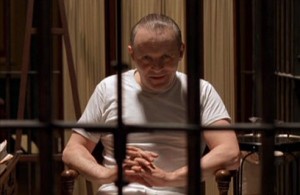
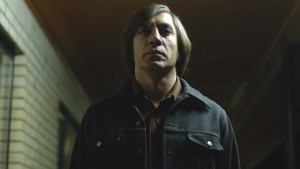
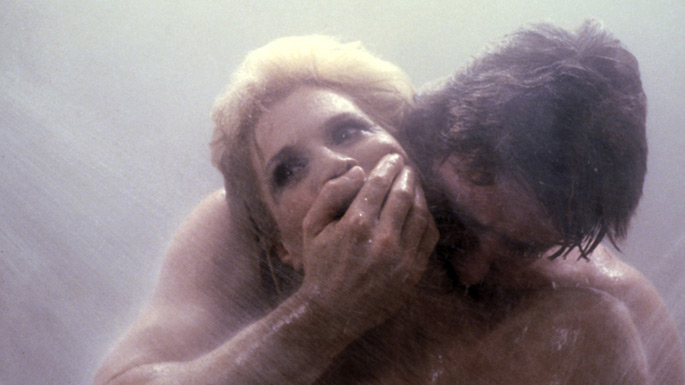
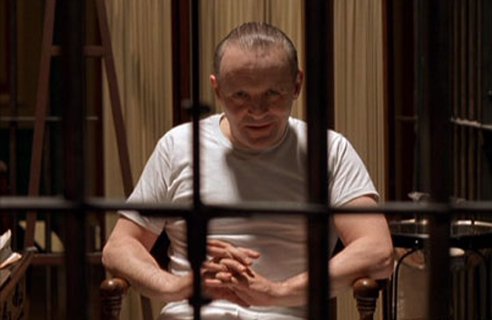
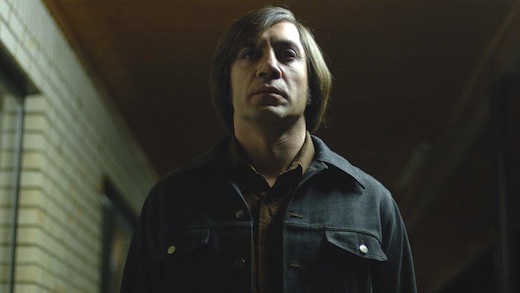
I have a habit as a critic that I suspect irritates some of my readers. When I find that my opinion about a new film differs substantially from that of the mainstream, I sometimes theorize that the reasons for this must be ideological. In this manner, I speculated that the immoderate fascination of other Americans with the mad serial killers of The Silence of the Lambs (1991) and No Country for Old Men (2007), which somehow seemed motivated by a twisted identification with them -– and especially with the capacity and eagerness of these psychotics to kill innocent people without any compunctions — were related to the fact that these films came out during the first and second Gulf wars, when Americans were killing innocent people with no compunctions at all, and sometimes even exhibiting comparable displays of glee about this mindless activity.
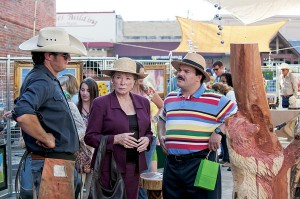
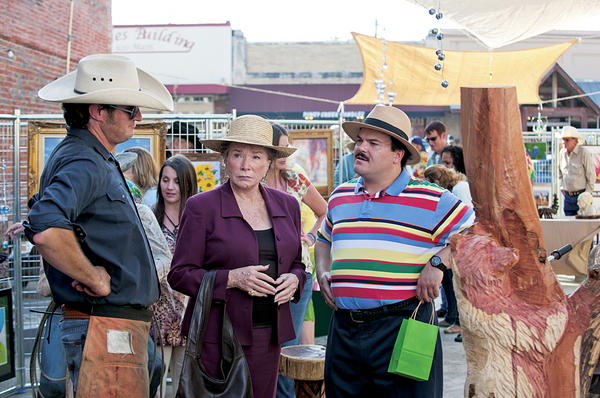
More recently, I’ve been puzzling over the fact that Richard Linklater’s latest feature, Bernie, a masterpiece that has been clearly delighting many of the audiences that come to see it, was only released after many delays, wasn’t sent to Cannes, and has been doing poorly at the box office — a fate similar to that of Linklater’s previous feature, Me and Orson Welles (2011), another treasured project which took him many years to finance, and one also dominated by a remarkable central performance (Christian McKay as Orson Welles, Jack Black as Bernie Tiede). Read more
What an onslaught of deaths that week in late March, 2021: Morris Dickstein, Larry McMurtry, Bertrand Tavernier, George Segal….The latter prompted this reposting. From Stop Smiling No. 35 (its gambling issue, guest edited by Annie Nocenti), June 2008. — J.R.
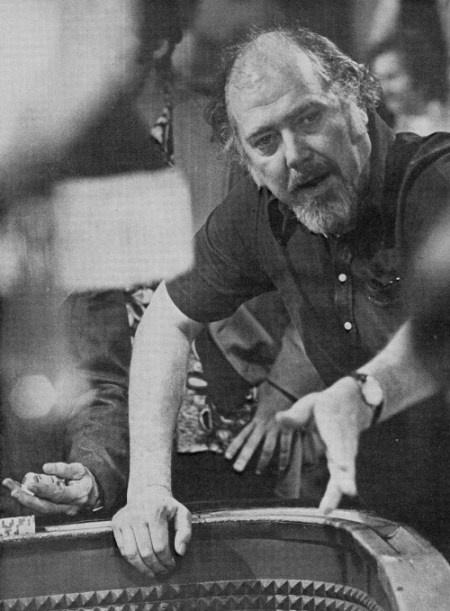
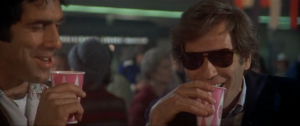
“Trusting to luck means listening to voices,” Jean-Luc Godard reportedly said at some point in the mid-1960s. This has always struck me as being one of his more obscure aphorisms, and one that even seems to border on the mystical. Yet the minute one starts to apply it to Robert Altman’s California Split, released in 1974 —- a free-form comedy about the friendship that develops and then plays itself out between two compulsive gamblers, Charlie (Elliott Gould) and Bill (George Segal), and the first movie ever to use an eight-track mixer — it starts to make some weird kind of sense.
What’s an eight-track mixer? According to the maestro of overlapping dialogue himself, speaking in David Thompson’s Altman on Altman (Faber and Faber, 2006), this is a system known as Lion’s Gate 8-Tracks developed by Jim Webb, and it grew directly out of Altman’s ongoing efforts to make on-screen dialogue sound more real. Sound mixers would frequently complain that some actors wouldn’t speak loudly enough and Altman would counter that this was a recording problem, not a performance problem involving the actors’ deliveries. Read more
From the Chicago Reader (August 31, 2001). Today (September 2, 2014), having recently reseen this movie, I’d probably give it a higher rating. — J.R.

The Curse of the Jade Scorpion
Rating ** Worth seeing
Directed and written by Woody Allen
With Allen, Helen Hunt, Dan Aykroyd, Brian Markinson, Elizabeth Berkley, Charlize Theron, Wallace Shawn, and David Ogden Stiers.

I don’t want to oversell Woody Allen’s 31st feature, which I happen to like. The script is full of holes, most of the one-liners are weak and mechanical, and the plot — a nightclub magician gets two of his hypnotized subjects to steal jewels for him — is so deliberately stupid and contrived that one can probably enjoy it only by pretending it’s a routine, low-budget second feature on an old-fashioned double bill, which is obviously what Allen intended. Yet it’s possible for a picture to be not very good and still be likable — something that doesn’t happen very often for me with Allen’s pictures. (It happened, momentarily, in Everyone Says I Love You — when Allen exposed his vulnerability by singing the first 16 bars of “I’m Thru With Love.”)

The problem with most escapism nowadays is that even if it makes you forget who and where you are, it doesn’t really detach you from norms of the world you’re living in. Read more