FromCineaste, Vol. XXIX, No. 4, September 2004. This is also reprinted in my collection, Goodbye Cinema, Hello Cinephilia. — J.R.
Although I suspect many would dispute this characterization, I think the period we’re now living through may well be the first in which scholars have finally figured out a good way of teaching film history. And significantly, this discovery isn’t necessarily coming out of academic film study, even if a few academics are making major contributions to it.
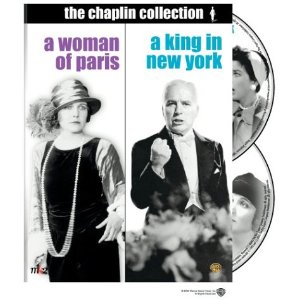
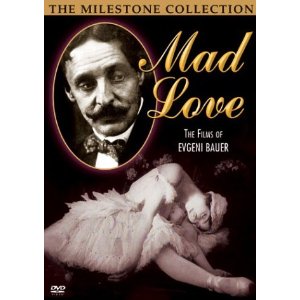
I’m speaking, of course, about the didactic materials accompanying the rerelease of some classic films on DVD. Three examples that I believe illustrate my thesis especially well are (1) the various commentaries or audiovisual essays offered by Yuri Tsivian on DVD editions of Mad Love: The Films of Evgeni Bauer (Milestone), Dziga Vertov’s Man with a Movie Camera (Kino International/BFI), and Sergei Eisenstein’s Ivan the Terrible (Criterion); (2) the commentaries offered by David Kalat on Fritz Lang’s Dr. Mabuse the Gambler (Blackhawk Films) and The Testament of Dr. Mabuse (Criterion); and (3) the various documentary materials offered on “The Chaplin Collection,” a twelve-box set issued jointly by MK2 and Warners and put together with the full resources and cooperation of the Charles Chaplin estate. Read more
From the November 29, 1990 Chicago Reader, where some wag had the bright idea of calling this piece “The Stinging Nun”. — J.R.
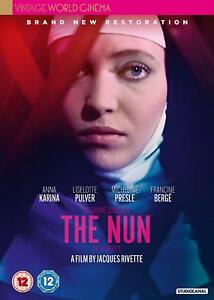
THE NUN
**** (Masterpiece)
Directed by Jacques Rivette
Written by Jean Gruault and Rivette
With Anna Karina, Liselotte Pulver, Micheline Presle, Christianne Lenier, Jean Martin, and Francisco Rabal.
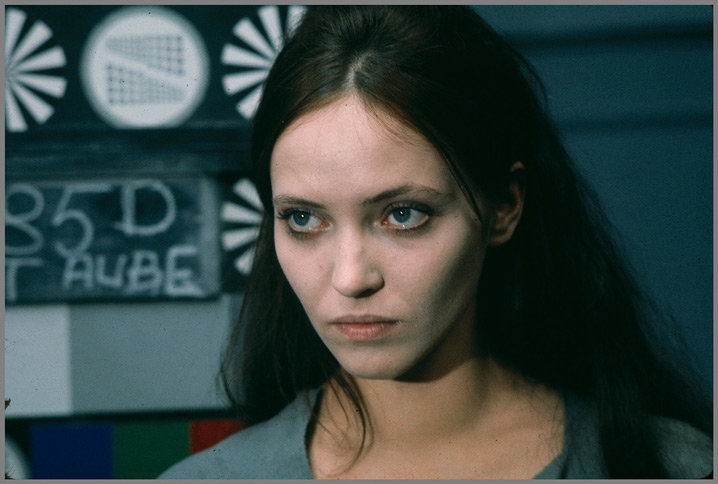
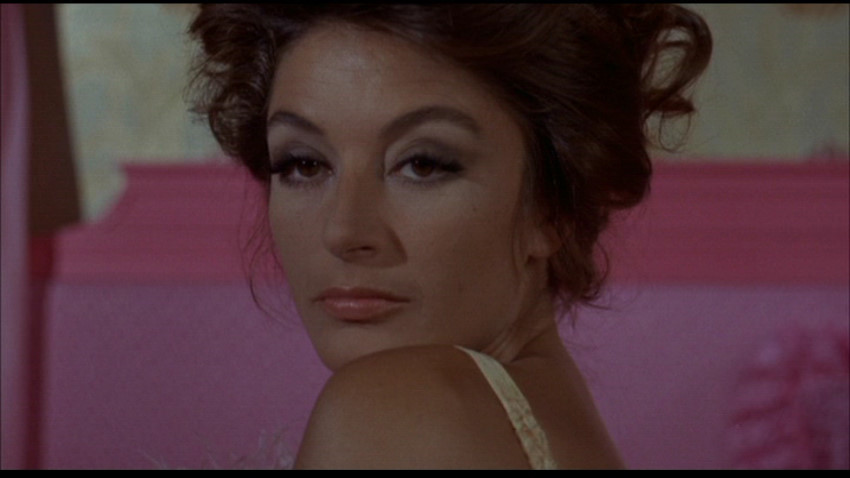
While it’s certainly regrettable that it’s taken Jacques Rivette’s controversial second feature 24 years to get distributed in this country in its complete and original form, there’s also something felicitous about its finally becoming available in an era when censorship of the arts is again on the warpath. Delays of various kinds have been central to the history of this potent if surprisingly chaste film, and there were comparable delays between the year Denis Diderot finished the novel that the film is based on (1760) and its actual appearance in print (1780-82 in serial form, and 1796–12 years after Diderot’s death — in the first printed edition).
Oddly enough, although the film makes no mention of this, the novel started out as a practical joke — an elaborate hoax staged by Diderot and some of his friends, who wanted to lure one of their cronies, the Marquis de Croismare, back to Paris after he retired to Normandy in 1758. Read more
In retrospect, it’s amazing to me how many good films I saw in 1998 — as evidenced by my ten-best piece for the Chicago Reader, published January 8, 1999. (P.S. The still at the very end of this article is from Masumura’s Red Angel, which I’m happy to say is now available on DVD, along with most of the films on this ten-best list.)
On September 24, 2010, “The Stunner” [sic] sent me the following message on MUBI: “I found this entry on your blog, about Manoel de Oliveira’s ‘Inquietude’ on your top 10 movies of 1998:’I prefer the French and Portuguese title of this three-part feature — which my dictionary defines as ‘disturbed state’— to its English title, Anxiety.’ A better translation for ‘inquietude’, in my opinion, would be something like ‘intranquility,’ ‘agitation’, or “inquietness’ — these are all good and quite literal translations and I, being Portuguese, think they are accurate synonyms.” — J.R.
What do we mean when we declare something or someone “the best”? Last month, during my first visit to Tokyo, I served on a panel about the late Japanese master Yasujiro Ozu along with director Hou Hsiao-hsien, Hou’s principal screenwriter, the president of Tokyo University, and two French critics associated with Cahiers du Cinema. Read more
From the August 24, 1990 issue of the Chicago Reader. This is another film (see capsule review of Rita, Sue and Bob Too, posted earlier today) released on Blu-Ray by Twilight Time. For the record, I much prefer most or all of the features David Lynch has made since Wild at Heart, especially Inland Empire. — J.R.
WILD AT HEART
* (Has redeeming facet)
Directed and written by David Lynch
With Nicolas Cage, Laura Dern, Diane Ladd, Willem Dafoe, Isabella Rossellini, Harry Dean Stanton, and Crispin Glover.
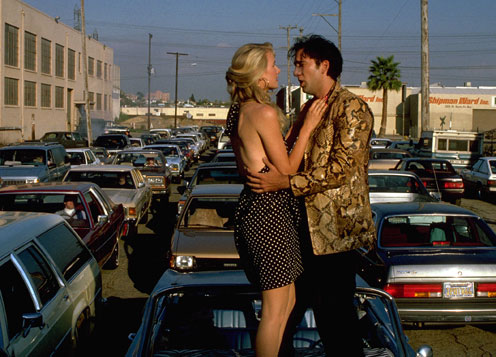
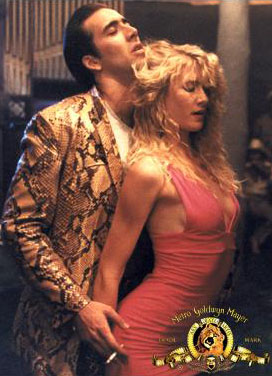
The progressive coarsening of David Lynch’s talent over the 13 years since Eraserhead, combined with his equally steady rise in popularity, says a lot about the relationship of certain artists with their audiences. A painter-turned-filmmaker, Lynch started out with a highly developed sense of mood, texture, rhythm, and composition; a dark and rather private sense of humor; and a curious combination of awe, fear, fascination, and disgust in relation to sex, violence, industrial decay, and urban entrapment. He also appeared to have practically no storytelling ability at all, and in the case of Eraserhead, this deficiency was actually more of a boon than a handicap. Like certain experimental films, the movie simply took you somewhere and invited you to discover it for yourself. Read more
The following essay was both commissioned and written in early June 2009. My thanks to the Chinese translator Zhanxiong Xu for giving me permission to publish the original English version here.
I’m also pleased to announce that a Chinese translation and edition of one of my own books, Movie Wars: How Hollywood and the Media Limit What Films We Can See, came out in China. I strongly suspect that the subsequent influx of Chinese visitors to this site must have had something to do with its publication. — J.R.
Introduction to the Chinese Edition of More Than Night: Film Noir in its Contexts
by Jonathan Rosenbaum
I
“The Chinese don’t accord much importance to things of the past,” Maggie Cheung maintained in an interview with a French magazine roughly a decade ago (1), “whether it’s films, heritage, or even clothes or furniture. In Asia nothing is preserved, turning towards the past is regarded as stupid, aberrant.”
Interestingly, this statement helps to explain why so many of the most important Chinese films, at least for me, are concerned with the discovery of history, and represent various attempts to reclaim a lost past. I’ll restrict myself to a short list of a dozen favorite Chinese features, all of which exhibit these traits: Fei Mu’s Xiao cheng zhi chun (Spring in a Small Town, 1948); Hou Hsiao-hsien’s Bei qing cheng shi (City of Sadness, 1989) and Xi meng ren sheng (The Puppetmaster, 1993); Wong Kar-wai’s A Fei zheng chuan (Days of Being Wild, 1990) and Fa yeung nin wa (In the Mood for Love, 2000); Edward Yang’s Gu ling jie shao nian sha ren shi jian (A Brighter Summer Day, 1991); Stanley Kwan’s Ruan Lingyu (1992); Tian Zhuangzhuang’s Lan feng zheng (The Blue Kite, 1993); Li Shaohong’s Hong fen (Blush, 1994); and Jia Zhangke’s Zhantai (Platform, 2000), Sanxia Haoren (Still Life, 2006), and Er shi si cheng ji (24 City, 2008). Read more
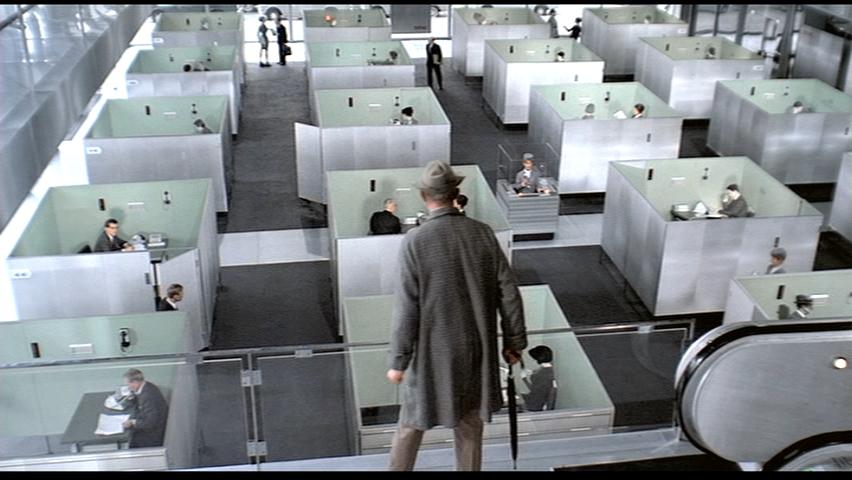
This article and interview was originally published in the May-June 1973 issue of Film Comment, roughly half a year after the interview took place. I went to work for Tati as a script consultant several weeks after I had the interview, but well before it appeared in print. A few years ago, this piece was reprinted online in the Southern arts magazine Drain. —J.R.
Tati’s Democracy
An Interview and Introduction
Jonathan Rosenbaum
Like all of the very great comics, before making us laugh, Tati creates a universe. A world arranges itself around his character, crystallizes like a supersaturated solution around a grain of salt. Certainly the character created by Tati is funny, but almost accessorily, and in any case always relative to the universe. He can be personally absent from the most comical gags, for M. Hulot is only the metaphysical incarnation of a disorder that is perpetuated long after his passing.
It is regrettable that André Bazin’s seminal essay on Jacques Tati (“M. Hulot et le temps,” 1953, in Qu’est-ce que Ie cinéma?Read more
Written for a retrospective catalog devoted to Jacques Demy, published by the San Sebastian International Film Festival, September 15-24, 2011, and reprinted in my book Cinematic Encounters 2: Portraits and Polemics (2019). — J.R.
“Braque, Picasso, Klee, Miro, Matisse….C’est ça, la vie.”–- Maxence in Les Demoiselles de Rochefort
“Life is disappointing, isn’t it?”
–- Kyoko in Tokyo Story
1
I’ve never come across any critical discussion of common traits in the separate films of Jacques Demy and Agnès Varda, who lived together for three decades. Their oeuvres are in fact quite different and distinct from one another, but one striking characteristic they share as filmmakers is their preoccupation with indexing and cross-referencing their own works within their own films.
In chronicling and excerpting her own previous work, Varda’s Les Plages d’Agnès (2008) brings this tendency to a climax, but her DVD containing Les Glaneurs et la Glaneuse (2000) and its sequel, Deux Ans Après, already formalizes and optimizes this tendency — which can be traced within and between some of her previous films — by allowing one to leap via one’s remote control from a character in the former documentary to the same person being filmed two years later (or vice versa). Read more
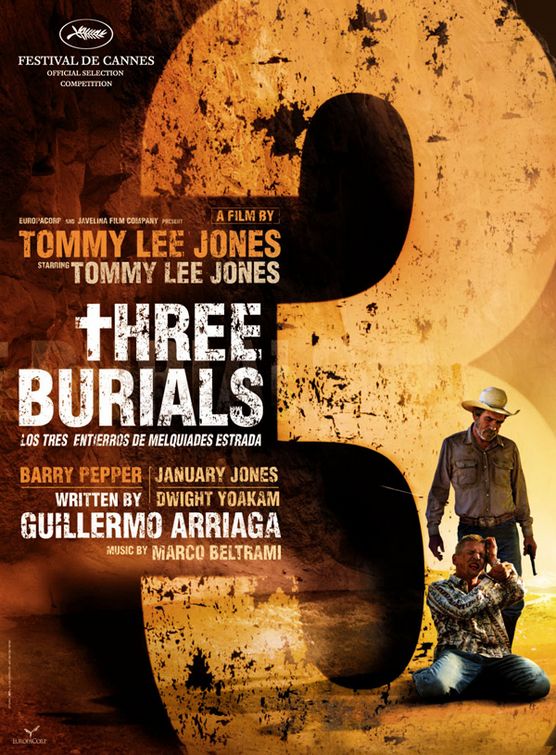
A contemporary western with political overtones and acerbic gallows humor, Tommy Lee Jones’s first theatrical feature as director (2005) is impressive. Inspired by the unpunished 1997 killing of 18-year-old Ezequiel Hernandez Jr., the script by Guillermo Arriaga (Amores Perros) concerns the accidental and unpunished shooting of the title character, a Mexican ranch hand (Julio Cesar Cedillo) working in west Texas. Jones plays the ranch hand’s foreman and friend, who kidnaps the border patrolman responsible (Barry Pepper) and drags him and Estrada’s corpse across the border, determined to fulfill his friend’s wish to be buried in his remote hometown. A very capable piece of storytelling, clearly showing the influence of Sam Peckinpah and beautifully shot in ‘Scope by Chris Menges, this recaptures some of the grandeur of the classic western while adding modernist and absurdist ironies. With Dwight Yoakam, January Jones, and Melissa Leo. R, 121 min. (JR)
Written for the Metrograph Chronicle in January 2020. — J.R.
There’s an unfortunate habit among some Yankee cinephiles — including distributors — to limit our perceptions of some overseas trends to single figures, so that Spanish cinema initially consisted of Luis Buñuel, then Pedro Almodóvar, Swedish cinema became synonymous with Bergman, and Hong Kong art cinema begins and ends with Wong Kar-wai. This helps to explain why I haven’t had much luck in keeping up with the careers of two other favorites of mine among Hong Kong directors, Peter Ho-Sun Chan and Stanley Kwan, whose finest work is every bit as important to me as Days of Being Wild and In the Mood for Love. If you haven’t yet seen Chanr’s Comrades: Almost a Love Story and/or Kwan’s Rouge, they’ll do a good job of suggesting what you might be missing.
Rouge, made in 1987, is set alternately in that year and in 1934. Comrades, Almost a Love Story, another Hong Kong not-quite romance shaped around two superstars, was made in 1996, opens in 1986, and ends first in Manhattan in 1995, then back again in 1986, when the title characters are arriving in Hong Kong, still strangers to the city and to each other. Read more
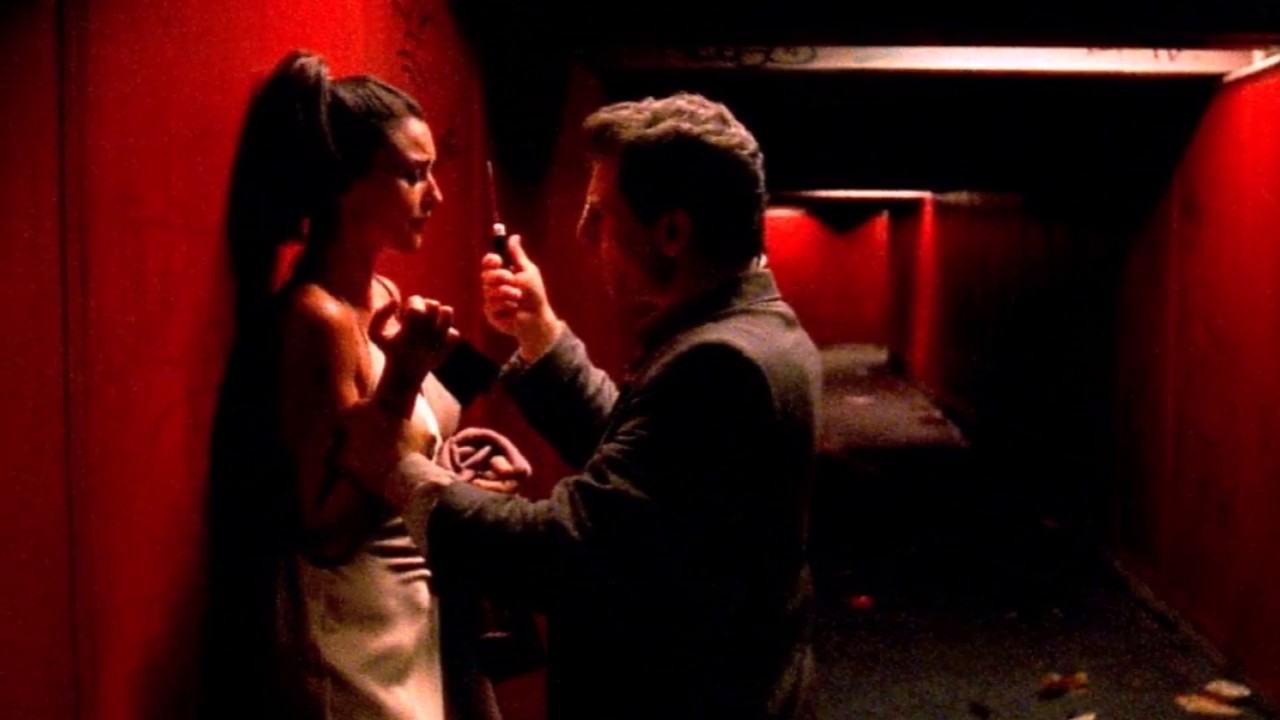
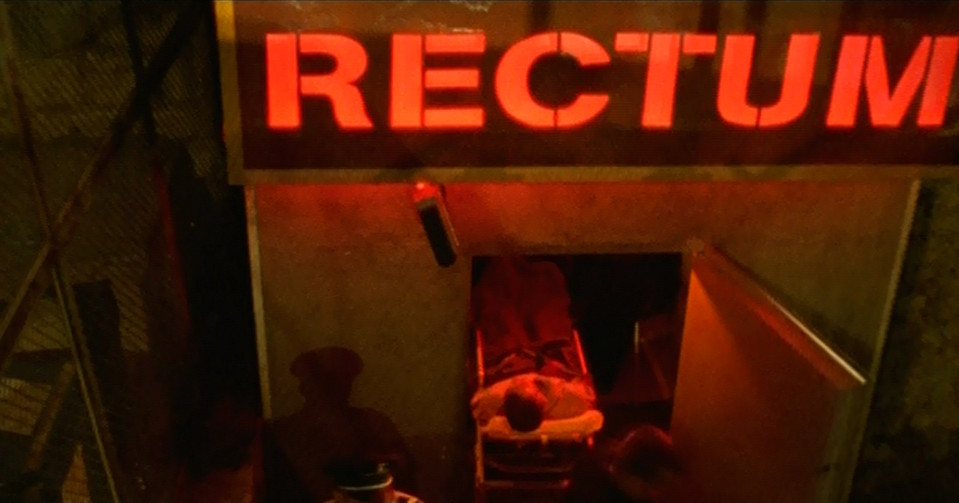
Gaspar Noé’s 2002 follow-up to his remarkable I Stand Alone is stupid, vicious, and pretentious, though you may find it worth checking out if you want to experiment with your own nervous system. As in the overrated and similarly misanthropic Memento, the episodes of the story play out in achronological order, from violent murder in a gay S-M club called the Rectum toward the rape and beating that motivated it and beyond that to earlier and happy times for the heroine (Monica Bellucci) and two of her lovers (Vincent Cassel and Albert Dupontel). The dialogue is mainly improvised, the sequences are mainly ten-minute takes (either real or simulated), and the aggressive 360-degree camera movements at the beginning are so disorienting that one can barely follow the action — though Noé grinds to a respectful halt to contemplate the rape and brutality. In French with subtitles. 99 min.
From Film Comment. In a few slight particulars, I’ve taken the liberty of editing my 30-year-old self 47 years later. I’ve also omitted the remarks about several recent French film books (apart from Benayoun’s) that concluded this column. — J.R.
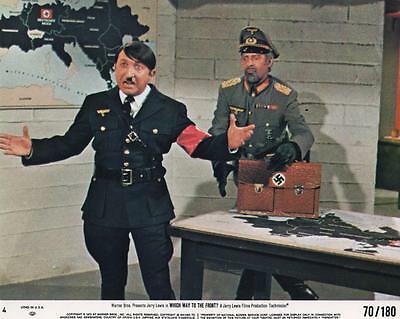
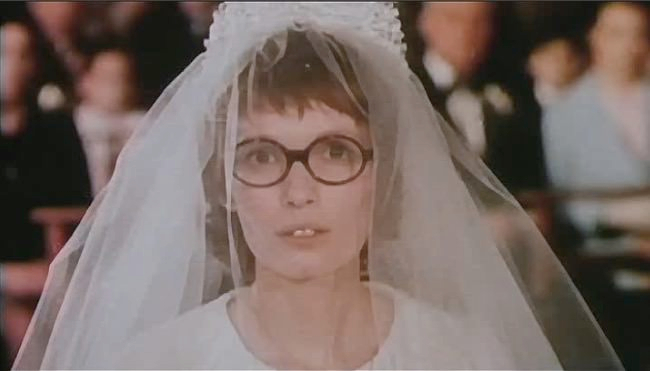
The admiration of French cinéastes for Jerry Lewis continues to be in evidence everywhere. In an interview in the current Time Out [in London], Jean-Pierre Gorin pays his own respect to Lewis’s greatness – over the protests of his interviewers – for the “experimental” and “scientific” ways that he deals with sound and image, cutting and plot construction, adding that Godard has seen WHICH WAY TO THE FRONT? (which “is almost mathematical if you look into it deeply”) five times. And in DOCTEUR POPAUL, Chabrol’s latest film, Mia Farrow is furnished with eyeglasses and buck teeth to make her resemble Julius Kelp in THE NUTTY PROFESSOR, while Jean-Paul Belmondo is run through a series of sight-gags that are clearly Lewis-inspired.
To my mind, Chabrol’s pastiches are vastly inferior to Lewis’s originals, and DOCTEUR POPAUL is less worthy of American release than Chabrol’s earlier OPHÉLIA, LA RUPTURE, or JUSTE AVANT LA NUIT (the last-named, a perverse and elegant companion-piece of LA FEMME INFIDÈLE, is probably the best of the lot). Read more
It’s infuriating to keep hearing people smugly and narcissistically remark on TV about what a “historic” period we’re currently living through. Presumably this is in sharp contrast to their (i.e., our) less significant predecessors. Yet truthfully, what these people really seem to mean by “historical” is “hysterical”. [12/18/20] Read more