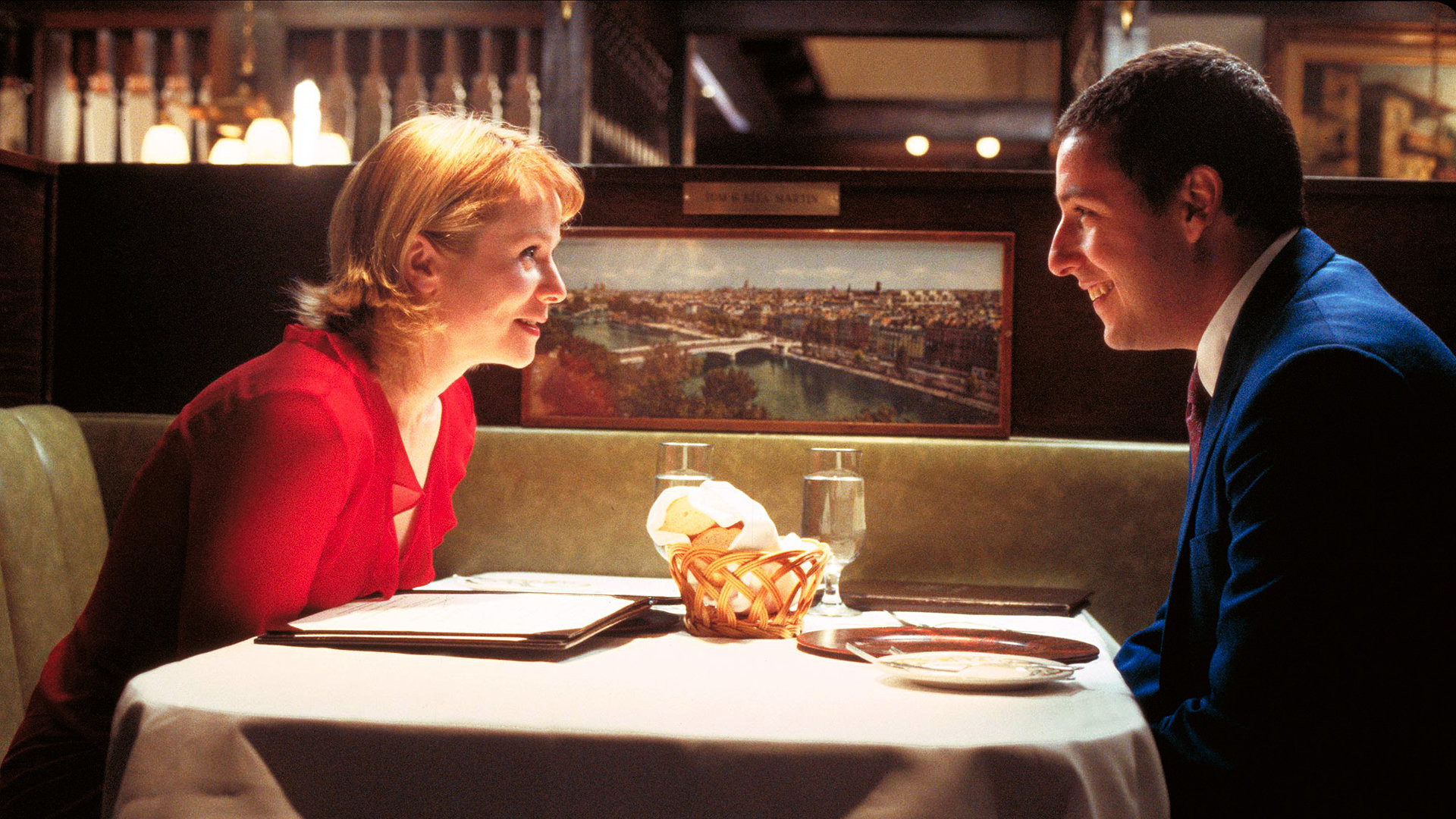
The fourth feature of writer-director Paul Thomas Anderson (after Hard Eight, Boogie Nights, and Magnolia) is a stridently wacky romantic comedy that stands or falls on whether you find Adam Sandler funny as a small businessman working out of a warehouse in greater Los Angeles. He didn’t make me laugh once, and neither did his costar Emily Watson, though Philip Seymour Hoffman, in what amounts to a cameo, made me laugh once or twice. I tend to like quirkiness, but this arch effort is so eager to be quirky nearly everything winds up willfully mannered, from Jon Brion’s flashy percussive score to the hyperbolically absurdist plot. Still, I wouldn’t have minded the Hollywood schlock lurking behind the studied weirdness if I’d believed in any of the characters on any level. With Luiz Guzman. 91 min.[2020 postscript: This movie lingers in my memory more pleasantly than this capsule review suggests, which must mean something positive] (JR)
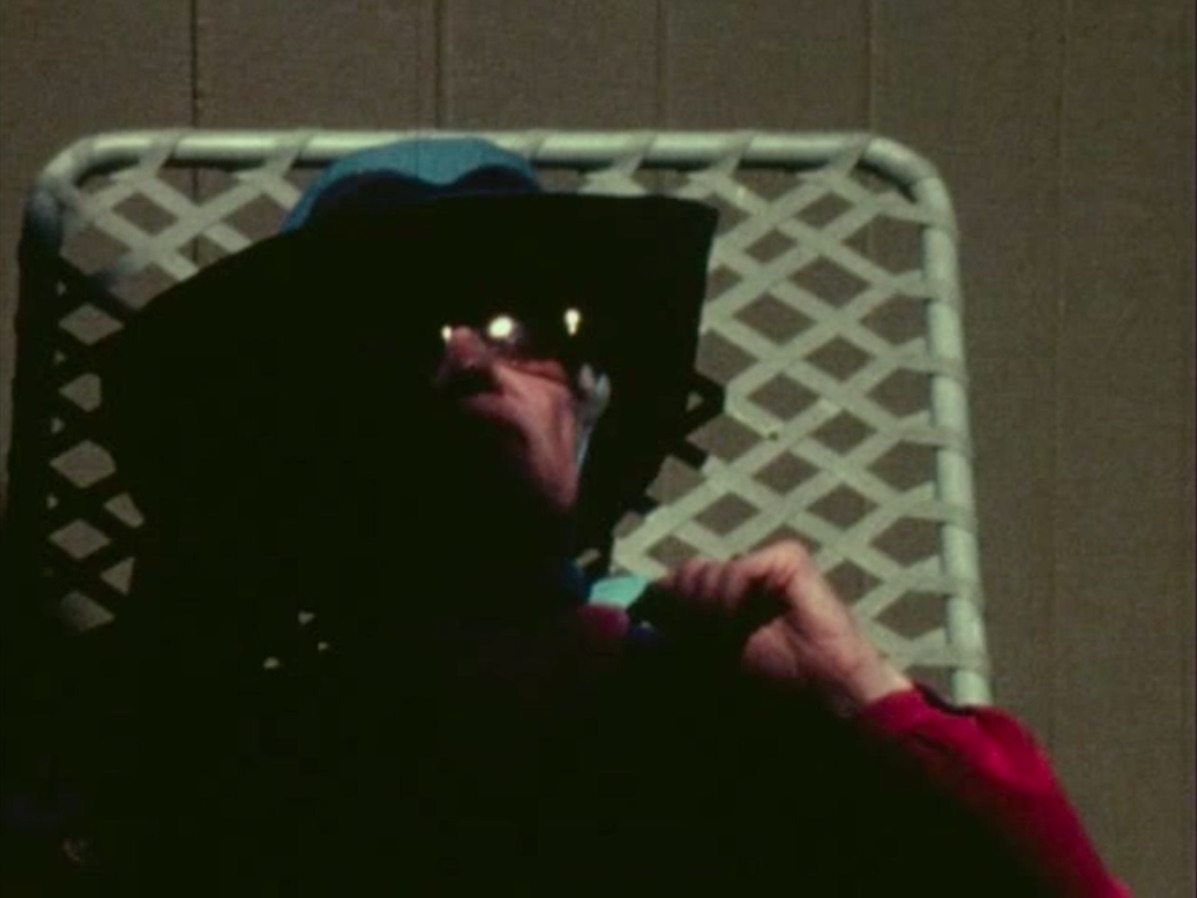
The four films to date of independent Chicago filmmaker Peter Thompson form two diptychs: not films to be shown simultaneously side-by-side, but successive works whose meanings partially arise out of their intricate inner rhymes and interactions. Two Portraits (1982), which has already had limited exposure in Chicago, describes the filmmaker’s parents: Anything Else, devoted to his late father, combines stop-frame images of the latter, in an airport and outdoors, with a painful recording of his voice taken in a hospital and a multifaceted verbal portrait delivered by his son; Shooting Scripts juxtaposes the filmmaker’s mother, Betty Thompson, reading from her own diaries with a minimalist view of her sleeping on a beach chair, alternating stop-frames with privileged moments of movement. Together these films create a rich tapestry, but the more recent hour-long pair, Universal Hotel and Universal Citizen (1987), receiving its premiere here, creates a still more ambitious and dense interweaving of objective and subjective elements. As Thompson puts it, this diptych deals with three main themes: the emotional thawing of men by women, the struggle to disengage remembrance from historical anonymity, and nonrecoverable loss. In the first film, Thompson describes his involved research about medical experiments in deep cold conducted on a Polish prisoner and a German prostitute by Dr. Read more
A masterpiece by Stanley Kwan, the greatest Hong Kong film I’ve seen (also known as Ruan Ling Yu and Center Stage). The story of silent film actress Ruan Ling Yu (1910-1935), known as the Garbo of Chinese cinema, it combines documentary with period re-creation, biopic glamour with profound curiosity, and ravishing historical clips with color simulations of the same sequences being shot — all to explore a past that seems more complex, mysterious, and sexy than the present. Maggie Cheung won a well-deserved best actress prize at Berlin for her classy performance in the title role, and a large part of what Kwan does as a director is to create a kind of nimbus around her poise and grace. (If I had to pick Kwan’s Hollywood equivalent, I’d opt for George Cukor.) Kwan also creates a labyrinth of questions around who Ruan was and why she committed suicide — a labyrinth both physical (with beautifully ambiguous uses of black-and-white movie sets) and metaphysical — and keeps these questions perpetually open. You should be prepared for a picture that lasts 146 minutes and invites you to relish every one of them — not only the stylish beauty of an imagined Shanghai film world of the 30s, but also the flat abrasiveness of Kwan chatting with Cheung on video about what all this means and coming up with damn little. Read more
My column for Caimán Cuadernos de Cine, submitted in late April for their June 2020 issue. Happily, both Her Socialist Smile and A House is Not a Home: Wright or Wrong are both readily available now via streaming.– J.R.
I suppose one could say that the coronavirus has been “good” for my web site because more people visit it now. In much the same fashion, and with an equivalent amount of innocent perversity, Donald Trump is said to be “bad” for the United States (that is, most of the people in the United States) yet “good” for television —meaning the handful of billionaires who own and control television, all of whom are felt to be distinct from the United States.
What does it mean, really, to call anything in the media (television, radio, cinema, the Internet, my web site, your web site ) “good” without matching the interests of the people who go there or live there? Like the American delusion that only three kinds of people exist in the world — Americans, anti-Americans, and prospective Americans — this means excluding most of humanity from the playing field.
I once heard that when Jonas Mekas in 1970 received the news that Nasser had just died, his first thought was to ponder whether this was “good or bad for cinema”. Read more
Commissioned by New Lines magazine the day that Godard died (September 13, 2022), and published by them without this title two days later. — J.R.
“He wasn’t sick. He was simply exhausted,” someone close to Jean-Luc Godard told the French newspaper Libération. But not so exhausted that he couldn’t confound his public, including his fans, one last time, by deciding to end his life by assisted suicide — that is to say, to end it nobly, willfully and seriously, even existentially, rather than fatefully and inadvertently.
Godard was hated as much as Orson Welles by the commodifiers who could find no way of commodifying his art, of predicting and thereby marketing his next moves as they could with a Woody Allen or an Ingmar Bergman or a Federico Fellini. And in the end he fooled us one last time by following his own path rather than ours. Was his way of dying a selfish act? Yes and no. It yielded an honest and considered end rather than an involuntary one; it tells us who he was (and still is).
I first encountered Godard’s work when I was 17 and saw À Bout de Souffle (Breathless, 1960) in New York. But I didn’t meet him in person until 1972, when I tried to interview him and Jean-Pierre Gorin in Paris about their co-directed Tout va bien (Just Great). Read more
Frederick Wiseman’s patient, four-hour unpacking of a small town in Maine confirms the impression of his previous masterpiece, Public Housing: that the masterful documentarian of High School (1968) and Welfare (1975) has now become a masterful essayist. Or maybe he’s been an essayist all along but has lately begun exercising his intelligence and organizing his documentary materials in increasingly subtle and nondidactic ways. What seems different and special about his recent work is its avoidance of easy theses. He picked as his subject this seaside community of 6,000 inhabitants, 99 percent of them white, because he lived a few miles away. He explains his approach as follows: “To document both change and continuity brought about by economic pressure on everyday life in Belfast, I examine its institutions and everyday practices. I also take a look at places where people interact: family life, commerce, public services, and public places.” My favorite scene is a high school teacher’s brilliant lecture on Moby-Dick that throws a great deal of light on everything else, but a lot of what I remember most vividly is the documentation of the daily work involved in preparing and packaging seafood — none of it boring to watch.Read more
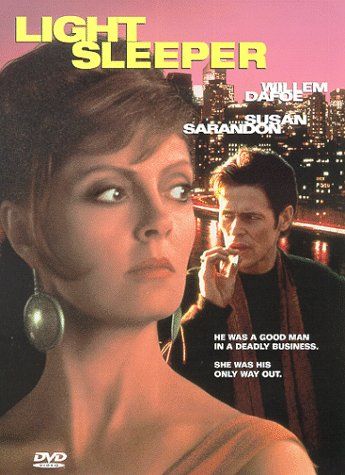
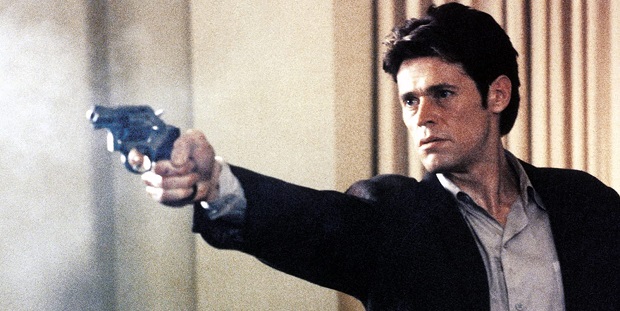
Despite a steady rise in his craft as both a writer and a director, Paul Schrader is still light years away from his mentor and model, Robert Bresson. His persistent ludicrous efforts to remake Diary of a Country Priest and Pickpocket in Hollywood terms have already given us Taxi Driver and American Gigolo, and they’re as doomed as ever in this portrait of a Manhattan drug dealer (Willem Dafoe) desperate to clean up his act. (Now Schrader appears to be trying to remake Taxi Driver, complete with excremental metaphors, nocturnal views of New York, and droning offscreen narration by the hero.) But Susan Sarandon (who improves even more with age than Schrader does) is so good as Dafoe’s boss, and the dialogue is so literate for such a familiar story, that there’s a lot to admire — it’s Schrader’s best film — as long as one can get past the transcendental claptrap (e.g., a New York Post headline reading a”Fall From Grace”) that Schrader sheds compulsively. With Dana Delany, David Clennon, Victor Garber, and Mary Beth Hurt. (JR)
From The Soho News (June 3, 1981). This is also reprinted in my first collection, Placing Movies: The Practice of Film Criticism. 2022: This remains for me De Oliveira’s greatest work, albeit his most neglected. As a treatise on how to adapt a great novel, it is surpassed only by Greed. J.R.
How can I persuade you that the best new movie I’ve seen this year, the only one conceivably tinged with greatness, is a voluptuous four-and-a-half-hour Portuguese costume melodrama, shot in 16-millimeter? Obviously I can’t. So rather than make you feel guilty about missing a masterpiece — as a couple of my friends managed to do when it was at MOMA last spring — let me assume at the outset that you will miss DOOMED LOVE all ten times that it shows at the Public between May 26 and June 14. Bearing this in mind, the following notes are an account of what you missed, are currently missing, or will miss.
1. If it’s confusing and misleading for some to call DOOMED LOVE an avant-garde film, this seems mainly because of the widespread working assumption that “avant-garde” is a social category above and beyond an aesthetic one. As industry-oriented critics like Kael and Sarris are frequently reminding us (the former obliquely, the latter unabashedly), the crucial professional issue is not what movies we go to as critics but what parties, junkets, festivals, universities, grants, and other circuits of power we have easy access to — not what we see but what we have is our calling card, whereas “taste” is largely a rationalization for the personal erotics of self-gratification, cooperation, conflict, and flattery founded on such a system of exchange. Read more
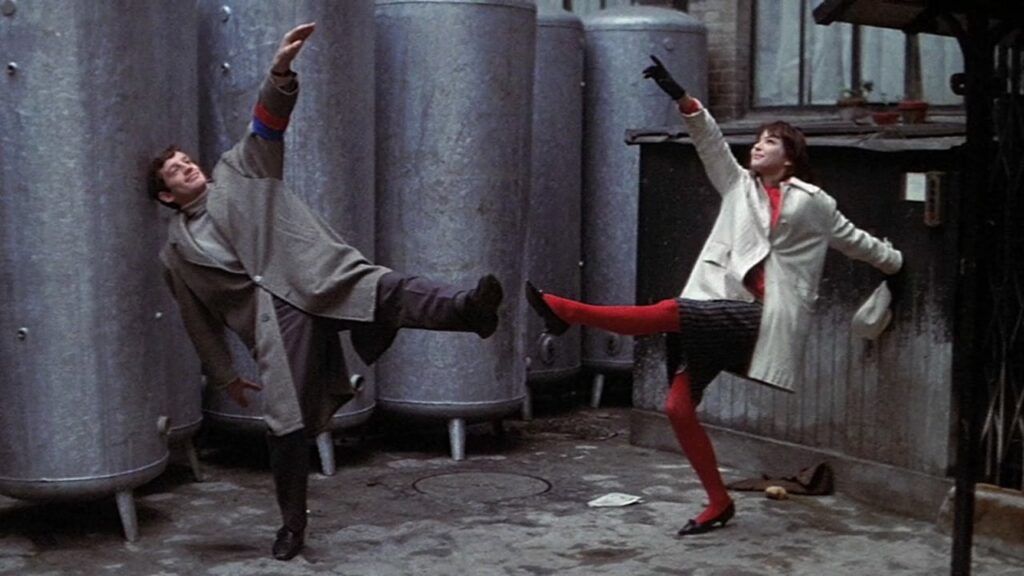
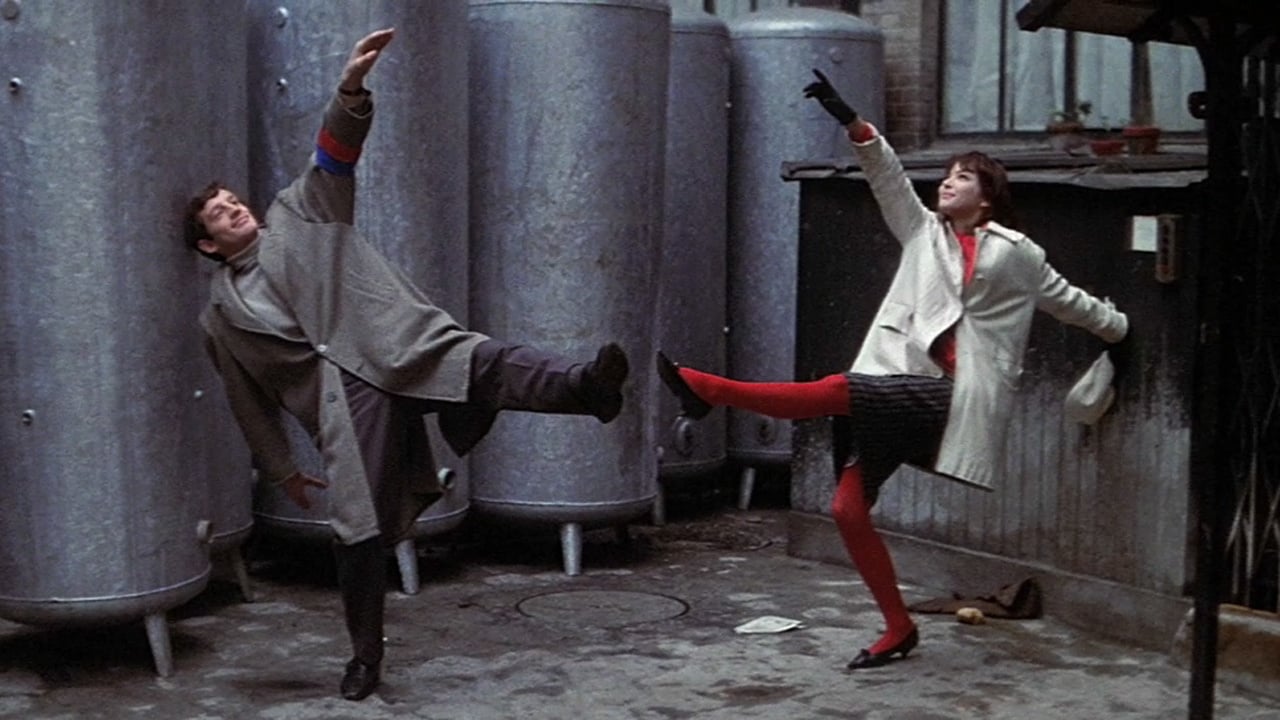
Jean-Luc Godard’s third feature and first studio production (1960) starts with a subversive premise: a neorealist musical in which the major characters (Jean-Paul Belmondo, Anna Karina, and Jean-Claude Brialy) can’t really sing and dance, much as they’d like to. Periodically ravishing to look at (it’s Godard’s first foray into both color and ‘Scope) and listen to (Michel Legrand did the nonsinging score), it’s also highly deconstructive in the way it keeps jostling us away from these pleasures and in the general direction of indecorous reality. (It’s also packed with both subtle and obvious references to other movies.) While its slender plot (stripper Karina wants a baby and turns to Belmondo when her boyfriend Brialy won’t oblige her) can irritate in spots, the film’s high spirits may still win you over. It’s perhaps most memorable for being a highly personal documentary about Karina and Godard’s feelings about her at the time, brimming with odd details and irreverent energies. In French with subtitles. 83 min. (JR)
How could an experimental documentary about the dismantlement of the world’s largest nuclear plant encompass, among other things, a survey of 20th century painting, a political statement, a site for meditation, and a philosophical song about annihilation and creation being parts of the same process? Thirty-five-year-old Lithuanian filmmaker Emilija Škarnulytė shows us how, and her vision is so spellbinding that it demonstrates how the finest lessons of 2001: A Space Odyssey in merging art and science and the early films of Alain Resnais in executing slow, steady, and hallucinatory camera crawls across, into, and around documentary subjects can be creatively applied.
“In my films from the last ten years,” she has said, “I have mostly researched places where contemporary political issues are staged between human and non-human worlds, the shifting boundaries between ecological and cosmic forces. I want to feel out all kinds of non-human and post-human scales in the depths of space and time.” Thus her opening images offerrocks thatresemble planets, a voluptuous nuclear explosion is rhymed with trees, an animated disassembly becomes a Constructivist dance, and a snake slithering around the same circuitry previously traversed by her camera becomes a bold Surrealist encounter.Read more
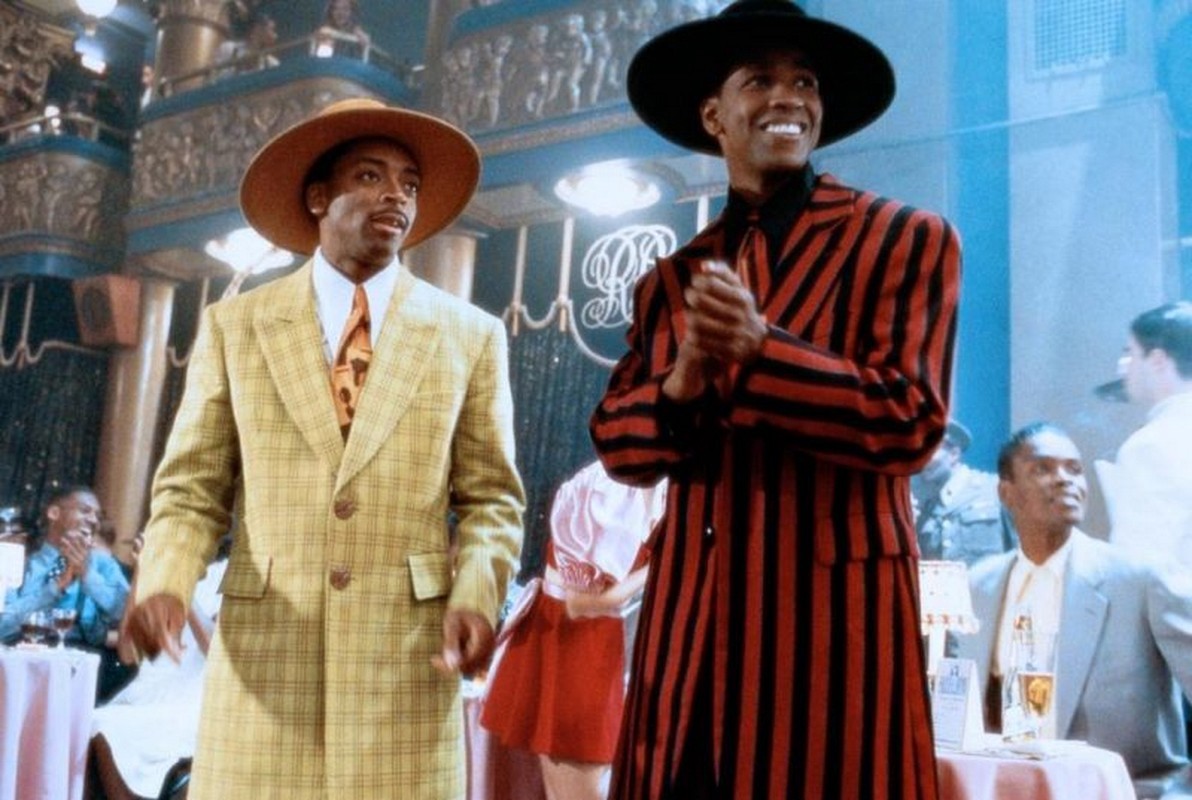
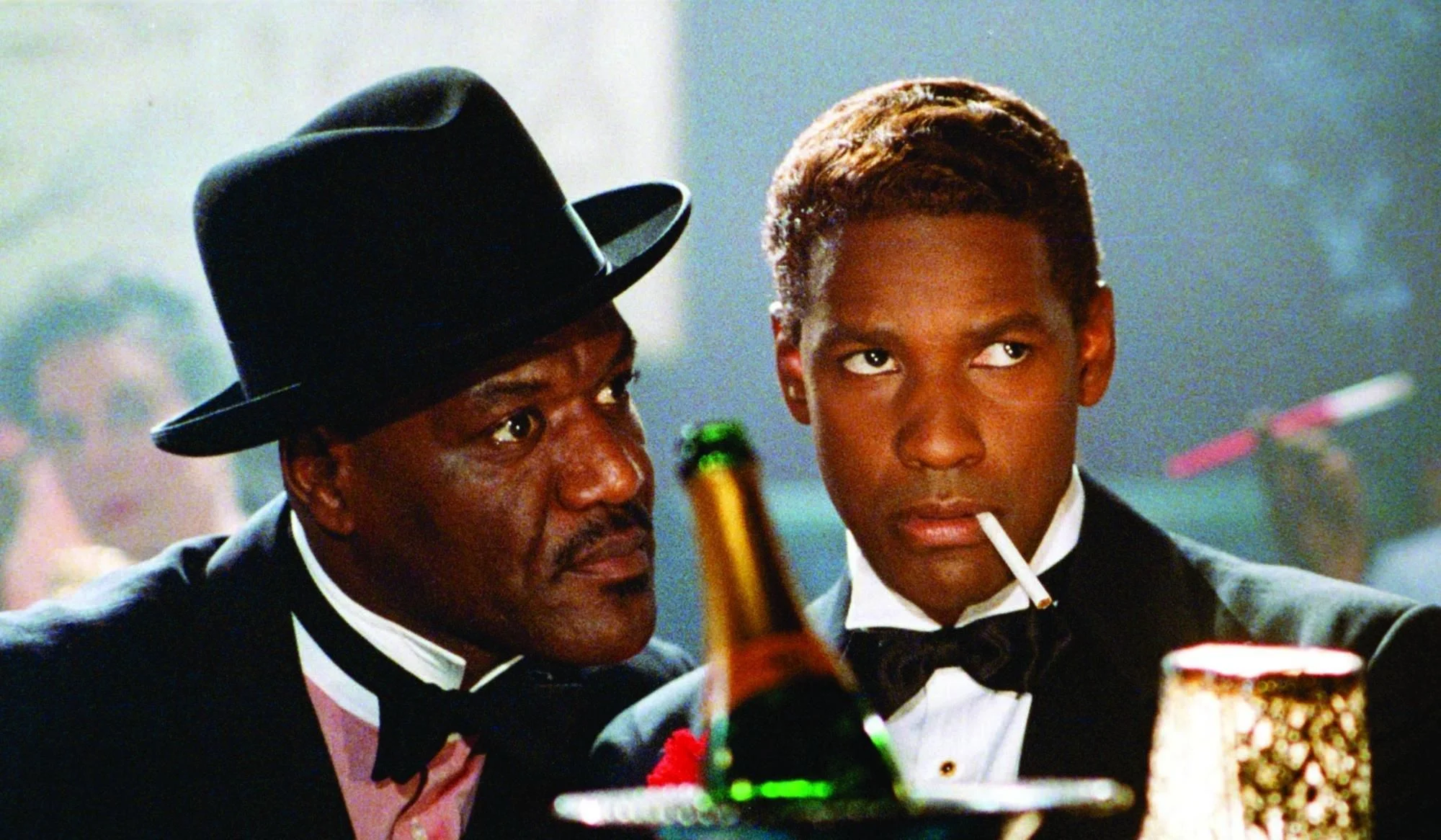
Spike Lee’s 1992 epic about the powerful black leader, adapted by Arnold Perl and Lee from Malcolm X’s autobiography (written with Alex Haley), benefits from a lively lead performance by the miscast Denzel Washington but doesn’t come within light years of the book, one of the greatest American autobiographies. It’s also sad to see that James Baldwin’s contributions to the original script (the late Perl was his collaborator) have been plundered with so little respect that his name was removed from the credits by his estate’s executor. The necessity of creating a pious official (i.e., middle-class) portrait squeezes out too many aspects of Malcolm’s varied experience and mercurial intelligence; even at 201 minutes, this often feels like a skim job. But if you’re too lazy to read the book, you probably should see this. With Angela Bassett, Albert Hall, Al Freeman Jr., Delroy Lindo, and Lee in a supporting role. (JR)
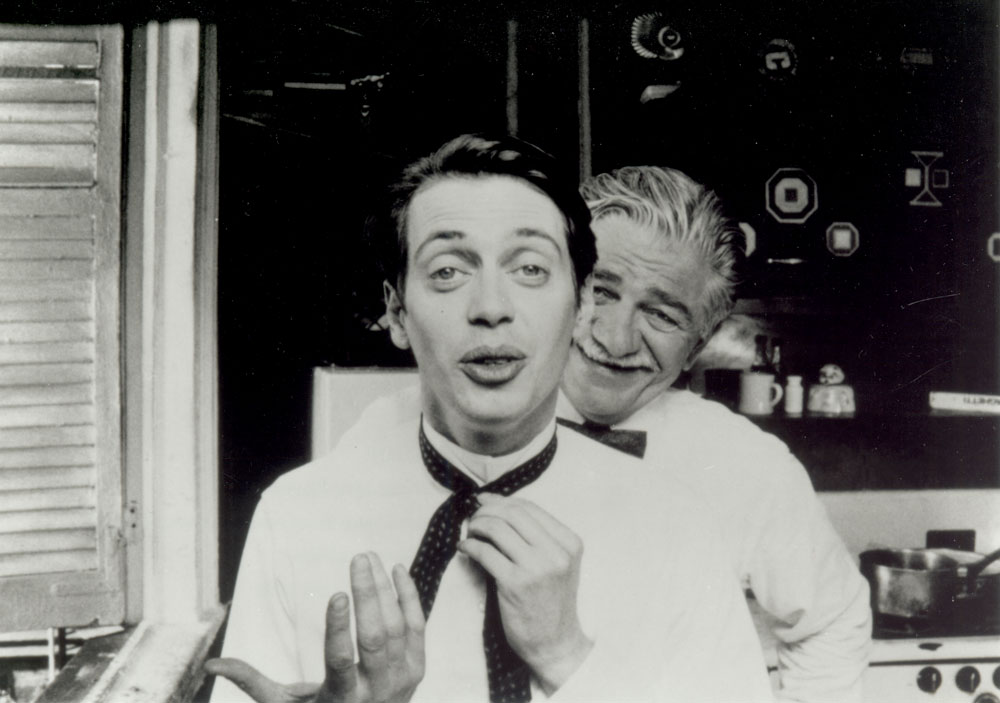
The main reason to see Alexandre Rockwell’s flaky, independent black-and-white comedy (1992) about an aspiring filmmaker (Steve Buscemi) on New York’s Lower East Sidea movie one feels was made every few months during the late 60s is John Cassavetes veteran Seymour Cassel, playing a petty crook with a heart of gold who suddenly appears to the hero like a fairy godfather (no pun intended, despite his compulsive displays of physical affection) to serve as his producer. The movie seems conceived according to the joint emblems of Jim Jarmusch (who appears in a cameo, along with Carol Kane) and Cassavetes rather like the first episode in Jarmusch’s Night on Earth, which used Gena Rowlands as an emissary from Cassavetes’s world. Here Cassel seems to be a variation on the noble/foolish hero played by Ben Gazzara in Cassavetes’s The Killing of a Chinese Bookie, but you certainly don’t have to know this source to respond to Cassel’s enormous funds of charm and charisma. (There’s also a wonderful performance by Sully Boyer as one of the crook’s incidental victims.) With Jennifer Beals, Pat Moya, and Will Patton. R, 90 min. (
The usual stuff. Some promising material about totalitarian maximum-security imprisonment in the year 2022 is quickly succeeded by OK action a la The Road Warrior on a remote island; the all-male cast begins to pall after a while, though Ray Liotta (hero), Stuart Wilson (villain), Lance Henriksen (father figure), and various others (Kevin Dillon, Kevin J. O’Connor, Ernie Hudson, Ian McNeice) do their best to keep you from nodding off. Martin Campbell directed from a screenplay by Michael Gaylin and Joel Gross that’s based on Richard Herley’s novel The Penal Colony. (JR) Read more