The following is a chapter from my book Film: The Front Line 1983 (Denver, CO: Arden Press) — which I’m sorry to say is only available now at ridiculously inflated prices (one copy at Amazon currently sells for $989.90). It probably remains the least well known of my books.I’m immensely grateful to Jed Rapfogel and Stephanie Gray at New York’s Anthology Film Archives for furnishing me with a document file of this essay so that I could post it here, originally to help promote their Mark Rappaport retrospective in March 2011, prior to the updated version of this held earlier this year. Readers should also consult my separate articles about Rappaport’s Rock Hudson’s Home Movies and From the Journals of Jean Sebergas well as my interview with Rappaport about the latter, all of which are also available on this site, along with a more recent piece about two of his videos. — J.R.
When the critic of a narrative film is feeling desperate, the first place that he or she is likely to turn to is a plot summary. Feeling rather desperate about my capacity to do justice to the last two features of the remarkable Mark Rappaport, I looked up the synopses and reviews of The Scenic Route and Impostors in the usually reliable Monthly Film Bulletin, which appeared precisely three years apart (February 1979 and February 1982), only to discover that each critic, Geoffrey Nowell-Smith and Simon Field, respectively, starts off with the admission that his own synopsis is misleading. Read more
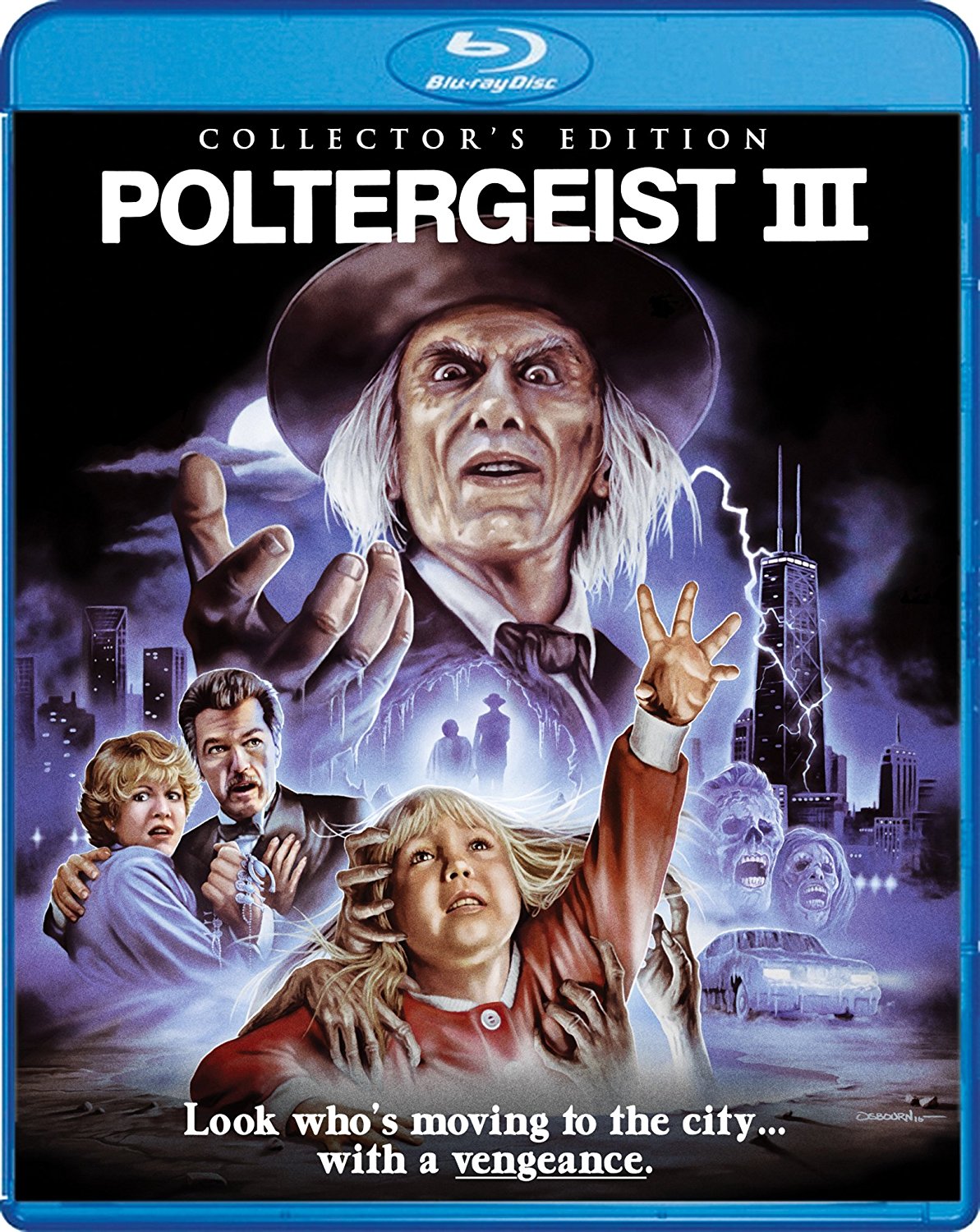
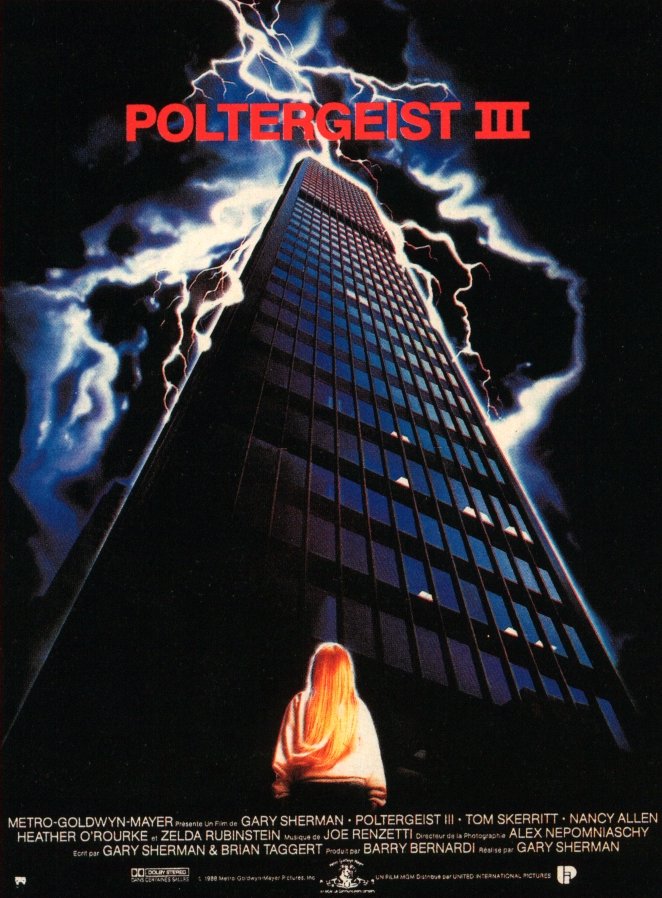
In this strictly routine second sequel to Poltergeist, directed by Gary Sherman from a script by Sherman and Brian Taggert, Carol Anne (Heather O’Rourke) is now happily living in Chicago with her uncle Bruce (Tom Skerritt), aunt Pat (Nancy Allen), and cousin Donna (Lara Flynn Boyle). But during a session at school with a therapist (Richard Fire) something nasty starts to happen when she looks in a mirror. Most of the action is confined to a single brand-new skyscraper, and the moves are both standard and predictable: periodic jolts from the other world that seem almost arbitrarily spliced into the action, setting up the rational-minded therapist as the major fall guy, and never paying much mind to plot or coherence, meanwhile cribbing from everything in sight (The Exorcist, The Shining, the first two Poltergeists). (JR)
From Tikkun, November/December 1990, Vol. 5, No. 6. This was my second and (to date) final contribution to this magazine. As I recall, I wasn’t too happy with the way I was edited on this one (although the published version — which they called “Out to Lynch,” and is only slightly altered here — is the only one I have now); I was much happier working with Peter Cole on my previous article for Tikkun, “Notes Towards the Devaluation of Woody Allen“. -– J.R.
“All I know for sure is there’s already more’n a few bad ideas runnin’ around loose out there.” — Sailor to Lula in Barry Gifford’s Wild at Heart: The Story of Sailor and Lula
I couldn’t care less about changing the conventions of mainstream television. — David Lynch, November 1989
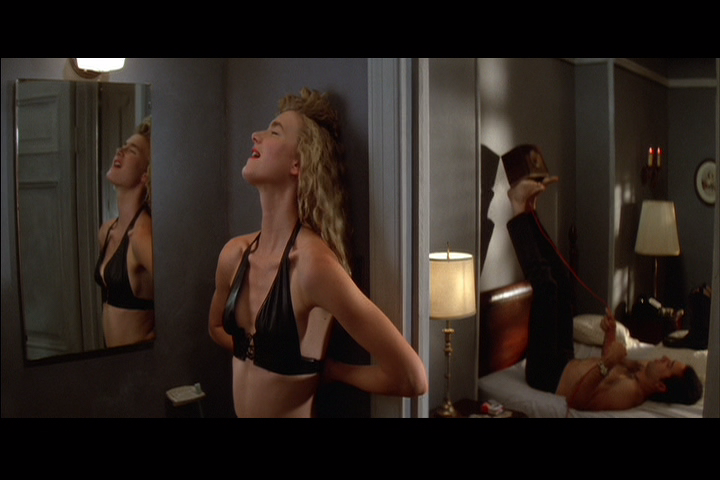
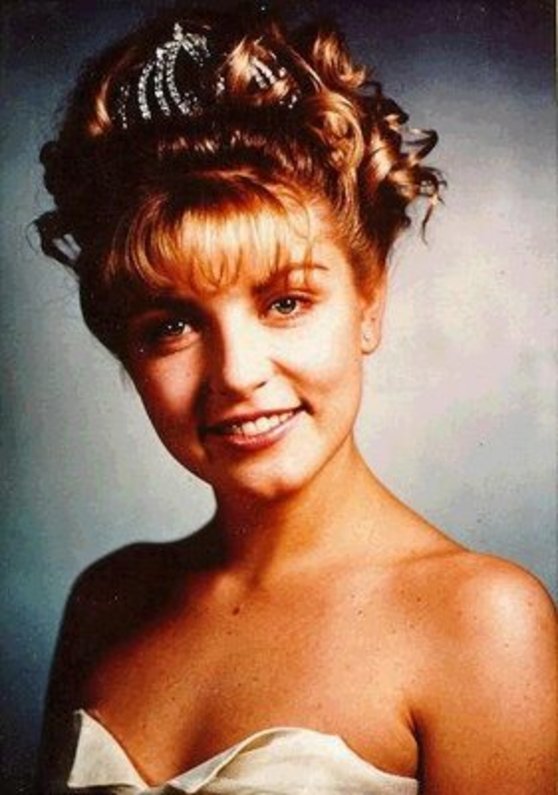
From The Birth of a Nation to Fatal Attraction, puritanism and political naïveté have frequently turned out be a winning combination in American movies. The recent popularity of David Lynch, however, puts a new spin on this formula. Sailor’s line — repeated in Lynch’s new movie based on Gifford’s novel — in a way summarizes Lynch’s work to date: an oeuvre that has recently expanded from paintings, movies, and a weekly comic strip to include two new TV series (Twin Peaks and American Chronicles, both coproduced by Mark Frost), an opera, a pop record album, commercials for Calvin Klein, a coffee-table book due out next fall, and undoubtedly other enterprises as well. Read more
Written for the Australian journal Screen Education 91 in 2018. — J.R.
What I say, I do not say with words. I do not say it with images either, with all due respect to the partisans of pure cinema, who would speak with images as a deaf-mute does with his hands. After all, I do not say, I show. I show people who move and speak. That is all I know how to do, but that is my true subject. The rest, I agree, is literature. – Éric Rohmer
The least typical film by central French New Wave figure Éric Rohmer, Perceval (1978) offers a wonderfully strange and evocative version of Chrétien de Troyes’ twelfth-century poem – set to music and translated into contemporary French by Rohmer himself – about the adventures of the title character (Fabrice Luchini), a callow and innocent youth who becomes the Red Knight. It captures the essence of its medieval trappings like no other film, yet it does so without ever presuming or pretending to re-create a historical period about which we know relatively little. Thus, it might be seen – and in fact was seen when it first appeared – as a bizarre exercise in literal literary adaptation, an odd experiment in representation itself. Read more
With Michelle Pfeiffer, Treat Williams, Jonathan Jackson, Ryan Merriman, Whoopi Goldberg, Cory Buck, John Kapelos, and Michael McElroy.
The two best reasons for seeing The Deep End of the Ocean are the story and Michelle Pfeiffer, not necessarily in that order. But these two calling cards are sometimes at odds, so the film’s virtues and problems grow out of the same source. On the one hand, you’ve got the star system creating certain expectations about the story’s focus; on the other, you’ve got a narrative about a 12-year-old boy trying to figure out his identity by reconciling two sets of parents. Because these two factors are at cross-purposes, you start out watching a star vehicle and wind up watching a coming-of-age story; the transition from one to the other is what makes The Deep End of the Ocean feel somewhat uncertain.
Certainly one can rationalize this shift of gears. The late Dwight Macdonald — the film critic for Esquire back in the early 60s, when it was still possible to write for that magazine about movies as an art form rather than as a combination of sport and business — suggested in one of his columns that a shift of focus from one character to another is often a good thing. Read more
Commissioned and published online by BBC.com in November 2018. — J.R.
Luis Buñuel was the greatest of all Spanish film-makers. He is also known as the greatest of all Surrealist film-makers – someone who kept returning to dreams and the unconscious, all the way from Un Chien Andalou, the silent avant-garde shocker he made with Salvador Dali, to Belle de Jour, in which sado-masochistic fantasies lurk beneath Catherine Deneuve’s chic surface. It’s no wonder that in critical studies of his films, the emphasis is on Freud as a “guide” to Bunuel’s greatness. But the influence of another thinker, Marx, was just as important. However surreal Bunuel’s work may be, political revolt and an acute feeling for class struggle informed all of it, whether it was French, Mexican or Spanish.
Truly a child of the 20th century, Luis Bunuel Portoles was born in 1900, the oldest child in a prosperous Catholic family based in the Aragon region of Spain. He first made his mark four years after he moved to Paris in 1925, when he joined forces with Dali to make Un Chien Andalou. Buñuel and Dali began collaborating again on the hour-long L’Age d’or (1930), but their political differences were already driving them apart: Buñuel’s Marxism versus Dali’s conservatism. Read more
From the Chicago Reader (September 14, 1990). — J.R.
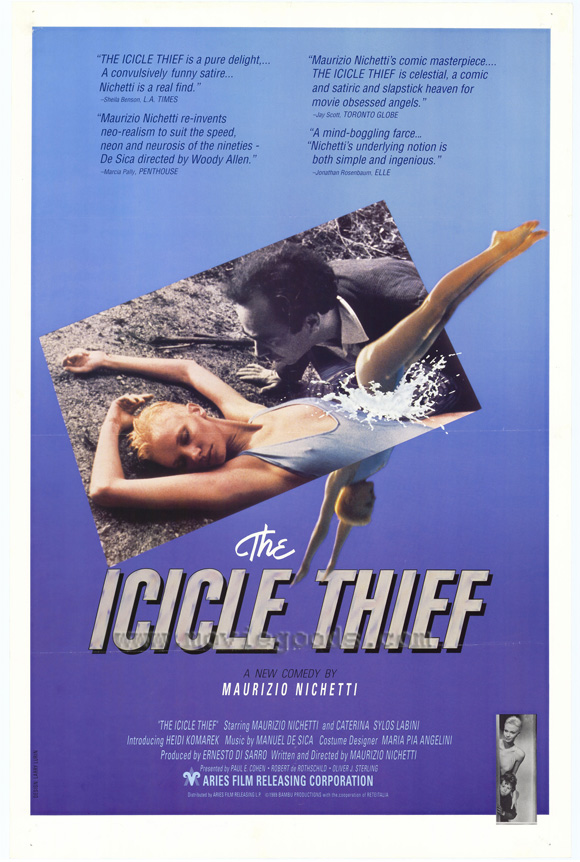
THE ICICLE THIEF
**** (Masterpiece)
Directed by Maurizio Nichetti
Written by Nichetti and Mauro Monti
With Nichetti, Caterina Sylos Labini, Federico Rizzo, Heidi Komarek, Renato Scarpa, Carlina Torta, Lella Costa, and Claudio G. Fava.
There is still so much we have to learn about TV! — Kurt Vonnegut, Hocus Pocus
Some people have called Maurizio Nichetti the Italian Woody Allen, an unfortunate appellation in more ways than one. Not only does it not do him justice, it also attributes to him an urban snobbishness that couldn’t be further from his world and persona. In the New York Times, where Allen’s movies are ranked higher than the late works of Welles and Antonioni — apparently because Allen, unlike Welles and Antonioni, reflects the worldview of many New Yorkers — the label can only backfire. But take a look at both actors and ask yourself which of the two is funnier.
The first time I saw a Nichetti movie, all it took was the opening sequence to convince me that there was no contest.
At an international conference in Milan, a distinguished participant suffers a stroke. A desperate call is made across the city to Colombo — a short nebbish with a mop of hair and a Groucho mustache, who operates a hilltop refreshment stand — for a glass of mineral water for the poor man. Read more
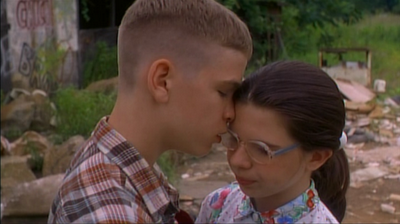
With Heather Matarazzo, Brendan Sexton Jr., Telly Pontidis, Herbie Duarte, Daria Kalinina, and Matthew Faber.
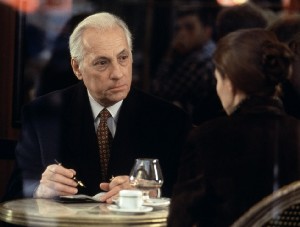
Nelly and Monsieur Arnaud
Rating *** A must see
Directed by Claude Sautet
Written by Sautet, Jacques Fieschi, and Yves Ulmann
With Emmanuelle Beart, Michel Serrault, Jean-Hugues Anglade, Claire Nadeau, Francoise Brion, Michele Laroque, and Michael Lonsdale.
It’s hard to think of two stark depictions of blocked libido more dissimilar than Todd Solondz’s Welcome to the Dollhouse and Claude Sautet’s Nelly and Monsieur Arnaud. But they share at least one trait that deserves to be cherished — a trait that sets them apart from most other new movies. Both offer lively alternatives to the current lackluster, middlebrow exemplars of “literary” cinema — Cold Comfort Farm, The Horseman on the Roof, The Postman, Sense and Sensibility — clogging up our art theaters, beckoning us to feel more educated and civilized and thereby keeping out other movies that might address our everyday lives more directly. (I haven’t seen Moll Flanders, but I suspect that it and the horrendous Disney animated feature Hunchback of Notre Dame are mainstream versions of the same spreading disease.) Read more
From the Chicago Reader (November 16, 2001). — J.R.
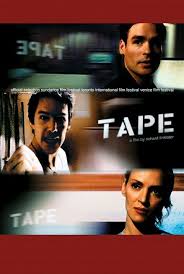
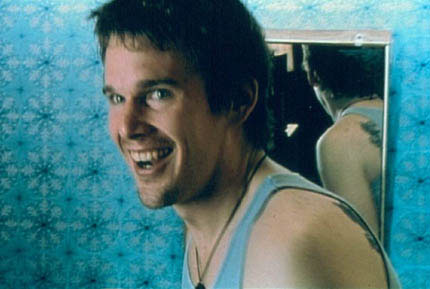
Tape ***
Directed by Richard Linklater
Written by Stephen Belber
With Ethan Hawke, Robert Sean Leonard, and Uma Thurman.
It seems that the less we know about a subject, the likelier we are to be assertive about it. And journalists play a big role in making people feel knowledgeable about what they don’t know. That’s why we keep encountering more and more twaddle about the state of world cinema even though the growth of digital video makes it impossible for anyone to keep up with the state of local cinema in any large city, much less any country, still less the world. All journalists can honestly say is that more and more works are being made and that keeping up with them is no longer possible. It was only days after an Iranian friend and I completed a book about Abbas Kiarostami that a New York critic E-mailed us about two new Kiarostami works we hadn’t even heard of — a ten-minute short for an episodic feature and a fiction feature in DV that he’s in the final stages of editing.
DV equipment is so easy to shoot with –it’s compact, light, inexpensive, unobtrusive — that it’s hard to keep up with how filmmakers are using the technology. Read more
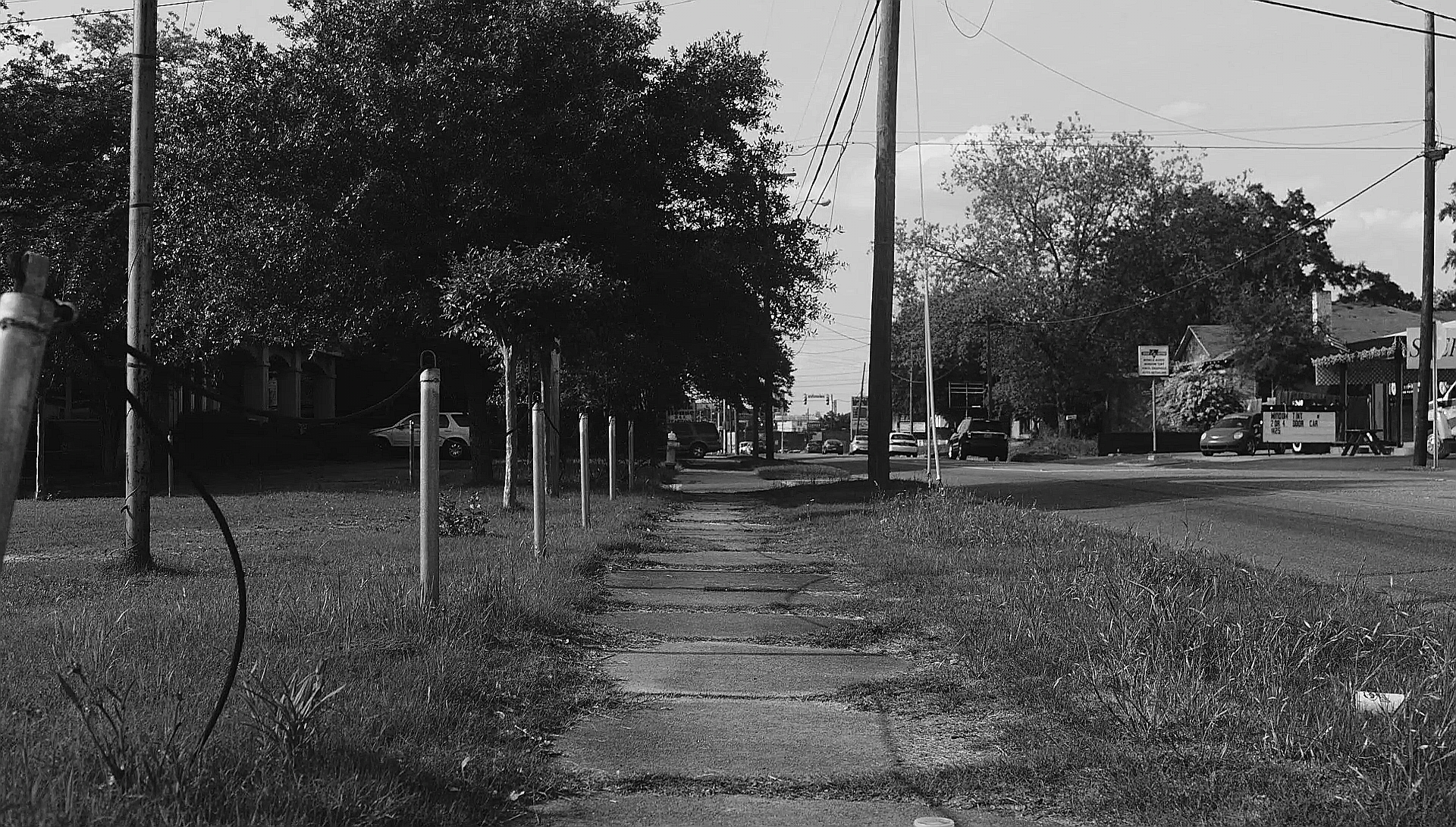
I gather that Travis Wilkerson’s amazing personal essay film about the murder of a black man by his great-grandfather in Dothan, Alabama in 1946 will be at New York’s Film Forum through March 13. I’m grateful to A.O. Scott for his enthusiastic review, which, by alerting me to this film’s existence, made me forgive Scott for what appeared to be his blindness to the subtler forms of racism and class bias practiced by Woody Allen in the reviewer’s latest “troubled” Times ruminations about that profoundly overrated figure. Even if I’m not the only one who views Manhattan as a hipper version of Trump’s “Make America great [i.e., white] again” — it was the late Allan Sekula who first pointed out to me how the absence of people of color on the streets of New York was part of what made it all seem so dreamy and romantic — the habit of avoiding racism when it appears in your own backyard is hardly unique to Scott. It’s even part of what makes New Yorkers and Alabamans seem similar to me, after living for many years in both places. (I grew up in Florence, to the northwest of Dothan — the other side of the state, and closer to the part of Tennessee where Wild River was filmed and is set.) Read more
From the Chicago Reader (November 3, 2000). — J.R.
Book of Shadows: Blair Witch 2
rating: 0
Directed by Joe Berlinger
Written by Dick Beebe and Berlinger
With Kim Diamond, Jeffrey Patterson, Erica Geersen, Tristine Ryler, and Stephen Ryan Parker.
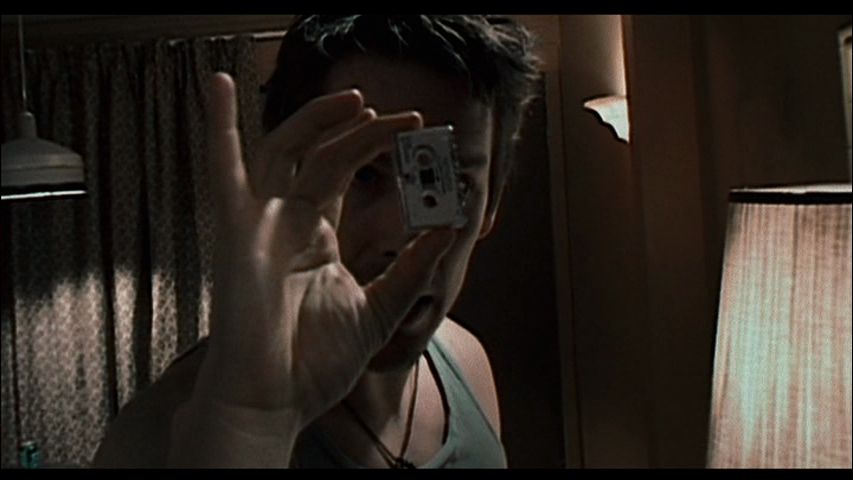
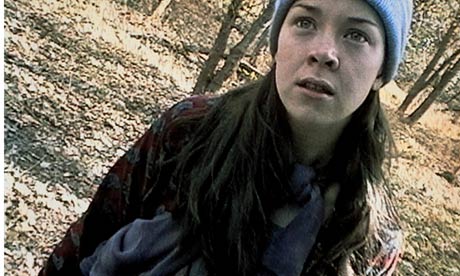
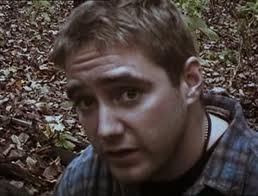
Call me naive, but unlike many of my colleagues I thought the unexpected runaway success of The Blair Witch Project in the summer of 1999 was encouraging, not depressing. I saw it as an indication that contemporary teenagers are far from the hardened cynics media “experts” make them out to be and that special effects and a handful of stars aren’t their sole reasons for wanting to see a movie. Its appeal offered a clear challenge to the studios and even forced the film industry to let it play in malls — an astonishing accomplishment for an independent pseudodocumentary that cost only $30,000.
I don’t consider the movie any sort of masterpiece and fully acknowledge its primitive conceptual and technical aspects, but I still think it expresses something about its young fans that’s authentic and powerful: a feeling of helplessness about their isolation and ignorance in relation to the world that’s central to its impact as a horror movie. If that isolation and ignorance led some viewers to initially see it as a real documentary, this is a tribute to the movie’s effectiveness — which makes it similar in some respects to Jim McBride’s David Holzman’s Diary, a 1967 low-budget pseudodocumentary that also fooled many young viewers. Read more