It’s amazing what an Oscar can do. Clint Eastwood’s career as a filmmaker was viewed by many as a cranky, uneven enterprise until he was anointed by the academy for Unforgiven. Now it’s clear that in many quarters he can do no wrong, even though A Perfect World and The Bridges of Madison County show no particular improvement in his work. (For starters, both films are longer than they need to be.) His skill in realizing and giving shape to the scripts of others is sometimes praised so highly it’s as if people thought the movie had emerged full-blown from his Zeus-like head. Whatever the achievements of The Bridges of Madison County (and they aren’t to be sneezed at), there’s a strong temptation to credit Eastwood with resuscitating the star system, the Hollywood tearjerker, and classical mise en scene (as I’ve done in my own capsule review). Yet at best he’s performing yeoman service on a so-so adaptation of a lousy novel, plunking his customary persona in the middle of it as if that were all it needed to achieve greatness.
Let’s face it, the danger of the star system is that it’s predicated to some degree on a blind worship of power; we’re encouraged to rationalize imperfections, slide over contradictions, and go with the oceanic flow. Read more
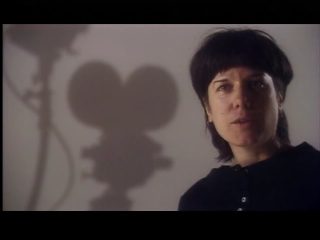
VISIONS OF LIGHT: THE ART OF CINEMATOGRAPHY *** (A must-see)
Directed by Arnold Glassman, Todd McCarthy, and Stuart Samuels Written by Todd McCarthy.
I realize it sounds strange to put it this way, but the special pleasures to be found in Lyrical Nitrate -– a 50-minute compilation of fragments of silent films made between 1905 and 1915, showing this Saturday and Sunday at the Music Box -– are closely related to the voyeuristic appeal of pornography, specifically old-fashioned stag reels. The experience of watching these fragments is, like the fragments themselves, fleeting and therefore tantalizing, suggestive and therefore provocative -– and so far off the beaten track of what’s supposed to be viewer friendly in our culture that I’m reminded of J. Hoberman’s speculation in the second edition of Midnight Movies, a book we coauthored: “Imagine if one had to go out at midnight to some seedy theater to see projected tapes of The Simpsons. Read more
From The Soho News (May 20-26, 1981). I’m sorry that I still haven’t managed to see Vermont in 3 1/2 Minutes, a 1963 film made by a childhood friend of mine — and that I haven’t been able to find any more illustrations for the small-gauge films that I wrote about here….My expressed feeling of solidarity with Squeeze Play was no doubt inflected by the fact that I was living in Hoboken at the time. — J.R.
May 8: At Anthology Film Archives, to see a program in “Home Made Movies: 20 Years of American 8mm and Super-8 Films” — an intriguing and varied series selected by Jim Hoberman that runs through the end of next month, warmly recommended to everyone without money who nurtures fantasies about taking over the media. I learn straight away that Linda Talbot’s Vermont in 3 1/2 Minutes is being replaced by Bear and Jane Brakhage’s Peter’s Dream, a title glossed by Jonas Mekas as referring to Peter Kubelka.
This reminds me of a somewhat troubled notion that first reared its inglorious head when I had the occasion to view all the films in the Whitney’s previous Biennial. The idea is simply that a surprising number of North American avant-garde films seem to center on the same general obsession as The Deer Hunter or Manhattan — namely, a boastful inventory of male possessions: This is my hometown, my house, my rifle, my dog, my Bolex, my woman, my art. Read more
From Film Comment (January-February 1975). This was a good eight years before I became a colleague of Chuck Wolfe at the Film Studies program University of California, Santa Barbara, where I found myself trapped in a dead-end adjunct job with no opportunity for advancement for four years before my 20-year stint at the Chicago Reader. — J.R.
To the editor:
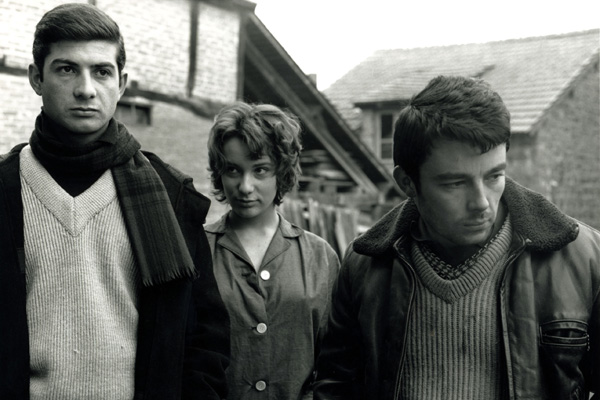
Contrary to Jonathan Rosenbaum’s introduction to his interview with Jacques Rivette (Film Comment, Sept.-Oct.1974), the first major Cahiers critic to embark on a feature film was Claude Chabrol, not Rivette. Chabrol shot LE BEAU SERGE between December 1957 and February 1958, finished editing in May, and presented the film at the Locarno festival that year. Rivette began work on PARIS NOUS APPARTIENT in the summer of 1958 while Chabrol filmed his second feature, LES COUSINS. This information is confirmed in Claire Clouzot’s Le Cinéma Français depuis la nouvelle vague and Guy Braucourt’s Cinéma d’aujourd hui volume on Chabrol.
All this may seem trivial, but it reflects a general misunderstanding of Chabrol’s crucial role n the transition of the Cahiers critics from writers to filmmakers. Read more
Written for Sight and Sound on August 15, 2015. Since writing this, I’ve discovered that free access to a subtitled version is now available at https://www.youtube.com/watch?v=09J-oSZF9G4. — J. R.
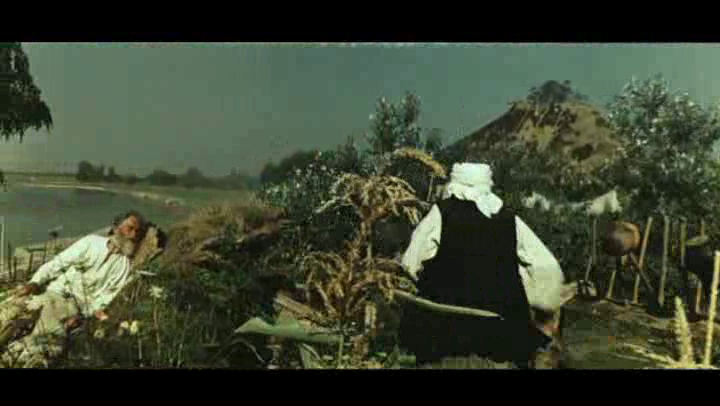
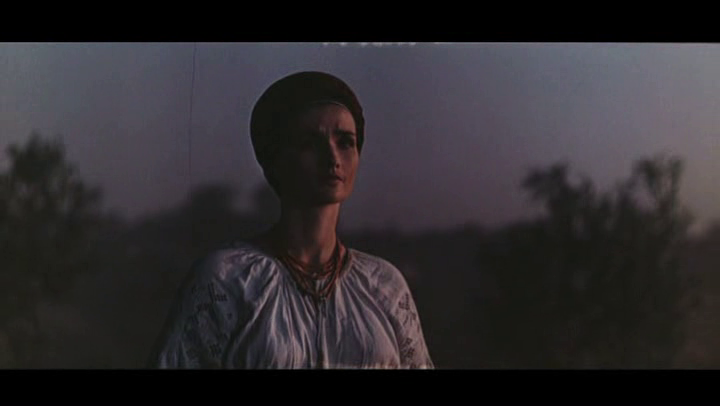
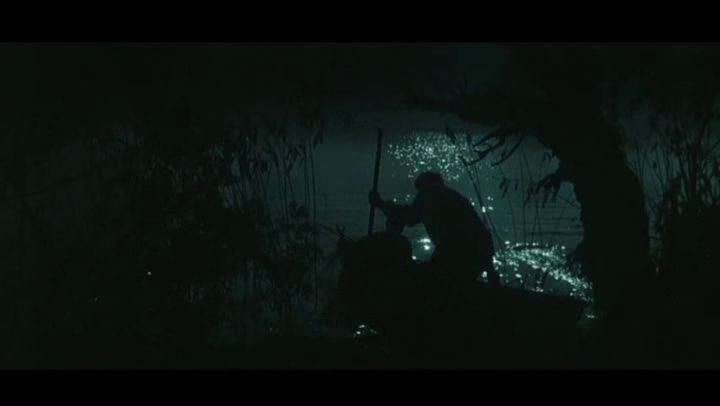
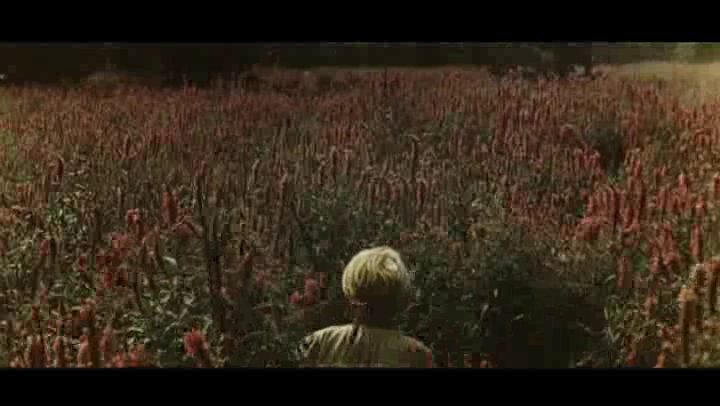
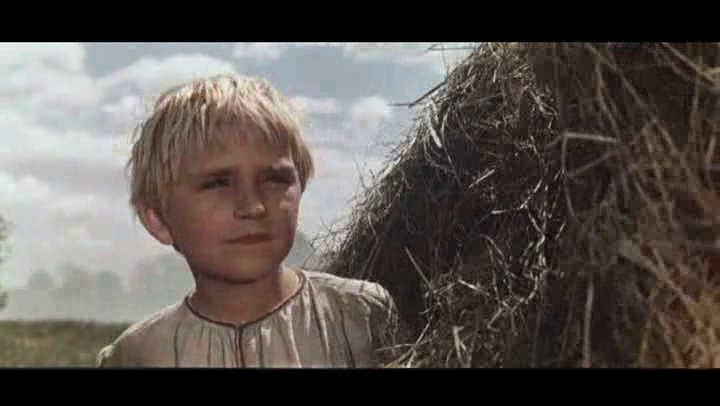
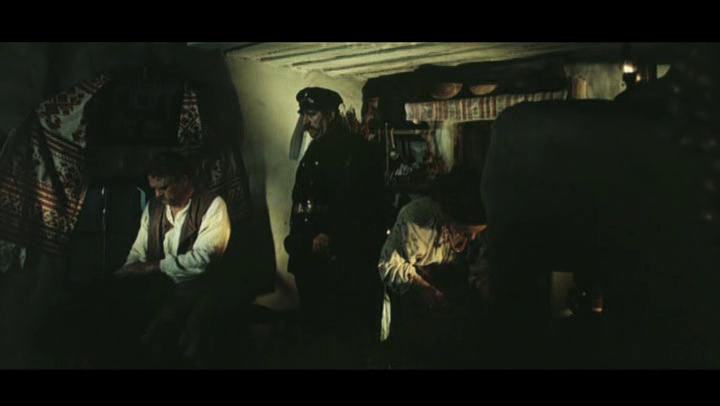
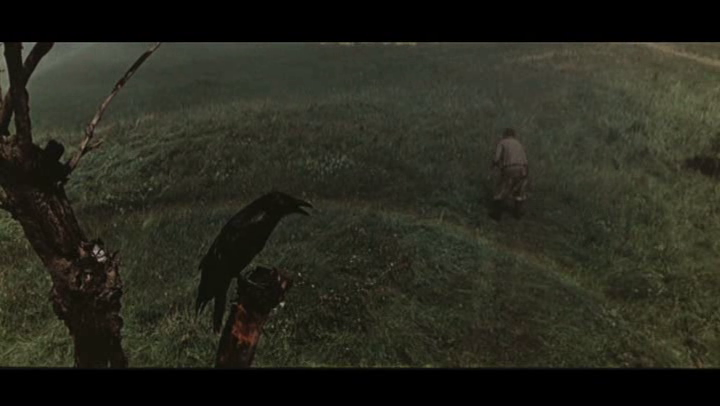
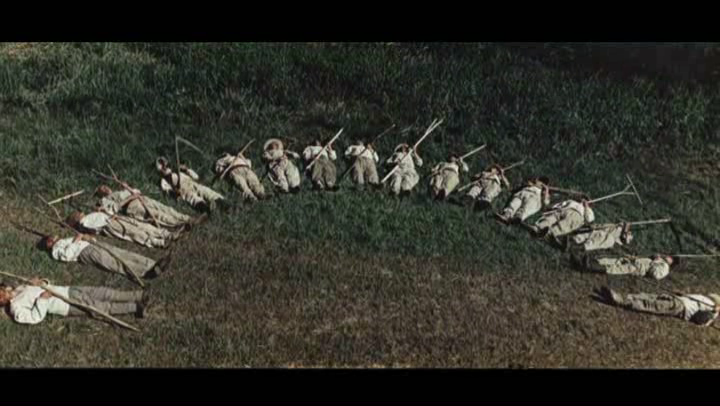
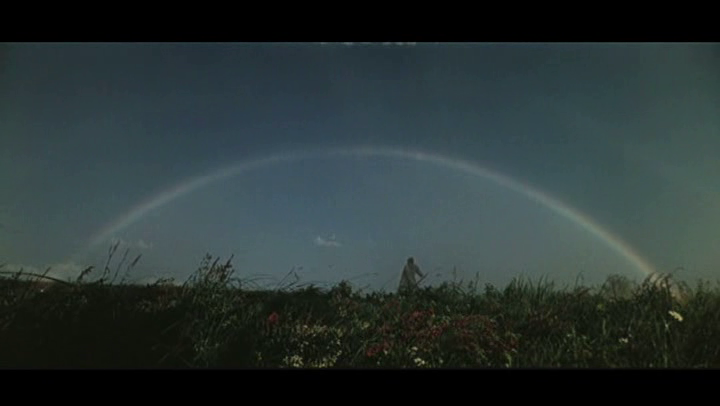
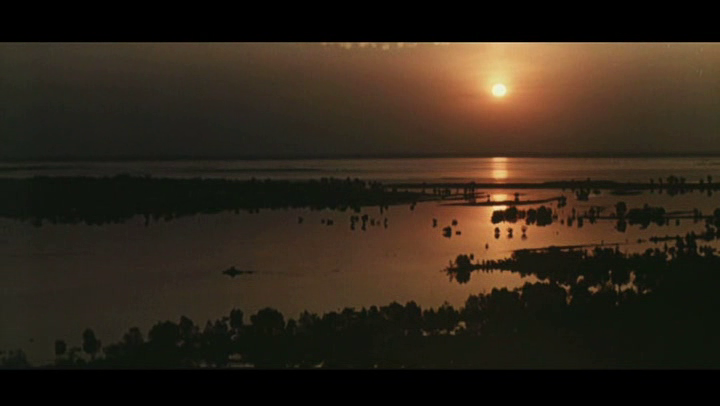
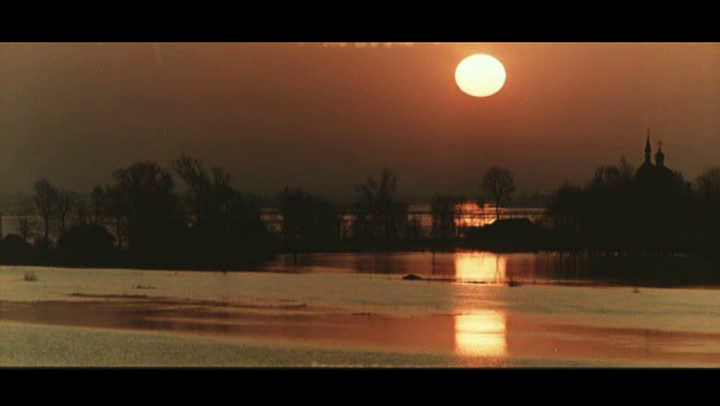
The Enchanted Desna (1964)
There are few masterpieces harder to access than this 70-millimeter, stereophonic poem by Moscow-born Yuliya Solntseva (1901-1989), widow of the great Alexander Dovzhenko, who devoted most of her filmmaking career, after playing the title role in Aelita (1924), to assisting her Ukrainian husband and then filming his unrealized projects after his death. I’ve never seen this subtitled, but Godard’s favorite film of 1965 was periodically screened at the Paris Cinémathèque over the following decade, and I’ve managed to fill in a few details by reading an English translation of Dovzhenko’s extended memoir of the same title. It’s a rambling but exalted account of his impoverished rural childhood, where, as in his best features, it becomes impossible to distinguish reality from fantasy or imagination, or pantheistic epic from a kind of music dreamt in images — a reciprocal dance performed by nature, family, and other eccentric local touchstones in perpetual, mysterious collaboration. (Jonathan Rosenbaum)
This originally appeared in Stop Smiling‘s “Hollywood Lost and Found” issue (2007); it’s also reprinted in my latest collection. — J.R.
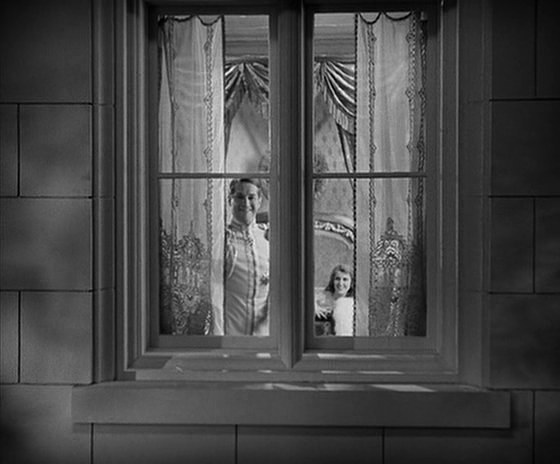
The camera cranes around the grand façade of a palace, a chateau, or a luxurious grand hotel, peering obliquely through the windows at the various doings inside. Or it stays perched in a hallway, outside a bedroom or a suite inside one of these buildings, while servants, musicians, or cigarette girls enter or leave, encouraging us to imagine what romantic shenanigans might be taking place on the other side of the door.
These are the two main signature shots of the great Hollywood filmmaker Ernst Lubitsch — especially during his Hollywood heyday, the 30s -— and one can also find variations of the second kind, the outside-the-door interiors, in the more romantic movies of Billy Wilder, Lubitsch’s major disciple, whose own Hollywood heyday was the 50s. In Lubitsch’s Ninotchka (1939), which Wilder and his frequent writing partner Charles Brackett helped to script, we’re made to understand how much three Russians in Paris (Sig Ruman, Felix Bressart, Alexander Granach) on a government mission are enjoying themselves in their hotel suite when they order up cigarettes, meaning three cigarette girls. Read more
From the Chicago Reader (October 12, 2017). In the Criterion Blu-Ray of this film, it’s refreshing to hear in Claire Denis’ and Juliette Binoche’s interviews about the film that they also consider it a sort of comedy. — J.R.
Let the Sunshine In (a stupid and misleading translation of the French title, Un beau soleil intérieur)
Loosely inspired by Roland Barthes’ nonfiction book A Lover’s Discourse: Fragments — which dives into the absurd language of solitude and mythology that lovers and would-be lovers recite to themselves and others — this rapturous and faintly comic concerto for Juliette Binoche may well be the most pleasurable and original film Claire Denis has made since Beau Travail (1999). Binoche plays a divorced painter whom Denis pairs sexually, amorously, and/or tentatively with a succession of men played by everyone from Xavier Beauvois to Alex Descas to Gerard Depardieu. The filmmaker’s skill in framing her protagonist’s various trysts, moods, and dialogues, sometimes even setting them to music, is matchless. Novelist Christine Angot collaborated with Denis on the script. –- Jonathan Rosenbaum
Commissioned by the University of Chicago Press and written in September 2016; published in November 2017. — J.R.
For all the differences between the history of cinema and the history of the Internet, one disturbing point they have in common is the degree to which our canons in both film and film criticism are determined by historical accidents. Thus we’ve canonized F.W. Murnau’s third American film, City Girl (1930), ever since a copy was belatedly discovered in the 1970s, but not his second, The Four Devils (1928), because no known print of that film survives. Similarly, we canonize Josef von Sternberg’s remarkable The Docks of New York (1928), but not the lost Sternberg films that preceded and followed it, The Dragnet (1928) and The Case of Lena Smith (1929). And it’s no less a matter of luck that all my long reviews for the Chicago Reader, published between 1987 and 2008, are available online, but none of Dave Kehr’s long reviews for the same publication, published between 1974 and 1986—a body of work that, together with Kehr’s columns for Chicago magazine in the 1980s, strikes me as being the most remarkable extended stretch of auteurist criticism in American journalism.
I hasten to add that, unlike the missing films of Murnau and Sternberg, Kehr’s writing for the Reader and Chicago has never been lost. Read more
Published online on October 12, 2017 by the British Council. — J.R.
Stillness and Life: Abbas Kiarostami’s 24 Frames
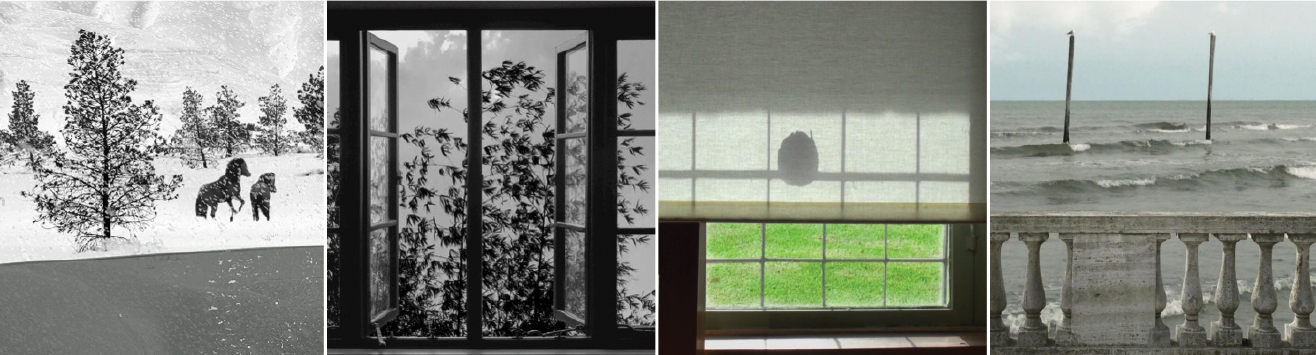
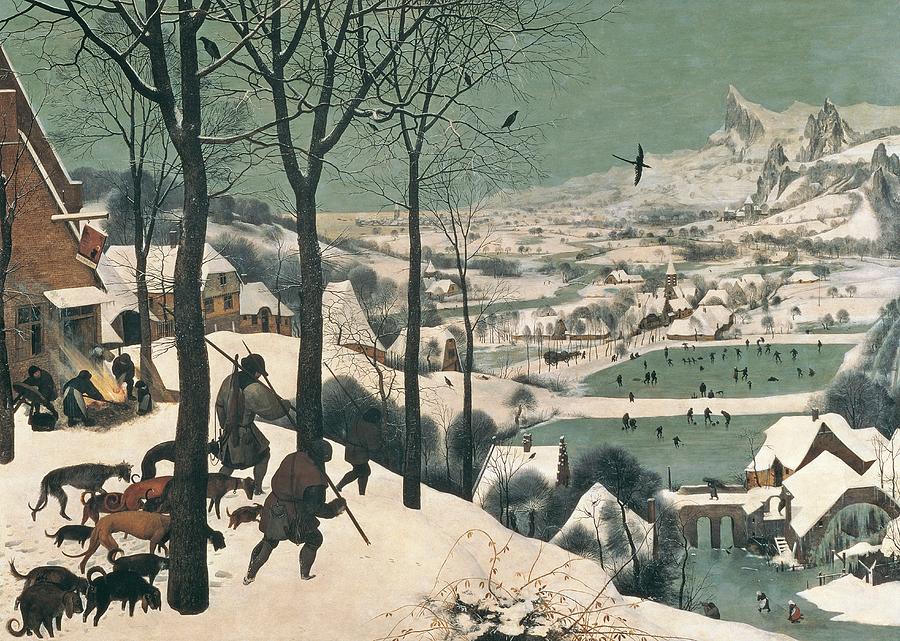
24 Frames (2017), the last film by Abbas Kiarostami, is a feature length experimental work comprising twenty-four vignettes, each four-and-half minutes long and shot mostly in black and white. The majority of these vignettes take place in natural surroundings. In fact, the first shot, of Pieter Bruegel the Elder’s painting The Hunters in the Snow (1565), establishes the template for most of the following scenes, which portray different kinds of animals and birds moving around in snowy landscapes. Elsewhere in the film, hunters are kept offscreen but we hear their gunshots. In one instance, they kill a bird and in another, a peaceful fawn. Other segments of the film focus on interior spaces, represented by large, dark windows that reveal only a limited view of the natural world beyond them (birds, or trees, or their shadows). With the exception of the homage to Bruegel, all of the segments are based on Kiarostami’s own photographs.
In 2015, Kiarostami confirmed that he was working on the project, which he began after completing his previous feature, Like Someone in Love (2012). His death in July 2016 meant the film remained unfinished.
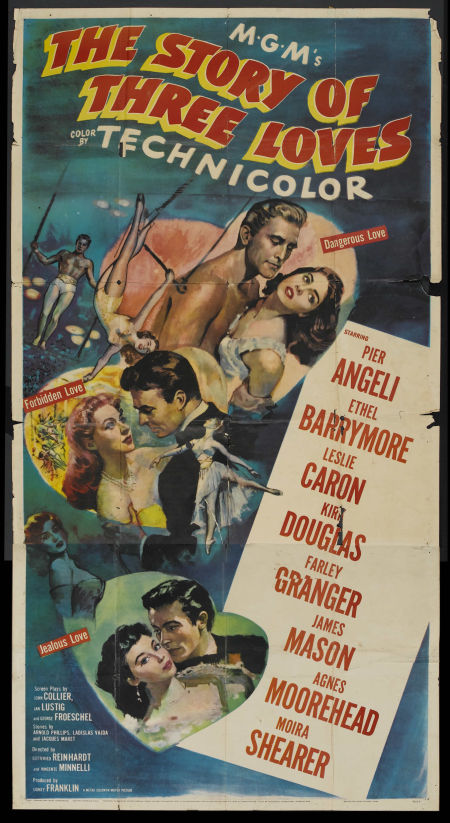
April 7: The Story of Three Loves (1953) at the Regency. It’s been over 27 years since I last saw this luscious, kitschy technicolor trio of thematically related sketches — awkwardly and arbitrarily stitched together on an intervening ocean liner — and it impresses me even more now than it did at age 10. Its terrain is neither Hollywood nor Europe, exactly, but a glossy MGM compromise between American dreams of Europe and European emigré dreams of America. And the fascinating thing about it today is the degree to which pop existentialism composes its principal form of hard aesthetic and social currency, in all three of its delirious parables about love and art.
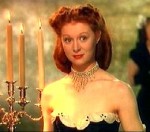
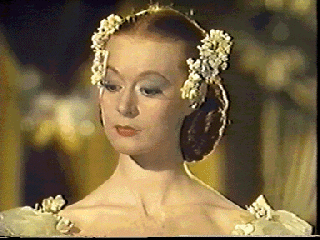
In the London-based “The Jealous Lover” (scripted by John Collier, directed by Gottfried Reinhardt), ballerina Moira Shearer learns she has a weak heart that prohibits further dancing. Subsequently inspired, however, by the florid imagination and genius of director James Mason, she devotedly and ecstatically dances herself to death.
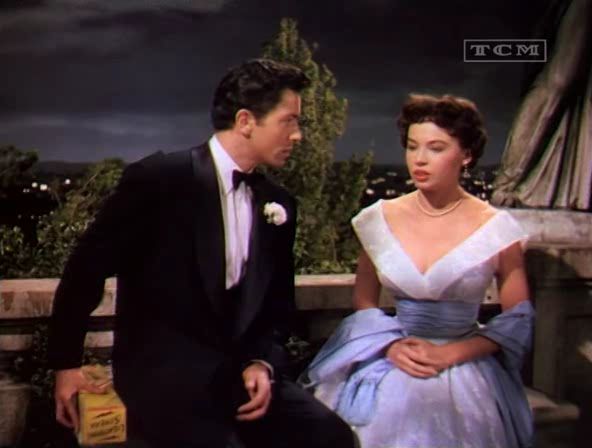
“Mademoiselle” offers Vincente Minnelli’s mise en scène of a Rome-based fantasy about an 11-year-old Ricky Nelson patterned somewhat after Daisy Miller’s twerpy kid brother. Secretly infatuated with his governess, Leslie Caron, he is enabled by the magic of an obliging American witch (Ethel Barrymore) to become Farley Granger for one enchanted, Cinderella-tense evening.
Written in October 2011 for the Blu-Ray released by Music Box Films. It seems like the gift of Ruiz never stops giving: a film cosigned by him and his widow Valeria Sarmiento suggestively called The Wandering Soap Opera turned up on a few South American ten best lists for 2017 as well as MUBI. — J.R.
It was disconcerting to see a passage from a 1997 article of mine about Raúl Ruiz (1941-2011) quoted in some of his mainstream obituaries: “Ruiz is the least neurotic of filmmakers; he doesn’t even seem to care whether what he’s doing is good or not.” Not because this was false when I wrote it but because it related to my earliest encounters with his work and its seeming challenges to film commerce, not to his better known big-budget efforts such as Marcel Proust’s Time Regained (1999) and Klimt(2006).
This is why some of these latter films disappointed me, pointing towards what Ruiz himself frankly described to me in a 2002 interview as a “capitulation”. But Mysteries of Lisbon shows that he may have gained as much from these bigger budgets as he lost, and I’m not speaking about pocket change. What he actually broadened was his film vocabulary, especially his employments of long takes and camera movements.
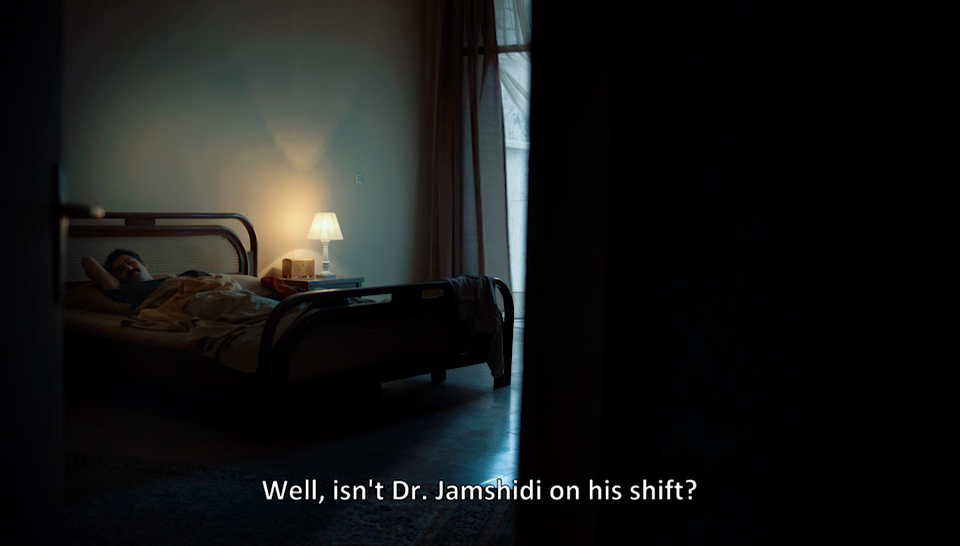
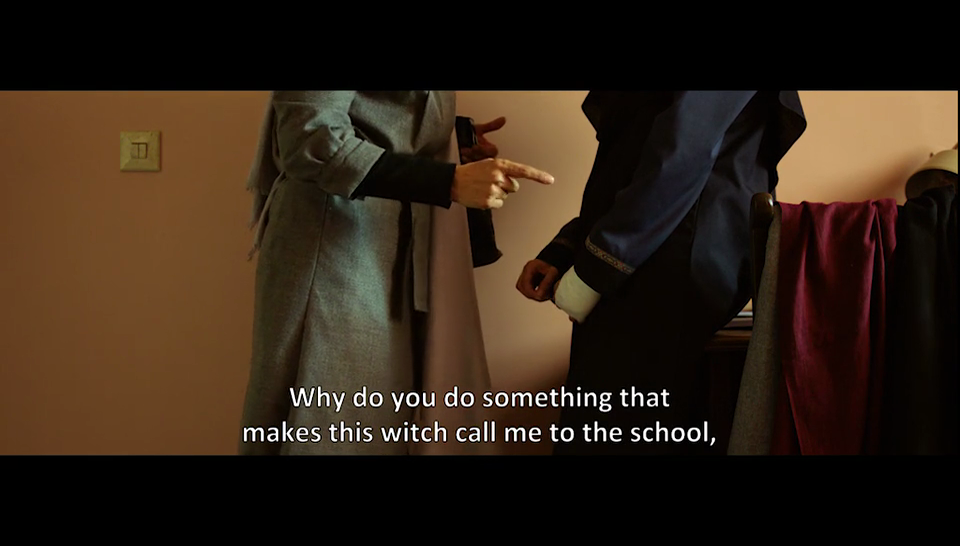
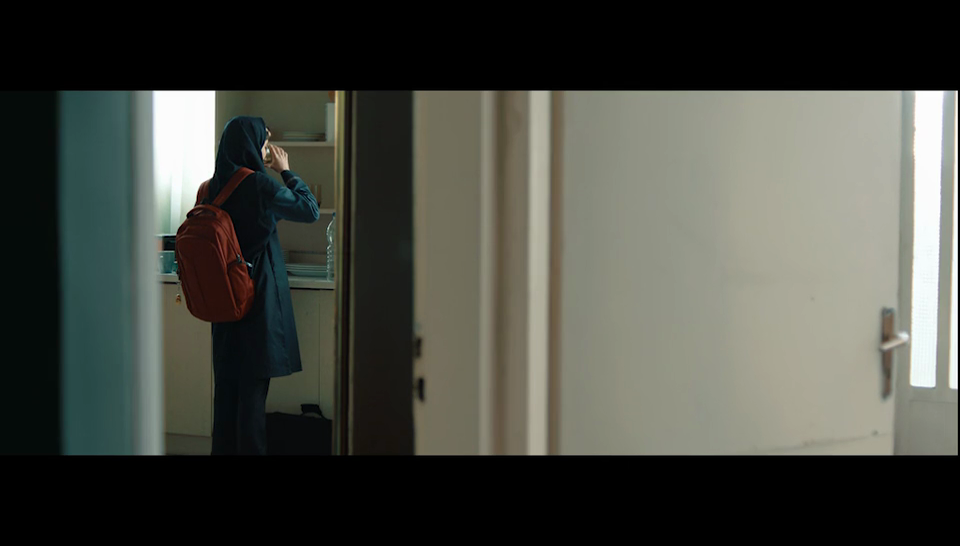
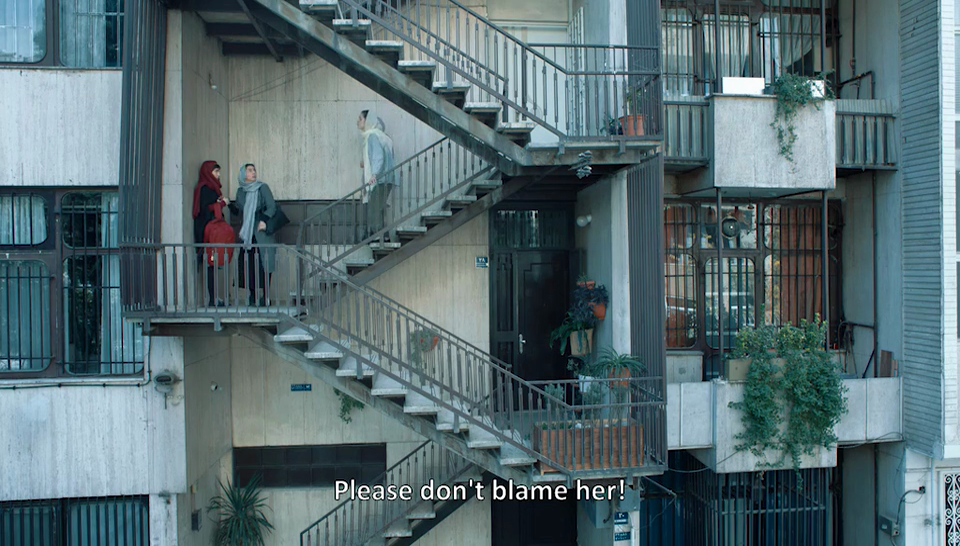
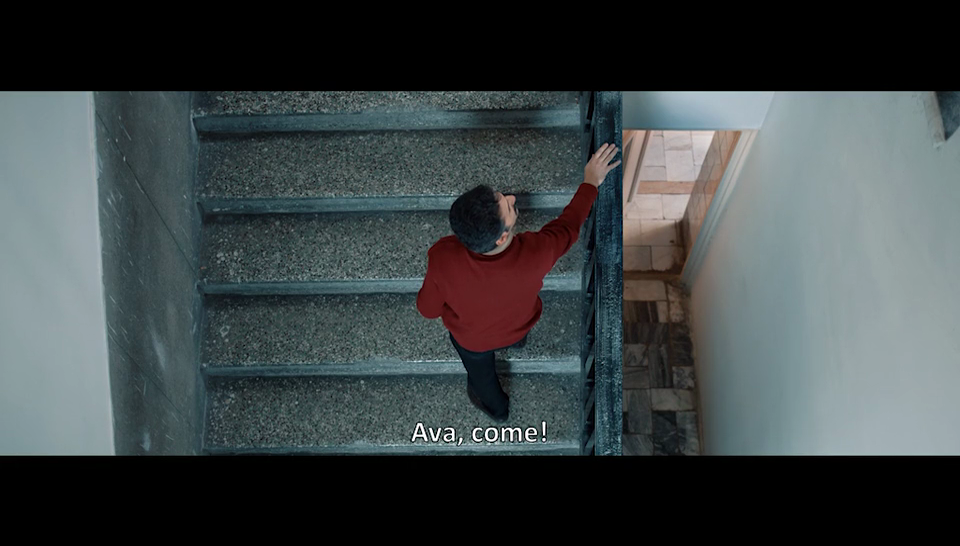
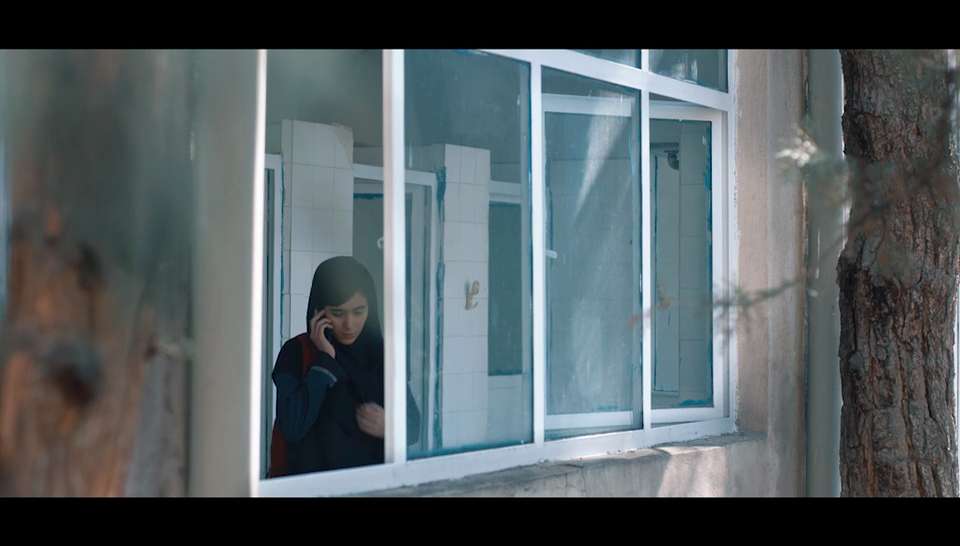
How much of the pain of Sadaf Foroughi’s first feature — winner of one of my Fipresci jury’s two prizes at the Toronto International Film Festival, a film from Iran — is the pain of being a teenager, and how much is it being a teenager at a particular place and time? How much is personal and how much is institutional, familial, cultural, social, political, architectural?
These are the questions raised by Foroughi’s exquisite, unorthodox framings and reframings of her characters, each one posing a separate inquiry. [9-20-17]
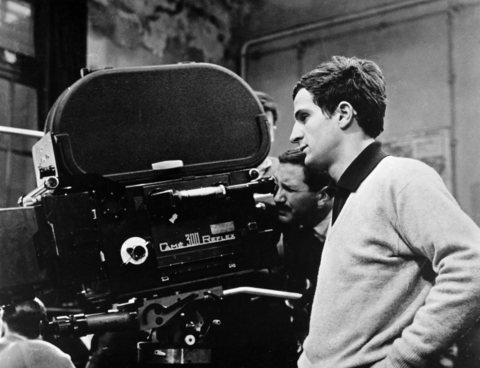
From Cineaste, Spring 1993. I must say that I continue to be stupefied that a very respected academic French film critic reviewed this book favorably in Sight and Sound. But I’ve come to value Truffaut far more as a critic than I did in 1993, so I’m delighted that his writing for Arts was recently and belatedly collected in France. My favorite of all his pieces — an early piece about Hitchcock called “Skeleton Keys”– has yet to be collected in either French or English, although Film Culture and the short-lived Cahiers du Cinema in English both ran an English translation back in the 1960s.– J.R.
The historical amnesia currently infecting much of film scholarship, in academic and mainstream publishing alike, is so pervasive that it might be said to affect our sense of the present as well as the past. In theory, then, the most valuable thing about this annotated collection of early film criticism by François Truffaut would be less what it has to tell us about individual films than what it has to impart about film criticism itself in Paris during the Fifties. In practice, however, it proves to be highly problematical on both counts. While I would find a first volume in English of the criticism of Serge Daney, Jean-André Fieschi, Luc Moullet, Claude Ollier, or several other French critics immensely more valuable than a second Truffaut collection (after The Films of My Life, not to mention his collected letters and many other related books in English), additional samplings of his critical work are still certainly welcome. Read more
Commissioned by Iranian Film Magazine in early December, 2017. — J.R.
It might be argued that domestic melodramas are often based on contrivances. This is true of both Asghar Farhadi’s The Salesman (2016) and Mohammed Hamzei and Ehsan Biglari’s Azar (2017), two of the better Iranian domestic melodramas that I’ve seen in recent years. But the different ways in which these films handle their contrivances is instructive.
Farhadi — whom I tend to regard as the Elia Kazan of Iranian cinema, for better and for worse, typically generating more heat than light in his most popular works, as Kazan did in On the Waterfront and East of Eden — is more conventionally skillful with his Big Scenes than the team of Biglari (writer) and Hamzei (director) are with theirs. This is because Farhadi knows how to disguise his contrivances so that they don’t seem contrived at all, but dramatically inevitable, such as the sexual impropriety that spurs most of the action in The Salesman as well as the various dramatic confrontations that result from this.
By contrast, the Big Scenes in Azar tend to be awkwardly unconvincing (notably, the accidental death of Saber from a brief scuffle with his cousin Amir arising from a financial dispute), or played down (the uncle of Amir smashing windows in his nephew’s pizzeria with his fist), or else omitted entirely (the pivotal meeting between Amir and his uncle in prison). Read more
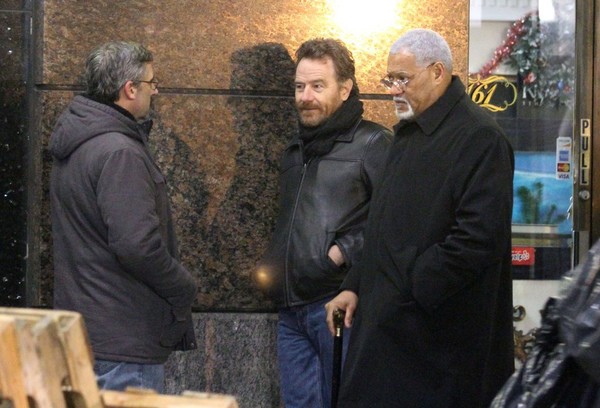
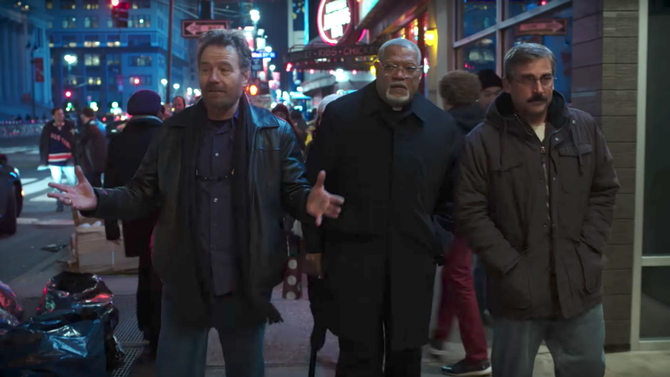
Having no desire to revisit the adolescent, macho-military hijinks of The Last Detail (1973) or read the Darryl Ponicsan novel on which it was based, I had some forebodings about this screen adaptation of Ponicsan’s 2005 sequel, even though the movie was cowritten and directed by the smart and resourceful Richard Linklater. Fortunately the movie belongs mainly to its fine lead actors — Steve Carell, Bryan Cranston, and Laurence Fishburne — playing buddies from the Vietnam war who reunite for a funeral in 2003 after one of them loses a son in Iraq. The movie asks whether Americans unable to share a country or a conviction can at least agree to share a symbol (whether it’s the Stars and Stripes or an unmerited military funeral), and even Linklater and Ponicsan seem divided and uncertain on the question. This has its moments, but it ends, like its characters, in sentimental confusion. — Jonathan Rosenbaum