According to my rough calculations, based partially on scrapbook entries, I’ve published over 9,000 items since the late 60s. And according to my former technical adviser and helper Benjamin Coy back in May 2008, when jonathanrosenbaum.com was launched, over 5,500 of these appeared in the Chicago Reader. As of March 22, 2023, 8,776 items have been posted on this site, now located at jonathanrosenbaum.net.
In some cases, if one looks up a particular film title, one may even find shorter and longer versions of the same capsule — a reflection of the Reader’s practice in recent years of trimming some of its longer capsules to conserve space. (J.R. Jones informed me that this trimming is no longer done; after I left in paper in early 2008 and Mara Shalhoup came in as editor, longer versions of the capsules appear on the Reader‘s website and shorter versions appear in print.)
In a few cases, due to some computer glitch, capsule reviews have been transported from the Reader web site in incomplete form. In those cases, I would advise going to the Reader’s own web site for the full version of the capsule, and would appreciate it if readers who encounter this problem could email me about it (at jonathanrosenbaum at earthlink dot net) so that I can restore the full version of the review on this site. Read more
Written for Moving Image Source [movingimagesource.us], and posted there on October 9, 2008. — J.R.
“A writer’s reputation,” Lionel Trilling once wrote, “often reaches a point in its career where what he actually said is falsified even when he is correctly quoted. Such falsification — we might more charitably call it mythopoeia — is very likely the result of some single aspect of a man’s work serving as a convenient symbol of what other people want to think. Thus it is a commonplace of misconception that Rousseau wanted us to act like virtuous savages or that Milton held naive, retrograde views of human nature.”
Although Orson Welles is rightly regarded as someone whose creative work partially consisted of his own persona, he remains unusually susceptible to mythmaking of this sort. This is because he often figures as someone who both licenses and then becomes the scapegoat for vanity that isn’t entirely — or even necessarily — his own. Quite simply, many of those (especially males) who obsess on the “meaning” of “Orson” are actually looking for ways to negotiate their own narcissism and fantasies of omnipotence.
It’s part of the special insight of Richard Linklater’s Me and Orson Welles, which premiered last month at the Toronto International Film Festival, to perceive and run with this aspect of the Welles myth, which is already implied in its title. Read more
From the Chicago Reader (November 4, 2005). — J.R.
Jarhead
* (Has redeeming facet)
Directed by Sam Mendes
Written by William Broyles Jr.
With Jake Gyllenhaal, Peter Sarsgaard, Jamie Foxx, Lucas Black, Chris Cooper, and Skyler Stone
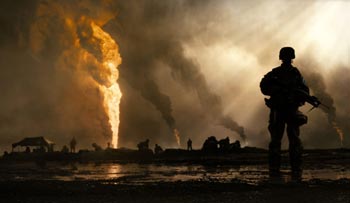
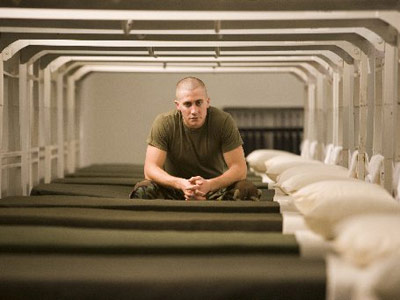
When Apocalypse Now opened in 1979 people argued over its politics. I always thought it was mainly prowar, so I got some satisfaction from seeing an early scene in Jarhead that shows marines at their Mojave Desert base in 1990 watching the movie on video. Itching for the gulf war to start, they whoop it up during the famous “Ride of the Valkyries” sequence, in which the cartoonish Lieutenant Colonel Kilgore ecstatically launches an air attack on a Vietnamese village to the strains of Wagner. Director Francis Ford Coppola, a known liberal, plainly saw the scene as disturbing, but screenwriter John Milius, a known hawk, has often suggested that he saw it as a hoot.
Like most of the good things in Jarhead — a somewhat muddled adaptation by writer William Broyles Jr. (Cast Away) and director Sam Mendes (American Beauty) of Anthony Swofford’s best-selling 2003 memoir — the reference to Apocalypse Now comes from the book, which alludes to movies in its first paragraph. Read more
From the Chicago Reader (June 11, 2004). It’s worth adding that Control Room can be seen now in its entirety on YouTube, which also has excerpts from Route 181; and further information about the latter film, go here. — J.R.
“We’re human, unlike the Arabs,” says an Israeli soldier in Route 181: Fragments of a Journey in Palestine-Israel (2003), which screens this week — along with Writers on the Borders: A Voyage in Palestine(s) (see separate listing) — as part of the Chicago Palestine Film Festival. The remark sums up the bias of Western media in covering Baghdad and the West Bank, a bias that makes both Route 181 and Control Room, a new documentary that isn’t part of the festival, eye-opening experiences. The first film, named after United Nations Resolution 181 (which divided Palestine into two states in 1947), is a road diary following the two directors, Michel Khleifi of Palestine and Eyal Sivan of Israel, along the resulting boundary; it gets closer to the everyday facts of Arab-Jewish relations in all their complexity than any other documentary I’ve seen. Its three discrete parts — covering the south, the center, and the north — run 84 minutes each and can be seen in any order (separate admissions apply, but a rebate is offered to those who view all three). Read more
From 1001 Movies You Must See Before You Die (2003). — J.R.
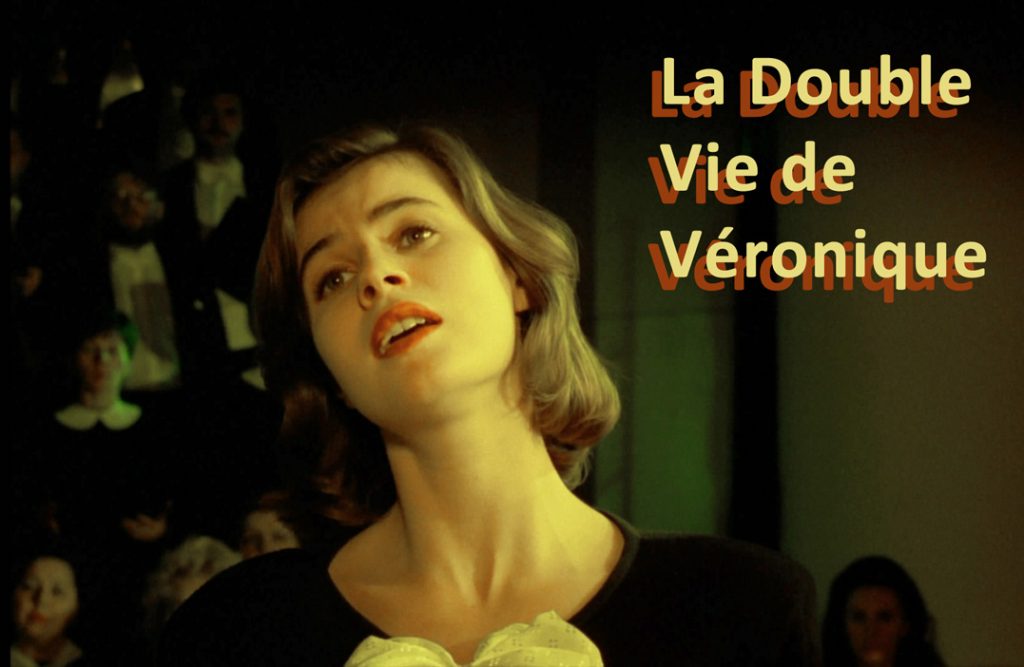
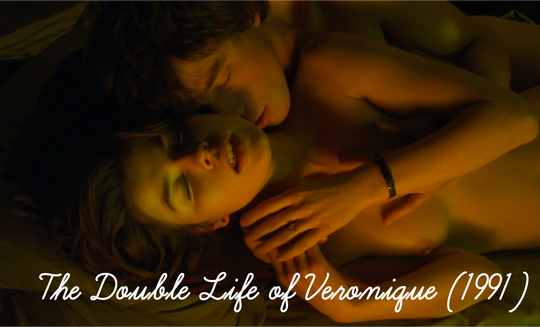
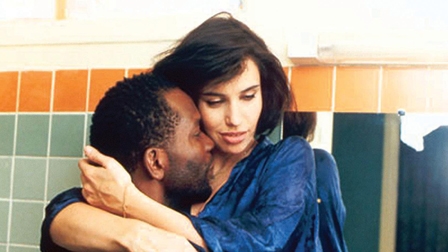
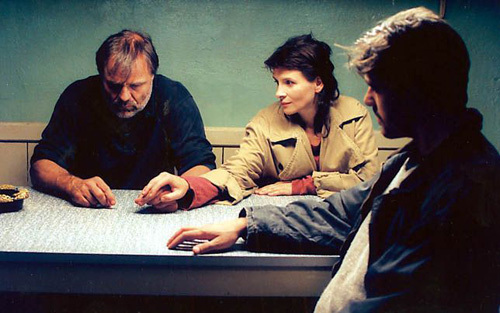
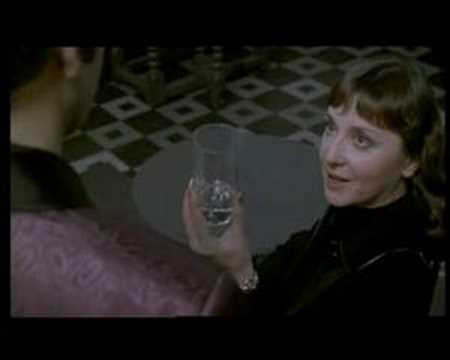
The Double Life of Véronique Krzysztof Kieslowski’s first feature after his Decalogue, launching the European coproduction mode of making films that would lead to his trilogy Three Colors(Blue, White, and Red), is an exquisite enigma following the parallel lives of two 20-year-old women, one in Poland and one in France, both played by the beautiful Irene Jacob. As in Three Colors, European coproduction becomes not only a means of financing, but part of the formal and thematic conceptualization of the project. The Polish Veronika is a talented singer with a heart condition; the French Veronique quits her voice lessons and gets involved with a puppeteer who writes children’s books. Masterfully directed, this rather dreamlike 1991 production is simultaneously an effort on Kieslowski’s part to hold onto to his Polish identity and an equally determined effort to move beyond it — almost as if the filmmaker were dreaming of a resurrected artistic identity for himself as Polish state financing went the route of Polish communism. With Philippe Volter, Halina Gryglaszewska, Kalina Jedrusik, and Aleksander Bardini. (JR)
From the Chicago Reader (October 22, 2003). — J.R.
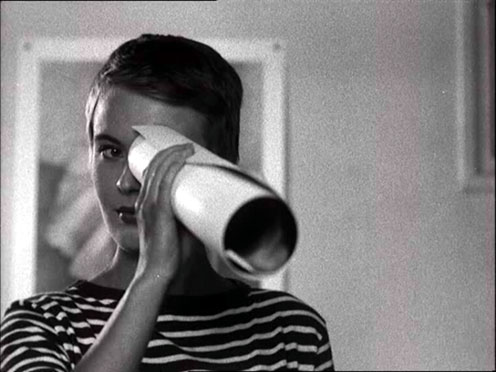
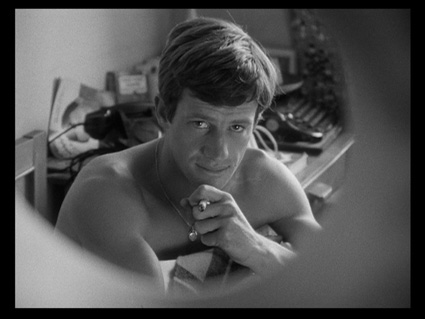
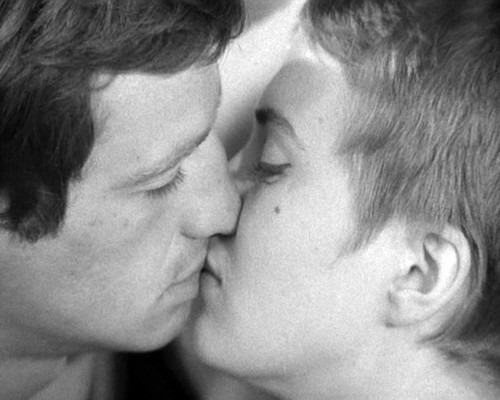
Shot on a shoestring and none the worse for it, Jean-Luc Godard’s gritty and engaging first feature had an almost revolutionary impact when first released in 1960. It lays down most of the Godardian repertoire that the later films would build upon: male bravado spiced with plug-ugly mugging and amusing self-mockery (brought to perfection in Jean-Paul Belmondo’s wonderful performance); a fascination with female beauty and treachery (the indelible Jean Seberg as the archetypal American abroad); an emulation of the American gangster movie, and a love-hatred for America in general; radically employed jump cuts that have the effect of a needle skipping gaily across a record; and a taste for literary, painterly, and musical quotations, as well as original aphorisms. Less characteristic of Godard’s later work are the superb jazz score (by French pianist Martial Solal), a relatively coherent and continuous narrative, and postsynchronized dialogue. In French with subtitles. 89 min. (JR)
The following, though written five years ago, still seems relevant enough today to merit quoting. It comes from my favorite contemporary historian, Eric Hobsbawm — specifically his short book On Empire: America, War, and Global Supremacy (New York/London: The New Press, 2008):
“Frankly, I can’t make sense of what has happened in the United States since 9/11 that enabled a group of political crazies to realize long-held plans for an unaccompanied solo performance of world supremacy. I believe it indicates a growing crisis within American society, which finds expression in the most profound political and cultural division within that country since the Civil War, and a sharp geographical division between the globalized economy of the two seaboards, and the vast resentful hinterland, the culturally open big cities and the rest of the country. Today a radical right-wing regime seeks to mobilize “true Americans” against some evil outside force and against a world that does not recognize the uniqueness, the superiority, the manifest destiny of America. What we must realize is that America global policy is aimed inward, not outward, however great and ruinous its impact on the rest of the world. It is not designed to produce either empire or effective hegemony. Read more
Thom Loree, one of Robin Wood’s dearest friends, has sent me the following, and kindly given me permission to reproduce it here. This list was dictated to Robin’s friend John Anderson two days before he died. (Correction, 1/7/10: Thom hasinformed methat he misunderstood the date; this list was in fact composed “a few weeks” before Robin died, not two days, although he was already “gravely ill at the time”.) Rio Bravo was clearly in the number one slot; the others weren’t ranked, and are given in the order in which he dictated them. –J.R.
Rio Bravo
Either I Can’t Sleep or I Don’t Want to Sleep Alone (Robin wasn’t articulating well, but probably the former)
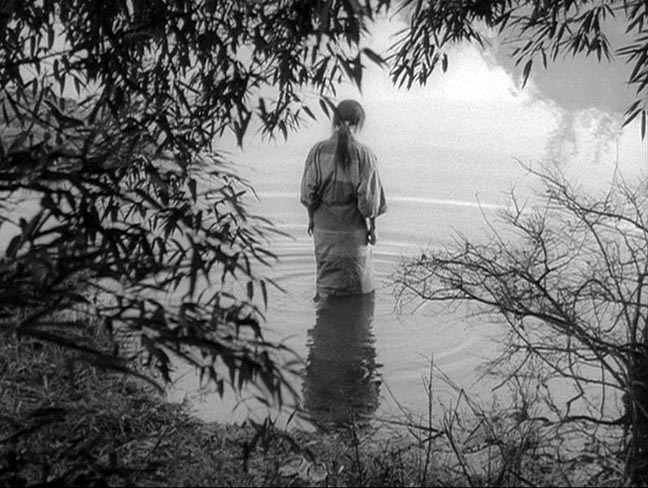
Sansho Dayo
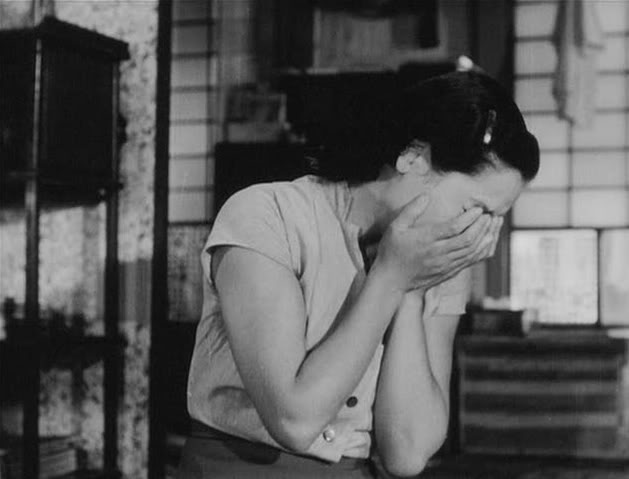
Tokyo Story
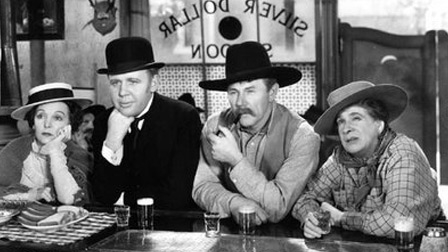
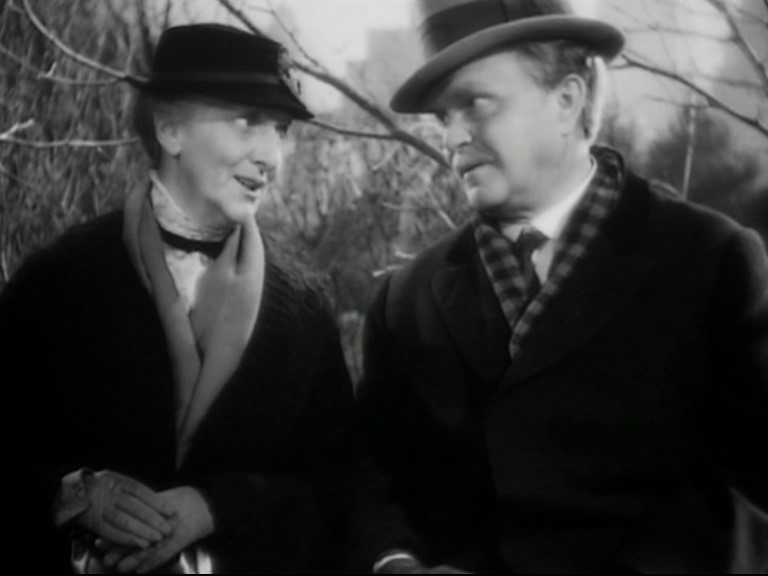
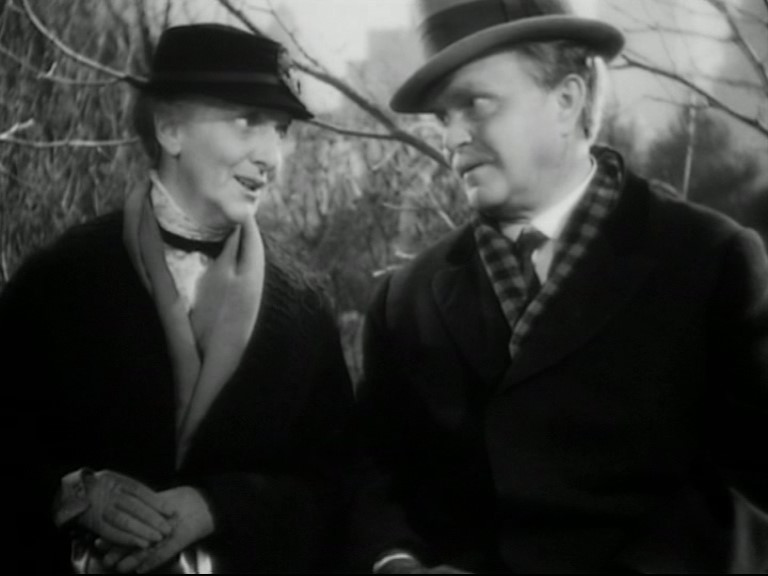
Ruggles of Red Gap or Make Way for Tomorrow
Code inconnu
The Reckless Moment or Letter from an Unknown Woman
Perhaps the closest I’ve come to writing theater criticism are the two reviews I did of the “American Film Theatre” productions of The Homecoming and The Maids in successive issues of the Monthly Film Bulletin in 1976 — a good filming and adaptation of a good play and a terrible filming and adaptation of what I consider an even greater play. So I’m reproducing these two reviews back to back. — J.R.
Homecoming, The
U.S.A./Great Britain, 1973
Director: Peter Hall
An attempt, largely successful, to approximate Peter Hall’s original stage version of The Homecoming in London (1965) and New York (1967), with only two cast changes: Cyril Cusack as Sam in place of John Normington, and Michael Jayston as Teddy in place of two previous Michaels –- Craig (New York) and Bryant (London). The outsized living room continues to function as a sort of masterpiece of hyper-realism, and the cast remains uniformly superb; if memory serves correctly, Paul Rogers has made Max somewhat nastier this time around while Ian Holm’s Lenny has become marginally more charismatic, and both of these changes seem to work to the play’s advantage in terms of overall balance. The only concessions to “opening out” the action are a few establishing or continuity shots of the street outside, some pointless glimpses of Ruth taking her walk, and brief forays into the kitchen. Read more
This review appeared in the October 1974 issue of Monthly Film Bulletin. —J.R.
Toni
France, 1934 Director: Jean Renoir
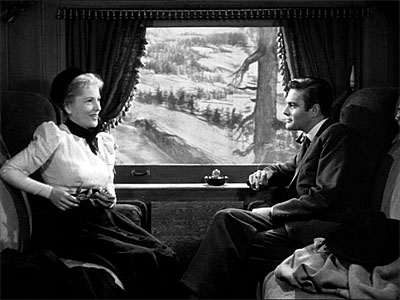
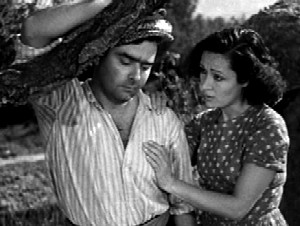
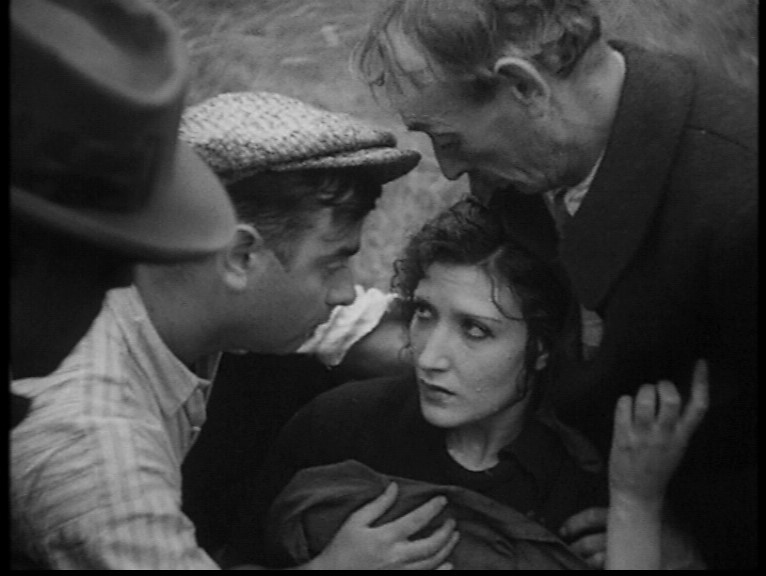
Neither a major nor a minor work in the Renoir canon, Toni demands to be regarded more as an adventure of the director in contact with his material than as an integral and “finished” composition. If the symmetrical framing device of the train arriving with fresh immigrants at the beginning and end of the film appears somewhat forced in relation to the whole, this is likely because Renoir began with notions of a social thesis and a Zola-derived sense of fatality from which his better instincts subsequently deviated. And it is the instinctual rather than the conceptual side of Toni that renders it a living work forty years after it was made -– a distinction that might serve equally well for Zola and Stroheim. Over and around the largely melodramatic plot is draped an expansive mood of leisurely improvisation, like an ill-fitting but comfortable suit of clothes, often permitting the accidental and random to take precedence over the deliberate, the individual detail over the general design. Thus the fleeting glance of a child at the camera in the opening prologue (when the newly-arrived immigrants walk into town), the grey haziness of Sebastian’s funeral procession, the muddy fadeouts and slightly bumpy pans are all part of the film’s charm and integrity. Read more
This was/is my first post for the Chicago Reader‘s film blog; there aren’t/weren’t any hyperlinks. This is reprinted in my collection, Goodbye Cinema, Hello Cinephilia. — J.R.
Some people’s obsessive preoccupation with spoilers has been driving me batty lately. It isn’t only among moviegoers; many fiction readers are equally afflicted. Visiting a Thomas Pynchon chat room lately in conjunction with a recent prepublication reading of Against the Day, I find other Pynchon freaks breathlessly advising one another about whether they should read the short review of the novel that Time has already posted, which actually mentions — horrors! — one of the characters getting killed, something that happens, if I remember correctly, roughly a fifth of the way through this almost 1100-page novel. Percentage-wise, that’s about as far as you have to watch The Death of a President [see photo] before you witness the assassination that the title already announces. Honestly, does that spoil the movie for anybody?
Give me a break. Is this form of worry a fit activity for grown-ups?
My objections to spoiler-think are multiple, so I might as well set them down in a list:
This review was originally written for the long-defunct Canadian film magazine Take One during the same time that I was writing my first book, Moving Places: A Life at the Movies (1980), and I’m sure that Pryor’s passionate form of self-examination and autocritique struck a very personal chord for me at the time. To contextualize this review a little further, I had recently written an angry attack on The Deer Hunter for the March issue of the same magazine, not too long after a reviewer in the Soho News had compared it favorably to Tolstoy. –J.R.
The True Auteur: Richard Pryor Live in Concert
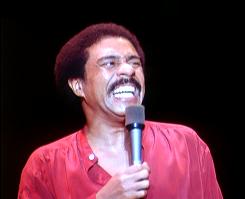
Richard Pryor Live in Concert has nothing in particular to do with the art of cinema; it merely happens to be the densest, wisest, and most generous response to life that I’ve found this year inside a first-run movie theater. A theatrical event recorded by Bill Sargeant, the entrepreneur who similarly packaged Richard Burton’s Broadway production of Hamlet and a celebrated rock concert (The T.A.M.I. Show) fifteen years ago, and more recently filmed James Whitmore’s impersonation of Harry Truman (Give ‘Em Hell, Harry!), it is nothing more nor less than a Pryor stand-up routine given last December 28th at the Terrace Theater in Long Beach, California, lasting about an hour and a quarter. Read more
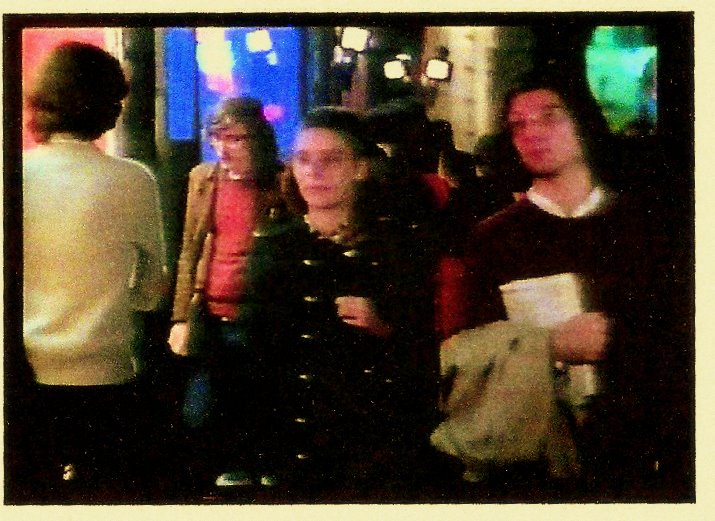
The reproduction is grainy, but I’m still a novice when it comes to importing film frames to this site, so this will have to do. For friends and acquaintances who want to know when and where I appear as an extra in Robert Bresson’s Quatre Nuits d’un Rêveur (Four Nights of a Dreamer, 1972), here I am. This is right towards the tail end of the penultimate sequence, and that’s me on the left, in the suede jacket and the orange-red sweater, carrying something–I no longer remember what –under my right arm. I had a moustache in those days. It was a fall evening, as I recall, not too far from the Palais de Chaillot, and a bit on the chilly side.
The following night, which was the film’s final night of shooting, I wound up on a bateau mouche with Bresson and the small crew and a small performing bossa nova band and singer who play a major part in the film’s most memorable sequence, but this time it was only as an offscreen spectator. [1/17/09] Read more
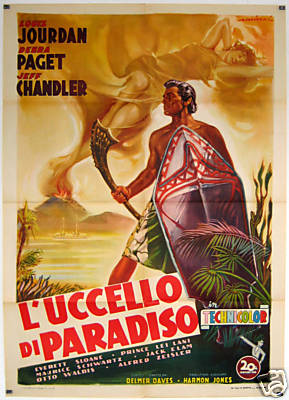
I’m glad that Dave Kehr’s recent column in the New York Times about the neglected and underrated Delmer Daves has spurred some interest in Daves on his web site, but disappointed that no one except for me has thought to bring up Daves’ 1951 remake of King Vidor’s 1932 Bird of Paradise. It’s true that I have some personal investment in this kitschy South Sea island tale, having written the first chapter of my autobiographical Moving Places: A Life at the Movies (1980; 2nd ed., 1995) about its significance for me. But the second chapter of the same book, a much longer one, is devoted to that same year’s Doris Day musical On Moonlight Bay, and I’d never dream of making any special case for that movie.
By contrast, what seems memorable about the 1951 Bird of Paradise, apart from its lush Technicolor, is a certain tragic sense of thwarted utopian and liberal multiculturism, similar in some ways to what can be found in Daves’ previous feature, also with Debra Paget and Jeff Chandler (and made at the same studio, Fox), Broken Arrow (1950). I suppose this could be written off as some sort of camp in both movies, but personally I find this less of a hoot than Daves’ penultimate feature, Youngblood Hawke (1964), which Dave describes as “interesting” and, like some of the posters on his site, seems to take relatively seriously. Read more
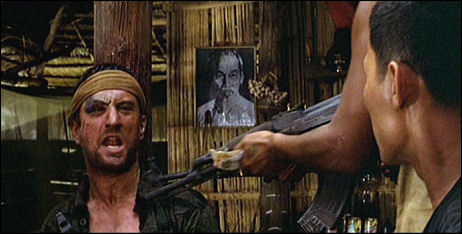
This review, one of the most incendiary I’ve ever written, appeared in the March 1979 issue of the Canadian monthly Take One (vol. 7, no. 4). It’s probably over the top, but at least it’s sincere; I can’t recall another occasion when any acclaimed movie filled me with such absolute loathing. I can recall thinking, when Cimino subsequently collected his Oscar, that he should have said at the time, “I’d like to thank especially the Vietnamese people, without whose corpses this award wouldn’t have been possible.”
The film is currently screening on Bologna’s Piazza Maggiore, although I’m delighted to report that programmer Ehsan Khoshbakht had the brilliant idea of screening Cinetract 101 just before it. — J.R.
“You beat me, baby,” Francis Ford Coppola reportedly said to Michael Cimino, director of the $13 million The Deer Hunter, in reference to the fact that this new Vietnam atrocity movie has opened several months before Coppola’s Apocalypse Someday. Considering the degree to which slick media and its prize monoliths now seem to rule most of our cultural and ethical discourse, I wonder whether Coppola might have said the same thing to the Reverend Jim Jones if, after the Guyana “suicides,” the latter had been around to receive the compliment. Read more