This was written in 1982 for The Movie: An Illustrated History of the Movies in the U.K. — J.R.
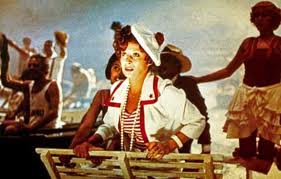
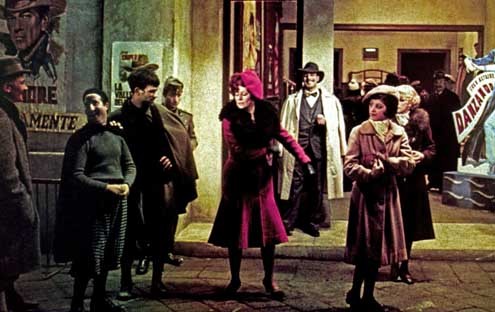
Starting with Gradisca, a local beauty, lighting a torch and setting a bonfire ablaze to roast the ‘winter-witch’ and usher in the spring, and ending with the wistful farewell she bestows a year later on the randy teenage boys at her wedding while sadly tossing away her bridal bouquet, the small-town life celebrated by Amarcord is above all one of community rituals and seasonal changes. Within this basic rhythmic pattern of eternal recurrence, dreams and other fantasies play as much of a role as precise recollections.
Amarcord means ‘I remember’ in the regional dialect of Rimini (Fellini’s own hometown), and even though the director has been at pains to disclaim any specific autobiographical intent in this episodic caravan or burghers and small-town events, it is clear enough in Fellini’s work as a whole that fact and fancy are never very far apart. Amarcord is Fellini’s thirteenth feature as a director, made 20 years after his first treatment of male adolescence in I Vitelloni (1953, The Spivs), and the distance he has traveled since is largely a matter of the extent to which he has learned to trust imagination over ‘realistic’ observation. Read more
This was written in the summer of 2000 for a coffee-table book edited by Geoff Andrew that was published the following year, Film: The Critics’ Choice (New York: Billboard Books). — J.R.
Set in a small provincial town in Poland the day after the country’s liberation in the spring of 1945, Ashes and Diamonds, Andrzej Wajda’s third film, may still be the most influential of his career. Yet, curiously, its impact both today and some 40 years ago seems predicated in part on the slightly anachronistic effect produced by superimposing the mid-fifties over the mid-forties — specifically, existential angst laid over a gloomy sense of exhaustion at the end of the war.
Above all, the black-leather-jacketed figure of Zbigniew Cybulski as Maciek, an uncertain resistance assassin — clearly derived from the Marlon Brando of The Wild One (1954) even more than the Brando of On the Waterfront from the same year, or the James Dean of East of Eden, and Rebel Without a Cause from the following year — reinvented postwar Poland in hipster terms. And the resulting image of the actor (who died prematurely in a railroad accident less than a decade later) was fixed in the popular imagination for good.
From the March 17, 1989 Chicago Reader. At least in memory, The Adventures of Baron Munchausen continues to remind me of Italo Calvino’s Cosmicomics. — J.R.
THE ADVENTURES OF BARON MUNCHAUSEN
*** (A must-see)
Directed by Terry Gilliam
Written by Charles McKeown and Gilliam
With John Neville, Eric Idle, Sarah Polley, Robin Williams, Oliver Reed, Uma Thurman, Jonathan Pryce, Winston Dennis, and Valentina Cortese.
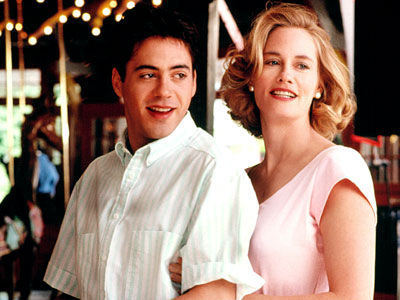
CHANCES ARE
** (Worth seeing)
Directed by Emile Ardolino
Written by Perry Howze and Randy Howze
With Cybill Shepherd, Robert Downey Jr., Ryan O’Neal, Mary Stuart Masterson, and Christopher McDonald.
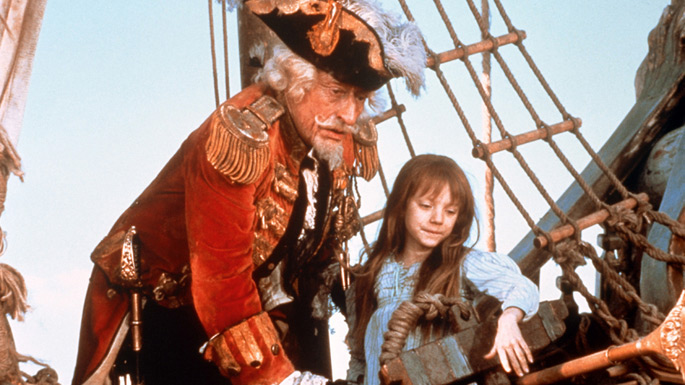
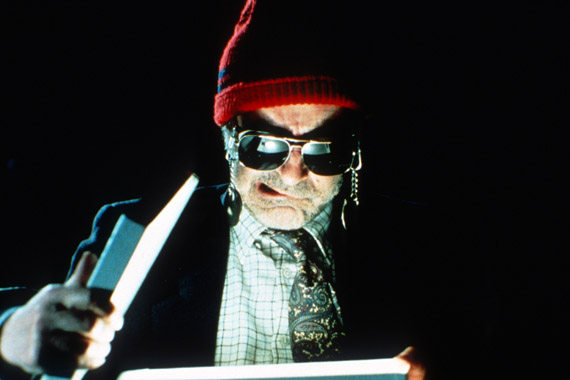
I can no longer recall whether any of Rudolf Erich Raspe’s late-18th-century best-seller The Adventures of Baron Munchhausen was read to me as a child. But there’s no question that these tall tales of comic extravagance — based on stories told by one Karl Friedrich Hieronymous (the Baron von Munchhausen) to his German poker buddies during the same period — have held a special place in children’s literature ever since. Reportedly about a dozen and a half film versions of the stories precede Terry Gilliam’s current entry, although I presume that most of these are silent and/or European, because I can find only one listed in Leonard Maltin’s extensive TV Movies (The Fabulous Baron Munchausen by Karel Zeman). Read more
Claude Chabrol died at the age of eighty, and I’d like to celebrate his work by focusing on what I regard as probably the greatest and most masterful of his later films, made in 1995 but released in the U.S. two years later. This review, which was later used on the film’s American DVD, ran in the Chicago Reader on February 14, 1997; it’s reprinted in my collection Essential Cinema, my most popular book on Amazon. — J.R.
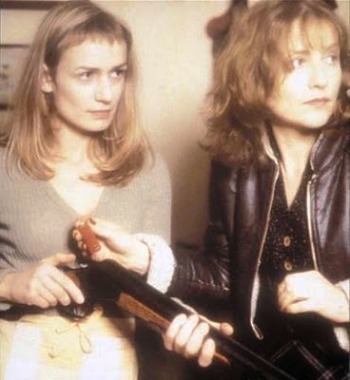
The Ceremony
Rating **** Masterpiece
Directed by Claude Chabrol
Written by Chabrol and Caroline Eliacheff
With Sandrine Bonnaire, Isabelle Huppert, Jacqueline Bisset, Jean-Pierre Cassel, Virginie Ledoyen, and Valentin Merlet.
It’s odd that Claude Chabrol is the most neglected filmmaker of the French New Wave today, at least in this country, because he started out as the most commercial and has turned out to be the most prolific, with the possible exception of Jean-Luc Godard. I’ve seen 33 of his 46 features, but nothing in over a quarter of a century that’s quite as good as La cérémonie, an adaptation of Ruth Rendell’s novel A Judgement in Stone.
Born in 1930, about six months ahead of Godard, Chabrol came from a family of pharmacists (as did Jacques Rivette). Read more
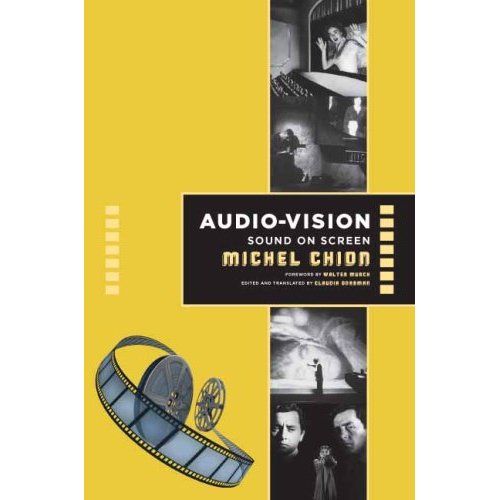
by Michel Chion. Translated and edited by Claudia Gorbman; Introduction by Walter Murch. New York: Columbia University Press, 1994, 239 pp., illus., Hardcover: $93.00; Paperback: $23.85.
Eighteen years ago, during my first quarter of film teaching, I terminally alienated some of my students in a lecture course on film esthetics with the following lesson in materialism. First I showed them Buñuel and Dali’s silent Un chien andalou several times, each time with a radically different musical accompaniment. Then I asked them on a quiz whether the statement, “The use of different kinds of music to accompany a silent film changes the film profoundly,” was true or false. Afterwards I explained to them that such a statement could only be false because the film remained the same regardless of whatever music accompanied it; the music changed only the way we looked at and ‘read’ the film, not the film itself.
I’m not recommending this as a teaching method, especially if one wants one’s contract renewed (mine wasn’t), but I’m bringing it up to illustrate the degree to which a certain amount of mystification about the relationship between image and sound is firmly entrenched in the way we think about film. Read more
Two particular (and very different) moments that I described for Chris Fujiwara’s Defining Moments in Movies (2007). — J.R.
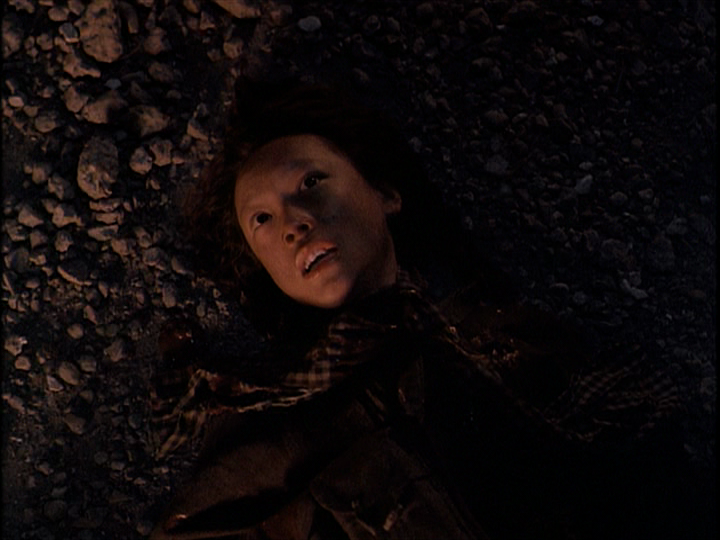
1987 /Full Metal Jacket –- The closeup of a dying Vietcong woman, a sniper.
U.S. (Warner Bros. Pictures). Director: Stanley Kubrick.
Cast: Matthew Modine, Ngoc Le.
Why It’s Key: It condenses the film’s power into an intense, mysterious moment.
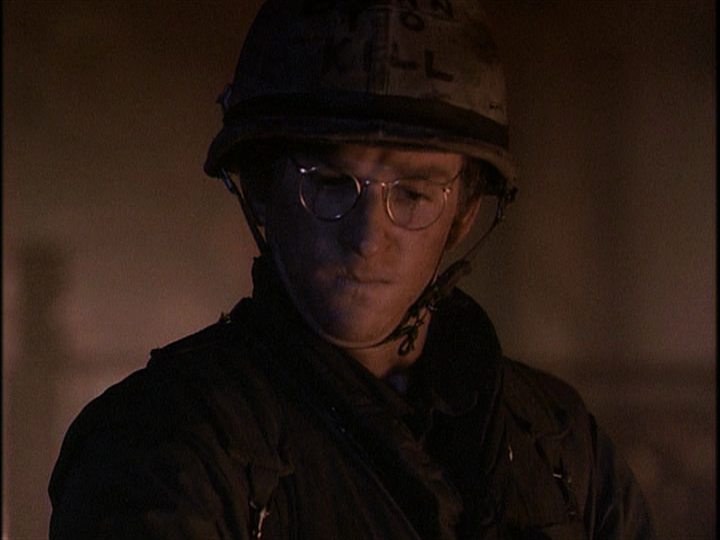
I had the rare privilege of seeing Stanley Kubrick’s last war picture — an adaptation of Gustav Hasford novel’s The Short Timers, about his experiences during the war in Vietnam — with war specialist Samuel Fuller, shortly after the film came out. He didn’t much care for the picture, he said afterwards, because he didn’t much like films about training, and besides, this movie wasn’t antiwar enough for his taste; he thought it might even encourage some teenage boys to enlist in future wars. Of course, Fuller had extensive war experience and Kubrick had none, which might have also played some role in forming his bias.
But one thing in the film that he loved without qualification was the close-up of the wounded Vietcong sniper at the end while she’s begging for Joker (Matthew Modine) to finish her off —- above all, for the look of absolute hatred in her eyes. Read more
With James Duval, Rose McGowan, Johnathon Schaech, Cress Williams, and Dustin Nguyen.
Kicking and Screaming
Rating *** A must see
Directed by Noah Baumbach
Written by Baumbach and Oliver Berkman
With Josh Hamilton, Olivia d’Abo, Chris Eigeman, Jason Wiles, Carlos Jacott, Eric Stoltz, Elliott Gould, Cara Buono, and Parker Posey.
Chet: Here’s a joke. How do you make God laugh?
Grover: How?
Chet: Make a plan.
— Kicking and Screaming
As luck would have it, I had my second looks at The Doom Generation and Kicking and Screaming, two radically different youth movies about defeat and paralysis, back-to-back. Both seemed better the second time around, though for very different reasons. Noah Baumbach’s first feature, Kicking and Screaming, which I’d originally seen and liked at Cannes last May, seems to have been tightened up in the editing and given more focus. Perhaps because I disliked Gregg Araki’s fifth feature, The Doom Generation, when I first saw it last August, I found it harder to decide on a second viewing whether it had been changed in the interim; in any case I found myself disliking it less. Read more
From the Chicago Reader (December 13, 2007). — J.R.
Starting Out in the Evening
Directed by Andrew Wagner ***
The two most interesting movies I saw at press screenings last summer had their opening dates postponed, and it’s not hard to imagine why. As Orson Welles experienced time and again, features that are fresh and unconventional are harder to gauge as commercial prospects than stale conventional ones — and thus they’re harder to sell. This explains both the box-office success of Welles’s relatively pedestrian The Stranger(1946) and the delayed and relatively unprofitable U.S. releases of many of his other features, starting with Citizen Kaneand continuing throughThe Lady From Shanghai, Othello, and F for Fake, among others.
Neither Jon Poll’s Charlie Bartlett nor Andrew Wagner’s Starting Out in the Evening is a masterpiece, but both films exemplify a kind of adventurous filmmaking that’s increasingly difficult to envisage in today’s marketplace, where first impressions mean everything — it’s an unpromising climate for any art form. When I saw Charlie Bartlett — an edgy and quirky satirical teen comedy, unusual for both its nervy politics and its class consciousness — in mid-July, it was scheduled to open in early August. Read more
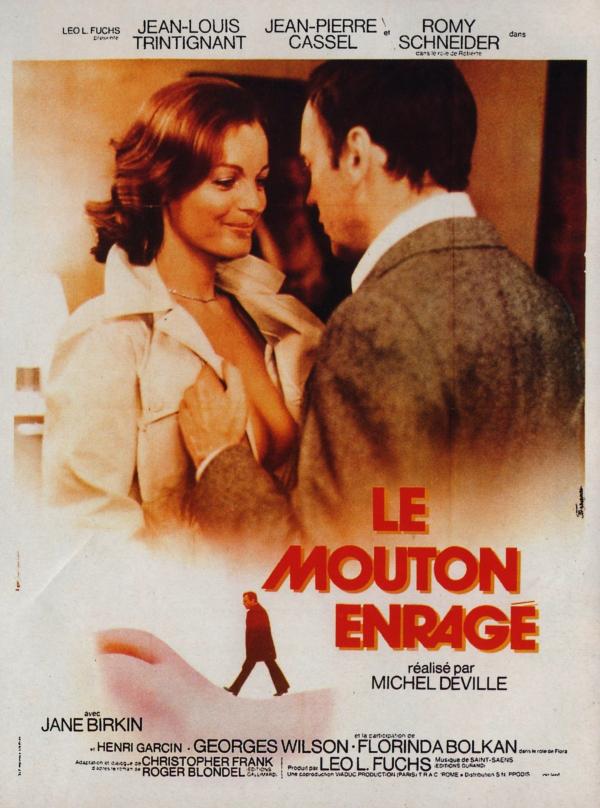
Le Mouton Enragé. Before the credits of Le Mouton Enragé come on, we see Jean-Louis Trintignant as Nicolas, an unassuming bank clerk who is so sheepish that he accepts a sandwich he hasn’t ordered in a café and winds up paying for a seat in a park where he doesn’t want to sit. Then he sees a pretty girl (Jane Birkin) standing alone by the Seine. A flush of courage overtakes him, he places a hand on her arm and says, “The person you’re waiting for doesn’t exist.” “Probably not,” she agrees, and voilà! The lamb is already on his way to becoming a lion. Carefully advised and tutured by his best friend (Jean-Pierre Cassel), Nicolas proceeds to make his way in the world; before the final reel, he has already become the editor of a jazzy tabloid and has bedded practically every attractive woman in the cast, including Birkin, Romy Schneider, Florinda Bolkan, and Estella Blain. The director of this graceful, inconsequential lark is Michel Deville, something of a specialist in neoclassy, softcore wish fulfillment — particularly harem fantasies where the ladies keep begging for more. (His Benjamin, a fleshy 18th century romp of a few years back, is a prime example.)Read more
I believe this was commissioned by the San Francisco International Film Festival in 1993; my thanks to Adrian Martin for reminding me of its existence. — J.R.
Jon Jost’s three features starring Tom Blair display a surprising amount of consistency and continuity. Part of this undoubtedly stems from the singular power and intelligence of Blair — mainly known as a stage actor and director — who is officially credited for “additional dialogue” only in The Bed You Sleep In, but undoubtedly played a comparable role in earlier films. Another part just as surely comes from the way in which Blair’s particular talents have inspired and inflected some of Jost’s preoccupations. All three films focus on specific forms of all-American male dementia and violence, crumbling economies and communities and family units that come apart through contagious paranoid mistrust. And all three can be further read in part as corrosive, speculative self-portraits that reflect his changing position as a filmmaker. When he made Last Chants for a Slow Dance (Dead End) he was effectively without a fixed address himself and his searing look at the misogyny and wanderlust of Tom, driving around jobless and in flight from domesticity, is in part a dark reading of his own situation at the time. Read more
People like myself who often despair of finding a cop-and-crime movie that isn’t encrusted in cliches should take to this wonderful sleeper by writer-director George Armitage (Vigilante Force), based on a novel by Charles Willeford (Cockfighter) and coproduced by Jonathan Demme. A small-time thief and ex-con (Alec Baldwin) arrives in Miami, latches on to a local hooker (Jennifer Jason Leigh), and winds up stealing the gun and badge (along with the dentures) of police detective Hoke Moseley (Fred Ward) in order to pose as a cop while pulling off more thefts. Some of the characters and situations, such as the thief’s stylish chutzpah and his relationship to the hooker, recall Godard’s Breathless, but Armitage’s handling of the material is consistently fresh and pungent. The three lead actors all manage to be terrific without showing off — Leigh, in the course of an exquisite performance, does one of the best impersonations of a country southern accent I’ve ever heard — and the use of Miami locations is a consistent delight. The late Willeford wrote five Hoke Moseley novels (and managed to publish four), and this crisp, funny, grisly, and perfectly balanced adaptation makes me yearn for Armitage to film a few more of them. Read more
From Monthly Film Bulletin, October 1974 (Vol. 41, No. 489). -– J.R.
Great Britain, 1973
Director: Saul Bass
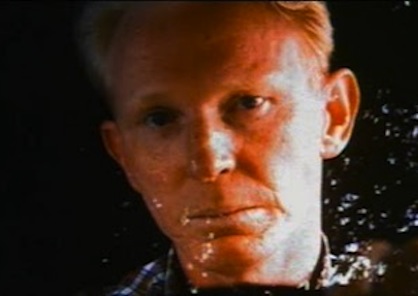
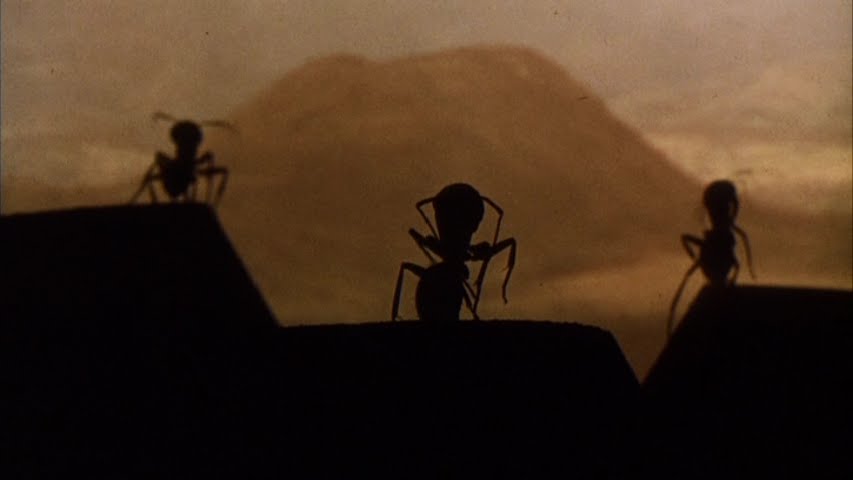
Ernest Hubbs, a research scientist, sets up an experimental dome in the Arizona of the resident ant population: the various species have united and are collectively destroying all their natural enemies. With the help of James Lesko, a colleague versed in computer analysis, Hubbs orders the Eldridge family to evacuate the area, and blasts the enormous anthills with grenades. When the Eldriges’ belateddeparture is precipitated by an ant attack, they are further incapacitated by the poison gas being used against the insects. Kendra, the granddaughter, is the only survivor, and is brought into the dome in a state of shock. The ants develop an immunity to the poison gas, and a subsequent experiment with mantises is foiled when Kundra hysterically smashes the lab equipment, causing Hubbs to be bitten on the hand by several ants. The ants ‘attack’ the dome with heat-focusing mirror surfaces, putting the computers out of commission; Lesko fights back with ‘white sound’, but the ants next succeed in destroying the dome’s air-conditioning unit. Lesko transmits a rectangular drawing to the ants in an effort to communicate, and receives in reply an identical drawing with a small circle containing a dot inside. Read more
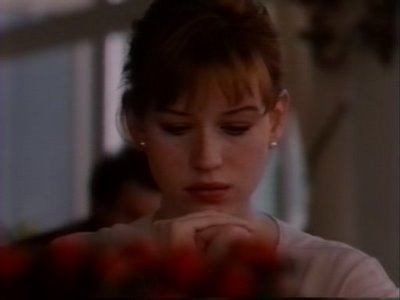
Jean-Luc Godard’s zany, English-speaking quasi adaptation of the Shakespeare play has the most complex and densely layered use of Dolby sound in movies, and this screening offers one the first chance in Chicago to hear it properly. The “itinerary” of the film–one can’t quite consider it a plot — involves a post-Chernobyl view of culture in general and Shakespeare’s play in particular. Among the performers, mainly used by Godard as a painter might use colors, are stage director Peter Sellars, Molly Ringwald (as Cordelia), Burgess Meredith (as Lear), a semiincoherent Godard (as someone called Professor Pluggy), and, in smaller parts, Norman Mailer, his daughter Kate Miller, film director Leos Carax, and Woody Allen. The film certainly qualifies as a perverse provocation on more levels than one, but one of these levels — believe it or not — is Shakespeare. It may drive you nuts, but it is probably the most inventive and original Godard film since Passion. (Film Center, Art Institute, Columbus Drive at Jackson, Friday, March 31, 6:00 and 7:45, 443-3737)
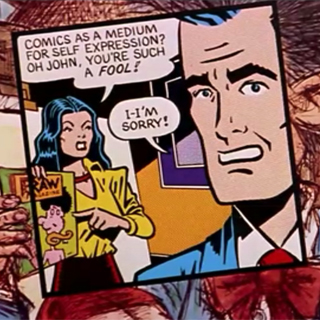
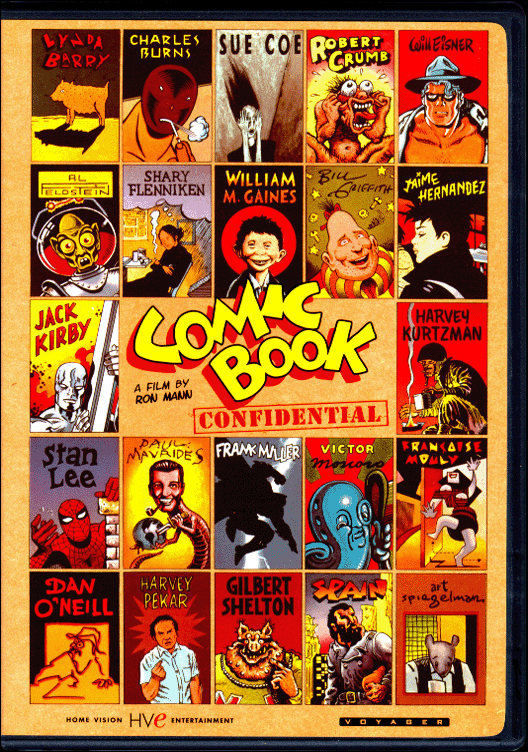
A very enjoyable documentary survey of American comic books, from their inception in 1933 to the present, by Canadian filmmaker Ron Mann (Imagine the Sound, Poetry in Motion). Newspaper comic strips such as Little Nemo in Slumberland, Krazy Kat, Dick Tracy, Li’l Abner, and Peanuts are omitted, but within the comic-book field, Mann’s reach is fairly broad, extending from diverse superheroes such as Superman and the Fantastic Four to EC Comics to underground artists such as Robert Crumb and Spain Rodrigues to recent figures such as Art Spiegelman, Lynda Barry, and Sue Coe. Jazzy graphic devices are employed to represent the work, including simplified animation and individual frames accompanied by the artists reading the captions and dialogue aloud, and the interviews are generally both lively and pertinent. Mann also gets a lot of amusing mileage out of archival footage of anti-comic-book propaganda from the 50s. One misses the kind of in-depth formal analysis given to comics by such overseas experts as Francis Lacassin, but otherwise Mann’s grasp of his subject is lively, penetrating, and affectionate. A Chicago premiere. (JR) (Music Box, Friday through Thursday, June 30 through July 6)