From the June 7, 2002 Chicago Reader. This is also reprinted in my book Essential Cinema. — J.R.
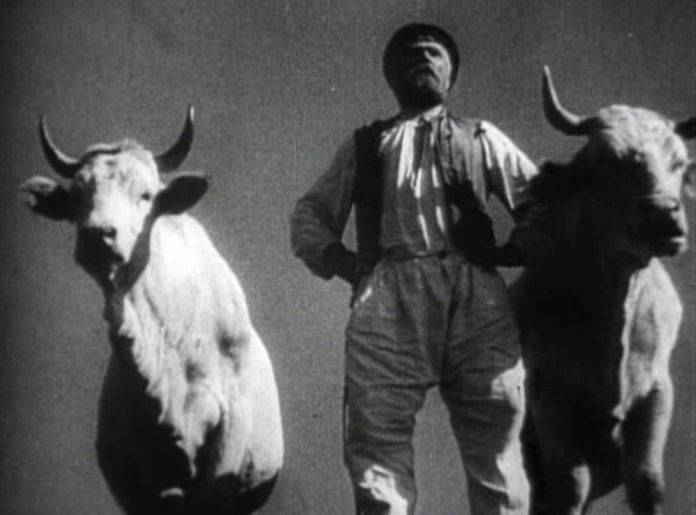
Landscapes of the Soul: The Cinema of Alexander Dovzhenko
When I speak of poetry, I am not thinking of it as a genre. Poetry is an awareness of the world, a particular way of relating to reality….Think of Mandelstam, think of Pasternak, Chaplin, Dovzhenko, Mizoguchi, and you’ll realize what tremendous emotional power is carried by these exalted figures who soar above the earth, in whom the artist appears not just as an explorer of life, but as one who creates great spiritual treasures and that specific beauty which is subject only to poetry. Such an artist can discern the lines of the poetic design of being. He is capable of going beyond the limitations of coherent logic, and conveying the deep complexity and truth of the impalpable connections and hidden phenomena of life. — Andrei Tarkovsky, Sculpting in Time
It is possible that we are still in a pre-historic stage of cinema, for the great history of cinema will begin when it leaves the frame of ordinary artistic representation and grows into a tremendous and extraordinarily encompassing perceptive category. — Alexander Dovzhenko, 1933
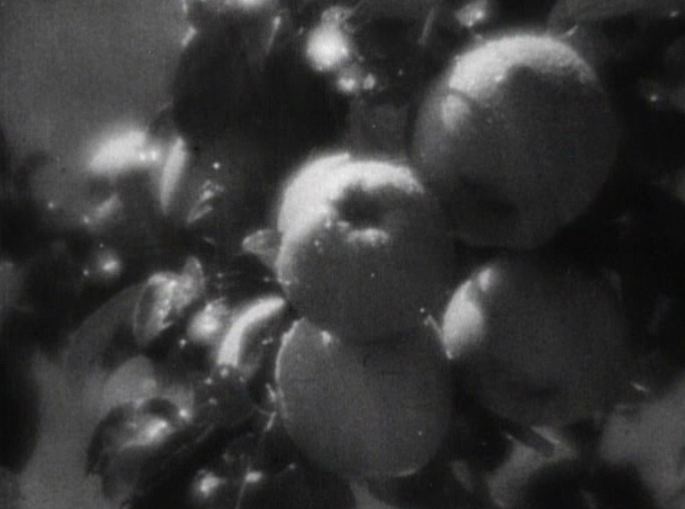
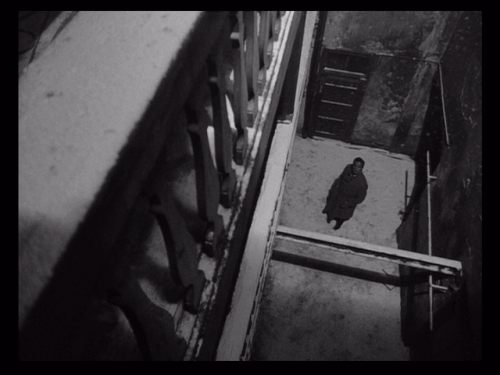
Ukrainian writer-director Alexander Dovzhenko may be the most neglected major filmmaker of the 20th century. Read more
Published, in a slightly shorter version, in the August 2014 Sight and Sound. — J.R.
JEAN-LUC GODARD, CINEMA HISTORIAN
By Michael Witt. Indiana University Press, 276pp. £20.65.
paperback, ISBN 9780253007285
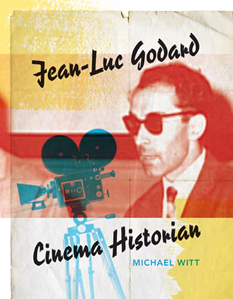
Reviewed by Jonathan Rosenbaum
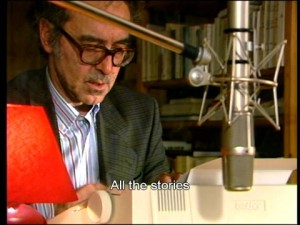
There has been a slew of important books lately devoted to post-60s Godard, including Daniel Morgan’s Late Godard and the Possibilities of Cinema, Jerry White’s Two Bicycles: The Work of Jean-Luc Godard and Anne-Marie Miéville, and Godard’s own Introduction to a True History of Cinema and Television, translated by Timothy Barnard — the latter including Michael Witt’s introductory, 55-page ‘Archaeology of Histoire(s) du cinéma’. But none seems quite as durable, both as a beautiful object and as a user-friendly intellectual guide, as Witt’s superbly lucid, jargon-free book about Histoire(s) du cinéma, Jean-Luc Godard, Cinema Historian.
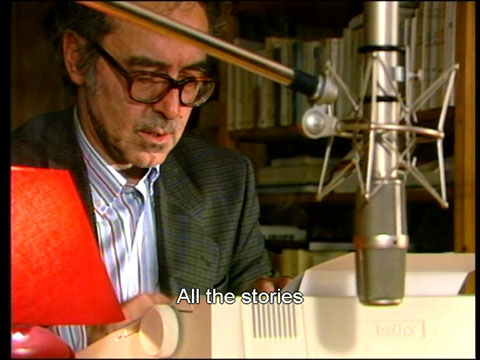
Copiously illustrated with frame enlargements that complement the text without ever seeming redundant, this examination of the philosophical, historical, and aesthetic underpinnings of Godard’s masterwork isn’t only about a four and a half-hour video; it’s also about the work’s separate reconfigurations as a series of books, a set of CDs, and a 35-millimeter feature of 84 minutes (Moments choisis des Histoire(s) du cinéma). Read more
From The Movie No. 82 (1981). — J.R.
The war in Vietnam created in the United States a national trauma unparalleled since the Civil War, and its after-effects may prove to be every bit as enduring in the American consciousness. It was a war fought not only with guns and napalm in Southeast Asia, but with placards and truncheons on campuses and streets in large cities throughout the western world. It became the largest, most crucial issue of a generation — virtually taking over such related matters as black protest and the youth-drug subculture — but Hollywood was afraid to deal directly with it, even on a simple level.
Hollywood has traditionally done its best to avoid contemporary politics and especially political con�troversy, largely for commercial reasons. There is always the danger that a shift in public opinions or interest, between the time of a film’s production and its release date, may render a film with a ‘timely’ subject unmarketable in the long run, or sooner; and few producers are ever willing to take such a risk. The profound divisions created by the Vietnam War in American life were too wide, in a sense, to be commercially exploitable — at least while America remained actively involved. Read more
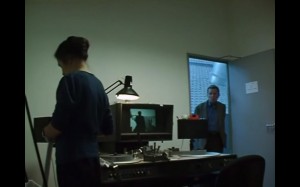
Thanks to Second Run Features, here is a very lucid, informative, and well-recorded conversation between Chris Petit and Pedro Costa about the latter’s 2001 documentary about Jean-Marie Straub and Danièle Huillet, Où gît votre sourire enfoui? (Where Does Your Hidden Smile Lie?), which took place at London’s ICA Cinema on January 9:
 Read more
From the April 1999 Chicago Reader.– J.R.


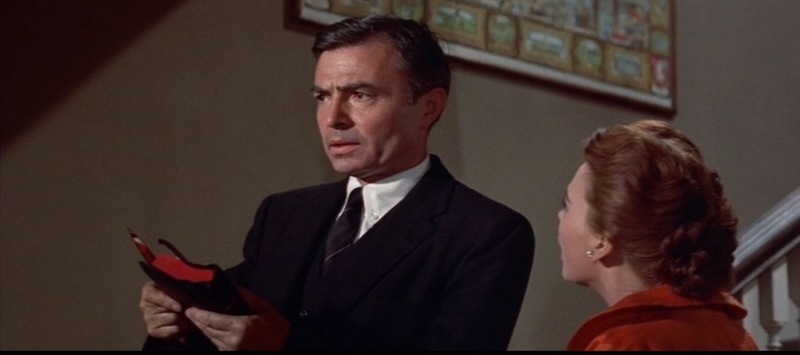
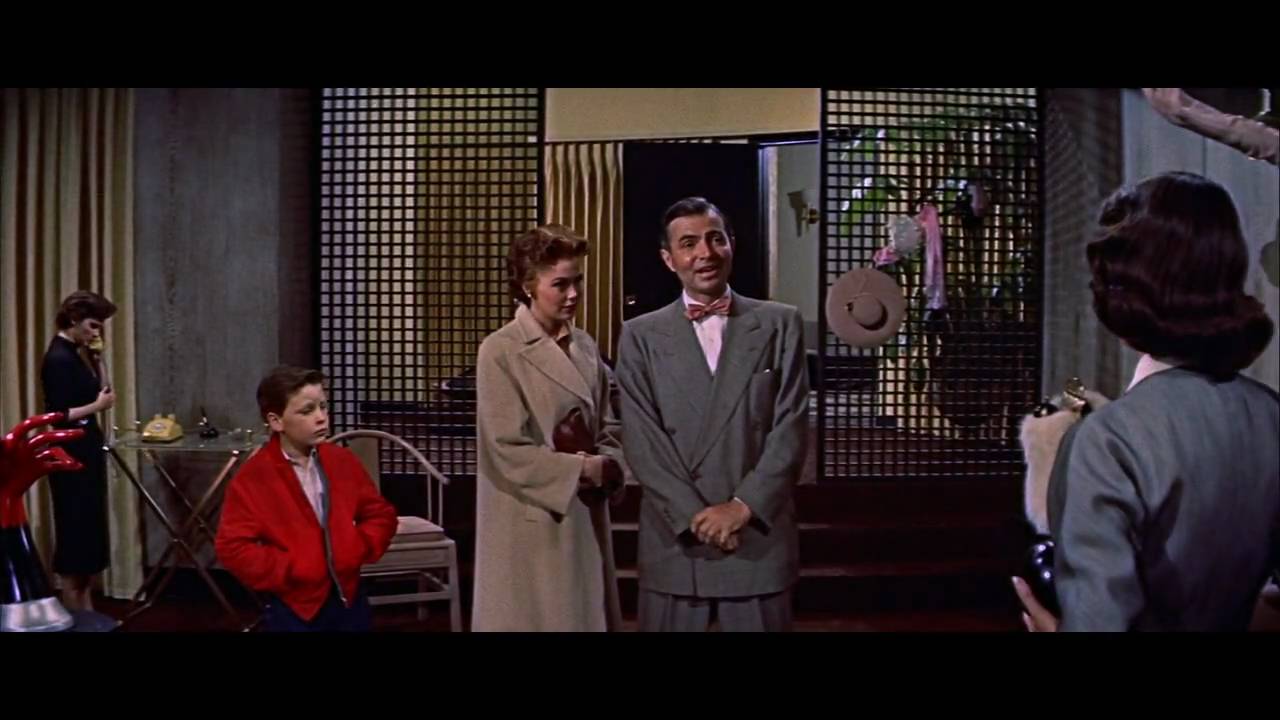
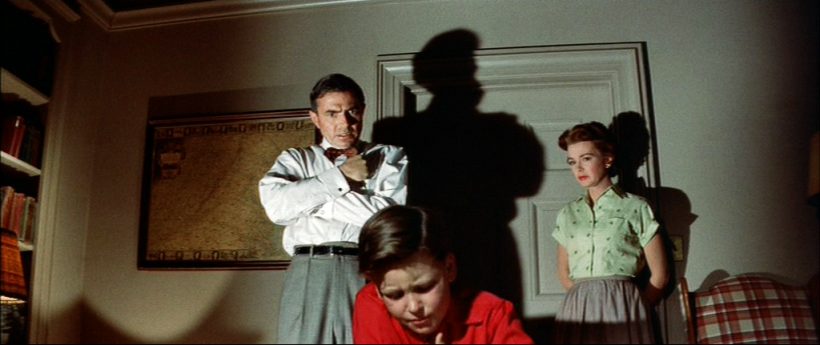
Nicholas Ray’s potent 1956 CinemaScope melodrama dealt with the ill effects of cortisone on a frustrated middle-class grammar-school teacher (James Mason) at about the same time that the first wave of wonder drugs hit the market. But the true subject of this deeply disturbing picture is middle-class valuesabout money, education, culture, religion, patriarchy, and getting ahead. These values are thrown into bold relief by the hero’s drug dependency and resulting megalomania, which leads to shocking and tragic results for his family (Barbara Rush and Robert Simon) as well as himself. Ray’s use of ‘Scope framing and color to delineate the hero’s dreams and dissatisfactions has rarely been as purposeful. (It’s hard to think of another Hollywood picture with more to say about the sheer awfulness of normal American family life during the 50s.) With Walter Matthau in an early noncomic role as the hero’s best friend; scripted by Cyril Hume, Richard Maibum, and an uncredited Clifford Odets. 95 min. (JR)

 Read more
Published in New York Newsday (Sunday, May 31, 1992). -– J.R.
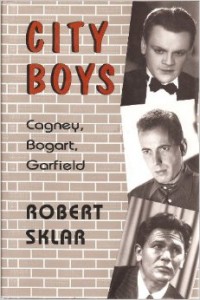
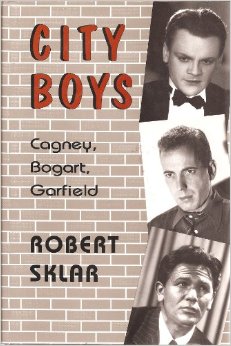
CITY BOYS: Cagney, Bogart, Garfield, by Robert Sklar. Princeton University Press, 311 pp., $27.50.
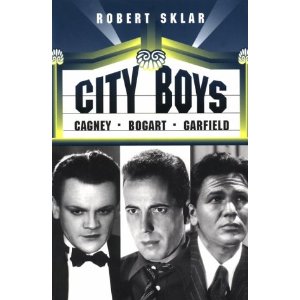
BY JONATHAN ROSENBAUM
Perhaps the most refreshing thing about this comparative study of the Hollywood careers of James Cagney, Humphrey Bogart and John Garfield is that it lacks the deference to the film industry that one has come to expect nowadays from movie books, journalistic as well as academic. Eschewing the puffery of popular star biographies and the equally dubious (and self-serving) idealism of such academic buzz terms as “the classical Hollywood cinema” and “the genius of the system,” Robert Sklar, professor of cinema studies at New York University, writes with the vernacular ease of a journalist without sacrificing the analytical rigor one expects from a prestigious university press. While he hasn’t always spread his net as widely as one might hope, he still offers a plausible portrait of three city boys and how they grew -– or didn’t.
A social historian at heart, Sklar is basically interested in charting the diverse forces that molded and altered the screen images of Cagney, Bogart and Garfield. Their overlapping careers offer many instructive parallels: New York origins, theatrical training, evolving hard-boiled screen personalities, leftist sympathies, artistic and economic exploitation by the studios, struggles for independence (including the formation of their own production companies) with mixed results and elaborate enforced recantations of former political allegiances during the Hollywood witch hunts. Read more
This was (mainly) published in Video Watchdog‘s July/August 1992 issue, with an accidentally deleted passage included in the errata section of their September-October 1992 issue. -– J.R.
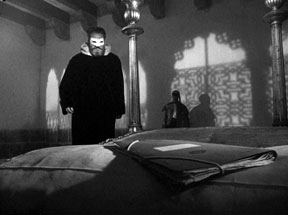
A brief note of clarification about my liner notes to the Criterion laserdisc of CONFIDENTIAL REPORT -– cited and questioned by Tim Lucas at the beginning of his excellent article [VW 10: 42-60]. The only reason why I failed to mention a third and (in my opinion) better version of MR. ARKADIN in these notes –- a version discussed by Lucas elsewhere in this issue –- is that I was under strict instructions from Criterion not to bring this matter up. I reluctantly agreed to this suppression of information only because I knew I would be writing about this version elsewhere (in [the January-February 1992 issue of] Film Comment), and I’m mentioning this anecdote now because I think it dramatizes the thin line separating criticism from publicity in most liner notes -– a general problem that readers of this magazine should be alerted to.
I don’t wish to denigrate the often fine work done by Criterion in making many important works available, but I do believe that the level of scholarship that’s attainable in commercial enterprises of this sort varies considerably from case to case. Read more
Written in September 2014 for my December “En movimiento” column in Caimán Cuadernos de Cine. — J.R.


Last September, I ordered from Amazon a three-disc DVD box set released by Lionsgate called Big History consisting of 17 episodes lasting almost seven and a half hours. My curiosity was spurred by an article by Andrew Ross Sorkin in the New York Times Magazine about billionaire Bill Gates enthusiastically discovering this package — a college course taught by Australian professor David Christian — while working out in his private gym, and then deciding to use this TV series to try to revolutionize the teaching of history in both American high schools and colleges.
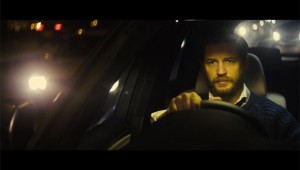

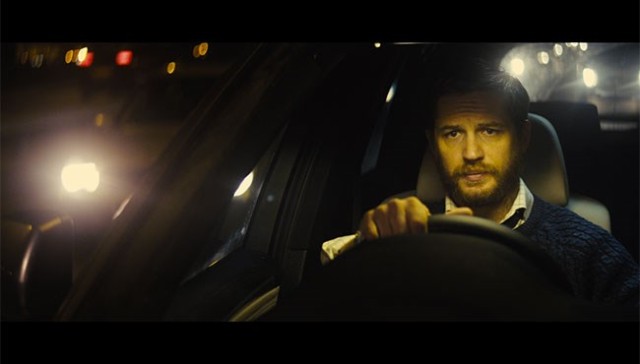
To my amazement, and in spite of all my qualms, Big History proves to be one of the most exciting things I’ve seen this year — not as moral instruction or as a technical tour de force (unlike Steven Knight’s Locke, which resurrects the heroism of the great Westerns, or Godard’s Adieu au langage, which reinvents 3-D) and not as distilled and hallucinatory poetry (unlike Pedro Costa’s Horse Money), but as a series of lucid pedagogical lessons, especially welcome for someone like me who has always been weak in science. Read more
Posted on Slate, December 27, 2005. — J.R.
Does Choosing “The Year’s Best” Compromise the Truth?
By Jonathan Rosenbaum
Dec 27, 2005 2:13 PM
Holiday Greetings, David, Scott, and Tony,
David, I appreciate your invitation to “shake hands and come out punching,” though I suspect our disagreements this time around may wind up having more to do with Steven Spielberg and Munich than they do with Terrence Malick and The New World. (See Edelstein’s top-20 list of 2005 films here.) Just to be contrary, however, let me start off with four agreements. Me and You and Everyone We Know, The Three Burials of Melquiades Estrada, William Eggleston and the Real World, and Homecoming all belong somewhere on my own extended list of favorites — and I’d need an asterisk of my own for the penultimate title, David, because Michael Almereyda is a friend whom we share.
To be contrary in another way, I haven’t yet composed my full list for Slate —although I’ve already filed separate lists for the Chicago Reader (which will appear online on Jan. 6) and the Village Voice (which has already appeared online). With your patience and indulgence, I’d like to delay this ritual for another day or so, concentrating for the moment on the issue of what the four of us actually do for a living. Read more
From Cinema Scope No. 34, Summer 2005. — J.R.

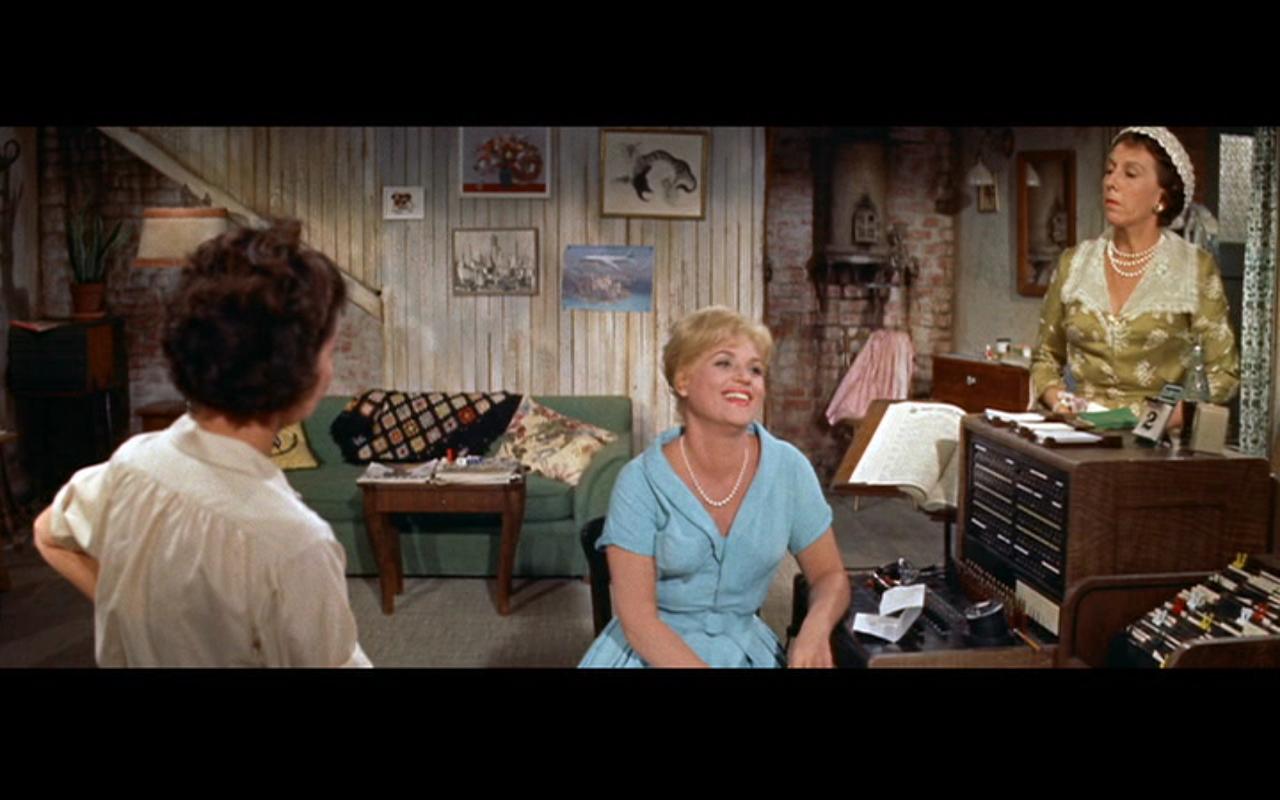
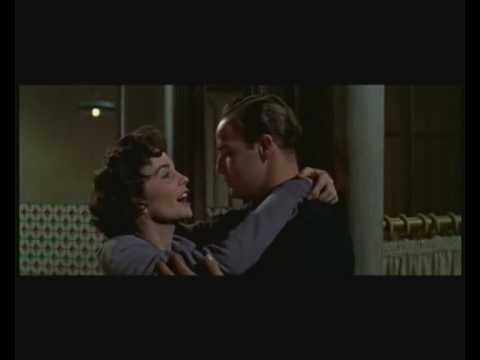
As an avid collector of Hollywood musicals, I’ve recently been checking out which items in my collection with optional French dialogue also have French versions of the songs. My father used to teach himself foreign languages by reading translations of some of his favorite English and American novels (e.g., Light in August in German). It’s recently occurred to me that watching favorite Anglo-American movies with foreign subtitles —- something closer to reading a bilingual text —- might also be helpful, though watching a foreign-dubbed version undoubtedly helps even more when it comes to improving one’s speaking knowledge of a particular language. This is one of the many resources afforded by DVDs that most people ignore, myself included. Just as it never occurs to most North American DVD watchers to spend the minimal amounts of time and money needed to acquire a multiregional player and order DVDs from abroad, the linguistic extras available on a good many DVDs slip past most people’s ken because taking advantage of them lies outside their usual habit patterns.
In any case, once I started examining the fine print on the boxes of the musicals in my collection, I discovered that optional French dialogue is fairly common, though whether this includes French versions of the songs is something one can only learn by playing the DVD. Read more

Full disclosure: Gerald Peary’s 80-minute documentary accords me two sound bites — one near the beginning (about Manny Farber), the other towards the end (about internet criticism) — and one lingering look at this web site (specifically, my 2005 essay about Susan Sontag).
Overall I’m fundamentally in agreement with David Bordwell’s verdict about this film on his own web site, after seeing it recently in Hong Kong: “In all, For the Love of Movies offers a concise, entertaining account of mass-market movie criticism, and I think a lot of universities would want to use it in film and journalism courses.”
I’m writing this in one-sentence paragraphs because that’s pretty much Gerry’s discursive style and manner here, largely carried by the narration (delivered by Patricia Clarkson), for better and for worse. So — to expand my own discursive style here into two sentences, one of them fairly long — in the two or three minutes devoted to Manny Farber, unless you’ve already read and digested a couple of his key articles, you might wind up concluding that “termite art” has something directly to do with “low-budget crime melodrama,” even though snippets of Farber’s prose and a couple of lines from a late onstage interview are also included. Read more
This was written in early 2003 at the invitation of Nicole Brenez for a French collection that she edited, La Vie nouvelle/nouvelle vision: à propos d’un film de Philippe Grandrieux (Éditions Léo Scheer, 2005), and she uses the French translation of it by Aïcha Bahcelioglu to lead off the book; the volume also includes a DVD of the film. — J.R.

I’ve witnessed and partly experienced two massive surges of interest in avant-garde cinema during my lifetime. The first, centered on North American films during the 1960s, was spearheaded by Jonas Mekas and P. Adams Sitney in New York; the second, centered on films in both Europe and North America around the turn of the century, has been masterminded as well as celebrated by, among others, Simon Field at the Rotterdam Film Festival and Nicole Brenez at the Cinémathèque Française.
I was slow in appreciating the first of these movements, in part because it tended to draw up battle lines between believers and atheists and was not very hospitable towards agnostics; for all that it accomplished, it was somewhat alienating to anti-institutional types such as Jack Smith and more pluralistic cinéphiles such as myself, who had trouble understanding why Marcel Hanoun was the only French avant-garde figure since the 20s admitted into Anthology Film Archives, which also managed to exclude such figures as Godard, Resnais, Rivette, and Straub-Huillet —- not to mention Lang and Mizoguchi — from its pantheon. Read more
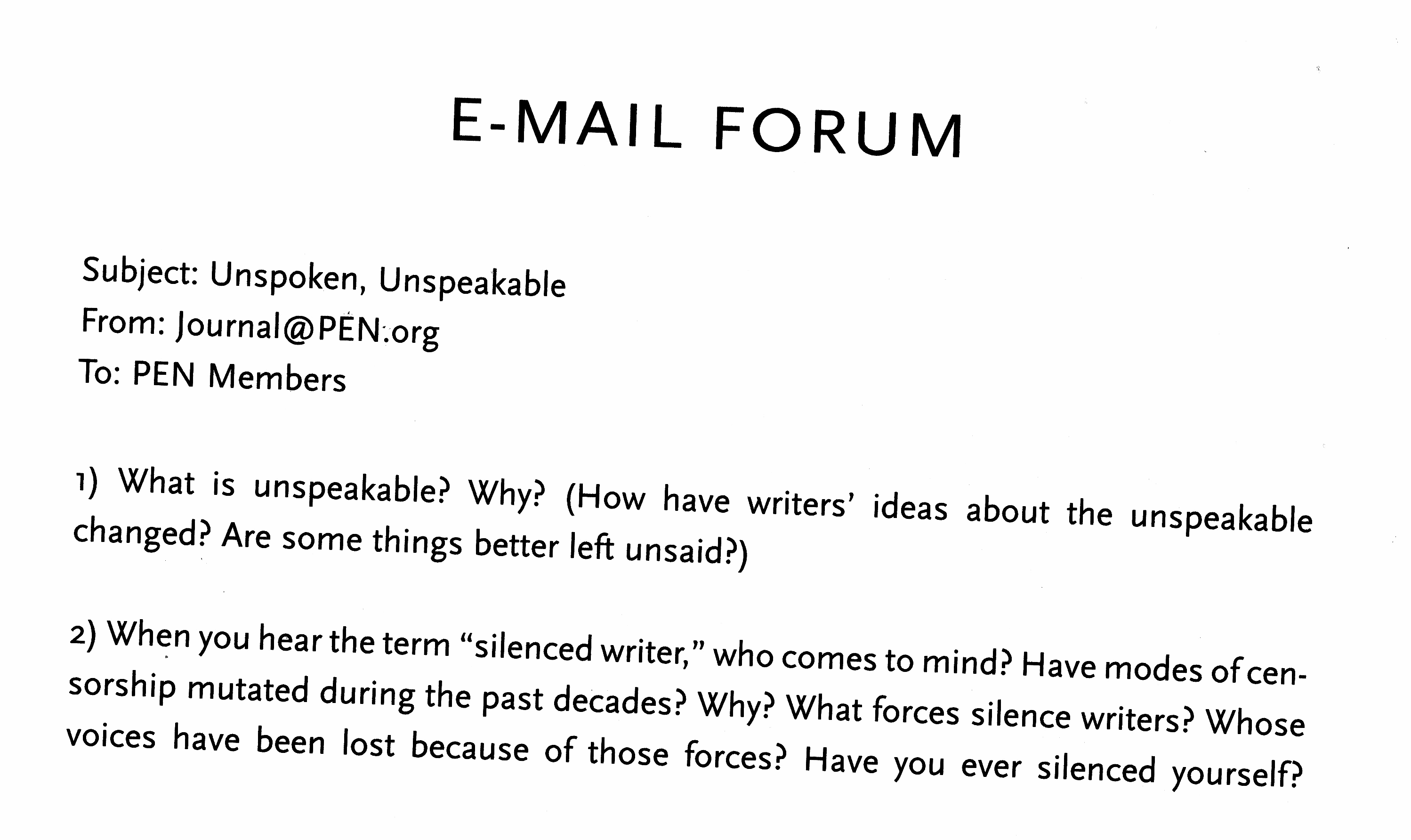
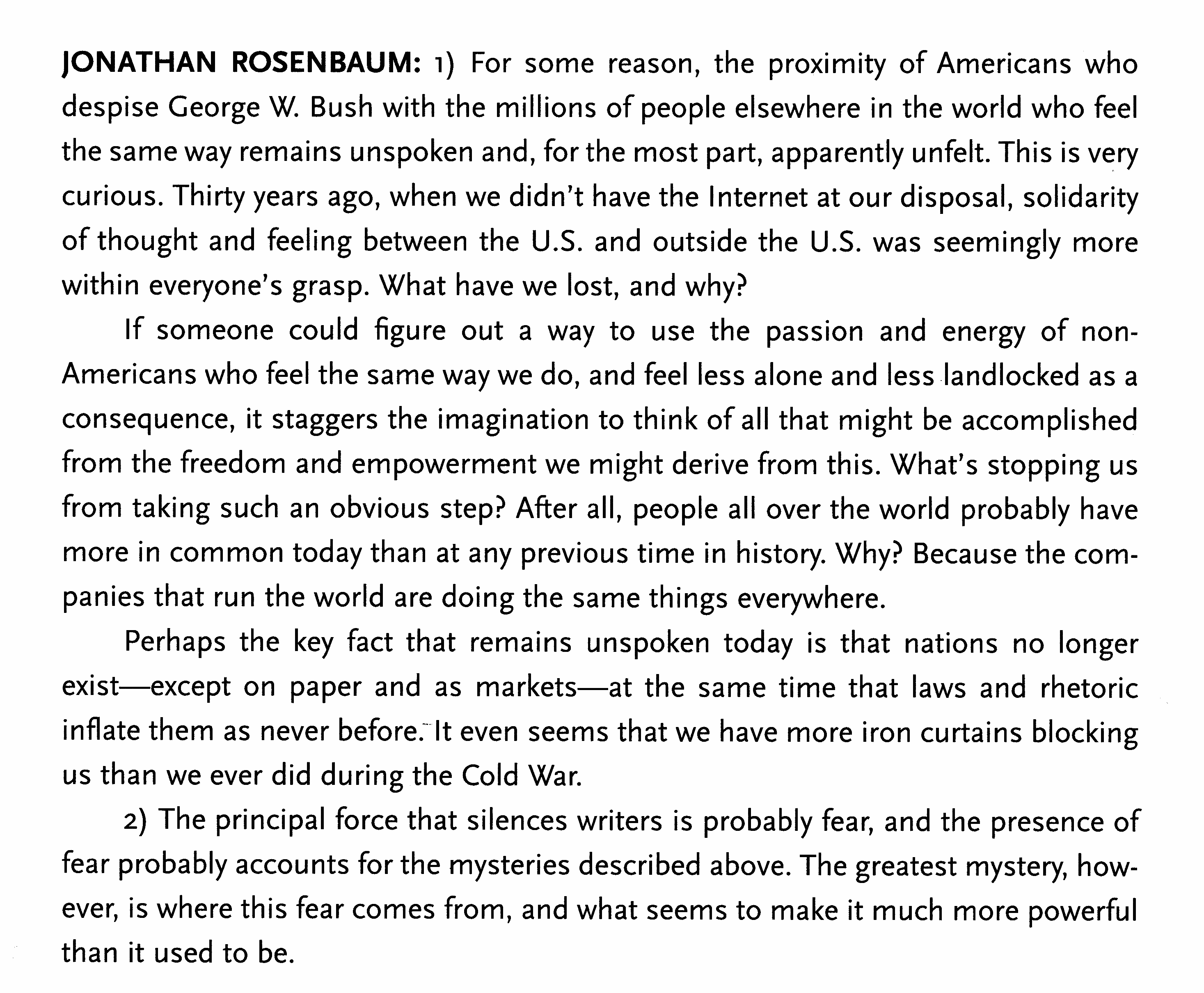
As a long-standing member of PEN, I’m periodically invited to participate in their “forums” for their occasional publication PEN America. This is my response to Issue 5 (volume 3) in 2004, devoted to “Silences”. –- J.R.
 Read more
From Cinema Scope #18 (Spring 2004). — J.R.
First of all, the good news:

After my announcement in this magazine three years ago that the original negative of my all-time favorite Hong Kong feature (1992) was destroyed, and that the two-and-a-half-hour original version was virtually lost (see “Stanley Kwan’s Actress: Writing History in Quicksand,” Cinema Scope issue 7, spring 2001 —- about to be reprinted in my collection Essential Cinema, with the same misinformation), this ideal version has just come out on DVD in France, under the title Center Stage, in a lovely two disc-set distributed by Universal Pictures Video.
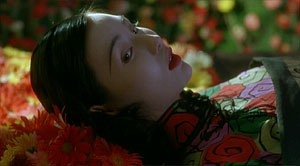
The bad news? It’s subtitled only in French — although an interview with Kwan comprising the only bonus, on the second disc, is conducted in English and can easily be followed that way.
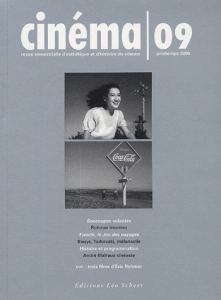
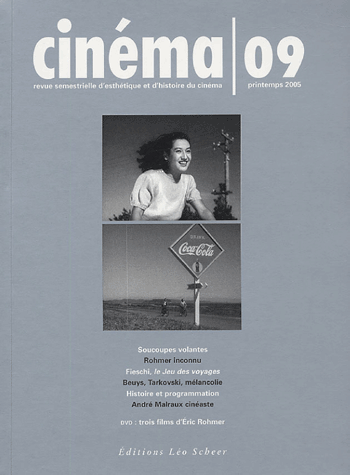
Also subtitled in French —- or in French without subtitles —- are invaluable DVDs included in the last three issues of Bernard Eisenschitz’s indispensable, lavishly illustrated (and therefore pricey) two-issue-a-year journal Cinéma, published by www.leoscheer.com. Issue 05 (printemps 2003) has a restoration of a surviving fragment from Kenji Mizoguchi’s La marche de Tokyo (1929); 06 has two late TV documentaries by Jean Eustache, Offre d’emploi (1980) and Le jardin des délices de Jerôme Bosch (1979); and 07, scheduled to appear this spring, will have my all-time favorite Iranian film, Forough Farrokhzad’s 1962 La maison est noire, as well as Ebrahim Golestan’s 1959 Un feu, which she edited. Read more
From the Chicago Reader (March 3, 2004). — J.R.
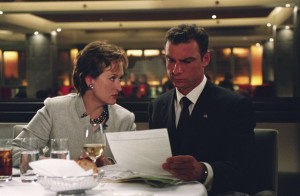
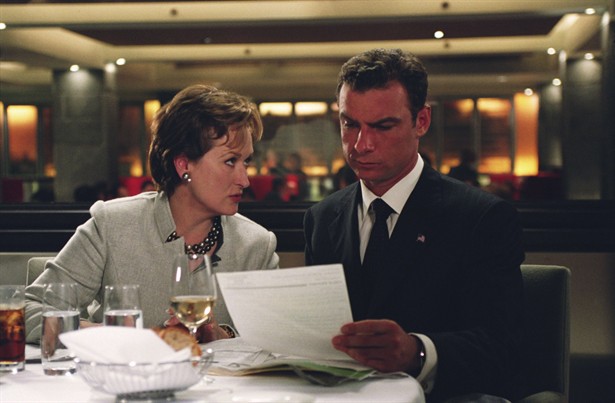
I don’t get it. As Dave Kehr has noted, the 1962 original was an audacious mix of cold war paranoia and twisted cabaret humor. Any remake that scuttles both had better have something good to replace them with; this offers only a vague retread of anticorporate thrillers from the 70s. The story’s been updated to the first gulf war (Manchurian is now just the name of an evil conglomerate) and deprived of its major shocks (involving formal inventiveness, over-the-top dialogue, and the way the incest is presented). Oddly, it does retain some of the original’s political murkiness — the right-wing villainess (Meryl Streep) resembles Hillary Clinton — but there’s no mythic or comic payoff. If you don’t care much about the first version, or what director Jonathan Demme’s name once meant, the cast does an OK job with Daniel Pyne and Dean Georgaris’s routine thriller script. But the bite found in the best recent political documentaries is missing. With Denzel Washington, Liev Schreiber, Jon Voight, and Jeffrey Wright. R, 135 min. (JR) Read more