Eruptions and Disruptions in the House of Lava

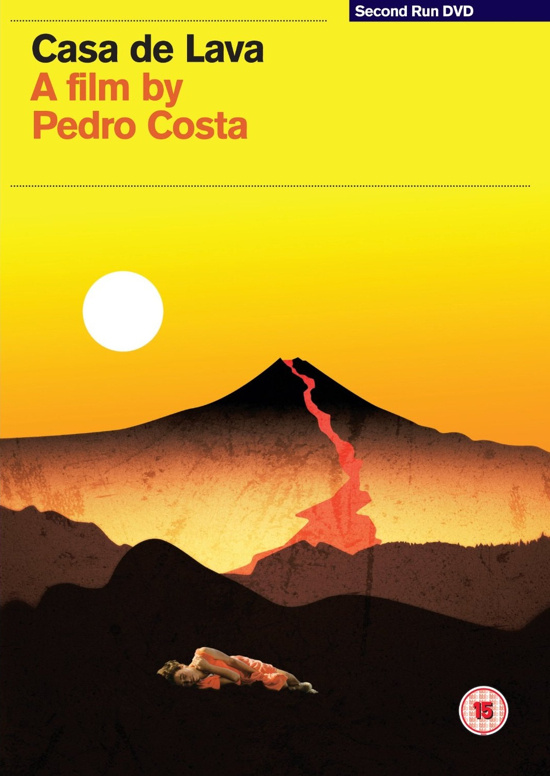
Written for the Second Run DVD of Pedro Costa’s Casa de Lava, released in the U.K. in 2012, and developed from separate articles in the Chicago Reader, November 15, 2007, and the Portuguese collection cem mil cigarros: OS FILMES DE PEDRO COSTA, edited by Ricardo Matos Cabo, Lisboa: Orfeu Negro, 2009. — J.R.
casa-dvd4


The cinema of Pedro Costa is populated not so much by characters in the literary sense as by raw, human essences — souls, if you will. This is a trait he shares with other masters of portraiture, including Robert Bresson, Charlie Chaplin, Jacques Demy, Alexander Dovzhenko, Carl Dreyer, Kenji Mizoguchi, Yasujiro Ozu, and Jacques Tourneur. It’s not a religious predilection but rather a humanist, spiritual, and aesthetic tendency. What carries these mysterious souls, and us along with them, isn’t stories — though untold or partially told stories pervade all of Costa’s features. It’s fully realized moments, secular epiphanies.

Born in Lisbon in 1959, Costa grew up, by his own account, without much of a family. Speaking about O sangue, his first feature, he admitted that there was a personal aspect in his concentration on the incomplete family in that film “because I never really had a family. Read more


Check Your Baggage [CRIMSON GOLD]

From the Chicago Reader (April 16, 2004). As much as I share my colleagues’ admiration [in 2012] for Jafar Panahi’s This is Not a Film, I must confess that I find it both depressing and somewhat insulting to Panahi that this is receiving more attention and praise in some quarters than his full-fledged films ever did, including such masterpieces as The White Balloon, The Circle, and Crimson Gold (not to mention Panahi’s more inventive and fruitful 2013 Closed Curtain, made under the same constraints as This is Not a Film). Which is why it seems worth reviving my review of the latter film. — J.R.

Crimson Gold **** (Masterpiece) Directed by Jafar Panahi Written by Abbas Kiarostami With Hussein Emadeddin, Kamyar Sheissi, Azita Rayeji, Shahram Vaziri, Ehsan Amani, and Pourang Nakhayi.

“War President” is an image. It is not a textual statement or rhetorical argument. An image is like an empty room and any message that one reads in that room necessarily came in the baggage one carried when one walked in the door. If I made an image of George Washington composed of images of the American dead from the revolution, would viewers likely take that image as an indictment of Washington? Read more

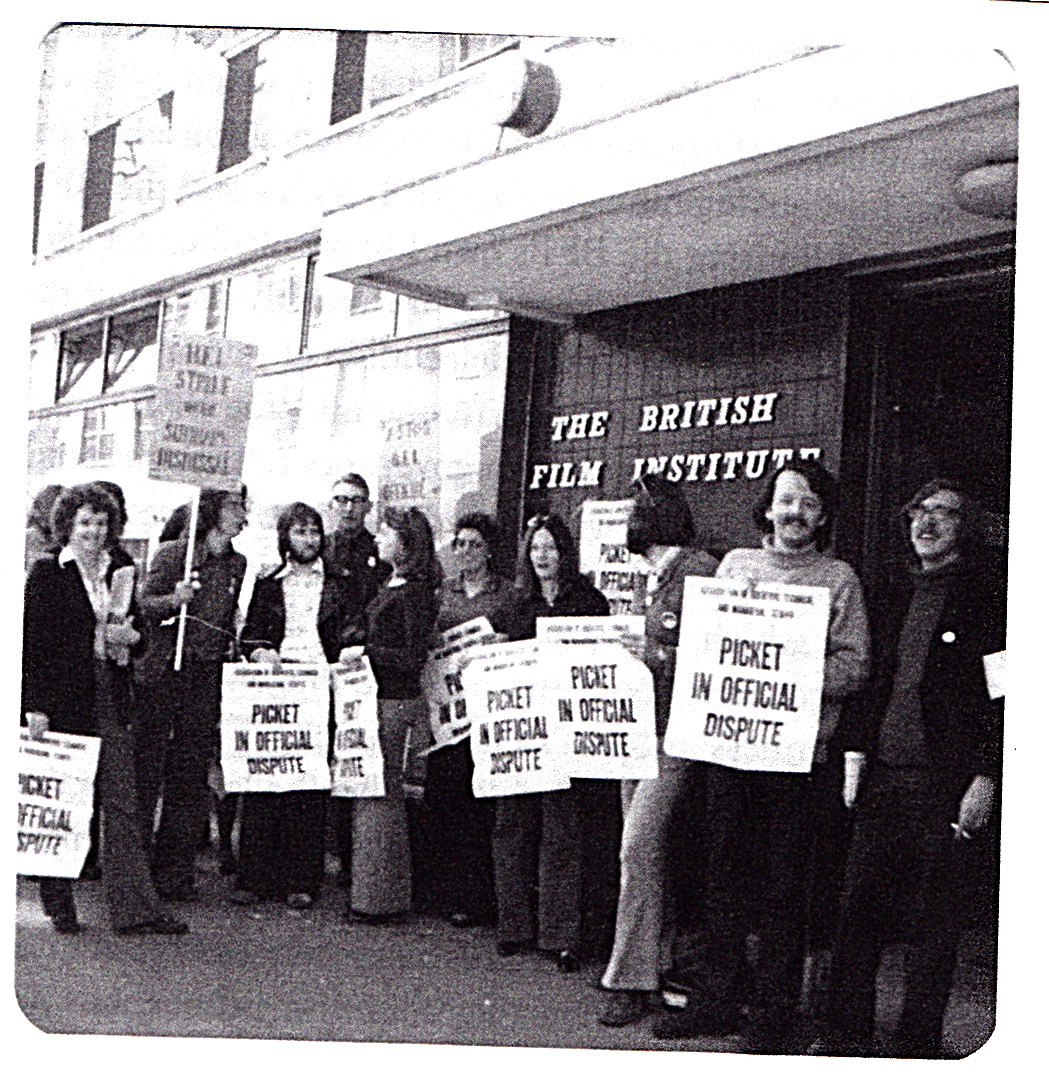
Review of THE BRITISH FILM INSTITUTE, THE GOVERNMENT AND FILM CULTURE, 1933-2000

From the online Screening the Past,  issue 36, posted 17 June 2013. — J.R.

BFI Strike August 1974_NEW_0001

Geoffrey Nowell-Smith and Christophe Dupin (ed.)

The British Film Institute, the Government and Film Culture, 1933-2000

Manchester/New York: Manchester University Press, 2012

ISBN: 978 0 7190 7908 5

US$95/UK£65

288pp (hc)

(Review copy supplied by Footprint Books/Warriewood)

The most interesting job I’ve ever had was my two and a half years of working for the British Film Institute, between 1974 and 1977 –- as both assistant editor of the Monthly Film Bulletin (under Richard Combs) and staff writer for Sight and Sound (under Penelope Houston, who was directly responsible for my getting hired), occasioning at the time a move from Paris to London. This is what sparked my particular interest in this impressively detailed history, coedited and mostly written (apart from four of its 15 chapters) by the University of London’s Geoffrey Nowell-Smith and the International Federation of Film Archives’ Christophe Dupin after more than six years of research — and the fact that it retails for $95 at Amazon in the U.S. and 65 quid at Amazon in the U.K. meant that the only reasonable way I could acquire it was to ask to review it. Read more

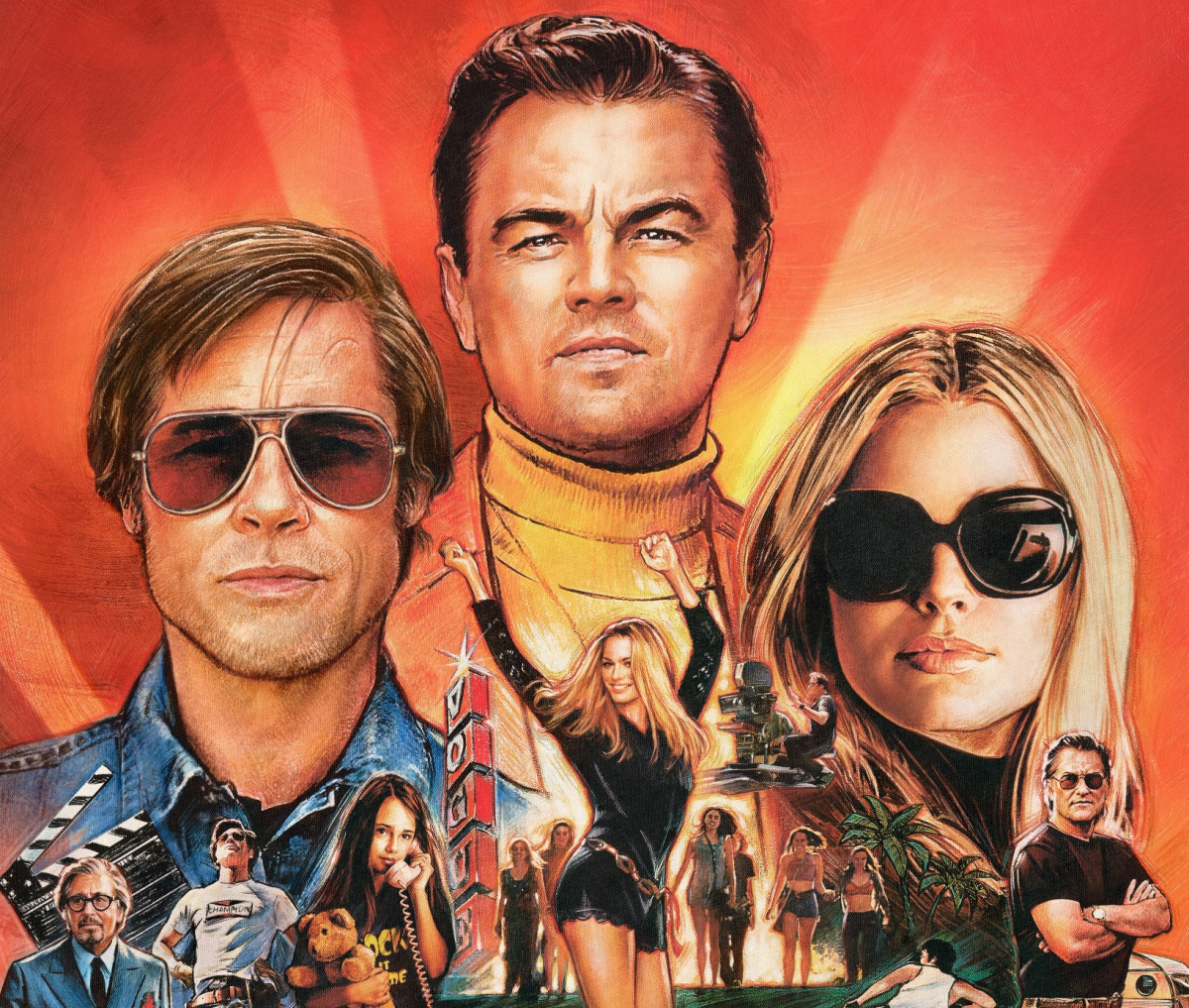
The World as Media Screen: Tarantino and Trump as Soul-Brothers

The Spanish monthly film magazine that I write for, Caiman Cuadernos de Cine, invited me in the summer of 2019 to expand on my latest column for them as well as a few Facebook posts about Tarantino’s Once Upon a Time in Hollywood. Here is the result. — J.R.

once-upon-a-time-in-hollywood-poster

Has 9/11 or the war on terror had any impact on you personally or creatively? 

9/11 didn’t affect me, because there’s, like, a Hong Kong movie that came out called Purple Storm and it’s fantastic, a great action movie. And they work in a whole big thing in the plot that they blow up a giant skyscraper. It was done before 9/11, but the shot almost is a semi-duplicate shot of 9/11. I actually enjoyed inviting people over to watch the movie and not telling them about it. I shocked the shit out of them. But, again, I was almost thrilled by that naughty aspect of it. It made it all the more exciting.

But on some level you must have been caught up in the reality of 9/11.

I was scared, like everybody else. “OK, what is this new world we’re going to be living in? Is it going to be fucking Belfast here?” And I didn’t want to fucking fly nowhere. Read more

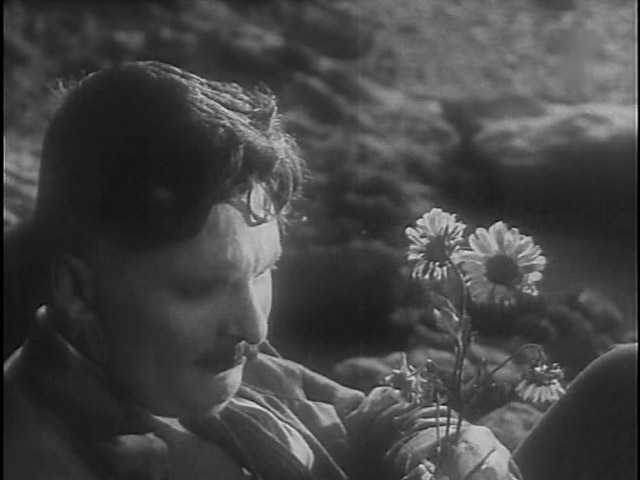
THE GHOST THAT NEVER RETURNS (1976 review)

From Monthly Film Bulletin, January 1976. — J.R.

Prividenie, Kotoroe ne Vozvrashchaetsya
(The Ghost that Never Returns)

U.S.S.R., 1929
Director: Abram Room


In an unidentified South American country, José Real is serving a life sentence for having led an oilfield workers’ strike ten years earlier. After another prisoner breaks away from guards to tell him that the prison governor has a letter from his wife, and then leaps to his death, Real leads a revolt among the prisoners. The governor orders that they be sprayed with hoses; the revolt subsides, and Real is locked into a narrow cupboard. Conferring with the chief of the secret service, the governor recalls the regulation whereby a prisoner who has served ten years is entitled to one day’s liberty and decides to grant this to Real, with the understanding that he will be killed at the day’s end for trying to ‘escape’. After being shown his wife’s letter and hearing from a newly arrived prisoner that a new strike is planned at Hillside Well, Real agrees to go. Five days later – after news of his imminent arrival has reached his family, their neighbors and the oilfield workers — he sets out, warned that no one who has taken this leave has ever made it back alive. Read more

Global Discoveries on DVD: Women, Men, Progressive and “Progressive” Thinking

My Winter 2019 column for Cinema Scope. — J.R.

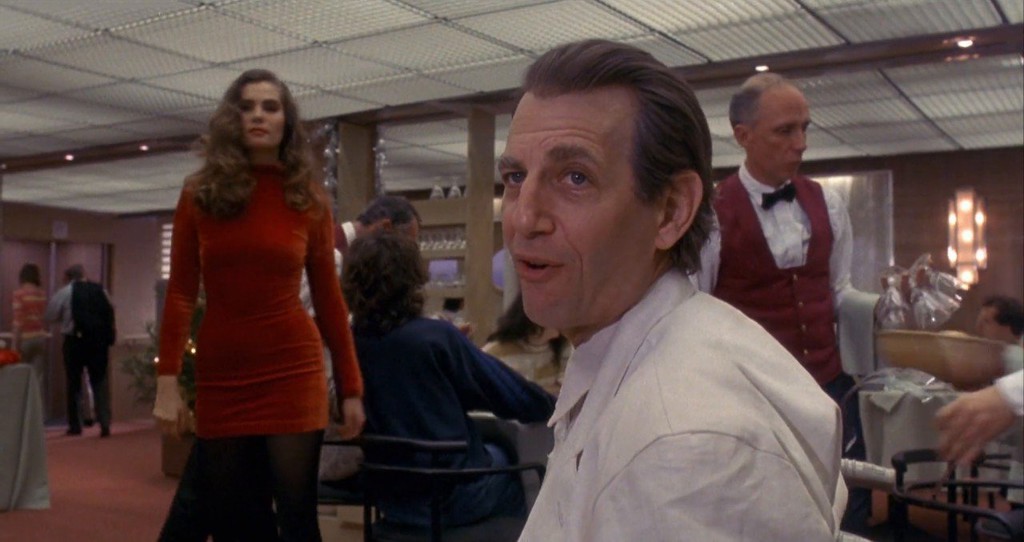
BitterMoon

venus-in-fur

based-on-a-true-story-b98033848a5d89fa598ae92db67ed4da

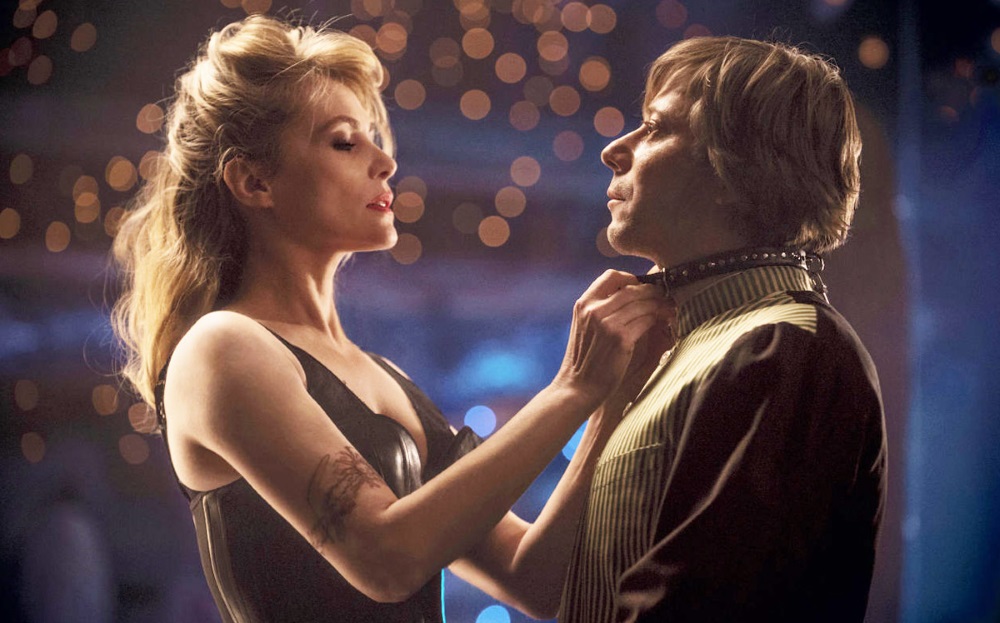
Some of Roman Polanski’s early features — Repulsion (1965), Rosemary’s Baby (1968), Tess (1979) — are centred on vulnerable women, but as Bitter Moon (1992) makes abundantly clear, these are all films predicated on the male gaze, as are the more recent and more impersonal films of his that come closest to qualifying as Oscar bait (The Pianist [2002], arguably The Ghost Writer [2010], and, I would presume, An Officer and a Spy). Bitter Moon even problematizes this fact by assigning that gaze to two mainly unsympathetic males (Peter Coyote and Hugh Grant), and defining it mostly as poisonous, and Venus in Fur (2013) carries this tendency further by explicitly labelling it sexist, meanwhile making the male figure (Mathieu Almaric) almost a dead ringer for Polanski as a young man. Based on a True Story (2017), by focusing almost exclusively on two women (Emmanuelle Seigner and Eva Green), seeks to minimize the male gaze even more, not so much by problematizing it as by making it closer to irrelevant. Polanski himself comments on this fact in the interview included on the Spanish DVD of this film (apparently the only way it can be seen with English subtitles translating its French dialogue, which is how I finally managed to catch up with it). Read more

Global Discoveries on DVD: Extras and Streaming, Now, Then, & There

From the Summer 2019 issue of Cinema Scope. — J.R.

Babylon-Berlin-poster-06


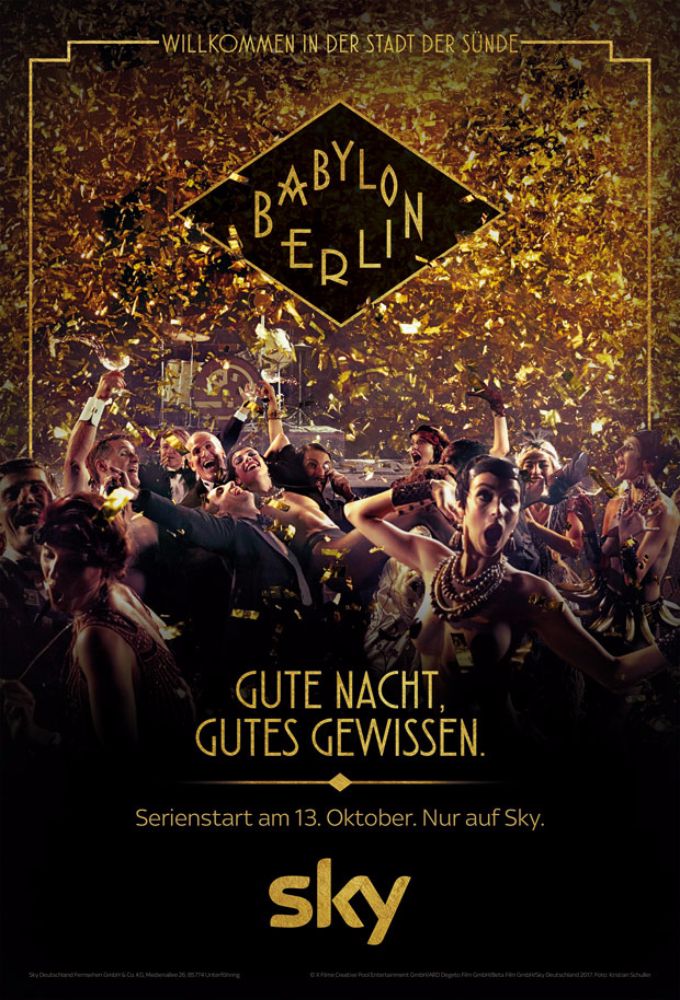
Readers of Movie Mutations, the 2003 collection I co-edited with Adrian Martin, will know that the Jungian notion of global synchronicity has long been a preoccupation of mine. One striking recent manifestation of this phenomenon came to light when I read, around the same time, Mark Peranson’s editor’s note about Documentary Now! in the last issue of this magazine, and a ramble from David Thomson about binge-watching TV in the April Sight & Sound, both of which compelled me to finally take out a trial subscription to Netflix and spend the better part of a weekend binge-watching Series One and Two of Babylon Berlin (12 hours) and the even more absorbing Russian Doll(four hours) via streaming — just before receiving a four-disc PAL DVD box set of the former from Acorn Media International on Monday. All of which suggests that Mark, D.T., Acorn, and I have mysteriously been on roughly the same market wavelengths regardless of our illusions of free choice.

BB

There’s a real danger that streaming may eventually make the name of this column anachronistic, so for the time being please allow me to include that viewing option, as I’ve already done with Blu-rays. Read more

Recommended Reading & Viewing (with qualms, 4/24/14)

 Directory of World Cinema Belgium

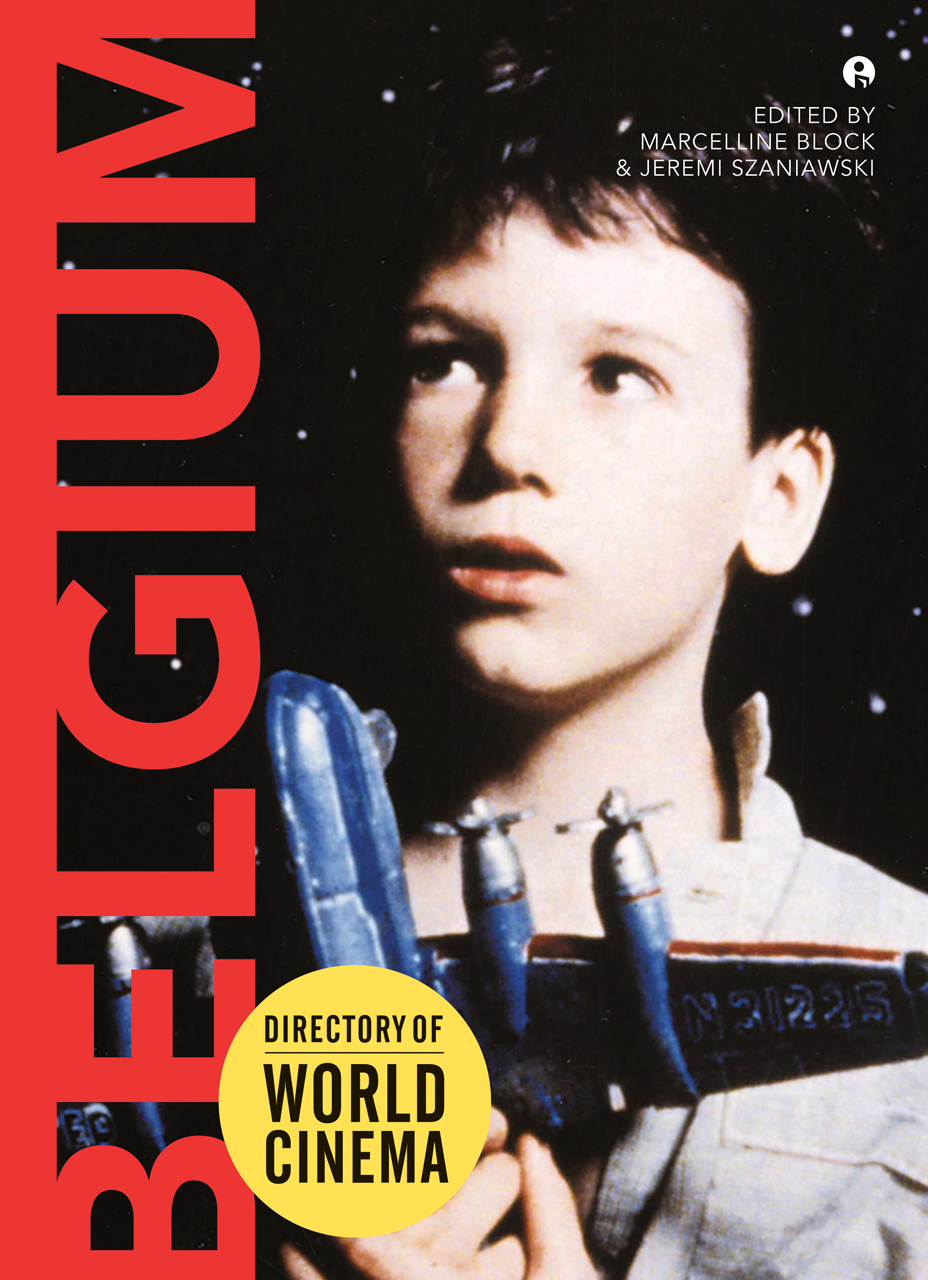
In today’s mail: Directory of World Cinema: Belgium, edited by Marcelline Block and Jeremi Szaniawski. Bristol, UK/Chicago, USA: Intellect Books, 332 pp., $31.95 from Amazon.

Nightfall

Discovered today on the Internet (at YouTube): 17 films by James Benning: five shorts (Two Cabins, Short Story, Two Faces, Postscript, Youtube) and a dozen features (Twenty Cigarettes, Ten Skies, One Way Boogie Woogie, Easy Rider, The War, Faces, After Warhol, Small Roads, Nightfall [see above photo], BNSF, casting a glance, Stemple Pass).  

In both cases, untold riches. Just for starters, the book offers countless reviews and essays by 38 contributors exploring multiple facets of a neglected subject, the first detailed account I know in English of all the features of André Delvaux, fascinating interviews with Chantal Akerman and Boris Lehman (including the former’s description of The Misfits as “a documentary about Marilyn Monroe undergoing a depression” and the “extremely accurate, just relationship” between people and space in John Ford’s The Grapes of Wrath), reflections on Jean-Claude Van Damme and “Belgium as Cinematic ‘Non-space’”. The Benning bounty includes five film that I’ve already seen and a dozen more that I haven’t . Read more

The Self-Aware Action Hero [on LAST ACTION HERO]

From the Chicago Reader (June 24, 1993). — J.R.

LAST ACTION HERO

** (Worth seeing)

Directed by John McTiernan

Written by Shane Black, David Arnott, Zak Penn, and Adam Leff

With Arnold Schwarzenegger, Austin O’Brien, Charles Dance, Anthony Quinn, Tom Noonan, Mercedes Ruehl, F. Murray Abraham, and Robert Prosky.

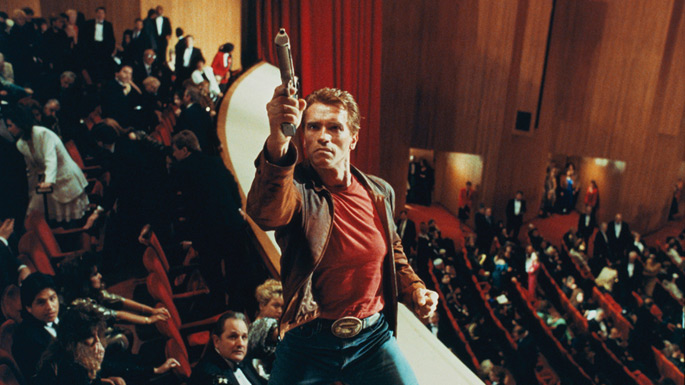
The word is out:  Last Action Hero is an unmitigated disaster. The sound of studio panic was plainly audible in a report in the June 17 New York Times that Columbia Pictures threatened to sever all communications with the Los Angeles Times if it didn’t guarantee it would “never again run a story written or reported by Jeff Wells about (or even mentioning) this studio, its executives, or its movies.” Wells’s crime was a June 6 article in the Los Angeles Times reporting that a test-marketing preview of Last Action Hero held in Pasadena about two weeks earlier had been disappointing. The article contained “categorical denials” from several studio executives that such a screening had ever taken place, but clearly this wasn’t enough for the industry people. As Wells told the New York Times, “You’re talking about a studio in a major meltdown mode. These guys are blitzing out here.”

I read this story only hours before seeing another “disappointing” preview of Last Action Hero in Chicago, after several weeks of hearing rumors that the picture was a “mess” and in deep, deep trouble. Read more

Introduction: Some Noises from an Unquiet American

This is my Introduction to The Unquiet American: Transgressive Comedies from the U.S., a catalogue/ collection put together to accompany a film series at the Austrian Filmmuseum and the Viennale in Autumn 2009. — J.R.

I cannot tell a lie: the initial concept and impulse behind this retrospective weren’t my own. More precisely, they grew out of a series of email exchanges between myself and Hans Hurch and/or Alexander Horwath last April. Everything started when Hans proposed that I select a program devoted to American film comedy, “not as a history or anthology of the genre but in a more open and at the same time more concrete way…not [to] just dedicate it to comedy as such but to various aspects, different forms, ideas, and functions of the comic – from the earliest works of American cinema to recent films.”

Over three months later, I think it’s safe to say that I’ve fulfilled this proposal, at least if one can accept a fairly loose definition of “earliest” (i.e., 1919 –- which is already a good quarter of a century into what might be described as the history of American film, describing my own limitations better than the limits of my subject.) Read more

Wellesnet interview

Posted on the web site Wellesnet. I’ve added a few illustrations of my own to the original, conducted by Lawrence French.

Having worked  as a consultant on the completion of The Other Side of the Wind, I’m no longer sure that all my comments about the film found below would still hold. But I can add a happy 2025 update to my remarks about Welles’ DON QUIXOTE: All of the footage held by Oja Kodar is currently in the process of being inventoried and transferred to the Madrid Film Archive. — J.R.

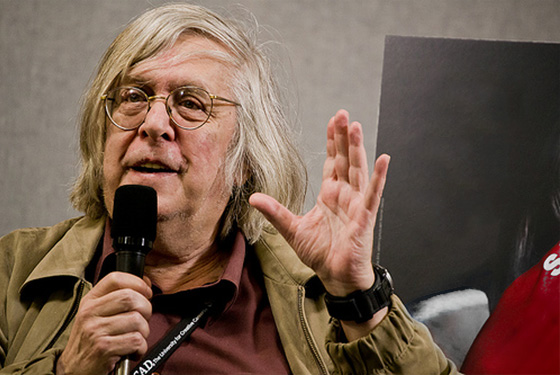
Jonathan Rosenbaum has long been an astute critic on the cinema of Orson Welles, frequently writing about Welles’ films. He served as the consultant for the re-edited version of TOUCH OF EVIL, and edited THIS IS ORSON WELLES, the seminal book of Welles interviews, conducted by Peter Bogdanovich.

The following interview has been combined from two separate conversations. The first took place in the fall of 1998, after the release of the re-edited version of TOUCH OF EVIL, and focused on the problems inherent in changing TOUCH OF EVIL to what Welles requested in a memo written 41 years earlier. The second interview occurred in January, 2003, and covers Welles’ two major unfinished films: DON QUIXOTE and THE OTHER SIDE OF THE WIND. Read more

From “Film Criticism in the Age of the Internet: A Critical Symposium” [2008]

From Cineaste, Vol. XXXIII, No. 4, 2008. -– J.R.

1) Has Internet criticism made a significant contribution to film culture? Does it tend to supplement print criticism or can it actually carve out critical terrain that is distinctive from traditional print criticism? Which Internet critics and bloggers do you read on a regular basis?

1) a. Significant and profound. Because the changes it has wrought are ongoing and unfolding, it’s still hard to have a comprehensive fix on them.

1) b. It can and does do both. By broadening the playing field in terms of players, methodologies, audiences, social formations, and outlets, it certainly expands the options. The interactivity of almost immediate feedback, the strengths and limitations of being able to post almost as quickly as one can think (or type), the relative ease of making screen grabs — these and many other aspects of Internet discourse are bringing about changes in content as well as in style and form, shape and size.

1) c. Here’s just a sample: To varying degrees (some much more regularly than others), I like to read Acquarello, David Bordwell, Zach Campbell, Fred Camper, Roger Ebert, Flavia de la Fuente, Filipe Furtado, Michael E. Read more

The Triumph of Publicity Over Public Discourse

My 30th “En Movimiento” column for Caiman Cuadernos de Cine, formerly known as the Spanish Cahiers du Cinema, written in late January, 2013. — J.R.

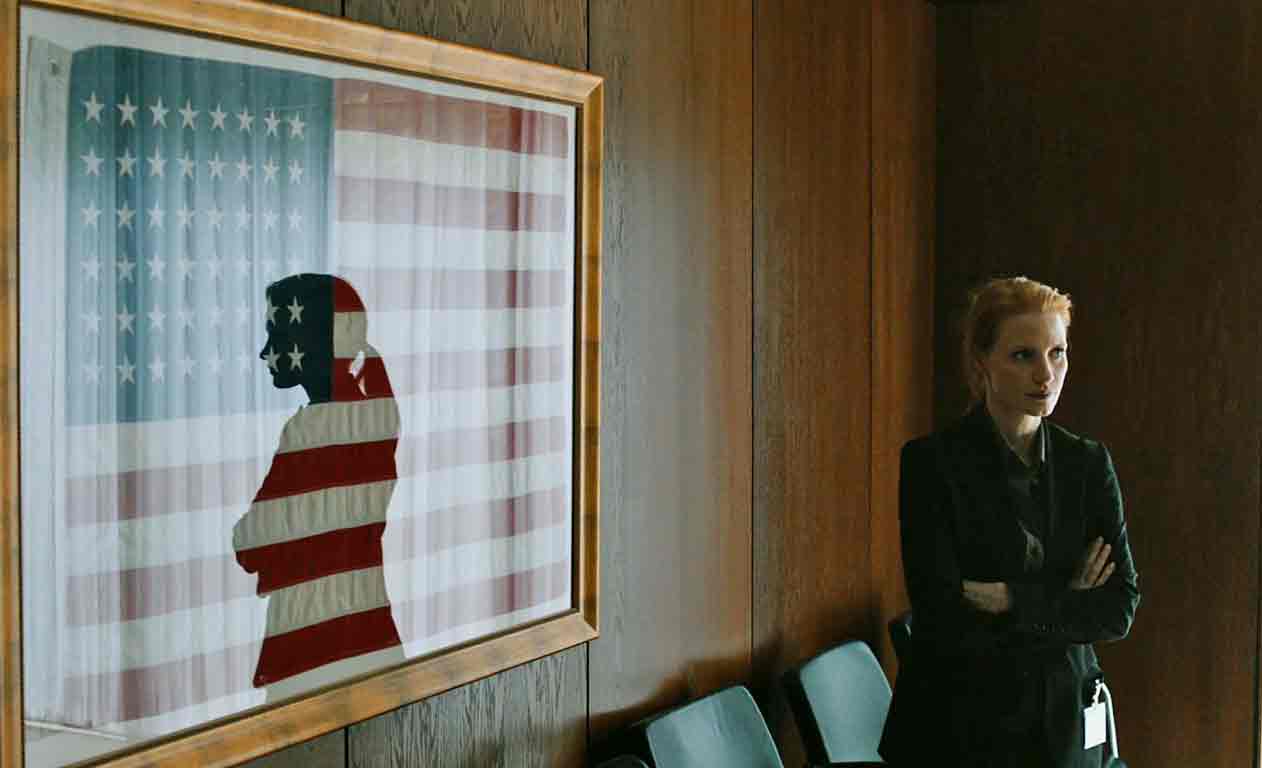
The debates about Kathryn Bigelow and Mark Boal’s Zero Dark Thirty in the United States have been substantial. Critical positions have ranged from Ignatiy Vishnevetsky’s measured defense at mubi.com/notebook/posts to Steve Coll’s attack in The New York Review of Books (to cite two of the less hysterical and more intelligent responses), and have only been exacerbated by the five Academy Award nominations the film has received. When I finally saw the film myself, it was apparent that part of the controversy derived from a certain ambiguity in the film’s depiction of torture, made all the more ambiguous by the filmmakers’ misleading and mainly unconvincing claims of political neutrality — a battle still being waged in the February issue of Sight and Sound, where Nick James, the editor of that English monthly, begs to differ with the negative judgments of two of his writers towards the film, even though he concedes that Bigelow’s naïve contention that “The film doesn’t have an agenda, and it doesn’t judge” has only helped to confuse matters.I agree with James that the climactic killing of Osama bin Laden registers largely as a hollow and morally dubious victory, but I also believe that the film’s commercially motivated attempt to be circumspect about its overall critical position makes it easy to misinterpret. Read more

Les Vampires

From the October 9, 1987 Chicago Reader. — J.R.

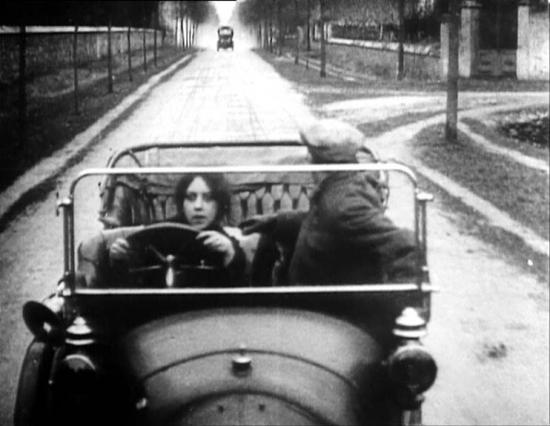
Louis Feuillade’s extraordinary ten-part silent serial of 1916, running just under eight hours, is one of the supreme delights of film–an account of the exploits of an all-powerful group of criminals called the Vampire Gang, headed by the infamous Irma Vep (Musidora), whose name is incidentally an anagram for “vampire.” Filmed mainly in Paris locations, Feuillade’s masterpiece combines documentary with fantasy to create a dense world of multiple disguises, secret passageways, poison rings, and evil master plots that assumes an awesome cumulative power: the everyday world of the French bourgeoisie, personified by the hapless sleuth hero, during the height of World War I is imbued with an unseen terror that no amount of virtuous detection can ever efface entirely. (Significantly, as in many of Feuillade’s other serials, the villains are a good deal more fascinating than the relatively square hero, although a comic undertaker and the leader of a rival gang are periodically on hand to help him out.) Because none of Feuillade’s complete serials is available in the U.S., this special screening helps to fill an enormous gap in our sense of film history. One of the most prolific directors who ever lived, Feuillade is today arguably a good deal more entertaining than Griffith, and unquestionably much more modern: his mastery of deep-focus mise en scene is astonishing, and its influence on Fritz Lang as well as Luis Bunuel and other Surrealists remains one of his major legacies. Read more

The Leopard Man

From the Chicago Reader (October, 1990). — J.R.

theleopardman3

theleopardman2

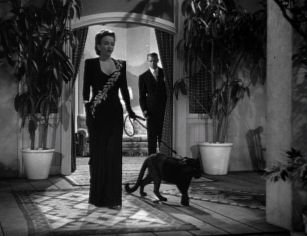
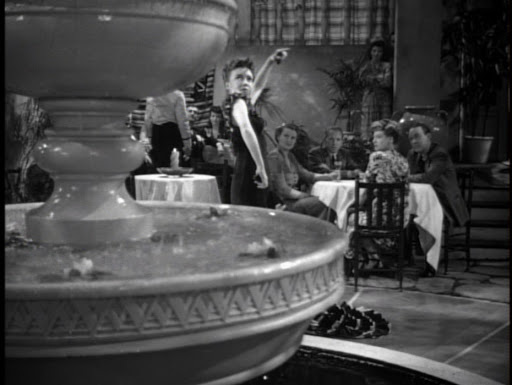
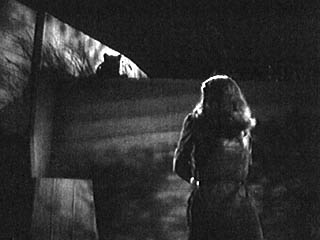
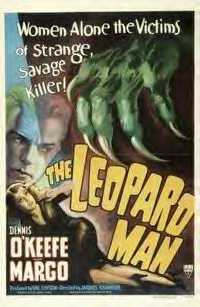
This economically constructed and haunting chiller (1943, 66 min.) from the inspired team of producer Val Lewton and director Jacques Tourneur doesn’t have the reputation of the two other films they worked on together in the early 40s, Cat People and I Walked With a Zombie. In part that’s because its ending is a bit abrupt and unsatisfactory — but it’s still one of the most remarkable B films ever to have come out of Hollywood. Adapted from Cornell Woolrich’s novel Black Alibi by Ardel Wray and Edward Dein, the film employs an audacious narrative of shifting centers, thematically related by a string of grisly murders in a small town in New Mexico. Depending for much of its effect on a subtle and poetic nudging of the spectator’s imagination, the film has a couple of sequences that are truly terrifying. With Dennis O’Keefe, Margo, and Jean Brooks. (JR)

Read more