William Styron vs. Richard Burton, Viewed Posthumously

Written for Moving Image Source‘s “Moments of 2012”, posted January 10, 2013. — J.R.
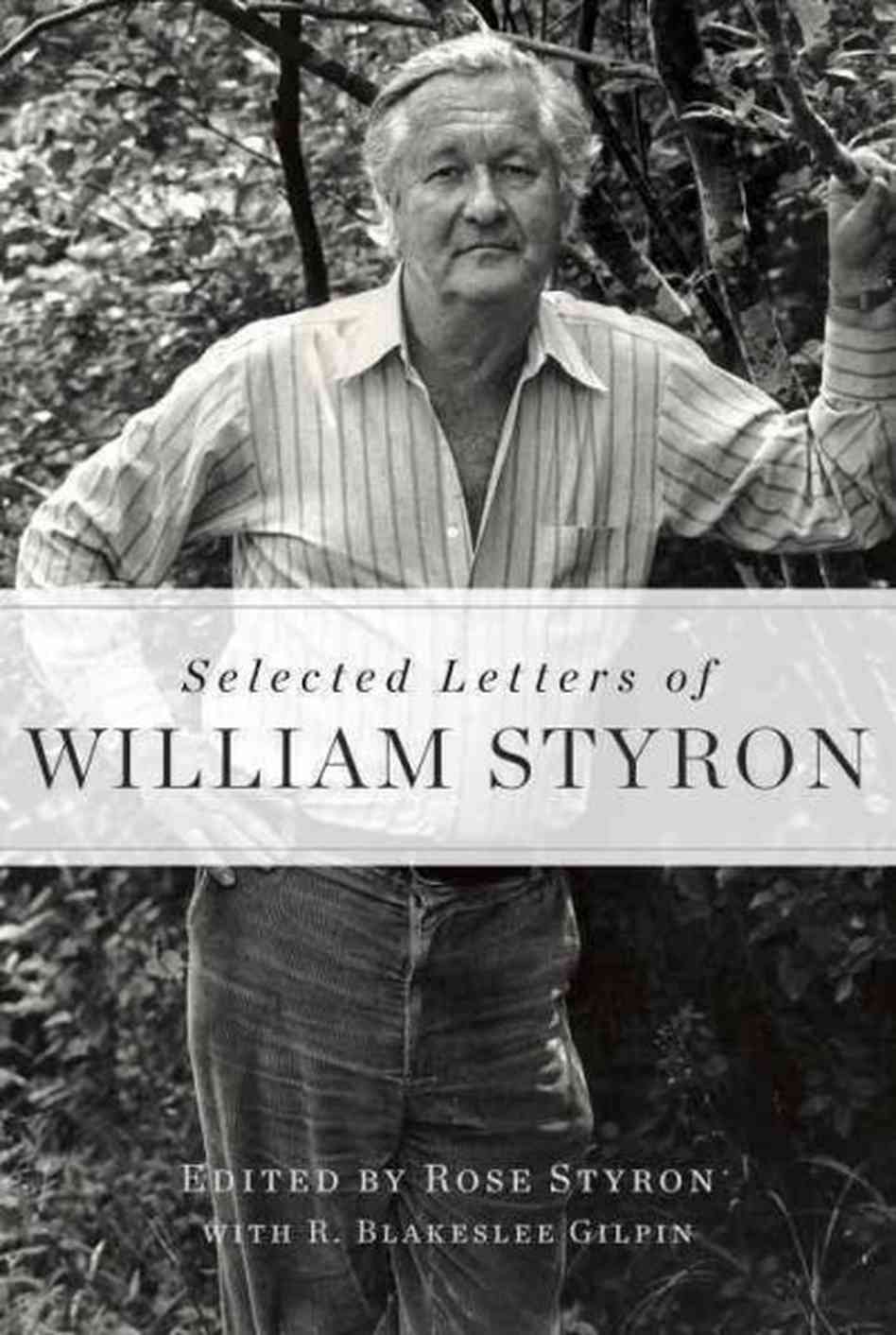
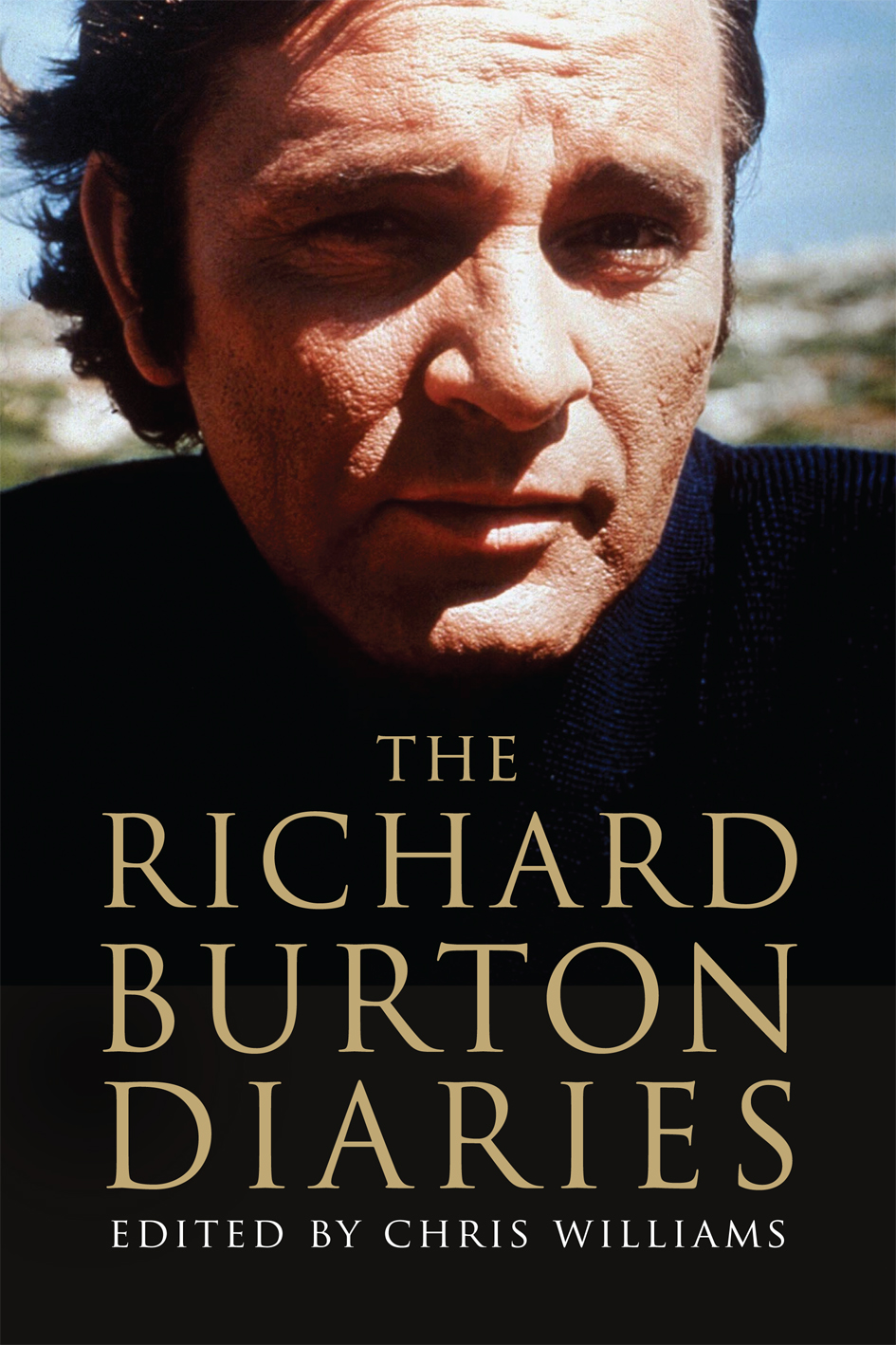
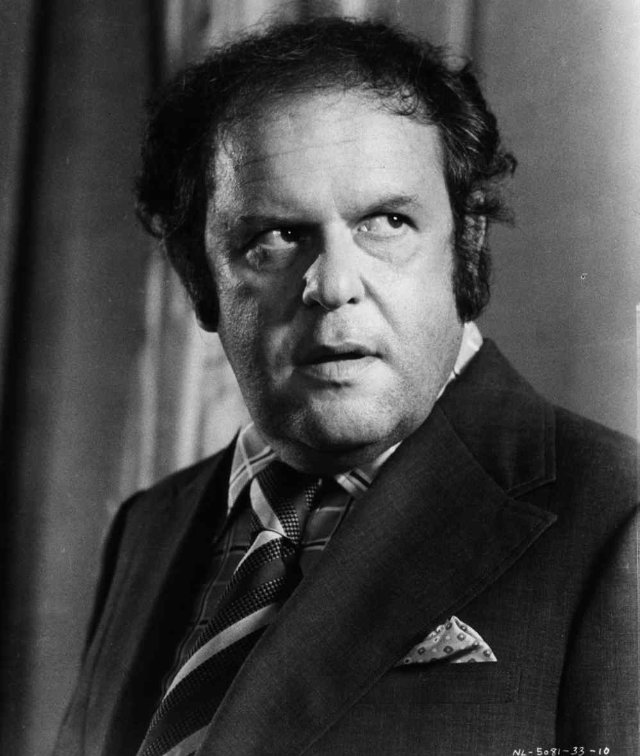
This holiday season, part of my light reading has consisted of browsing through two new doorstop-size books, each over 600 pages long, Selected Letters of William Styron and The Richard Burton Diaries. The differences between them have been both telling and surprising, at least to me. Both men were heavy drinkers and literary pontificaters who spent much of their social lives hanging out with celebrities, but Styron—the more prestigious and respectable of the two, and admittedly the one I respected more before broaching these two volumes — proves to be an utter, sanctimonious bore, seemingly more interested in career management than in life, while Burton, forever the shameless hack actor, has both an interest in life and a wry sort of humor about it that sparkles on every page.

Admittedly, there’s not necessarily much correlation between artistic talent and the way one communicates with one’s self or with friends, acquaintances, and relatives. My own semi-admiration for Styron stems mainly from what I remember favorably about Set This House on Fire and Sophie’s Choice two of his less respectable efforts, according to this country’s literary tastemakers, but possibly more because of their perceived subject matter than because of their dramatic achievements. Read more
A New Leaf

From the Chicago Reader (October 1, 1995); corrected and updated in September 2012. — J.R.

ANewLeaf-May

ANewLeaf-Matthau-Coco

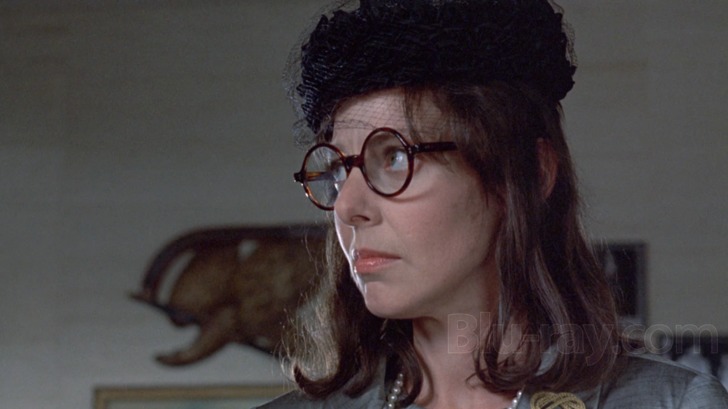
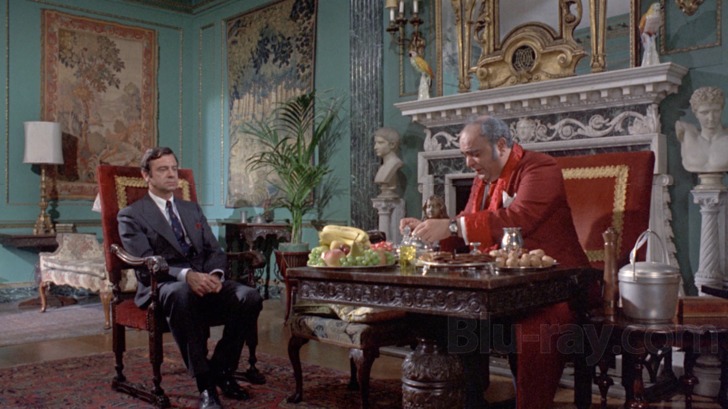
Writer-director-star Elaine May’s first feature (1971). Not all of it works, and the studio cut some of the darker elements (including a murder sequence that May avows was one of the funniest things Jack Weston ever did), but it’s still an often brilliant and frequently hilarious comedy. Walter Matthau, cast wildly against type, plays a spoiled playboy suddenly deprived of his wealth who plots to marry and murder a wealthy, klutzy, and clueless botanist (May, playing sort of a female Jerry Lewis). May’s savage take on her characters irresistibly recalls Stroheim; she’s at once tender and corrosive (as well as narcissistic and self-hating). This is painful comedy, to be sure, but there’s a lot of soul and spirit behind it. With James Coco, George Rose, and William Redfield. (JR)

ANewLeaf-Weston Read more

Responses to Spielberg Poll

Given to Indiewire in March 2013:

THE SPIELBERG POLL

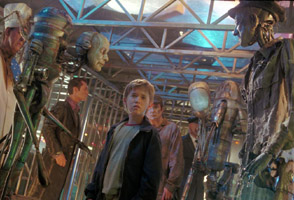
AI-boy&mother

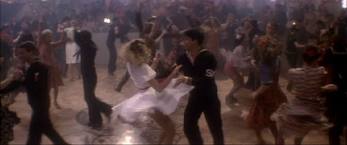
1941-dance


BEST FILM
You may vote for up to 5 films.

1. A.I. Artificial Intelligence
2. 1941
3. Close Encounters of the Third Kind
4.
5.


BEST DIRECTING JOB
You may vote for up to 5 films.

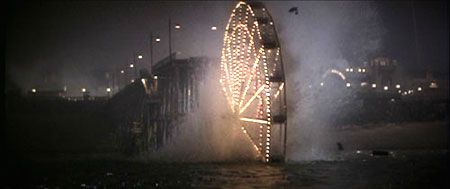
1941-ferriswheel

1. 1941
2. A.I. Artificial Intelligence
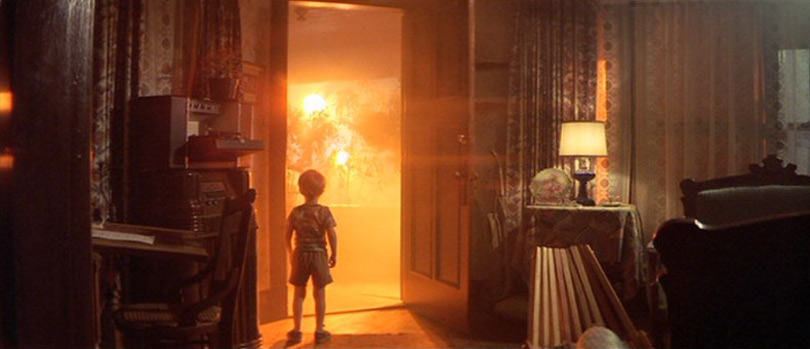
3. Close Encounters of the Third Kind

closeencounters-door


BEST LEAD PERFORMANCE
You get five votes. Remember to list both an actor’s name and the title of the film he or she appears in.

AI-Davids

1. Haley Joel Osment (David) in A.I. Artificial Intelligence
2. John Belushi (Captain Wild Bill Kelso) in 1941

1941-Belushi


BEST SUPPORTING PERFORMANCE
You get five votes. Remember to list both an actor’s name and the title of the film he or she appears in.

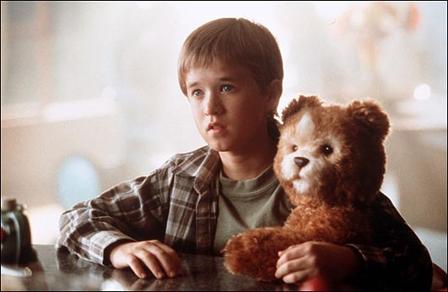
AI-boy&Teddy

1. Teddy (teddy bear/prop/special effect) in A.I. Artificial Intelligence
2. Jude Law (Gigolo Joe) in A.I. Artificial Intelligence


BEST SCENE
You get five votes. Feel free to include an explanation of why a certain scene/moment/sequence made your list.

1. last scene in A.I. (emotional virtuosity and bleakness)
2. restaurant sequence in 1941 (technical virtuosity and exhilaration)


BEST HERO
You get five votes. Include the character name and the film in which he/she appears.

1. Haley Joel Osment (David) in A.I. Read more

Gertrud

From the Chicago Reader (May 27, 1988). — J.R.

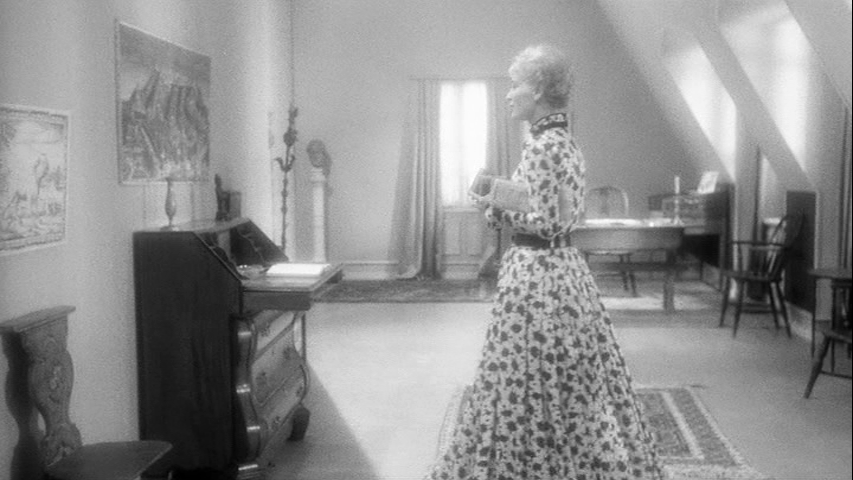
Carl Dreyer’s last film, one of the most controversial movies ever made, would be my own candidate for the most beautiful, affecting, and inexhaustible of all narrative films, but it is clearly not for every taste — not, alas, even remotely. Adapted from a long-forgotten play by Hjalmar Soderberg written during the early years of this century, it centers on a proud, stubborn woman (Nina Pens Rode) who demands total commitment in love and forsakes both her husband and a former lover for a young musician who is relatively indifferent to her. It moves at an extremely slow, theatrical pace in lengthy takes recorded mainly in direct sound (although shot principally in a studio), and deserves to be ranked along with The Magnificent Ambersons, Lola Montes, and The Man Who Shot Liberty Valance as one of the great haunted memory films. In a way, the meaning of this film partially hinges on the refusal and/or inability to compromise, and what this means over the range of an entire life (in this case, Dreyer’s as well as his heroine’s). The eponymous heroine may be regarded as a monster, a sublime and saintly martyr, or, most likely, as an impossible fusion of the two. Read more

The Steel Helmet

From the Chicago Reader (April 1, 2005). — J.R.

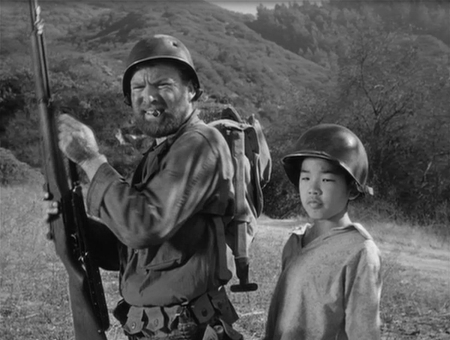
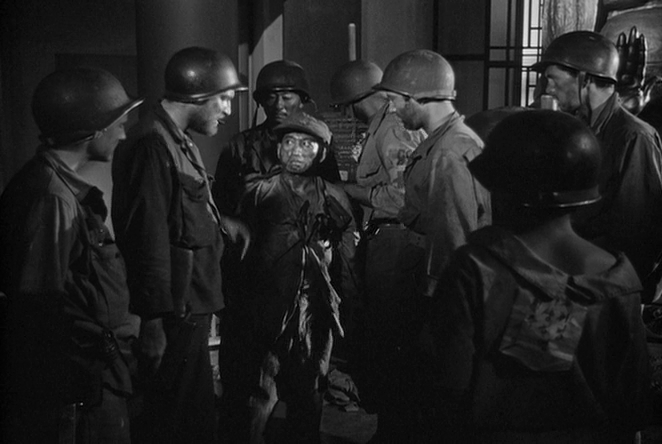
Sam Fuller’s first and greatest war film (1951) is even better in its terse and minimalist power than the restored version of The Big Red One released last year. The first Hollywood movie about the Korean war, this introduced Gene Evans, the gruff star Fuller was to use many more times, as a crude, bitter, savvy sergeant who, despite his obvious racism, bonds with a South Korean war orphan. In addition to being visually and aurally brilliant, the film includes virtually unprecedented debates about America’s racial segregation and the internment of Japanese during World War II. An independent production, The Steel Helmet did so well that it immediately won Fuller a contract at 20th Century Fox. With Steve Brodie, Robert Hutton, and James Edwards. 84 min. (JR)

Read more

Sleep with Me

From the Chicago Reader (September 6, 1994). — J.R.

The best of the so-called Generation X movies that I’ve seen so far, this charming first feature by Rory Kelly about a circle of friends in their 30s, and the various complications that ensue when one of the bunch falls helplessly in love with a friend’s wife, owes much of its spark to collective effort, in the script as well as the performances. The film was written by Kelly and five of his friends — Duane Dell’Amico, Roger Hedden (author of Bodies, Rest & Motion), Neal Jimenez (writer and codirector of The Waterdance), Joe Keenan, and Michael Steinberg (director of Bodies, Rest & Motion and codirector of The Waterdance) — with each of the six scripting a separate scene organized around a gathering. A limitation of the collective social portrait is that one never learns what most of the characters do for a living, but the behavioral interplay is often funny and observant. The able cast includes Craig Sheffer (A River Runs Through It), coproducer Eric Stoltz (who starred in both The Waterdance and Bodies, Rest & Motion), and Meg Tilly; the striking and effective score is by David Lawrence. Read more

Cinema as Social Practice, Today and Yesterday: Confessions of a Cinephile

Written for the Mexican magazine La Tempestad (No. 85), which published it in Spanish translation in late 2012, before Mehrnaz Saeed-Vafa completed her  feature-length film about my family house, A House is Not a Home. It was published online in February 2013. — J.R.

Jonathan Rosenbaum

I’m very fortunate in having had a prolonged and comprehensive exposure to cinema both as mainstream entertainment and as an art form. But my experience has been somewhat atypical insofar as these two forms of exposure have been in different places and at different stages in my life, with relatively little interaction between them.

Born in Alabama in 1943, I grew up as the son and grandson of small-town film exhibitors, giving me a virtually unlimited access to popular cinema for practically all of the 1950s. This was followed by my discovery of film as an art form during much of the 1960s and 1970s, chiefly in New York, Paris, and London, and even though this entailed in certain cases some rediscoveries and reassessments of films I had seen earlier in Alabama, the discontinuities were usually more striking than the continuities because my family, although very much interested and invested in the arts in general (especially music, literature, and architecture), saw cinema almost exclusively in terms of business and light entertainment — which of course was and is the way most people everywhere in the world tend to see it. Read more

The Road to Overload [NORTH ON EVERS]

From the Chicago Reader (October 2, 1992). — J.R.

NORTH ON EVERS

*** (A must-see)

Directed and written by James Benning.

A good many of the fine points of the film business elude me. But if I understand some of the current rules correctly, it’s poison to use black-and-white cinematography, letterboxing (for framing wide-screen formats on video), or subtitles –unless they appear in music videos or, in the case of subtitles, in Dances With Wolves or The Last of the Mohicans, when they automatically become commercially desirable.

I cite these ridiculous rules of thumb to show just how fanciful most such commercial “rules” turn out to be. Producers, distributors, and exhibitors often claim that their choices are dictated by the well-researched desires of audiences; of course audiences counter that they can only choose from what’s put in front of them. In other words everyone passes the buck when it comes to explaining why black-and-white features can’t get bankrolled in this country and why foreign-language films have a tough time — only 1 percent of all movies shown here are subtitled. And the industry takes enormous pains to ensure that we don’t see letterboxing on TV or video — except on MTV. Read more

A Stranger Among Us

From the Chicago Reader (July 1, 1992). — J.R.

M8DSTAM EC003

There’s apparently something about Hasidic Jews that makes normally talented and reasonable filmmakers — David Mamet in Homicide, screenwriter Robert J. Avrech (Body Double) and director Sidney Lumet here — turn otherwise straightforward thrillers into harebrained hootfests. The best that can be said for this movie, which stars Melanie Griffith as an underground cop who lives with the Hasidim of Brooklyn while trying to solve the murder of a jewel merchant, is that apart from the talents of Griffith and Eric Thal (who plays a young Hasidic Jew she mildly flirts with) it has some educational value as a form of exposition about a fascinating subculture. The worst is that most of the other actors (and characters for that matter) get bent out of shape while trying to conform to the contours of the dotty plot. With John Pankow, Tracy Pollan, Lee Richardson, Mia Sara, Jamey Sheridan, Burtt Harris, and a lot of quotes from the cabala. (JR)

AStrangerAmongUs

Read more

Sound and Vision (Films by Marguerite Duras)

From the September 15, 1995 issue of Chicago Reader. —J.R.

Films by Marguerite Duras

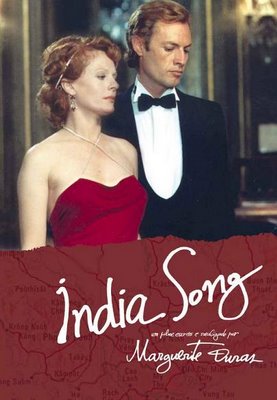
It’s surely indicative of the scarcity of Marguerite Duras movies that even a dedicated fan like me has managed to see only seven of them — and for one of those I had to drive 100 miles, from Santa Barbara to Los Angeles. No Duras film has been distributed in the United States for years, and in preparing this article I wasn’t even able to obtain a complete filmography; my own provisional list includes 20 titles, stretching from La musica in 1966 to Les enfants in 1982.

If one extends this list by adding adaptations (by herself and others) of Duras literary works, the scripts she wrote for other directors, and two films by Benoit Jacquot revolving around Duras, the figure is 31 films, most of them features. So it’s no small achievement that Facets Multimedia (which, thanks to the efforts of Charles Coleman, has recently featured such adventurous fare as Manoel de Oliveira’s Valley of Abraham and an exhaustive Nanni Moretti retrospective) will be showing a dozen films from this list over the next couple of weeks, most of them in brand-new prints and most of them four to six times. Read more

Visionary Agitprop

From the Chicago Reader (December 8, 1995).  — J.R.

I Am Cuba

*** (A must-see)

Directed by Mikhail Kalatozov

Written by Yevgeny Yevtushenko and Enrique Pineda Barnet

With Luz Maria Collazo, Jose Gallardo, Sergio Corrieri, Maria Gonzalez Broche, Raul Garcia, and Jean Bouise.

Undeniably monstrous and breathtakingly beautiful, ridiculous and awe inspiring, I Am Cuba confounds so many usual yardsticks of judgment that any kind of star rating becomes inadequate. A delirious, lyrical, epic piece of communist propaganda from 1964 — at least three years in the making and 141 minutes long–it is simply too campy and too grotesque to qualify as a “masterpiece,” but I’d probably care less about it if it were one. A “must-see” may come closer to the mark, but it certainly isn’t a must-see for everybody. This movie has been rattling around in my head since I first encountered it 16 months ago, yet I can’t say it won’t enrage some people and bore others. Worth seeing? Has redeeming facet? Worthless? It fits all and none of these categories. To put it simply, the world doesn’t make allowances for a freak of this kind.

A Russian-Cuban production, it reportedly was hated in Russia and Cuba alike in the mid-60s, at least among government officials; in Cuba it was commonly known as I Am Not Cuba. Read more
The Lovers of Pont-Neuf

From the January 29, 1999 Chicago Reader. — J.R.

les-amants-du-pont-neuf

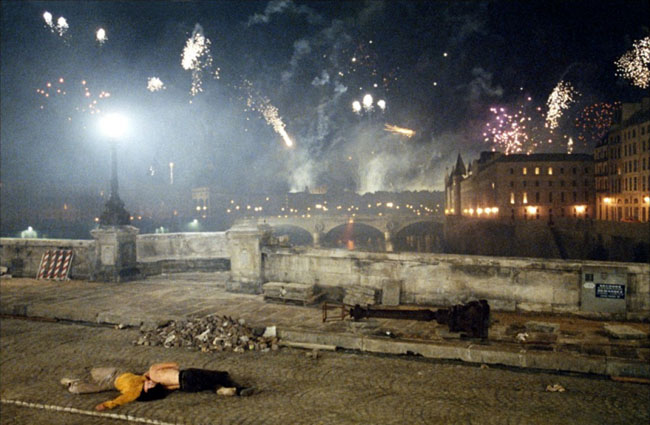
This 1992 French feature by Leos Carax (Boy Meets Girl, Bad Blood) could be the great urban expressionist fantasy of the 90s: like Sunrise and Lonesome in the 20s and Playtime and Alphaville in the 60s, it uses a city’s physical characteristics to poetically reflect the consciousness of its characters. Carax daringly and disconcertingly begins the film as a documentary portrait of the homeless in Paris, but it becomes a delirious love story between two people (Denis Lavant and Juliette Binoche) who live on one of Paris’s most famous bridges and experience the whole city as a kind of enchanted playground, a vision that reaches an explosive apotheosis during a bicentennial fireworks display over the Seine. To realize his lyrical and monumental vision, Carax built a huge set in the French countryside that depicted Pont-Neuf and its surroundings, making this one of the most expensive French productions ever mounted. So the film seems an ideal subject for a lecture by former Chicagoan Stuart Klawans, film critic for the Nation and author of Film Follies: The Cinema Out of Order, a new book with a witty and highly original sense of film history. Read more

Othello Goes Hollywood

From the Chicago Reader (April 10, 1992); also reprinted in two of my collections, Placing Movies and Discovering Orson Welles. — J.R.

OTHELLO

**** (Masterpiece)

Directed and written by Orson Welles

With Orson Welles, Micheal Mac Liammoir, Suzanne Cloutier, Robert Coote, Fay Compton, Doris Dowling, and Michael Laurence.

Sustained until death at 70 by his fame as the prodigy with the baby face, Orson Welles always appeared to abide by words he put in the mouth of Citizen Kane: “There’s only one person in the world to decide what I’m gonna do — and that’s me.” — from a two-page magazine ad for the Dodge Shadow that appeared last month under the heading “Amazing Americans . . . a celebration of people who have lifted our nation’s pride

I guess this describes the official Orson Welles we’re all supposed to love and revere. The ad demonstrates how even the recalcitrance of a wasted and abused artist can wind up as a handy marketing tool. Chrysler, a corporation that never would have dreamed of sustaining, much less supporting Welles as an artist when he was alive — and surely wouldn’t pay a tenth of what this ad cost to help make his unseen legacy available today — proudly invites us to join it in celebrating his artistry. Read more

Too Late Blues

From the April 1. 1992rChicago Reader. — J.R.

toolateblues-bluray

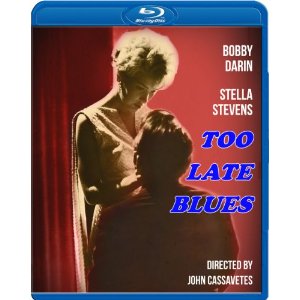
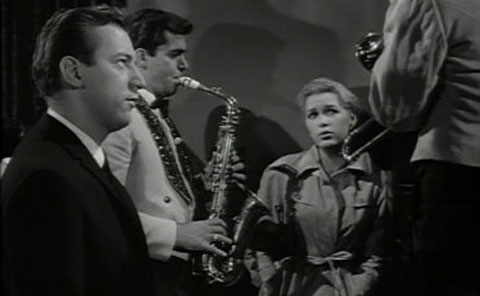
The success of John Cassavetes’s independent Shadows led to a contract with Paramount that yielded only this feature, Cassavetes’s second — a gauche but sincere drama with a highly relevant subject: the self-laceration and other forms of emotional havoc brought about when a footloose jazz musician (Bobby Darin) decides to sell out and go commercial. A lot could be (and was) said about what’s wrong with this picture: it’s pretentious, lugubrious, mawkish, and full of both naivete and macho bluster. It also has moments that are indelible and heartbreaking, at least one unforgettable performance (Everett Chambers as the hero’s manager), and many very touching ones (by Darin, Stella Stevens, Rupert Crosse, Vince Edwards, Cliff Carnell, and Seymour Cassel, among others), not to mention a highly affecting jazz score featuring Benny Carter and a haunting theme by David Raksin. If you care a lot about Cassavetes, you should definitely see this — otherwise keep your distance (1960). (JR)

Photo of Everett Chambers

toolateblues Read more

The Undistributed

This appeared in the Chicago Reader in their Christmas issue (December 25) in 1992.  — J.R.

The presumption behind most ten-best lists is that they include items available to everybody. One can always look at such lists and say, “Too bad I missed such and such. Maybe I’ll catch up with it on video.” But few people seem to be aware that they may never catch up with a film, because it never made it to Chicago at all—either to theaters or to video stores. In a consumer culture like ours we aren’t supposed to think too much about what merchandisers choose to put in front of us; it’s better for business if we assume that new movies just fall from the sky into theaters and video stores—and that those that don’t make it don’t deserve to. However, I see a certain number of movies in other countries every year that don’t make it to town, and sometimes they’re better than the movies that do. Why this happens so often is a matter worth exploring briefly.

In 1938 the U.S. government filed an antitrust action against Paramount Pictures, objecting to the monopolies of movie theaters held by the studios. By the end of 1946 a court judgment enjoined not only Paramount but also Loew’s, RKO, Warner Brothers, and 20th Century-Fox from acquiring additional theaters. Read more