Showgirls

From the September 1, 1995 Chicago Reader. — J.R.
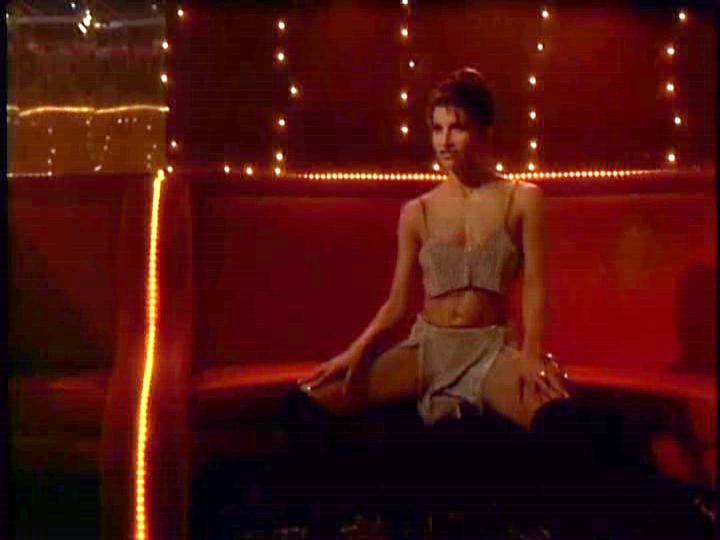
995SWG_Gina_Gershon_009

Director Paul Verhoeven and writer Joe Eszterhas’s fresh meat market—a sleazy Las Vegas porn show with clunky production numbers that resemble body-building exercises, backed by heaps of big studio money. The story, a low-rent version of All About Eve, charts the rise of one bimbo showgirl (Elizabeth Berkley) at the expense of another (Gina Gershon); alas, the only actor who seems comfortable is Kyle MacLachlan. It must be admitted that, as with Basic Instinct and Starship Troopers, which I also underrated initially, this 1995 movie has only improved with age—or maybe it’s just that viewers like me are only now catching up with the ideological ramifications of the cartoonlike characters. In this case, the degree to which Las Vegas (and by implication Hollywood) is viewed as the ultimate capitalist machine is an essential part of the poisonous package. With Glenn Plummer, Robert Davi, Alan Rachins, and Gina Ravera. R, 131 min. (JR)

Elizabeth-Berkley-Showgirls-11

Read more

Arabian Knight

From the Chicago Reader (August 1, 1995). — J.R

The neglected Canadian animator Richard Williams directed and coscripted this mind-boggling London- made cartoon musical feature (1995), the first to be made in ‘Scope since Disney’s Sleeping Beauty in 1959. It’s a movie that’s been in and out of production since 1968, apparently because Williams mainly worked on it as a labor of love in between more lucrative projects (such as Who Framed Roger Rabbit). Eventually he lost creative control, and it’s impossible to say whether the movie would have been more or less coherent without the postproduction interference: the storytelling is perfunctory, but the imaginative animation, which revels in two-dimensionality, is often wonderful — an improbable blend of Escher, op art, Persian miniatures, and Chuck Jones that shoots off in every direction and seems great for kids. Arabian Knight is a lot more memorable than either Aladdin or Pocahontas (though its cultural references are much more varied and confused). The cast of offscreen voices includes the late Vincent Price as the main villain, Matthew Broderick as the hero, a humble cobbler, Jennifer Beals as the princess, Eric Bogosian, Toni Collette, and Jonathan Winters as a disreputable thief. Margaret French collaborated on the script, and Robert Folk and Norman Gimbel wrote the songs.

Read more

A Little Princess

From the Chicago Reader (May 1,1995). — J.R.

ALittrlePrincess

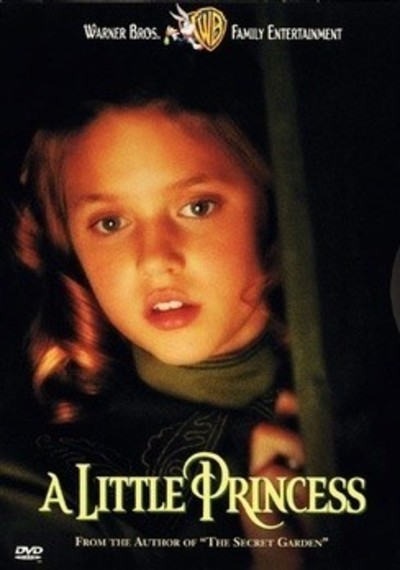
I’m not sure whether this sensitive 1995 adaptation of a novel by Frances Hodgson Burnett (author of The Secret Garden) from Warners is quite the miracle some of my colleagues claimed, but it blows most Disney competition out of the water and is enjoyable for grown-ups as well. Set during World War I, it follows the adventures of an imaginative and resourceful little girl (Liesel Matthews) raised in India and then deposited by her father at an exclusive New York boarding school, where she soon becomes the victim of a mean headmistress (Eleanor Bron). Directed by Mexican filmmaker Alfonso Cuaron in his American debut and scripted by Richard LaGravenese (The Fisher King) and Amy Ephron, the film uses studio resources to create an entrancing world both in New York and in the heroine’s fantasies about India. G, 97 min. (JR)

ALP Read more

A Pure Formality

From the Chicago Reader (July 1, 1995). — J.R.

A-Pure-Formality-Poster

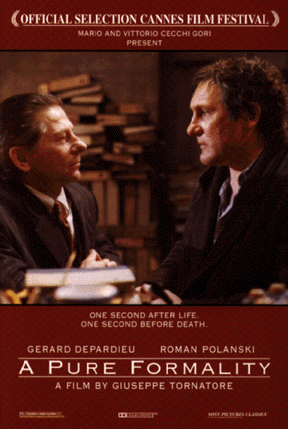
After the success of Rain Man Barry Levinson was allowed to indulge himself with Toys, and after Cinema Paradiso Giuseppe Tornatore was similarly allowed to foist this work of staggering pretentiousness on the public (1994). This French-Italian production with French dialogue, written with Pascale Quignard, starts off promisingly enough as a police thriller with metaphysical and symbolic overtones, but becomes steadily more abstract and preposterous as it gets closer to the denouement. A man without identity papers (Gerard Depardieu) running through the woods in a raging storm in an unnamed country is arrested and taken to a dilapidated police station to be interrogated. He claims to be a famous writer named Onoff, but the facts he offers the inspector (Roman Polanski) are confused and contradictory, and as the night wears on things just get murkier and murkier. The performances by the two leads and by Sergio Rubini are more than serviceable, but it makes little difference given that the material is so gratingly awful. Beware. (JR)

APureFormality Read more

The Innocent

linnocente

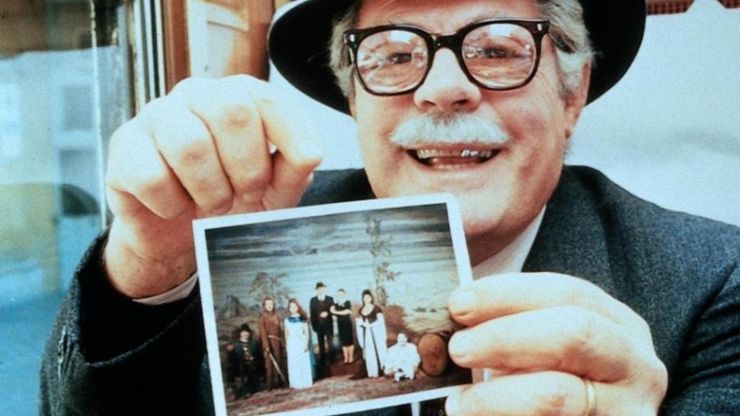
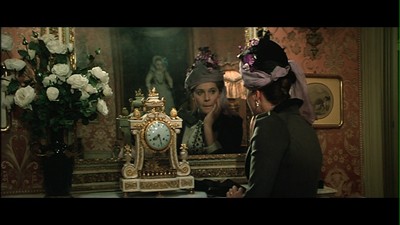
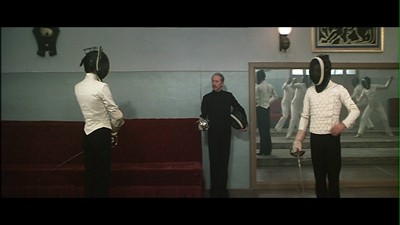
Though it wasn’t terribly well received when it first appeared, Luchino Visconti’s last film (1979) strikes me as arguably the greatest of his late works apart from The Leopard — a withering autocritique of masculine vanity and self-delusion, adapted from a novel by Gabriele D’Annunzio, focusing on a well-to-do intellectual (Giancarlo Giannini) at the turn of the century struggling to justify his sexual double standards and his libertarian philosophy regarding his wife (Laura Antonelli) and his mistress (Jennifer O’Neill). Opulently mounted, dramatically understated, and keenly felt, this is a haunting testament, as well as one of Visconti’s most erotic pictures. Incidentally, the elderly hand seen on-screen during the opening credits is Visconti’s own. In Italian with subtitles. 125 min. (JR)

linnocente2

linnocente3 Read more

Halfaouine — Boy of the Terraces

From the Chicago Reader (June 16, 1995). — J.R.

H-BR

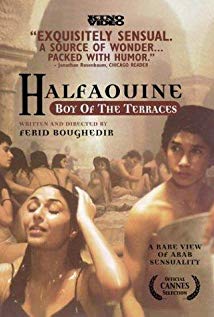
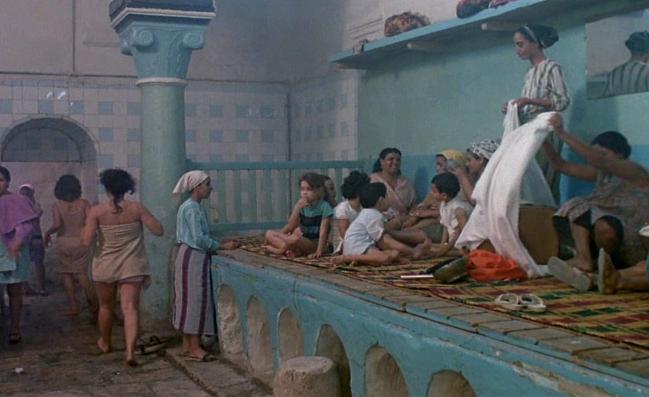
This lovely first feature from Tunisia (1990) is the work of Ferid Boughedir, the best-known film critic in the Arab world, whose documentaries Camera d’Afrique and Camera d’Arabe are models of their kind. Exquisitely sensual without being prurient, sensitive without being arch or affected, this portrait of a 12-year-old boy’s life, family, and community is packed with humor and perception, and the film’s feeling for the labyrinthine architecture of the neighborhood is a source of wonder. Film Center, Art Institute, Columbus Drive at Jackson, Friday and Saturday, June 16 and 17, 8:00, and Tuesday, June 20, 6:00, 443-3737.

Halfaouine Read more

Pocahontas

From the Chicago Reader (July 13, 1995). — J.R.

pocahontas-the-disney-movie

After some belated glimmers of ecological and postcolonial conscience in The Lion King, the Disney animation people go even further in revising some of their social priorities relative to the racism of Walt, and in their first cartoon feature based on real people do a conscientious and at times imaginative job of trying to illustrate aspects of the John Smith and Pocahontas story without reverting to all of the usual Hollywood lies. Contradictions confound certain aspects of this project — such as the language spoken by Pocahontas (which, in the Hollywood tradition, oscillates between tribal talk and the unaccented chatter of a contemporary Valley girl) — but overall this seems like a reasonable stab at an impossible agenda. Unsurprisingly, the film is usually more at home with animals (including a pampered English bulldog lifted from Tex Avery’s Spike) than with people, but it isn’t afraid to give both Pocahontas and John Smith some sex appeal. Personally, I prefer Hawks’s The Big Sky on this interracial, intercultural subject, but there’s something to be said for this movie’s monumental and anthropomorphic handling of landscapes — a constant in Disney cartoon rhetoric since Bambi — which reveals that the Leni Riefenstahl influence still persists in some ways. Read more

On DOPPELGANGER: A TRIP INTO THE MIRROR WORLD by Naomi Klein

What makes Doppelganger my favorite of Naomi Klein’s books, maybe because it’s the most literary, appearing on the heels of her two previous masterworks (No Logo and The Shock Doctrine), is that she practices exactly what she preaches.


Offering a personal and autobiographical narrative that reads like a novel as well as like a slowly
unfolding argument, she creates a manifesto that’s roomy enough to include philosophy and metaphysics as well as politics while addressing us in the present. And meanwhile somehow managing to tell us something hopeful about our hopeless times. [9/15/23] Read more

Clueless

From the Chicago Reader (July 11, 1995). — J.R.

clueless-dvd-cover

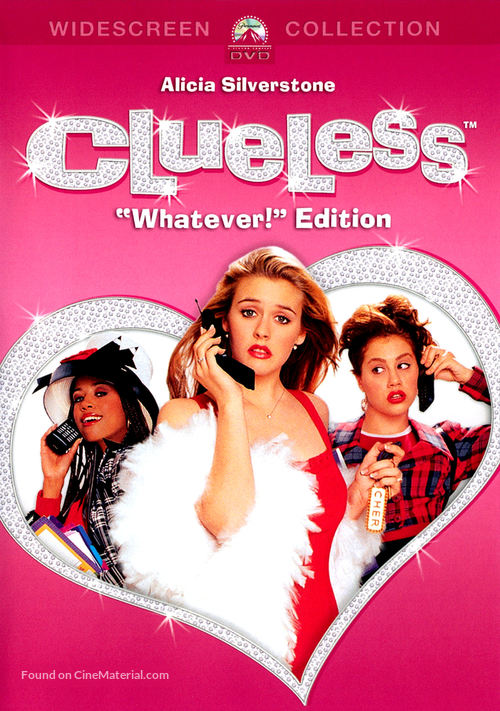
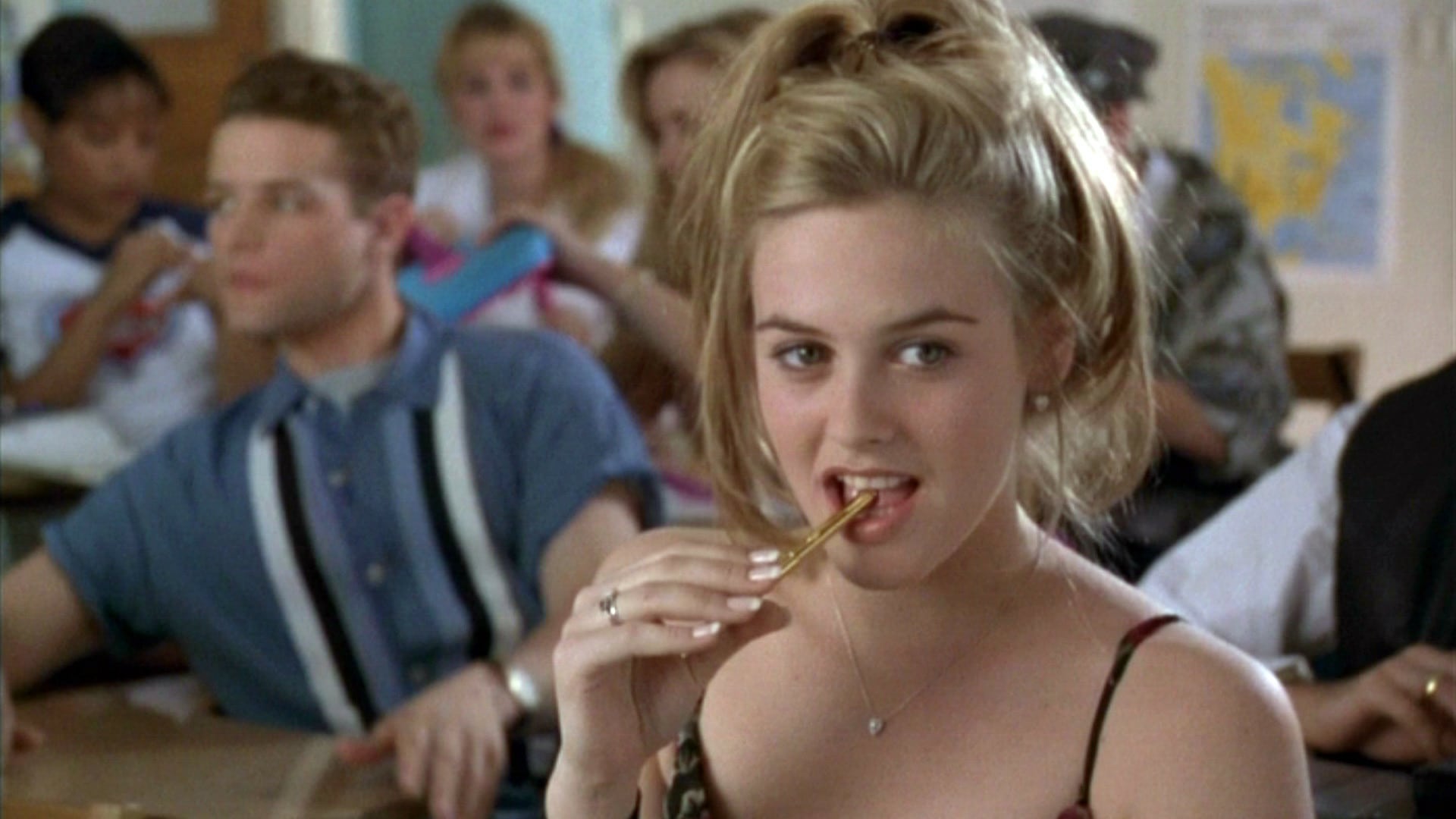
If you gave up on writer-director Amy Heckerling after Look Who’s Talking and its sequel, this 1995 comedy — improbably but cleverly adapted by Heckerling from Jane Austen’s Emma — might get you interested again. As in Fast Times at Ridgemont High, her first feature, Heckerling displays a nice feeling for teenagers — teenage girls especially — and some flair for witty dialogue. Here she’s concentrating on the travails of a wealthy but good-hearted Beverly Hills consumer (Alicia Silverstone) as she tries to establish a romance between two of her teachers (Wallace Shawn and associate producer Twink Caplan), make over a new transfer student (Brittany Murphy) with the help of her best friend (Stacey Dash), pass a driving test, and lose her virginity. Though this drifts at times as storytelling, it’s mainly lightweight but personable fun. With Paul Rudd, Donald Faison, Elisa Donovan, Jeremy Sisto, Julie Brown, and Dan Hedaya. 97 min. (JR)

Clueless Read more

Death and the Maiden

From the January 13, 1995 Chicago Reader. — J.R.

datm

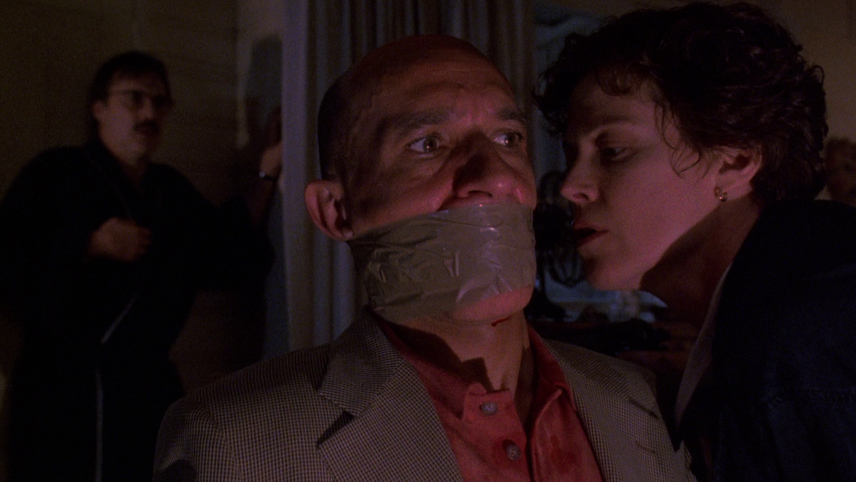
With the help of Rafael Yglesias and Ariel Dorfman, Roman Polanski has adapted Dorfman’s three-character play about a former political prisoner (Sigourney Weaver) kidnapping a doctor (Ben Kingsley) whom she believes was her torturer, while her lawyer husband (Stuart Wilson) serves as a go-between. Even though he’s psychologically expanded his source, the material is a bit too schematic to work as much more than a scaled-down thriller. By plunking three characters down in a remote location beside a body of water Polanski revives some of the triangular tensions found in his Knife in the Water and portions of his Cul-de-sac, but this comes across as a less personal work than either of those films or Bitter Moon, and is intermittently hampered by the mental adjustments that have to be made in order to accept English and American actors playing South American characters. Even so, Polanski certainly gets the maximum voltage and precision out of his story and actors, keeping us preternaturally alert to shifting power relationships and delayed revelations. It’s refreshing to see this mastery in a climate where there’s so little of it around. Water Tower.

DeathandtheMaiden Read more

The Online William K. Everson Collection (with updated links)

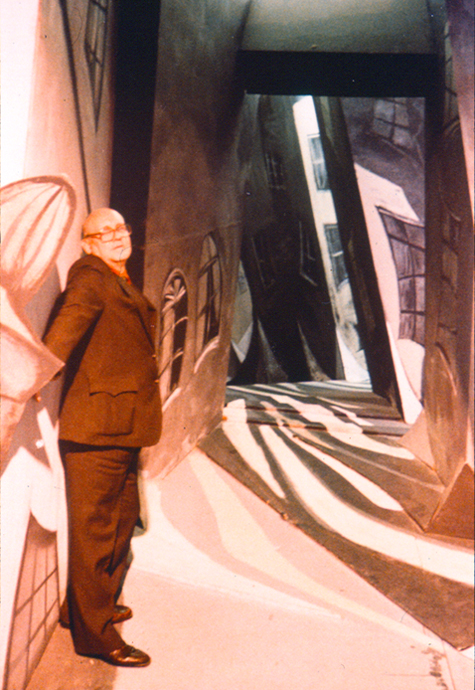
Thanks to a passing reference by Andy Rector on Girish’s excellent blog, I’ve just stumbled upon an invaluable online reference tool — the William K. Everson Collection, which has been set up by New York University’s Cinema Studies, where Everson taught from 1972 to 1996. As someone who used to attend some of the memorable screenings of The Theodore Huff Memorial Film Society that were organized by Everson, at two or three of its separate locations, I’m especially delighted to recover some of the program notes he wrote for those events, such as those for F.W. Murnau’s rediscovered City Girl (a screening I attended) on March 2, 1970. In fact, the two most impressive individual archives to be found at this site are Everson’s voluminous program notes, beautifully cross-referenced and reproduced for easy access, and his collection of press kits. (There are also some other things here as well — including the photograph reproduced above, of Everson imitating Cesare in the Cabinet of Dr. Caligari set that was rebuilt inside the Cinémathèque Française’s Musée du Cinéma at the Palais de Chaillot.)

Everson’s immense value when he was alive was more his extraordinary generosity, the breadth of his knowledge as a film scholar, and his enthusiasm than his critical acumen, so there are times when one wants to quibble with some of the own opinions in his notes (such as his own quibbles about Jacques Tourneur’s masterpiece Stars in My Crown, for example). Read more

Both Sides of John Cassavetes

From The Movie, Chapter 65, 1981.-– J.R.

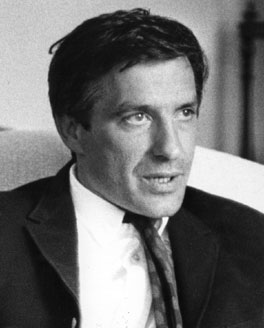
One of the most paradoxical and controversial of all the American independents, John Cassavetes has always placed actors and acting at the center of his film-making conceptions. An actor himself, he has used his craft as a means of financing his own productions — which are themselves celebrations of acting. ‘Directing really is a full-time hobby with me,’ he confessed in an interview in the late Sixties. ‘I consider myself an amateur film-maker and a professional actor.’

Born on December 9th, 1929 in New York City, the son of a Greek immigrant who made and then lost a fortune in business, Cassavetes attended Colgate College as an English major. It was there that his interest in acting was sparked, and he enrolled in the American Academy of Dramatic Arts shortly after graduation.

Delinquent turns director

Following a stage debut in a stock company and a bit part in a Hollywood feature, Fourteen Hours (1951), Cassavetes gradually acquired his reputation as a young actor by appearing in television dramas, where he specialized in juvenile delinquent parts. By the mid-Fifties, budget, he was re-creating one of these roles in a film about a family being held captive by hoodlums, The Night Holds Terror (1955). Read more

What Is a Jew? [EUROPA EUROPA]

From the Chicago Reader (November 8, 1991). — J.R.

EUROPA EUROPA

**** (Masterpiece)

Directed and written by Agnieszka Holland

With Marco Hofschneider, Rene Hofschneider, Delphine Forest, Andre Wilms, Julie Delpy, and Halina Labonarska.

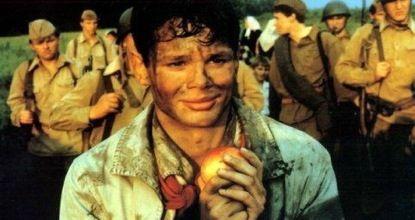
Solomon Perel was born in Peine, Germany, in 1925, the youngest child of a Polish-Jewish shoe merchant. He survived World War II first in a Soviet orphanage (1938-41), then by posing as an Aryan at the most prestigious and elite Hitler youth school in Germany. The only giveaway sign of his Jewish identity was his circumcised penis, which he had to keep hidden at all costs. (At one point, he even made an amateurish and painful surgical attempt to “uncircumcise” himself.) After the war, he emigrated to Palestine as a Jew. At the end of Europa Europa — director Agnieszka Holland’s adaptation of Perel’s autobiography — the real Solomon Perel tells us, “When I had sons, I didn’t hesitate to circumcise them.” The film concludes by showing us Perel today, at age 65, in Israel, singing a familiar Hebrew song.

But are we truly convinced of his Jewishness? On the prosaic level we certainly are: obviously Solly Perel is a Jew. But on the philosophical, meditative level established during the course of this remarkable film, we may be somewhat less certain. Read more

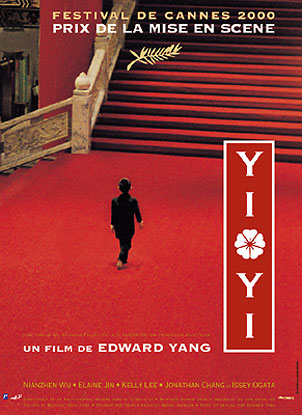
Alone in a Crowd [on YI YI]

From the March 2, 2001 Chicago Reader. –J.R.

Yi Yi

****

Directed and written by Edward Yang

With Wu Nien-jen, Elaine Jin, Kelly Lee, Jonathan Chang, Issey Ogata, and Ke Suyun.

“Happy families are all alike,” begins Anna Karenina. “Every unhappy family is unhappy in its own way.” The way in which the Jians, the central family in Edward Yang’s 173-minute Yi Yi, are unhappy is difficult to pinpoint in a word or phrase, but Yang sees this father, mother, teenage daughter, eight-year-old son, and grandmother as the five fingers of a single hand, each one gradually becoming paralyzed and isolated.

Yang’s films are all set in Taipei, and only one of them, A Brighter Summer Day, isn’t contemporary. One thing that’s special about them is that they don’t coast along on the actions of a single hero or protagonist. The best of them — in descending order, A Brighter Summer Day (1991), Yi Yi (2000), Taipei Story (1985), and Mahjong (1996) — are about groups more than individuals; in A Brighter Summer Day the group is a class of high school boys in the early 60s, in Yi Yi it’s a screwed-up middle-class family in the late 90s, in Taipei Story it’s three separate troubled generations during Taiwan’s economic boom in the mid-80s, and in Mahjong it’s a dispersed pack of ailing and confused individuals in the mid-90s who are driven nuts by capitalism, or by what Yang calls “a Confucian confusion” about capitalism. Read more