From the August 2, 1991 Chicago Reader. — J.R.
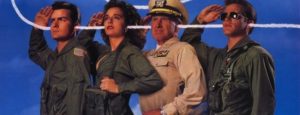
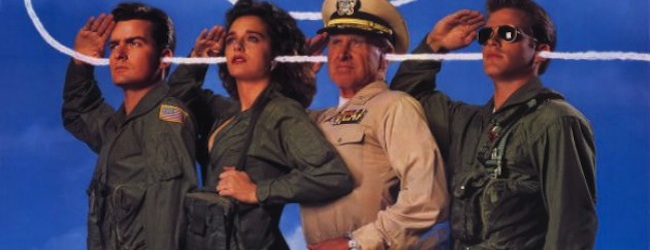
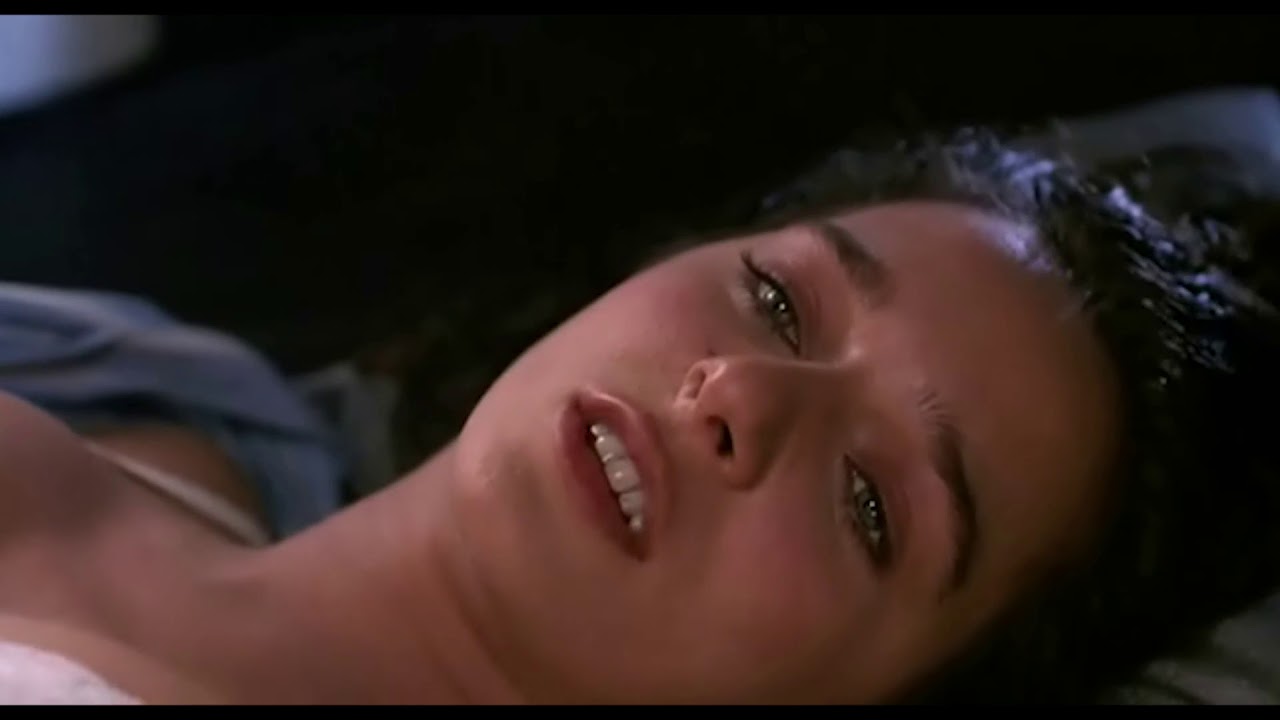
For my money, this is funnier than both Naked Guns combined, even down to the final joke-strewn credits. Putatively a parody of Top Gun, it also includes send-ups of Dances With Wolves, Full Metal Jacket, The Fabulous Baker Boys, Superman, and even Gone With the Wind. Directed and cowritten (with Pat Proft) by Jim Abrahams, one of the three writer-directors who launched Airplane!, this shares more with that 1980 laugh getter than an exclamation point and Lloyd Bridges; there’s also much of the same pleasure in milking cliches and ridiculing poker-faced straight men with their own compliance (Charlie Sheen is every bit as well cast here as Leslie Nielsen is in the Naked Gun movies), and the airborne antics are realized with a lovely sense of craft. With Cary Elwes, a very sexy Valeria Golino, Kevin Dunn, Jon Cryer, William O’Leary, Kristy Swanson, and Efrem Zimbalist Jr. (Webster Place, Ford City, Bricktown Square, Burnham Plaza, Golf Mill, Lincoln Village, Water Tower)
 Read more
According to most of the American mainstream press at the 1999 Cannes film festival, this consciousness-raising transsexual soap opera by aging Spanish enfant terrible Pedro Almodovar should have walked off with all the prizes. I guess it represents a significant advance in his career, giving us a kinder, gentler, more soulful Almodovar who makes a lot more references than usual to other movies: All About Eve and A Streetcar Named Desire especially, but also (in terms of the story’s point of departure) John Cassavetes’s Opening Night. For me it felt like a good many weeks at a politically correct summer camp, though the talented actorsincluding Cecilia Roth, Eloy Azorin, Marisa Paredes, Toni Canto, Antonia San Juan, and Penelope Cruzseem to enjoy the taste of the characters they’re playing. In Spanish with subtitles. R, 101 min. (JR) Read more
Though the writer-director is Neil Jordan, not Anthony Minghella, and the source novel is by Graham Greene, not Michael Ondaatje, the male lead is Ralph Fiennes and this 1999 feature is clearly designed to be another The English Patient. In that endeavor the film succeeds pretty well, but whether it does full justice to Greene is another matter. The book is my favorite of this author’s, and one aspect that the movie captures quite nicely is romantic nostalgia for the London blitz–a curious emotion also evoked by Gravity’s Rainbow, which learned a great deal from Greene. The underrated 1954 movie version of Greene’s novel, which Van Johnson and Deborah Kerr starred in, Edward Dmytryk directed, and Greene gave grudging approval to, had some of the same quality. This new version is a misty, highly emotional Catholic mystery story with dreamy flashbacks and evocative performances by Julianne Moore and Stephen Rea, and if you’re looking to be romantically captivated, this movie just might do the job. Michael Nyman composed the music. 109 min. (JR) Read more
From its opening seconds, this feature from Belgian brothers Jean-Pierre and Luc Dardenne (La promesse), winner of the Palme d’Or at the 1999 Cannes film festival, has to be the most visceral filmgoing experience of the past year, including all of Hollywood’s explosions and special-effects extravaganzas. It concerns the desperate efforts of the 18-year-old title heroine (played by Emilie Dequenne, a remarkable nonprofessional), who lives in a trailer park with her alcoholic mother and suffers from stomach cramps, to find a steady job; she particularly hopes to work at a waffle stand whose current employee has romantic designs on her. This may sound like the grimmest sort of neorealism, but the Dardennes keep the story so ruthlessly unsentimental and physical it would be a disservice to describe it as neo anything. You feel it in your nervous system before you get a chance to reflect on its meaningit’s almost as if the Dardennes were intent on converting an immediate experience of the contemporary world into a breathless theme-park rideand it makes just about every other form of movie realism look like trivial escapism. It’s certainly not devoid of psychological nuance either, and it’s had such an impact in Belgium that a wage law for teenagers, which passed in November 1999, is known as the Rosetta plan. Read more
From the Chicago Reader (January 7, 2000). — J.R.
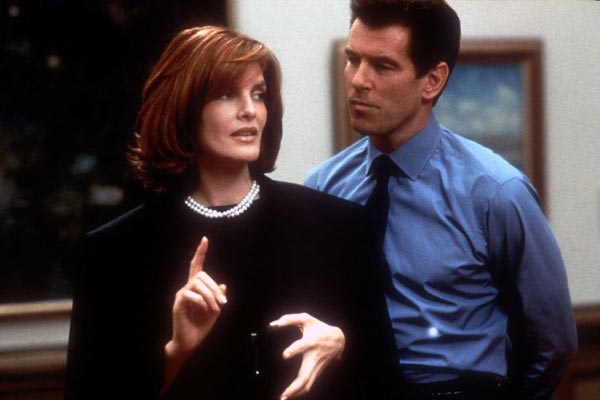
I find critics’ near unanimity about hits and favorites a bit of a bore, even when I agree with some of their choices. Disputes are far more interesting, because they make artistic and political differences clearer and more meaningful. Perhaps because I’m drawn to cinema that can theoretically change the world — and me — I can’t see much purpose in commemorating movies whose prime aim seems to be to make me forget the world outside the theater. The remake of The Thomas Crown Affair and an evening of channel surfing, no matter how enjoyable either might be, are of roughly equal irrelevance.
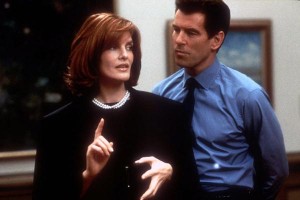
Nineteen ninety-nine was a pivotal year in movies, clarifying where a lot of people stood and who they were. This kind of definition was encouraged by the existential stocktaking that came with the end of the millennium — the compiling of more best-film lists than usual (of the 90s, of the century) and more generalized meditating on the state of the art and the medium. (After finishing my own best-of-the-90s list for the last issue of the year, I discovered that all but one of the movies had an interesting trait in common: they hadn’t been reviewed in the New Yorker. Read more
This dialogue is part of a section called “Two Auteurs: Masumura and Hawks,” included in Movie Mutations: The Changing Face of World Cinephilia (2003), a volume I co-edited with Adrian Martin. It was preceded by my essay, “Discovering Yasuzo Masumura: Reflections on Work in Progress,” and, before the “epilogue,” it was followed by Hasumi’s own essay, “Inversion/ Exchange/Repetition: The Comedy of Howard Hawks”. — J.R.
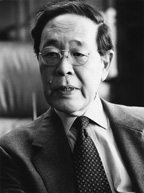
Jonathan Rosenbaum: When did you first write about Howard Hawks?
Shigehiko Hasumi: In 1977, just after he died. At that time, Hawks was so underestimated in Japan that no film magazine wanted an article on him. I published it in a literary magazine.
JR: And is there a particular period in his career that you prefer?

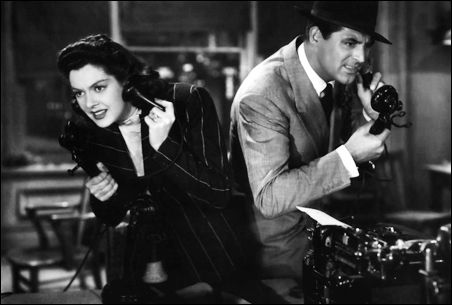
SH: Yes, from Bringing Up Baby (1938) to His Girl Friday (1940). Of course, his two films noirs with Lauren Bacall and Humphrey Bogart, To Have and Have Not (1944) and The Big Sleep (1946), impress me deeply. But the comedies in this period seem to me the highest accomplishment of his mise en scène. For me, Hawks is essentially a filmmaker of comedy. In that sense, I could say also that my preference goes to the period between Twentieth Century (1934) and Monkey Business (1952). Read more
Joseph McBride, a friend, asked me to contribute a list of some sort to The Book of Movie Lists (Chicago: Contemporary Books, 1999), which he put together, and here’s what we came up with. -– J.R.
The 10 Best Jazz Films
by Jonathan Rosenbaum
What follows is a personal list of neither the best films on jazz (e.g., Jazz on A Summer’s Day) nor the best examples of jazz on film (such as the Fats Waller soundies or the 1981 Johnny Griffin at the Village Vanguard), but something more special and rarified: films in which the aesthetics of jazz and the aesthetics of film find some happy and mutually supportive meeting ground.
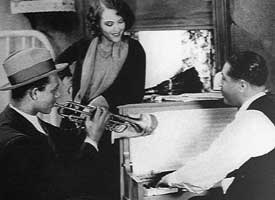
1.Black & Tan (DUDLEY MURPHY, 1929). Remarkable not only as an experimental narrative by the (often uncredited) main author of Ballet mécanique and as a radical political statement about to whom jazz belongs, but also as a ravishing, poetic marriage between the music of Duke Ellington and the poetics of death and orgasm. Only twenty-one minutes long, but the aesthetics of jazz and film start here.
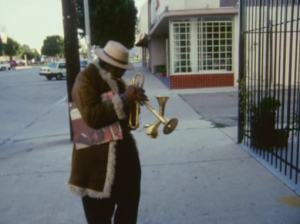
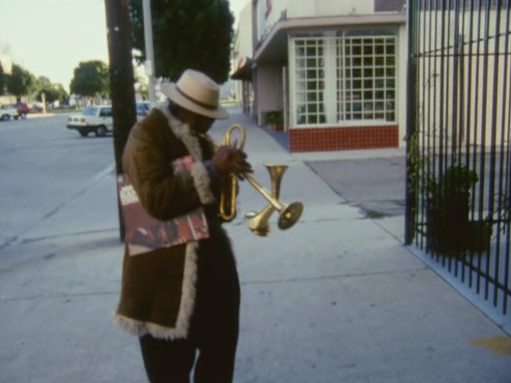
2.When it Rains (CHARLES BURNETT, 1995). A twelve-minute miracle, and, alas, the only film on this list by a black filmmaker, this is a jazz parable about the discovery of common ‘6os roots via a John Handy album in contemporary L.A., Read more
This is third in an ongoing series of five lists of lists. –J.R.
Chicago Reader, 1995:
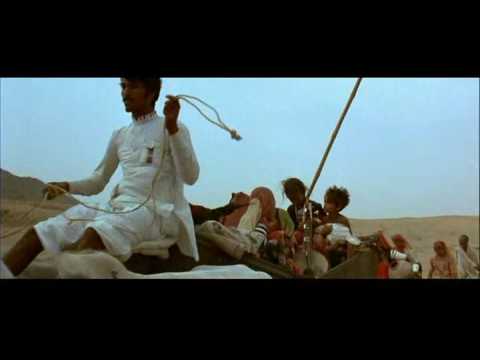
Latcho Drom (Tony Gatlif)
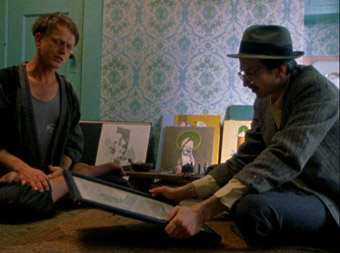
Crumb (Terry Zwigoff)
A Great Day in Harlem (Jean Bach) + When It Rains (Charles Burnett)
Lamerica (Gianni Amelio)
Good Men, Good Women (Hou Hsiao-hsien)
Safe (Todd Haynes)
Germany Year 90 Nine Zero (Jean-Luc Godard)
Exotica (Atom Egoyan)
Hyenas (Djibril Diop Mambety)
Up Down Fragile (Jacques Rivette)

Chicago Reader, 1996:
Dead Man (Jim Jarmusch)
The Asthenic Syndrome (Mira Kuratova)
The Decalogue (Krzysztof Kieslowski)
Nightjohn (Charles Burnett)
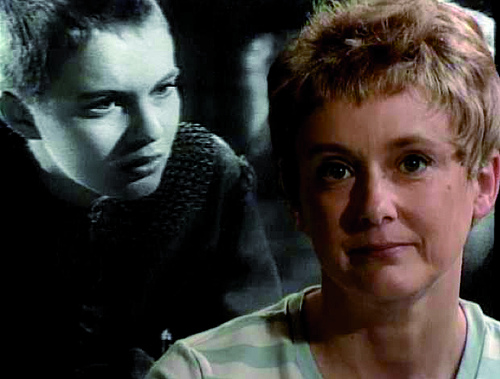
The Neon Bible (Terence Davies)
Regularly or Irregularly (Abbas Kiarostami) + From the Jounals of Jean Seberg (Mark Rappaport)
Thieves (André Téchiné) + My Favorite Season (André Téchiné)
The White Balloon (Jafar Panahi) + Goodbye South, Goodbye (Hou Hsaio-hsien)
Blush (Li Shaohong) + Red Hollywood (Thom Anderson & Noël Burch)
Flirt (Hal Hartley) + Deseret (James Benning)
Sling Blade (Billy Bob Thornton) + Joan the Maid (Jacques Rivette)
Secrets & Lies (Mike Leigh) + Basquiat (Julian Schnabel)
Get on the Bus (Spike Lee) + Chungking Express (Wong Kar-wai)
Mars Attacks! (Tim Burton) + The Cable Guy (Ben Stiller)
When Pigs Fly (Sara Driver) + Desolation Angels (Tim McCann)
Stealing Beauty (Bernardo Bertolucci) + My Life and Times With Antonin Artaud (Gérard Mordillat)
Ectasy (Mariano Barroso) + Vive l’Amour (Tsai Ming-liang)
Cyclo (Tran Anh Hung) + Breaking the Waves (Lars von Trier)
2 X 50 Years of French Cinema (Anne-Marie Mièville & Jean-Luc Godard) + The Crucible (Nicholas Hytner)
A Family Thing (Richard Pearce) + Nelly and Monsieur Arnaud (Claude Sautet)
Yang and Yin: Gender in Chinese Cinema (Stanley Kwan) + Red Lotus Society (Stan Lai)
Foxfire (Annette Haywood-Carter) + Bottle Rocket (Wes Anderson) + Trainspotting (Danny Boyle)

Chicago Reader, 1997:
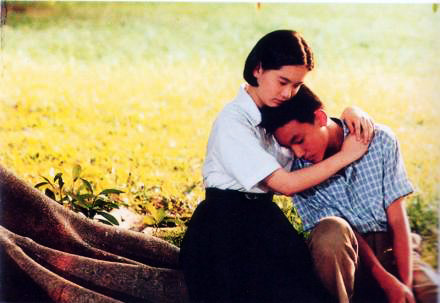
A Brighter Summer Day (Edward Yang)
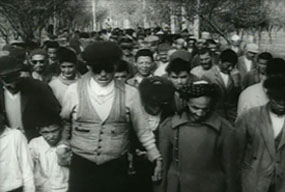
The House Is Black (Forugh Farrokhzad)
Irma Vep (Olivier Assayas)
The Ceremony (Claude Chabrol)
4 Little Girls (Spike Lee) + Fast, Cheap & Out of Control (Errol Morris)
La promesse (Luc and Jean-Pierre Dardenne)
In the Company of Men (Neil LaBute)
The Sweet Hereafter (Atom Egoyan)
As Good As It Gets (James L. Read more
From the Chicago Reader, February 10, 1995. — J.R.
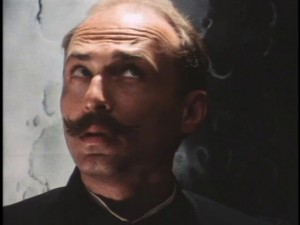
Ron Vawter (1948-1994), who died of AIDS, was one of those rare actors who, like Tilda Swinton in England and the late Delphine Seyrig in France, remained equally active in commercial and experimental productions. He played the psychiatrist in sex, lies, and videotape and appeared in such Hollywood features as The Silence of the Lambs and Philadelphia. But Vawter also played the male lead in Mark Rappaport’s ground-breaking and visually stunning Postcards and in Bruce and Norman Yonemoto’s Made in Hollywood (both from 1990) and appeared with Willem Dafoe and other members of the Wooster Group in Ken Kobland’s elegantly creepy and cadaverous video Flaubert Dreams of Travel but the Illness of His Mother Prevents It (1986), a series of surrealist tableaux presented with diverse sound elements. Remembering Ron includes the Rappaport and Kobland tapes, a ten-minute excerpt from Made in Hollywood (unfortunately too fragmented to give much sense of the whole), and Leslie Thornton’s brand-new The Last Time I Saw Ron. This powerful memoir combines glimpses of Vawter in a Belgian stage production, Philoktetes Variations, with diverse kinds of found and new footage and uncanny sound effects. Read more
The fourth feature (1995) by this country’s most gifted black filmmaker, Charles Burnett (Killer of Sheep), is his first with a directly political edgea heartfelt and persuasive look at the racism and corruption of the Los Angeles police force, based on a true story and calculated to burn its hard lessons straight into your skull. The plot concerns the adjustments made by a sincere black rookie cop (Michael Boatman) who joins an all-white precinct and wants to be accepted by his fellow officers; his only real ally turns out to be the one woman in the precinct (Lori Petty, in a singular performance), a Jew who gets plenty of abuse herself. When a murder case arises involving a black suspect (Ice Cube), the hero’s decision to perjure himself in order to support his white partner opens a Pandora’s box of ironies and ambiguities that the movie squarely faces. The distributor forced him to tone down the anger and despair of his original ending, but this still packs a mighty punch. With Elliott Gould and M. Emmet Walsh. 108 min. (JR) Read more
For many of its historical details, I found this James Ivory-Ruth Prawer Jhabvala account of Thomas Jefferson’s five-year stint as ambassador to France (1784-’89) a lot more absorbing and interesting than their usual brand of Classics Illustratedeven if the Gourmet-style consumerist spreads remain pretty much the same. But by the time they get around to articulating a story, the inhibitions imposed by their good taste begin to seem more like gutlessness, and what initially promises to be an exposure of American liberal doublethink about slavery winds up as a querulous wimp out on a subject that the underrated Mandingo is better equipped to deal with. I don’t feel qualified to comment on the accuracy of this portrait of Jefferson, but Nick Nolte does what he can to suggest unplumbed depths, and the other actorsincluding Greta Scacchi, Gwyneth Paltrow, Thandie Newton, Seth Gilliam, Simon Callow, Nancy Marchand, Charlotte de Turckheim, Jean-Pierre Aumont, Michael Lonsdale, and James Earl Jonesvie with the varied decor in holding one’s respectful attention (1995). (JR) Read more
Clint Eastwood resurrects the star system, the Hollywood love story, and middle-aged romance, but despite all his craft and sincerity, he and screenwriter Richard LaGravenese can’t quite turn Robert James Waller’s cardboard best-seller into flesh and bone. The one big exception is Meryl Streep’s beautiful and fresh performance as an Iowa housewife resigned to a disappointing life. Eastwood plays a National Geographic photographer who happens along while her family is gone, a fantasy figure who seldom adds up to anything more than his sketchy profile. As long as these two are on-screen one can forget the treacle that brought them theretheir first moment of physical contact is exquisite and unforgettableand the film makes a plausible conservative argument for adultery as a preserver of marriage. This self-styled relic (1995) only fitfully transcends the Reader’s Digest aura it seems so eager to honor and justify, but it’s earnest and it has the unfashionable courage to be slow. With Annie Corley, Victor Slezak, Jim Haynie, and a wonderful jazz sound track featuring singer Johnny Hartman. 135 min. (JR) Read more
This 1995 film works so well as storytelling and action adventure that you may want to overlook the dubious if well-intentioned premise: the slaughter of the Burmese populace becomes significant only to the degree that an American tourist (Patricia Arquette), seeking to overcome a tragedy in her own life, becomes personally involved with it. Ace director John Boorman took over this project from other hands, and he shows his customary flair with ‘Scope compositions, gorgeous sunsets, and suspenseful, exotic spectacle. What left me a little uneasy is epitomized by Hans Zimmer’s hack score, which aims at sounding vaguely Southeast Asian (wooden-sounding flutes and the like) rather than specifically Burmese to get us all in the right paternalistic frame of mind. But if you don’t mind such casual insults, you’re likely to be glued to your seat. Alex Lasker and Bill Rubenstein wrote the script; with Frances McDormand, Spalding Gray, and U Aung Ko. 99 min. (JR) Read more
Commissioned and published for the Voyager laserdisc of F for Fake in 1995. My thanks to Marcio Sattin in São Paulo for giving me a printout of this untitled “lost” essay in Spring 2015, which I’ve slightly re-edited.-– J.R.
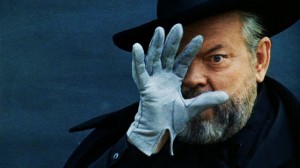
Orson Welles’ two major documentary forays stand roughly at opposite ends of his film career: It’s All True (1942) and F for Fake (1973), and together the two projects’ very titles express a dialectical relationship to the documentary. Both belong to a form of documentary known as the essay film that interested Welles throughout his career. Notwithstanding some Wellesian hyperbole, it seems safe to say that both titles accurately convey the overall essence of their respectiive projects: Most of the never-completed It’s All True, as Welles conceived and shot it, was true; most of F for Fake is fake -– a fake documentary about fakery, with particular attention devoted to art forger Elmyr de Hory, to author Clifford Irving, and to Welles himself. As Welles put it in a 1983 interview, “In F for Fake I said I was a charlatan and didn’t mean it . . . because I didn’t want to sound superior to Elmyr, so I emphasized that I was a magician and called it a charlatan, which isn’t the same thing. Read more
From the Chicago Reader (January 5, 1996). — J.R.
I can’t recall a worse year for Hollywood than 1995. This suggests that either my memory or the studio system is disintegrating. My guess is it’s the latter. I don’t mean to say the business is coming apart; sadly, Hollywood has often found it easy to make money with junk, especially if the public is willing — as it still apparently is — to go along with the film industry’s manipulations. (However, given the scant means available to most people to make themselves heard on such matters in this “free” society, I don’t want to jump to too many conclusions about this.) Rather I believe that what’s coming apart is the social contract between the industry and filmgoers, which allows some form of customer satisfaction that isn’t predicated on deception and a fundamental contempt for the audience.
A symptom of the problem could be found in an article by Peter Bart in Variety late last October bemoaning the poor box-office returns for “such pricy projects” as Jade, The Scarlet Letter, Strange Days, and Assassins. “Rubbing salt into the wound,” added Bart, “is a new Yankelovich opinion survey…which indicates that 43 percent of filmgoers interviewed say they would attend more films all year round if a ‘better selection’ of movies were available. Read more