It’s depressing to recall that Karl Hess: Toward Liberty (1979) wound up winning an Oscar, but this was of course on the eve of Ronald Reagan’s first landslide election as Big Daddy/Rich Uncle. This polemic appeared in the October 8, 1980 issue of The Soho News, and might be considered one of the first glimmers of a more extended argument that would eventually yield the book Movie Wars: How Hollywood and the Media Limit What Films We Can See two decades later. I’ve often speculated, incidentally, if my final sentence might have had anything to do with my never having been invited to the Telluride Film Festival — the current codirector of which, Tom Luddy, was working for Coppola at the time. (I can still recall an angry phone call from Tom during this period that insisted I was dead wrong in taking Coppola as part of the problem rather than as part of the solution. Much later, I should add, in 1987, Tom himself produced one of Godard’s most underrated and neglected features, King Lear.) –J.R.
Hollywood or Bust
by Jonathan Rosenbaum
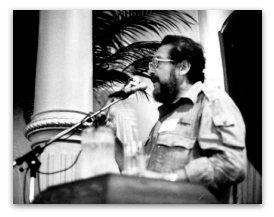
What do you want to know about the Seventh Annual Student Film Awards — presented by the Academy of Motion Picture Arts and Sciences and AT&T — that a critic could possibly tell you? Read more
This is the last in a series of four essays I wrote in 2008 about Fassbinder films for Madman, the Australian DVD label. The others, on The Bitter Tears of Petra von Kant, Ali: Fear Eats the Soul, and Martha, have already been posted on this site. — J.R.
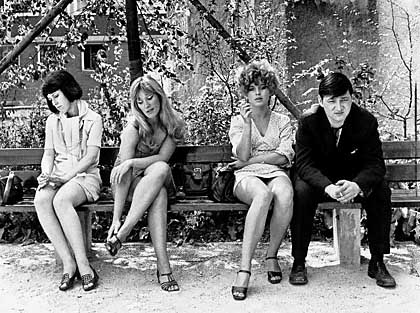
Katzelmacher is only the second feature of Rainer Werner Fassbinder, yet the gulf that separates it from its predecessor, Love is Colder Than Death, is enormous. His first feature, shot over 24 days in April 1969, was later described by its writer-director as the first of his “cinema” films, apparently because its minimal story about petty gangsters seems conceived in relation to genre films. It premiered at the Berlin Film Festival in June, where it was roundly booed and received mixed reviews; it seems fairly safe to conclude that if Fassbinder had made nothing else, most of us would never have heard of him.
This is no doubt why Fassbinder’s somewhat mysterious epigraph for Katzelmacher, credited to his friend and collaborator Yaak Karsunke, reads like a directive to himself: ”It’s better to make new mistakes than to perpetuate the old ones to the point of unconsciousness.” Another directive, more ironic, crops up in one of the film’s final lines of dialogue — “We need a bit of order here” —- which has formal as well as political implications. Read more
This appeared in the November 1974 issue of Monthly Film Bulletin. The ironic aftermath of the final sentence in my review is that another five years would pass before the release of Malick’s second feature, and then 20 more before the release of his third. — J.R.
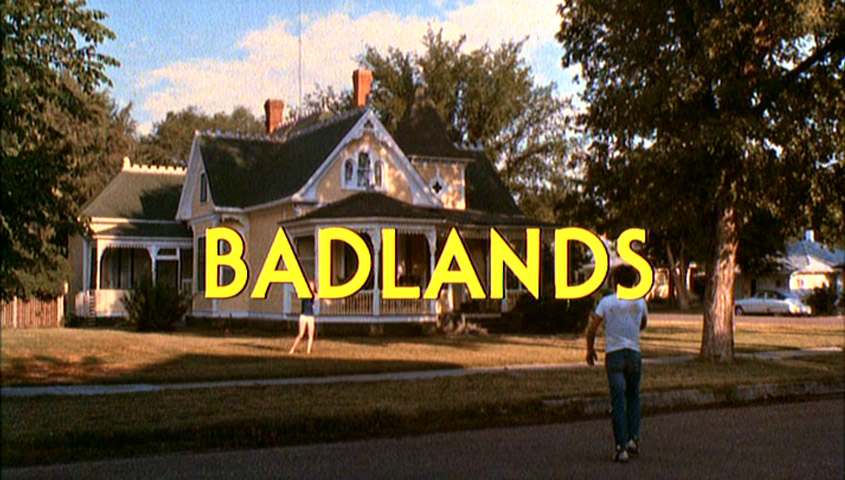
Badlands
U.S.A., 1973 Director: Terrence Malick
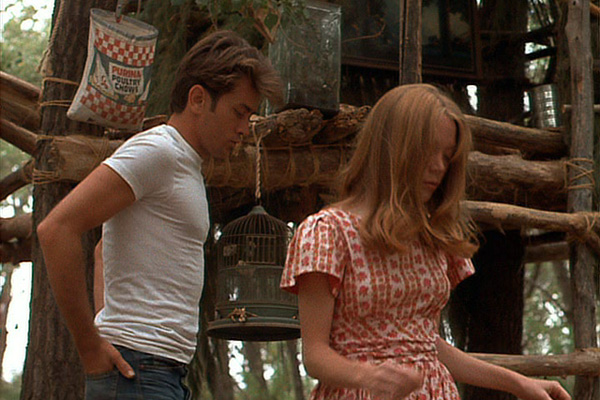
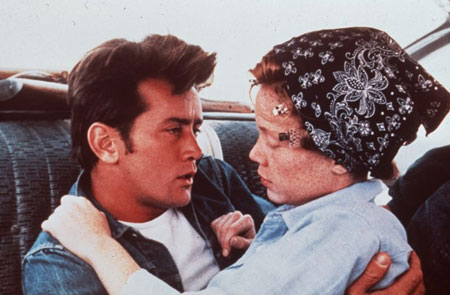
It would hardly be an exaggeration to call the first half of Badlands a revelation -– one of the best literate examples of narrated American cinema since the early days of Welles and Polonsky. Compositions, actors, and lines interlock and click into place with irreducible economy and unerring precision, carrying us along before we have time to catch our breaths. It is probably not accidental than an early camera set-up of Kit on his garbage route recalls the framing of a neighborhood street that introduced us to the social world of Rebel Without a Cause: the doomed romanticism courted by Kit and dispassionately recounted by Holly immediately evokes the Fifties world of Nicholas Ray -– and more particularly, certain Ray-influenced (and narrated) works of Godard, like Pierrot le fou and Bande à part. Terrence Malick’s eye, narrative sense, and handling of affectless violence are all recognizably Godardian, but they flourish in a context more easily identified with Ray. Read more

I had a very pleasant time this past weekend in Little Rock attending the Arkansas Literary Festival and promoting my collection Essential Cinema there, at a very well-attended session hosted by the editor-in-chief of the Oxford American, Marc Smirnoff. I also enjoyed gobbling a good many hush puppies at Flying Fish, a hangout not far from my hotel on the river front. There was even an hour or two on Sunday, after the rain slackened, when I could take an old-fashioned streetcar ride across the Arkansas River to North Little Rock and back. This is where my grandfather, Louis Rosenbaum, once operated a movie theater called the Princess, roughly between 1916 and 1918, before he moved with his wife and son to Florence, Alabama and continued his career in movie exhibition there for another four decades. (My father had a dim memory of taking a streetcar from North Little Rock to Little Rock to see Intolerance when he was in the first grade.)
The only sour note I can recall during the weekend was making the mistake of opening a local newspaper while having breakfast Saturday morning and reading the lead letter to the editor, opposite the editorial page. This letter maintained that (1) hallucinogenic drugs were and should be illegal and (2) the worst of these drugs was socialized medicine, which, in spite of the wistfully misplaced idealism and delusions of people who believed in it, never worked and couldn’t work. Read more

I’m really tired of hearing from American reviewers that Kathryn Bigelow’s The Hurt Locker “isn’t political”. This specious and even insulting claim is clearly part of their effort to convince people to see the movie, and I’m at least sympathetic to that part, since the film is far and away the best new American commercial feature I’ve seen in months — the best constructed and the most thoughtful and entertaining. It’s also the best commercial American film about the so-called “war in” (I prefer “occupation of”) Iraq, at least since In the Valley of Elah, on which writer Mark Boal also furnished much of the material.
First of all, the notion that any American film made today with an Iraqi setting could possibly be apolitical in any shape or form strikes me as being extremely naïve and myopic. Secondly, I can’t imagine what could make the notion of an apolitical film on this subject sound even remotely attractive. Are we really that helpless and hopeless? And are we so blinkered in our perceptions of what politics consists of that we think it’s limited to how we vote in elections? (Spoiler ahead, so if you haven’t yet seen the film, you might want to stop reading here.) Read more
From the Chicago Reader (January 28, 2005). — J.R.

Notre musique
*** (A must-see)
Directed and written by Jean-Luc Godard
With Sarah Adler, Nade Dieu, Godard, Rony Kramer, Mahmoud Darwich, Jean-Christopher Bouvet, Simon Eine, Juan Goytisolo, Peirre Bergounioux, George Aguilar, Leticia Gutierrez, Jean-Paul Curnier, and Gilles Pequeux.
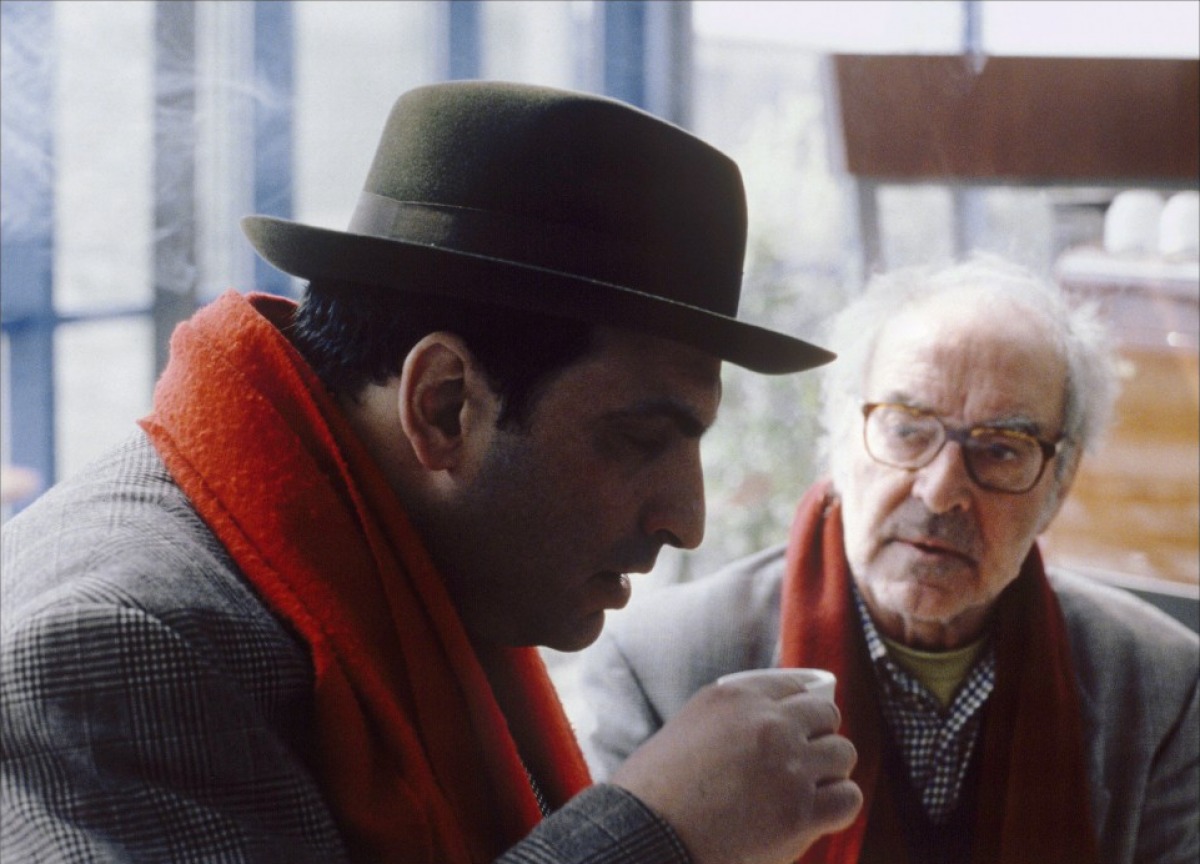
Jean-Luc Godard has had a tendency to be combative and obscure. He’s a lot calmer and steadier in his latest feature, Notre musique, opening this week at the Music Box. He’s also been making an effort to express his intentions clearly and simply in interviews, including those with the mainstream American press. Yet some viewers will probably still feel excluded and puzzled by his methods as a filmmaker and his habits as a thinker, however beautiful and powerful the results.
Even if one can deal with Godard’s compulsive use of metaphor and abstraction and his Eurocentric perspective — all standard in much of his late work — there’s something morose and emotionally remote about this film. Around a sense of futility, a disenchantment with the world, he builds a kind of poetics that’s akin to some of the excesses associated with German romanticism. The issue isn’t whether such despair is warranted, but what one does with it. Read more
From Monthly Film Bulletin, May 1975 (Vol. 42, No. 496). Blythe Danner was a classmate of mine at Bard College, where I had the privilege of seeing what a gifted actress she already was (I remember especially her performance of one of the lead roles in Jean Genet’s The Maids) and the pleasure of accompanying her once or twice on the piano when she performed as a jazz singer (in particular, on “‘Round Midnight”). — J.R.

Lovin’ Molly
U.SA., 1973Director: Sidney Lumet
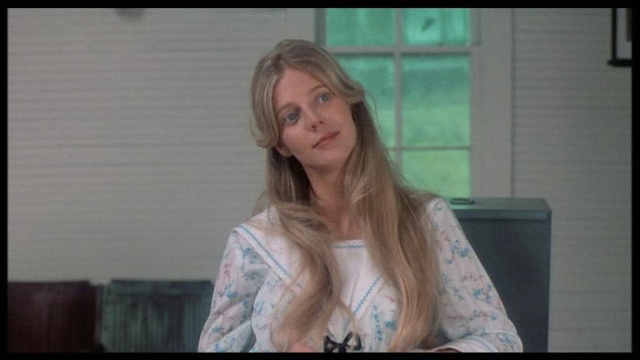

Bastrop, Texas. The lives of three characters, narrated by each in
turn. 1925, Gid (Anthony Perkins): Gid and Johnny (Beau Bridges)
are friends whocompete for the favors of Molly (Blythe Danner),
who likes themboth. When Gidproposes to Molly, she replies
that she’d rather have sex with him for its own sake, not as part
of a marriage contract, and invites himto join her in a nude swim,
but he refuses. She goes to a dance with Eddie (Conrad Fowkes),
another local boy, and Johnny picks a fight with him. Gid sleeps
with her for the first time, and is shocked to discover she isn’t a
virgin. On a train to the Panhandle to sell his father’s cattle, Gid
attacks Johnny for sleeping with Molly and not proposing to her, but
then discovers that Eddie slept with her first. Read more
I’m still a long way from seeing all the features to date of the prolific and often brilliant Romanian filmmaker Radu Jude, but what’s really exceptional about this one is it’s the very first I don’t much care for. At 170 minutes, it seems a good hour longer than it needs to be. Not so much an adaptation of the Bram Stoker novel or a commentary on its diverse movie versions (though it intermittently fluctuates between both and various self-referential conceits), it’s also a compendium of crude and adolescent sexual gags and diverse swipes at capitalism, but even a few striking visual effects and moments of more cultivated wit can’t compensate for all the dross and hammy overstatements. Jude’s Kontinental 25, playing at the same Chicago festival, is every bit as repetitious but much more substantial and interesting. (Jonathan Rosenbaum)
Read more
From the Chicago Reader (November 25, 2005). — J.R.
Jean Renoir, The Boss: The Direction of Actors
**** (Masterpiece)
Directed by Jacques Rivette
With Jean Renoir and Michel Simon

In 1966 Jacques Rivette made a three-part TV documentary titled Jean Renoir, Le patron (Jean Renoir, the Boss), and its 90-minute centerpiece has rarely been seen since. “A Portrait of Michel Simon by Jean Renoir, or A Portrait of Jean Renoir by Michel Simon, or The Direction of Actors: Dialogue,” screening on DVD this week at Alliance Francaise, is a missing link that’s key to understanding Rivette’s work. It’s a raw record of the after-dinner talk between one of the world’s greatest directors and his greatest actor, both in their early 70s, punctuated by clips from the five films they worked on together — Tire-au-Flanc (1928), On Purge Bébé (1931), La Chienne (1931), Boudu Saved From Drowning (1932), and Tosca (1941). It also includes occasional remarks by Rivette, the documentary’s producers (Janine Bazin and Andre S. Labarthe), and the stills photographer (the distinguished Henri Cartier-Bresson). The joy Renoir and Simon clearly share at being reunited is complemented by Rivette’s determination to exclude nothing, so that the “direction of actors” applies to him as much as to his two principals, each of whom can be said to be directing the other. Read more
From the Chicago Reader (April 14, 1995). I’m not sure why, but this is one of the most popular posts on this site. — J.R.
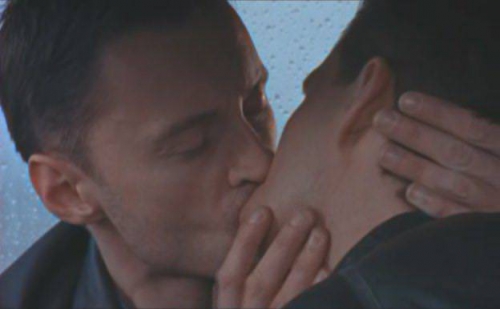
Priest
**
Directed by Antonia Bird
Written by Jimmy McGovern
With Linus Roache, Tom Wilkinson, Cathy Tyson, Robert Carlyle, James Ellis, Lesley Sharp, Robert Pugh, and Christine Tremarco.
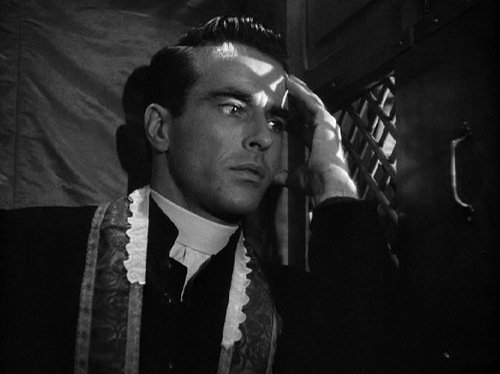
A friend of mine who hasn’t even seen Priest calls it “post-Oprah,” and it’s easy to see what he means — in terms of pacing as well as subject matter. Its first incarnation was as a 200-page script by Jimmy McGovern for a four-part BBC miniseries, but he shaved it to 65 pages when the BBC decided to make it a feature. When it went out to festivals last year (where it won numerous awards), director Antonia Bird’s cut was 109 minutes; since then it’s been trimmed by 8 minutes, apparently to make it eligible for an R rating: its distributor, Miramax, now under the control of the Disney studio, isn’t allowed to release any NC-17 pictures. I haven’t seen the longer version, but it’s likely that these successive abridgments have both produced the taut narrative that’s central to the movie’s powerful impact as entertainment and limited it as art and as a piece of sustained thought. Read more
From Monthly Film Bulletin, September 1976 (Vol. 43, No. 512). — J.R.
Buffalo Bill and the lndians, or
Sitting Bull’s History Lesson
U.S.A., 1976
Director : Robert Altman
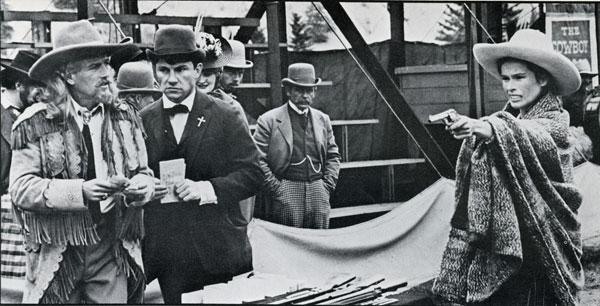
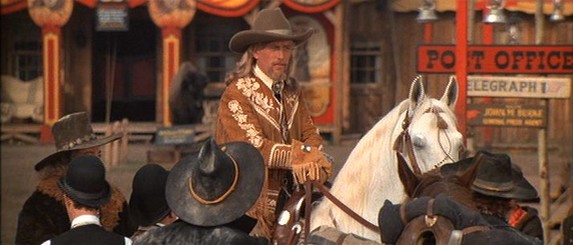
Cert-A. dist-EMI. p.c–Dino De Laurentiis Corporation/Lion’s Gate Films/Talent Associates-Norton Simon. exec..-p-David Susskind. p– Robert Aitman. assoc. p–Robert Eggenweiler, Scott Bushnell, Jac Cashin. p. exec—Tommy Thompson. asst. d–Tommy Thompson,Rob Lockwood. sc–Alan Rudolph, Robert Altman. Suggested by the play Indians by Arthur Kopit. ph–Paul Lohmann. Panavision. col–Deluxe General.ed-Peter Appleton, Dennis Hill. p. designer–Tony Masters. a.d–Jack Maxsted. set dec–Dennis J. Parrish, Graham Sumner. scenic artist–Rusty Cox. sp. effects–Joe Zomar, Logan Frazee, Bill Zomar, Terry Frazee, John Thomas. M–Richard Baskin. cost–Anthony Powell. make-up–Monty Westmore. titles-Dan Perri. sd. ed–William Sawyer,_Richard Oswald. sd. rec–Jim Webb, Chris McLaughlin. sd. re-rec–Richard Portman. research–Maysie Hoy. wrangler–John Scott. l.p–Paul Newman (Buffalo Bill), Joel Grey (Nate Salsbury), Burt Lancaster (Ned Buntline). Kevin McCarthy (Major John Burke), Harvey Keitel (Ed Goodman), Allan Nicholls (Printiss Ingraham), Geraldine Chaplin (Annie Oakley). John Considine (Frank Butler), Robert Doqui (Osborne Dart), Mike Kaplan (Jules Keen), Bert Remsen (Crutch), Bonnie Leaders (Margaret), Noelle Rogers (Lucille Du Charmes), Evelyn Lear (Nina Cavalini), Denver Pyle (McLaughlin),Frank Kaquitts (Sitting Bull), Will Sampson (William Halsey), Ken Krossa (Johnny Baker), Fred N. Larsen (Buck Taylor), Jerri Duce and Joy Duce (Trick Riders), Alex Green and Gary MacKenzie (Mexican Whip and Fast Draw Act), Humphrey Gratz (Old Soldier), Pat McCormick (Grover Cleveland), Shelley Duvall (Frances Folsom). Read more
From the Chicago Reader (January 10, 2003), where it was printed under the title “Against the Tide”. — J.R.

While putting together a collection of my film pieces for an upcoming book I included an appendix listing my 1,000 favorite films and videos made between 1895 and the present — features and shorts, live action and animation, narrative and experimental. The point was to cite not the works I consider the most important historically but the ones that still provide me with the most pleasure and edification.
This took more work than anticipated because I didn’t have a surefire method of recalling all the possible candidates. I worried about the inevitable oversights, including even ones from 2002. I also worried that I’d wind up weighting the list with more old than recent films — a fear that proved to be mainly groundless. The year between 1924 and 2002 for which I listed the fewest titles — five — was 1937. Four other years — 1926, 1939, 1942, and 1945 — yielded only six apiece. The peak year was 1955, with 21 titles. Generally speaking, there was a steady rise through the 50s, a decline in the 60s, then a leveling off: 17 items in the teens, 72 in the 20s, 95 in the 30s, 103 in the 40s, 160 in the 50s, 133 in the 60s, 130 in the 70s, 129 in the 80s, and 125 in the 90s. Read more