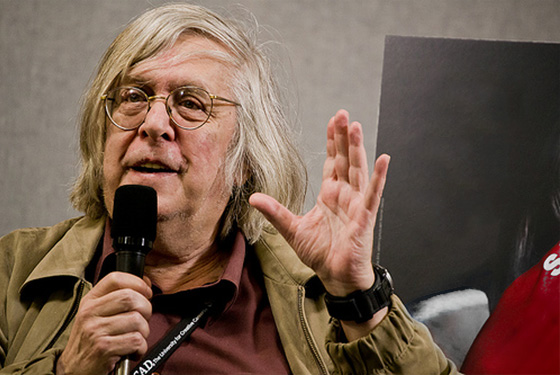
I’m still a long way from seeing all the features to date of the prolific and often brilliant Romanian filmmaker Radu Jude, but what’s really exceptional about this one is it’s the very first I don’t much care for. At 170 minutes, it seems a good hour longer than it needs to be. Not so much an adaptation of the Bram Stoker novel or a commentary on its diverse movie versions (though it intermittently fluctuates between both and various self-referential conceits), it’s also a compendium of crude and adolescent sexual gags and diverse swipes at capitalism, but even a few striking visual effects and moments of more cultivated wit can’t compensate for all the dross and hammy overstatements. Jude’s Kontinental 25, playing at the same Chicago festival, is every bit as repetitious but much more substantial and interesting. (Jonathan Rosenbaum)
Read more
From the Chicago Reader (November 25, 2005). — J.R.
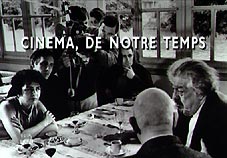
Jean Renoir, The Boss: The Direction of Actors
**** (Masterpiece)
Directed by Jacques Rivette
With Jean Renoir and Michel Simon

In 1966 Jacques Rivette made a three-part TV documentary titled Jean Renoir, Le patron (Jean Renoir, the Boss), and its 90-minute centerpiece has rarely been seen since. “A Portrait of Michel Simon by Jean Renoir, or A Portrait of Jean Renoir by Michel Simon, or The Direction of Actors: Dialogue,” screening on DVD this week at Alliance Francaise, is a missing link that’s key to understanding Rivette’s work. It’s a raw record of the after-dinner talk between one of the world’s greatest directors and his greatest actor, both in their early 70s, punctuated by clips from the five films they worked on together — Tire-au-Flanc (1928), On Purge Bébé (1931), La Chienne (1931), Boudu Saved From Drowning (1932), and Tosca (1941). It also includes occasional remarks by Rivette, the documentary’s producers (Janine Bazin and Andre S. Labarthe), and the stills photographer (the distinguished Henri Cartier-Bresson). The joy Renoir and Simon clearly share at being reunited is complemented by Rivette’s determination to exclude nothing, so that the “direction of actors” applies to him as much as to his two principals, each of whom can be said to be directing the other. Read more