Here is a chronological list of many of the book reviews and longer pieces on literary and related subjects found on this web site, with links added in a few cases; capsule reviews of films are omitted, and this list is otherwise far from complete, especially regarding many more recent posts:
Review of A MOVEABLE FEAST (Bard Observer, September 1964)
Review of THE CRYING OF LOT 49 (Bard Observer, May 1966)
“I Missed It at the Movies: Objections to ‘Raising KANE’” (Film Comment, Spring 1972)
Review of JEAN RENOIR: THE WORLD OF HIS FILMS (Film Comment, January-February 1973)
Review of GRAVITY’S RAINBOW (Village Voice, March 1973)
“Raymond Durgnat” (Film Comment, May-June 1973)
Review of Dwight Macdonald’s DISCRIMINATIONS (Village Voice, Oct. 1974)
Review of Gore Vidal’s MYRON (Village Voice, Nov. 1974)
Review of Noel Burch’s THEORY OF FILM PRACTICE (Sight and Sound, Winter 1974/75)
On Jean Renoir [book review] (Film Comment, May-June 1976)
“Film Writing Degree Zero: The Marketplace and the University” (Sight and Sound, Autumn 1977)
Review of Noel Burch’s TO THE DISTANT OBSERVER (American Film, July-August 1979)
Review of Graham Greene’s DR. Read more
This book review appeared in the August 27, 1980 issue of The Soho News.
I was moved to repost this review some time ago by the generous recent reference to it made by Sam Jordison in the Guardian. –– J.R.
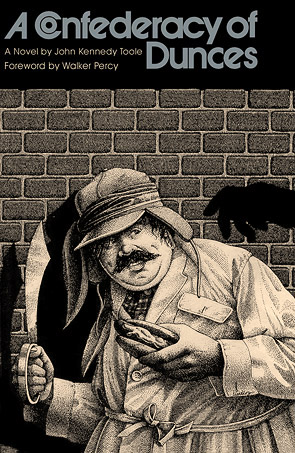
A Confederacy of Dunces
By John Kennedy Toole
Foreword by Walker Percy
Louisiana State University Press, $12.95
Is it by mere chance, or through some form of subtly earned tragic irony, that this brilliantly funny, reactionary novel is being published during a reactionary period, apparently about a decade and a half after it was written? God knows what it might have been like to read this in the mid-’60s. I suspect it would have been less warmly received — one reason, perhaps, why it wasn’t published way back then.
What I mean by Reactionary Humor is the boring literary schemes of Tom Sawyer, not the expedient escape tactics of Huck Finn. Broadly speaking, it’s what we learn to expect from the perennial antics of Blondie and Dagwood, Amos and Andy, Franny and Zooey, Laurel and Hardy (and Marie and Bruce, in Wallace Shawn’s recent play), not to mention W.C. Fields, Rainer Werner Fassbinder, Archie Bunker, and Woody Allen. Read more
These are the original letters published in French translation in Trafic no. 24, Winter 1997 and subsequently published in English in a 2003 book edited by Adrian Martin and myself, Movie Mutations: The Changing Face of World Cinephilia (London: British Film Institute). These letters have by now also appeared in Croatian, Dutch, Farsi, French, German, and Spanish. — J.R.
From Jonathan Rosenbaum (Chicago):
7 April, 1997
Dear Adrian,
Almost a year has passed since I wrote in Trafic* about “the taste of a particular generation of cinephiles — an international and mainly unconscious cabal (or, more precisely, confluence) of critics, teachers, and programmers, all of whom were born around 1960, have a particular passion for research (bibliographic as well as cinematic), and (here is what may be most distinctive about them) a fascination with the physicality of actors tied to a special interest in the films of John Cassavetes and Philippe Garrel (as well as Jacques Rivette and Maurice Pialat).” I named four members of this generation — Nicole Brenez (France), Alexander Horwath (Austria), Kent Jones (U.S.), and you (Australia). Each of you, I should add, I met independently of the other three, originally through correspondence (apart from Kent), although Kent and Alex already knew each other. Read more
Commissioned by Found Footage for its 4th issue (February 2018). — J.R.
We’re living through a confusing transitional period whose transitions are chiefly matters of financial speculation lying beyond our control. Theorizing our helpless condition — which often means attempting to rationalize it, or to adapt to it by other means — we’re obliged to use an out-of-date language. This antiquated language needs to be upgraded with a new vocabulary if we want to make useful sense of what’s happening — something that we haven’t yet figured out how to do. Just as “politically correct” language can sometimes be described as the language of defeat – struggling to make an adequate representation of a reality over which one has lost control – theoretical cinema suggests at times a farewell gesture towards a medium that has fled.
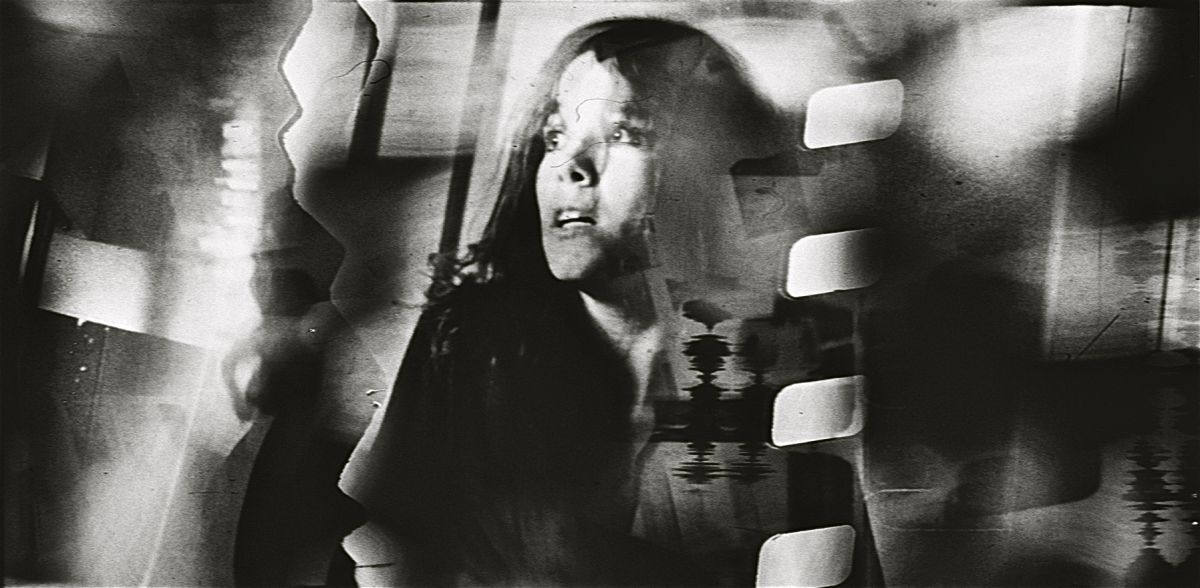
The fumblings to be found below are an attempt to clarify not so much five experimental films in 35-millimeter and CinemaScope by Peter Tscherkassky — L’Arrivée (1997-1999, 2:09 min.), Outer Space (1999, 9:58 min.), Get Ready (1999, 1:06 min.), Dream Work (2001,11 min.), and Instructions for a Light and Sound Machine (2005, 17 min.), all of which I find powerful, provocative, haunting, and ultimately confounding — as the confusing language used to describe them. Read more
From Film Comment (March-April 2012). — J.R.

Ever since Gilbert Adair died three weeks short of his 67th birthday, in London, I’ve been rereading him compulsively. And I’ve had a lot to choose from — not only many online articles (including pieces written for this magazine and for Sight & Sound), but all but one of the 18 books listed on the flyleaf of his nineteenth and last, And Then There Was No One: The Last of Evadne Mount (Faber and Faber, 2009) — the final volume in his inspired trilogy of Agatha Christie pastiches, which somehow manage to combine his taste for pop entertainment with his more avant-garde impulses, to riotous effect. Even though I eventually lost touch with Gilbert as a friend — whom I’d met in the early 1970s as a fellow habitué of the Paris Cinémathèque, and who years later was kind enough to broker my friendship with Raúl Ruiz (with whom he worked on several projects, including three that were filmed, and who tragically and prematurely died just a few months earlier) — I remained a steadfast fan who collected all his books.
For Film Comment, Gilbert made his first appearance in an interview with Jacques Rivette, conducted jointly with myself and Lauren Sedofsky for the September-October 1974 issue, available online at http://www.jonathanrosenbaum.net/1974/09/phantom-interviewers-over-rivette-with-gilbert-adair-and-lauren-sedofsky/ Read more
IL CINEMA RITROVATO
DVD AWARDS 2011
VIII edition
Jurors: Lorenzo Codelli, Alexander Horwath, Mark McElhatten, Paolo Mereghetti, Jonathan Rosenbaum, Peter Von Bagh.
BEST DVD 2010 / 2011
Segundo de Chomón 1903-1912 (Filmoteca de Catalunya [ICIC]/Cameo Media s.l.) EL Cine de La Fantasia. A production by Cameo and Filmoteca Catalunya.
The first edition of a long awaited series devoted to the great Spanish master of magic films, hand coloring and technical special effects. Offering 114 minutes of 31 astonishing titles, complete with a 111-page tri-lingual book containing an informative essay by Jean M. Minguet and credits on each film and the 12 different archives that provided restored prints. (http://www.cameo.es/portal/tabid__13173/consulta__De%20Chomon/default.aspx)
BEST SPECIAL FEATURES (BONUS)

The Night of the Hunter (Criterion: www.criterion.com)
For the invaluable and detailed film record of Charles Laughton directing his only feature, drawing from the more than eight hours of outtakes discovered by Bob Gitt and including fascinating rehearsals in which Laughton acts out some of the roles himself.
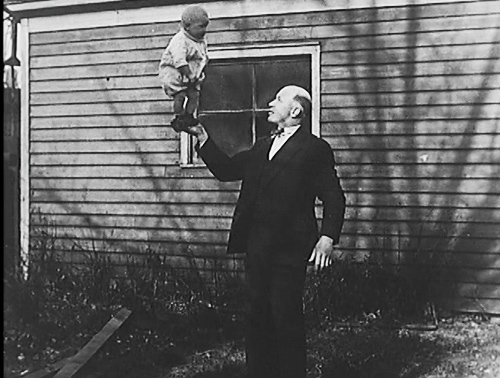
MOST ORIGINAL CONTRIBUTION TO FILM HISTORY
Orphans 7 – A Film Symposium (New York University’s Orphan Film Symposium, www.orphanfilmsymposium.blogspot.com)
For bringing to the attention of DVD watchers a rich and fascinating area of film history: so-called “ephemeral” films, including amateur films, activist filmmaking, industrial films, etc., Read more
From the Summer 2004 issue of Cineaste. — J.R.
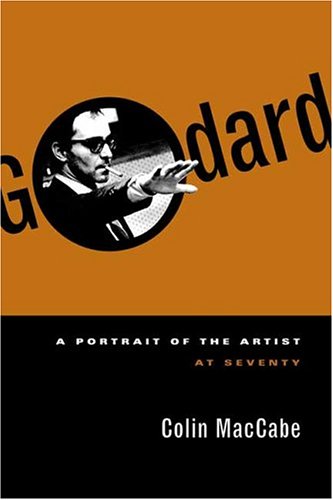
Godard: A Portrait of the Artist at Seventy
by Colin MacCabe. Filmography and picture research by Sally Shafto. New York, NY: Farrar, Straus and Giroux, 2003. 432 pp, illus. Hardcover: $25.00.
This isn’t an authorized biography of Jean-Luc Godard. But it appears to have qualified briefly as a book that might have become one after Colin MacCabe first embarked on it in the mid-Eighties. “Two years later,” he reports in his Preface, “he” — meaning Godard — “asked me how the work was progressing and this encouraged me to bury my own doubts and to prepare a very detailed treatment. By the early nineties, however, it was clear that Godard no longer had any faith in the project.”
MacCabe says nothing to explain this change of heart and loss of faith. A look, however, at one version of his detailed treatment — “Jean-Luc Godard: A Life in Seven Episodes (to Date),” published in Raymond Bellour’s 1992 Museum of Modern Art collection Jean-Luc Godard Son + Image, 1974-1991 — provides a plausible reason, especially if one zeroes in on the following passage in the second episode: “The South American journey came to an end [in Rio] when Godard’s father once again refused to support his son any longer. Read more
Written for a collection edited by Adam Cook, Making the Case: Contemporary Genre Cinema, whose publisher belatedly changed his mind about publishing. This is the article’s first appearance, although it’s also reprinted in my latest book, Cinematic Encounters 2: Portraits and Polemics. — J. R.
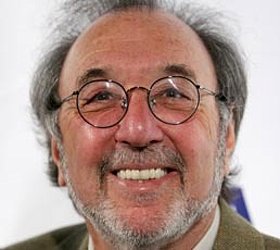
Out of his half-dozen comedy features to date as producer-writer-director — Terms of Endearment (1983), Broadcast News (1987), I’ll Do Anything (1994), As Good as It Gets (1997), Spanglish (2004), and How Do You Know (2010) — James L. Brooks has had three big commercial successes (the first two and the fourth) and three absolute flops (the third, fifth, and sixth). And because all six of these movies are concerned equally with personal failure and personal success, functionality (emotional and professional) as well as dysfunctionality (emotional and professional), it somehow seems fitting that each one has represented a highly ambitious as well as a highly risky undertaking.
The above paragraph has the disadvantage of making Brooks seem so unexceptional as a commercial filmmaker that one might wonder, on the basis of this description, whether he’s worth examining at all. Some might also question whether all six of his movies qualify as comedies, despite Brooks’ own insistence that they do. Read more
A recent essay. — J.R.

Reflections on Kiarostami’s Two-Way Mirrors
Mehrnaz Saeed-Vafa
“The power of cinema is to create believable illusions.” Abbas Kiarostami
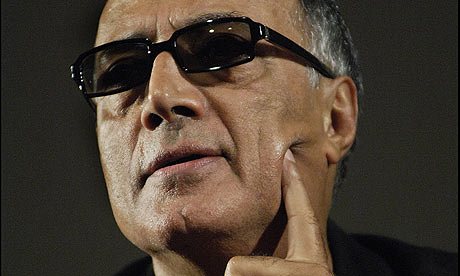
As I begin to write about Abbas Kiarostami’s cinema, my profound sadness about his loss emerges again. The vivid memories of several meetings and conversations with him in different countries (Iran, Europe, Canada, and the US) and at different times and on various occasions in the last four decades are now mixed with images from his films. How ironic that his death happened so abruptly, like the many unexpected and unresolved open-endings of his films.

The filmmaker I was fortunate to know was a graceful, thoughtful dignified man, observant and playful with a great sense of humor. Despite his fame, he was very humble. He was very supportive of other filmmakers, new directors, and especially his students in many of his workshops around the world.
I remember meeting him for the first time in Tehran after the screening of his second feature, The Report (Gozaresh, 1977). The dark bleak film had very little resemblance to its warm friendly-looking approachable serene director who always wore a sweet smile when greeting people.
During the year 1980 I’d run into him from time to time whenever I went to Kanun (The Institute for Intellectual Development of Children and Young Adults) to resolve the production issue of my unfinished film, The Transfigured Night. Read more
Originally posted on June 13, 2016. — J.R.
It’s embarrassing for me to confess that I let over six weeks pass from the time that Oda Kaori sent me an email from Osaka with a link to her 68-minute film Aragane until I finally found time to watch it — during a day of rest in Lisbon, in between professional engagements. This has been an exceptionally busy spring for me in terms of writing, travel, and other commitments, but I suspect that another reason why it’s taken me so long was the fearful prospect of watching a documentary of that length about work in a coal mine in Sarajevo. I don’t know why this prospect discouraged me so much, but the fault is mine.
Kaori was one of the original dozen or so students to enroll in Béla Tarr’s Film.Factory when it started three years ago, whom I met during my first of my four two-week sessions there; she was also one of the students most affected by the films of Peter Thompson, whose email I quoted from in my article about Film.Factory, and whom I once lent a DVD of Maya Deren’s films at her request. I believe that Aragane was her thesis film; she has shown it at a few Japanese venues, including the Yamagata film festival, and she is hoping to find a distributor for it. Read more
From New York Newsday (Sunday, August 28, 1991). -– J.R.
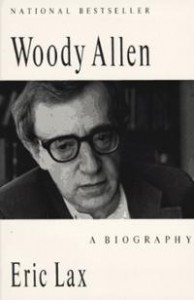
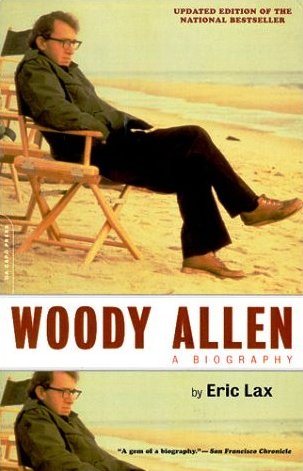
WOODY ALLEN: A Biography, by Eric Lax. Knopf, 384 pp., $24.
BY JONATHAN ROSENBAUM
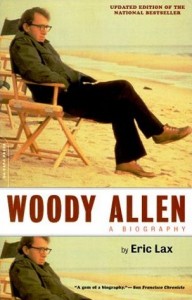
How does one write the biography of an untouchable? Without touching him –- or at least by handling him with kid gloves. When it comes to dealing with America’s favorite comic spokesman for the urban middle class, Eric Lax does a fair job of plotting out both the apprenticeship and the career moves of Woody AIlen as he gradually worked his way up from gag writer to stand-up comedian to increasingly ambitious filmmaker (from “Bananas” to”Hannah and Her Sisters” to “Another Woman”), with various side trips –- as jazz clarinetist, playwright and literary humorist — along the way. But when it comes to separating the Woody persona from the actual person, or the mystique from the life, Lax’s agenda goes soft. Devoted fans may discover a few unmined nuggets here, but for skeptics like myself the experience is as unreflective as any of Allen’s movies.
 After an introduction that briefly chronicles Allen’s tortured
23-hour trip to the Soviet Union in 1988, Lax begins with the
birth of Allan Stewart Konigsberg in 1935 and the creation of
his familiar stage name 16 years later. Read more
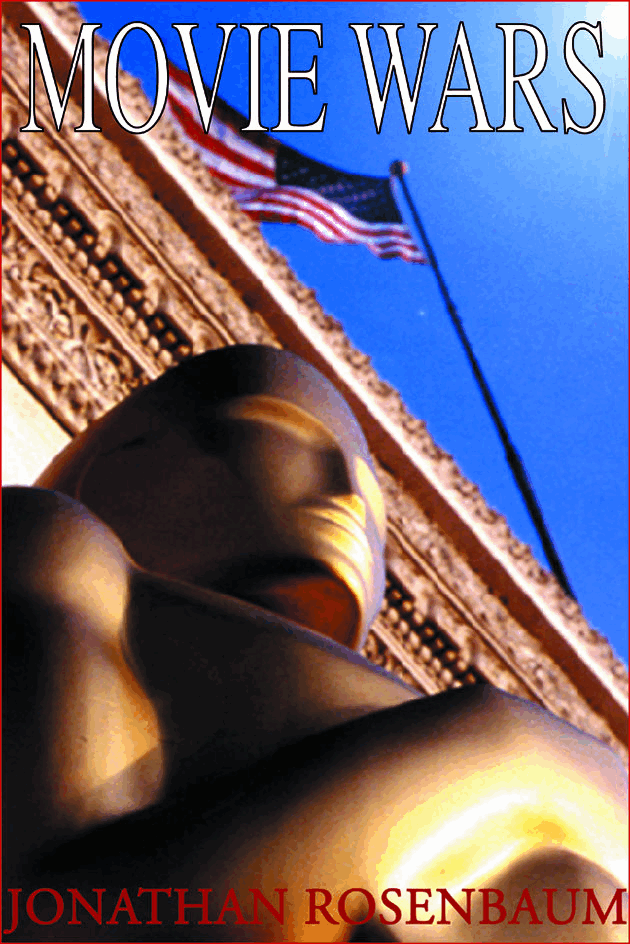
The second part (roughly the second half) of Chapter One of my most popular book, Movie Wars: How Hollywood and the Media Limit What Films We Can See (2000); for the first half, go here. The illustration below is from the now out-of -print English edition. — J.R.
Is the Cinema Really Dead?
Susan Sontag’s essay “A Century of Cinema” — a generational lament whose validity for me both rests on and is partially thrown into doubt by its generational stance — has by now appeared in many languages around the world as well as in many different English-language publications, including the The New York Times Magazine (February 25, 1996), the “movie issue” of Parnassus: Poetry in Review (volume 22, nos. 1 & 2, 1997), The Guardian, and at least two book-length collections of essays. I’ve noted many interesting variations in this piece as it’s appeared in various settings, and assume that some of these represent subsequent revisions or afterthoughts on Sontag’s part. But the most striking differences appear between the first version published in America — in The New York Times Magazine, with the strikingly different title “The Decay of Cinema” — and all the others, and I assume that these, including the title, stem from editorial interventions, or at the very least collaborations between Sontag and her editor or editors at the Times. Read more
The first part (roughly the first half) of Chapter One of my most popular book, Movie Wars: How Hollywood and the Media Limit What Films We Can See (2000). The second half will be posted tomorrow; the illustration below is from the now out-of-print English edition. — J.R.
Is the Cinema Really Dead?
[The] early nineties have not been as encouraging as the early seventies.. . . It is not as easy now to believe in the medium’s vitality or its readiness for great challenges. So many of the noble figures of film history aredead now, and who can be confident that they are being replaced? . . . .The author sees fewer films now. He would as soon go for a walk, look at paintings, or take in a ball game. [1994]
It has become harder, this past year, to go back in the dark with hope or purpose. The place where “magic” is supposed to occur has seemed a lifeless pit of torn velour, garish anonymity, and floors sticky from spilled sodas. Forlornness hangs in the air like damp; things are so desolate, you could set today’s version of Waiting for Godot in the stale, archaic sadness of a movie theater. Read more
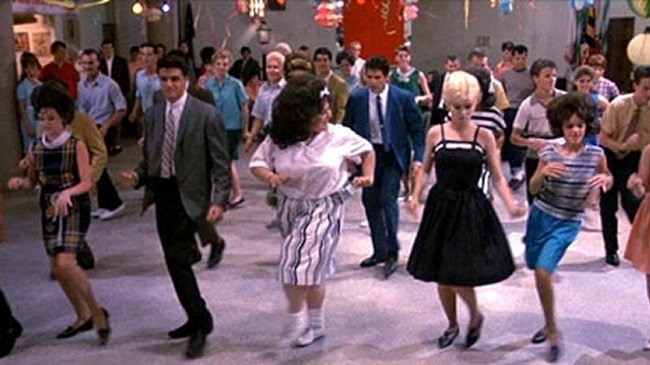
This is a review of the John Waters original (1988) — not the Adam Shankman remake (2007) derived from the Broadway musical, which I haven’t seen. Thanks to the seeming omnipresence of the latter, I originally found it very difficult to find any stills from the former on the Internet. My review appeared in the March 4, 1988 issue of the Chicago Reader. Today I persist in thinking that America would be a better place if John Waters were hosting The Tonight Show. — J.R.
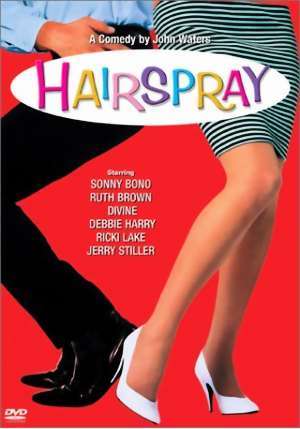
HAIRSPRAY
*** (A must-see)
Directed and written by John Waters
With Ricki Lake, Divine, Leslie Ann Powers, Colleen Fitzpatrick, Ruth Brown, Sonny Bono, Debbie Harry, and Shawn Thompson.
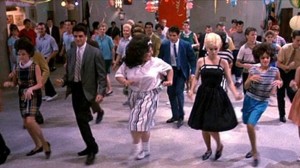
As John Waters is the first to point out, Hairspray is “a satire of the two most dreaded film genres today — the ‘teen flick’ and the ‘message movie.'” But one of the nicest things about this exhilarating, good-natured pop comedy is that it actually is both a teen flick and a message movie. Satirical or not, it redeems as well as revitalizes both genres while celebrating their excesses.
This downscale, urban Dirty Dancing is a cunning crossover maneuver that opens as many doors to the mainstream audience as Waters can reach for, urging black and white, fat and skinny, blue collar and white collar, and generations some 25 years apart to join in the festive euphoria. Read more
One of my “En movimiento”columns for Cahiers du Cinéma España, written specifically for their special Godard issue (December 2010). — J.R.
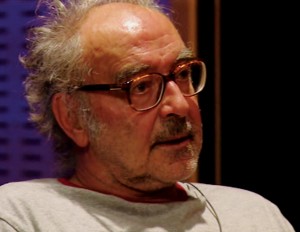

Writing recently here about the largely negative American reception of Film Socialisme at Cannes, I noted — in response to the implications of such critics as Todd McCarthy and Roger Ebert that the film’s difficulties could somehow be attributed to flaws in Godard’s character — that I was “impressed not only by the film’s singular, daring, and often beautiful employments of sound and image, but also by its tenderness towards virtually all the contemporary characters and figures in the film (including the animals) — a virtue I don’t find at all present in For Ever Mozart.”
One could, in fact, go through many portions of Godard’s filmography and cite works that are humanist (such as Bande à part, Masculin-Féminin, and France/tour/detour/deux enfants) and those that are relatively nonhumanist (such as Weekend, Vladimir et Rosa, and Passion). Even though one could argue that Godard’s self-imposed social isolation since his departure from Paris has had harmful effects on his art, it is too simplistic to assume that he’s always or invariably the simple grouch that many journalists have claimed him to be. Read more