From the Chicago Reader (December 1, 1992).
Al Pacino’s winning entry in the disability Oscar sweepstakes, with plenty of reminders of Dead Poets Society to take up the slack once it runs out of ways of emulating Rain Man. Among the able hands in this scurrilous, overlong enterprise are screenwriter Bo Goldman, producer-director Martin Brest, and costar Chris O’Donnell; the plot, a very loose Americanized remake of a 1975 Dino Risi comedy, transpires over a Thanksgiving weekend, when a scholarship student (O’Donnell) at an expensive New England prep school, wrestling with an anguished crise de conscience (he’s being pressured to inform on classmates), is hired to take care of a blind retired lieutenant colonel (Pacino), who drags him along to Manhattan on a wild, expensive weekend. An irascible bully who proves to have a heart of gold, Pacino’s character seems manufactured by a computer programmed with box-office grosses, and it’s disheartening to find a movie that professes to take a stand on behalf of personal integrity ripping off Chaplin’s theme song from City Lights without credit to generate some of its pathos. Given the talent on board, there’s an undeniable flair and effectiveness in certain scenes (such as Pacino dancing the tango with a stranger in a posh restaurant), but the meretricious calculation finally sticks in one’s throat. Read more
From the Chicago Reader (August 25, 1995). — J.R.
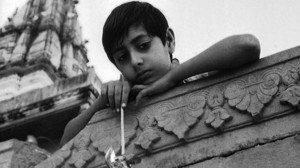
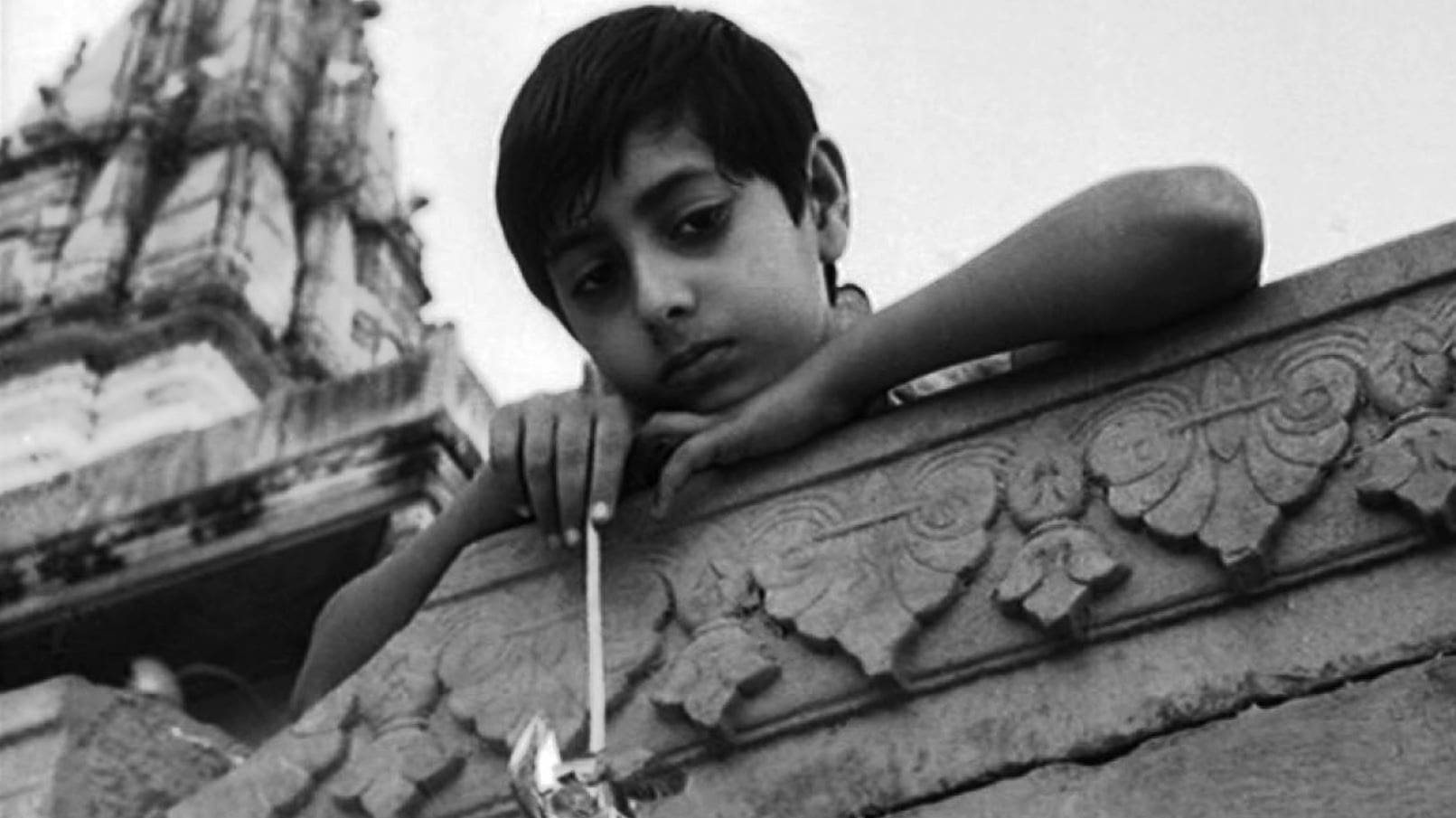
The second installment of Satyajit Ray’s great Apu trilogy, fully comprehensible on its own terms, suffers at times from its episodically constructed plot, which follows Apu from the age of ten in the holy city of Banaras (in 1920) to his early adulthood in Calcutta. It also bears the traces of technical problems, which led to a virtually one-to-one shooting ratio for many scenes. But this also happens to be my own favorite film in the trilogy, as well as the reported favorite of Ray’s fellow Bengali directors Ritwik Ghatak and Mrinal Sen. Its treatment of death — specifically the death of Apu’s father toward the beginning of the film and of his mother near the end — is among the most beautiful, mystical, and precise handlings of that subject in all of cinema, worthy of Mizoguchi; in a way the film is little more than a careful contextualizing of these two astonishing sequences. An adaptation of roughly the last fifth of Bibhutibhusan Banerjee’s novel Pather Panchali and the first third of his subsequent novel Aparajita, this benefits as much as the rest of the trilogy from the ravishing “commentary” of Ravi Shankar’s music. Read more
Posted on MUBI Notebook February 25, 2020. — J.R.
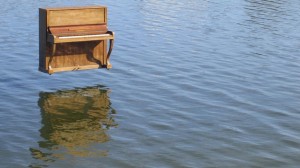
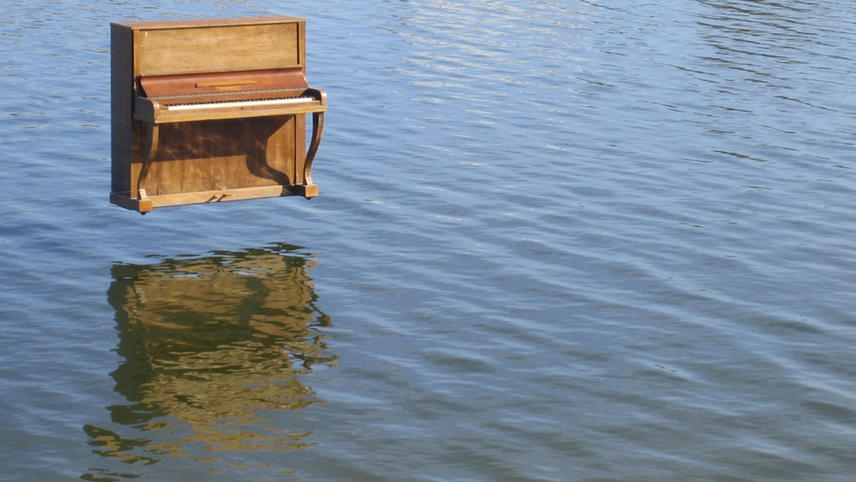
1. Written in 2007 for Sight and Sound’s annual “five best” poll: “The beautiful and exciting fifth feature of Catalan filmmaker Pere Portabella — the onetime coproducer of Viridiana who forged a memorable kind of clandestine experimental cinema under Franco with Vampir Cuadecuc (1970) and Umbracle (1972) — was made in 1989. But thanks to the overall scarcity of his work, I only caught up with it this year, at the first North American Portabella retrospective, held in Chicago in November. His work as a whole has been preoccupied with issues of continuity in almost every sense of that term — historical, political, thematic, narrative, poetic, musical, pictorial, sonic, stylistic, formal. And now that mainstream cinema has replaced Franco as the power to be subverted, continuities of narrative and those between sound and image are the principal orthodoxies to be played with.“
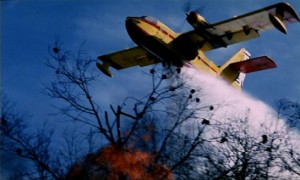
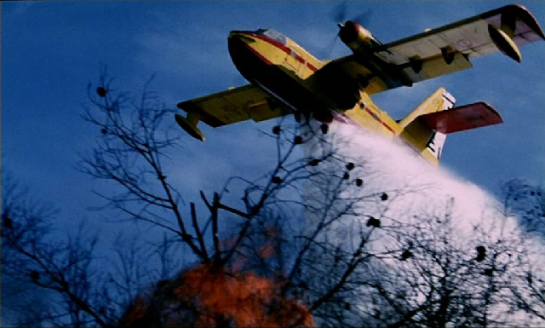
2. In between its opening shot (rain falling on pavement) and its final shot (a plane spraying artificial rain –- actually a torrential downpour—on what remains of a burnt forest), Warsaw Bridge is concerned with both flow and contact, movement and collision, agitation and stasis. What might be said to flow and move, apart from water, is different kinds of narrative and different forms of information. Read more