This article began as a lecture delivered on April 1, 2001 at the conference “Women and Iranian Cinema,” held at the University of Virginia and organized by Richard Herskowitz and Farzaneh Milani. Two years later it appeared in French translation in Cinéma/06, then in a booklet accompanying Facets Video’s DVD release of The House is Black in 2005, and it has also appeared in my collection Goodbye Cinema, Hello Cinephilia: Film Culture in Transition (University of Chicago Press, 2010). — J.R.

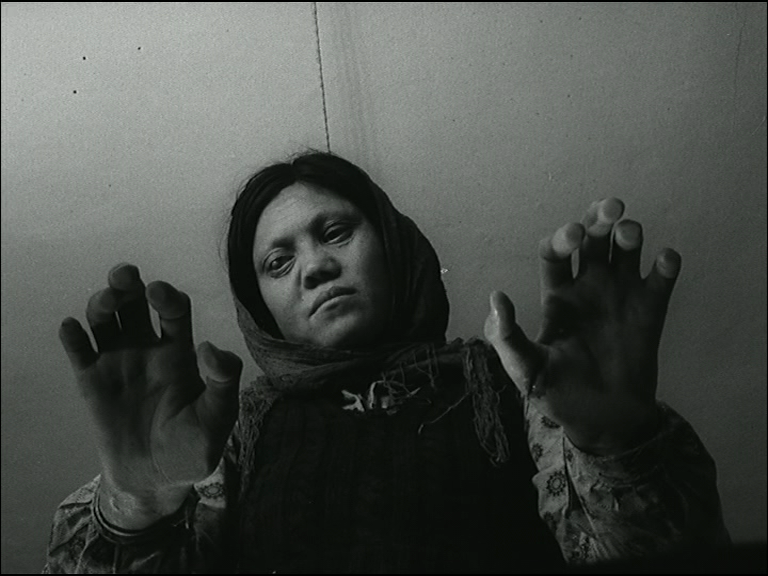
The Iranian New Wave is not one but many potential movements, each one with a somewhat different time frame and honor roll. Although I started hearing this term in the early 1990s, around the same time I first became acquainted with the films of Abbas Kiarostami, it only started kicking in for me as a genuine movement — that is, a discernible tendency in terms of social and political concern, poetics, and overall quality — towards the end of that decade.
Some commentators — including Mehrnaz Saeed-Vafa — have plausibly cited Sohrab Shahid Saless’s A Simple Event (1973) (1) as a seminal work, and another key founding gesture, pointing to a quite different definition and history, would be Kiarostami’s Close-up (1990) (2). Read more
Written circa June 2010 and previously unpublished. — J.R.

I can still recall the amusement of Penelope Houston — my boss, during the mid-1970s, when I was working for British Film Institute’s Editorial Department, on the staffs of Sight and Sound and Monthly Film Bulletin — whenever she came across routine references to directors Samuel Fuller and Douglas Sirk as “neglected” figures. Even though very few Anglo-American cinephiles could have even identified Fuller and Sirk during the 1950s, when most of their major films were coming out, Penelope certainly had a point when it came to questioning how “neglected” they still were among contemporary cinephiles in the U.K., especially after the Edinburgh film festival had extensive retrospectives devoted to each of them in 1969 and 1972, respectively. By the mid-70s, at least three books about Fuller and two about Sirk were available in the U.K — none of which appeared to have the slightest effect on their status as “neglected” filmmakers, according to the usual sound-bites.
Penelope indeed had a point. But then again, so did the various teachers and journalists who described Fuller and Sirk as “neglected,” because even though one book about each figure was published in the British Film Institute’s Cinema One series (a joint effort of the BFI’s Editorial and Education Departments in which Peter Wollen had a voice as well as Penelope), these directors remained relatively shadowy figures in Sight and Sound, a quarterly in that period which had a guaranteed subscription list based on BFI membership and therefore an unparalleled degree of clout over other film magazines in the U.K. Read more
This appeared in the June 18, 2004 issue of the Chicago Reader. —J.R.
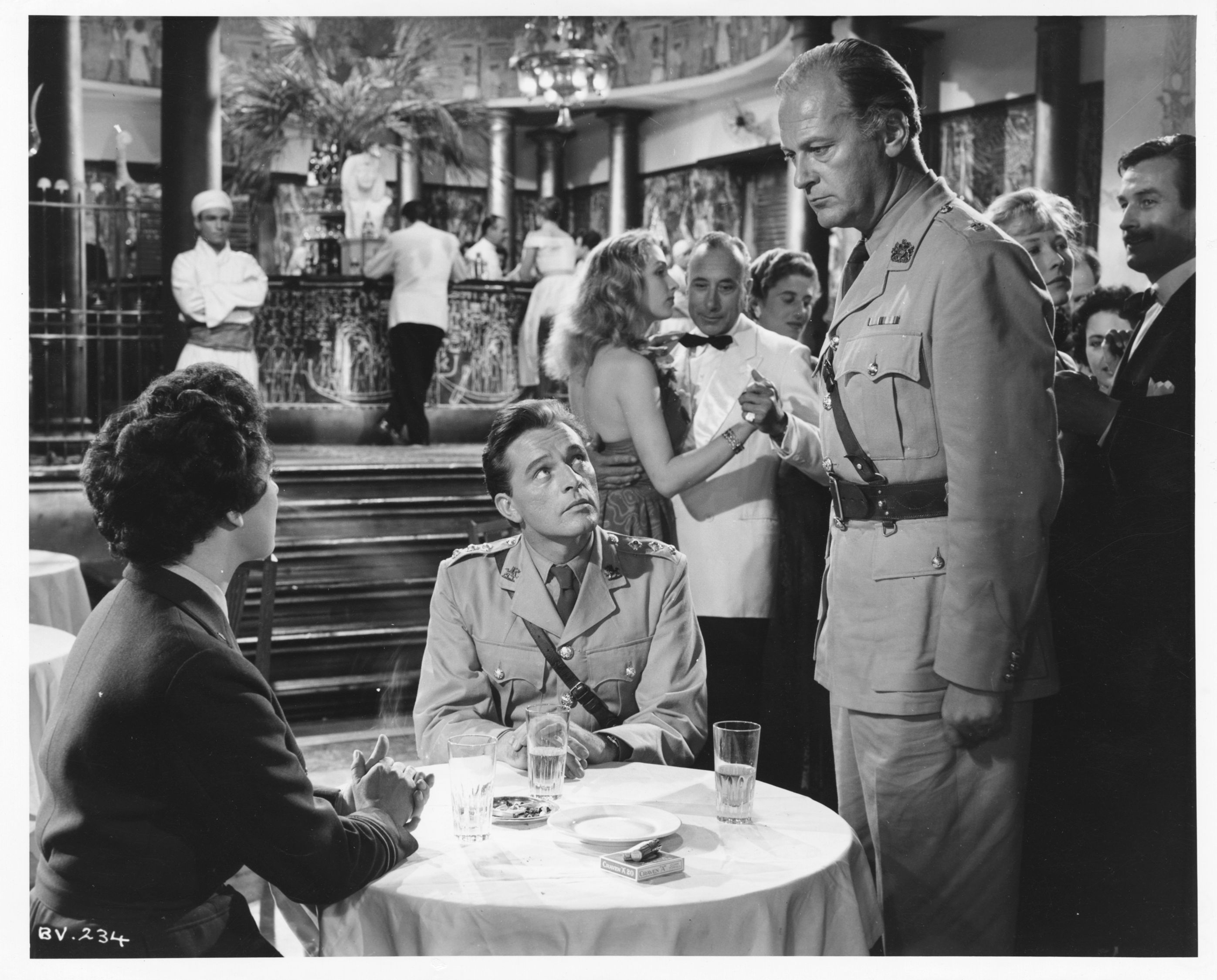
Bitter Victory
**** (Masterpiece)
Directed by Nicholas Ray
Written by Rene Hardy, Ray, and Gavin Lambert
With Richard Burton, Curt Jurgens, Ruth Roman, Raymond Pellegrin, Anthony Bushell, Andrew Crawford, Nigel Green, and Christopher Lee.
Jane Brand: What can I say to him?
Captain James Leith: Tell him all the things that women have always said to the men before they go to the wars. Tell him he’s a hero. Tell him he’s a good man. Tell him you’ll be waiting for him when he comes back. Tell him he’ll be making history. —Bitter Victory
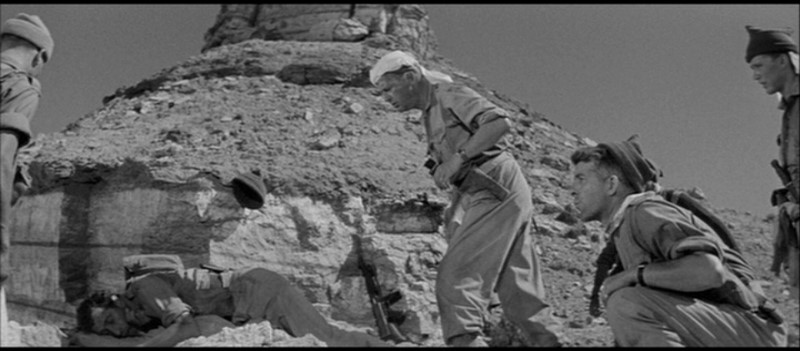
This week, as part of its series devoted to war films, the Gene Siskel Film Center is showing a restored version of Nicholas Ray’s little-known masterpiece Bitter Victory—a powerful, albeit flawed, black-and-white CinemaScope feature set mainly in Libya during World War II. This 1957 film offers a radical reflection on war, and its relevance to the current war in Iraq goes beyond the desert settings and references to antiquity.
Many films are regarded as antiwar, including ones that proceed from antithetical premises; in the 60s a popular revival house in Manhattan liked to run a double bill of Grand Illusion and Paths of Glory. Read more
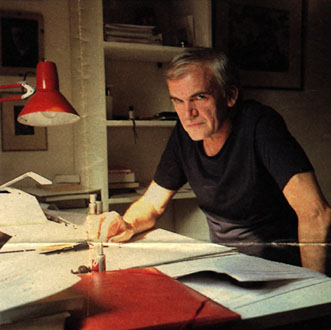
“I must admit,” the Bear said in an icy voice, “that I have indeed always considered death a tragedy.”
“And you were wrong,” said Paul. “A railway accident is horrible for somebody who was on the train or who had a son there. But in news reports death means exactly the same thing as in the novels of Agatha Christie, who incidentally was the greatest magician of all time, because she knew how to turn murder into amusement, and not just one murder but dozens of murders, hundreds of murders, an assembly line of murders performed for our pleasure in the extermination camp of her novels. Auschwitz is forgotten, but from the crematorium of Agatha’s novels the smoke is forever rising into the sky, and only a very naive person could maintain that it is the smoke of tragedy.”
–Milan Kundera, Immortality (1990) [10/4/09] Read more
The following was written for the Monthly Film Bulletin — a publication of the British Film Institute, where I was serving at the time as assistant editor — and it follows most of the format of that magazine by following credits (abbreviated here) with first a one-paragraph synopsis and then a one-paragraph review. (For his resourceful photo research, thanks once again to Ehsan Khoshbakht.)–J.R.


Black and Tan
U.S.A., 1929
Director: Dudley Murphy
Dist—TCB. p.c—RKO. p. sup—Dick Currier. sc—Dudley Murphy. ph—Dal Clawson. ed—Russell G. Shields. a.d—Ernest Feglé. m/songs—“Black and Tan Fantasy” by James “Bubber” Miley, Duke Ellington, “The Duke Steps Out”, “Black Beauty”, “Cotton Club Stomp”, “Hot Feet”, “Same Train” by Duke Ellington, performed by—Duke Ellington and His Cotton Club Orchestra: Arthur Whetsol, Freddy Jenkins, Cootie Williams (trumpets), Barney Bigard (clarinet), Johnny Hodges (alto sax), Harry Carney (baritone sax), Joe Nanton (trombone), Fred Guy (banjo), Wellman Braud (bass), Sonny Greer (drums), Duke Ellington (piano), (on “Same Train”, “Black and Tan Fantasy”) The Hall Johnson Choir. sd. rec—Carl Dreher. with—Duke Ellington and His Cotton Club Orchestra, Fredi Washington, The Hall Johnson Choir. 683 ft. 19 min. (19 mm).
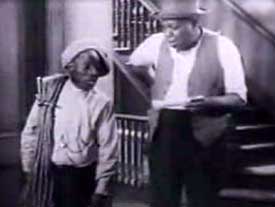
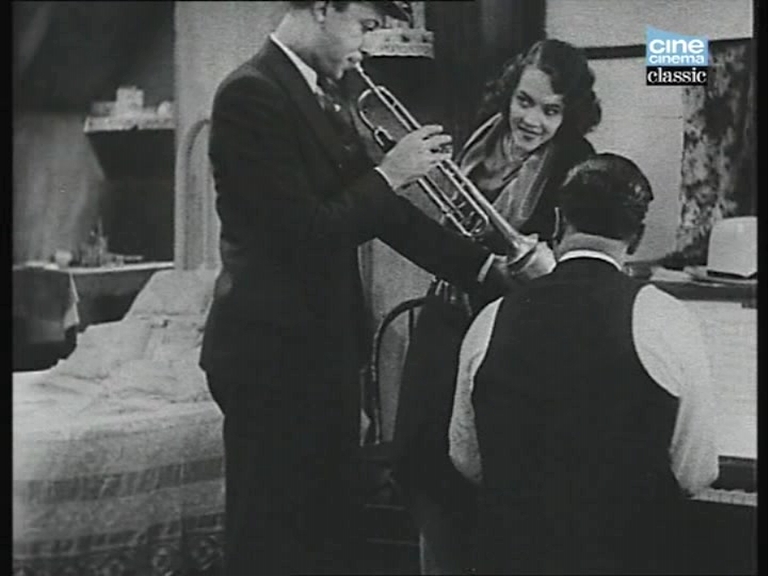
Duke Ellington rehearses his “Black and Tan Fantasy” for a club date in his flat with trumpet Arthur Whetsol until interrupted by two men from the piano company, sent to remove the instrument because he has fallen behind in the payments. Read more
Here is the first review I ever wrote of a Pynchon novel, published in my college newspaper and signed “Jon Rosenbaum”. In fact, although I never reviewed Slow Learner, Pynchon’s collection of early stories, I suppose it could be said that I’ve reviewed all his novels to date, because this brief review in the Bard Observer begins with a two-paragraph review of V.
I’ll also be posting, separately and in the near future, my review of Mason & Dixon, which originally appeared in In These Times. And my reviews of Gravity’s Rainbow (for the Village Voice) and of Vineland and Against the Day (both in the Chicago Reader) can be found elsewhere on this site.
One possible point of interest about this piece of juvenilia is my early comparison of Pynchon with Rivette in relation to what might be called the poetics of paranoia, a subject I would return to. For whatever it’s worth, the disappointment I’ve generally felt regarding Pynchon’s post-70s work is matched by the overall disappointment I’ve felt regarding Rivette’s post-70s work, and in both cases I’ve felt guilty about this, because the work I prefer tends to be less sane (and therefore less conventional and more avant-garde) than the work that follows it. Read more
Written for the Fall 2016 issue of Cinema Scope. — J.R.
DVD Awards 2016, Il Cinema Ritrovato
Jurors: Lorenzo Codelli, Alexander Horwath, Lucien Logette, Mark McElhatten, Paolo Mereghetti, and Jonathan Rosenbaum. (Although Mark McElhatten wasn’t able to attend the festival this year, he has continued to function as a very active member of the jury.)
BEST SPECIAL FEATURES
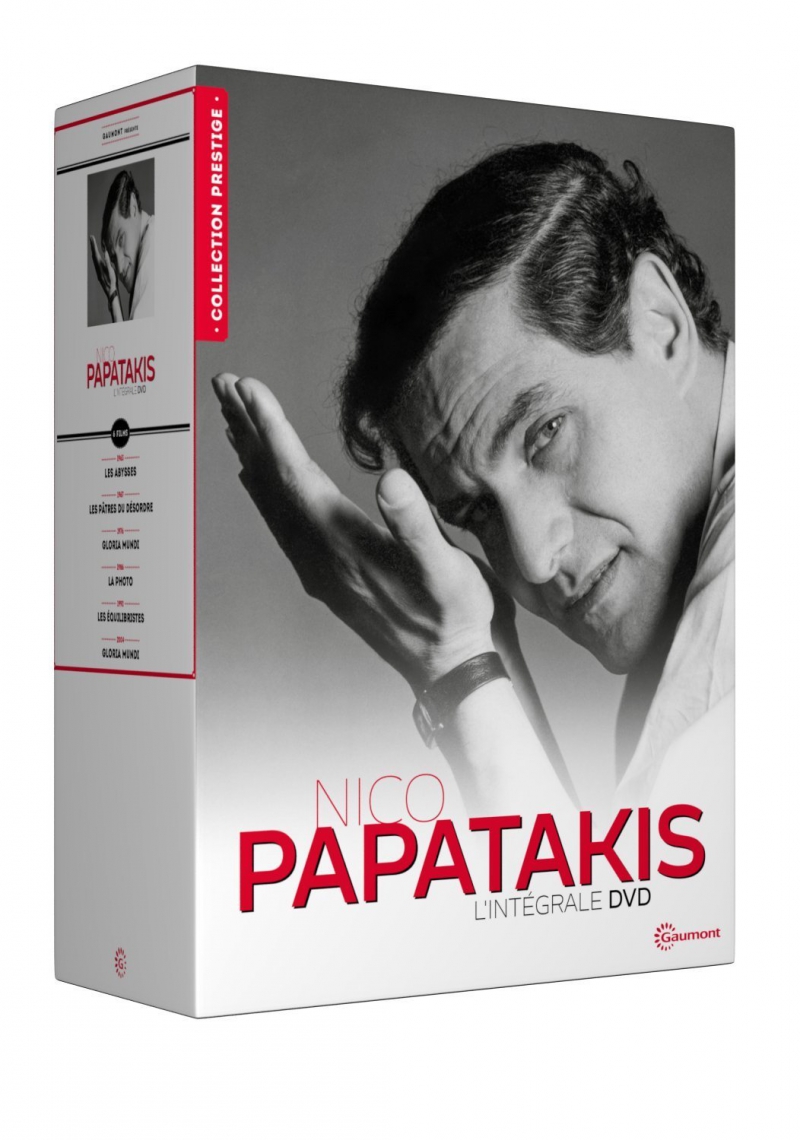
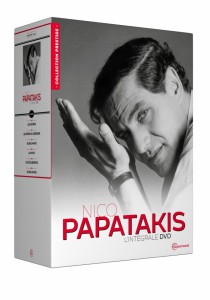
Coffret Nico Papatakis (France, 1963-92) (Gaumont Vidéo, DVD). A comprehensive and cogent presentation of a neglected filmmaker from Ethiopia and a singular cultural figure in postwar France who ran an existentialist cabaret, produced major films by Jean Genet and John Cassavetes, gave the German singer Nico her name, and made many striking films over four decades. (JR)
BEST DVD SERIES
Coffret Collection 120 ans n.1 1885-1929 (France, 1885-1929) (Gaumont Vidéo, DVD). To celebrate its 120 years of activity in the film industry, Gaumont has published a series of nine beautiful box sets that summarize the whole history of cinema. Divided by decades, the box sets consist of 20 to 35 DVDs with the most representative films marked with a daisy symbol. The editions include films made by Alice Guy, Louis Feuillade, Dreville, Duvivier, Gabin, Louis de Funès, Pialat, and Deville, but also masterpieces by Losey, Fellini or Bergman that the French company co-produced. Read more
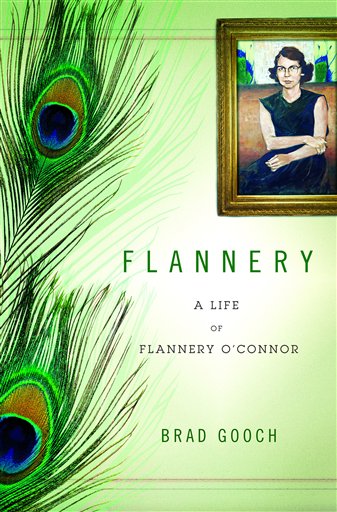
FLANNERY: A LIFE OF FLANNERY O’CONNOR by Brad Gooch (New York/Boston/London: Little, Brown and Company), 2009, 449 pp.
So far, I’ve basically been reading in and around this book rather than reading it, so I can’t with a clear conscience make it “recommended reading”, at least not yet (something I can do for Wendy Lesser’s astute and very thoughtful review of it in a recent Bookforum). I can, however, pick a bone with what I consider a couple of significant omissions: neither the names “Nathanael West” nor “Stanley Edgar Hyman” appears in the Index. The latter, who wrote a superb monograph on O’Connor that was published in 1966 (no. 54 in the University of Minnesota Pamphlets on American Writers), argues rather persuasively (on p. 43) that the “writer who most influenced [O’Connor], at least in her first books, is Nathanael West. Wise Blood is clearly modeled on Miss Lonelyhearts (as no reviewer noticed at the time),” and then goes on to cite four examples of her prose that amply bear this out: “Hazel Motes has a nose `like a shrike’s bill’; after he goes to bed with Leora Watts, Haze feels ‘like something washed ashore on her’; Sabbath Lily’s correspondence with a newspaper advice-columnist is purest West; and all the rocks in Wise Blood recall the rock Miss Lonelyhearts first contains in his gut and then becomes, the rock on which the new Peter will found the new Church.” Read more