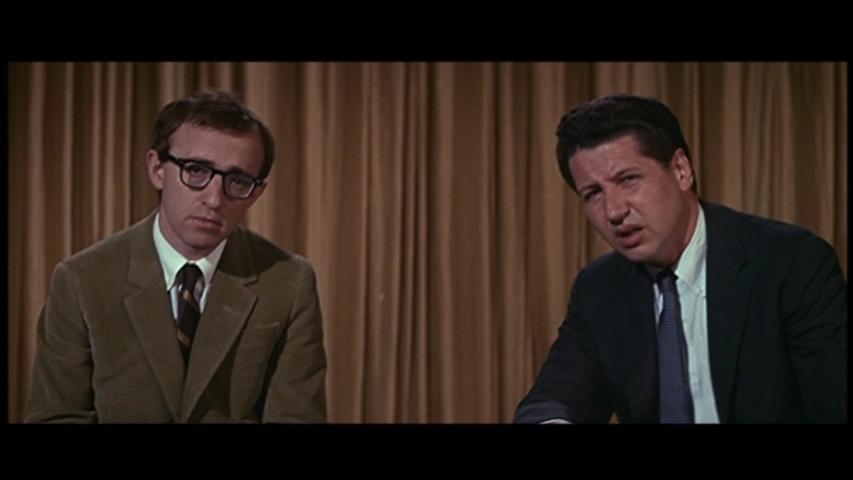
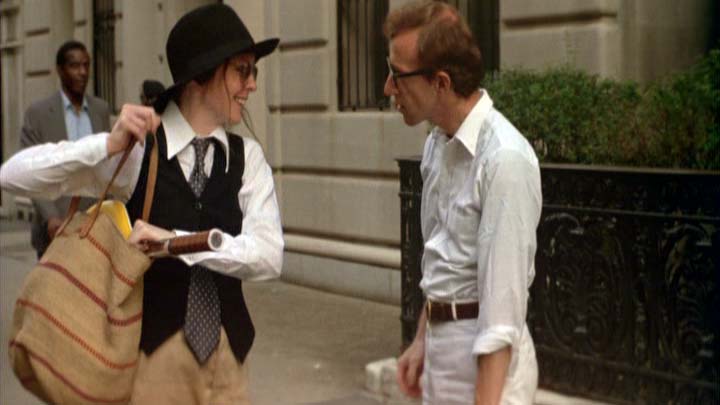
Preparing a book about Woody Allen, biographer Patrick McGilligan sent out a poll to me and many others, and here are my responses to his questions:
THE WOODY ALLEN POLL
1. What five Woody Allen films do you hold in the highest regard?
(List the five in any order. One equal point will be assigned to each of your choices for the cumulative total to be listed from 100 participating critics and scholars.)
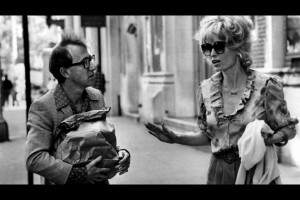
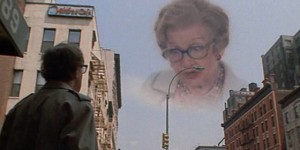
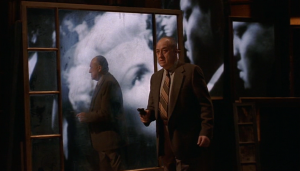
What’s Up, Tiger Lily?
Annie Hall
Broadway Danny Rose
Oedipus Wrecks
Manhattan Murder Mystery
2. What do you believe about the allegation by Dylan Farrow, Allen’s adopted daughter, that he sexually molested her?
c. Undecided.
3. Have the Dylan Farrow allegations, or his marriage to Mia Farrow’s adopted daughter Soon-Yi Previn – either or both – affected your view of his film?
No.
4. How has his over-all legacy been affected? Comments are welcome.
I’ve always thought he was overrated (cf. my “Notes Toward the Devaluation of Woody Allen”). If his reputation and legacy as an artist have been tarnished by these unconfirmed charges or his marriage, this only illustrates the public’s lack of seriousness about art. I find Allen’s far more confirmable shame and embarrassment about his working-class origins and his middle-class values far more relevant to the importance and (lack of) depth of his work. Read more
Published as “Classic Touch” in the January 2002 issue of AMC: American Movie Classics Magazine….The last photo reproduced here is of the whole crew of the re-edit team at the Cannes Film Festival in May 1998. — J.R.
Considering all the rereleases in recent years of studio classics that are
labeled “director’s cut,” it must seem like every studio picture has one.
But the phrase is often a marketing term, and therefore potentially
misleading. There are some movies, including a few great ones, that can’t
be released in “director’s cuts” because the director was never accorded
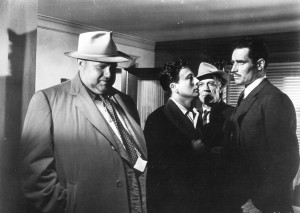
final cut in the first place. At least five of Orson Welles’s European films
and three of his Hollywood features have director’s cuts, but Touch of
Evil (1958), his last Hollywood movie, isn’t one of them. (For the record,
his three director’s cuts are all in the 1940s: Citizen Kane and two
separate edits of his Macbeth.)
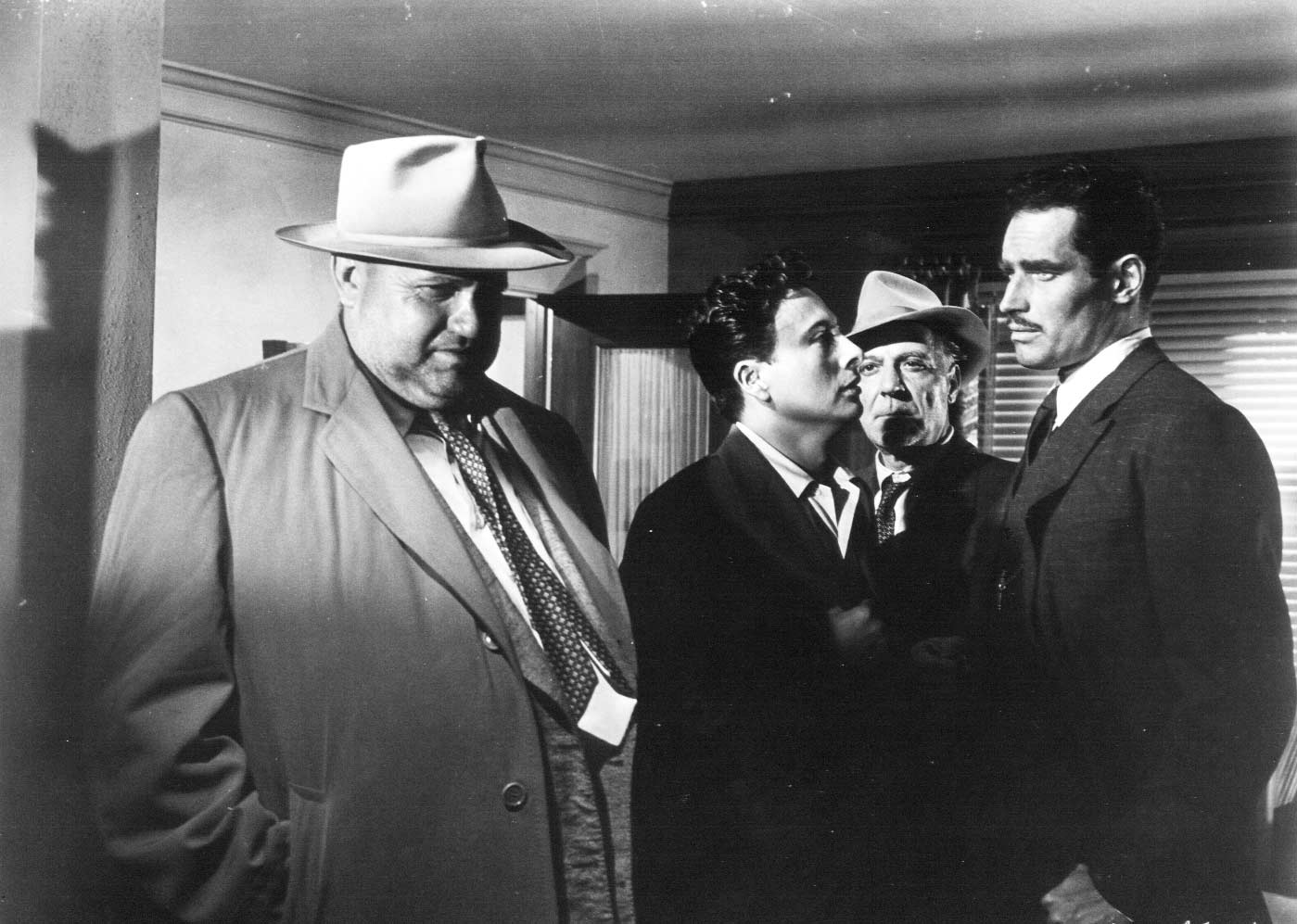
Admittedly, there was less studio interference on this noir thriller than
there had been on Welles’s The Magnificent Ambersons, The Stranger,
and The Lady from Shanghai. Welles was allowed to direct and rewrite
the script only after he’d been cast as the heavy, a crooked cop — mainly
through the intervention of lead actor Charlton Heston, who played an
honest Mexican cop. Read more
It’s sad to hear about the death of my friend Edgardo Cozarinsky, a writer and director, in Buenos Aires, at age 85, but the sadness belongs to his friends rather than to Edgardo himself, because I believe he had a rich and full life.
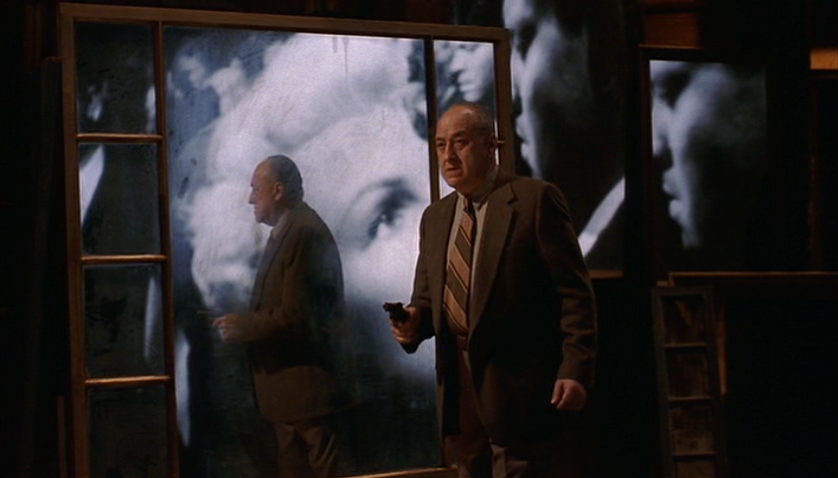
The following text, commissioned by Edgardo himself for a retrospective held in Paris, was reprinted in my original English in the September-October 1995 issue of Film Comment. I should stress that this essay is very much out of date once one starts to consider Cozarinsky’s prolific subsequent career as both a writer and a filmmaker — although I’ve anachronistically included some more recent book covers and film posters as illustrations, as well as a poster and two stills from the 2005 Ronda Nocturna, known in English as Night Watch, in part to help make up for the impossibility of finding stills for some of the rarer films of his discussed here.
Let me also quote my Reader capsule review of Night Watch: “With a few exceptions, I prefer the literature of Edgardo Cozarinsky, an Argentinean based mainly in Paris, to his films, and his nonfiction in both realms to his fiction. But this poetic, atmospheric drama, shot in Buenos Aires, challenged my bias, mixing the natural and the supernatural, the cinematic and the literary, with such assurance that Cozarinsky no longer seems like a divided artist. Read more
Almost seven years have passed since I quoted from the manuscript of this wonderful book in the Introduction to my own Discovering Orson Welles. At that point the subtitle of Todd Tarbox’s book was A Friendship in Four Acts, but if anything, the book has only grown since then, both physically and in terms of readability. In short, it’s been well worth the wait. (June 2014 footnote: For more details, including an excerpt from one of the Welles/Hill conversations, go to Todd Tarbox’s radio interview with Rick Kogan, here.) — J.R.
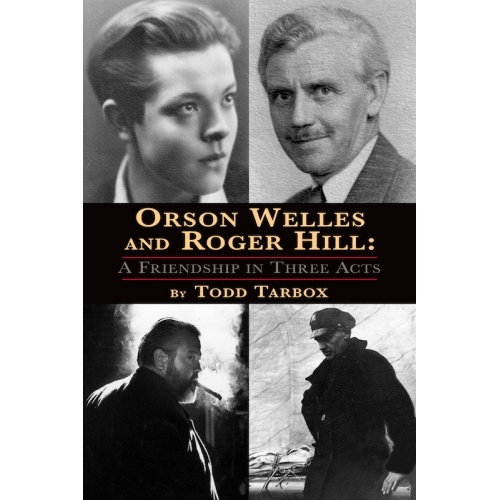
The major and longest-lasting close friendship of Orson Welles’s life was with one of his earliest role models — his teacher, advisor, and theatrical mentor at the Todd School who later became the school’s headmaster, Roger Hill. By editing and arranging many of their recorded conversations at the end of Welles’s life and career, Hill’s grandson, Todd Tarbox, has given us invaluable and candidly intimate glimpses into many of its stages, especially ones towards the beginning and end of that diverse and complicated saga. In the process, he also confounds and complicates the array of “weak” and flawed father figures that populate most of Welles’ films, all the way from Citizen Kane and The Magnificent Ambersonsthrough The Trial, Chimes at Midnight, Don Quixote, and The Other Side of the Wind, with a bracing and ennobling alternative to that pattern, an unwavering relationship of mutual admiration and respect that was a clear source of strength to both of them. Read more
All three of the following short reviews appeared in the June 1975 issue of Monthly Film Bulletin (vol. 42, no. 497). The reason why I had to cover so many films of this kind for the magazine was that I was the assistant editor, and it was very hard to convince most of our freelance reviewers (apart from Tom Milne) to take them on. -– J.R.
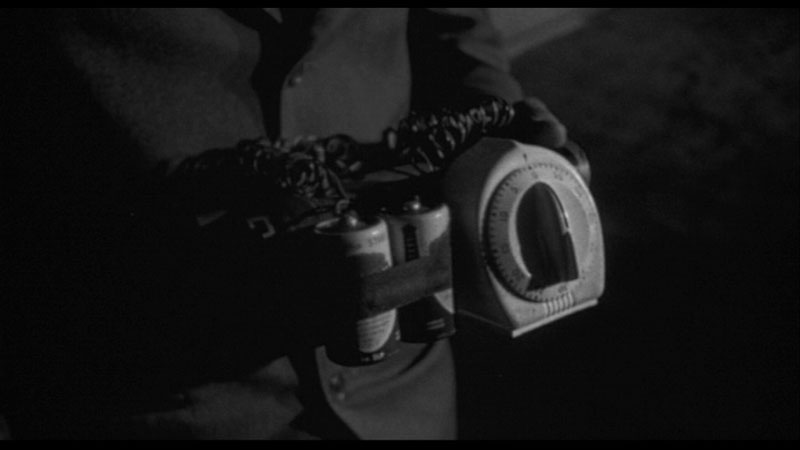
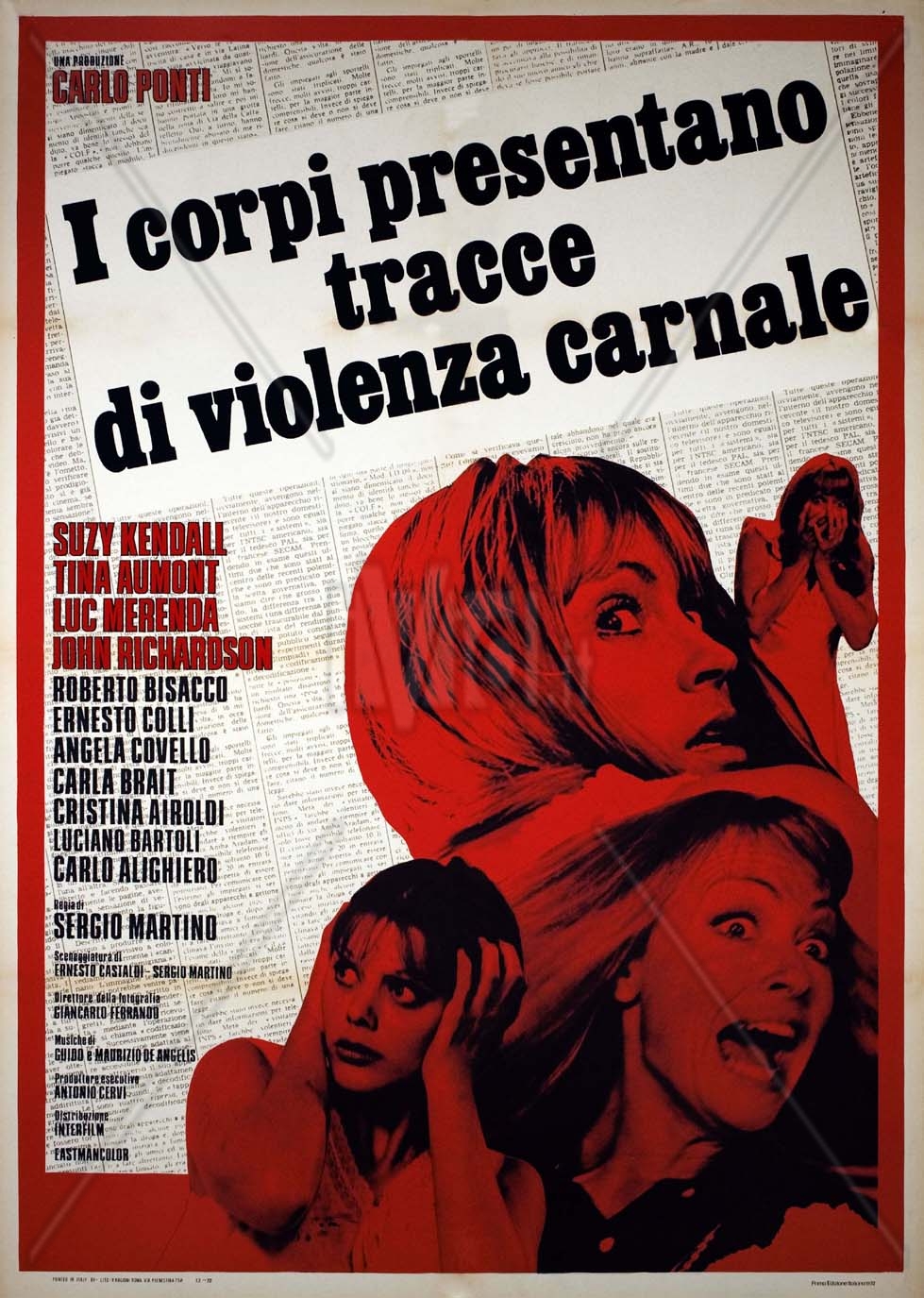
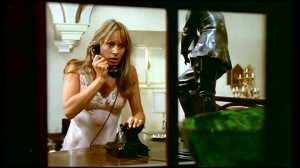 Corpi Presentano Tracce di Violenza Carnale. I (Torso)
Italy, 1973
Director: Sergio Martino
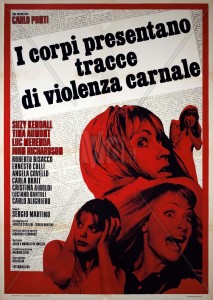
After two college girls, Florence and Carol, are savagely murdered and butchered by a masked assailant, one of their classmates, Daniela, recalls having recently seen the scarf left behind by the murderer but can’t remember who was wearing it. Before long, she receives an anonymous threatening phone call, and her uncle Nino requests that she so for a rest to his country villa with her school friends Ursula, Katia and Jane. Jane stays behind briefly to look up Stefano — a student whom she suspects is the killer, but who proves not to be at home — and passes up an invitation to attend a concert with her art professor Franz. A scarf-dealer who meanwhile tries to blackmail the killer by phone manages to collect 3 million lire, but is then run down by a car; that evening, after a local shoe-peddler spies Ursula seducing Katia in the country house, he is pursued, killed and thrown into a well by the masked assailant. Read more
From Monthly Film Bulletin, February 1975 (vol. 42, no. 493). -– J.R.
Swedish Wildcats
U.S.A./Sweden, 1974
Director: Joseph W. Sarno
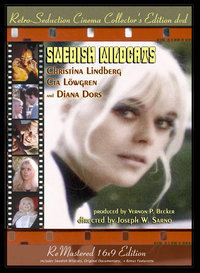
Copenhagen. Margareta, a brothel madam who displays her prostitutes in elaborate cabaret revues at private parties, summons her two orphan nieces Susanna and Karen — both part of her entourage — to participate in a ‘slave auction’ staged for some local clients. Gerhard Jensen, chief of a ground crew handling air cargo, bids for Karen and then offers to pay extra to share a room with Susanna and his friend; Margareta agrees and watches the results through a two-way mirror: Gerhard complains to Karen, “I could get more excitement from a piece of raw liver”, and tries to make love to Susanna, then beats her when she refuses to kiss him on the mouth. In a park, Susanna meets Peter Borg, another member of Gerhard’s crew; it is love at first sight, and she presents herself as Natasha, a ballet dancer, while he claims to be a test pilot working on a secret project. Meanwhile, her sister Karen has also fallen in love with someone who doesn’t know her profession — Gabriel, an architect from a very respectable family. Read more
This was written in the summer of 2000 for a coffee-table book edited by Geoff Andrew that was published the following year, Film: The Critics’ Choice (New York: Billboard Books). — J.R.
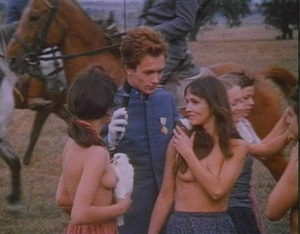
A recent documentary about communist musicals called East Side Story (Dana Ranga, 1997) assumes that communist-bloc directors were just itching to make Hollywood extravaganzas and invariably wound up looking strained, square, and ill-equipped. But Red Psalm (1971), Miklós Jancsó’s dazzling, open-air revolutionary pageant, is a highly sensual communist musical that employs occasional nudity as lyrically as the singing, dancing, and nature. That is to say, within its own specially and exuberantly defined idioms, it swings as well as wails.
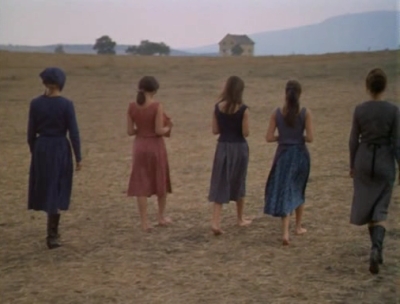
Set near the end of the 19th century, when a group of peasants have demanded basic rights from a landowner and soldiers arrive on horseback to quell the uprising, Red Psalm is composed of only 26 shots. (With a running time of 84 minutes, this adds up to an average of three minutes per shot. Jancsó’s earlier feature from 1969, Winter Sirocco, is said to consist of only 13 shots.) Each long take is an intricate choreography of panning camera, landscape, and clustered bodies that constantly traverse, join, and/or divide the separate groups. Read more