Part of a booklet accompanying a Jim Jarmusch retrospective at the Wexner Center for the Arts at The Ohio State University, October 2001. -– J.R.
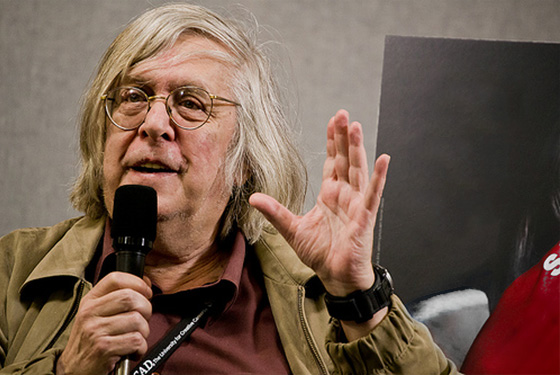
A child of the New Wave who spent time at the Paris Cinémathèque, was Nicholas Ray’s personal assistant on Lightning Over Water — and Sam Fuller’s costar in Tigrero [Mika Kaurasmaki] many years later — Jim Jarmusch has loved films even longer than he’s been making them. Signs of this love are fully apparent in his tributes to John Cassavetes, Fuller, and Robert Mitchum, as well as in a recent phone conversation I had with him about his selections of favorite films by others to accompany his own films at the Wexner Center.
J.R.
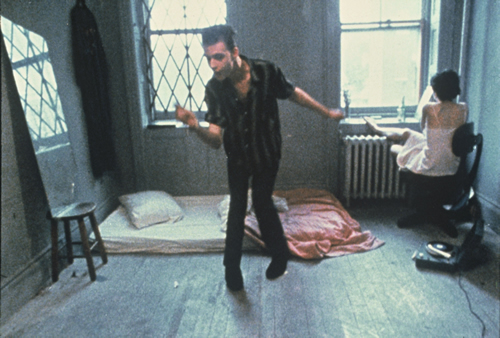
I want to focus mainly on the pairings you’ve come up with. Why, for instance, show The Devil, Probably with Permanent Vacation, your first film?
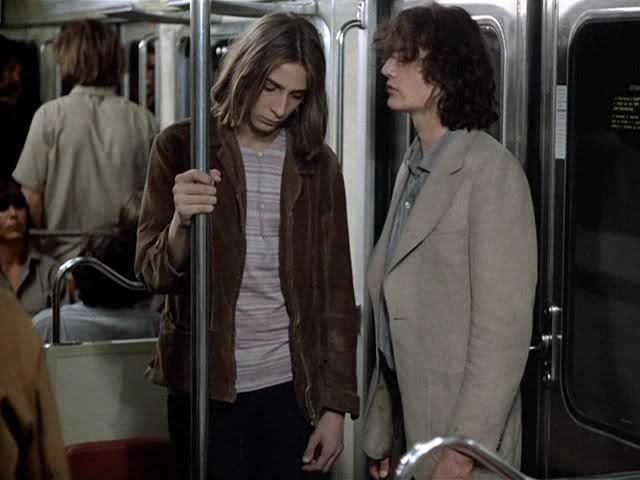
I don’t really know. I saw The Devil, Probably a long time ago, and I’ve never seen it since. I remember it being about a young guy in Paris who’s suicidal. And it’s [Robert] Bresson. Before I saw this movie, when I used to go to Paris, I’d sit at the end of Île de la Cité, and I think that’s where the film ends. Read more
In the Fray
By Jonathan Rosenbaum
Dec 28, 2001 11:37 AM
Dear David, Roger, Sarah, and Tony,
I’m afraid that going to see Monster’s Ball or Black Hawk Down for the purposes of this exchange isn’t even an option for me. Neither has opened yet in Chicago, and though the first and possibly the second got special screenings for local reviewers willing to go beyond Chicago for their 10-best lists, I feel my first duty is to address what Chicagoans can see in my own list for the Reader. In any case, I’m looking forward to seeing Monster’s Ball because of my liking for Billy Bob Thornton and Halle Berry, but the very thought of going to see any war film for pleasure right now gives me the creeps. Though, come to think of it, I’d probably rather see Black Hawk Down than even think again about Audition, one of David’s favorites — a movie whose view of mankind, including audience members, is for me a lot bleaker than anything found in A.I.
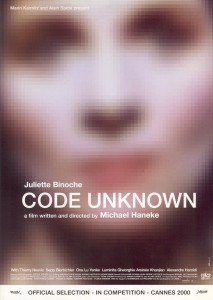
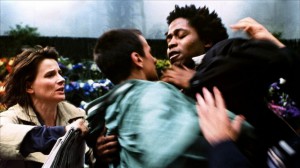
On the other hand, like Roger, I could cite some first-rate movies that exist mainly on television, such as Spike Lee’s A Huey P. Newton Story (which I saw at the Vancouver International Film Festival), even if it’s basically a record of a powerful performance by Roger Guenveur Smith, or Code Unknown, which I saw on the Sundance Channel (where it’s been playing for ages) on Christmas Eve, and which opens here theatrically next week. Read more
From the Chicago Reader (January 4, 2002). — J.R.
There is no such thing as film production. It is a joke, as much as the production of literature, pictures, or music. There are no good years for films, like good years for wine. A great film is an accident, a banana skin under the feet of dogma; and the films that we try to defend are a few of those that despise rules. — Jean Cocteau, 1949
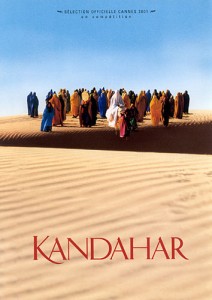
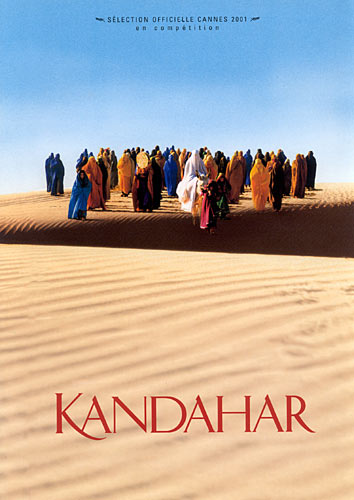
Two events in the year 2001 changed my relation to movies — one public and momentous, the other private and relatively trivial. The public event, of course, took place on September 11, and for many Americans, myself included, it broadened dramatically what we mean when we say “us.” It changed the way we see the world as well as the U.S., and for me the change in the way we see the world was more important. Some of my compatriots may still not be able to move mentally beyond this country, even theoretically; others may be considering the possibility for the first time. I saw better than ever the role movies can play in helping us understand the world from other perspectives, and the sudden outpouring of interest in films about Afghanistan — most notably Jung (War): In the Land of the Mujaheddin and Mohsen Makhmalbaf’s Kandahar — was only the most obvious sign that this is happening. Read more
From the April 3, 2000 Chicago Reader. — J.R.
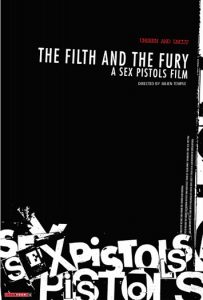
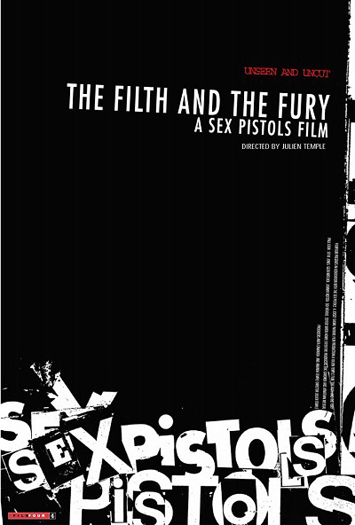
A pretty good English documentary about the 26-month life span of the Sex Pistols, by Julien Temple, who tries to correct some of the false impressions left by his first feature, The Great Rock ‘n’ Roll Swindle, which was made 20 years ago and privileged the role played by the punk band’s manager, Malcolm McLaren. For my taste, this corrected version has way too many clips from Laurence Olivier’s Richard III. I also would have enjoyed more animated material, since what we have is loads of fun. The period ambience (call it funk) is irresistible, but the main points of interest here are sociological rather than musical. 108 min. (JR)
 Read more
From the Chicago Reader (April 7, 2000). — J.R.
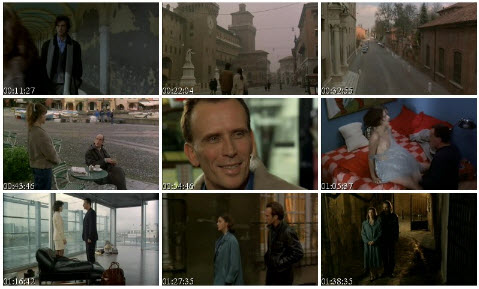
Beyond the Clouds
Rating *** A must see
Directed by Michelangelo Antonioni (with Wim Wenders)
Written by Antonioni, Tonino Guerra, and Wenders
With John Malkovich, Ines Sastre, Kim Rossi-Stuart, Sophie Marceau, Chiara Caselli, Peter Weller, Fanny Ardant, Jean Reno, Jeanne Moreau, Marcello Mastroianni, Irene Jacob, and Vincent Perez.

Chicago has had a plethora of film festivals lately — Women in the Director’s Chair, Polish Movie Springtime, Chicago Latino Film Festival, the Asian American Showcase. This is probably good for filmmakers who want their work shown, but I’m not sure it’s a boon for moviegoers. For one thing, the screening of so many films at once makes it easy for good work to get lost. Billions of dollars are now spent annually making and promoting a few dozen movies — most of them dogs — that the media obligingly make visible and label important, and everything else is consigned to relative oblivion. The most any obscure film can hope for — good or bad, major or minor — is to compete with all the other obscure films. This is tantamount to tripling the number of passengers in steerage without increasing the provisions: more people get to travel, but everyone gets brutalized in the process. Read more
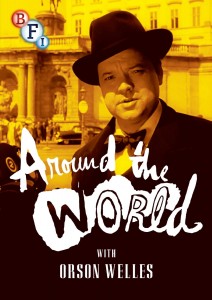
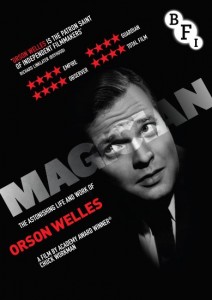
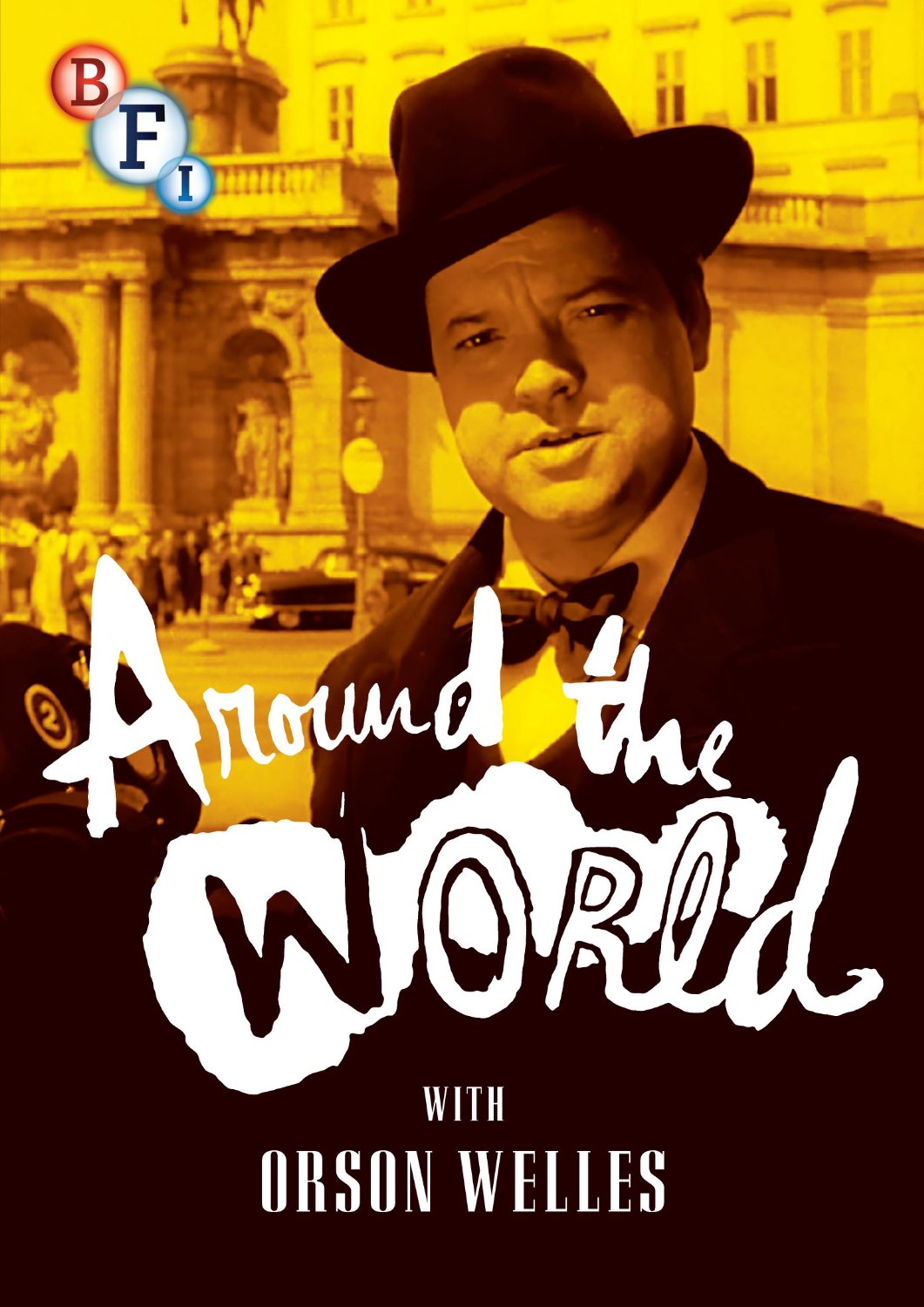
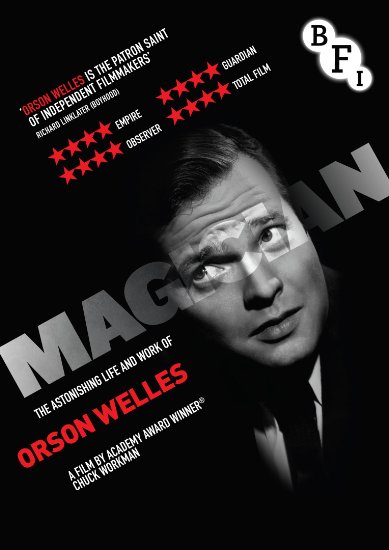
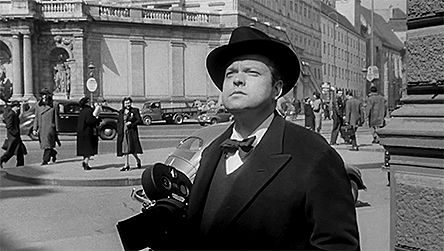
Two new British Film Institute digital releases related to Orson Welles, both due out later this month, arrived in my mailbox yesterday, the day after I submitted my Fall DVD column to Cinema Scope —Around the World with Orson Welles (1955) on Blu-Ray and Chuck Workman’s 2014 Magician: The Astonishing Life and Work of Orson Welles on DVD. In their very different ways, both are worthy items that are well worth having, which is largely why I’m posting something about them here.
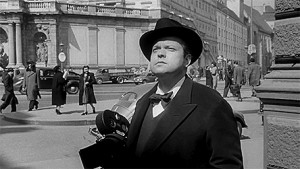
Around the World with Orson Welles is a shamefully neglected TV series directed by Welles of six half-hour episodes, made around the same time as Mr. Arkadin (for the same French producer, Louis Dolivet), with a remarkable range of topics including Basque culture (two episodes), Vienna coffee houses and pastry, the bohemian avant-garde in Paris (including a reading of Lettrist poetry: see still below), London pensioners, and the Spanish bullfight (with Mr. and Mrs. Kenneth Tynan as cohosts); a seventh episode — the first to be shot, but never completed — was an investigative crime report set in the French provinces, The Dominici Affair, and an English version of Christophe Cognet’s 52-minute, 2000 French documentary about this project is one of the two extras included. Read more
Film history that is open to the present


Last month Alexander Horwath, director of the Austrian Film Museum, sent me a press release about an ambitious and audacious retrospective he’s presenting throughout November entitled “Notre Musique,” devoted to “forty major works of fictional and documentary cinema made between 2000 and 2006.” “Film museums are often — and justifiably — viewed as places where an awareness of the historic foundations of contemporary cinema can evolve,” he begins. “Yet a reverse perspective is equally important — an approach to film history that is open to the present.” His selection, he adds, “is not so much influenced by the best-known or `most-discussed’ films of recent years but rather by the unbroken capacity of cinema to bear witness to life on this planet [his emphasis] — not just in the sense of documentation but also as an illumination of circumstances that habor a potential for change.” What he’s put together, in short, is a group of films that are supposed to bear witness, politically and responsibly, to the present moment — a daring gesture if one considers Jacques Rivette’s plausible statement in a Cahiers du Cinéma roundtable over 40 years ago, that it’s virtually impossible for a critic to know the long-term value of a film when it first appears.
Read more
From the May 26, 2000 Chicago Reader. I must confess that I’m embarrassed by most of my other reviews of Claire Denis films on this site. Writing from the Trumsoe International Film Festival in Norway, where I resaw many of her films at a retrospective, I discovered how they invariably seem to improve on repeated viewings. (I also reprinted this piece on Beau Travail in Goodbye Cinema, Hello Cinephilia: Film Culture in Transition.)
Part of what’s both great and difficult about Denis’ films has been discussed perceptively by the late Robin Wood in one of his last great pieces, about I Can’t Sleep. And part of what I think is so remarkable about Claire, one of my favorite people, is a trait she shares with the late Sam Fuller, which might be described as the reverse of the cynicism of the jaundiced leftist who loves humanity but hates people. Fuller and Denis both show very dark, pessimistic, and even despairing views of humanity in their films, but their love of people and of life is no less constant. (Jim Jarmusch shows a bit of the same ambivalence in some of his edgier films, such as Dead Man, Ghost Dog, The Limits of Control, and Paterson.) Read more
From the Chicago Reader (July 14, 2000). — J.R.

Trixie
Rating ** Worth seeing
Directed and written by Alan Rudolph
With Emily Watson, Dermot Mulroney, Nick Nolte, Nathan Lane, Brittany Murphy, Lesley Ann Warren, Will Patton, and Stephen Lang.
[Trixie] is propelled by this need in her own personality to accomplish something and find the truth. But of course, the truth doesn’t exist anymore. The truth now seems to be whatever gets the most applause. — Alan Rudolph in an interview
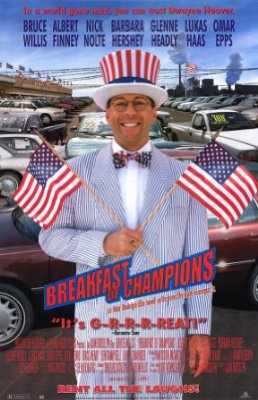
Alan Rudolph’s previous feature, Breakfast of Champions (1999), probably his best since Choose Me (1984), is an abrasive, angry, formally imaginative, and generally faithful adaptation of Kurt Vonnegut Jr.’s book of the same name. It has a lot going for it, including Bruce Willis, who helped finance it, as a blustering car dealer, one of his best performances to date; Barbara Hershey as his pill-popping wife; Nick Nolte as his sales manager and best friend, who guiltily harbors a fetish for lingerie; and Albert Finney as Vonnegut’s dark doppelganger, itinerant hack SF writer Kilgore Trout. It was easily last year’s most corrosive Hollywood movie about the American way of life, and it was especially good at showing the claustrophobic desperation of living in a small midwestern town and slowly going insane — a potent literary theme at least since Sherwood Anderson’s Winesburg, Ohio. Read more
This was written in the summer of 2000 for a coffee-table book edited by Geoff Andrew that was published the following year, Film: The Critics’ Choice (New York: Billboard Books). — J.R.
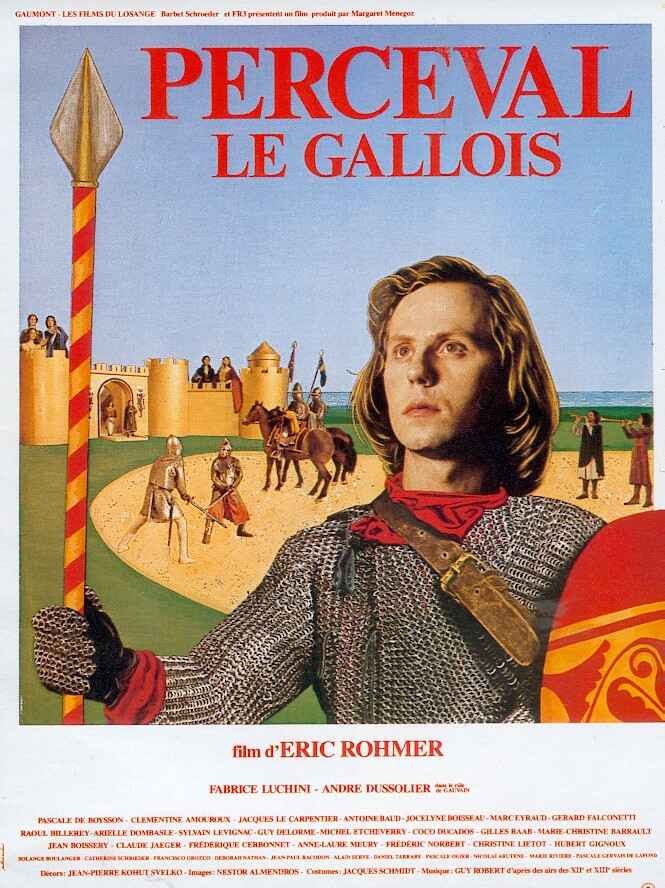
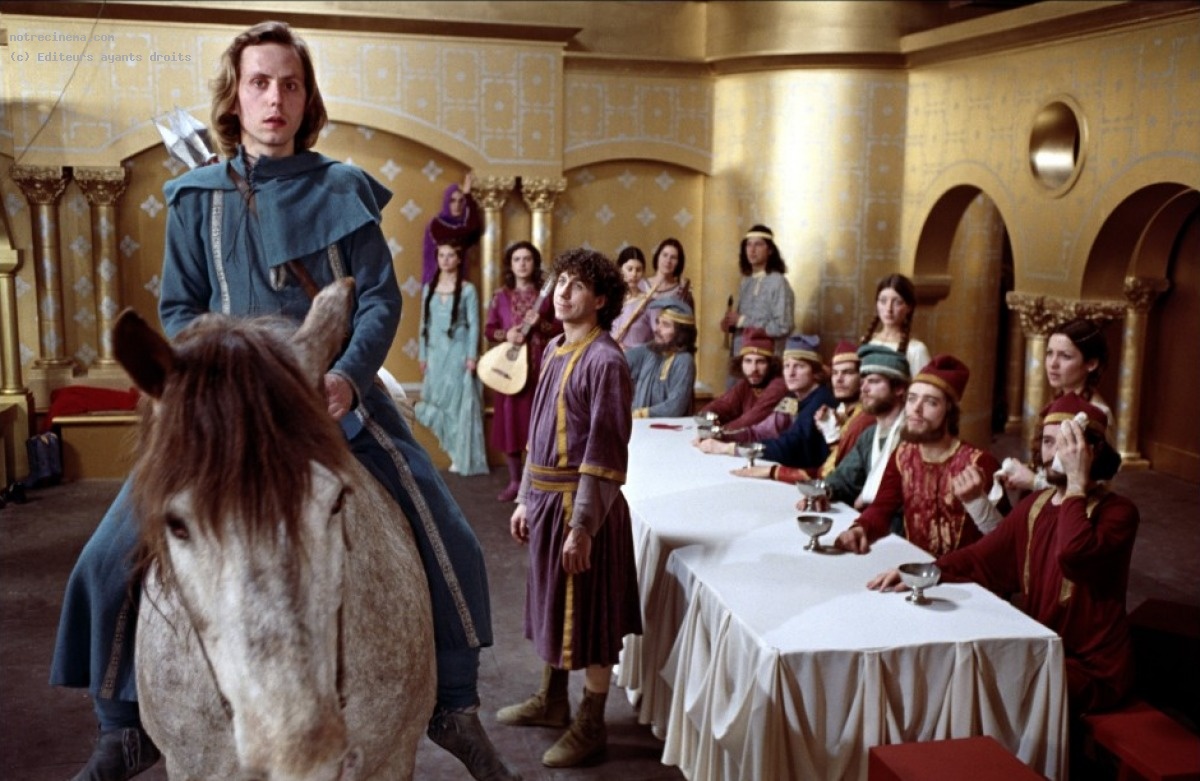
Eric Rohmer’s least typical film, Perceval might also be his best: A wonderful version of Chrétien de Troyes’ 12-century epic poem, set to music, about the adventures of a callow and innocent knight (Fabrice Luchini). Deliberately contrived and theatrical in style and setting -– the perspectives are as flat as in medieval tapestries, the colors bright and vivid — the film is as faithful to its source as possible, given the limited material available about the period.
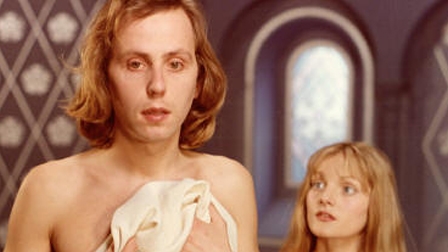
Luchini, who would later play Octave in Rohmer’s much more characteristic Full Moon in Paris (1984), called Perceval “a scholarly project, touched by insanity.” That is both its charm and its ineffable strangeness, enhanced by the fact that it represents an almost complete departure from the carefully crafted realism of Rohmer’s other films. As Australian critic G.C. Crisp has described this realism, “The cinema is a privileged art form because it faithfully transcribes the beauty of the real world….Any distortion of this, any attempt by man to improve on [God’s handiwork], is indicative of arrogance and verges on the sacreligious.” Read more
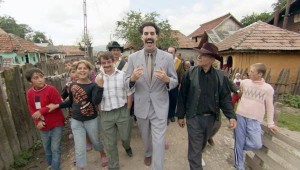
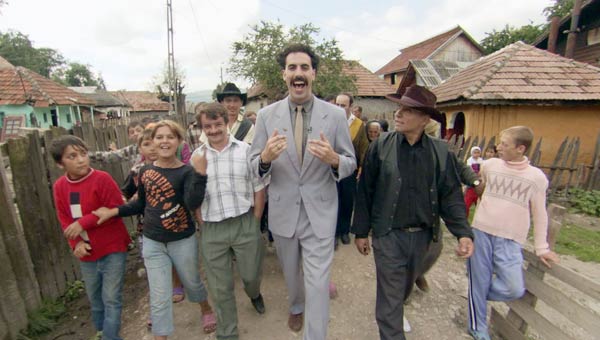
I’d like to ask some of the fans of Borat to explain something to me. I keep reading that this movie is a sly (or not so sly) critique of racism and intolerance based on ignorance, but Sacha Baron Cohen’s apparent semi-ignorant intolerance of the Kazakhs is almost always factored out of the discussion. It’s pretty easy to paint them as a pack of pathetic anti-Semites if you know nothing about them, but isn’t that the kind of glibness Borat is supposedly attacking?
Michael Moore has often been accused of a similar kind of one-upmanship, and with some justification, but why does the even less analytical Cohen get a free ride when he appeals to the same base impulses of the audience? The fact that, as recently revealed, he has the villagers of Kazakhstan speaking Hebrew suggests that maybe he’s enjoying a joke on his more “knowing” spectators as well as his more obvious on-screen targets. But I honestly don’t know what sort of thought — if any — lies behind his use of Kazakhstan or the choice of Hebrew. John Tierney in the New York Times (subscription required) has aptly pointed out that he always could have made Borat a citizen of an invented country instead.
Read more
From the Chicago Reader (June 28, 2002). — J.R.
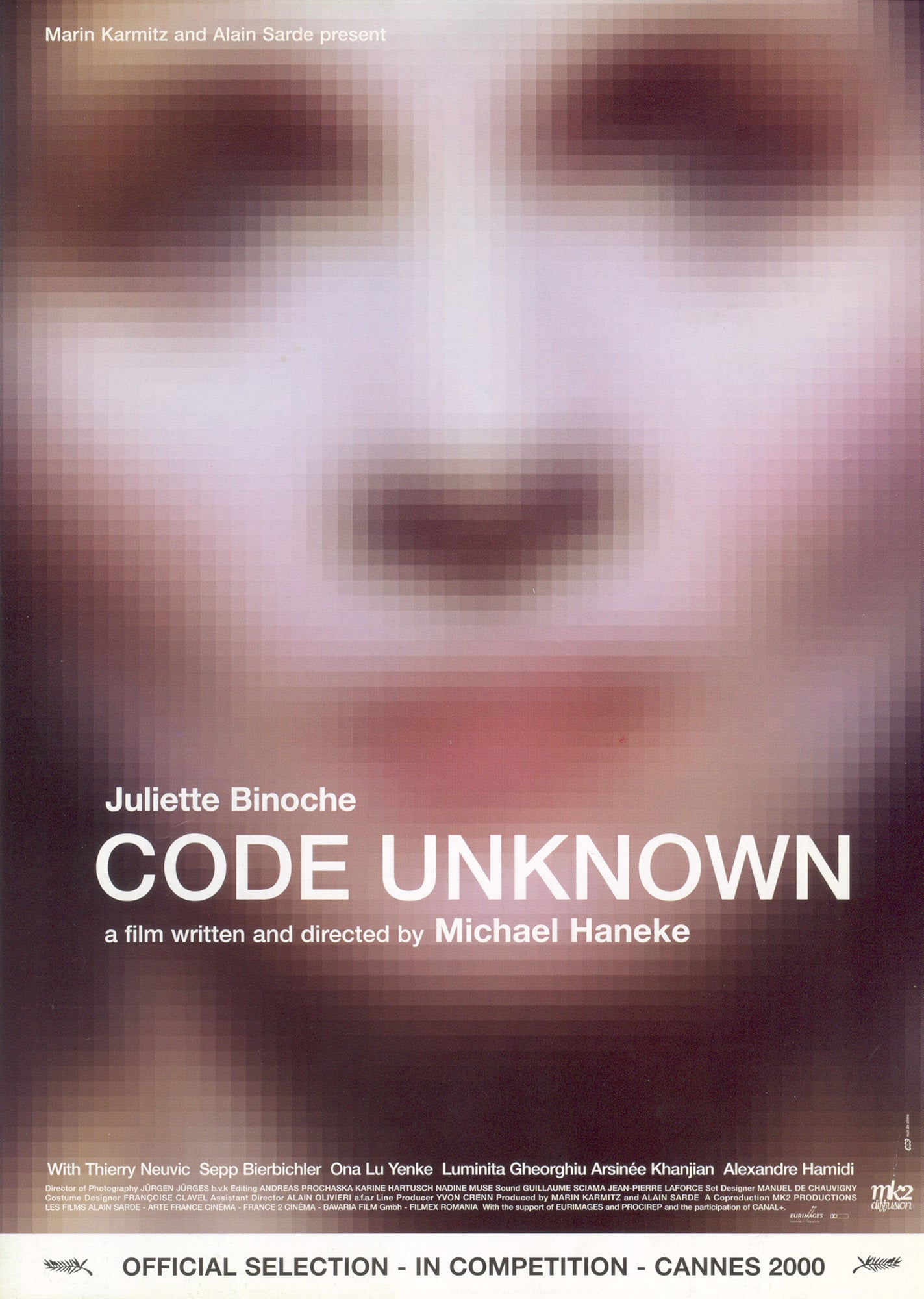
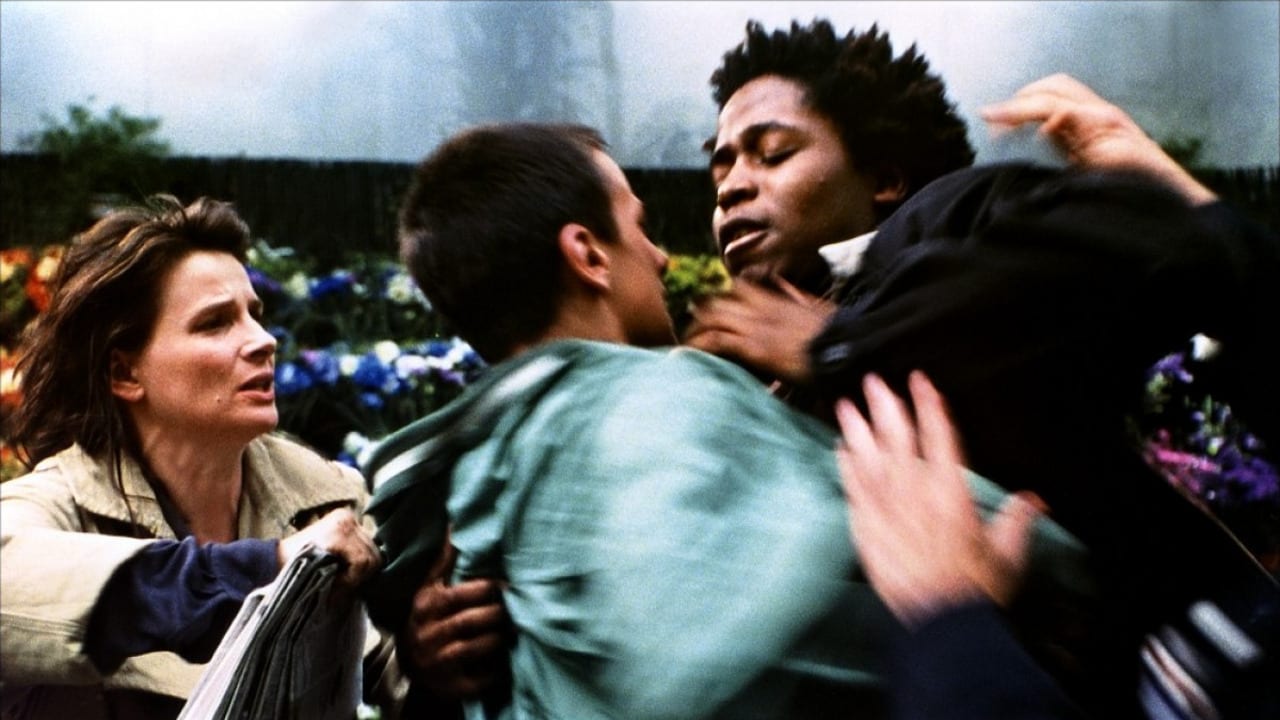
Aptly subtitled “Incomplete Tales of Several Journeys,” the fifth feature by Austrian director Michael Haneke (2000, 117 min.), his best to date, is a procession of long virtuoso takes that typically begin and end in the middle of actions or sentences, constituting not only an interactive jigsaw puzzle but a thrilling narrative experiment comparable to Alain Resnais’ Je t’aime, je t’aime, Jacques Rivette’s Out 1, and Rob Tregenza’s Talking to Strangers. The film’s second episode is a nine-minute street scene involving an altercation between an actress (Juliette Binoche in a powerful performance), her boyfriend’s younger brother, an African music teacher who works with deaf-mute students, and a woman beggar from Romania; the other episodes effect a kind of narrative dispersal of these characters and some of their relatives across time and space. I couldn’t always keep up with what was happening, but I was never bored, and the questions raised reflect the mysteries of everyday life. This is Haneke’s first feature made in France, and the title refers to the pass codes used to enter houses and apartment buildings in Paris — a metaphor for codes that might crack certain global and ethical issues. Read more
Written for Sight and Sound on August 5, 2015. — J.R.
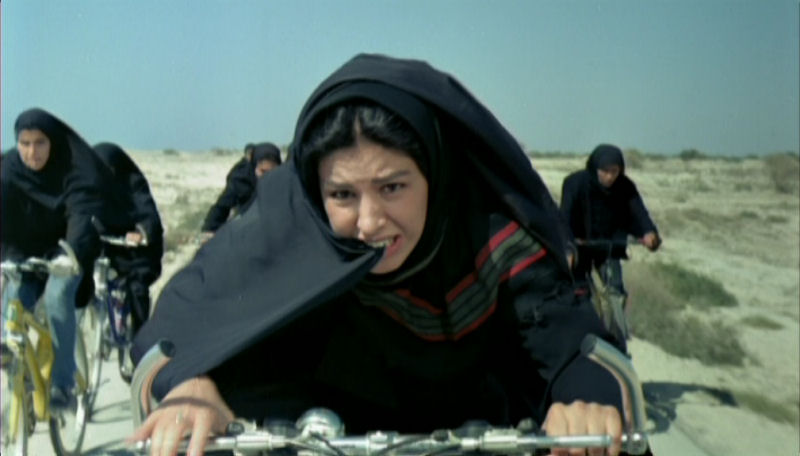
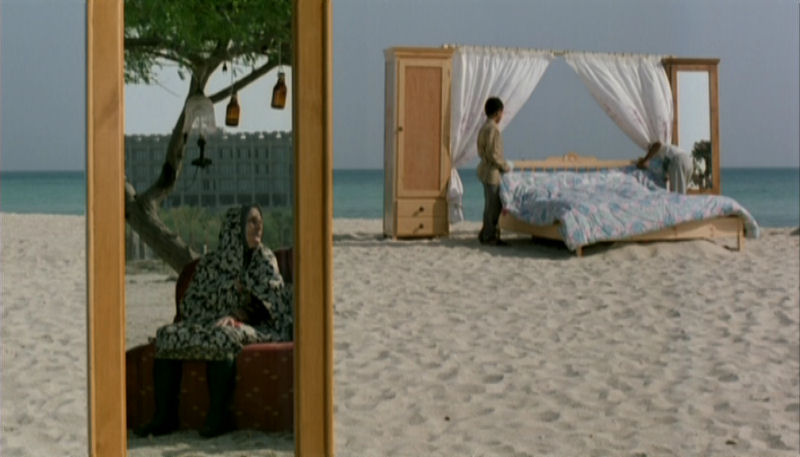
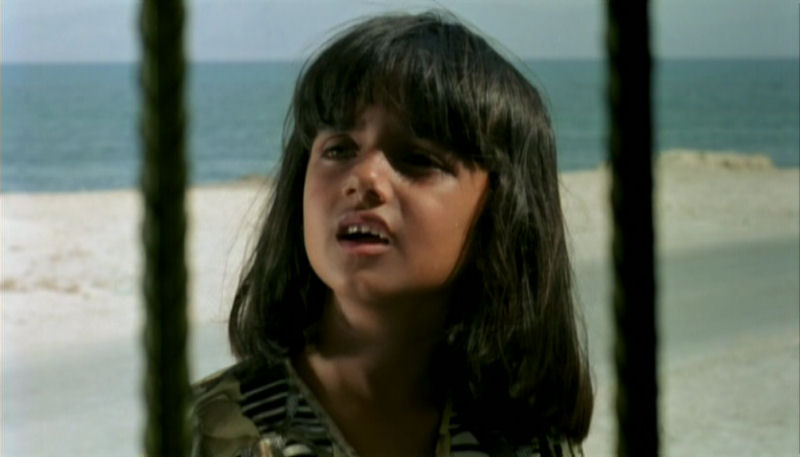
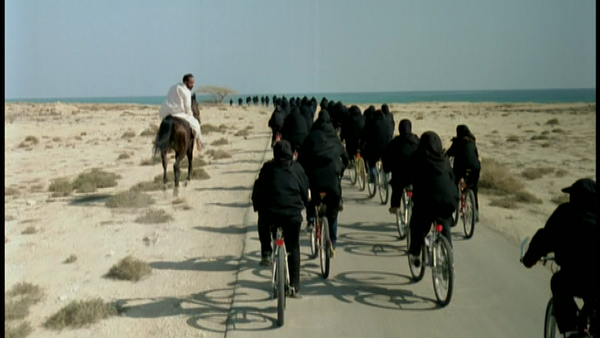
The Day I Became a Woman (2000)
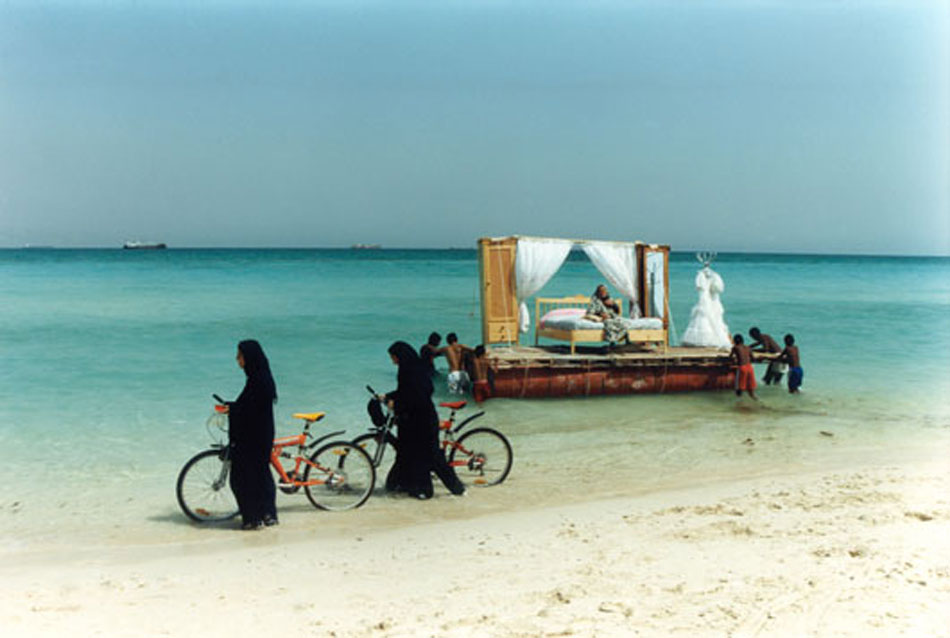
Marziyeh Meskini’s first feature, shot exclusively in exteriors on gorgeous Kish island in Iran, tells three successive tales of rebellious female empowerment at separate ages: Havva enjoys sharing tamarind pulp and a lollipop with a male friend a few hours before she turns nine and officially loses her freedom by becoming a woman. Ahoo fiercely pedals her bicycle with other women while her husband and other male relatives on horses try to restrain her. Houra, a dowager, buys a beach full of home furnishings at a nearby mall and has them hauled out to sea. All three tales are both allegorical and sensual, and the leisurely pacing of the first is followed by the constant motion of the second. The Surrealist deconstruction of domestic space in the third brings all three characters together, and once again turns the censorship rules into creative opportunities. (Jonathan Rosenbaum)
Read more
This is the 11th one-page bimonthly column that I published in Cahiers du Cinéma España; it appeared in their March 2009 issue. — J.R.
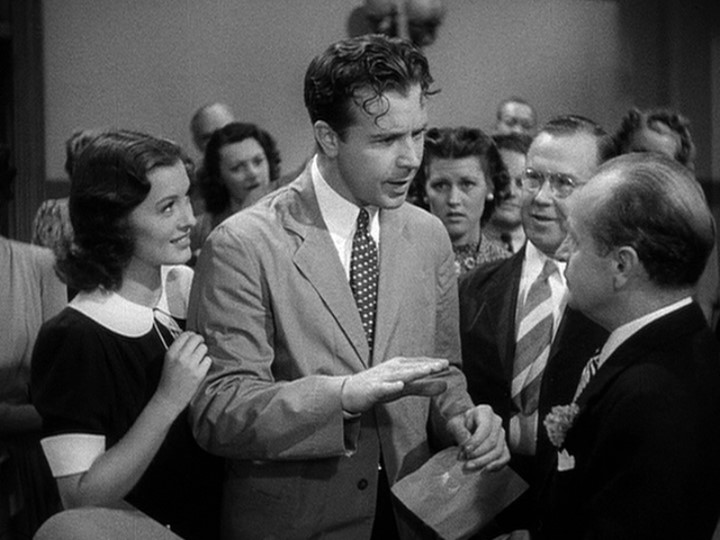
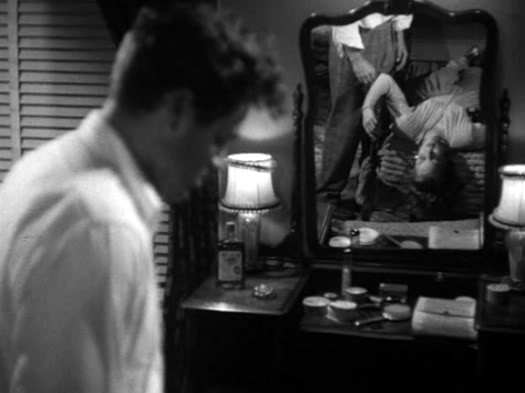
Tomorrow I start teaching the final semester of a course and film series I’ve been offering at Chicago’s School of the Art Institute devoted to world cinema of the 30s, 40s, 50s and 60s. To provide a segue between the Depression of the 30s and the 40s, I’ll be starting with a double feature devoted to economic desperation, Preston Sturges’s Christmas in July (1940) and Edgar G. Ulmer’s Detour (1945).
Two of the most popular films I showed last fall were Lubitsch’s The Man I Killed (1932) and McCarey’s Make Way for Tomorrow (1937). I selected them before last year’s economic recession started, and the congruence and relevance of certain themes — remorse about warfare and spurious patriotism, crowded family apartments and neglect of the elderly — probably added to their appeal. But the contemporary impact of films is always difficult to predict. I’m convinced that a significant part of what inspired Clint Eastwood to make Flags of Our Fathers and Letters from Iwo Jima was the U.S. occupation of Iraq, but this relevance wasn’t discussed in the press. Read more
From the Chicago Reader (July 29, 2005). — J.R.

The World
**** (Masterpiece)
Directed and Written by Jia Zhang-ke
With Zhao Tao, Chen Taishen, Jing Jue, Jiang Zhongwei, Huang Yiqun, Wang Hongwei, Liang Jingdong, Ji Shuai, and Alla Chtcherbakova
The title of Jia Zhang-ke’s 2004 masterpiece, The World — a film that’s hilarious and upsetting, epic and dystopian — is an ironic pun and a metaphor. It’s also the name of the real theme park outside Beijing where most of the action is set and practically all its characters work. “See the world without ever leaving Beijing” is one slogan for the 115-acre park, where a monorail circles scaled-down replicas of the Eiffel Tower, the Taj Mahal, London Bridge, Saint Mark’s Square, the Leaning Tower of Pisa, the Pyramids, and even a Lower Manhattan complete with the Twin Towers. Extravagant kitsch like this may offer momentary escape from the everyday, but Jia is interested in showing the everyday activities needed to hold this kitsch in place as well as the alienation in this displaced world — and therefore in the world in general, including the one we know.
Jia, with his choreographed wide-screen long takes in long shot, may be the best cinematic composer of figures in landscapes since Michelangelo Antonioni. Read more