From the October 2010 Sight and Sound. I regret a few errors that crept into this piece as originally published, all of which were my own fault and all of which are corrected here. — J.R.
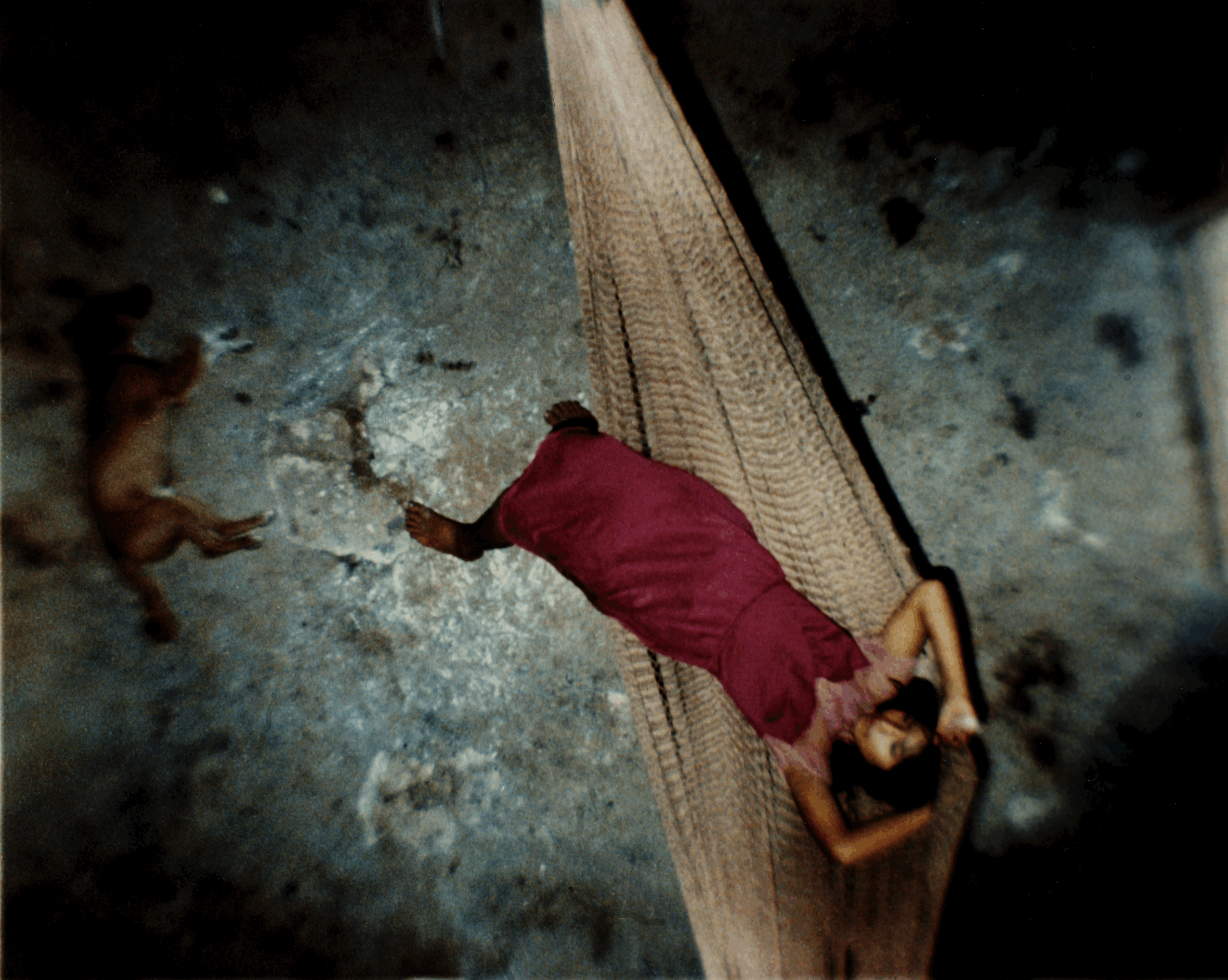
In the interests of full disclosure, I should mention at the outset that Françoise Romand has been a good friend for over two decades. But I hasten to add that she became a friend because of my immoderate enthusiasm for Mix-Up (1985), her first film — one of the strangest as well as strongest documentaries that I know.
To make matters even more mixed-up, I should also point out that, on the region-free DVD bonus of this hour-long French documentary in English, Françoise, after interviewing herself in French, shows her filming of my talking head in English while I attempt to explain why I find her film so powerful and exciting. What follows represents another try.
Filmed over just twelve days, but recounting a multilayered real-life story that covers nearly half a century, Mix-Up recounts and explores what ensued after two English women, Margaret Wheeler and Blanche Rylatt, respectively upper-middle-class and working-class, gave birth to daughters in November 1936 in a Nottingham nursing home, and the babies were inadvertently switched. Read more
From the Chicago Reader (August 26, 2005). — J.R.
9 Songs
** (Worth seeing)
Directed by Michael Winterbottom
With Kieran O’Brien and Margo Stilley
Sex, drugs, and rock ‘n’ roll used to be a commercially surefire package that today seems less automatically reliable. Which is presumably why Michael Winterbottom’s 9 Songs arrives in Chicago 15 months after its Cannes premiere — during the dog days of summer, when art-house films that distributors aren’t quite sure what to do with tend to surface. Sex is the main course, the side dishes are nine concert performances given by rock bands, and the spices are a few glancing references to cocaine and prescription drugs.
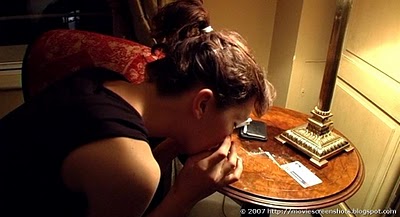
Even though it has few of the narrative elements we usually expect, this 69-minute movie is surprisingly fresh and original. The mise en scene, the editing (by Winterbottom and Mat Whitecross), and the camerawork by Marcel Zyskind keep it lively and attractive. The lighting is often exquisite, and the actors sometimes seem like inspired jazz players.
9 Songs is intermittently arousing, but though the sex is real, it isn’t really porn. Jonathan Romney offers a pretty precise description in the London Independent: “Essentially, 9 Songs bets us that it can make sex stand for all the other things that routinely convey character.” Read more
From the Chicago Reader (November 1, 1996). — J.R.

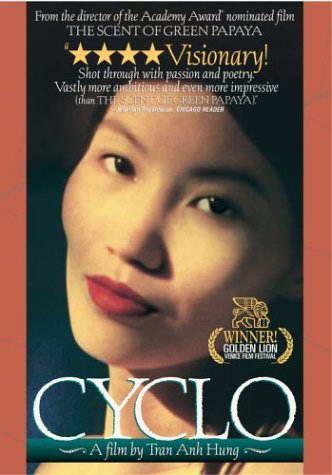

Cyclo
Rating **** Masterpiece
Directed and written by Tran Anh Hung
With Le Van Loc, Tony Leung-Chiu Wai, Tran Nu Yen Khe, Nguyen Nhu Quynh, Nguyen Hoang Phuc, and Ngo Vu Quang Hai.
Tran Anh Hung’s first feature, The Scent of Green Papaya, redefined what we mean by “inside” and “outside,” architecturally as well as socially and psychologically. The same could be said about the vastly more ambitious and even more impressive Cyclo, which was shot in Ho Chi Minh City — unlike The Scent of Green Papaya, which was shot in a studio outside Paris — and is set in the present.
The Scent of Green Papaya — the first and so far only Vietnamese film ever nominated for an Academy Award — was inspired by the filmmaker’s memories of his mother and was set in 1951 and 1961. Tran said that his next feature would be based on recollections of his father. This led me to expect another period film, which Cyclo isn’t — but there’s no question that it’s a film about patriarchy. The first and last things the 18-year-old hero (Le Van Loc) says offscreen concern his late father — a pedicab driver who was run over by a truck — and there’s the sense throughout that he’s stuck in an endless cycle of male misery passed from one generation to the next. Read more
From the Chicago Reader (January 16, 2004). — J.R.

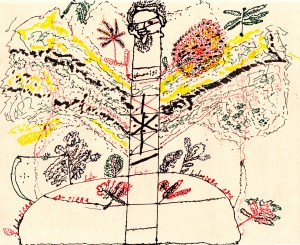
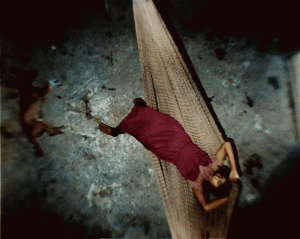
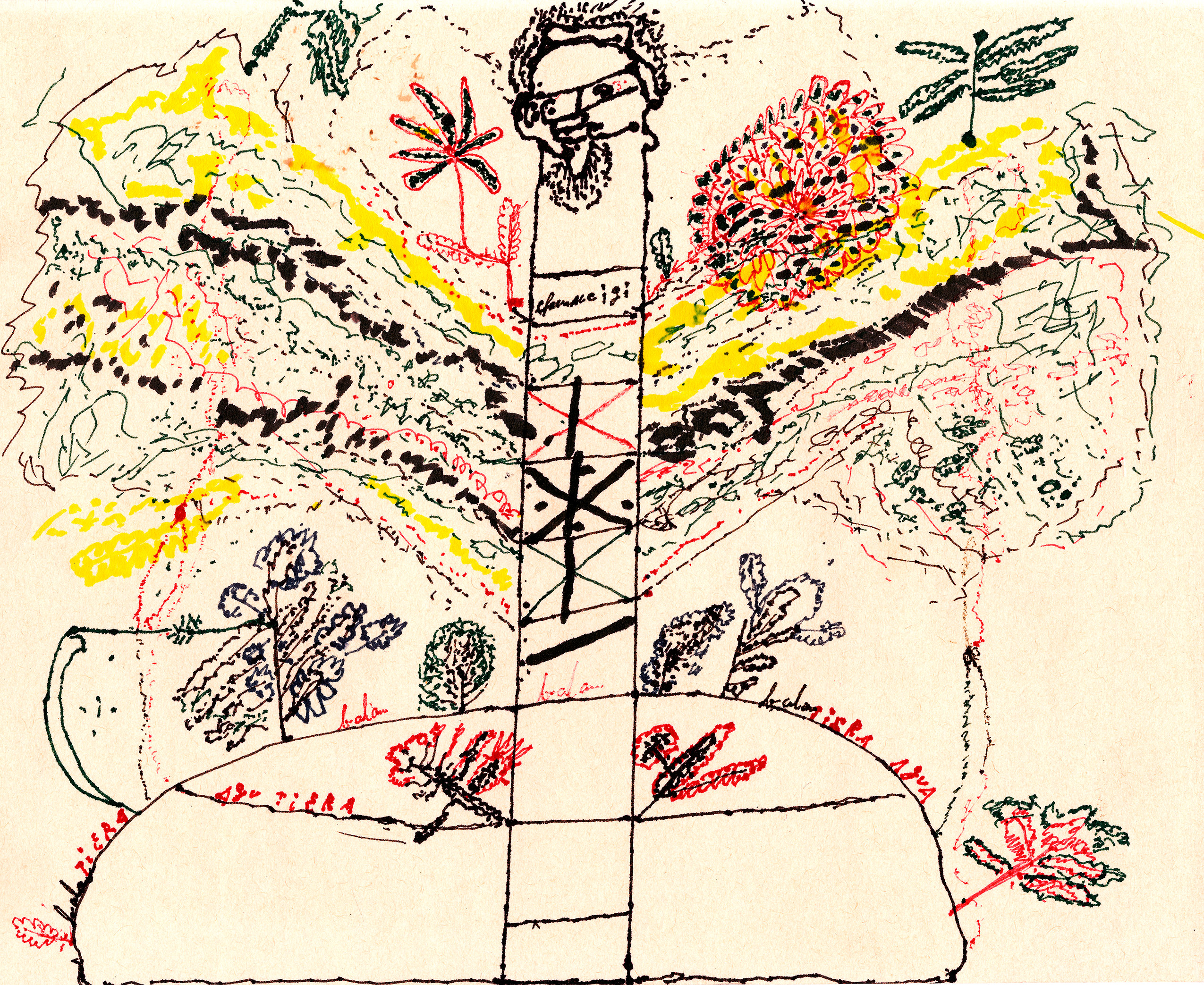
A world premiere of the first feature by Peter Thompson, perhaps the most original and important Chicago filmmaker you never heard of, showing with one of his best shorts. Over a decade in the making, El Movimiento (2003, 90 min.) follows the relationship between Don Chabo, a Mayan shaman in Yucatan, and William F. Hanks, the Chicago anthropologist he improbably selected as his sole apprentice, showing how both men think, work, and dream. Thompson’s skill as a poetic organizer and interpreter of disparate materials is even more apparent in his mysterious and provocative Universal Hotel (1986, 28 min.), which tracks his detailed research into photographs of a freezing and thawing experiment conducted in Dachau with a German prostitute and a Polish prisoner. Apart from offering fascinating glimpses into alternative medical practices, both films are profound meditations on the passage of time. (JR)
Read more
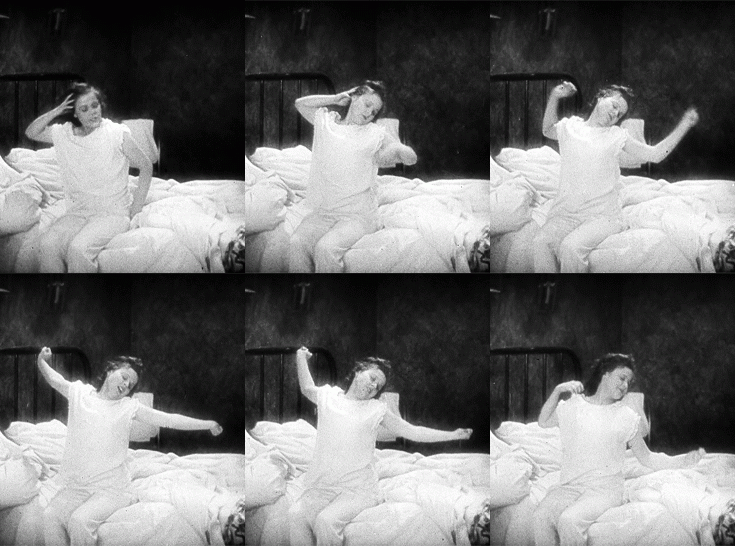
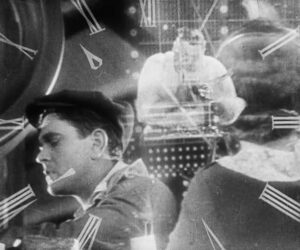
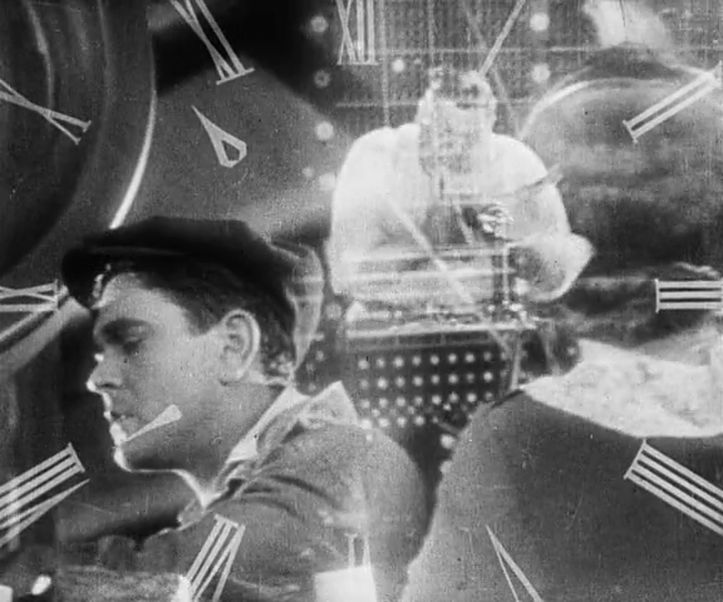
Paul Fejos’s exquisite, poetic 1928 masterpiece about love and estrangement in the big city deserves to be ranked with F.W. Murnau’s Sunrise and King Vidor’s The Crowd from the same period, though it’s not nearly as well-known. Equally neglected is Fejos himself, a peripatetic Hungarian who made striking films in Hungary, Hollywood, Austria, and France in the late silent and early sound era before becoming an anthropologist — and making a few ethnographic films that are even harder to find. Lonesome, which has some dialogue, begins with a dazzling evocation, using superimpositions and diptychs, of the hero and heroine, who haven’t yet met, as they wake and pursue their morning work routines. They meet at Coney Island that afternoon, lose track of each other in a crowd, then are reunited back in the city in a surprising diptychlike scene. Fejos was already interested in ethnographic archetypes when he made this picture, which makes city life seem like a labyrinth in a fairy tale — as intricate and inscrutable, but also as enchanted. 69 min. The opening event of the weekend symposium “Cinema as Vernacular Modernism”; a 35-millimeter print will be screened. Univ. of Chicago Doc Films, 1212 E. 59th St., Read more
From the Chicago Reader (March 4, 2005). — J.R.

Chain
*** (A must-see)
Directed and Written by Jem Cohen
With Miho Nikaido and Mira Billotte

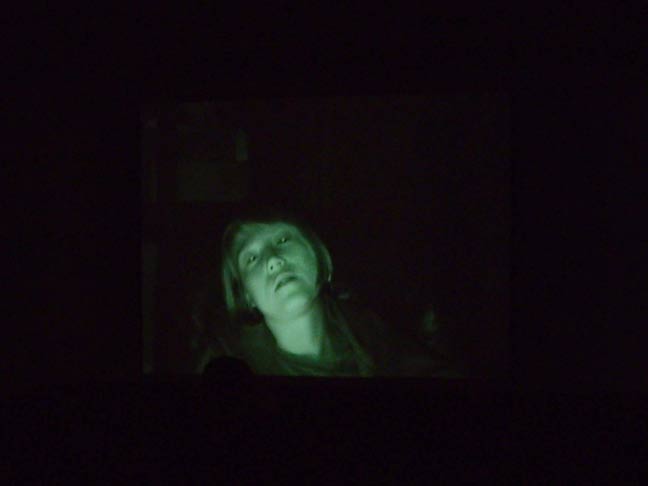
Chain, the first solo feature by film and video artist Jem Cohen, is a strange mix of documentary and fiction about malls and similar commercial spaces. It’s meditative rather than action packed, and the creepiness it exposes has as much to do with absence as presence. But it deserves more attention than the single local screening it’s getting at Columbia College. I suspect it’s not getting more because it was partly funded by European television, because distributors never know how to package films that merge documentary and fiction, and because it belongs to the netherworld between film and art (it’s playing in conjunction with the Museum of Contemporary Photography’s exhibition “Manufactured Self”). It hasn’t even made the art-house circuit, which is a loss: it’s highly ambitious, has plenty to say, and is far from inaccessible.
Chain was shot in 16-millimeter over six years in hundreds of malls around the world — Atlanta, Dallas, Orlando, Berlin, Paris, Warsaw, Melbourne. That it’s impossible to tell the malls’ locations is part of the point. “I began the project,” says Cohen in his press notes, “by deciding to focus on the corporate and commercial landscapes that I had previously ‘framed out’ in my filmmaking, and to try to understand how these places were affecting the people within them. Read more
Here’s the unedited version of a review I wrote for In These Times, published in their September 3, 2008 issue. — J.R.
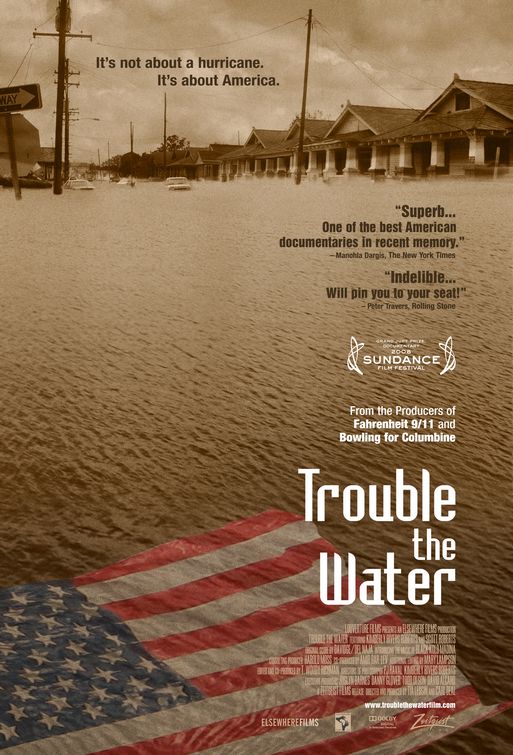
I can’t quite follow all of the offscreen sound bites preceding the main title of Tia Lessen and Carl Deal’s Trouble the Water. But it’s clear from the media voices I can transcribe that they concisely present this documentary’s agenda — at the same time we see the intertitle “September 14th 2005/Central Louisiana” appear onscreen and then get our first glimpses of some of the people who’ll shortly become this documentary’s central characters, seated around a picnic table.
Two of the offscreen voices come from George W. Bush; the others all sound like they come from newscasters or interviewees:
1. Read more
I no longer recall where this 2008 review was written for. — J.R.
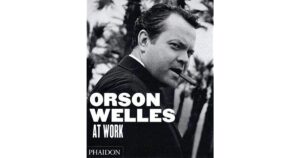
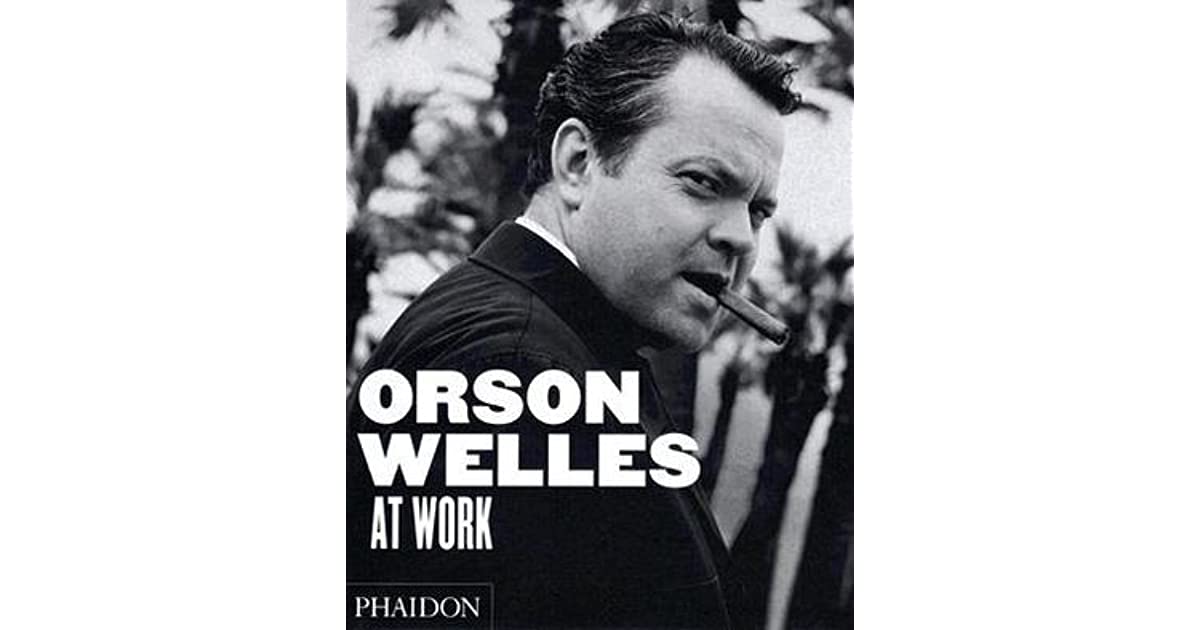
ORSON WELLES AT WORK by Jean-Pierre Berthomé and François Thomas. London/New York: Phaidon Press, 2008. 320 pp.
Considering how much popular currency is enjoyed by works about Orson Welles that are poorly researched, possibly because they respond so dutifully to existing attitudes and mythologies about the man — most notably, David Thomson’s slipshod biography Rosebud and Michael Epstein and Thomas Lennon’s Oscar-nominated but fanciful documentary The Battle Over Citizen Kane (both 1996) — a reliable book about his filmmaking that doesn’t stoop to special pleading is always welcome. This one, originally published in French a couple of years ago — in an ongoing series of beautifully and copiously illustrated coffee-table books that has already yielded Bill Krohn’s indispensable Hitchcock at Work — is special not just for the amount of fresh information it offers. It’s also invaluable because of the unusual perspectives its two authors bring to their subject.
Jean-Francois Berthomé, author of a definitive book on Jacques Demy, is also an expert on movie set design, the subject of another of his books. François Thomas, an Alain Resnais specialist, once wrote a dissertation on Welles’s sound work (in film, radio, TV, and theatre) that was over a thousand pages long. Read more
From the Chicago Reader (October 31, 2003). — J.R.
Sylvia
** (Worth seeing)
Directed by Christine Jeffs
Written by John Brownlow
With Gwyneth Paltrow, Daniel Craig, Jared Harris, Amira Casar, Andrew Havill, Lucy Davenport, Blythe Danner, and Michael Gambon.
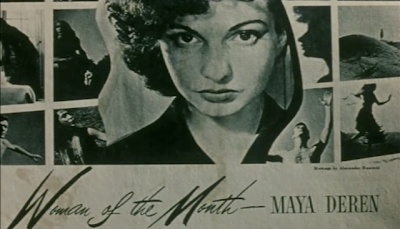
In the Mirror of Maya Deren
**** (Masterpiece)
Directed by Martina Kudlacek


Greasing the bodies of adulterers
Like Hiroshima ash and eating in.
The sin. The sin.
— Sylvia Plath, “Fever 103 °“

In film, I can make the world dance.
— Maya Deren
In college it always seemed like the guys who were poets got more girls than the prose writers. The assumption was that poets had all the romance and sensuality associated with their medium working for them. Poetry, after all, isn’t just a block of printed material; it’s an activity, and one that can turn people on sexually as well as spiritually.
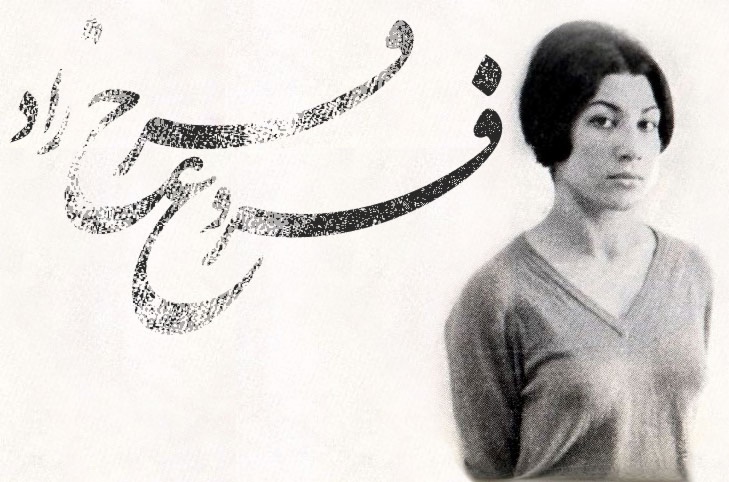
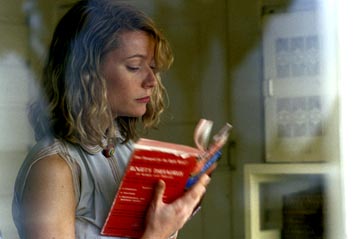
In cultures such as those of Russia and Iran sexual and spiritual qualities tend to run neck and neck: the great Persian poet Forough Farrokhzad (1935-’67), a fan of Sylvia Plath, retains a mythic allure that combines the auras of Joan of Arc, Billie Holiday, and Marilyn Monroe. And an erotic charge is one of the first things that Sylvia, a biopic about Sylvia Plath (1932-’63), gets right. Read more
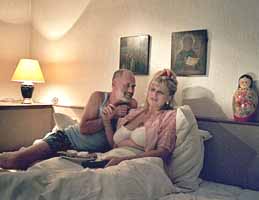
The blighted relationships explored by a Prague psychologist with marital troubles of her own (Jana Janekova, excellent) are the focus of Vera Chytilova’s 2006 Czech feature, her best in many years. With its aggressively mobile camera and abrupt editing, the movie seems to lurch from one miniplot to the next as if in a punch-drunk trance. Like much of Chytilova’s best work (Daisies, The Apple Game), it sometimes verges on hysteria, but it’s clearly enhanced by the experience of screenwriter Katrina Irmanovova, a therapist herself. And her fictional patients evoke the letter writers of Nathanael West’s novel Miss Lonelyhearts in their cumulative misery, suggesting some poetic yet plausible version of the modern world. In Czech with subtitles. 108 min. (JR) Read more
From Film Comment (March-April 2009). — J.R.
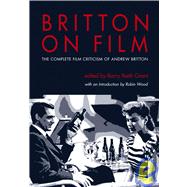

Britton on Film
The Complete Film Criticism of Andrew Britton
Wayne State University Press, $39.95
Even if you don’t agree with the claim in Robin Wood’s Introduction that Britton (1952-1994) “was, and remains, quite simply, the greatest film critic in the English language,” this hefty collection edited by Barry Keith Grant, 534 large-format pages long, certainly proves that Wood’s cantankerous Marxist disciple, who published mainly in Movie (U.K.) and CineAction (Canada), was a formidable figure. To my taste, the two best demonstrations of his intellectual and ethical strength are his separately published Katherine Hepburn: The 30s and After (1984), the best book-length study of a film actor that I know (misleadingly retitled Katherine Hepburn: Star as Feminist in its U.S. edition), and his passionate defense of Mandingo in Movie (1976), which single-handedly established that film’s importance amidst a chorus of jeers. And even if the absence of the first study from this book already makes its subtitle not quite accurate, the full range of Britton as both a polemicist and an analyst of everything from Detour to Madame de… to Jaws to Tout va bien is amply on display here.
One limiting factor here is the amount of space devoted to refuting such academic touchstones as Screen in the 70s and The Classical Hollywood Cinema — engaging with labyrinthine debates that seem less consequential now, at least to nonacademics like myself, than they did at the time. Read more
This appeared in the May 1, 2008 issue of the Chicago Reader. — J.R.
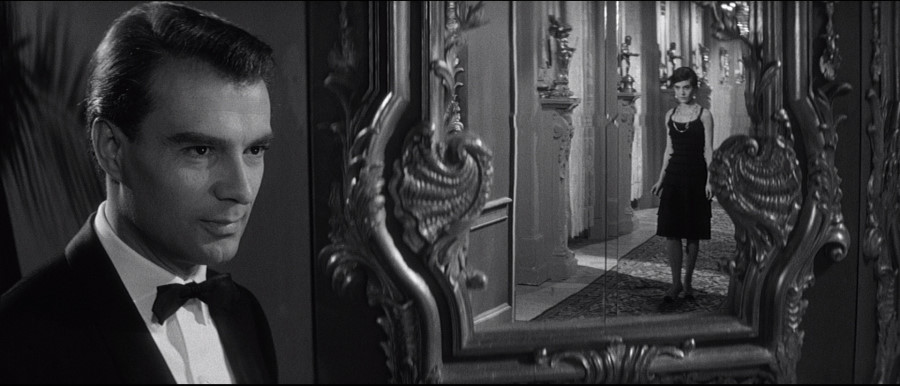
Last Year at Marienbad ****
DIRECTED BY ALAIN RESNAIS
WRITTEN BY ALAIN ROBBE-GRILLET
WITH GIORGIO ALBERTAZZI, DELPHINE SEYRIG, AND SACHA PITOEFF
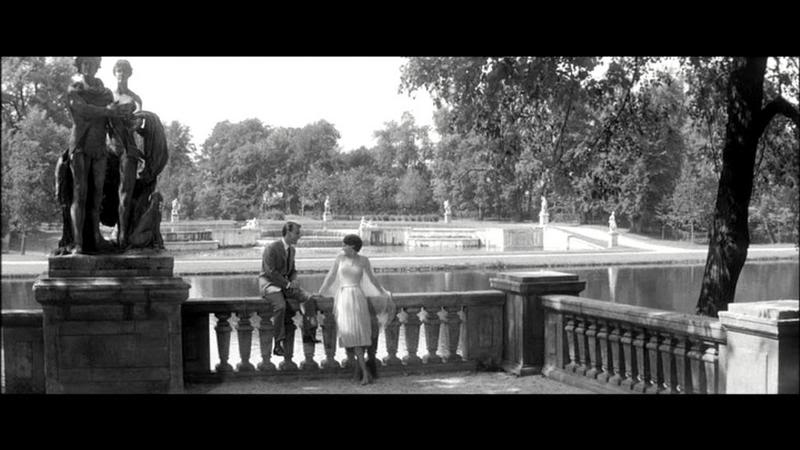
It’s too bad Last Year at Marienbad was the most fashionable art-house movie of 1961-’62, because as a result it’s been maligned and misunderstood ever since. The chic allure of Alain Resnais’ second feature — a maddening, scintillating puzzle set in glitzy surroundings — produced a backlash, and one reason its defenders and detractors tend to be equally misguided is that both respond to the controversy rather than to the film itself.
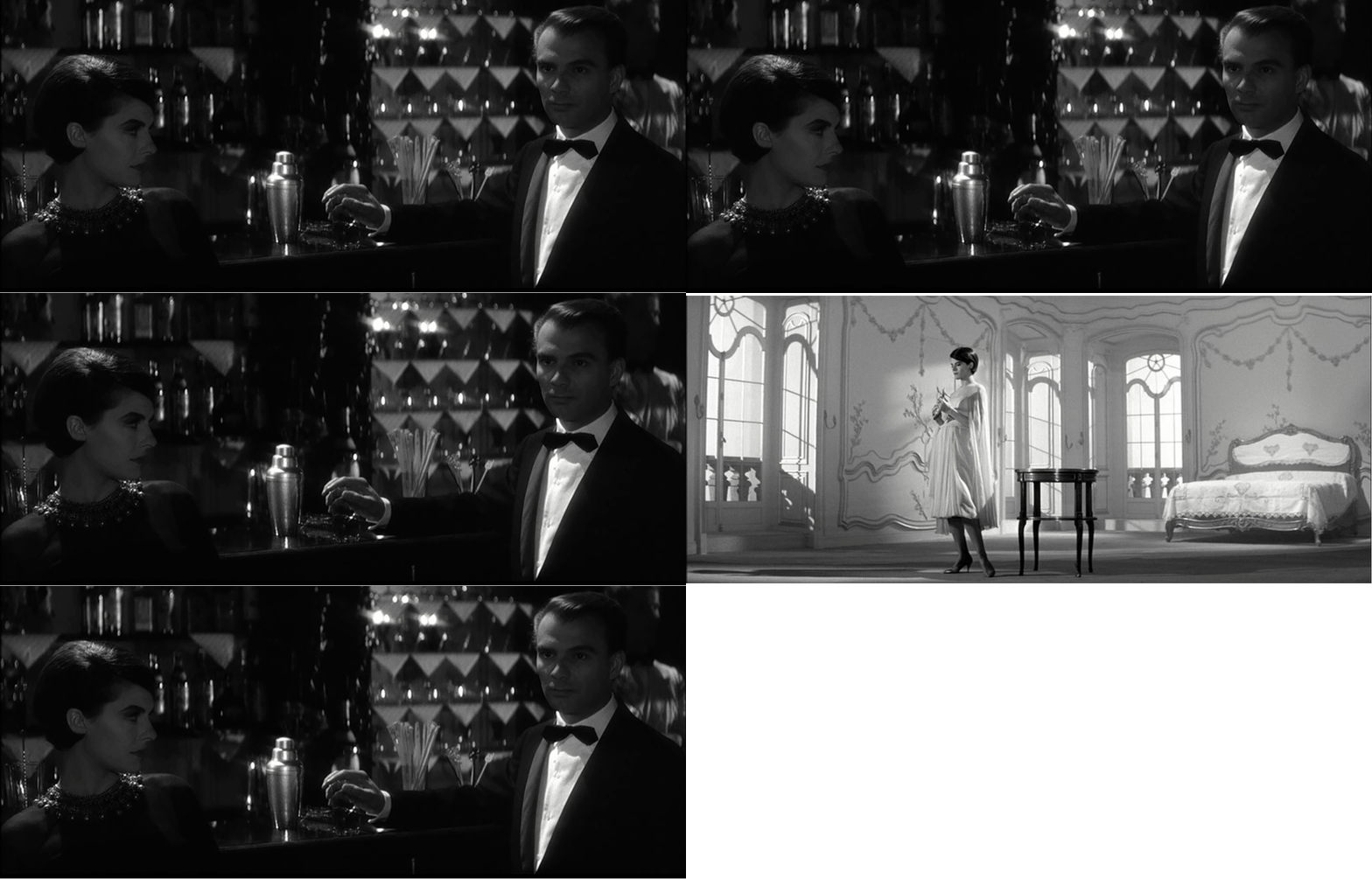
“I am now quite prepared to claim that Marienbad is the greatest film ever made, and to pity those who cannot see this,” proclaimed one French critic, even as others ridiculed what they perceived as the film’s pretentious solemnity — overlooking or missing its playful, if poker-faced, use of parody as well as its outright scariness. Dwight Macdonald, who admitted to seeing the movie three times in a week, confessed in Esquire that it made him feel like a dog in one of Pavlov’s experiments. In the Village Voice, on the other hand, Jonas Mekas claimed that “the film begins and ends in the brain of Alain Robbe-Grillet, who wrote the script” and added, “Its forced intellectualism is sick.” Read more
From the Chicago Reader (May 7, 2004). — J.R.


Ford Transit
*** (A must-see)
Directed by Hany Abu-Assad
Written by Abu-Assad and Bero Beyer.
Super Size Me
* (Has redeeming facet)
Directed and written by Morgan Spurlock.
What do we expect from documentaries? Do we seek to be informed by them or merely entertained? If it’s the former, do we expect some guidance about how to process the information?
The documentaries I’ve seen lately have made me ponder these questions. For example, last week at the Buenos Aires Festival of Independent Film I saw a fascinating Palestinian feature called Ford Transit (showing twice this week at Facets Cinematheque) that freely mixes fiction and nonfiction as if they were alternate routes to the same goal. I also attended the world premiere of a more conventional documentary, The Take, which was made for Canadian TV and may never screen here. Finally, there’s Super Size Me (which opens at the Landmark this week), a film that has been getting considerable attention since it premiered at the Sundance festival last January.
Let’s start with The Take, which was directed by Avi Lewis and written by Naomi Klein, who’s a columnist for the Nation and the Guardian and author of the international best seller No Logo, a journalistic account of the worldwide antiglobalization movement. Read more
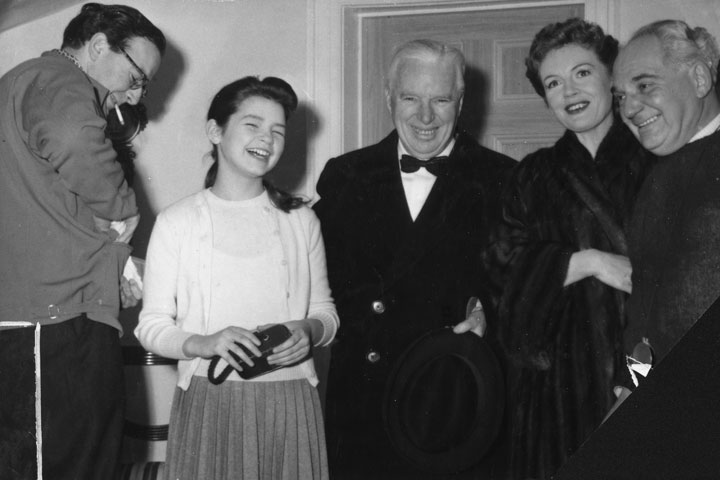
I was interviewed by Estado de Minas, the largest newspaper in Belo Horizonte, Brazil, shortly before and in connection with my plans to teach a ten-hour course on Charlie Chaplin there in mid-August 2012. (They ran some of my comments on criticism but omitted what I had to say about Chaplin.) Here are their questions and my responses….The first photo below shows Chaplin in a London film studio with Cy Endfield (on the left). — J.R.
1. Questions about Chaplin:
Why do we still love Charlie Chaplin? What makes him so relevant in 2012?
These are questions that I hope my course will help to answer. Right now, one of my main reasons for wishing to teach this course is that I don’t know the answers to these questions.
Why do you think Chaplin must be reintroduced to contemporary filmgoers? Isn’t he universally recognized and understood enough already?
It would be presumptuous of me to speak about whether or not Chaplin is adequately recognized today in Brazil —or, for that matter, in any country that I haven’t visited and/or whose language I neither speak nor read. But to make a generalization based on my experience, I would say that Chaplin tends to be universally recognized today as a great performer, but very widely unrecognized, undervalued, and misunderstood as a filmmaker. Read more
Adapted and condensed from “Comparaisons à Cannes,” translated by Jean-Luc Mengus, Trafic no. 19, été 1996. -– J.R.
In his introduction to Understanding Media, Marshall McLuhan
records the consternation of one of his editors that “seventy-five
per cent of your material is new. A successful book cannot venture
to be more than ten per cent new.” From the vantage point of this year’s
Cannes Festival, a compulsion to contextualize everything new in
relation to something familiar reveals a comparable problem. Indeed, the
kind of movie pitch parodied at the beginning of Altman’s The Player,
in which every project becomes some version of one or two previous
hits — “The Graduate, Part 2,” “The Manchurian Candidate meets
Ghost” — has by now become a kind of journalistic shorthand for the
critic eager to make the film fully accessible once it’s released. This
necessity of establishing old references in relation to new ideas is above
all an indication of how thoroughly the priorities of the film business
have infiltrated film criticism.
As useful as this practice is, it often functions as a kind of nervous
tic. For the writer or speaker too lazy to perform the less alluring task
of description, it poses a constant temptation — a means of short-
circuiting the critical process through a kind of magic or alchemy that
suddenly makes the invisible visible. Read more