From the Chicago Reader (December 26, 2001). — J.R.
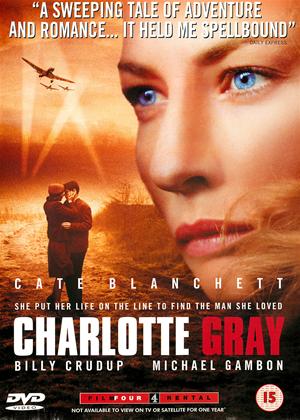
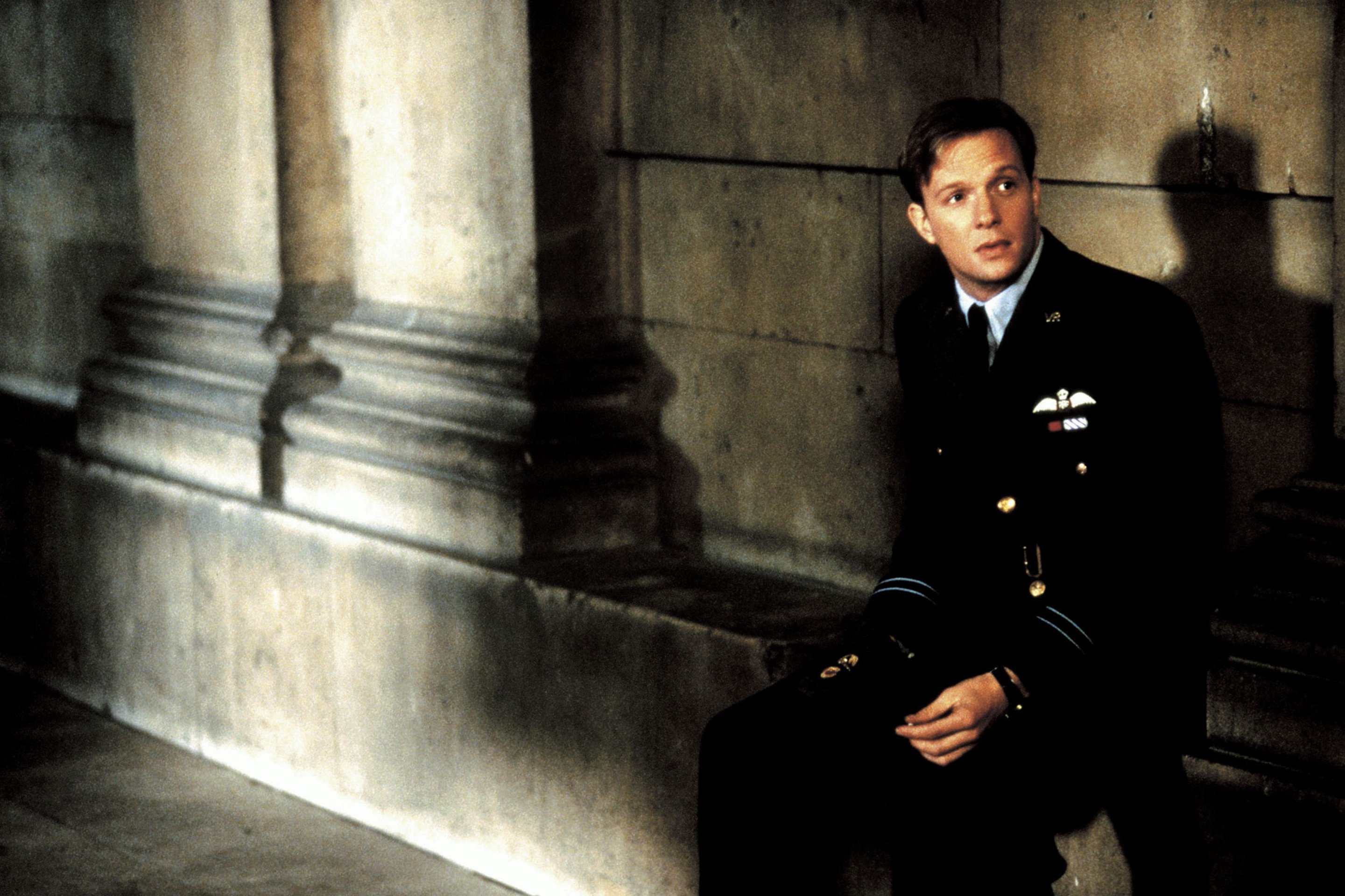
This movie reveals something interesting: during the occupation of France, Nazi officers and French peasants all spoke English with English accents, as did English resistance fighters — aside from the occasional spurt of French and German to identify who’s who. I never thought that a thoughtful director like Gillian Armstrong would get trapped in such Euro-nonsense, but I guess there’s a first time for everything. Jeremy Brock wrote the script, and the landscapes are attractive. Under the circumstances, the omnipresent Cate Blanchett does pretty well in the title role. With Billy Crudup, Michael Gambon, and Rupert Penry-Jones. 121 min. (JR)
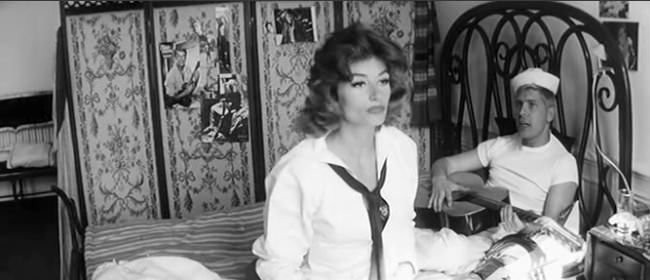
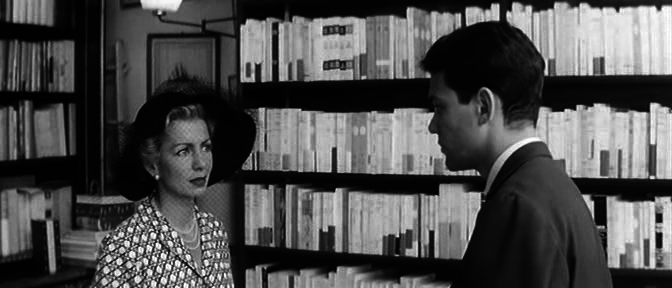
Jacques Demy’s first and in some ways best feature (1961, 90 min.), shot in exquisite black-and-white ‘Scope by Raoul Coutard, is among the most neglected major works of the French New Wave. Abandoned by her sailor lover, a cabaret dancer (Anouk Aimee) brings up their son while awaiting his return and ultimately has to choose among three men. Chock-full of film references (to The Blue Angel,Breathless, Hollywood musicals, and the work of Max Ophuls, among other things) and lyrically shot in Nantes, the film is a camera stylo love letter, and Michel Legrand’s lovely score provides ideal nostalgic accompaniment. In his third feature and biggest hit, The Umbrellas of Cherbourg, Demy settled on life’s disappointments; here at least one major character gets exactly what she wants, and the effect is no less poignant. With Marc Michel, Jacques Harden, and Elina Labourdette (the young heroine in Robert Bresson’s 1945 Les dames du Bois de Boulogne). A restored 35-millimeter print will be shown. In French with subtitles. Music Box, Friday through Monday, May 24 through 27.
This appeared in the May 22, 1998 issue of the Chicago Reader. — J.R.
Bulworth
Rating *** A must see
Directed by Warren Beatty
Written by Beatty and Jeremy Pikser
With Beatty, Halle Berry, Oliver Platt, Jack Warden, Paul Sorvino, Don Cheadle, and Amiri Baraka.
By Jonathan Rosenbaum
“Warren Beatty co-wrote, directed, and stars in this satire about a self-destructive U.S. senator using race-baiting tactics to get reelected.” I assume Mark Caro hadn’t seen Bulworth when he wrote this capsule for the Chicago Tribune‘s May 10 summer movie preview. It only goes to show the risks you run when you try to make a movie that tells the truth politically and then limit this “truth” to a series of sound bites; sooner or later that form of TV abbreviation is going to bite you back.
More precisely, Bulworth is about a Democratic senator from California (Beatty), up for reelection in 1996, who is having a nervous breakdown, takes out a contract on himself, and then finds himself blurting out the truth instead of the usual packaged lies during his campaign. He hasn’t slept for days, and after throwing caution to the winds and going off to a hip-hop club with Nina (Halle Berry) and two other young women from South Central LA, he starts parsing out all his public statements in rap, scandalizing his staff and various media people with the form and content of his forthright declarations. Read more
From the Chicago Reader (March 23, 2007). This film is currently available for free on YouTube. — J.R.
This 2006 feature is my favorite to date by English writer-director Christopher Petit (Radio On). Subtitled both On Stalking and Being Stalked and A Story of Obsessive Passion, it’s about a young woman (Rebecca Marshall) stalking a London academic (Gregory Dart, author of the source novel) who is himself obsessed with a woman in Leipzig. Both paranoid and lyrical, the movie visualizes its strange tale mainly through ersatz surveillance footage, and the music is appropriately Hitchcockian. To complicate matters, the first-person voice-over is shared by Marshall and Petit himself (his portion is full of film references). Formally this is a dazzler. 77 min. (JR)
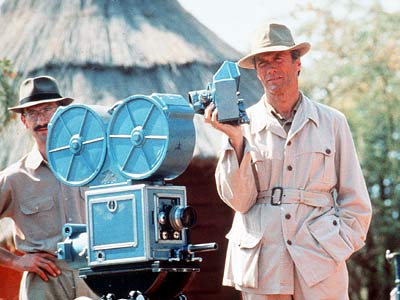
Posted in Moving Image Source, December 1, 2009. This is the second time I wrote at length about White Hunter, Black Heart, and this essay was reprinted in Goodbye Cinema, Hello Cinema; the earlier piece, written 19 years earlier, is available here. [August 31 footnote: After watching Eastwood’s embarrassing and often fumbling impromptu speech at the Republican National Convention last night, I treasure his performance in this spectacularly underrated movie even more.] — J.R.
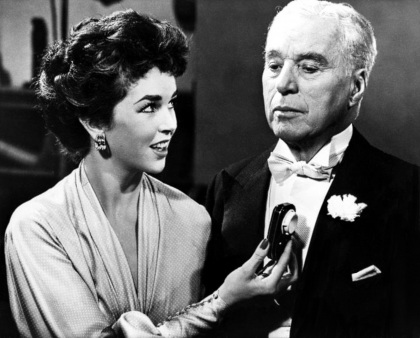
“It’s the film of a free man.” Roberto Rossellini’s celebrated defense of Charlie Chaplin’s most despised film, A King in New York (1957) — a film so reviled that it goes unmentioned in Chaplin’s 1964 autobiography — is a sentence that frequently comes to mind about some of the features directed by Clint Eastwood, especially over the past couple of decades. Eastwood has in fact carved out a singular niche for himself that affords him the sort of artistic and conceptual freedom that no one else in Hollywood can claim. Starting with the fact that he doesn’t test-market his movies and indulge in the sort of hasty post-production revisions that limit the range of his colleagues, he’s a director who can choose both his subjects and how he deals with them. Read more
This article was written in 2006 — specifically at the request of Ghatak’s son Ritaban, whom I met at the Jeonju International Film Festival in South Korea in the spring of that year. I was serving on one of the festival’s juries and also lectured with Ritaban at a screening of The Cloud-Capped Star during a Ghatak retrospective. Ritaban was then planning a critical collection about his father’s work, as a kind of follow-up to a collection of his father’s writings about cinema (Rows and Rows of Fences, published by Seagull Books in Calcutta in 2000) and asked me to contribute an article to it. But once I emailed this piece to him about half a year later, I never heard from him again, leading me to conclude that the critical collection project was suspended. So eventually I submitted this to my friend Adrian Martin, coeditor of the online Rouge, who published this in their 10th issue in 2007, about a year later. — J.R.
Ritwik Ghatak: Reinventing the Cinema
I have no way of knowing if Ghatak ever saw Jacques Tati’s 1953 masterpiece Mr. Hulot’s Holiday, but when I look at his second feature, Ajantrik (1958), it’s hard not to be reminded of it. Read more
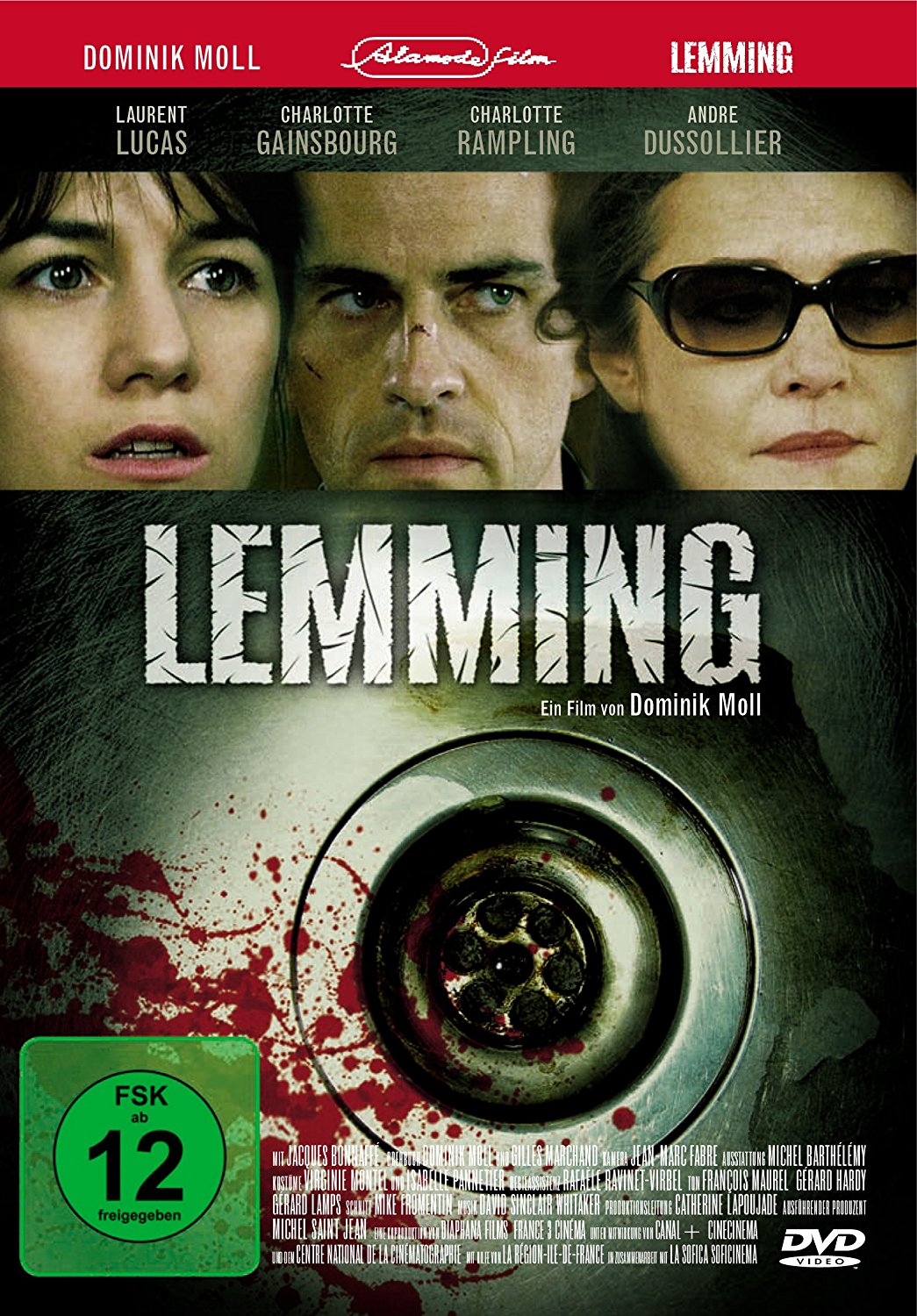
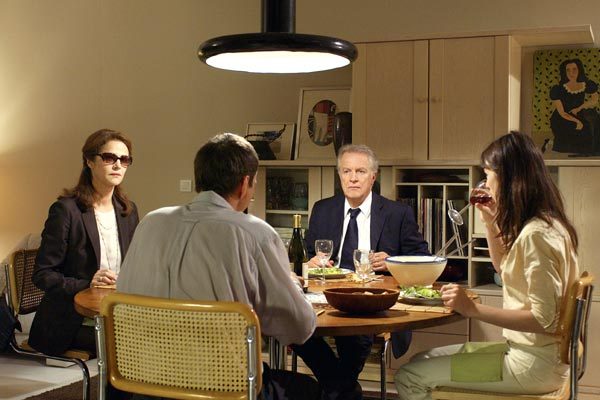
Brilliantly conceived and competently executed, this disturbing psychological thriller by German-born French filmmaker Dominik Moll (With a Friend Like Harry) has been compared to David Lynch’s Lost Highway, in part because of its uncanny two-part construction. But it also suggests an original spin on Eyes Wide Shut in the unspoken understandings of its married couple (Laurent Lucas and Charlotte Gainsbourg) and its ambiguous mix of reality and fantasy. Andre Dussollier and Charlotte Rampling play another couple who arrive for a dinner party, and the unpredictable transactions among the four kept me engrossed and curious throughout. In French with subtitles. 129 min. Music Box.
Properly speaking, this skillful made-for-cable satire (1997, 100 min.) directed by Joe Dante qualifies as the middle feature in his so-called war trilogy, preceded by Matinee (1993) and followed by Small Soldiers (1998). Viewers who consider it the best of the threesome may have a point, though its lack of a theatrical run in this U.S. makes it somewhat better known overseas. Beau Bridges plays the governor of Idaho who decides to close his state borders to a plane full of Pakistani orphans fleeing a nuclear disaster, and the action is crosscut with national government deliberations (James Coburn as a Presidential advisor) and various kinds of frantic media spin (Dan Hedaya as a network news director). Barry Levinson set this project in motion, so the parallels with Wag the Dog aren’t accidental, but one of the essential ingredients brought to it by Dante, the least Swiftian of satirists, is that nobody’s a villain, even when behaving like an idiot and/or a hypocrite. (The governor, for instance, plays shamelessly to his xenophobic constituency while remaining smitten with his Mexican mistress, a reporter played by Elizabeth Pena, and the movie is determined to view him simply as a lovable asshole.) Read more
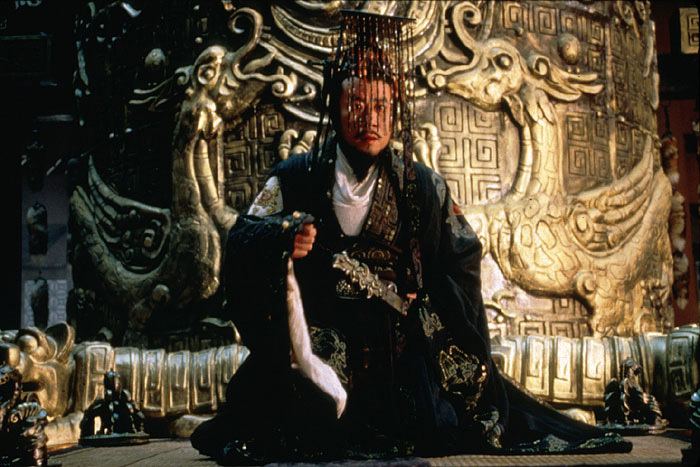
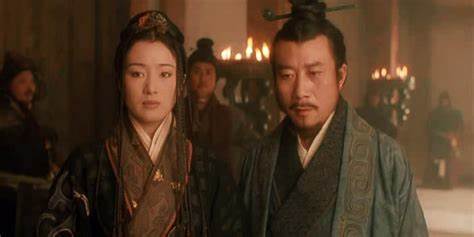
Historical spectaculars tend to fall into two broad categories: myths of origin (Cecil B. De Mille’s 1923 and 1956 versions of The Ten Commandments) and more ponderous inquiries into the hero’s personality (Eisenstein’s Ivan the Terrible, Lean’s Lawrence of Arabia). Chen Kaige’s massive 161-minute epic (1999) about the unification of China, accomplished by its first emperor during the third century BC, attempts an impossible synthesis of these two categories, beginning with Ying Zheng (Li Xuejian), the king of Ch’in, as a charismatic hero and ending with him as a murderous villain, the mantle of heroism having passed to his former mistress (Gong Li) and the mysterious assassin she enlists to kill him (Zhang Fengyi). Though there’s no physical resemblance, it’s impossible to follow the development of Ying Zheng without thinking of Mao — in some respects the last Chinese emperor — but even without that parallel this is a powerful story and a splendid spectacle. Compared with Maggie Cheung, Gong Li is arguably more an iconic star than an actress, but on this outing she gives a pretty impressive performance. (JR)
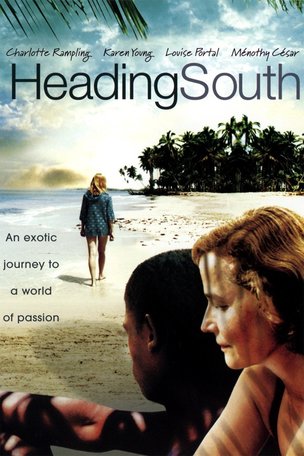
This bold departure by French director Laurent Cantet (Human Resources, Time Out) follows three middle-aged Americans (Karen Young, Charlotte Rampling, Louise Portal) whose vacations in Haiti during the brutal reign of Baby Doc Duvalier include encounters with male prostitutes. Cantet is concerned not only with the women’s psychologies and complex interrelations as they compete for the same local hunk (Menothy Cesar) but also with the global economics at work. The film tackles more than it can master, but it’s never less than fascinating, and all three leads are exceptional. Screenwriter Robin Campillo adapted three short stories by Dany Laferriere. In English and subtitled French and Creole. 106 min. (JR)
From the Chicago Reader (November 17, 2006). — J.R.
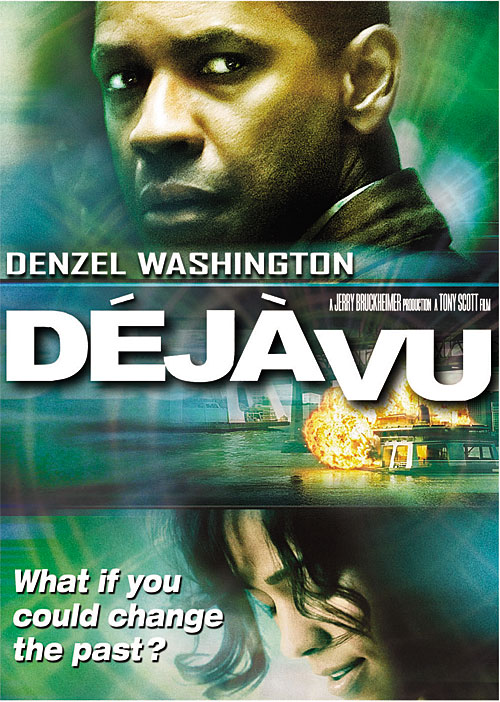
After a terrorist explosion kills the passengers on a New Orleans ferry, an ATF agent (Denzel Washington), discovering that a form of time travel can send him back to the event, resolves to save the life of a woman (Paula Patton) killed shortly before, as well as prevent the explosion. The story recalls Otto Preminger’s Laura (1944) in its romantic moodiness and has some of the philosophical poignance common to tales of time travel. But the SF hardware (enjoyable) and thriller mechanics (mechanical) of this Jerry Bruckheimer slam-banger don’t mesh very well with reflection, and the action trumps most evidence of thought. Tony Scott directed a script by Bill Marsilii and Terry Rossio; with Val Kilmer and James Caviezel. PG-13, 128 min. (JR)
From the Chicago Reader (December 22, 2006). — J.R.
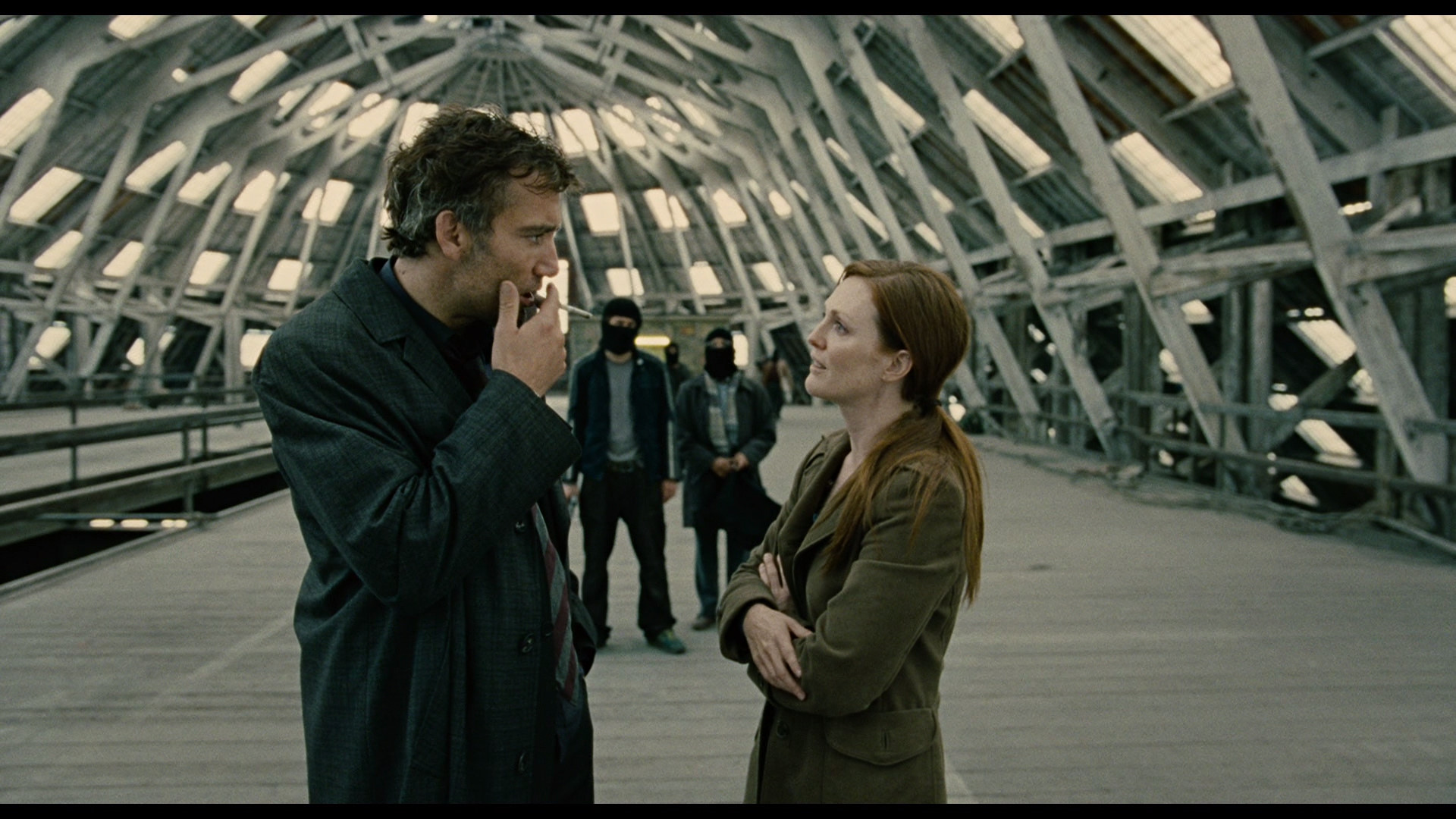
Adapted from P.D. James’s dystopian novel, this SF feature by Alfonso Cuaron (Y Tu Mama Tambien) takes place in England in 2027, when the human race has mysteriously become infertile and faces extinction. A onetime revolutionary (Clive Owen) is asked by an old flame (Julianne Moore) to take part in her underground movement defending illegal aliens, who are trucked off to concentration camps; assisted by an older hippie pal (Michael Caine in an Oscar-worthy performance), he agrees to smuggle a young woman (Claire-Hope Ashitey) out of the country. The film gradually devolves into action-adventure, then the equivalent of a war movie. But the filmmaking is pungent throughout, and the first half hour is so jaw-dropping in its fleshed-out extrapolation that Cuaron earns the right to coast a bit. R, 108 min. (JR)
Overrated in France and underrated in the U.S., writer-director Richard Brooks thrived on sensationalism (Blackboard Jungle, Looking for Mr. Goodbar) and made some excellent westerns (The Professionals, Bite the Bullet), but he generally faltered whenever he tried for prestigious art (The Brothers Karamazov, Sweet Bird of Youth, Lord Jim, In Cold Blood). One of his better 50s efforts was this 1956 CinemaScope western with Robert Taylor and Stewart Granger, about the disappearance of the buffalo in the 1880s. With Debra Paget, Lloyd Nolan, and Russ Tamblyn. Politically incorrect (not so much because Native Americans are associated with the buffalos but because Paget and Tamblyn are cast as the former), but the liberal sentiments still seem genuine. 108 min. (JR)
In some respects this is my favorite of Budd Boetticher’s Randolph Scott westerns (1958, 78 min.), though it’s usually considered a minor work next to Ride Lonesome and The Tall T. After becoming innocently involved in a revenge killing in a small border town, Scott is robbed of his money and ordered away at gunpoint; he decides to go back for his money without really understanding all the local intrigues. Boetticher’s acerbic humor, always his strong point, is given more edge than usual here through an intricate Charles Lang script. With Craig Stevens, Barry Kelley, and Tol Avery. (JR) Read more
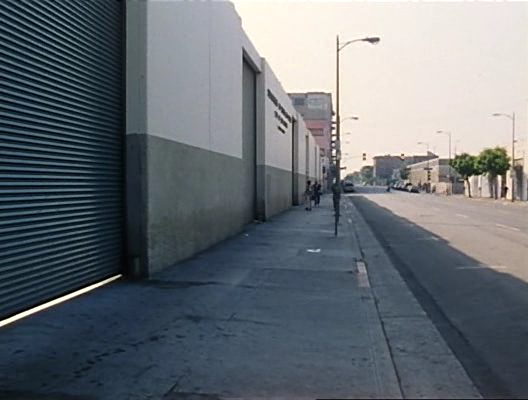
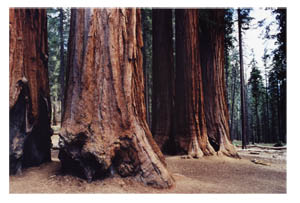
Experimental films usually attempt to rearrange our reflexes along with our expectations. James Benning’s 270-minute, 16-millimeter “California Trilogy” does that in part by obliging us to rethink the way we interpret “directed by” and “written by.” If “directing” refers to the placement of camera and microphone, then Benning — who works alone, recording image and sound by himself — directed these three films. And if “writing” means the choice and identification of subjects — including the way they’re represented in the credits — then Benning is also the trilogy’s writer.
Benning — who will attend the March 21 screening of his film at the Film Center — placed his name at the end of the final credits of El Valley Centro, Los, and Sogobi, the three 90-minute features comprising his trilogy. Each feature consists of 35 shots lasting 150 seconds apiece, followed by final credits also lasting 150 seconds. Thirty-six times two and a half minutes equals an hour and a half; multiply that by three and you get 270 minutes, or four and a half hours. Read more






![Deja.Vu[2006].avi](https://www.jonathanrosenbaum.net/wp-content/uploads/2006/11/Deja.Vu2006.avi.jpg)