From the Chicago Reader (January 3, 2008). I much prefer this film to Paul Thomas Anderson’s next feature, The Master, an incoherent mess with fewer compensations (despite the heavy breathing from some of my colleagues, who have compared it to Herman Melville); but for my money, neither film holds a candle to Magnolia. — J.R.
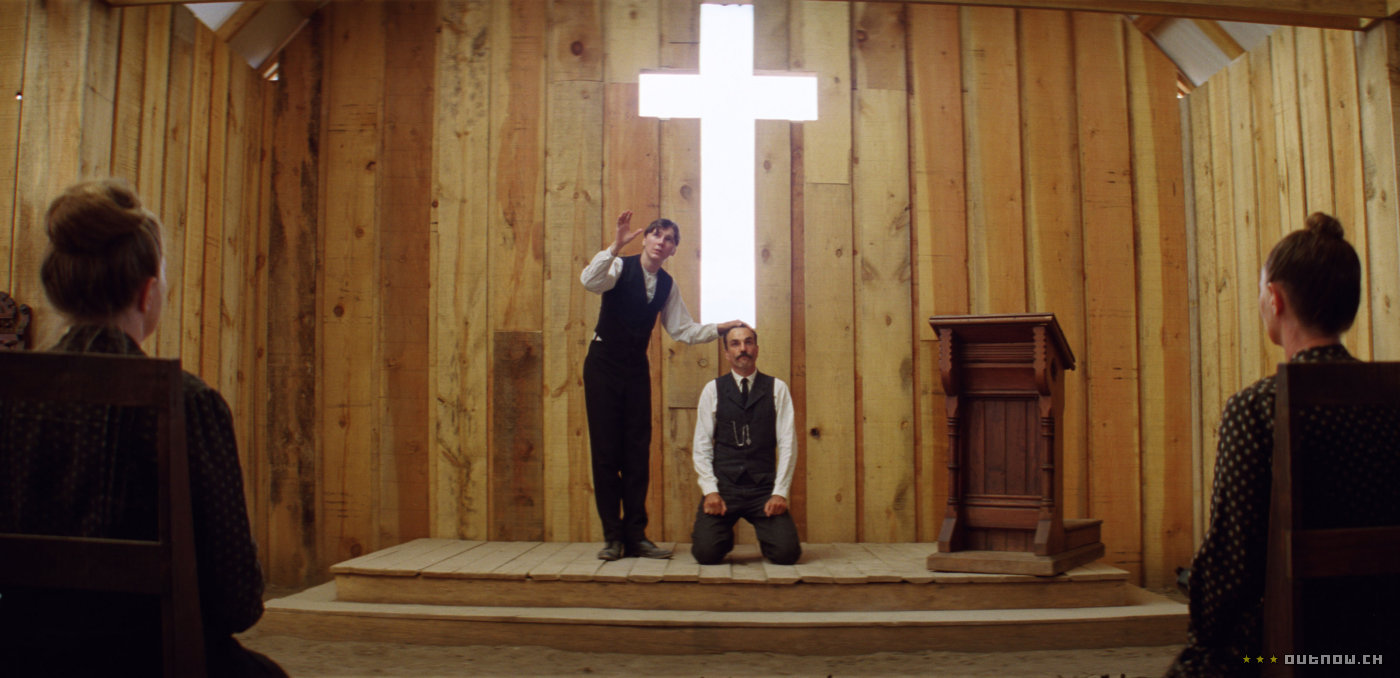
Paul Thomas Anderson’s fifth feature, a striking piece of American self-loathing loosely derived from Upton Sinclair’s Oil!, is lively as bombastic period storytelling but limited as allegory. The cynical shallowness of both the characters and the overall conception — American success as an unholy alliance between a turn-of-the-century capitalist (Daniel Day-Lewis) and a faith healer (Paul Dano), both hypocrites — can’t quite sustain the film’s visionary airs, even with good expressionist acting and a percussive score by Radiohead’s Jonny Greenwood. Day-Lewis, borrowing heavily from Walter and John Huston, offers a demonic hero halfway between Thomas Sutpen in Faulkner’s Absalom, Absalom! and James Dean’s hate-driven tycoon in Giant (shot on the same location as this movie), but Kevin J. O’Connor in a slimmer part offers a much more interesting and suggestive character. This has loads of swagger, but for stylistic audacity I prefer Anderson’s more scattershot Magnolia. Read more
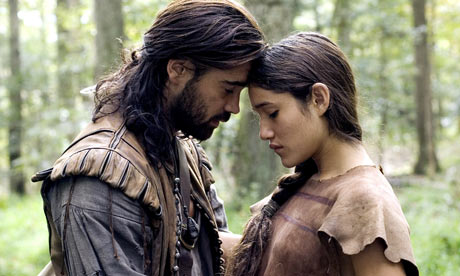
No important American filmmaker in recent years has divided audiences more than writer-director Terrence Malick (The Thin Red Line), and his fourth feature in 35 years pushed me for the first time into the skeptics’ corner. The subject matter is partly to blame: after four centuries of Anglo denial about the genocidal conquest of America, I was hoping for something a little more grown-up and educational about John Smith (Colin Farrell) and Pocahontas (the striking Q’Orianka Kilcher). Malick still has an eye for landscapes, but since Badlands (1973) his storytelling skill has atrophied, and he’s now given to transcendental reveries, discontinuous editing, offscreen monologues, and a pie-eyed sense of awe. All these things can be defended, even celebrated, but I couldn’t find my bearings. With Christopher Plummer, David Thewlis, and Christian Bale. PG-13, 135 min. (JR)
This review of was commissioned by its writer-director-producer-editor, Drew Hanks. The Made Man’s trailer can be accessed here: https://youtu.be/rPH9HbveDRk – J.R.
One striking trait shared by the United States and the Catholic Church is a taste for symbolism that overtakes material reality. The same mentality that converts wine into blood can also turn racial differences into graphic abstractions that replace facts so that pinkish brown individuals are called “white” and slightly darker brown individuals can be called “black”.
One of the more eloquent descriptions of this taste for metaphysics over material reality comes from Mary McCarthy, a lapsed Catholic and an American, who argues in her 1947 essay “America the Beautiful: The Humanist in the Bathtub” that “the virtue of American civilization is that it is unmaterialistic”:
“It is true that America produces and consumes more cars, soap, and bathtubs than any other nation, but we live among these objects rather than by them….When an American heiress wants to buy a man, she at once crosses the Atlantic. The only really materialistic people I have ever met have been Europeans….The strongest argument for the unmaterialistic character of American life is the fact that we tolerate conditions that are, from a materialistic point of view, intolerable.” Read more
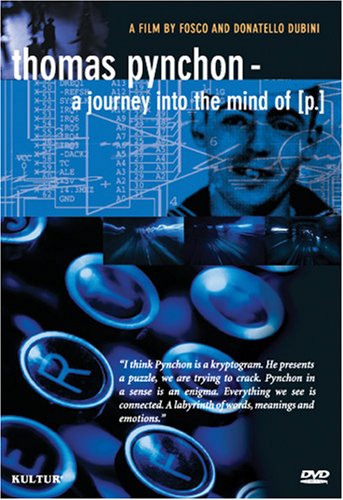
Pynchon freaks can be divided into two categories: those fascinated by his work, who respect his wish to be known through it, and those fascinated by his life, who see his writing as an illustration of his experiences. Aimed at the latter group, this 2001 Swiss documentary by Fosco and Donatello Dubini begins by enlisting a former Pynchon squeeze to show us his LA digs from the early 70s (she’s identified as Bianca from Gravity’s Rainbow, which discounts whatever art he brought to his experiences) and goes mostly downhill from there. Pynchon groupies weigh in while significant critics like Edward Mendelson are omitted, and even as gossip the movie reflects poorly on some of the author’s old friends. But the archival footage does include Lee Harvey Oswald (who may have been in Mexico City at the same time as Pynchon) and a cat freaking out on mescaline. 90 min. (JR) Read more
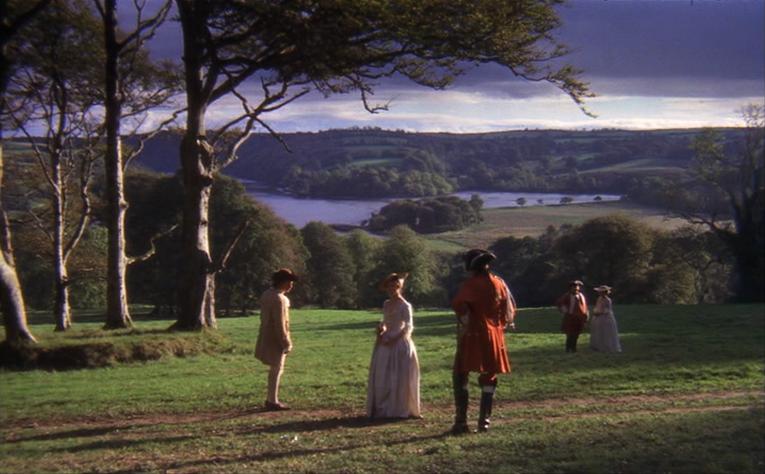
With the possible exceptions of Killer’s Kiss and A Clockwork Orange all of Stanley Kubrick’s features look better now than when they were first released, and Barry Lyndon, which fared poorly at the box office in 1975, remains his most underrated (though Eyes Wide Shut is already running a close second). This personal, idiosyncratic, and melancholy three-hour adaptation of the Thackeray novel may not be an unqualified artistic success, but it’s still a good deal more substantial and provocative than most critics were willing to admit. Exquisitely shot in natural light (or, in night scenes, candlelight) by John Alcott, it makes frequent use of slow backward zooms that distance us, both historically and emotionally, from its rambling picaresque narrative about an 18th-century Irish upstart (Ryan O’Neal). Despite its ponderous pacing and funereal moods, the film is highly accomplished as a piece of storytelling, and it builds to one of the most suspenseful duels ever staged. It also repays close attention as a complex and fascinating historical meditation, as enigmatic in its way as 2001: A Space Odyssey. The Music Box’s weeklong Kubrick retrospective includes a new print of this and several other films, and it offers an excellent opportunity to reevaluate a filmmaker whose work continues to deepen after his death. Read more
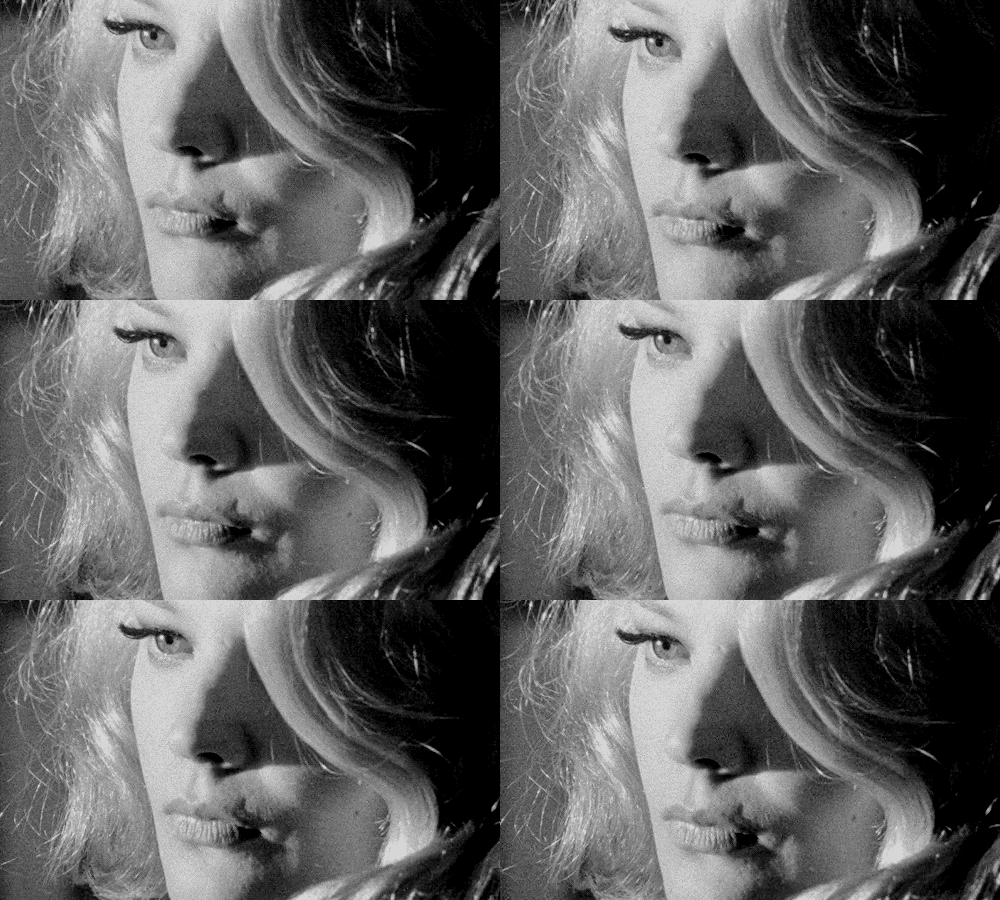
John Cassavetes’s galvanic 1968 drama about one long night in the lives of an estranged well-to-do married couple (John Marley and Lynn Carlin) and their temporary lovers (Gena Rowlands and Seymour Cassel) was the first of his independent features to become a hit, and it’s not hard to see why. It remains one of the only American films to take the middle class seriously, depicting the compulsive, embarrassed laughter of people facing their own sexual longing and some of the emotional devastation brought about by the so-called sexual revolution. (Interestingly, Cassavetes set out to make a trenchant critique of the middle class, but his characteristic empathy for all of his characters makes this a far cry from simple satire.) Shot in 16-millimeter black and white with a good many close-ups, this often takes an unsparing yet compassionate “documentary” look at emotions most movies prefer to gloss over or cover up. Adroitly written and directed, and superbly acted — the leads and Val Avery are all uncommonly good (the astonishing Lynn Carlin was a nonprofessional discovered by Cassavetes, working at the time as Robert Altman’s secretary) — this is one of the most powerful and influential American films of the 60s. Read more
Practically speaking, we should invent our own extras, not necessarily or invariably depend on those that are made on our behalf. To cite four examples of what I mean:
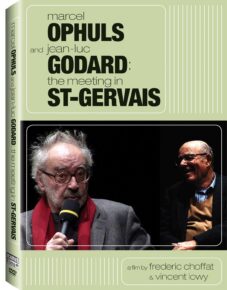
(A) According to normal usage, Icarus Film’s DVD of Frederic Choffat and Vincent Lowy’s 44-minute Marcel Ophuls and Jean-Luc Godard: The Meeting in St-Gervais contains no extras. But according to my own usage, this DVD itself functions as an extra to a 100-page book that I own, Dialogue sur le cinéma: Jean-Luc Godard & Marcel Ophuls, published by Le Bord de l’Eau in 2011. That book, prefaced by short essays by Vincent Lowy and André Gazut and concluded by Daniel Cohn-Bendit’s essay for Le Monde, ‘Mon ami Godard’, transcribes two encounters between Godard and Ophüls, held in 2002 and 2009 (the first of these focusing more on Marcel’s father Max), whereas the DVD includes most (but not all) of the second of these dialogues, and somehow manages to leave out some of the more interesting parts, either through cuts or incomplete subtitles. Which doesn’t mean that Icarus’s release isn’t worth having — only that its contents are worth contextualizing beyond the material offered by Icarus. Read more
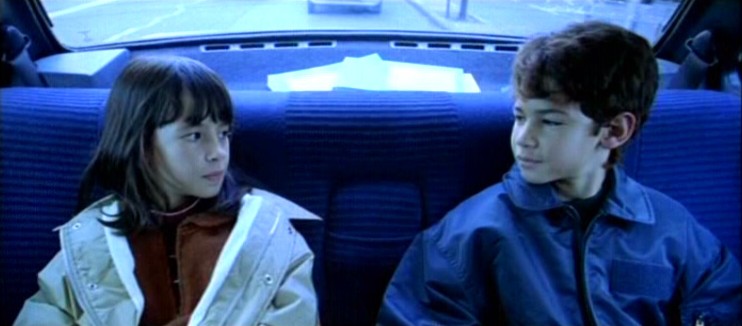
The best Spanish film I’ve seen in years, this 1998 feature by Julio Medem (Cows, The Red Squirrel, Earth), attractively shot in ‘Scope, is the story of two young lovers who first encounter one another at the age of eight, told from alternating viewpoints that after 17 years converge in Finland. The romantic style of the film commands attention as much as the story itself, which is shaped — like the names of the two lead characters, Otto and Ana — as a palindrome. The graceful jumping about in time and space may recall the early work of Alain Resnais, but the theme and ambience are Spanish to the core; Medem charts the crisscrossing destinies of the two leads with passion as well as lyricism. With Fele Martinez and Najwa Nimri. In Spanish with subtitles. R, 112 min. (JR)
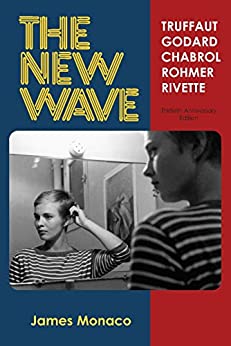
A writer whose methods immediately evoke the mood and dynamics of an energetic classroom, James Monaco restricts The New Wave to the five film-making alumni of Cahiers du Cinéma most often identified with that label: Truffaut, Godard, Chabrol, Rohmer and Rivette. Considering the dearth of books in English on the subject (only Peter Graham’s anthology and Raymond Durgnat’s early monograph — both long out of print, and the latter unmentioned in the present book — qualify as predecessors), it is a fertile field for any critic interested in organizing a lot of diverse material, and this task is handled by Monaco with grace and assurance; for its bibliography alone, this over-priced volume is well worth having. Beginning with an evocation of Rivette’s first encounters with Godard and Truffaut (and later Chabrol and Rohmer) at the Avenue de Messine Cinémathèque in 1949 or 1950, he proceeds to the films of each until, some 320 pages later, he has burrowed his way through over a hundred features and shorts.
Lots of grist for the mill; but what kind of product is the Monaco factory manufacturing? Read more
From the Chicago Reader (October 23, 2003). — J.R.
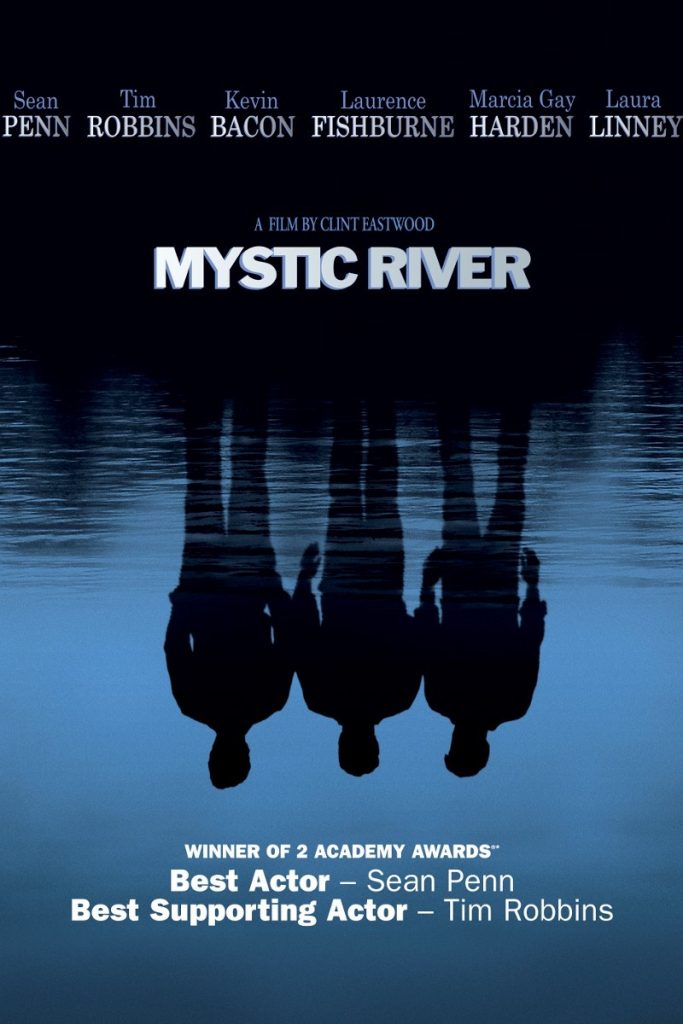
Mystic River ** (Worth seeing) Directed by Clint Eastwood Written by Brian Helgeland With Sean Penn, Tim Robbins, Kevin Bacon, Laurence Fishburne, Marcia Gay Harden, Kevin Chapman, Laura Linney, Adam Nelson, Emmy Rossum, and Cameron Bowen.
The critical community has spoken: Clint Eastwood’s Mystic River is a masterpiece and a profound, tragic statement about who we are and the inevitability of violence in our lives — a pitiless view, in which violence begets violence and the sins of the fathers pass to later generations.
Presumably these qualities are also in Dennis Lehane’s best-selling novel, which I haven’t read, but it’s the movie that’s drawing most of the superlatives from American critics. The acclaim started after the film premiered at Cannes, when much of the griping American press seemed to see it as a vindication of American filmmaking, an answer to the terrible state of cinema in general. Some of those critics may have seen it as a vindication of U.S. patriotism as well — one reason it’s likely to rack up plenty of Oscars.
The last Eastwood movie that provoked biblical language and allusions to Greek tragedy was Unforgiven (1992), which also saw violence as both awful and unavoidable — our destiny and perhaps even our birthright. Read more
From the September 28, 2001 Chicago Reader. — J.R.
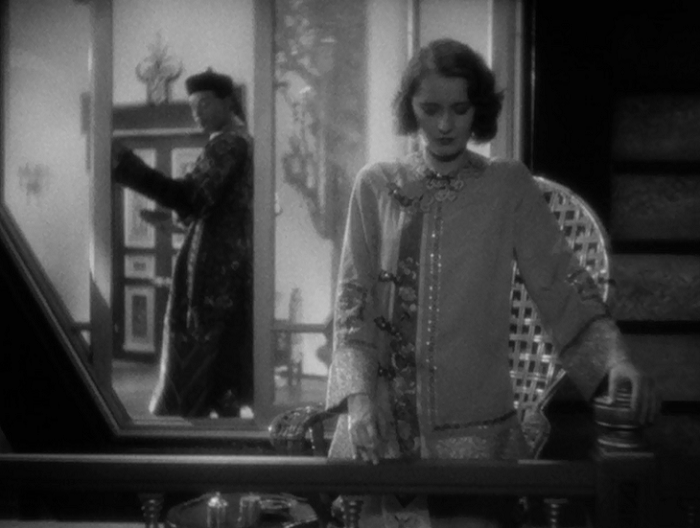
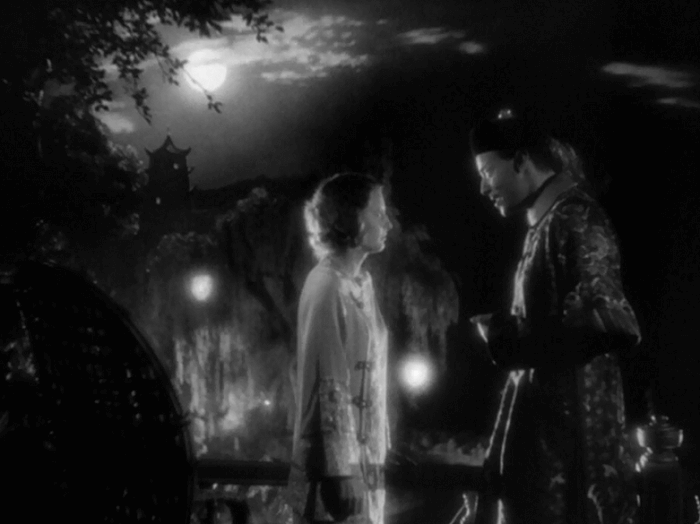
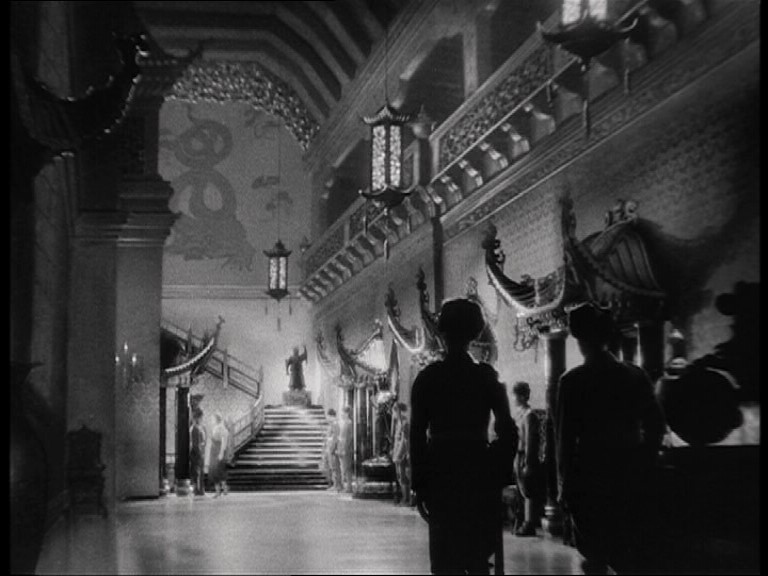
Frank Capra’s very atypical drama about an American missionary (Barbara Stanwyck) taken prisoner by a Chinese warlord (Nils Asther) is not only his masterpiece, but also one of the great love stories to come out of Hollywood in the 30s — subtle, delicate, moody, mystical, and passionate. Joseph Walker shot it through filters and with textured shadows that suggest Sternberg; Edward Paramore wrote the script, adapted from a story by Grace Zaring Stone. Oddly enough, this perverse and beautiful film was chosen to open Radio City Music Hall in 1933; it was not one of Capra’s commercial successes, but it beats the rest of his oeuvre by miles, and both Stanwyck and Asther are extraordinary. With Walter Connolly and Lucien Littlefield. 89 min. Music Box, Saturday and Sunday, September 29 and 30.
7. Letters from the Ends of the World (a dozen of the first
graduates of Béla Tarr’s FilmFactory)
8. Uncut Gems (Josh & Benny Saftie)
9. Cry Macho (Clint Eastwood)
An incomplete list of nine titles for an incomplete, pandemic year that cries out for updates and afterthoughts. That may help to explain why many items here are at least partially films/videos about films/videos (and at least one item, Letters…, is about the pandemic). Having to compile a so-called ‘2021’ list in October compels me to add Uncut Gems, seen too late in 2020 to make it onto last year’s list. Read more
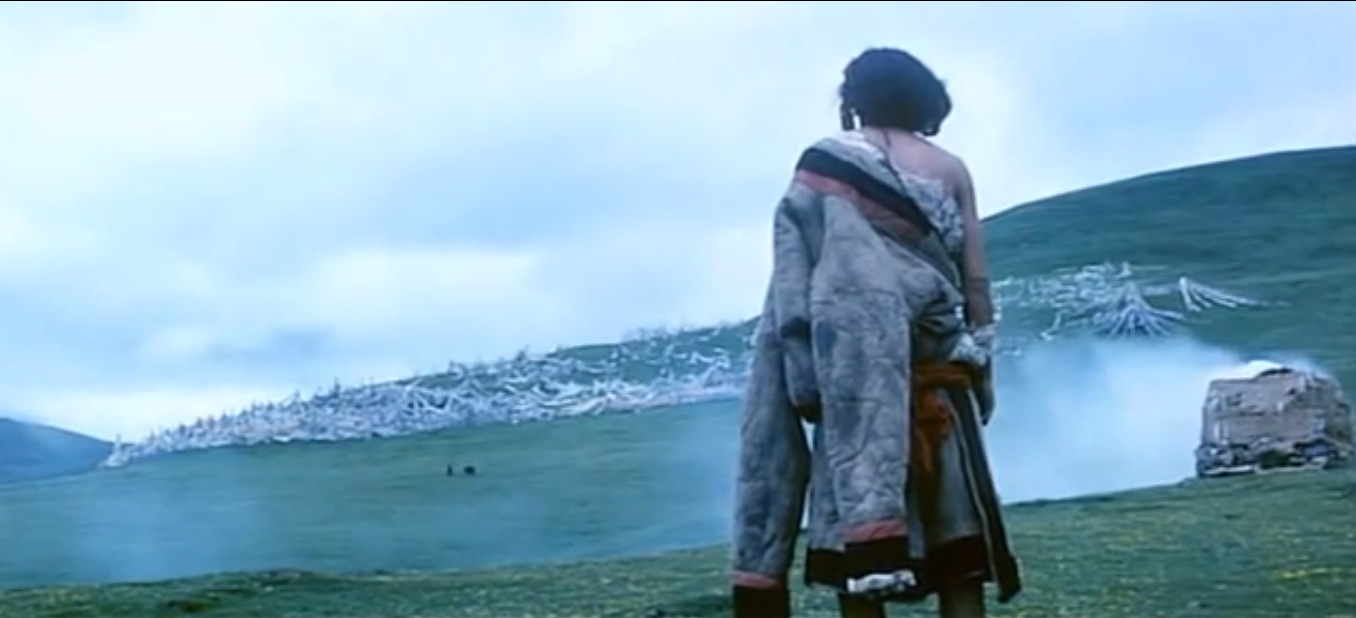
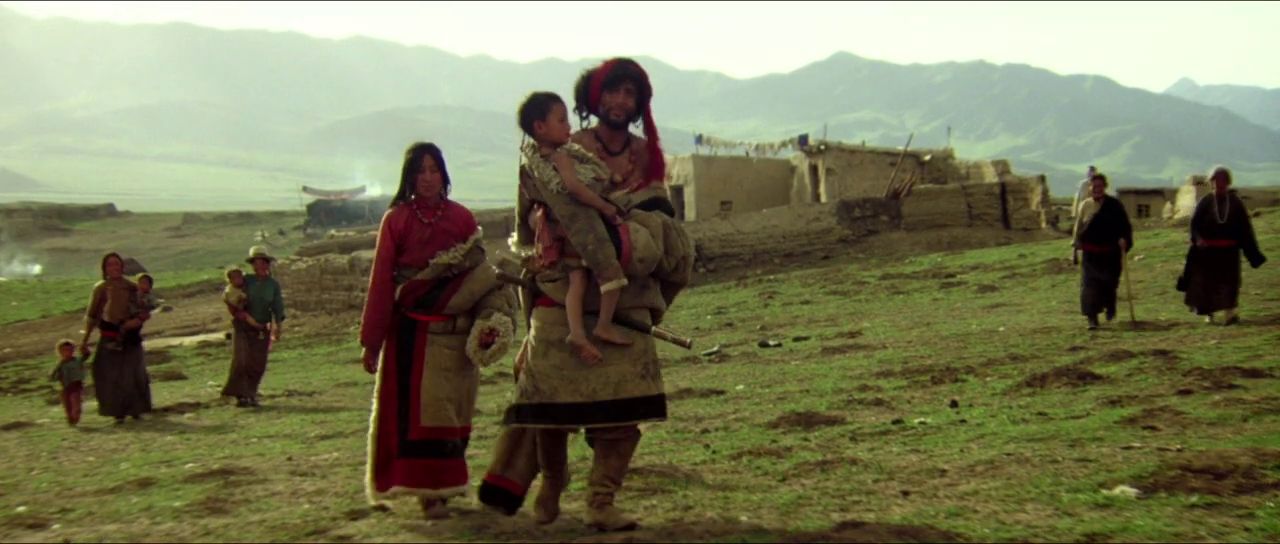
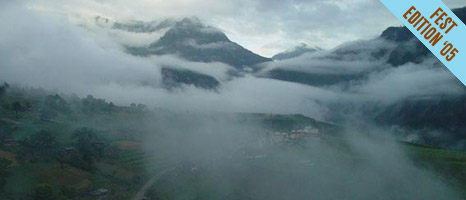
I truly regret not being able to illustrate this early piece for the Reader, published in September 1987, with the sort of illustrations its awesome landscapes deserve. In fact, the only other film by Tian Zhuangzhuang (see photo above) that I’m aware of that’s comparably impressive from this standpoint is his extraordinary Delamu (or, in Chinese, Cha ma gu dao xi lie), a 2004 documentary that’s even more neglected, at least in this country (see the photo below, immediately after the absurdly small landscape photo from The Horse Thief).[2023 postscript: Happily, illustrations are now more readily available, and even though the film doesn’t seem to be currently available on DVD or Blu-Ray, it can be seen letterboxed and subtitled in all its widescreen glory at https://www.youtube.com/watch?v=LZSjjOQUtHY.] –J.R.
It’s worth adding that one can now obtain The Horse Thief inexpensively, letterboxed and with English subtitles, at www.yesasia.com/us/1005182257-0-0-0-en/info.html. And see the previous link for a Blu-Ray.–-J.R.
THE HORSE THIEF
**** (Masterpiece)
Directed by Tian Zhuangzhuang
Written by Zhang Rui
With Cexiang Rigzin and Dan Jiji.
By Jonathan Rosenbaum
If the two aesthetically richest decades in the history of cinema have been the 1920s and the 1960s, it is in no small part due to the fact that it was during these two golden ages that film came closest to becoming a universal language. Read more
From the Village Voice (April 25, 1971). This was the first piece I ever published there, thanks to Andrew Sarris, and I’ve done a light edit (in October 2012) in order to make it a little more bearable to me. The “Indian girl” [sic] mentioned here, who subsequently became a very good friend, was Munni Kabir; as Nasreen Munni Kabir, she is identified today on Wikipedia as an author and TV producer, based in the U.K., and about ten years ago, I saw her again in London when she came to a public discussion I was having with Geoff Andrew about the short films of Kiarostami.
I believe I was mistaken about the seasonal setting of the Dostoevsky story, and apologized profusely about this to Bresson himself when he expressed interest in reading this article (which he conveyed to me via Munni, along with his address) and I sent him a copy, along with a note; I still have a copy of his gracious thank-you note, sent to me in Alabama, including his assurance that my error wasn’t very important….My subsequent encounters with (or, more precisely, sightings of) Bresson in Paris occurred at a screening of Luchino Visconti’s White Nights at the Cinematheque’s auditorium on Rue d’Ulm, a private screening of Susan Sontag’s Promised Lands, and two successive private screenings of Bresson’s Lancelot du Lac with members of his cast and crew.Read more
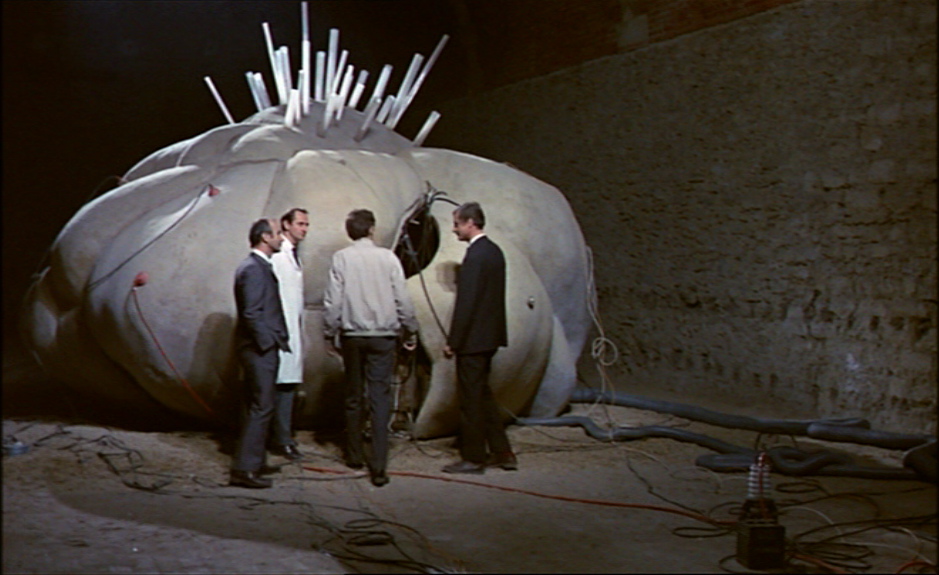
As I recall, this was my only contribution to this Boston alternative weekly, commissioned by the late Stuart Byron. He asked me to review the film because I was the only colleague of his who defended it when it was shown at the 1972 New York Film Festival, where everyone else, at least within his earshot and mine, considered it an unmitigated disaster — which probably accounts in part for my defensive, almost apologetic tone, which I now regret. I suspect that part of my problem with conceptualizing the film came from my confusion of “science fiction” with the French category of “fantastique,” which incorporates Surrealism and its tolerance for fantasy as well as science fiction. So it’s gratifying to see Manohla Dargis declaring the film a masterpiece at the time of its early 2014 run at New York’s Film Forum, and doing an infinitely better job of saying why than I was able to muster 40-odd years earlier, writing from Paris….Fans of Eternal Sunshine of the Spotless Mind are urged to check out this film, in many ways its major inspiration. — J.R.
At first glance, Alain Resnais’ fifth feature seems as sharp a decline from La Guerre est finie, his previous film, as that one was from Muriel. Read more