A “PIERROT” PRIMER by Jean-Pierre Gorin, a 36-minute audiovisual analysis of Jean-Luc Godard’s PIERROT LE FOU included on the second disc of the Criterion DVD of PIERROT LE FOU (Criterion 421, 2007).
For some time, I’d been lamenting that the highly original manner and method of lecturing on a film inaugurated by Manny Farber as a teacher at the University of California, San Diego and subsequently developed there by Jean-Pierre Gorin had still never been preserved on a DVD, which in some ways may be an ideal place for it. Then, when J-P’s inventive and perceptive remarks on portions of PIERROT LE FOU turned up on the Criterion DVD last year, I was thrilled and gratified to discover that it had finally happened. I even resolved to write about this in my next DVD column for Cinema Scope. But then I somehow managed to forget this resolve (so many DVDs, so little time)–at least until I accessed and started reading Royal Brown’s online review of the DVD in the summer issue of Cineaste, where my eye came upon a reference to Gorin’s “professorial and often rather smug and empty analysis of the film’s first fifteen minutes”. Since none of these three adjectives comes even close to describing my own responses, I regret my failure to note my own admiration for what Gorin has done. Read more
From the Chicago Reader (November 8, 2007). — J.R.

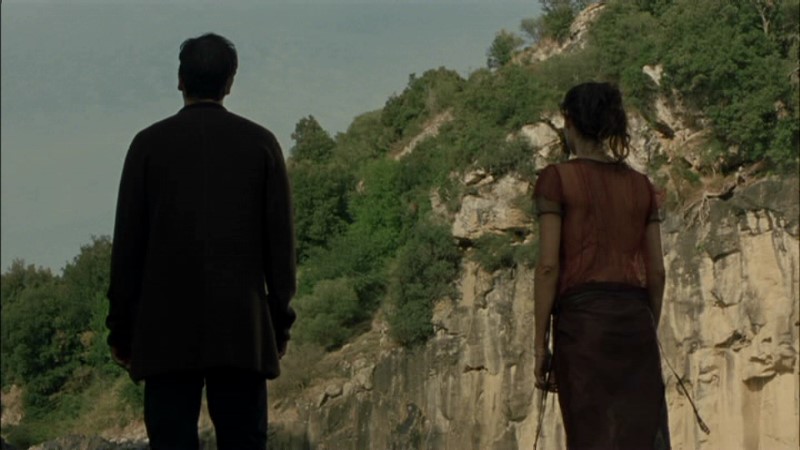
Most of Raul Ruiz’s films have some element of deadpan surreal farce; this one’s a farce through and through. When an ethereal Swiss lunatic (Elsa Zylberstein) comes in line to inherit the equivalent of several countries, her venal father (Michel Piccoli) schemes to have her bumped off by another nutcase. As corpses pile up, a couple of local cops indulge in some hilarious rationalizations for doing nothing. The sweetness of Zylberstein’s performance and the ambience in general are oddly old-fashioned — reminiscent of Harvey and Arsenic and Old Lace — while the gracefully meandering camera echoes the domestic thrillers of Claude Chabrol. Alas, this is second-best Ruiz and wears out its welcome before the end. Still, it has its share of wit and invention. In French with subtitles. 105 min. (JR)
 Read more
From the Chicago Reader (January 12, 2007). — J.R.
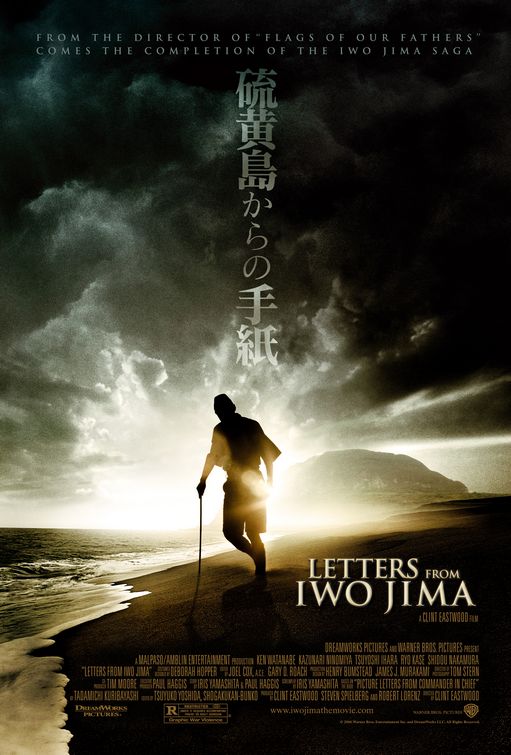
Letters from Iwo Jima ****
directed by Clint Eastwood
written by Iris Yamashita and Paul Haggis
with Ken Watanabe, Kazunari Ninomiya, Tsuyoshi Ihara, Ryo Kase, Hiroshi Watanabe, and Takumi Bando
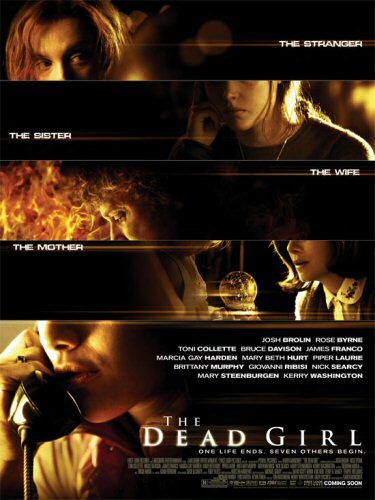
The Dead Girl ***
directed and written by Karen Moncrieff
with Toni Colette, Rose Byrne, Mary Beth Hurt, Marcia Gay Harden, Brittany Murphy, Kerry Washington, Giovanni Ribisi, Piper Laurie, James Franco, Mary Steenburgen, Bruce Davison, Nick Searcy, and Josh Brolin
Given my usual aversion to war and slasher movies, I wasn’t instantly won over by either Letters From Iwo Jima or The Dead Girl. Both films display a fundamental decency and seriousness from the outset, but both are unrelievedly grim and full of booby traps. (At press time I was told that The Dead Girl may not open for another week or so.)
Letters From Iwo Jima, directed by Clint Eastwood, one of the finest directors alive, looks at the World War II battle of his recent Flags of Our Fathers from a Japanese perspective. Letters From Iwo Jima opened in Japan around the same time its counterpart opened here, evidence of the nobility of his intention to address the people of both countries, not just us. Read more
From the Chicago Reader (April 20, 2007). The severe sentencing of Jafar Panahi, the director of Offside, after this article was published made his remarkable (and earlier) filmmaking more vital and relevant than ever. — J.R.
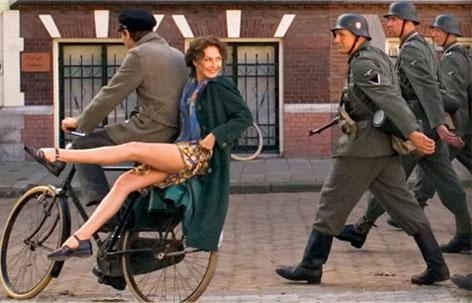

BLACK BOOK ****
DIRECTED BY PAUL VERHOEVEN
WRITTEN BY GERARD SOETEMAN AND VERHOEVEN
WITH CARICE VAN HOUTEN, SEBASTIAN KOCH, THOM HOFFMAN, HALINA REIJN, WALDEMAR KOBUS, AND DEREK DE LINT
OFFSIDE ****
DIRECTED BY JAFAR PANAHI
WRITTEN BY PANAHI AND SHADMEHR RASTIN
WITH SIMA MOBARAK SHAHI, SAFAR SAMANDAR, SHAYESTEH IRANI, M. KHEYRABADI, and IDA SADEGHI


The recent successes of such films as Pan’s Labyrinth, Volver, and The Lives of Others at multiplexes is a welcome sign that art-house ghettos aren’t the only places for foreign-language films anymore. Art houses, like multiplexes, tend to foster certain expectations about the movies we go to see in them, and sometimes we miss out on what a film has to offer as a consequence. Paul Verhoeven’s big-budget drama Black Book, which opened last week at the Music Box and is now also playing at some more commercial venues, and Jafar Panahi’s low-budget comedy Offside, which opens this week at the Music Box, both confound expectations. Read more
I hardly ever watch sports of any kind, so it isn’t surprising that I don’t generally watch sports films either, much less pretend to evaluate them. But I just saw a bouncy and personal debut effort about marathon running by a longtime pal of mine, Cheryl Ross, whom I mostly know and cherish as a colleague (initially as a fellow Chicago Reader writer and staffer), as a fellow movie buff, and as a sometime guest when she returns to Chicago for some of her marathons. I enjoyed watching her first film because I like Cheryl a lot, and also because she almost always accomplishes whatever she sets out to do, including in this case to become a filmmaker. If you’d like to check it out, here’s a link:
The Marathon Master – YouTube [12/20/23]
Read more
From the Chicago Reader (July 26, 2007). — J.R.
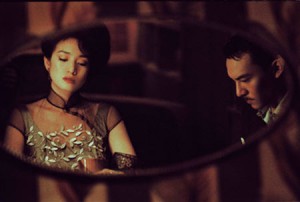
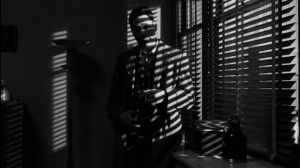
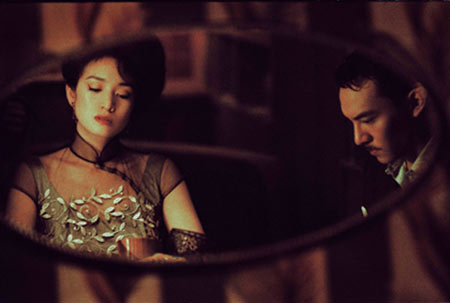
The raison d’être for this three-part 2004 anthology was finding a project for ailing Italian master Michelangelo Antonioni, in his early 90s, whose segment, The Dangerous Thread of Things, is drawn from three sketches in his book That Bowling Alley on the Tiber. It’s clumsily acted and closer to standard porn than anything else he’s done, though it’s also characteristic of his late work in its sensitivity to modernist architecture and its fascination with the silences and antagonisms of an unhappy couple. The one masterpiece here is Wong Kar-wai’s moving The Hand, a visually exquisite and highly erotic period piece about a prostitute (Gong Li) and her tailor (Chang Chen). The complete washout is Steven Soderbergh’s flashy Equilibrium, a heartless, unerotic, and ultimately pointless black comedy with a 1950s setting. I guess one out of three ain’t bad. In English and subtitled Mandarin and Italian. 108 min. (JR) Read more
From the Chicago Reader (June 8, 2007). — J.R.

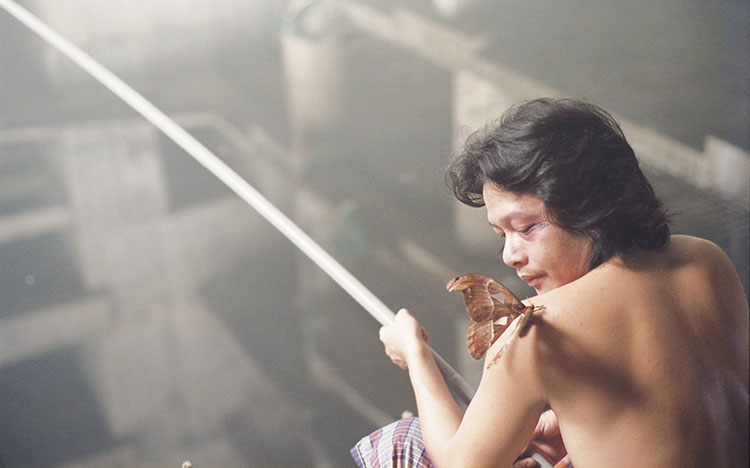
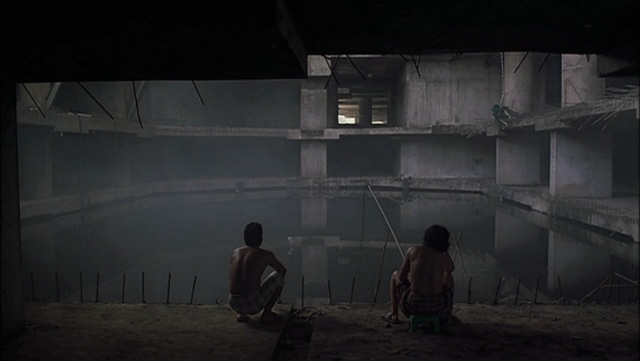
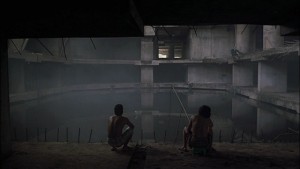
This 2006 feature by Tsai Ming-liang (Goodbye, Dragon Inn) is a departure in many respects — perhaps too many. His first film to be shot in his native Malaysia, it alludes to the homophobic persecution of deputy prime minister Anwar Ibrahim in the late 90s, to the large number of foreign workers stranded after the country’s economic crisis, and, according to Tsai, to Mozart’s The Magic Flute as well. Lee Kang-sheng, Tsai’s perpetual star, plays both a paralyzed hospital patient and a homeless worker who becomes the apex of a bisexual triangle involving another immigrant who takes care of him and a coffee-shop waitress. Despite the overload, Tsai remains resourceful. In Malay, Mandarin, and Bengali with subtitles. 118 min. (JR)
 Read more
From the Chicago Reader (July 1, 1997). — J.R.
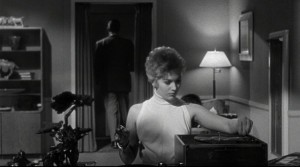

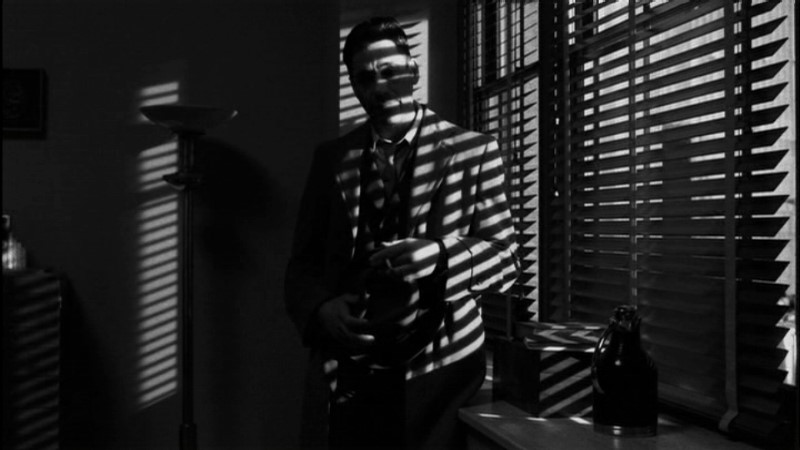
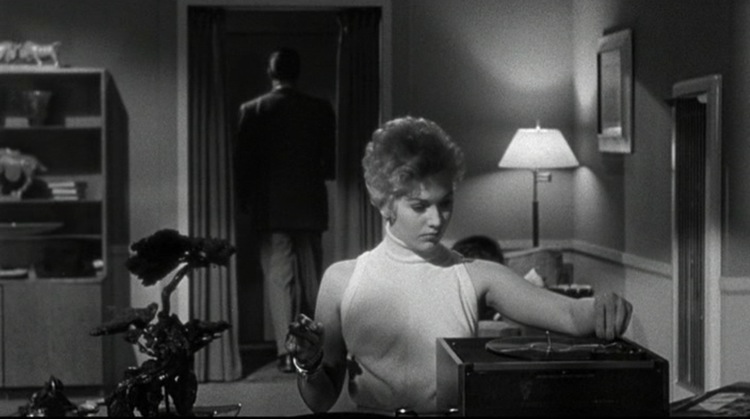
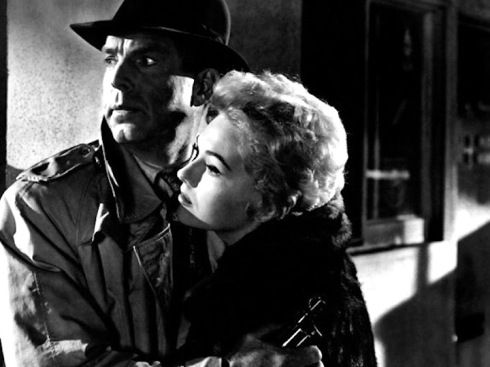
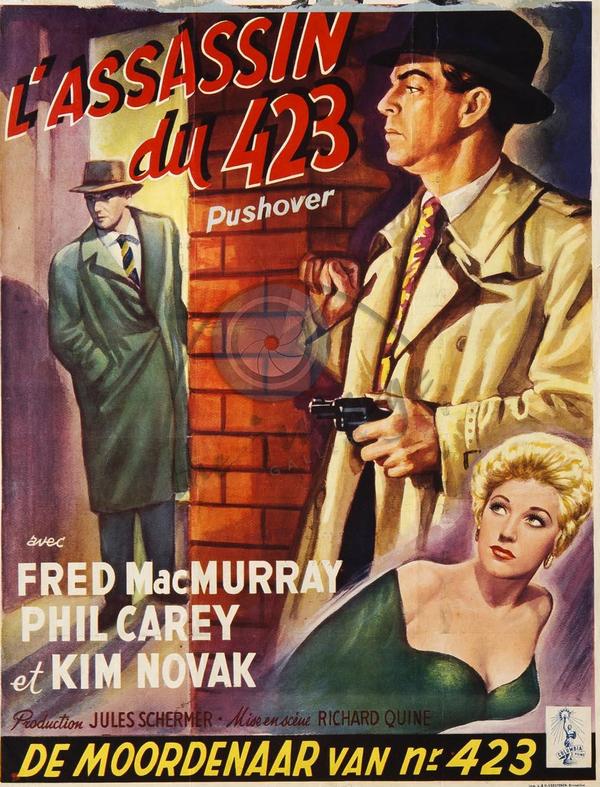
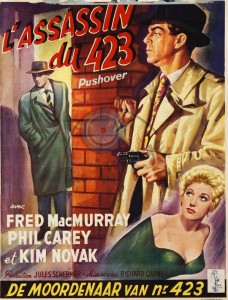
Richard Quine, a sometime actor best known today for his career as a director at Columbia in the 50s and early 60s, never became a cult hero, but a surprising number of his pictures hold up pretty well. This is one of them, a 1954 noir item with echoes of Double Indemnity. An aging cop (Fred MacMurray) falls in love with a bank robber’s girlfriend (Kim Novak in her first major role, and if you’re as much of a pushover for her early work as I am, you can’t afford to miss this.) Adapted by Roy Huggins from two novels — Thomas Walsh’s The Night Watch and William S. Ballinger’s Rafferty; with Phil Carey, Dorothy Malone, and E.G. Marshall. (JR)
 Read more

From the Omaha World-Herald:
Chambers’ may appeal after his suit against God is tossed out
BY CHRISTOPHER BURBACH
WORLD-HERALD STAFF WRITER
You can’t sue God if you can’t serve the papers on him, a Douglas County District Court judge has ruled in Omaha.
Judge Marlon Polk threw out Nebraska Sen. Ernie Chambers’ lawsuit against the Almighty, saying there was no evidence that the defendant had been served. What’s more, Polk found “there can never be service effectuated on the named defendant.”
Chambers had sued God in September 2007, seeking a permanent injunction to prevent God from committing acts of violence such as earthquakes and tornadoes.
The senator said today that he is considering an appeal of Polk’s ruling.
“It is a thoughtful, well-written opinion,” Chambers said. “However, like any prudent litigator, I want to study it in detail before I determine what my next course of action will be.”
Polk dismissed the lawsuit with prejudice, which means it can’t be refiled. But his ruling can be appealed.
Although the case may seem superfluous and even scandalous to others, Chambers has said his point is to focus on the question of whether certain lawsuits should be prohibited.
“Nobody should stand at the courthouse door to predetermine who has access to the courts,” he said. Read more
From the December 19, 2008 Chicago Reader:
One of the more puzzling features by the puzzling Manoel de Oliveira, this placid travelogue (2007) was adapted by him from an autobiographical book by Manuel and Silvia da Silva. A Portuguese man (Ricardo Trepa, the director’s grandson) emigrates to the U.S. in 1946, becomes a doctor, and returns home in 1960 to marry. In 2007, he and his wife (Oliveira and his own wife) tour various American and Caribbean historical sites to confirm his curious theory that Christopher Columbus was a Portuguese Jew; turning up at all these sites, and visible only to the viewer, is a mute, female angel carrying a sword and a Portuguese flag. Like some of Oliveira’s other minor works (The Letter, Belle Toujours), this intermittently suggests a poker-faced joke without a punch line. In English and subtitled Portuguese. 70 min. (JR) Read more
Why wasn’t a single reference to George W. Bush made by anyone — including Ellen DeGeneres in her gently laid-back stand-up routines? Probably for the same reason that I rarely heard Bush mentioned by anyone in conversations when I was recently in Rotterdam, Toulouse, and Paris. Why beat a dead horse?, the deceased in this case being the fate of the world, or perhaps innocent civilians in Iran, not a spry but clueless leader. Once it’s become accepted and mutually acknowledged that the overall will of the world’s population and the will of the American people — insofar as either will can be correctly inferred — has almost no bearing on what Bush decides to do, speaking out of rage and impotence about a stupid dictator’s whims won’t accomplish very much. So instead of cracking jokes about how Clinton risked impeachment for getting a blow job while Bush risks nothing but a little wrist-slapping for endangering the survival of the planet as well as his own country, DeGeneres brings out a vacuum cleaner. The closest she ever got to evoking Bush was implying at one point that more of the American public voted for Al Gore.
Read more
This short article was written for the Barcelona newspaper La Vanguardia and published there in Spanish on January 9, 2008. Portabella’s 1970 Vampir-Cuadecuc was written about by James Naremore in the Summer 2008 issue of Film Quarterly as his second favorite film of 2007. And Portabella, who has his own web site, ihas released a sizable DVD box set devoted to his work.

Portabella in the U.S.
by Jonathan Rosenbaum
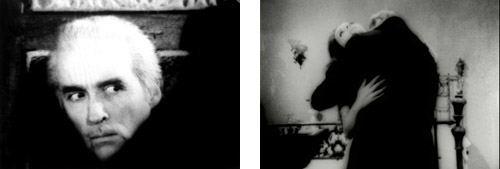
It was over 36 years ago, in Cannes, that I first encountered the singular cinema of Pere Portabella, a revelation that came via his second feature, Vampir-Cuadecuc. Living at the time in Paris, I knew absolutely nothing about Catalan culture under Franco, and had only the film’s sounds, images, and Portabella’s wit in juxtaposing the two as my guides. The only contextual information I had was that Portabella was one of the producers of Luis Buñuel’s Viridiana, and that he couldn’t be present because the Franco government had taken away his passport as punishment for this caprice.

In my festival coverage for the Village Voice, I described Vampir as “the most original movie at the festival and the most sophisticated in its audacious modernism.” A year later, I praised Portabella’s Umbracle [see illustration below] in the same newspaper. Read more
From the March 12, 2008 Chicago Reader:
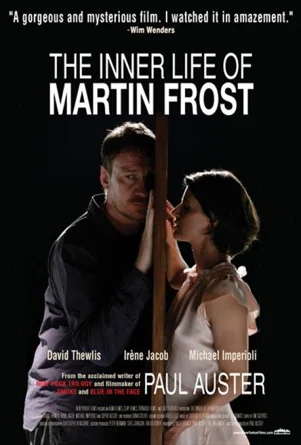
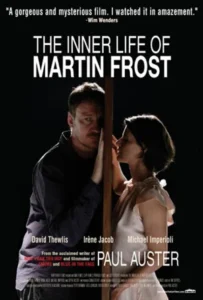
Relaxing at a friend’s empty country house, a reclusive New York novelist (David Thewlis) is inspired to write a new story and the next morning wakes up alongside a mysterious and seductive graduate student (Irene Jacob) who quickly becomes his muse and lover. Paul Auster, who made his directing debut with Lulu on the Bridge, provides the voice-over narration for this 2007 second feature, which was drawn and expanded from an interpolated story in his own novel, the engrossing Book of Illusions. The sad irony is that his storytelling gifts, Thewlis’s resourcefulness, and Jacob’s beauty only postpone one’s awareness that the material is too literary to work as cinema. The plot becomes increasingly arch (with the arrival of characters played by Michael Imperioli and by Auster’s teenage daughter, Sophie) and self-consciously metaphysical, and mannerism gradually overtakes visual and narrative invention. 94 min.
 Read more
From the March 12, 2008 Chicago Reader.
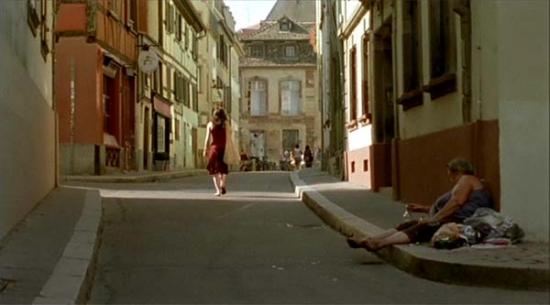
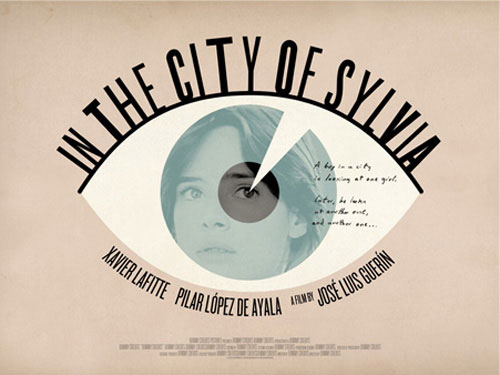
Two hypnotic and haunting 2007 features by Spanish experimental filmmaker Jose Luis Guerin, about the same romantic obsession. (The reference points are W.G. Sebald’s novel Vertigo and Alfred Hitchcock’s film of the same title.) The silent Some Photos in the City of Sylvia (65 min.) uses black-and-white stills with English intertitles to recount an unseen artist’s return to Strasbourg to search for a young woman he met briefly 22 years earlier while making a Goethe-related literary pilgrimage. The far more elliptical In the City of Sylvia (84 min.) tells the same story with color, carefully articulated sound, and minimal, subtitled French dialogue; in this film the artist returns only six years after his pilgrimage. Both works are mysterious, beautiful, and primal. It’s a pity the first, an intimate study and scenario for the second, is being shown after only one screening of its more languid successor.
Read more
This was written for Artforum‘s web site, and appeared there April 3, 2009. — J.R.

A considerable part of what’s most fascinating and enjoyable about Jim McBride’s early films is also what’s most dated and therefore forgotten about them. So it seems pertinent that McBride’s first two films, David Holzman’s Diary (1967) and My Girlfriend’s Wedding (1969), an especially (and provocatively) dialectical twosome, are available on a DVD released in the UK by Second Run (full disclosure: I wrote the liner notes) but can’t be found on their home turf.

The first of these movies virtually launched the American pseudo-documentary long before postmodernist skepticism ungracefully redubbed the form “mockumentary” (and only a couple years after Peter Watkins’s more earnest pseudo-documentaries Culloden [1964] and The War Game [1965], made for the BBC). The title hero (L. M. Kit Carson) — a compulsively diaristic filmmaker who offers his own life for inspection, scaring away his girlfriend in the process — is, like McBride himself, smitten with the textures of the present moment, which ultimately makes him a doomed figure. Some 1960s audiences found him so compellingly believable that they could even accept Holzman, in the final sequence, having lost his Éclair and Nagra, reduced to recording his face and voice in a penny arcade — even though it is left unexplained how these abject substitutes could get conveyed to us on film. Read more