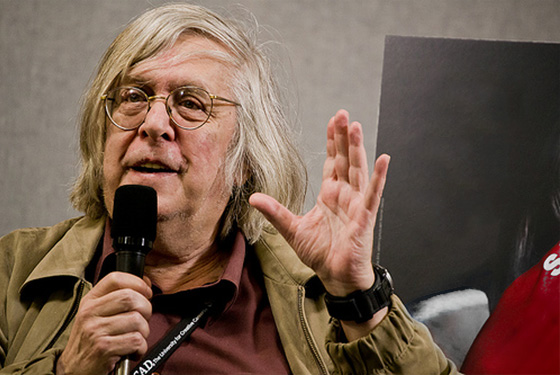
From the Chicago Reader (June 1, 2002). — J.R.
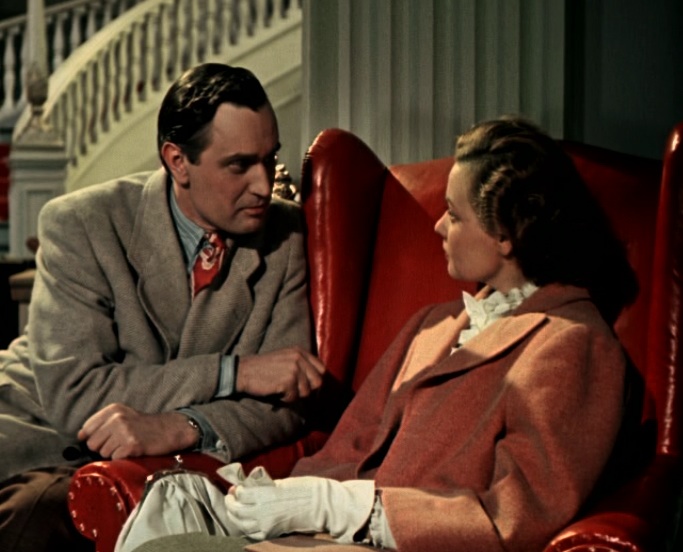
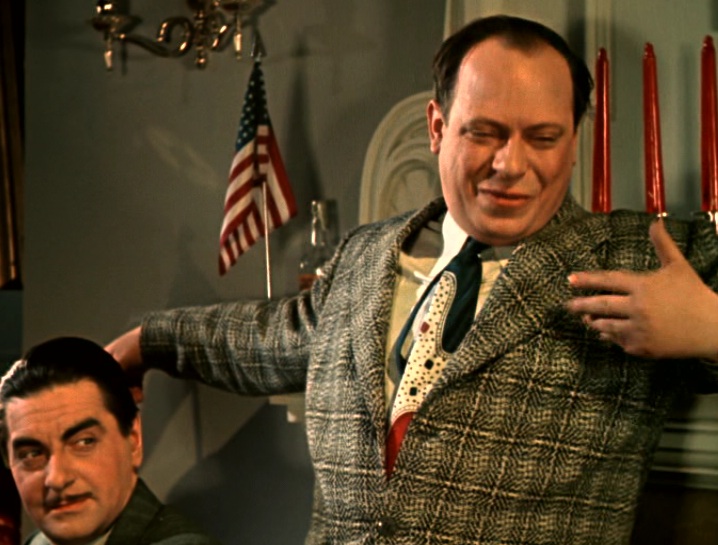
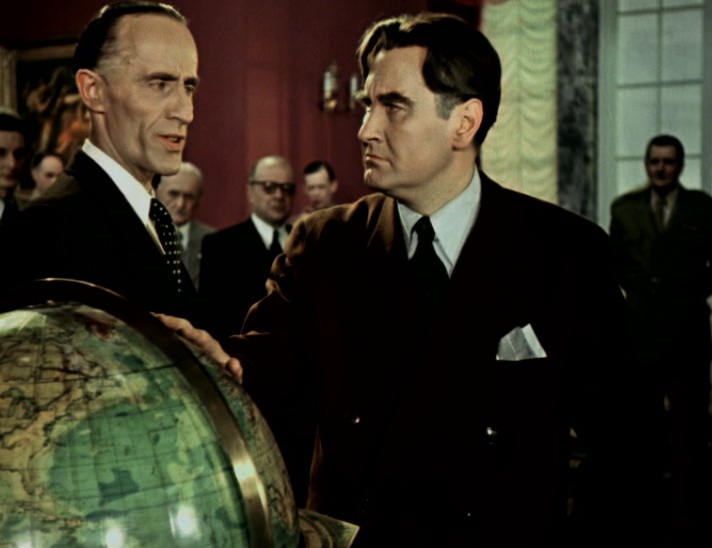
Around 1950, after seeing his own ideas rejected time and again, the great Soviet director Alexander Dovzhenko undertook this grotesque piece of kitsch, which was inspired by the defection of U.S. journalist Annabelle Bucard after she discovered that the U.S. embassy in Moscow, where she worked, was a nest of spies. Dovzhenko’s script went through countless drafts, and when Stalin terminated the project (for reasons that are still obscure), the director learned the news only when the electricity was abruptly shut off on the soundstage where he was working. The film was finally released in 1995, with commentary on the missing pieces and material about its arduous birth, and it’s morbidly fascinating as an example of Stalinist filmmaking (Dovzhenko’s style is nowhere in evidence). Considering the director’s stature, the most depressing aspects of this are that even the commentator isn’t sure whether it’s sincere and that ultimately it doesn’t matter much. In Russian with subtitles. 73 min. (JR)
 Read more
Written for The Unquiet American: Transgressive Comedies from the U.S., a catalogue/ collection put together to accompany a film series at the Austrian Filmmuseum and the Viennale in Autumn 2009. — J.R.
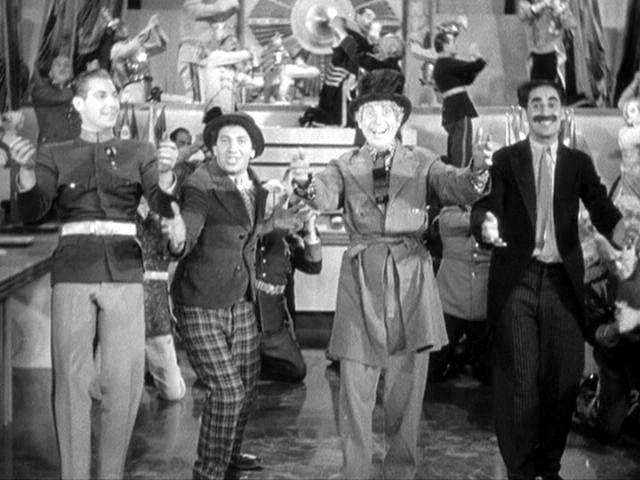
DUCK SOUP (1933)
Many reasons could be cited why this is the best of all
the Marx Brothers features, even though it was a
commercial disappointment when it was first released
in 1933. The last of the Marx Brothers movies in
which Zeppo -– the straight man among the brothers
and the youngest (who replaced Gummo, the one
who fulfilled this role on stage) –- appeared, it is perhaps
the only one whose anarchistic pleasures aren’t
crippled or interrupted by romantic and musical
interludes. (The climactic musical number here,
“Freedonia’s Going to War,” is an integral part of the
action.) Leo McCarey was inarguably the best director
the brothers ever worked with, and the ridiculing
of both nationalism and patriotism is more pointed
than most of their other satires. This comedy
also has the most beautiful (and beautifully abstract)
sequence in any Marx brothers picture, staged in
front of a mirror, developing a gag concept from
Chaplin’s The Floorwalker (1916) and extending it
to hallucinatory proportions. It also includes the
second and possibly best appearance of Margaret
Dumont (Groucho’s ideal foil) in a Marx Brothers
picture, and also features Edgar Kennedy and Louis
Calhern in memorable parts. Read more