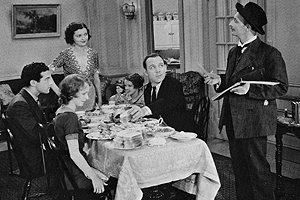
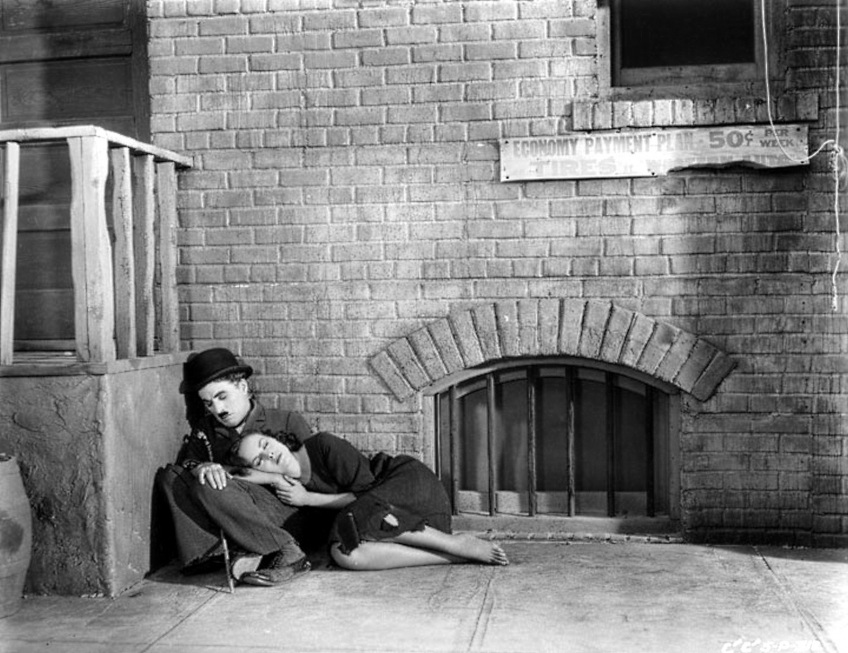
D.W. Griffith’s last film (1931) was unquestionably dated when it was released at the height of the Depression, both as an antidrinking polemic — probably fueled in part by Griffith’s own struggles with alcoholism — and as a Victorian melodrama. Yet today it emerges as one of his most powerful and intensely felt works — not merely a heartbreaking story and a portrait of the Depression at its grimmest, but a poignant summary of everything that Griffith could do with a camera, even in low-budget, unspectacular circumstances. With Hal Skelly and Zita Johann. 87 min. (JR)
From the Autumn 1984 Film Quarterly. I reviewed this book at Biskind’s request, and my position was hampered by the fact that he was the main editor of American Film at the time, where his commissions were essential to my livelihood. Our relationship became even more strained after I was all set to review the book and he then informed me that he wished I weren’t reviewing it. — J.R.
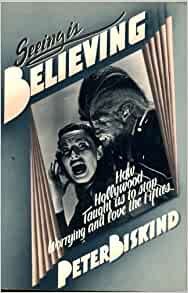
SEEING IS BELIEVING: How Hollywood Taught Us to Stop Worrying and Love the Fifties By Peter Biskind. NewYork: Pantheon Books, 1983. $22.95 cloth, $10.95 paper.
The first thing to be said about Peter Biskind’s ambitious and long-awaited study of ideology in Hollywood movies of the fifties is that it can’t be dipped into at random with out a considerable amount of confusion setting in. Without the benefit of Biskind’s careful construction and preparation, the unwary reader who plunges in midstream is bound to be bewildered or dismayed by many of the political labels, whereby Thieves Highway, for instance, is designated as a “right-wing film,” or High Noon and The Blob as “radical films.” Even in the Introduction, which tends to be more cautious than the rest of the book, several eyebrows are likely to be raised by the following sentence: “The films of Robert Aldrich can usually be counted on to be somewhere on the left, just as the films of Elia Kazan are frequently in the middle, while those of John Ford are to the right of his and those of Alfred Hitchcock are to the right of his. Read more
From the Chicago Reader (July 8, 1994). Also reprinted in my collection Movies as Politics. — J.R.
** FORREST GUMP (Worth seeing)
Directed by Robert Zemeckis
Written by Eric Roth
With Tom Hanks, Robin Wright, Gary Sinise, Mykelti Williamson, Sally Field, Michael Humphreys, and Hanna Hall.
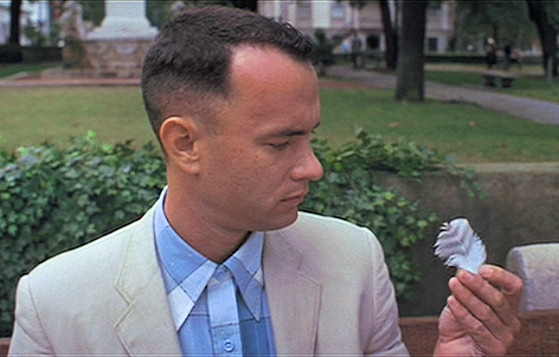
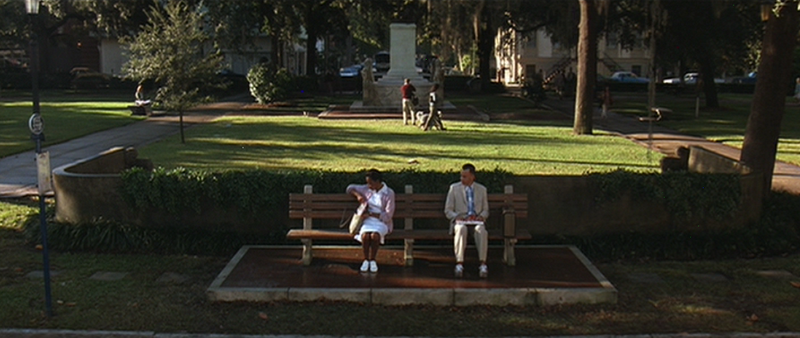
In the opening shot of Forrest Gump — a movie that might be described as Robert Zemeckis’s flag-waving Oscar bid — the camera meticulously follows the drifting, wayward trajectory of a white feather all the way from the heavens to the ground, just beside the muddy tennis shoes of the title hero (Tom Hanks). Forrest Gump, a slow-witted, sweet-tempered, straight-shooting fellow from Alabama with an IQ of 75, is waiting for a bus in a small park in Savannah, Georgia. Picking up the feather and placing it inside a book, he proceeds to recount his life story to various passing strangers; in the film’s final shot, over two hours later, we see a breeze carry the same white feather up and away.
These framing shots — a poetic statement about the vicissitudes of chance, how histories are made, unmade, and remade — are meant to say something about a half-century of American life, from the 40s to the present; and the tragicomic life of Forrest Gump, a saintly fool, is meant to embody those years. Read more
Written to introduce a dossier in Farsi on Alain Resnais prepared by Ehsan Khoshbakht in March 2012. — J.R.
Alain Resnais is clearly one of our greatest living filmmakers. But he’s also one of the most elusive, for a number of reasons. He started out as the most international of all the French New Wave artists, at least in his early features (especially Hiroshima mon amour,Last Year at Marienbad, La Guerre est finie,Je t’aime, je t’aime, and Providence), but then went on to become the most French of French directors (not only in obvious cases such as Mon oncle d’Amérique, Stavisky…, Mélo, Same Old Song, Not on the Lips, and Wild Grass, but even in films derived from English or partially American sources, such as I Want To Go Home, Smoking,No Smoking, and Private Fears in Public Places). Even before he got around to making features, he made by far the greatest films in the history of cinema about racism and colonialism (Statues Also Die), the Holocaust (Night and Fog), plastic (La Chant du Styrène), and libraries (Tout la mémoire du monde).Among Read more
Commissioned by Stanley Schtinter in the summer of 2019 for the limited LP release of Carles Santos’ soundtrack score for Pere Portabella’s Vampir Cuadecuc in early 2020. I received a copy of this LP from Stanley earlier that month — on the final day of a Portabella retrospective in London that began in November, when I gave a lecture at Close-up and Portabella himself, who’d just turned 93, was amiably present. — J.R.
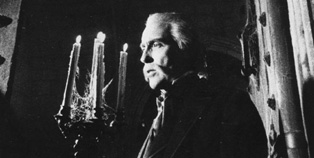
Masterpieces have many possible ports of entry. My own passport into Pere Portabella’s Vampir Cuadecuc (1970) — first seen multiple times at the Directors’ Fortnight in Cannes in 1971 and then celebrated in my festival coverage for the Village Voice — was composed of rampant cinephilia crossed with political ignorance, as well as a fascination with William S. Burroughs’ use of cut-ups in Naked Lunch (1959), The Soft Machine (1961-1966), and The Ticket That Exploded (1962-1967) to create scrambled syntax (echoed in Portabella’s capacity to shift his narrative focus within single shots from the Dracula story itself to the filming of it). I knew then that Portabella, one of the Spanish producers of Luis Buñuel’s Viridiana, had his own passport confiscated as punishment by Francoist Spain, accounting for his absence in Cannes, and that his film was mostly a silent documentary of the shooting of an adaptation of Bram Stoker’s Dracula by one Jesus Franco, accompanied by musique concrète. Read more
I don’t have much patience with colleagues who dismiss Charlie Chaplin by saying that Buster Keaton was better (whatever that means). To the best of my knowledge, with the arguable exception of Dickens, no one else in the history of art has shown us in greater detail what it means to be poor, and certainly no one else in the history of movies has played to a more diverse audience or evolved more ambitiously from one feature to the next. The recent European release of his eight major features on DVD, digitally restored and with superb bonus materials, has been matched over here by only four titles so far, including Modern Times (1936), the second of his two Depression-era masterpieces — though viewing it on a big screen is required for maximal impact. The opening sequence of the Tramp on the assembly line is possibly his greatest slapstick encounter with the 20th century, and as Belgian filmmakers Luc and Jean-Pierre Dardenne brilliantly observe on one of the DVD extras, the famous shot of his being run through machinery equates him with a strip of film. Still, there’s more hope here than in City Lights, perhaps because this time the Tramp has Paulette Goddard, another plucky urchin, to keep him company. Read more
From the Chicago Reader (October 3, 1995); slightly tweaked in late 2013. — J.R.
If, like me, you find things to admire in many of Gus Van Sant’s films, you may be especially gratified by what he’s done with this satirical anti-TV script by Buck Henry — suggested by a real-life crime and adapted from a Joyce Maynard novel — and a spot-on performance by Nicole Kidman that may be the best of its kind since Tuesday Weld’s wicked sexual turns in Pretty Poison and Lord Love a Duck. Charting the ruthlessness of an ambitious bimbo telecaster in Little Hope, New Hampshire, this staccato black comedy sustains its brilliant exposition and narration until the plot turns to premeditated murder, complete with hapless and semicoherent teenage accomplices. The movie loses much of its pitch and many of its laughs at this juncture, and there’s an uncomfortable tendency to equate the falsity and venality of TV too exclusively with Kidman’s character, thereby bypassing golden opportunities offered by Wayne Knight (as a station boss) and an uncredited George Segal to make the target less gender specific. But much of this is good nasty fun, with a fine secondary cast that includes Matt Dillon, Joaquin Phoenix, Alison Folland, Casey Affleck, Illeana Douglas, and Dan Hedaya; also look for striking cameos by David Cronenberg and screenwriter Buck Henry. Read more
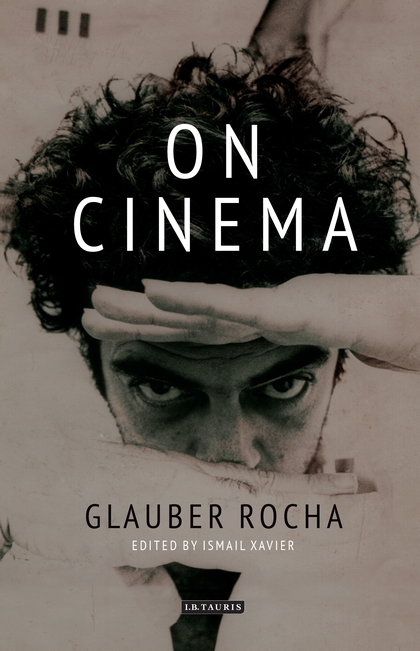
By Glauber Rocha, edited by Ismail Xavier. London/New York: I.B. Taurus, 2019, 306 pp., Hardcover: $110, Kindle: $85.
I’m strictly an amateur on the subject of Glauber Rocha (1939-1981), identified on the back cover of this pricey volume as “Brazil’s most important filmmaker and founder of the 1960s and ‘70s Cinema Novo movement”. But even a cursory glance at the limited availability of his films to Anglo-Americans without a grasp of Portuguese reveals that I have plenty of company, and this book offers us an invaluable starting-point for diminishing our ignorance. Eleven years in the making (and with ample confirmation that this painstaking care has paid off in terms of fluidity and clarity), with five individuals apart from Rocha listed on the title page — editor Xavier, general coordinator Lúcia Negib, Cecília Mello for final text and notes, and Stephanie Dennison and Charlotte Smith as translators — this is a rich assembly of articles drawn from three separate collections of Rocha’s writing: Critical Review of Brazilian Cinema (1963), The Cinema Novo Revolution (1981), and The Century of Cinema (1983), the first two of which were put together by Rocha himself. Read more
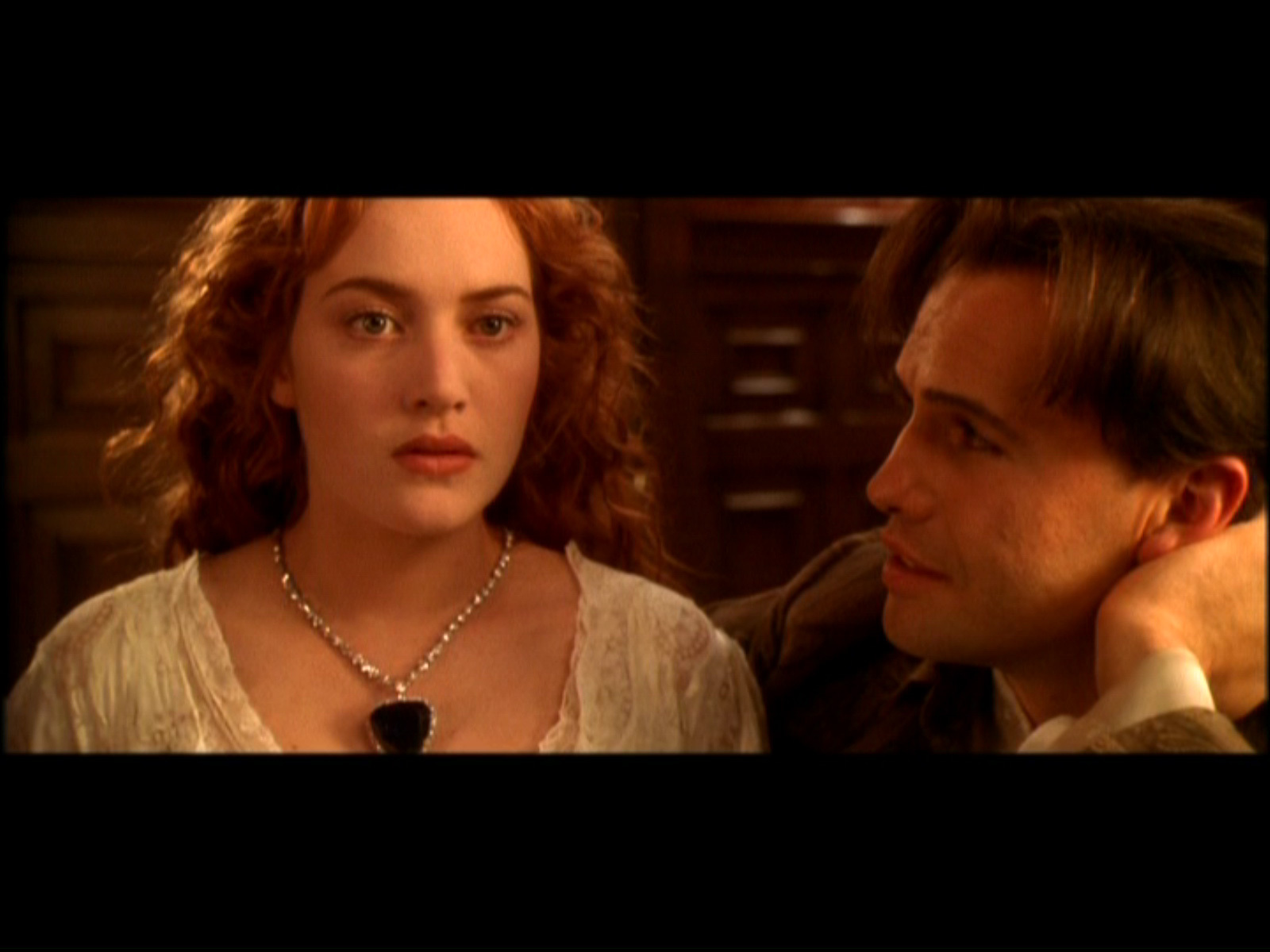
For better and for worse, James Cameron’s hokey yet moving $200 million blockbuster (1997) tells you quite a bit about first class, a little about third class, and nothing at all about second class. This is mainly because Titanic, unlike most disaster movies, has virtually no subplots; the whole 194 minutes pivot around a fictional love story on the doomed ship between a rebellious bride-to-be (Kate Winslet) and a penniless artist (Leonardo DiCaprio). The elemental style and broadly defined characters recall D.W. Griffith at times (though there’s no equivalent to either of the Gish sisters), and for a movie set in 1912 this seems entirely appropriate. Some of the invented story is certainly fanciful, and a few details are downright stupid, yet overall what the movie has to say about its era and, more implicitly, our own in terms of class rings true. All things considered, Titanic is old-fashioned epic filmmaking that carries a wallop. With Billy Zane, Kathy Bates, Frances Fisher, David Warner, and Bill Paxton. (JR)
Written for the 2019 catalogue of Il Cinema Ritrovato in Bologna. Tim Lucas has helpfully and subsequently furnished us with the following on Facebook: “According to his autobiography, Roger Corman — then a script reader at Fox — retrieved this script from a slush pile and presented it to a producer acquaintance as having worth, given a proper rewrite. He did it himself, then presented it to the producer, who — without telling him — got the film greenlit as a Peck vehicle and took all the credit. Corman promptly quit his job and set about becoming a producer outside the Hollywood studio structure.” — J.R.
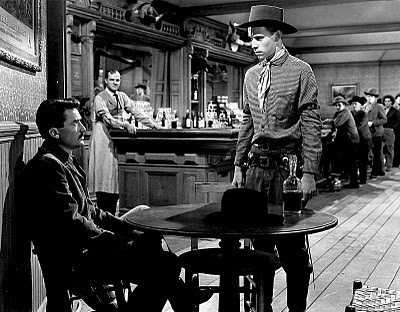
Commonly described as an “adult” Western, The Gunfighter (1950) differs from both the Freudian Pursued (1947) and the classical The Furies (1950). Though it comes close to equating screen time with real time, without any rhetorical emphasis (as High Noon brings with clocks), its method is historical revisionism, postulating a “real” West that tragically undermines the ones we accept in other Westerns. It plays an intricate double game with genre expectations, satisfying some demands and implicitly chiding us for certain others. Significantly, the film’s first and final images are almost identical but register as antithetical in moral significance. Read more
Jean-Luc Godard takes on the Bosnian war in this 1997 French-Swiss production, broken into four segments: “Theater,” “You Don?t Fool With Love in Sarajevo,” “A Film About In-Tranquillity,” and “For Ever Mozart.” No Godard film is devoid of interest, and all his work (with the arguable exception of some of his post-’68 efforts, like Un film commes les autres) is worth seeing, but this treatment of war as bad theater and the vicissitudes of the film business strikes me as being his least-inspired feature since the late 60s. Working with a cast of unknowns who are encouraged not to outshine one another, and staging bits of Bosnian warfare on property that belonged to his late grandparents in Switzerland, he makes his isolation and his distance from his contemporary subjects more of an issue this time. An erotically framed, beautifully lit female torso in a doorway, imitating a Bosnian corpse, points to where some of the problems lie. The unidiomatic title, by the way, is a somewhat forced bilingual pun that can also be read as “pour rever Mozart,” i.e., “to dream Mozart.”
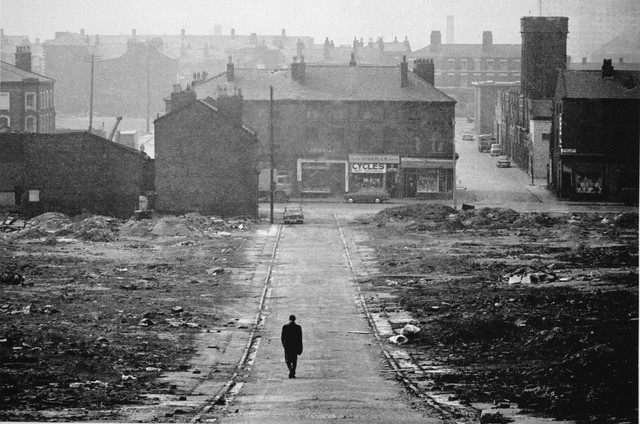
It seems incredible that Terence Davies, the greatest living English filmmaker, has made only five features in two decades. His first documentary, a multifaceted, mesmerizing, and eloquent essay about his native Liverpool, is as autobiographical and as intensely personal as his Distant Voices, Still Lives (1988) and The Long Day Closes (1992), so that his evolution as a lapsed Catholic and as a homosexual are as operative here as his working-class background and his taste in music and cinema. Being made up chiefly of found footage, this film lacks the mise en scene of its predecessors, but it has the added benefit of Davies’ voice-over narration, which, thanks to his training and experience as an actor, has an enormous performative power. (Check out the witty way he conveys his disdain for the Beatles through his delivery of one of their best-known refrains.) 72 min. (JR) Read more
From the Chicago Reader (November 27, 1998), and reprinted in my collection Essential Cinemaand on the BFI Blu-ray of the film. In his audiovisual essay on the latter release, Geoff Andrew rightly corrects my error, below, of describing the ax murder victim as Demy’s Lola, not von Sternberg’s Lola Lola. — J.R.
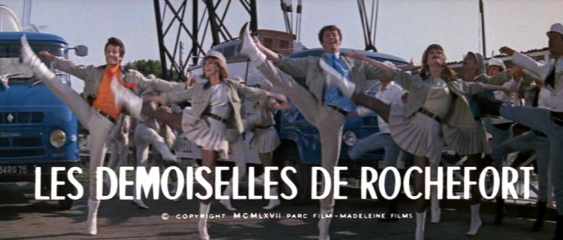
The Young Girls of Rochefort
Rating **** Masterpiece
Directed and written by Jacques Demy
With Catherine Deneuve, Françoise Dorléac, George Chakiris, Gene Kelly, Danielle Darrieux, Michel Piccoli, Grover Dale, Jacques Perrin, Geneviève Thénier, Henri Crémieux, and Jacques Riberolles.
As eccentric as this may sound, Jacques Demy’s 1967 Les demoiselles de Rochefort is my favorite musical. Yet despite my 30-year addiction to the two-record sound track, the first time I was able to see the movie subtitled was a couple of weeks ago — helpful considering my faltering French. It’s certainly the odd musical out in terms of both its singularity and its North American reputation — a large-scale tribute to Hollywood musicals shot exclusively in Rochefort in southwest France, and an unabashedly romantic paean to American energy and optimism that’s quintessentially French. It has a score by Michel Legrand that’s easily his best, offering an almost continuous succession of songs with lyrics by Demy, all written in alexandrines (as is a climactic dinner scene that’s spoken rather than sung); choreography that ranges from mediocre (Norman Maen’s frenchified imitations of Jerome Robbins) to sublime (Gene Kelly’s choreography of his own numbers); and perhaps the most beautiful dovetailing of failed and achieved connections apart from Shakespeare and Jacques Tati’s Playtime, shot during the same period. Read more
From Framework (volume 45, number 1, Spring 2004). Because of its length, I’m running this in two parts. — J.R.
This interview took place in Buenos Aires, Argentina, April 20, 2002 — if memory serves, at the Abasto shopping mall, where the Buenos Aires Festival of Independent Film was then being held.
NK: How did you come to film criticism and film journalism? You start out in the States and have some years in Paris and then London and then back to the States.
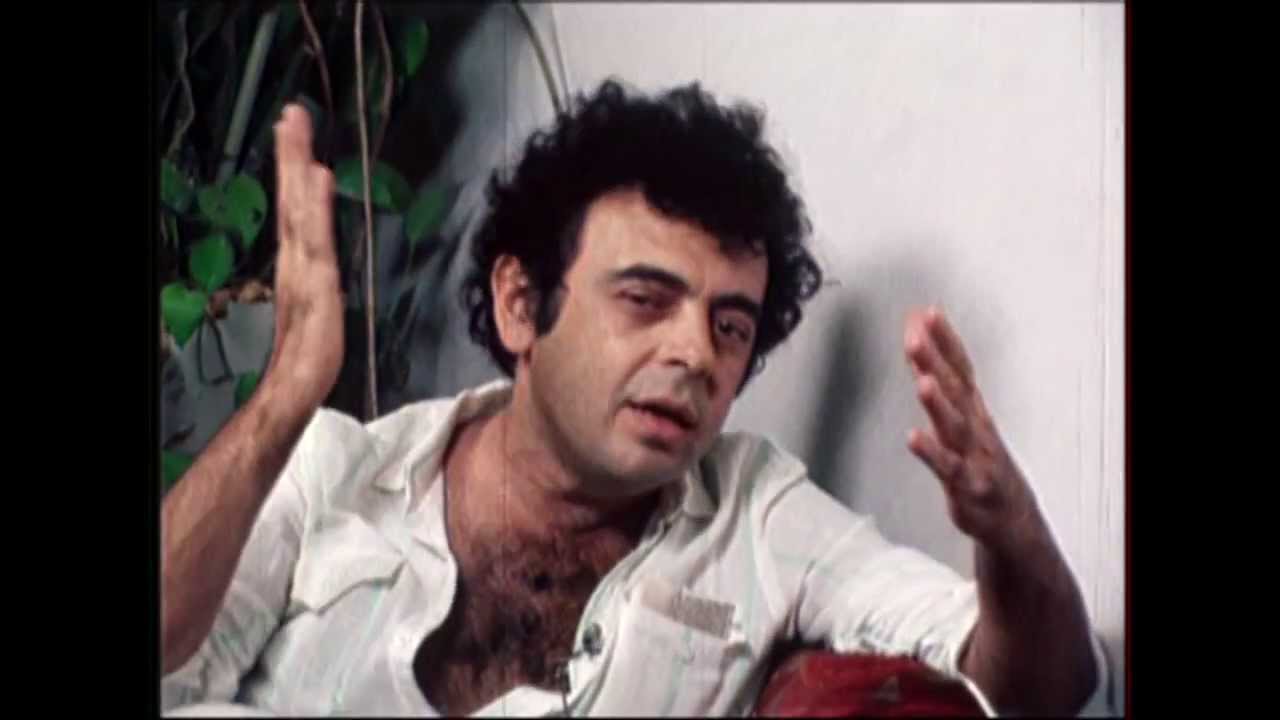
JR: Like most other film critics of my generation I didn’t set out to be a film critic. I was a writer from very early on and my family was involved in the film business but my initial interest was in being a fiction writer. I wrote fiction in high school and in college and was hoping, very unrealistically, to have a career as a novelist.
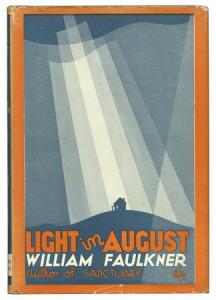
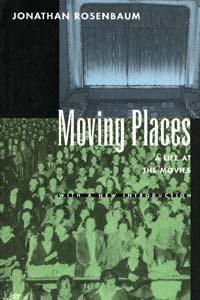
NK: The fiction writer aspect survives into the opening page of Moving Places where you riff on the opening of William Faulkner’s Light in August.
JR: My MA thesis was on Light in August. At the time I got fed up and quit graduate school I was working on a novel and somebody I knew from college offered me a job editing a collection of film criticism. Read more
It’s hard to say what Terence Davies’s powerful masterpiece is about — growing up in a working-class family in Liverpool in the 40s and 50s — without making it sound familiar and lugubrious. In fact, this beautiful memoir, conceivably one of the greatest of all English films, is so startling and original that we may not have the vocabulary to do it justice. Organized achronologically, so that events are perceived more in terms of emotional continuity than of narrative progression, the film concentrates on family events like weddings and funerals and on songs sung at parties and the local pub. It’s clear that Davies’s childhood, which was lorded over by a brutal and tyrannical father, was not an easy one, yet the delight shown and conveyed by the well-known songs makes the experience of this film cathartic and hopeful as well as sorrowful and tragic. (There are some wonderful laughs as well.) Much of the film emphasizes the bonds between the women in the family and their female friends, although there’s nothing doctrinal or polemical about its vision, and the purity and intensity of its emotional thrust are such that all the characters are treated with passion and understanding. Read more



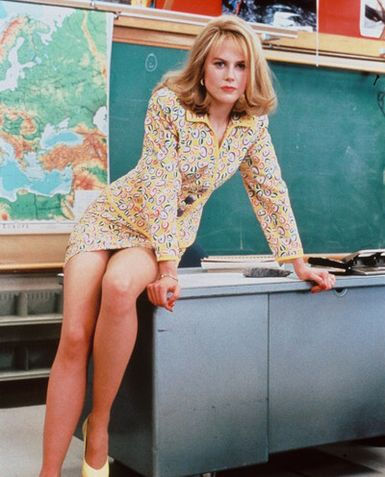 If, like me, you find things to admire in many of Gus Van Sant’s films, you may be especially gratified by what he’s done with this satirical anti-TV script by Buck Henry — suggested by a real-life crime and adapted from a Joyce Maynard novel — and a spot-on performance by Nicole Kidman that may be the best of its kind since Tuesday Weld’s wicked sexual turns in Pretty Poison and Lord Love a Duck. Charting the ruthlessness of an ambitious bimbo telecaster in Little Hope, New Hampshire, this staccato black comedy sustains its brilliant exposition and narration until the plot turns to premeditated murder, complete with hapless and semicoherent teenage accomplices. The movie loses much of its pitch and many of its laughs at this juncture, and there’s an uncomfortable tendency to equate the falsity and venality of TV too exclusively with Kidman’s character, thereby bypassing golden opportunities offered by Wayne Knight (as a station boss) and an uncredited George Segal to make the target less gender specific. But much of this is good nasty fun, with a fine secondary cast that includes Matt Dillon, Joaquin Phoenix, Alison Folland, Casey Affleck, Illeana Douglas, and Dan Hedaya; also look for striking cameos by David Cronenberg and screenwriter Buck Henry.