From the January 29, 1999 Chicago Reader. — J.R.
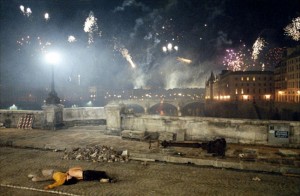
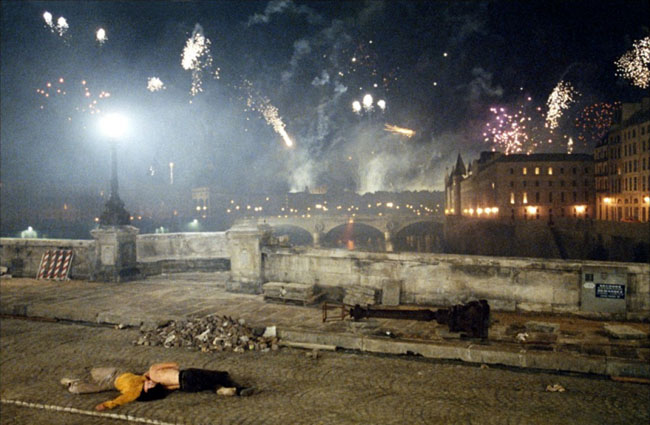
This 1992 French feature by Leos Carax (Boy Meets Girl, Bad Blood) could be the great urban expressionist fantasy of the 90s: like Sunrise and Lonesome in the 20s and Playtime and Alphaville in the 60s, it uses a city’s physical characteristics to poetically reflect the consciousness of its characters. Carax daringly and disconcertingly begins the film as a documentary portrait of the homeless in Paris, but it becomes a delirious love story between two people (Denis Lavant and Juliette Binoche) who live on one of Paris’s most famous bridges and experience the whole city as a kind of enchanted playground, a vision that reaches an explosive apotheosis during a bicentennial fireworks display over the Seine. To realize his lyrical and monumental vision, Carax built a huge set in the French countryside that depicted Pont-Neuf and its surroundings, making this one of the most expensive French productions ever mounted. So the film seems an ideal subject for a lecture by former Chicagoan Stuart Klawans, film critic for the Nation and author of Film Follies: The Cinema Out of Order, a new book with a witty and highly original sense of film history. Read more
From the Chicago Reader (April 10, 1992); also reprinted in two of my collections, Placing Movies and Discovering Orson Welles. — J.R.

OTHELLO
**** (Masterpiece)
Directed and written by Orson Welles
With Orson Welles, Micheal Mac Liammoir, Suzanne Cloutier, Robert Coote, Fay Compton, Doris Dowling, and Michael Laurence.
Sustained until death at 70 by his fame as the prodigy with the baby face, Orson Welles always appeared to abide by words he put in the mouth of Citizen Kane: “There’s only one person in the world to decide what I’m gonna do — and that’s me.” — from a two-page magazine ad for the Dodge Shadow that appeared last month under the heading “Amazing Americans . . . a celebration of people who have lifted our nation’s pride”
I guess this describes the official Orson Welles we’re all supposed to love and revere. The ad demonstrates how even the recalcitrance of a wasted and abused artist can wind up as a handy marketing tool. Chrysler, a corporation that never would have dreamed of sustaining, much less supporting Welles as an artist when he was alive — and surely wouldn’t pay a tenth of what this ad cost to help make his unseen legacy available today — proudly invites us to join it in celebrating his artistry. Read more
From the April 1. 1992rChicago Reader. — J.R.
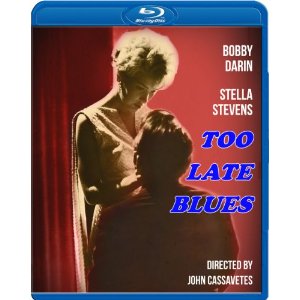
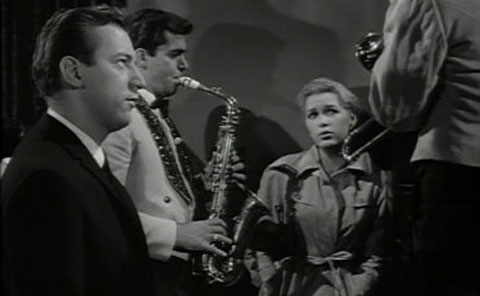
The success of John Cassavetes’s independent Shadows led to a contract with Paramount that yielded only this feature, Cassavetes’s second — a gauche but sincere drama with a highly relevant subject: the self-laceration and other forms of emotional havoc brought about when a footloose jazz musician (Bobby Darin) decides to sell out and go commercial. A lot could be (and was) said about what’s wrong with this picture: it’s pretentious, lugubrious, mawkish, and full of both naivete and macho bluster. It also has moments that are indelible and heartbreaking, at least one unforgettable performance (Everett Chambers as the hero’s manager), and many very touching ones (by Darin, Stella Stevens, Rupert Crosse, Vince Edwards, Cliff Carnell, and Seymour Cassel, among others), not to mention a highly affecting jazz score featuring Benny Carter and a haunting theme by David Raksin. If you care a lot about Cassavetes, you should definitely see this — otherwise keep your distance (1960). (JR)

 Read more
This appeared in the Chicago Reader in their Christmas issue (December 25) in 1992. — J.R.
The presumption behind most ten-best lists is that they include items available to everybody. One can always look at such lists and say, “Too bad I missed such and such. Maybe I’ll catch up with it on video.” But few people seem to be aware that they may never catch up with a film, because it never made it to Chicago at all—either to theaters or to video stores. In a consumer culture like ours we aren’t supposed to think too much about what merchandisers choose to put in front of us; it’s better for business if we assume that new movies just fall from the sky into theaters and video stores—and that those that don’t make it don’t deserve to. However, I see a certain number of movies in other countries every year that don’t make it to town, and sometimes they’re better than the movies that do. Why this happens so often is a matter worth exploring briefly.
In 1938 the U.S. government filed an antitrust action against Paramount Pictures, objecting to the monopolies of movie theaters held by the studios. By the end of 1946 a court judgment enjoined not only Paramount but also Loew’s, RKO, Warner Brothers, and 20th Century-Fox from acquiring additional theaters. Read more
From the Chicago Reader (March 1, 1992). — J.R.
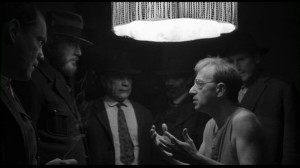
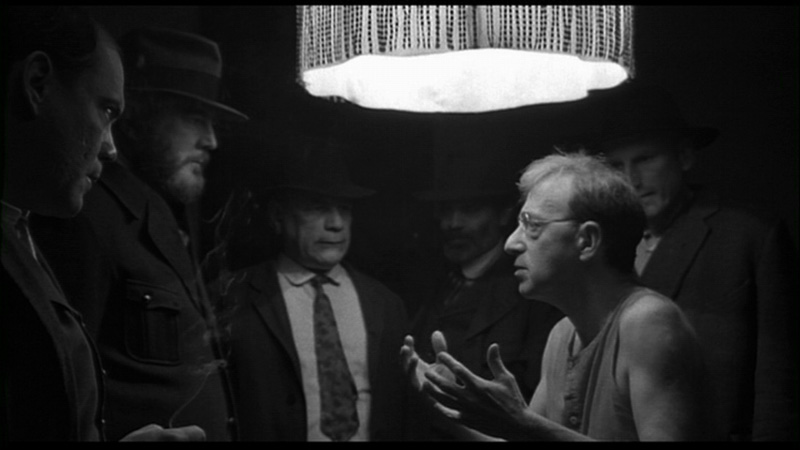
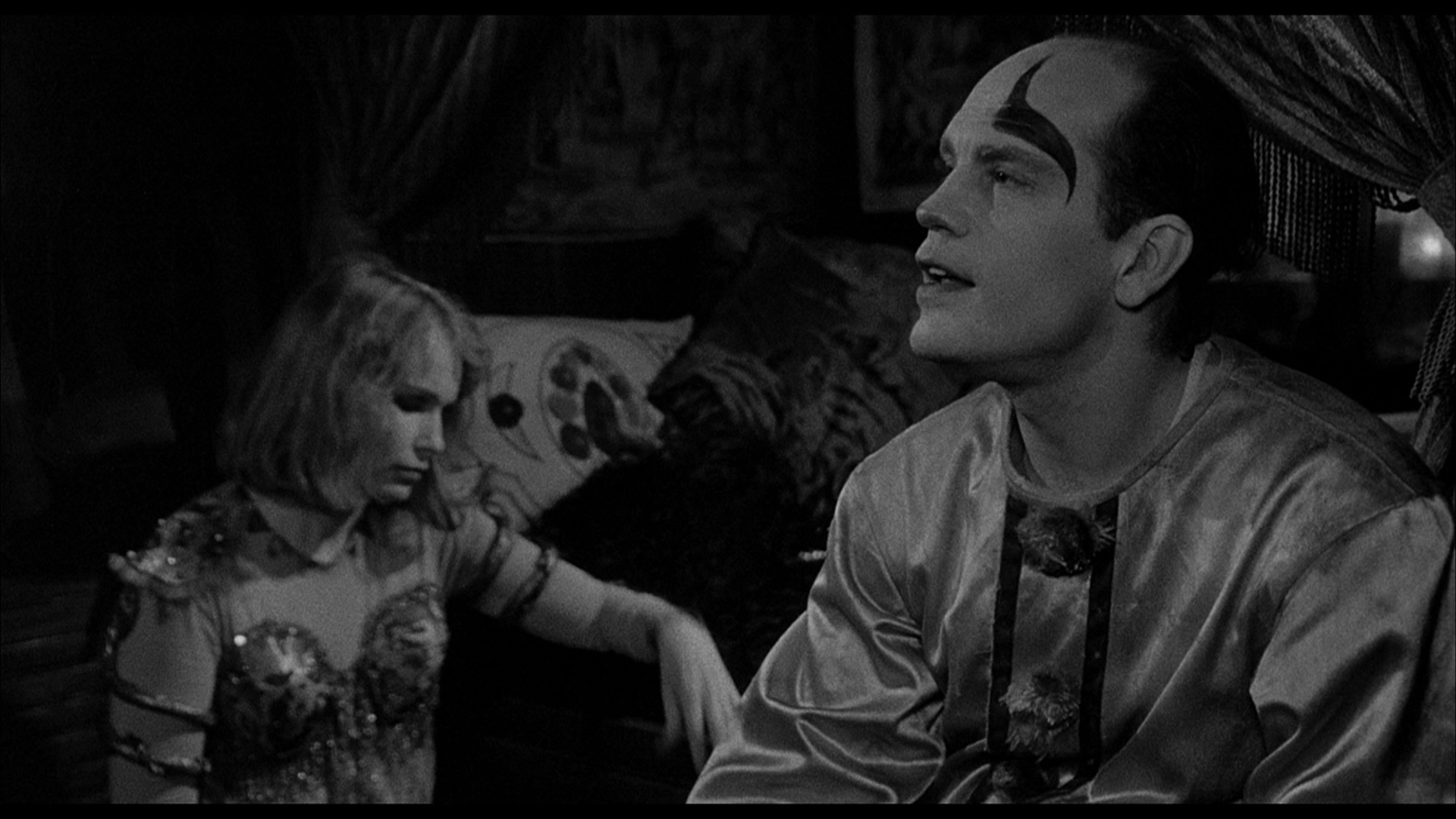
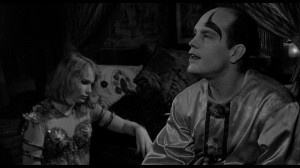
Now we all know what German expressionism is: extended chunks of Bergman’s Sawdust and Tinsel (recast with John Malkovich and Mia Farrow) and The Magician (recast with Kenneth Mars and Woody Allen), Nosferatu’s pointed ears, the dull center framing of any Woody Allen movie (no diagonals or tilted angles, please), lots of kvetching with New York accents, central-casting prostitutes played by guest stars (Lily Tomlin, Jodie Foster, and Kathy Bates), reams of dialogue we’ve all heard before in countless other movies, a strangler lurking in dank cobblestone alleyways, the opening passage of Kafka’s The Trial (who needs to read any further?), music by Kurt Weill, and, to top it off, shadows, silhouettes, and fog filmed in black and white. In short, Woody Allen’s feeblest semicomedy and postmodernist pastiche since A Midsummer Night’s Sex Comedy, bravely forsaking the streets of Manhattan for the soundstages of Astoria, explores the dark night of the soul with lots of famous people. With Michael Kirby, Donald Pleasence, Philip Bosco, Kate Nelligan, Julie Kavner, John Cusack, Madonna (for a minute or two), and others I’ve undoubtedly forgotten. You’ll forget them, too. (JR)
 Read more