From the Chicago Reader (October 23, 2003). — J.R.
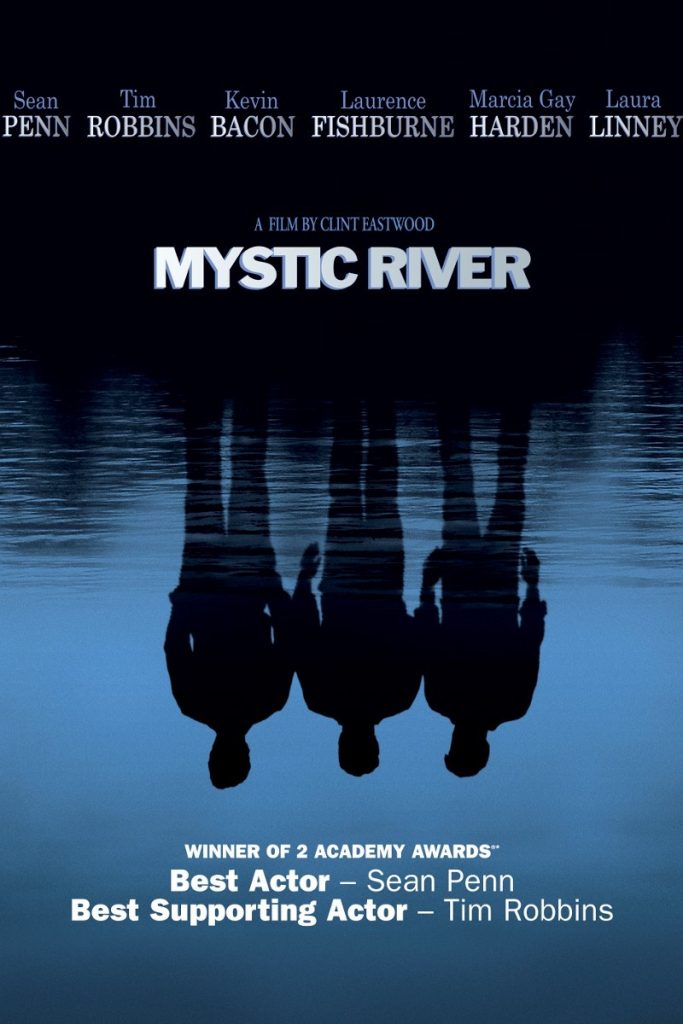
Mystic River ** (Worth seeing) Directed by Clint Eastwood Written by Brian Helgeland With Sean Penn, Tim Robbins, Kevin Bacon, Laurence Fishburne, Marcia Gay Harden, Kevin Chapman, Laura Linney, Adam Nelson, Emmy Rossum, and Cameron Bowen.
The critical community has spoken: Clint Eastwood’s Mystic River is a masterpiece and a profound, tragic statement about who we are and the inevitability of violence in our lives — a pitiless view, in which violence begets violence and the sins of the fathers pass to later generations.
Presumably these qualities are also in Dennis Lehane’s best-selling novel, which I haven’t read, but it’s the movie that’s drawing most of the superlatives from American critics. The acclaim started after the film premiered at Cannes, when much of the griping American press seemed to see it as a vindication of American filmmaking, an answer to the terrible state of cinema in general. Some of those critics may have seen it as a vindication of U.S. patriotism as well — one reason it’s likely to rack up plenty of Oscars.
The last Eastwood movie that provoked biblical language and allusions to Greek tragedy was Unforgiven (1992), which also saw violence as both awful and unavoidable — our destiny and perhaps even our birthright. Read more
From the September 28, 2001 Chicago Reader. — J.R.
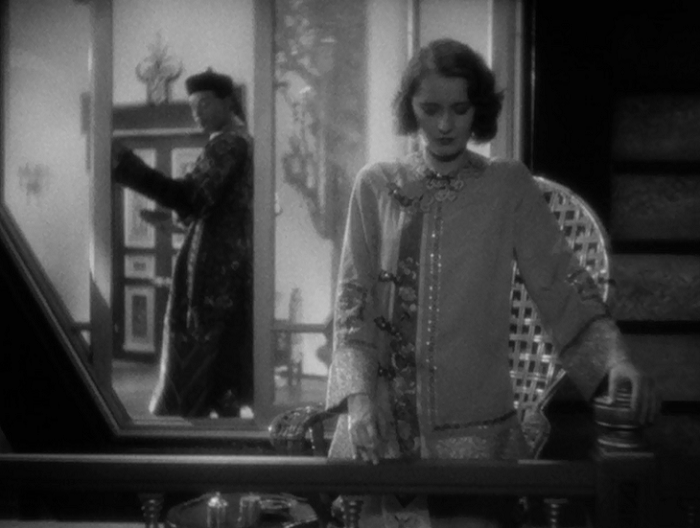
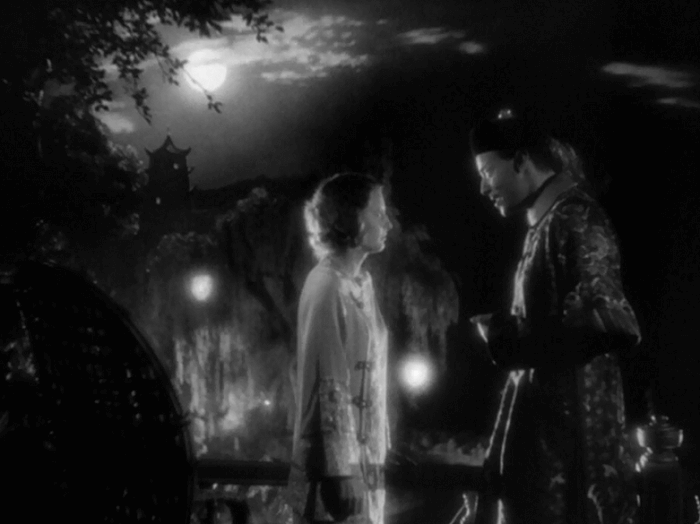
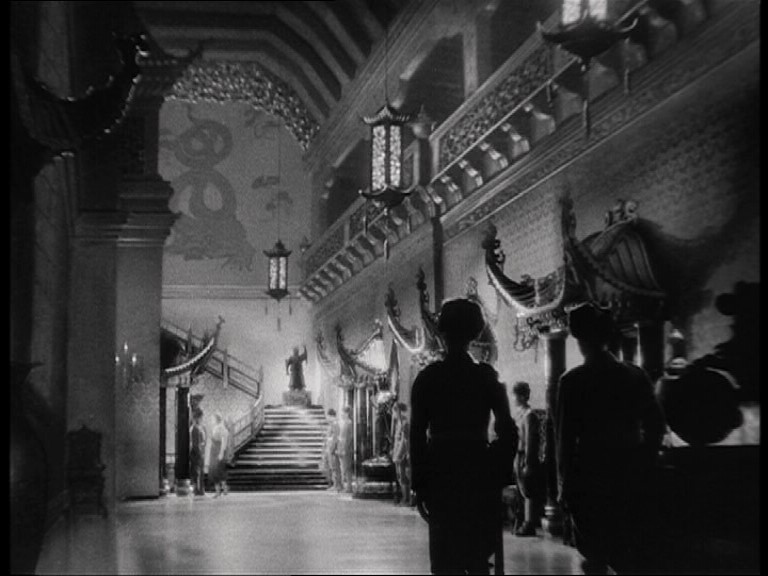
Frank Capra’s very atypical drama about an American missionary (Barbara Stanwyck) taken prisoner by a Chinese warlord (Nils Asther) is not only his masterpiece, but also one of the great love stories to come out of Hollywood in the 30s — subtle, delicate, moody, mystical, and passionate. Joseph Walker shot it through filters and with textured shadows that suggest Sternberg; Edward Paramore wrote the script, adapted from a story by Grace Zaring Stone. Oddly enough, this perverse and beautiful film was chosen to open Radio City Music Hall in 1933; it was not one of Capra’s commercial successes, but it beats the rest of his oeuvre by miles, and both Stanwyck and Asther are extraordinary. With Walter Connolly and Lucien Littlefield. 89 min. Music Box, Saturday and Sunday, September 29 and 30.
7. Letters from the Ends of the World (a dozen of the first
graduates of Béla Tarr’s FilmFactory)
8. Uncut Gems (Josh & Benny Saftie)
9. Cry Macho (Clint Eastwood)
An incomplete list of nine titles for an incomplete, pandemic year that cries out for updates and afterthoughts. That may help to explain why many items here are at least partially films/videos about films/videos (and at least one item, Letters…, is about the pandemic). Having to compile a so-called ‘2021’ list in October compels me to add Uncut Gems, seen too late in 2020 to make it onto last year’s list. Read more
From the Village Voice (April 25, 1971). This was the first piece I ever published there, thanks to Andrew Sarris, and I’ve done a light edit (in October 2012) in order to make it a little more bearable to me. The “Indian girl” [sic] mentioned here, who subsequently became a very good friend, was Munni Kabir; as Nasreen Munni Kabir, she is identified today on Wikipedia as an author and TV producer, based in the U.K., and about ten years ago, I saw her again in London when she came to a public discussion I was having with Geoff Andrew about the short films of Kiarostami.
I believe I was mistaken about the seasonal setting of the Dostoevsky story, and apologized profusely about this to Bresson himself when he expressed interest in reading this article (which he conveyed to me via Munni, along with his address) and I sent him a copy, along with a note; I still have a copy of his gracious thank-you note, sent to me in Alabama, including his assurance that my error wasn’t very important….My subsequent encounters with (or, more precisely, sightings of) Bresson in Paris occurred at a screening of Luchino Visconti’s White Nights at the Cinematheque’s auditorium on Rue d’Ulm, a private screening of Susan Sontag’s Promised Lands, and two successive private screenings of Bresson’s Lancelot du Lac with members of his cast and crew.Read more
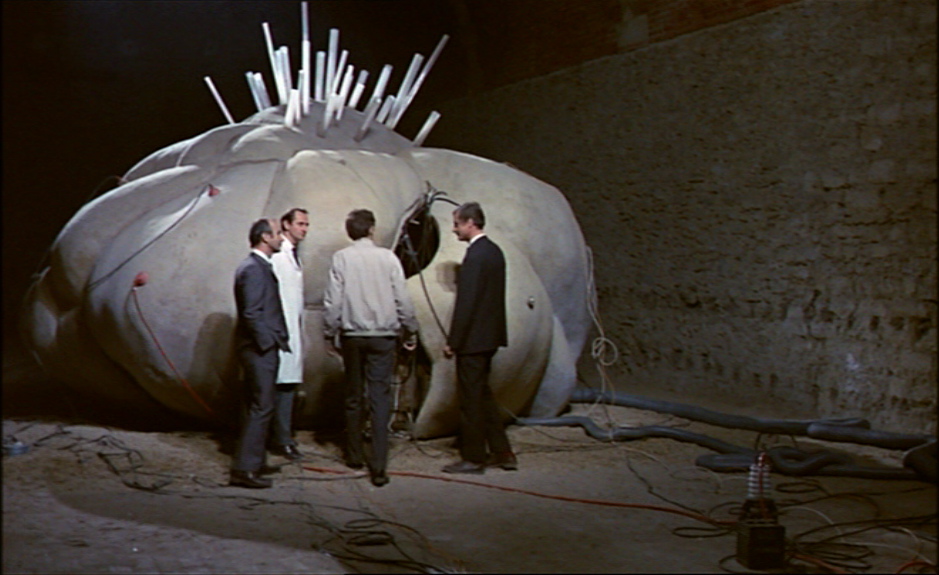
As I recall, this was my only contribution to this Boston alternative weekly, commissioned by the late Stuart Byron. He asked me to review the film because I was the only colleague of his who defended it when it was shown at the 1972 New York Film Festival, where everyone else, at least within his earshot and mine, considered it an unmitigated disaster — which probably accounts in part for my defensive, almost apologetic tone, which I now regret. I suspect that part of my problem with conceptualizing the film came from my confusion of “science fiction” with the French category of “fantastique,” which incorporates Surrealism and its tolerance for fantasy as well as science fiction. So it’s gratifying to see Manohla Dargis declaring the film a masterpiece at the time of its early 2014 run at New York’s Film Forum, and doing an infinitely better job of saying why than I was able to muster 40-odd years earlier, writing from Paris….Fans of Eternal Sunshine of the Spotless Mind are urged to check out this film, in many ways its major inspiration. — J.R.
At first glance, Alain Resnais’ fifth feature seems as sharp a decline from La Guerre est finie, his previous film, as that one was from Muriel. Read more
Commissioned by the French quarterly Trafic for their spring 2020 issue. — J.R.
The rhythmic clapping resonates inside these walls, which are hard and glossy as coal: Come-
on! Start-the-show! Come-on! Start-the-show! The screen is a dim page spread before us, white and silent. The film has broken, or a projector bulb has burned out. It was difficult even for us, old fans who’ve always been at the movies (haven’t we?) to tell which before the darkness swept in. — from the last page of Gravity’s Rainbow
To begin with a personal anecdote: Writing my first book (to be published) in the late 1970s, an experimental autobiography titled Moving Places: A Life at the Movies (Harper & Row, 1980), published in French asMouvements: Une vie au cinéma (P.O.L, 2003), I wanted to include four texts by other authors — two short stories (“InDreams Begin Responsibilities” by Delmore Schwartz, “The Secret Integration” by Thomas Pynchon) and two essays (“TheCarole Lombard in Macy’s Window” by Charles Eckert, “My Life With Kong” by Elliott Stein) — but was prevented from doing so by my editor, who argued that because the book was mine, texts by other authors didn’t belong there. Read more
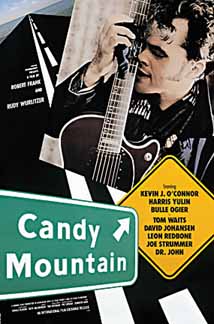
With Kevin J. O’Connor, Harris Yulin, Tom Waits, Bulle Ogier, Roberts Blossom, Leon Redbone, and Dr. John.
Is it my imagination, or has “60s” become less of a dirty word lately? Appearances can be deceptive, but in recent movies as diverse in quality (as well as in subject matter) as Who Framed Roger Rabbit, Young Guns, and Tucker, we seem finally to be acknowledging that certain 60s values persist in our minds and habits as something more positive than war wounds. The recognition comes slowly and begrudgingly, though — almost as if the Reagan era has kept it under lock and key, and plastered it over with warnings about freak-outs, burnouts, and death. So when something that might be called 60s wisdom makes an appearance in our midst, it deserves to be treasured and savored rather than hastily filed away. At some time in the future we may find uses for it.
Although it’s pointedly set in the present, Candy Mountain has so many links to the 60s in terms of its ambience and attitudes that it seems to exist in a slightly blissed-out time warp — a charmed and charming “other place” that perceives the harshness of the present through a warm and misty (though not necessarily self-deceiving) haze. Read more
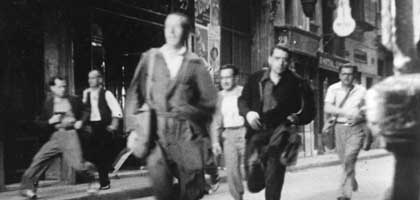
It’s a pity that André Malraux’s only film, a pre-neorealist feature about the struggle of his own Republican squadron in the International Brigade during the Spanish Civil War, with a stirring original Darius Milhaud score — started in Barcelona in July 1938 (a few months after publishing his novel of the same title in France), suspended in January 1939 after the Franco Nationalists seized Barcelona, completed in the French Joinville studios just ahead of the German occupation, and finally released only after the Liberation, in 1945 — is virtually unknown today in the English-speaking world, even though a DVD of the restoration with English subtitles is available in France. James Agee compared its poetry to that of Homer, but it seems to have become a forgotten film in the U.S. since then.
I showed a couple of clips from the film in my World Cinema of the 1930s course last night, as a kind of irreverent and dialectical contrast to Howard Hawks’ dark and beautiful Only Angels Have Wings, shot almost simultaneously in Hollywood. Much as I love the Hawks film, which I would describe as profound hokum, I don’t think its ideological and colonialist trappings should be entirely ignored. Read more
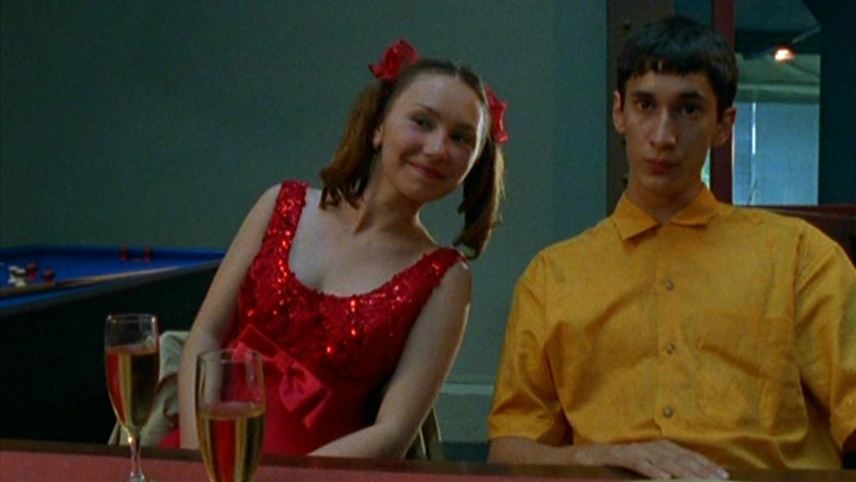
Pascal Aubier directed this sweet and winsome 1995 French comedy. A 20-year-old tour guide (Gregoire Colin) in charge of Georgian singers giving a Paris concert pretends to be the son of a famous (but fictional) French New Wave director named Gascogne alleged to have left behind an unseen masterpiece when he died in the mid-70s. This impersonation momentarily gains him admission to the French film world, an identity, and even the love of a young Georgian woman, who accompanies him around Paris in a giddy sequence in which they reenact famous scenes from French New Wave classics. Part of what makes Aubier, a middle-aged filmmaker, tolerant about this deception is his hero?s tender years; charmed and intimidated by the mythology of the New Wave, the boy finds that the only way he can become heroic, to himself and to others, is to become part of something that ended around the time he was born. This reveals a telling postmodernist dilemma for cinema as a whole, not just the French cinema: directors like Quentin Tarantino require allusion and imitation for their very existence, not simply as a means of getting ahead or being fashionable, and this romantic and alluring story dives gracefully yet forcefully into the heart of this dilemma. Read more
From the October 5, 2007 Chicago Reader. I was pleased to find this review quoted in the expanded second edition of Richard Porton’s Film and the Anarchist Imagination (2020) — J.R.
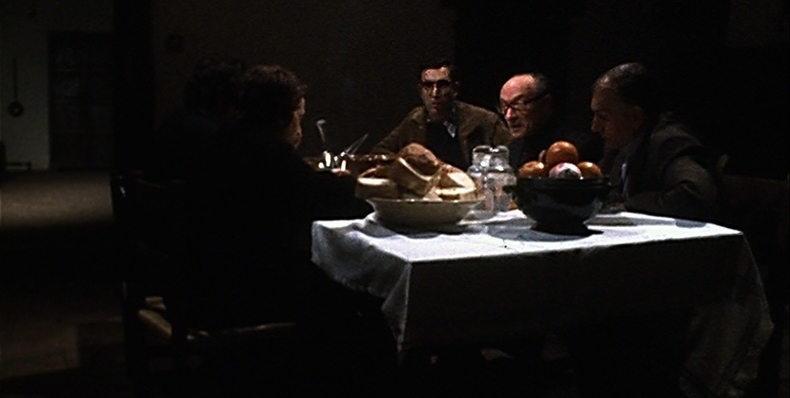
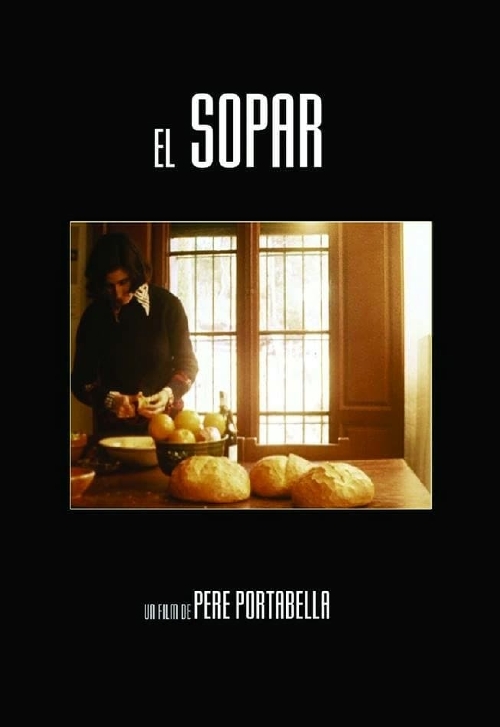
In this 50-minute political documentary (1974) by Catalan filmmaker Pere Portabella — made the year before Franco’s death, on the same night that the militant anarchist Salvador Puig Antich was executed — five former political prisoners, four men and a woman, whose combined prison terms lasted over 50 years, are seen meeting over a meal in a Catalonian farmhouse (the title means The Supper in Catalan) to discuss political strategies and the effects their prison terms have had on their political commitments. This is mainly a political and historical document, but just as Portabella’s more experimental films (Cuadecuc-Vampir, Umbracle, Warsaw Bridge) are never entirely divorced from politics, this political film has its own formal concerns, most of them related to camera movements and sound recording, as well as the pregnant silences that eventually overtake the conversation. In Catalan and Spanish with subtitles. (JR)
This was written and submitted in 2020 to the editor of an Iranian film magazine called Cinéma Vérité, at his request.
A few thoughts about documentary films and film criticism, recapitulating some ideas recently expressed in a brief online interview with the Cinéma Vérité International Film Festival in Tehran:
All documentaries have certain fictional elements, just as all fiction films have certain documentary elements (e.g. by being documentaries about the actors and places that are filmed and the times when they were filmed). In Robert Flaherty’s Nanook of the North, which most people regard as a “pure” documentary, we now know that the woman purported to be Nanook’s wife was in fact Flaherty’s girlfriend, whom he enlisted to play that part.
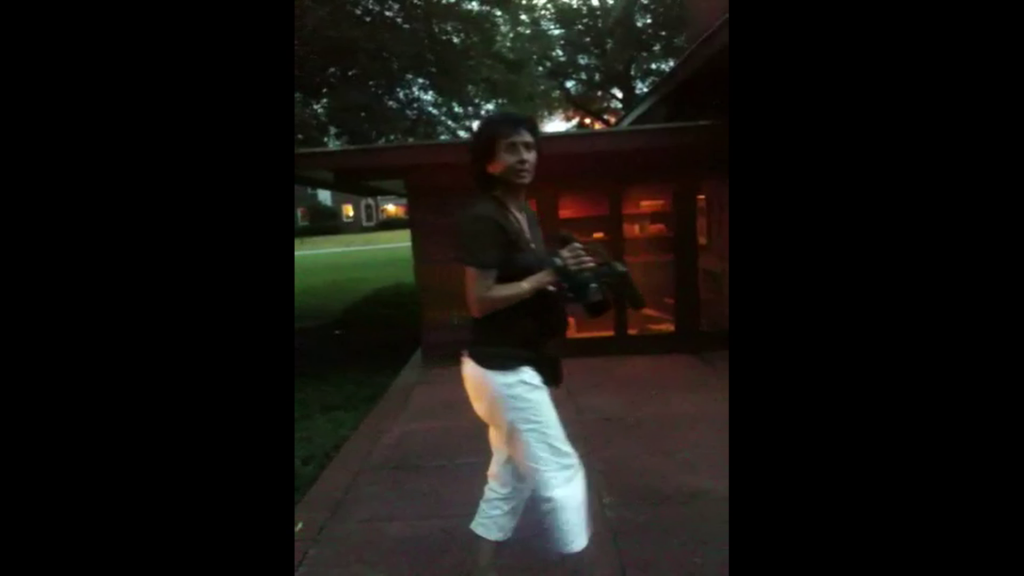
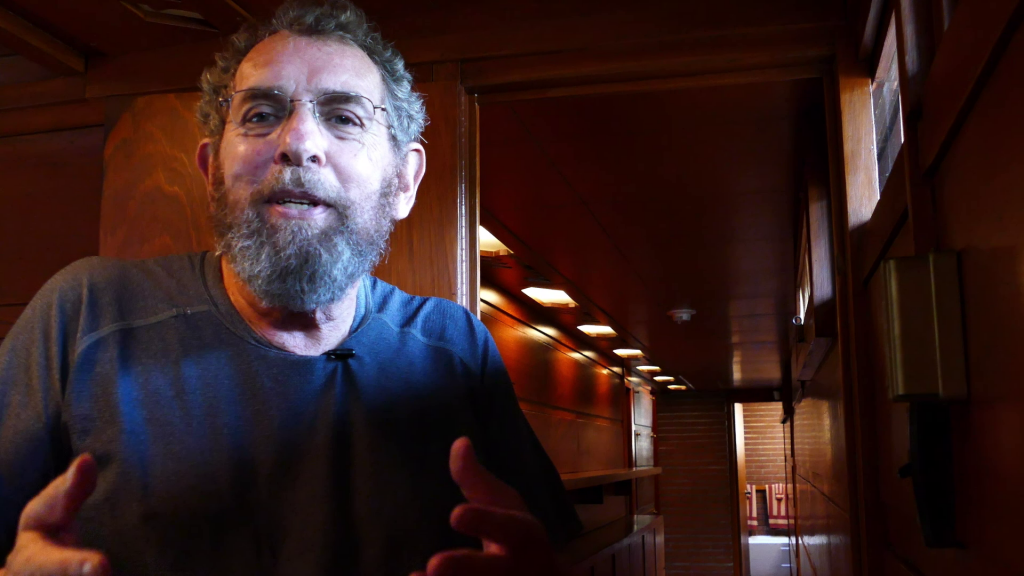
An excellent illustration of this principle is Mehrnaz Saeed-Vafa’s recent U.S. feature A House is Not a Home: Wright or Wrong (2020), which I was privileged to be involved with, as a documentary subject, assistant, and advisor. I grew up in a house designed for my family in Florence, Alabama, by Frank Lloyd Wright. It is owned today by the city, which is now a museum open to the public. Mehrnaz, who already recounted the story of her life in Tehran and Chicago through Jerry Lewis clips in Jerry and Me (2012), explores in this case the issues of what it means to live inside a work of art and how this might divide as well as unite members of a family, seen through the experiences of her own family in Iran and the U.S.Read more
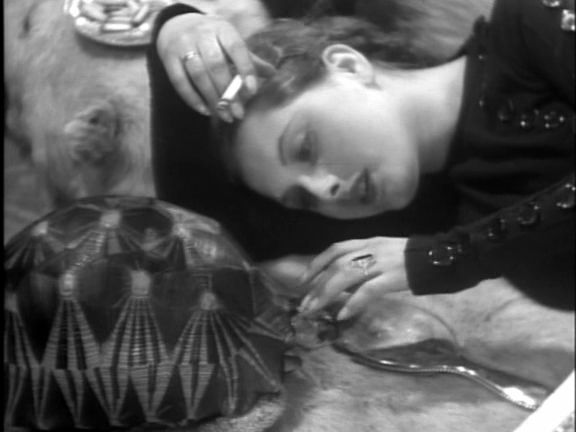
Unavailable just about everywhere — except for on a SECAM French video that is now so scarce it sells for 100 Euros on French Amazon — Renoir’s gorgeous, sexy, and scandalously neglected second sound feature, a Simenon adaptation with Pierre Renoir as Maigret that is arguably the first film noir ever made anywhere, has finally made it onto DVD, with English subtitles no less, and available here. Thanks to Connor Kilpatrick for making me aware of this. (For a paragraph about this movie that I once wrote for DVD Beaver, go here and page down.)
Perhaps the biggest revelation of this film (and there are quite a few) is the young femme fatale lead, Winna Winfried, who according to Renoir was only 17 when she made it, her film debut. Her other film appearances were so few and far between that I’ve never met anyone who has ever mentioned seeing any of them. [8/24/10]
A “critic’s choice” from the Chicago Reader (November 8, 1996). — J.R.
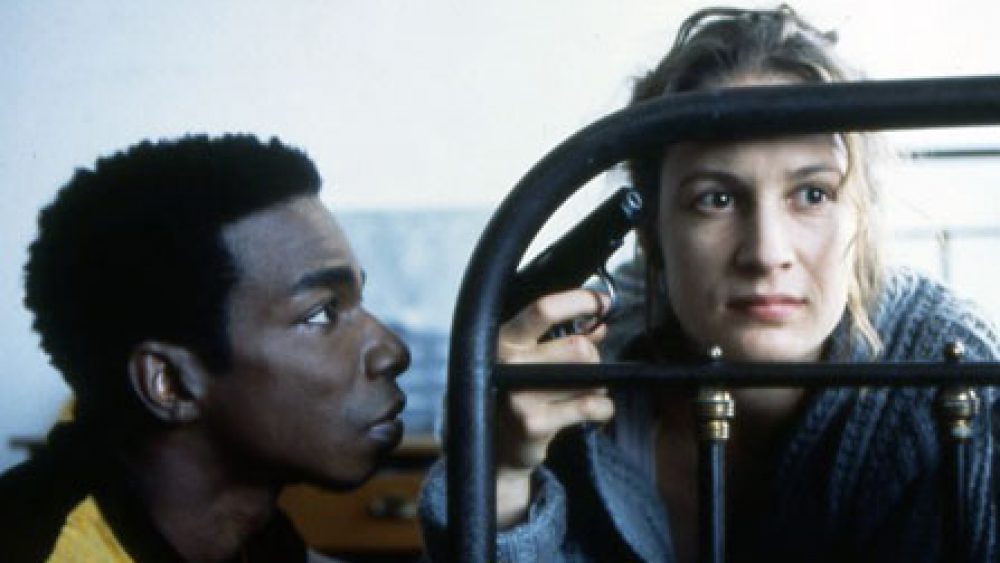
This 1995 film is the only feature by Hal Hartley that has the same degree of formal playfulness as his overlooked short films — perhaps because it was made as if it were three separate shorts, all recounting the same story but set in different cities (New York, Berlin, and Tokyo) and told mainly in different languages, with certain differences regarding gender, race, ethnicity, and milieu. Though it lacks some of the behavioral charms of Hartley’s Trust and The Unbelievable Truth and even announces its own likelihood to fail as an experiment in the second episode, this is in some ways my favorite Hartley picture — not only because it takes the most risks, but also because it gives the mind more to do in the process. The actors include Martin Donovan and Parker Posey in New York, Dwight Ewell, Geno Lechner, and Elina Lowensohn in Berlin, and Miho Nikaidoh, Kumiko Ishizuka, and Hartley himself in Tokyo. The whole thing unfolds in an economical 85 minutes. Music Box, Friday through Thursday, November 8 through 14.
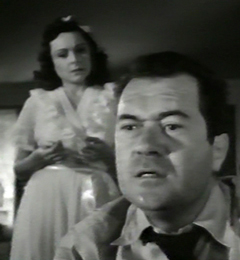
Conceivably the most anti-American Hollywood picture ever made — I certainly can’t think of any competitors — Cy Endfield’s brilliant and shocking thriller (originally known as The Sound of Fury) was adapted by Jo Pagano from his novel The Condemned, which was inspired by a lynching that occurred in California in the 30s. A frustrated and jobless veteran (Frank Lovejoy), tired of denying his wife and son luxuries, falls in with a slick petty criminal (Lloyd Bridges), and the two work their way up from small robberies to a kidnapping that ends in murder. Apart from an unnecessary moralizing European character, this masterpiece is virtually flawless, exposing class hatreds and the abuses of the American press (represented here by Richard Carlson as a reporter) with rare lucidity and anger. At once subtle and unsparing, this may be the best noir thriller you’ve never heard of, perhaps because Endfield’s American career was cut short by the blacklist the same year it was released (1951). With Kathleen Ryan, Katherine Locke, Adele Jergens, and Art Smith. (Film Center, Art Institute, Columbus Drive at Jackson, Friday, July 17, 7:45, 443-3737)
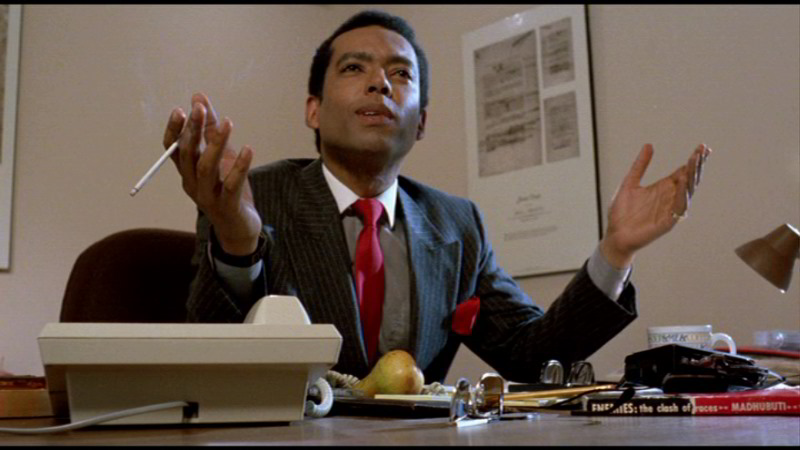
This highly original existential black comedy (1991) charts the real-life exploits of William Douglas Street (played with a great deal of charisma and wit by writer-director Wendell B. Harris Jr.), a Detroit con man. From the late 70s to the mid-80s Street carried off a number of impersonations, presenting himself as a Time magazine reporter, a surgery intern (he performed 23 successful operations), a Caribbean exchange student at Yale, and a civil rights attorney; various other scams landed him in prison. Without wasting any time on facile psychologizing, Harris uses his subject as a means to explore the paradoxes of acting (some of Street’s real-life victims play themselves) and the invisibility of blacks in the U.S.; Street is also the source of some very funny comedy. In all, this disturbing yet compelling rogue’s progress calls to mind an 18th-century picaresque novel. Harris’s eclectic directorial style doesn’t always sustain itself, but it’s brimming with inventive ideas. R, 94 min. (JR) Read more