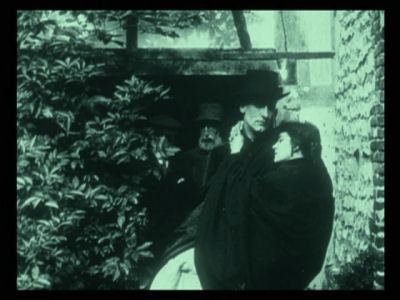
In this breezy, dreamlike 1917 French serial, an enormous pack of hounds runs with the car of the dorky title hero (René Cresté) as he drives around the Paris suburbs in his flowing black cape, righting wrongs and generally taking care of business; one of these dogs even rings the gate bell for him at one of his stops. These glorious, goofy mutts are emblematic of what makes Louis Feuillade a greater director of popular cinema than Spielberg or Lucas; his serials from the teens may be the greatest of all adventure films, representing the essence and peak of fantasy filmed on real locations. Less sublime or mysterious than Les vampires or Tih Minh (which is even better), Judex proved to be a bigger hit than either, and even spawned an inferior sequel. The surveillance camera/TV/mirror inside Judex’s secret cave, relentlessly tracking the banker villain in his cell, presaged Lang’s Mabuse, Orwell’s Big Brother, and all the versions of Batman, and marks the genteel Feuillade, a spiritual contemporary of Lewis Carroll, as one of the inventors of 20th-century paranoia. It all runs more than six hours, but there’s not a better movie in town. Read more
From the Chicago Reader (March 19, 1993). — J.R.
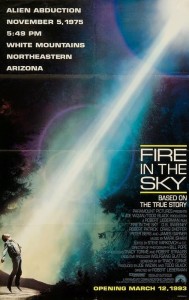
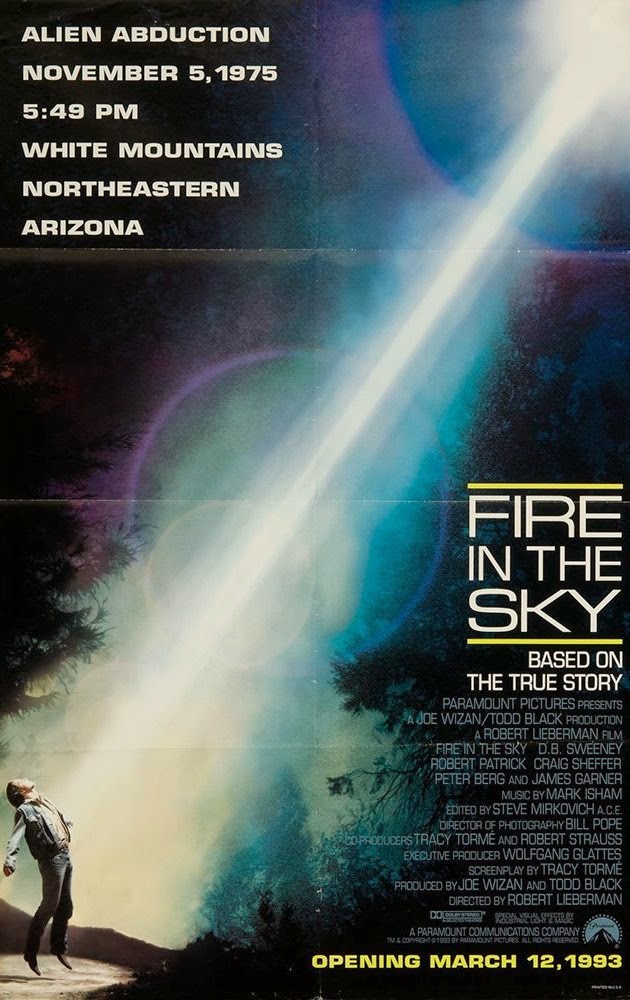
FIRE IN THE SKY
** (Worth seeing)
Directed by Robert Lieberman
Written by Tracy Torme
With D.B. Sweeney, Robert Patrick, Craig Sheffer, Peter Berg, and James Garner.
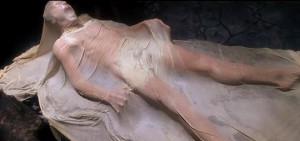
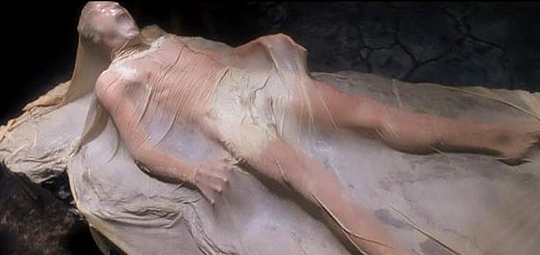
“Based on the true story,” crows Paramount in the ads, and the words “Based on a true story” appear on-screen right after the opening credits. Under the circumstances — Fire in the Sky being the story of one Travis Walton (D.B. Sweeney), who was allegedly knocked to the ground by a ray from a UFO in an Arizona forest on November 5, 1975, then whisked away by the same UFO only to be spat out five days later minus his clothes and sanity — these are clearly fighting words.
I came to this movie fully prepared to execrate it, but on reflection I’m more inclined to congratulate Paramount on its ability to get people like me riled up with its Barnum-like come-on — a good way of getting all of us to pay attention. In fact, considering that the encounter with extraterrestrials is couched in subjective rather than objective terms, “based on the true story” doesn’t seem such an outrageous tag. Furthermore, some of the implications of the line are partially undercut, or at least displaced, by a quotation that appears on-screen before the credits: “‘Chance makes a plaything of a man’s life’ — Seneca, First century A.D.” Read more