Review of AUTEUR THEORY AND MY SON JOHN

Written for Cineaste (Winter 2018). — J.R.

Auteur Theory and My Son John


by James Morrison. New York: Bloomsbury Academic, 2018.

190 pp. Hardcover: $75.00, Paperback: $19.95, and Ebook:

$17.95.


My admiration for and my demurrals about James Morrison’s brilliant monograph both begin on the first pages of his Introduction. He quotes the title subject of Mike Nichols: An American Master (2016) on the “froggy conspiracy” which elevates figures like Howard Hawks and Jerry Lewis at the expense of George Stevens, Billy Wilder, William Wyler, and Fred Zinnemann (“our greatest directors”), a statement that Morrison aptly compares to the vulgar parodies of existential beatniks in Stanley Donen’s Funny Face. Yet two pages later, when he calls Nichols “countable as one of the ‘auteurs’ who by common consent ushered in the New Hollywood,” Morrison seems to be indulging in aspects of the same parody, especially when one considers that he’s decided to suppress the information that Mike Nichols: An American Master is the work of a genuine auteur, Elaine May (coincidentally, Donen’s current partner), and not only because, unlike Nichols, she functions as a film writer as well as a film director. I presume that Morrison chose to suppress May’s involvement in this glib claptrap because it complicates his argument, especially when he goes on to show that Nichols’ tirade is seemingly bolstered by May’s montage of dumb quotes from Bosley Crowther about Bonnie and Clyde, and from Pauline Kael and Renata Adler about 2001, constituting what Morrison rightly calls “a slam against film criticism as such”. Read more

One man’s meat is another man’s Poisson (GRAVITY’S RAINBOW)

This is by far the most challenging book review I’ve ever had to write. I wrote it during my extended stint in Paris (1969-74), after requesting the assignment from an editor at The Village Voice. I was already a big Pynchon fan by then, having already reviewed The Crying of Lot 49 for my college newspaper, The Bard Observer. Years later, I would review both Vineland and Against the Day for the Chicago Reader, Mason & Dixon for In These Times, and Inherent Vice for Slate.


Eventually, after getting assigned to review Gravity’s Rainhow for the Voice in  1973, I received a copy of the bound, uncorrected galleys resembling the one seen below on the right, the marked-up copy of which I still possess today. One significant difference between this version and the published one is the epigraph preceding the fourth and final section, “The Counterforce”. In the published version, which I received shortly before completing my review, this is, “What?” — Richard M. Nixon. In the uncorrected proofs, this is, “She has brought them to her senses, /They have laughed inside her laughter, /Now she rallies her defenses, /For she fears someone will ask her /For eternity — /And she’s so busy being free….” Read more

Women of Substance

From the Chicago Reader (August 10, 2001). — J.R.

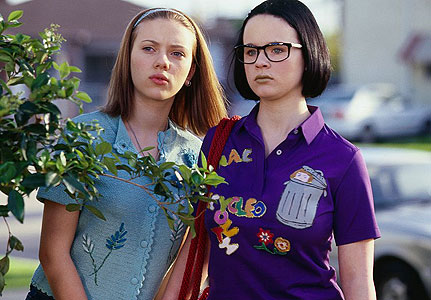
ghost-world

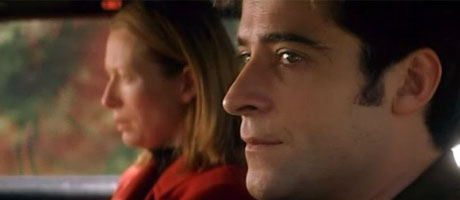
TheDeepEnd

Under the Sand

Rating *** A must see

Directed by Francois Ozon

Written by Ozon, Emmanuele Bernheim, Marina de Van, and Marcia Romano

With Charlotte Rampling, Bruno Cremer, Jacques Nolot, and Alexandra Stewart.

Ghost World

Rating *** A must see

Directed by Terry Zwigoff

Written by Daniel Clowes and Zwigoff

With Thora Birch, Steve Buscemi, Scarlett Johansson, Brad Renfro, Illeana Douglas, Bob Balaban, and Stacey Travis.

The Deep End

Rating ** Worth seeing

Directed and written by Scott McGehee and David Siegel

With Tilda Swinton, Goran Visnjic, Jonathan Tucker, Peter Donat, Josh Lucas, and Raymond Barry.

It’s often said that strong roles for women are rare nowadays, but three new movies — Under the Sand, Ghost World, and The Deep End — have the virtue of handing a juicy, sympathetic part to a talented actress and letting her run with it. All three are directed by men, which raises the question of whether women will find these portraits as potent and sensitive as I do. Yet even if they qualify to some degree as male fantasies, I’d argue that they’re more in touch with our everyday reality and our history than a male fantasy like Apocalypse Now Redux. Read more

Crossing Kelly Reichardt’s Wilderness

Written for the Viennale in August 2020 for a late October publication called Textur #2 and devoted to Kelly Reichardt. — J.R.

  “More nameless things around here than you can shake an eel at.”

— King-Lu in First Cow

I suspect that the first important step in learning how to process Kelly Reichardt’s films is discovering how not to watch them. A few unfortunate viewing habits have already clustered around her seven features to date, fed by buzz-words ranging from “neorealism” (applied ahistorically) to “slow cinema” (an ahistorical term to begin with) — especially inappropriate with a filmmaker so acutely attuned to history, including a capacity to view the present historically — and, in keeping with much auteurist criticism, confusing the personal with the autobiographical. 

Interviewed by Katherine Fusco and Nicole Seymour, the coauthors of a monograph about her, Reichardt rightly resists fully accepting any of these categories,[1] however useful they might appear as journalistic shortcuts. (E.g., J. Hoberman on Wendy and Lucy in the Village Voice: “Reichardt has choreographed one of the most stripped-down existential quests since Vittorio De Sica sent his unemployed worker wandering through the streets of Rome searching for his purloined bicycle, and as heartbreaking a dog story as De Sica’s Umberto D.”) Read more
We Are What We Spend: Presence and Absence in VITALINA VARELA (for TRAFIC)

An alternate version of my essay on the Costa film, written in May 2020 for Trafic. — J.R.

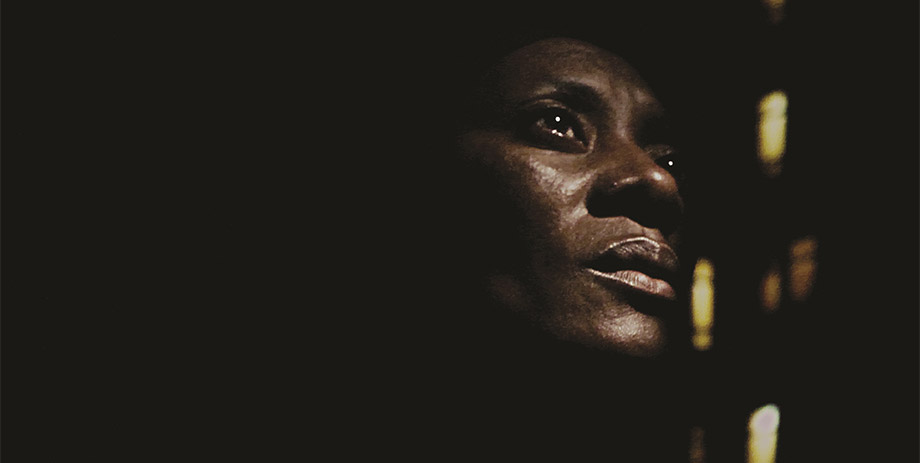
It isn’t necessary to have seen anything else by Pedro Costa before encountering his title heroine in a film of her own, but if you saw his previous feature, Horse Money, you’ve already met her—a striking, angry middle-aged woman from Cape Verde who finally found the money to fly to Lisbon to join her long-absent husband, only to discover that she just missed his funeral. Settling into his rickety, crumbling house and trying to come to terms with her grief, keeping company mainly with a semi-mad priest (Costa regular Ventura), she’s precisely the kind of person that the world and movies tend to ignore and evade, yet Costa’s epic portraiture, beautifully lit and framed so that it builds an exalted altar to her, invites us to luxuriate in her hushed presence. Audiences tend to have an easier time with this dark reverie than critics because it takes us somewhere very special and respects us far too much to tell us why.

How to explain the appeal of a movie named after a real person, a displaced “non-professional” who is also its star? Read more

Orson Welles in the 21st Century

 Published in the Spanish newspaper El mundo as “El maverick impredecible” on May 1, 2015. — J.R.

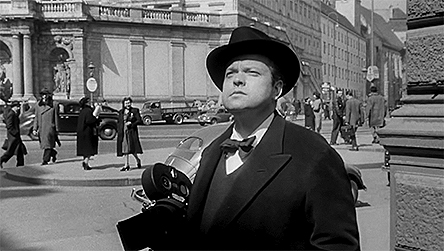
Having some historical perspective on changing fashions in film taste is never easy, but it becomes necessary if one is to understand the fluctuating meanings of the career of Orson Welles. Just as one needs to recall a time in the early 20th century when the crime serials of Louis Feuillade such as Fantomas and Les Vampires were regarded with utter scorn by sophisticated cinephiles, and a time in the mid-20th  century when Alfred Hitchcock was still considered an entertainer but not an artist, we have to consider that during the half-century constituting the career of Orson Welles, his audience swerved repeatedly back and forth between regarding him as a mainstream star and viewing him as an esoteric artist. Although the tendency to see him as a maverick has been constant, the issue of where he belongs as a maverick has never been entirely resolved.

Even before Citizen Kane, when at age 23 he appeared on the cover of Time magazine (1938) for his work in theater and as a radio actor, and shortly before he began a weekly radio series of his own, he already had the profile of a boy genius full of imagination and mischief, a reputation that was only enhanced about half a year later when he fooled part of his radio audience into believing, through an unorthodox adaptation of H.G. Read more

GHOST DOG as International Sampler

Written for a Criterion rerelease, released in November 2020.. — J.R.

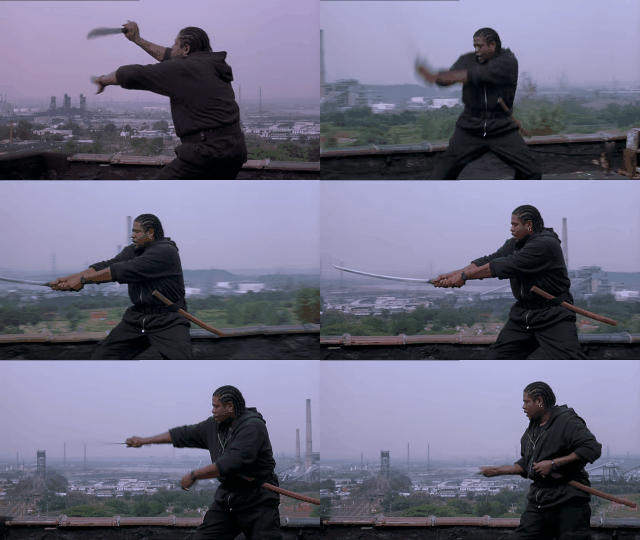
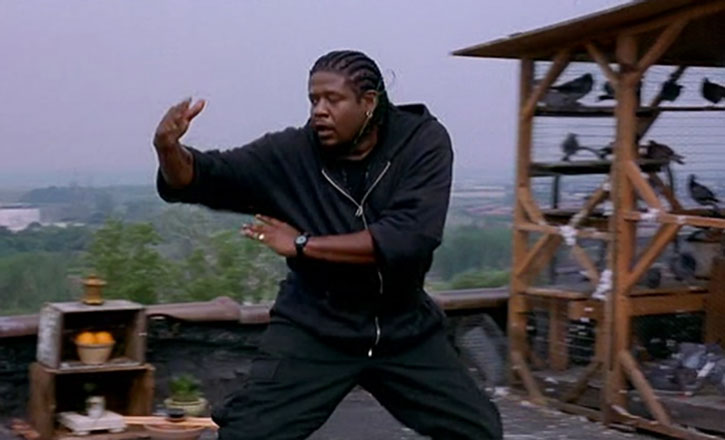
Along with Dead Man, his previous narrative feature, Ghost Dog: The Way of the Samurai marks a quantum leap in the Jim Jarmusch universe — a discovery of history (both antiquity and tradition) that carries with it a sense of gravity and even tragedy missing from his first five features. And paradoxically, along with his embrace of antiquity comes an uncanny intimation of the future from a 1999 perspective — an anticipation of social media and their mythical assemblies of identities and fanciful hashtags, a full decade before Facebook and Twitter rose to prominence, all the more surprising from a committed Luddite who would subsequently opt for faxes over emaiand post only on Instagram.

Jarmusch’s special way of evoking contemporary online individualities is a mix-and-match game of movie-genre tropes (including a final shoot-out scene), references to particular films (e.g., pigeons kept on a New Jersey rooftop, from On the Waterfront), and diverse literary touchstones ranging from The Wind in the Willows to Frankenstein. It also involves mythical profiles that sometimes merge with (or at least suggest) star presences, something Jarmusch has long depended upon, including his evocations (and invocations) of Elvis in Mystery Train (1989) and Nikola Tesla in Coffee and Cigarettes (2003), and his uses of, among many others, Roberto Benigni and Tom Waits in Down by Law (1986), Gena Rowlands and Winona Ryder in Night on Earth (1991), Johnny Depp and Gary Farmer in Dead Man (the latter of whom briefly returns in Ghost Dog), Forest Whitaker and Henry Silva in Ghost Dog, Cate Blanchett (in two roles) in Coffee and Cigarettes, and Isaach de Bankolé, Tilda Swinton, and Bill Murray in several films each.  Read more

Notes on the March to Montgomery

Here is my first-person reportage of the last laps of the original event, hurriedly written for the April 2, 1965 issue of the Bard Observer. I’ve only done a little bit of light editing on this text. — J.R.

Notes on the March to Montgomery

By Jonathan Rosenbaum

(Note: because of the haste with which this article was written, and because of its close proximity in time to the event itself, I cannot claim to be attempting anything definitive here, either in terms of impression or opinion. The following reactions are immediate and fragmented ones written only a few days after the march, and as such must suffer the defects of hurried writing and tentative suppositions. –- J.R.)


I

We arrived in Montgomery by Wednesday afternoon, following Highway 80 through the middle of town and heading towards St. Jude. a Catholic hospital complex on the city’s outskirts whose property was being used as a campsite for the marchers. We drove a rented Avis car; the Hertz people in Atlanta, when they overheard what we were up to, had told us that they had no cars available, but being hospitable Southern folk had driven us over to their competitors a few blocks away. Read more

4 Little Girls

From the Chicago Reader (October 31, 1997). — J.R.

4littlegirls

This surprisingly humble documentary by Spike Lee may be his best film to date apart from Do the Right Thing. It’s not weighed down by an ounce of flab or hype, and the story it tells is profoundly affecting. On September 15, 1963, four little black girls attending Sunday school at Birmingham’s 16th Street Baptist Church, a central meeting place in the civil rights movement, were killed in a racist bombing. This is a detailed exploration of what that event meant 34 years ago — to family, friends, and the movement — as well as what it means today. In the only picture Charlie Parker ever painted — a beautiful portrait of a daughter who died in infancy — he imagined what she might have looked like in her 30s, and in 4 Little Girls Lee gets us to imagine something comparable. He uses John Coltrane’s “Alabama” with tact and sensitivity, making up for his crude use of the piece in Malcolm X, and he seems to have learned a fair amount about my home state. Perhaps for the first time, Lee actually finds something to say about history — my only quibble is that he doesn’t tell us more about the belated sentencing of the bomber. Read more

When Bad Films Happen to Good Actors

From the Chicago Reader (July 22, 1988). — J.R.

MidnightRun-ad

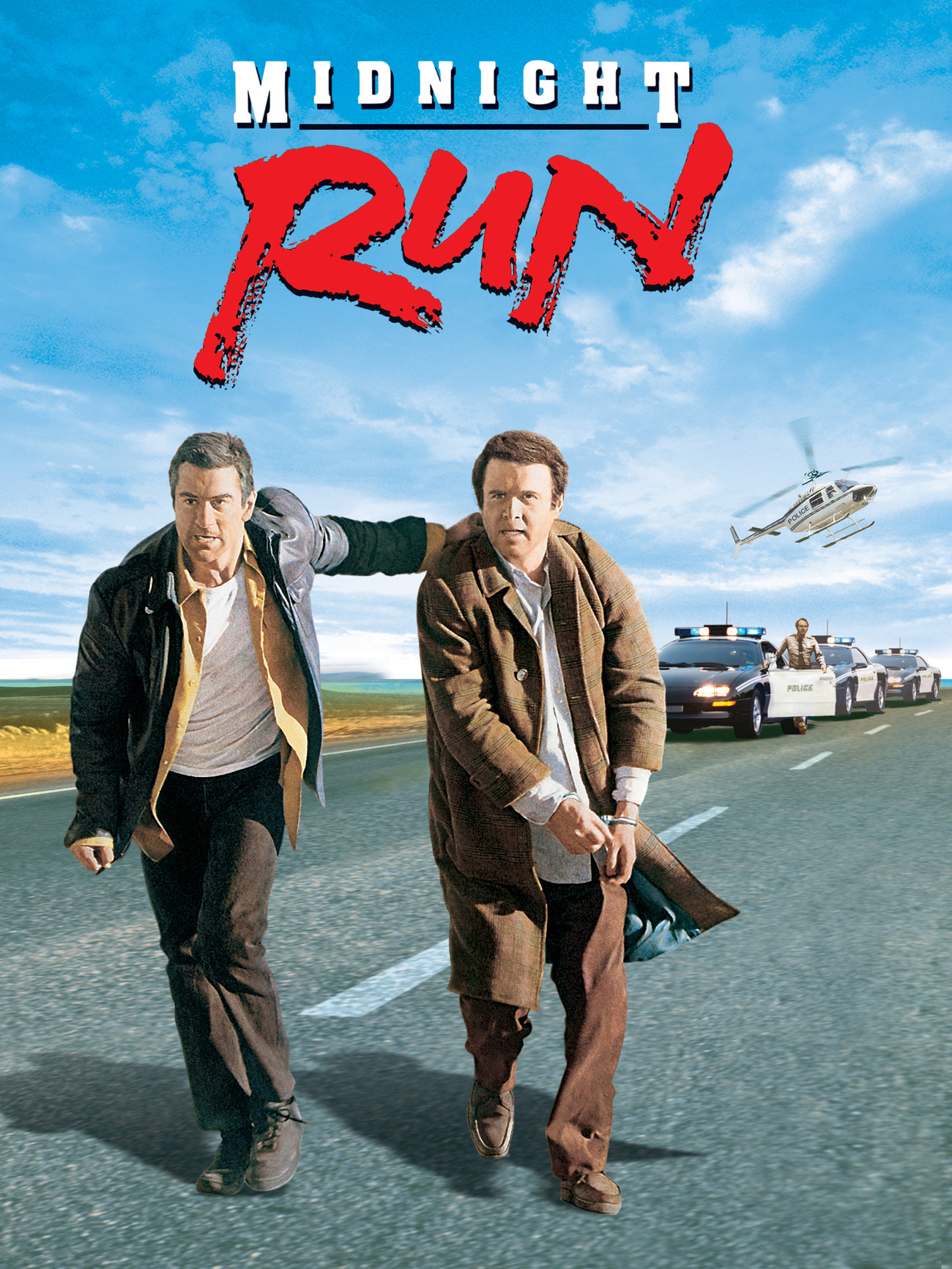
MIDNIGHT RUN

** (Worth seeing)

Directed by Martin Brest

Written by George Gallo

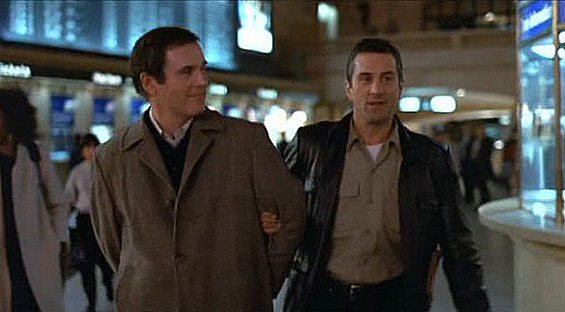
With Robert De Niro, Charles Grodin, Yaphet Kotto, John Ashton, and Dennis Farina.

midnightrun02

There’s a certain unavoidable imposture in the way critics (and the Academy Awards) generally break commercial movies into constituent parts and distinct contributions. To do this is to assume, first of all, that a movie’s official credits are an accurate indication of who did what offscreen, which is often not the case. It assumes further that one can easily isolate such separate aspects of movies as photography, direction, script, and acting while experiencing and judging their combined effects, the movie as a whole — it assumes, that is, that one can reverse the filmmaking process and, through powers of sheer induction, come up with precise recipes, the same way that producers and packagers do.

Like a butcher slicing up a carcass and pricing its various parts, the film reviewer typically regards each movie as a collection of individual expressions, each one to be rated on a separate evaluative scale. Of course, some of the greatest films tend to elude such divisions: how can one separate Chaplin’s acting from his directing in Monsieur Verdoux, or Tati’s directing from his script in PlayTime? Read more

Everyone Says I Love You

From the Chicago Reader (January 1, 1997). — J.R.

esily

everyone-says-i-love-you-1996

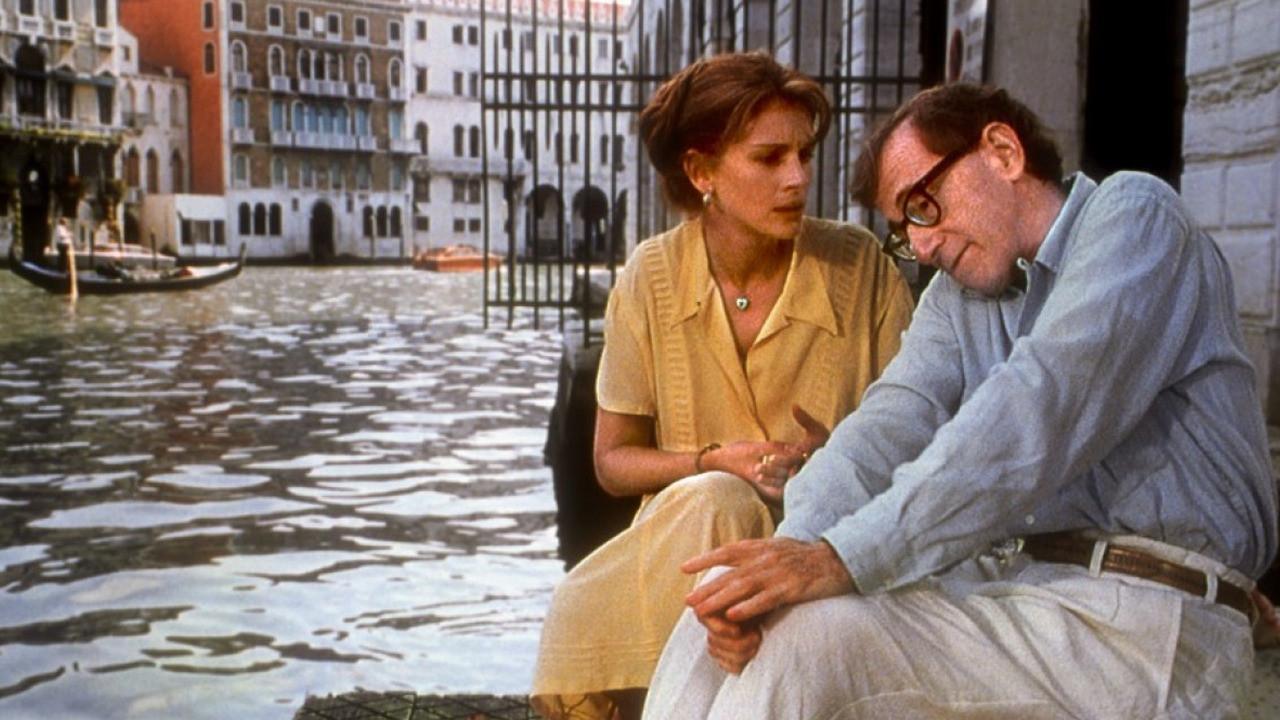
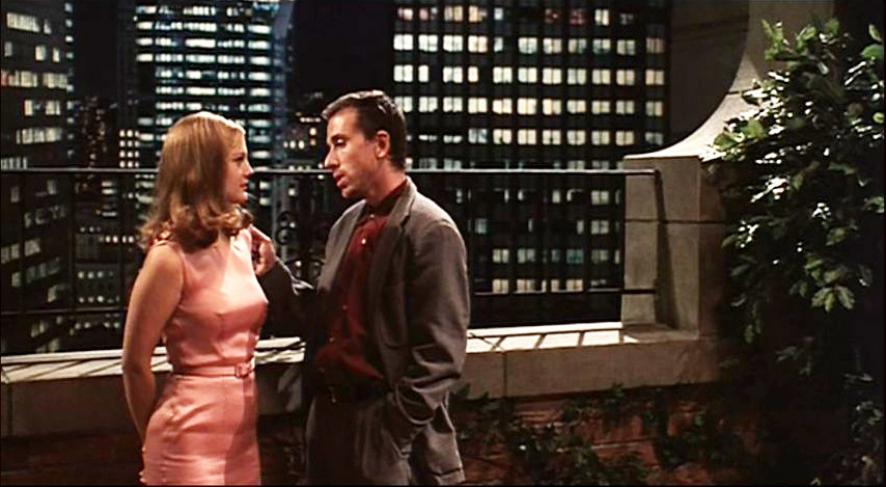
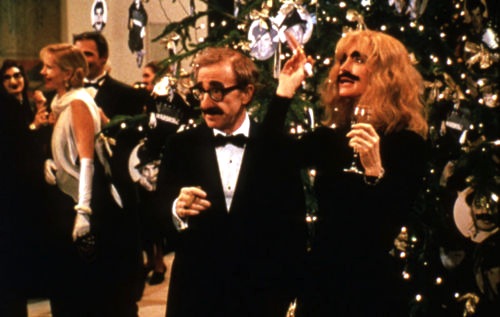
This creepy Woody Allen musical (1996) has got to be the best argument ever against becoming a millionaire. It unwittingly reveals so many dark facets of the filmmaker’s cloistered mind that one emerges from it as from a crypt, despite the undeniable poignance of some of the musical numbers (the best of which hark back to Guys and Dolls in displaying the vulnerability of the amateur performers). This isn’t only a matter of how Allen regards the poor, nonwhite, sick, elderly, and incarcerated segments of our society, how he feels about the ethics of privacy, or what he imagines his rich upper-east-side neighbors are like. In this characterless world of Manhattan-Venice-Paris, where love consists only of self-validation and political convictions of any kind are attributable to either hypocrisy or a brain condition, the me-first nihilism of Allen’s frightened worldview is finally given full exposure, and it’s a grisly thing to behold. With Goldie Hawn, Alan Alda, Drew Barrymore, Lukas Haas, Julia Roberts, Tim Roth, and Natalie Portman. R, 101 min. (JR)

everyone-says-i-love-you

everyone Read more

IN OLD CHICAGO

Written for the 2019 catalogue of Il Cinema Ritrovato in Bologna. — J.R.

in-old-chicago-1938

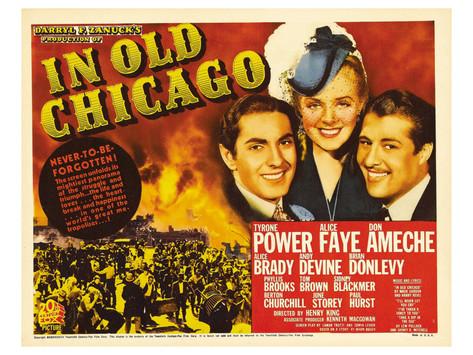
In my early teens, I wrote a time-travel yarn in which time travelers revisit 1871 to determine whether Mrs. O’Leary’s cow really kicked over a lantern that started the Great Chicago Fire — their abrupt arrival startling the cow and thereby causing the self-same catastrophe. Despite claims to being historical, this two million dollar Fox epic (1938) — a quarter of whose budget went towards depicting this fire (which had taken 300 lives and destroyed two million dollars worth of property) — seems almost as fanciful about some of its facts as I was. But Henry King, as mythical about the Midwest as Ford was about the West and De Mille was about the Middle East, makes Chicago both a cauldron of corruption (the grandfather of Ben Hecht’s Chicago) and the site of his recurring theme — the coexistence of nihilism and decency, rebellion and domesticity, represented here both by the Cain-and-Abel dialectic of the O’Leary brothers (Tyrone Power and Don Ameche) and the two women who lord it over them, a showgirl-capitalist (Alice Faye) and their prudish mother (Alice Brady), the latter of whom owns the recalcitrant cow. Read more

Hallelujah, I’m A Bum!

HallelujahImaBum

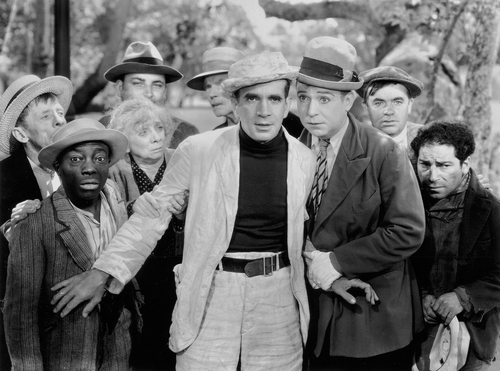
This eccentric and soulful anarcho-leftist fantasy is probably the most underrated of all Depression-era musicals. Directed by Lewis Milestone in 1933 from a script by Ben Hecht and S.N. Behrman, with a score by Rodgers and Hart that features rhyming couplets, the film stars Al Jolson as a Central Park hobo who actually likes being homeless — until he falls in love with an amnesia victim (Madge Evans) who’s a former mistress of the mayor (Frank Morgan) and has to get a job to support her. The overall conception owes something to Chaplin’s 1931 City Lights, but the editing and mise en scene are genuinely inspired and inventive. (The parodic Eisensteinian montage cut to the syllables of “America” must be seen to be believed, and a tracking shot past muttering customers in a spacious bank is equally brilliant and subversive.) Harry Langdon is memorable as a Trotskyite, and Richard Day’s art deco sets are striking. 82 min. 2019 postscript: According to the late Pierre Rissient, much of this film’s brilliance can be credited to the preproduction work on it done by Harry d’Arrast. (JR)

hallelujahimabum Read more

FLOWERS OF SHANGHAI

Written for the 2019 catalogue of Il Cinema Ritrovato in Bologna. — J.R.

LesFleurs

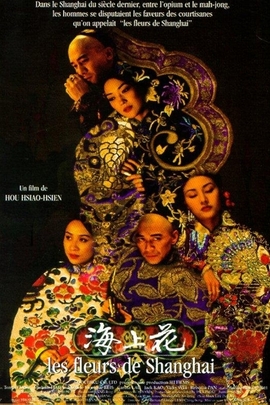
Hou Hsiao-hsien’s 1998 feature, his thirteenth, represents a bold departure from his previous work. It’s his first film to be set completely outside Taiwan,  the implicit or explicit subject of his earlier movies — most noticeably in his trilogy comprising City of Sadness, (1989), The Puppetmaster, (1993), and Good Men, Good Women(1995), but also in the bittersweet allegory of Son’s Big Doll, his seminal contribution to the 1983 sketch feature The Sandwich Man.  After focusing mostly on families and landscapes, Hou fashions a chamber-piece set exclusively in the interiors of Shanghai brothels in the late 19thcentury, adapted from a novel by Han Bangqing by his usual screenwriter Chen Tien-wen.

flowersofshanghai2

And after Hou showed striking stylistic affinities with Yasujiro Ozu, here’s a film whose long takes, camera movements, and concentration on prostitution suggest a Kenji Mizoguchi without melodrama. But insofar as Hou’s previous films deal with existential and historical questions of identity related to Taiwan as a country occupied and colonized at various times and in various ways by China, Japan, and the U.S., Flowers of Shanghai finds similar issues arising from interactions between prostitutes (the “flower girls”), their madams (or “aunts”), and their wealthy and powerful customers. Read more

Holy Smoke

From the Chicago Reader (January 25, 2000). — J.R.

HS

Holy-Smoke

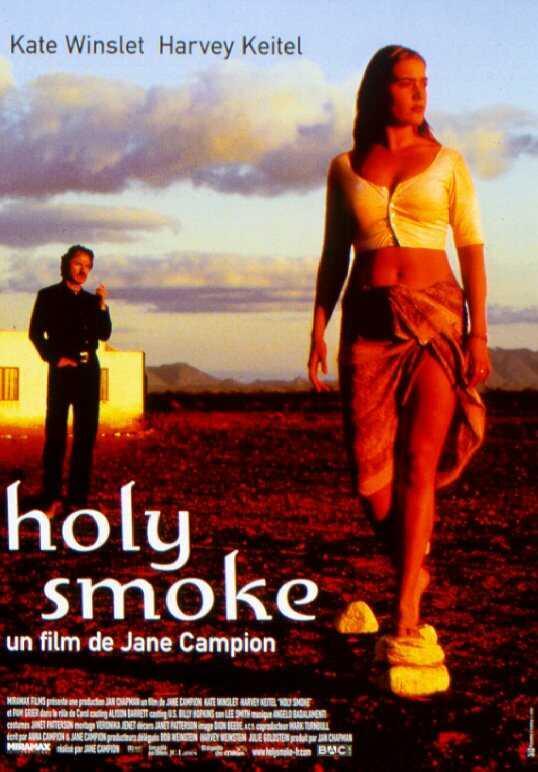
Jane Campion still has a remarkable eye for framing and imagining, but on the sad evidence of this scrambled free-for-all (1999), written with her sister Anna Campion, she’s taken leave of about half her senses. The setup is promising: a young Australian woman (Kate Winslet) becomes smitten with an Indian guru, and her bourgeois family, after luring her back home with a lie that her father is dying, hires an American specialist (Harvey Keitel) to deprogram her in the outback. Naturally the two of them get involved, and naturally this becomes a monumental battle of wills and sexes. As in Campion’s The Piano there’s a lot of wildness qualifying as a kind of politically correct porn, decked out on this occasion with dazzling visual effects that begin with the title written in smoke. But all sorts of questions go unanswered, and there’s little of the density found in Campion’s early work; this is mainly smoke, not fire. R, 114 min. (JR)

holy_smoke-690465431-large Read more