A better-than-average Quentin Tarantino imitation, this 1999 feature crosscuts the overlapping adventures of a teenage supermarket cashier (Sarah Polley) who’s filling in for a British coworker and trying to take over a little of his drug business to score some rent money, the coworker (Desmond Askew) partying in Las Vegas, and a couple of TV actors (Scott Wolf and Jay Mohr) caught up in a drug sting. The LA-underground characters, situations, and ambience keep this lively, even if most of the Tarantino-esque narrative rewinds seem forced and dutiful. Doug Liman (Swingers) shot and directed the script by first-timer (and coproducer) John August; others in the cast include Katie Holmes, Taye Diggs, William Fichtner, Nathan Bexton, and Timothy Olyphant. 100 min. (JR) Read more
Funny as well as poignant, this 1999 comedy stars Eddie Murphy and Martin Lawrence as New York bootleggers sentenced to life in a Mississippi prison after being framed for murder in 1932. This might be better than anything either comedian has done before; at least it made me laugh more. A movie about black men in prison comes dangerously close to being a movie about contemporary reality, and part of what I like about Robert Ramsey and Matthew Stone’s episodic screenplay and Ted Demme’s mainly self-effacing direction is how many real-life issues it manages to broach without ever threatening to become pompous. Character humor growing out of adversity has a long and venerable tradition, and if this in part suggests a street-smart Forrest Gump, it also recalls the euphoric gusto of W.C. Handy’s song Long Gone as performed by Louis Armstrong. As is expected by now in a Murphy movie, the makeup effects (handled by the ace Rick Baker) are elaborate, but little of this is asked to replace performance; Murphy and Lawrence and the secondary cast, which includes Obba Babatunde, Bokeem Woodbine, Ned Beatty, and R. Lee Ermey, all do a fine job. (JR) Read more
An intelligent and informative feature-length documentary (1999) by Canadian filmmaker Nettie Wild about the Zapatista movement and uprising in southern Mexico, concentrating on events that occurred between 1994 and 1997. The film focuses mainly (and cogently) on the struggles of the Zapatista National Liberation Army in Mexico and in cyberspace, but it also allows the government-allied paramilitary group north of Chiapas, which calls itself Peace and Justice, to speak on its own behalf (when it isn’t assaulting the film crew). This is sturdy as well as stirring political filmmaking that asks all the right questions, including ones about the role of the U.S. in the outcome. 89 min. (JR) Read more
From the Chicago Reader (May 1, 1999). — J.R.
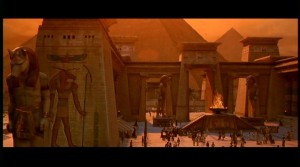
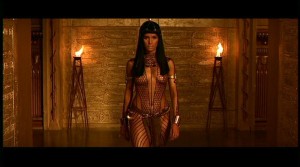
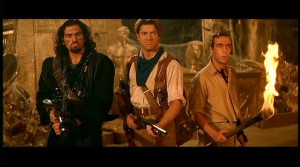
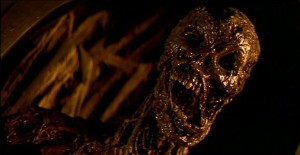
Not just a remake of the Boris Karloff-Karl Freund classic but an Indiana Jones spin-off with dollops of Jason and the Argonauts, George Romero’s zombie series, Land of the Pharaohs, Samson and Delilah, and even Apocalypse Now (Arnold Vosloo’s mummy bears a certain resemblance to Brando’s Kurtz). Writer-director Stephen Sommers does a pretty good job of zipping things along and occasionally scaring us, and the digital effects are fun; Brendan Fraser, John Hannah, and Jonathan Hyde do what they can with one-dimensional parts but tend to be outshone by the almost two-dimensional Rachel Weisz. Kevin J. O’Connor is mainly embarrassing as a conniving Arab, but then all the Arabs in this 1999 film, set during the 1920s, are accorded roughly the same respect, affection, and humanity as black people in The Birth of a Nation. Thanks to the example of Lucas-Spielberg, guiltless colonialism backed by endless gun power is still the name of the game. PG-13, 124 min. (JR)
 Read more
A TV writer (executive producer Lona Williams) and a first-time director (Michael Patrick Jann) join forces with Kirstie Alley, Ellen Barkin, Kirsten Dunst, and Denise Richards in a uniquely mean-spirited skewering of teen beauty pageants. An intermittently enjoyable bad movie that never knows when to stop, this heaps scorn not only on every aspect of (and participant in) the pageant but also on mental defectives, signing for the deaf, and Japanese-Americans eager to assimilate. All the leads play their roles like strident amateurs (only Allison Janney, as Barkin’s best friend, emerges relatively unscathed), and the film’s so aggressive about its bad-taste agenda that the early John Waters seems a pussycat by comparison. There’s something bracing about the unleashing of so much unbridled negativity, especially for anyone who’s ever suffered through small-town pettiness and mediocrity, but this 1999 release eventually outstays its welcome. Still, if you come to it in a sufficiently foul mood, it might cheer you up. 98 min. (JR) Read more
The only other adaptations I’ve seen of the Alexandre Dumas novel (which I haven’t read) are the Classics Illustrated comic book and the 1939 James Whale potboiler, both of which I prefer to this vulgar and overwrought 1998 free-for-all, which makes you wait interminably for the story’s central narrative premise. (The Whale version spills the beans right away.) Written and directed by Randall Wallace (best known as the screenwriter of Braveheart), this starts off as a Three Musketeers sequel, trusting that its hefty cast and fart jokes will keep you interested. But to be fair, the story is close to foolproof once it finally gets going. With Leonardo DiCaprio, Jeremy Irons, John Malkovich, Gerard Depardieu, Gabriel Byrne, Anne Parillaud, and Judith Godreche. 132 min. (JR) Read more
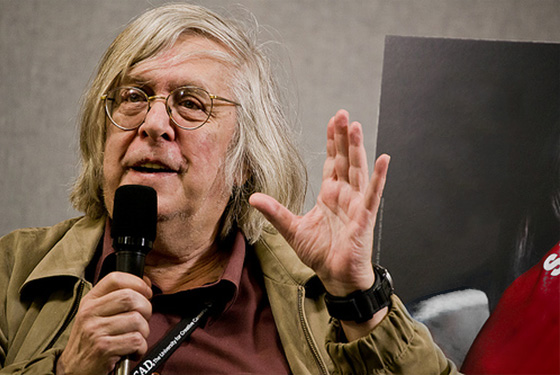
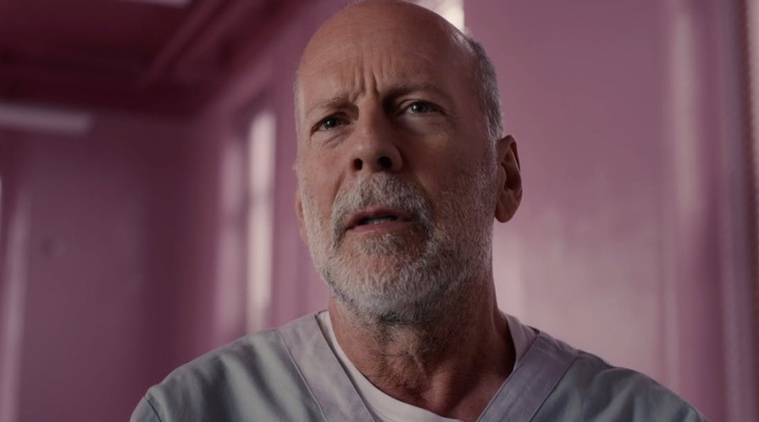
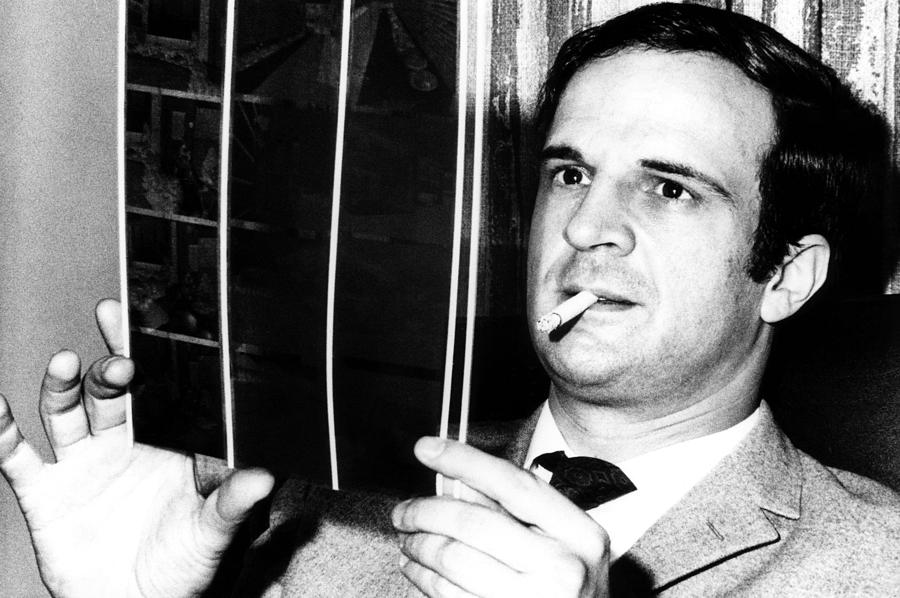
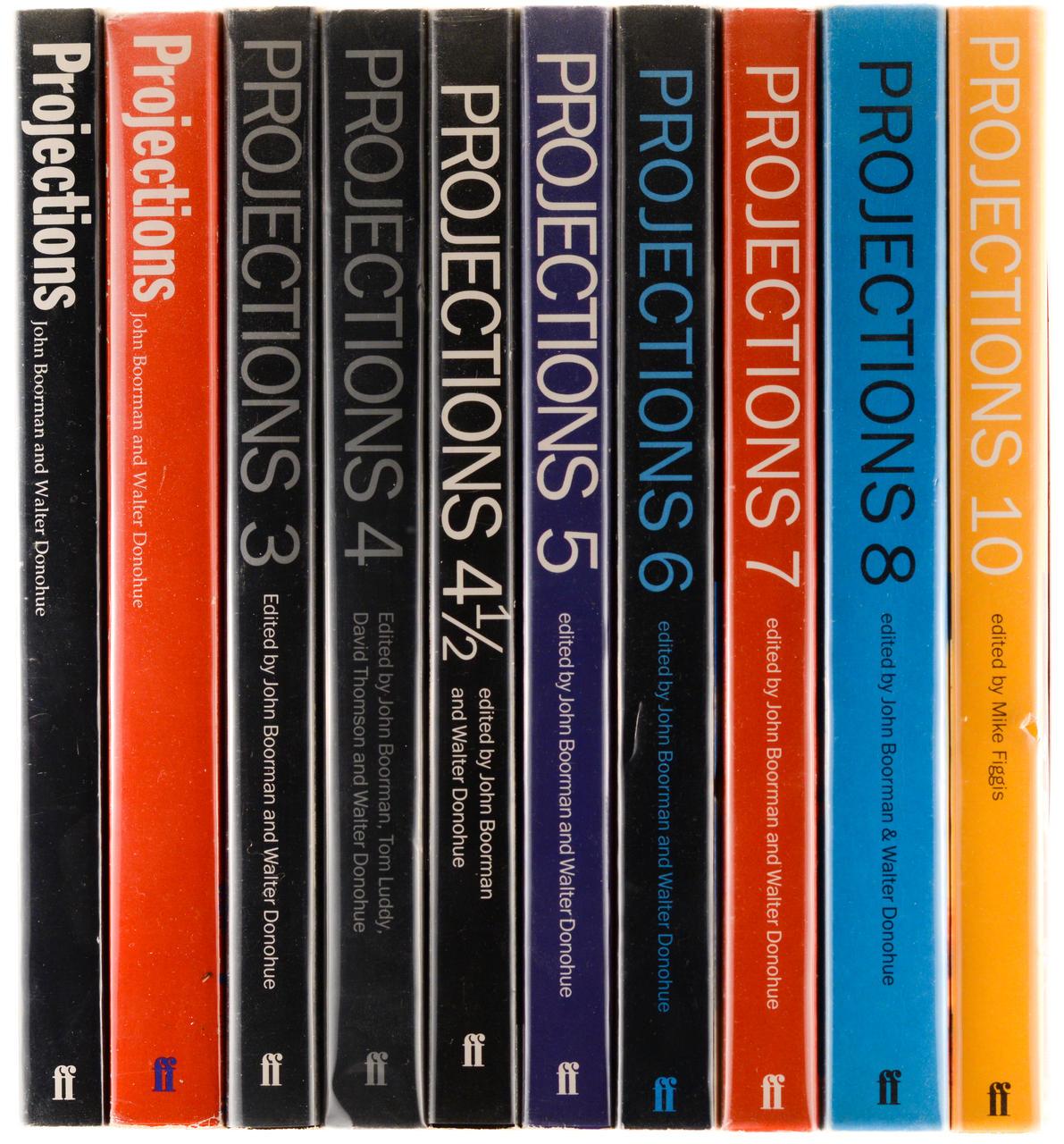
From Projections 8, edited by John Boorman and Walter Donohue, 1998. Subtitled Film-makers on Film-makers, this issue of the periodic Faber and Faber publication was devoted specifically to what it called ‘criticism,’ spurred jointly by a brief declaration by Bruce Willis at Cannes in 1997 (‘Nobody up here pays attention to reviews…most of the written word has gone the way of the dinosaur’) and a lengthy essay by François Truffaut, ‘What Do Critics Dream About?’, introducing his 1974 collection The Films of My Life. As nearly as I can remember, I was one of the nine critics (along with Gilbert Adair, Geoff Andrew, Michel Ciment, Peter Cowie, Kenneth Turan, Alexander Walker, Armond White, and Jonathan Romney) asked to respond to these two declarations of principles. (I haven’t been able to find Truffaut’s essay online, but an excerpt from it can be found here: https://www.lostinthemovies.com/2009/04/what-do-critics-dream-about.html.)
If my comments about the Truffaut essay sound harsh, I hasten to add that I still regard his early criticism as seminal — perhaps even the most seminal that was written by Bazin’s younger disciples, as Godard, among others, has suggested. -– J.R.


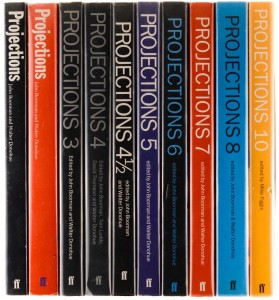
I welcome the prospect of an issue of Projections devoted to `the art and practice of film criticism’, though given the present climate that circulates around film discourse in general — a climate at once pre-critical and post-critical in which the static produced by commerce tends to drown out most of the murmurs associated with criticism — I’m more than a little fearful about what results such an inquiry is likely to yield. Read more
The best Wim Wenders documentary to date and an uncommonly self-effacing one, this 1999 concert movie about performance and lifestyle is comparable in some ways to Latcho Drom, the great Gypsy documentary/musical. In 1996 musician Ry Cooder traveled to Havana to reunite some of the greatest stars of Cuban pop music from the Batista era (who were virtually forgotten after Castro came to power) with the aim of making a record, a highly successful venture that led to concerts in Amsterdam and New York. The players and their stories are as wonderful as the music, and the filmmaking is uncommonly sensitive and alert. 105 min. (JR) Read more
Stanley Kubrick’s last feature (1999) skillfully portrays the dark side of desire in a successful marriage. Since the 60s he’d thought about filming Arthur Schnitzler’s novella Traumnovelle, about a young doctor contemplating various forms of adultery and debauchery after discovering that his wife has entertained comparable fantasies. It has a Kafkaesque ambiguity, wavering between dream and waking fantasy, and all the actors do a fine job of traversing this delicate territory. Yet the story has been altered to make the doctor (Tom Cruise) more of a hypocrite and his wife (Nicole Kidman) feistier; Kubrick’s also added a Zeus-like tycoon (played perfectly by Sydney Pollack) who pretends to explain the plot shortly before the end but in fact only summarizes the various mysteries; his cynicism and chilly access to power reveals that Kubrick was more of a moralist than Schnitzler. This is a gripping, suggestive, and inventive piece of storytelling that, like Kubrick’s other work, grows in mystery over time. R, 154 min. (JR) Read more
An edgy youth thriller, packed with speed and technique, that basically offers three versions of how Lola (Franka Potente), the girlfriend of a small-time drug courier (Moritz Bleibtreu), spends 20 minutes running across town trying to hustle up 100,000 deutsche marks so that her boyfriend won’t get iced by his boss. The industrial music, the show-offy visual effects, the conceptual interest of following a story in three separate directions, and the sheer energy of the cast and writer-director Tom Tykwer make this 1999 film about as entertaining as a no-brainer can bea lot more fun, for my money, than a cornball theme-park ride like Speed, and every bit as fast moving. But don’t expect much of an aftertaste. In German with subtitles. R, 88 min. (JR) Read more
Like many children’s movies these days, this 1999 animated feature by writer-director Brad Bird (The Incredibles) is an E.T. spin-off, but it’s a very likable and imaginative one. Set in a small town in Maine in 1957, it features a nine-year-old hero and his friend, a 50-foot extraterrestrial robot with a big appetite for metal and a peaceful, playful nature that turns threatening only when the paranoia of grown-ups activates its destructive possibilities. Adapted by Tim McCanlies from the book The Iron Man by British poet Ted Hughes, this is enjoyable in part because of its flavorsome period ambience and its lively and satiric charactersespecially a beatnik sculptor and a government agent voiced respectively by Harry Connick Jr. and Christopher McDonaldthough its graphic and dramatic virtues are nothing to sneeze at either. Some of the other voices are furnished by Jennifer Aniston, Eli Marienthal, Vin Diesel, Cloris Leachman, John Mahoney, and M. Emmet Walsh. PG, 86 min. (JR) Read more
The most disputed and reviled prizewinner at Cannes in 1999, this brave, ambitious, difficult, and highly memorable second feature by Bruno Dumont (The Life of Jesus) follows the police investigation of a rape-murder, sticking mainly to an oddball detective’s assistant who lives with his mother and who often hangs out with a female neighbor he silently loves and her loutish boyfriend. Dumont clearly views this sad sack as a Dostoyevskian hero, and though the stylization of the character is sometimes more than he can handle, I was held and often moved by the mulish persistence of the pacing, the precise and sensuous grasp of the locations, and the brute physiognomy of some of the characters (especially the love interest and the detective). Critics have called this dull and ugly, the hero laughably pathetic, and the plot and style ridiculousexactly my reaction to most Hollywood product. L’humanit Read more
A welcome change of pace (1999) from David Lynch, based on the true story of Alvin Straight, a midwestern septuagenarian who rode 240 miles on a lawn mower to visit his estranged brother after the latter suffered a stroke. The wonderful Richard Farnsworth plays the lead, and he was clearly born for the part; the script is by John Roach and Lynch’s editor and coproducer, Mary Sweeney. Lynch’s imaginative and heartfelt direction falters only when he tries for some of his relatively familiar weirdo effects. Otherwise this is a highly affecting and suggestive spiritual odyssey with plenty of all-American trimmings and reflections about old age. If some of the imagery suggests very-high-level calendar art, Lynch’s use of the ‘Scope frame is even more attractive than in Blue Velvet, and the film’s reflective rhythms are haunting. With Sissy Spacek. G, 111 min. (JR) Read more
Kimberly Peirce’s first feature (1999, R, 118 min.), written with Andy Bienan, tells the disturbing story of Teena Brandon (Hilary Swank)raped and murdered in late 1993 for impersonating a manas harrowingly effective agitprop against sexual intolerance and hate crime. It’s a film with all the earmarks of earlier work by American independent producer Christine Vachon (Poison, Swoon, Safe, I Shot Andy Warhol, Go Fish). In some ways the story is about class as much as sexuality, and within this framework the actors do a fine jobespecially Chloe Sevigny as Teena’s girlfriend Lana. (JR) Read more
This 1999 supernatural serial-killer movie by Tim Burton, set in the late 18th century, isn’t what it purports to bean adaptation of Washington Irving’s great story The Legend of Sleepy Holloweven if the main setting (a village on the Hudson River in upstate New York) is roughly the same and the major characters have the same names. (For an adaptation halfway worthy of the name, you’d have to check out Walt Disney’s Ichabod and Mr. Toad, a cartoon turned out half a century earlier.) But it’s a visually impressive tribute to the Hammer horror movies Burton saw as a boy, and if that’s all you want you’ll probably have a blast, even if the script by Andrew Kevin Walker (Seven) is fairly formulaic. The castJohnny Depp, Christina Ricci, Miranda Richardson, Michael Gambon, Casper Van Dien, and Jeffrey Jonesis fun to watch, and the pictorialism is often stunning. R, 111 min. (JR) Read more