Written for the New York Times‘ online “Room for Debate: The Polanski Uproar” on September 29, 2009, in response to the following question:
“The recent arrest of Roman Polanski, the film director who fled to France from the United States in 1978 on the eve of sentencing for having unlawful sex with a 13-year-old girl, has caused an international ruckus. The French culture minister, Frédéric Mitterrand, and the French foreign minister, Bernard Kouchner, both issued statements of support for Mr. Polanski. But many others in France have expressed outrage at that support and said he should face justice for the crime.
“While it’s clear that the film industry forgave Mr. Polanski long ago, should society separate the work of artists from the artists themselves, despite evidence of reprehensible or even criminal behavior?”
Jonathan Rosenbaum:
I’m not at all in favor of giving artists free passes when it comes to their personal morality. But in the case of Roman Polanski, anyone who’s bothered to follow the history of his case in any detail is likely to conclude that (a) he’s already paid a great deal for his crime, (b) the interests of journalism and the entertainment industry in this matter usually have a lot more to do with puritanical hysteria and exploitation than any impartial pursuit of justice. Read more
From the December 1981 issue of American Film. I was quite unhappy with the way this article was edited at the time, but having discovered my original submitted draft quite recently (in mid-November 2011, 30 years later), I’ve decided to resurrect it here, including my own title. (Theirs was “Looking for Nicholas Ray”.)
My working assumption in restoring original drafts on this site, or some approximation thereof, isn’t that my editors were always or invariably wrong, or that my editorial decisions today are necessarily superior, but, rather, an attempt to historicize and bear witness to my original intentions. It was a similar impulse that led me to undo some of the editorial changes made in the submitted manuscript of my first book, Moving Places: A Life at the Movies (1980), when I was afforded the opportunity to reconsider them for the book’s second edition 15 years later (available online here) — not to revise or rethink my decisions in relation to my subsequent taste but to bring the book closer to what I originally had in mind in 1980.— J.R.
By and large, the last three decades in the life of film director Nicholas Ray can be divided fairly evenly into three distinct parts. Read more
From the Chicago Reader (May 6, 2005). In 2013, Twilight Time brought out a two-disc Blu-Ray of both versions of the film. — J.R.
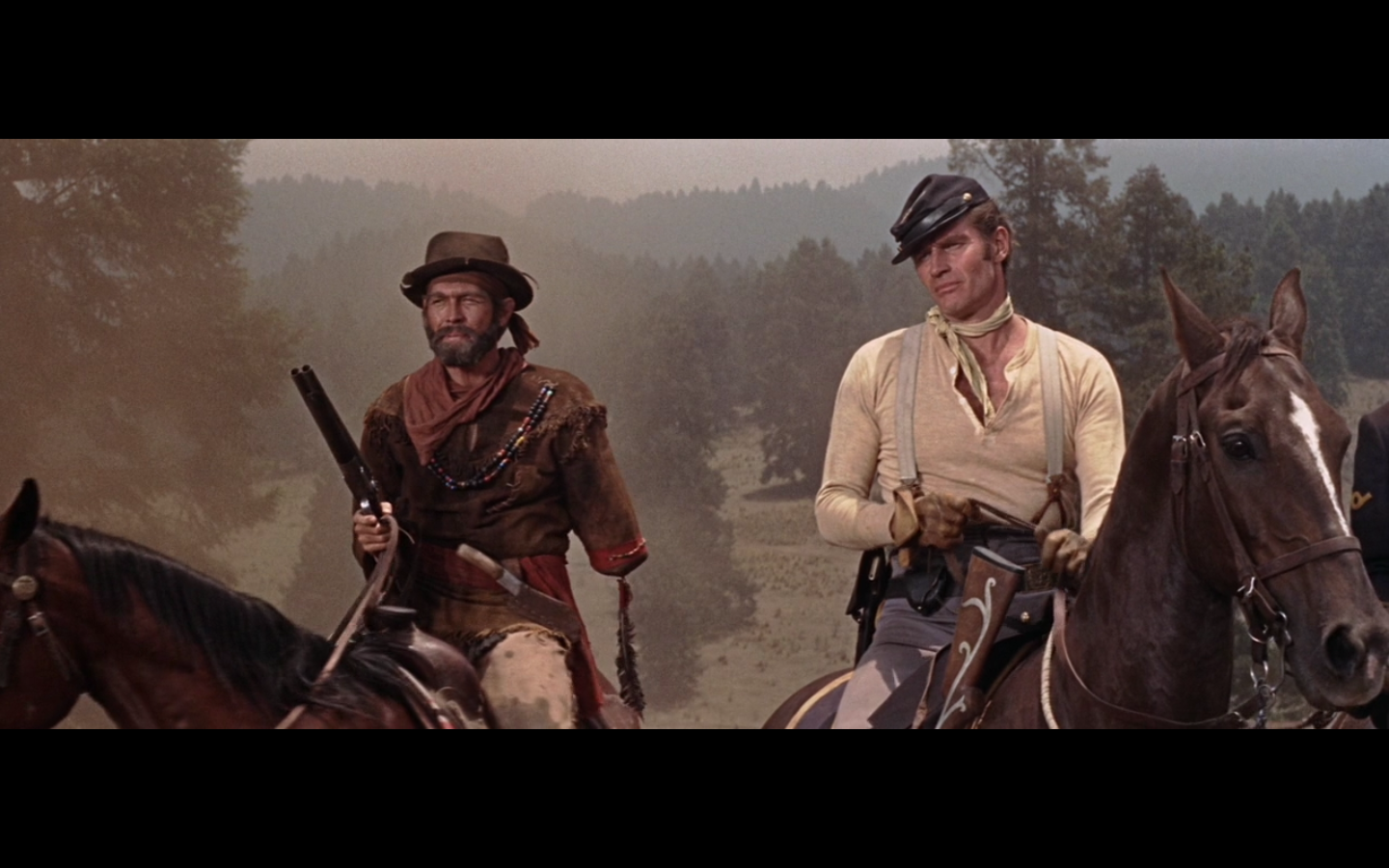
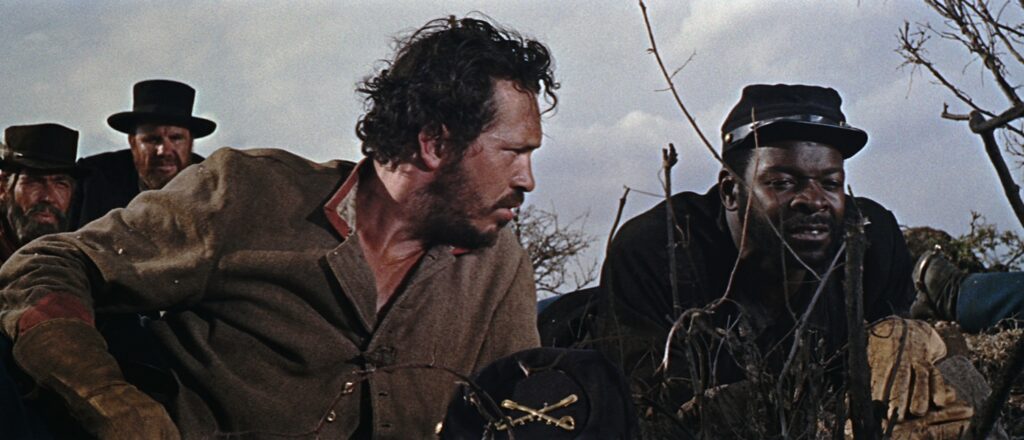
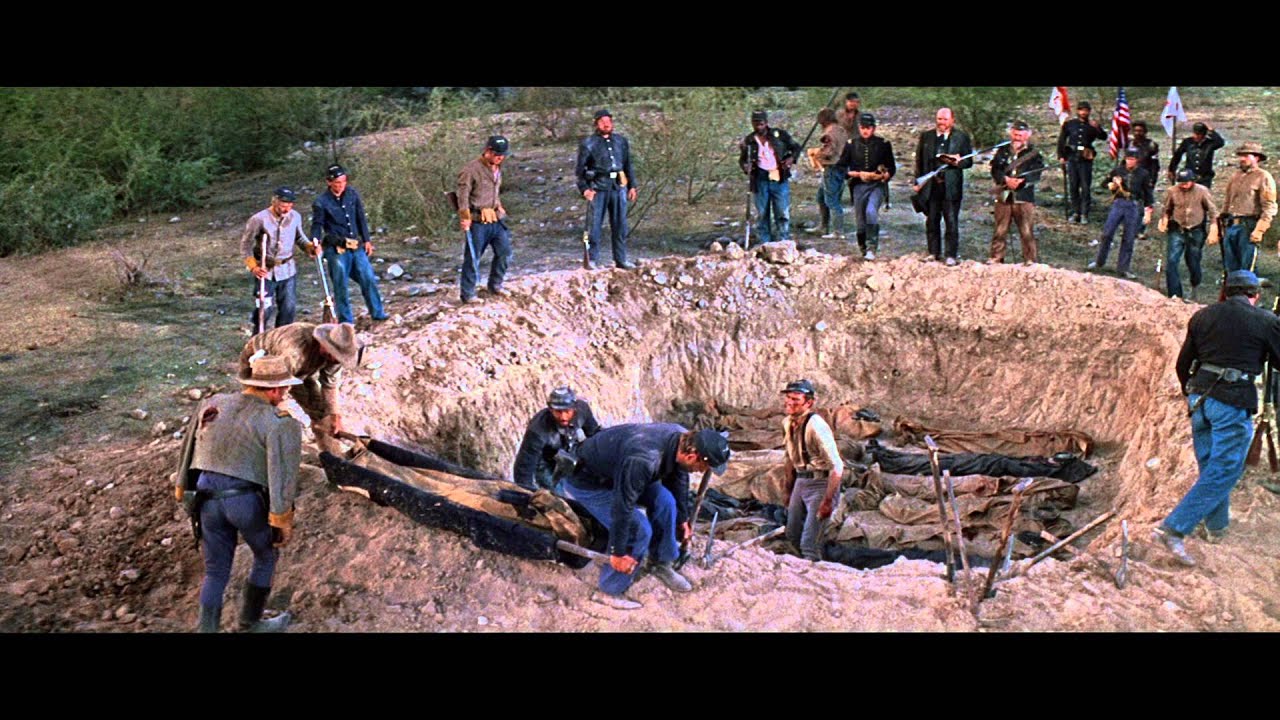
Director Sam Peckinpah went over budget during production of this 1965 epic western and was fired, so this restoration, based on a scholarly assessment of his intentions, can’t really be considered a director’s cut. But it’s 12 minutes longer, its story is easier to follow, and its score is closer to what Peckinpah had in mind. Still as flawed as its title hero and a bit out of control, it’s a powerful and provocative account of a disgraced Union officer (Charlton Heston) reluctantly joining forces with Confederate prisoners (including Richard Harris) to kill or capture an Apache who led a massacre in New Mexico. It may not approach The Wild Bunch, but after the soldiers cross into Mexico the film takes on weight and flavor that suggest major Peckinpah, and both Harris and Heston (who gamely gave up his salary to keep Peckinpah on board, at least for a while) contribute some of their finest work. With Senta Berger, James Coburn, Warren Oates, and Ben Johnson. PG-13, 136 min. Music Box.
From Cinema Scope, Winter 2005, issue 21.Much of this column is out of date — starting with the URL in the first sentence, which none the less does take you somewhere that’s related. — J.R.
My most fruitful recent discovery for ordering rare films on DVD is www.superhappyfun.com — a mysterious U.S.company whose name sounds oddly Japanese and who makes its own Region 0 DVD-Rs (“a movie that’s been ported over from VHS, tweaked with a time-based corrector, and recorded onto a consumer-grade DVD”), packed in envelopes rather than boxes to save costs and usually priced at $13 apiece. The prints used vary in quality and are ranked in their catalogue entries between 10 (best) and 4 (worst); I’ve found so far that anything below 7 borders on the dubious (such as my blotchy albeit subtitled copy of Jacques Rivette’s Paris Belongs to Us, assigned a 6).
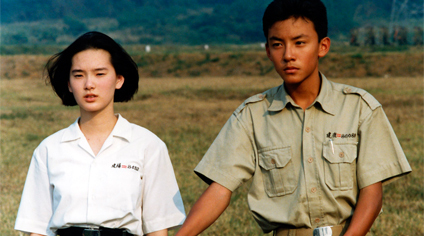
Among the treasures I’ve recently acquired are Edward Yang’s A Brighter Summer Day (the full version, with English subtitles, on two discs, for $15), The Exterminating Angel subtitled, The Girl Can’t Help It letterboxed, a couple of restored Ernst Lubitsch musicals (Monte Carlo and One Hour with You), Joseph Losey’s M, Jacques Tourneur’s Nightfall, Kinugasa’s A Page of Madness (which has no intertitles, so subtitles aren’t needed), Fuller’s Park Row, and Antonioni’s The Passenger. Read more
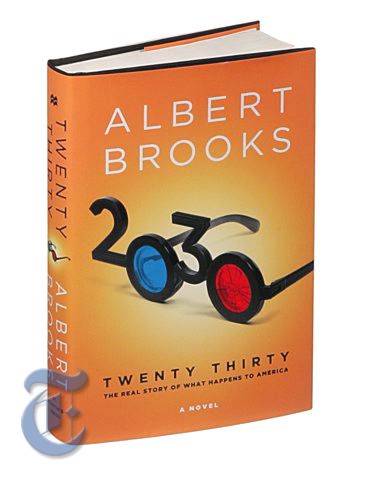
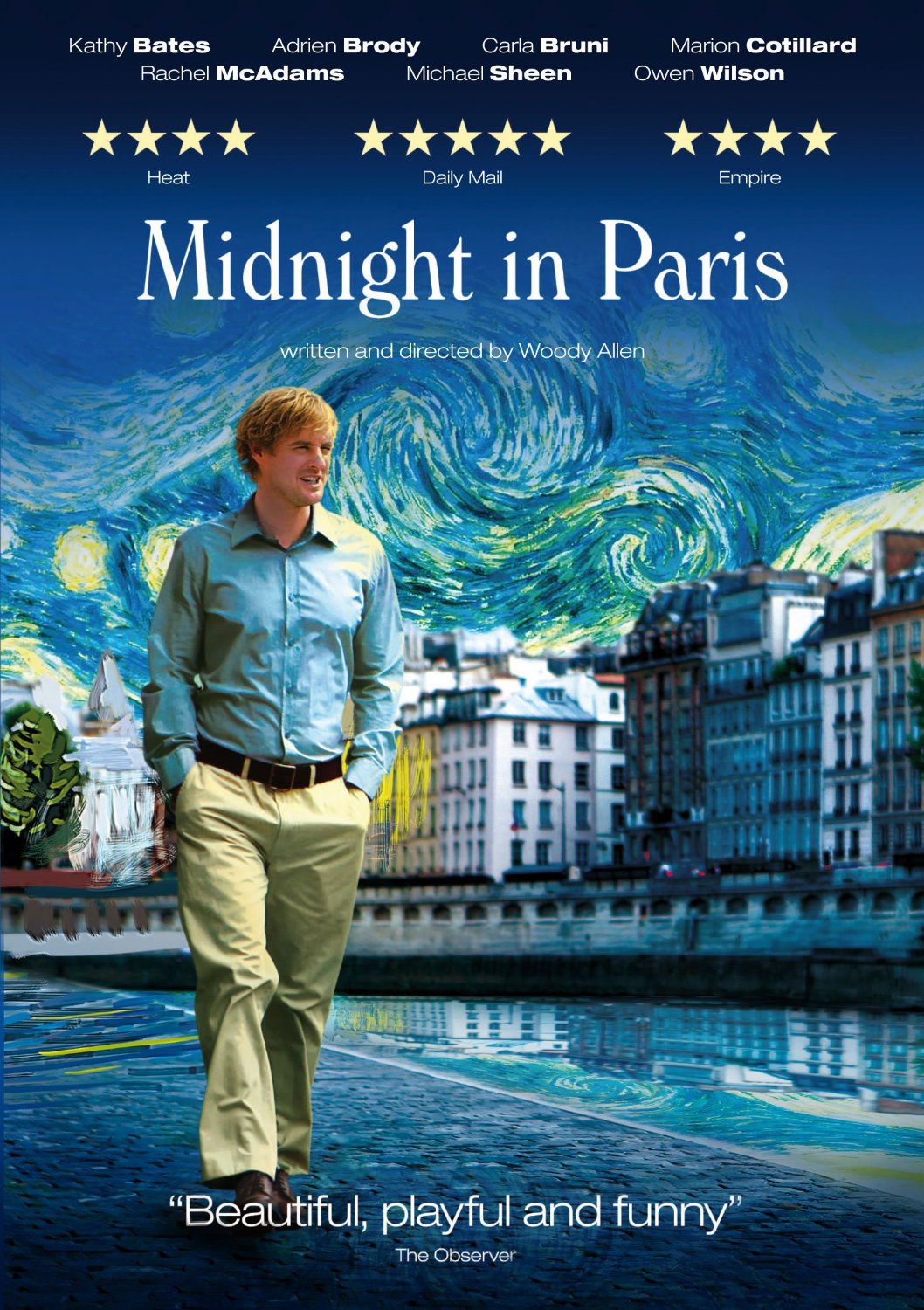
One wouldn’t expect Albert Brooks’s first novel (Twenty Thirty: The Real Story of What Happens to America) and Woody Allen’s latest movie (Midnight in Paris) to have much in common, especially after one considers that the former is set 19 years in the future whereas the latter is set at least partially between eight and nine decades in the past. But the main thing they do have in common is in fact very contemporary — a preoccupation with money, which Brook’s novel is especially up front about. Both are also ultimately more interested in wisdom than in laughs (or, for that matter, in literature, at least for its own sake); Brooks’s own form of humor, which he seems to find impossible to suppress, is mainly a creative form of sarcasm, which he plants in many of his characters (all of them male, as it happens); more generally, much of his novel’s tone is fairly dour and cautionary. And the principal thing it’s dour and cautionary about is a very contemporary preoccupation with not having enough money. Read more
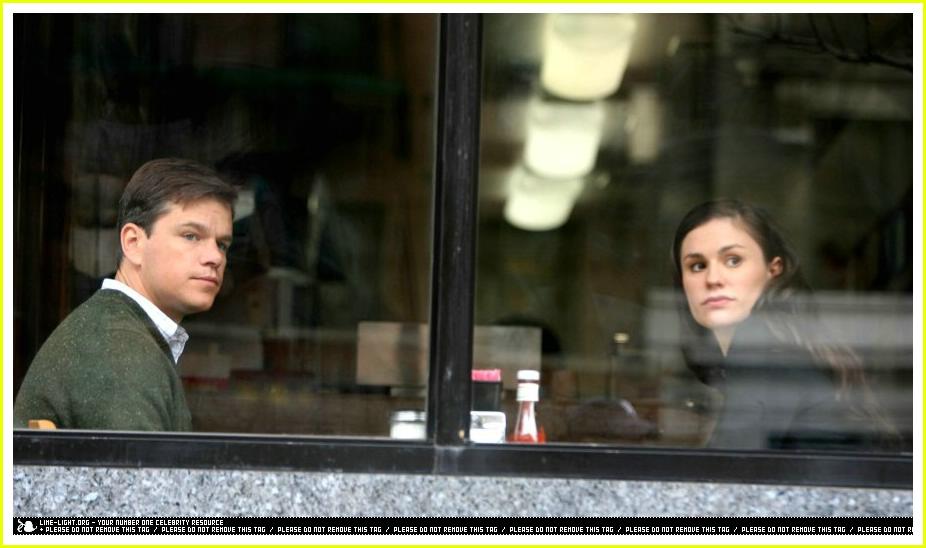
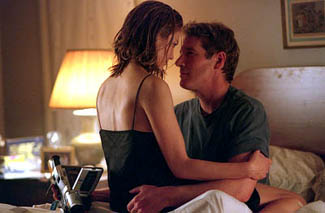
Since I regard Claude Chabrol’s quintessentially French La femme infidele (1968) as one of his greatest films — making it all the more unfortunate for us (and fortunate for the authors of this remake) that it’s been unavailable for years — I was fully prepared to detest the Adrian Lyne version. Yet for roughly the first half of this 124-minute feature, I was pleasantly surprised, especially by the decisive shift in emphasis from husband to wife. Diane Lane, as the unfaithful wife of Richard Gere, gets to show off her magnificent legs at every opportunity — especially but not exclusively on her trips from her suburban home to the Soho loft of a young French hunk (Olivier Martinez) who sells rare books — and Lyne’s fancy cutting, honed on and still often resembling TV commercials, keeps this sensual in a way that the Chabrol movie never was. But then violence, guilt, and the husband’s viewpoint take over, Lane’s legs are sheathed, and the movie doesn’t have a clue about how to proceed. The original was a classically balanced and ultimately very satisfying work held in place by Chabrol’s love-hatred for bourgeois domesticity; the remake doesn’t reflect anyone’s love or hatred for anything, just a lot of anxiety about test marketing, which means it takes a nosedive when it goes shopping for an ending (I counted several, all of them ham-fisted). Read more
I just saw a great film tonight for the first time, the second feature of the Belgian surrealist André Delvaux (1926-2002), known in English as One Night…A Train, with Yves Montand and Anouk Aimée,which dates from 1968. It starts off as something quite ordinary and gradually gets weirder and crazier, winding up eventually somewhere in the vicinity of both Kafka and Tarkovsky (the latter in his Stalker mode). It isn’t available commercially, but you can download it for free, and with English subtitles, at https://ok.ru/video/1373447653913. [2021 note: I originally gave a ldifferent link that no longer works. For more about this film and Delvaux, go here.]
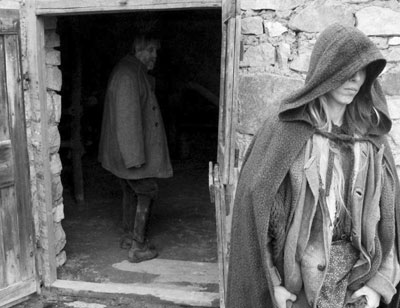
The film is adapted from a novella by Johan Daisne, who also wrote the source novel of Delvaux’s previous feature, The Man Who Had His Hair Cut Short (1965). I’m less fond of that film than I am of Delvaux’s second feature and his third, Rendez-vous à Bray (1971), which I recently described on this site as my favorite Belgian feature. Rendez-vous à Bray is also based on a very mysterious novella, in this case a Gothic tale by Julien Gracq set during World War 1, although it isn’t really a war film. Read more
Written for my En movimiento column for the September 2013 issue of Caiman Cuadernos de Cine. Reseeing The Hanging Tree tonight, I was fascinated to discover how much McCabe and Mrs Miller was indebted to its prostitutes and its fires, and how often Daves could use a crane as if it were a musical instrument.— J.R.
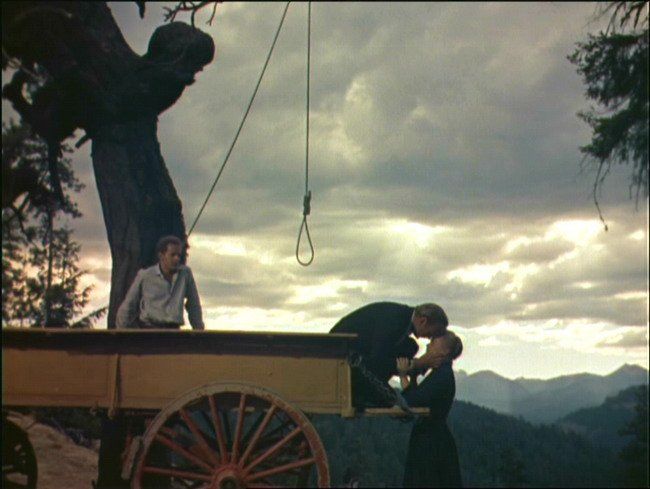
“Many of Delmer Daves’s films are beloved, but to say that he remains a misunderstood and insufficiently appreciated figure in the history of American movies is a rank understatement.” This is how critic Kent Jones begins the second of his two essays accompanying the simultaneous Criterion releases on DVD and Blu-Ray of Jubal (1956) and 3:10 to Yuma (1957), the first two in a string of three Westerns that Daves made with Glenn Ford. (The third was Cowboy in 1958.)
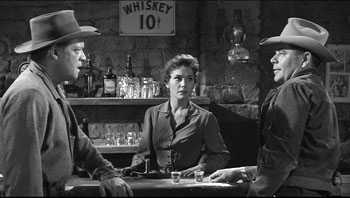
I saw the two Blu-Rays, in reverse order, on the same day, and I agree entirely with Jones that 3:10 to Yuma (ignoring its reportedly lamentable recent remake) is a remarkable achievement — as much for Glenn Ford’s performance as a charismatic villain as it is for the diverse dramatic and visual nuances of Daves, working in black and white and widescreen. Speaking as someone for whom Glenn Ford’s heroism in my youth was as important as that of James Stewart or Cary Grant, I was also astonished by the unpredictable and multileveled killer-hipster and delicate gangleader-womanizer he creates here (and also grateful for a fascinating interview with his son and biographer Peter Ford, included as a bonus). Read more
With this 1997 drama, producer-director Clint Eastwood continued his welcome practice of trying something different on every picture, turning this time to a best-seller very different from The Bridges of Madison County, the source material for his previous film. The liberties taken by John Lee Hancock in adapting John Berendt’s atmospheric nonfiction novel move the original story even closer to fiction: four murder trials are collapsed into one, the author-narrator is replaced with a made-up hero (John Cusack), and a lot of languid local color is distilled into a meandering story line. But Eastwood finds good ways of honoring the book: shooting on location in Savannah, using a very tasteful selection of tunes by Johnny Mercer (a Savannah native) on the sound track, and even getting local drag queen Lady Chablis to play an expanded version of her own part in the original story. (She’s not exactly a film actor, but there’s something in the way that Eastwood turns her loose that makes the movie come alive.) The results are more leisurely and character driven than most contemporary movies are encouraged to be, and positively drip with juicy southern ambience. Kevin Spacey is at his best playing the millionaire antiques specialist who shoots his rough-trade lover and employee (Jude Law). Read more
Thanks to Mark Rappaport for recommending Sergei Loznitsa’s extraordinary 2018 Donbass, available for $5 (a one-day pass) at https://easterneuropeanmovies.com/drama/donbass, which offers the most gripping and elucidating portrait of what’s happening now in Ukraine that I’ve encountered anywhere. Many of us have already encountered Loznitsa’s expertise as a documentary storyteller, but this film is a veritable eye and ear-opener. [5/6/22]
In 1952 beat painter and filmmaker Alfred Leslie wrote a play based on an argument he witnessed between art critic Clement Greenberg and abstract expressionist painters at a celebrated hangout in Greenwich Village. The text was lost in a 1966 fire that also consumed most of Leslie’s paintings and films, but 20 years later he reconstructed it from memory and added songs, and in 1997 a staged reading was videotaped with three cameras. Leslie found the results visually boring, so he decided to insert an enormous quantity of found footage from newsreels, porn films, and Hollywood movies, either to illustrate or to play against the ongoing discussion. The opening clip, a clown singing in squawks and squeaks that are subtitled with some invective from critic Hilton Kramer, sets the tone perfectly; like many fine filmmakers who’ve worked with found footage in recent years (such as Jean-Luc Godard and Mark Rappaport), Leslie is an expert indexer, and his taste for the silliest, sexiest, and most surreal manifestations of American culture is so infectious that the debate about artists and critics in this 2001 video improbably becomes infused with joy. 84 min. (JR) Leslie, the festival’s guest of honor, will attend the screening to introduce and discuss his work. Read more
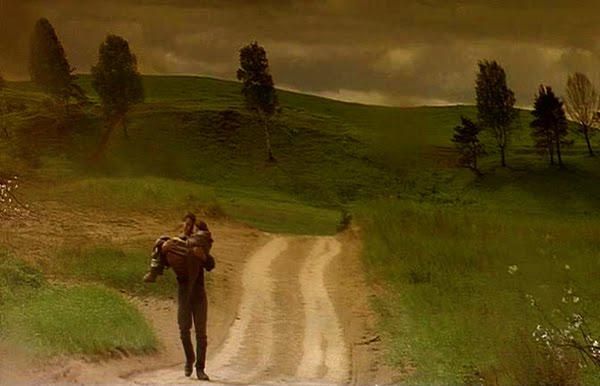
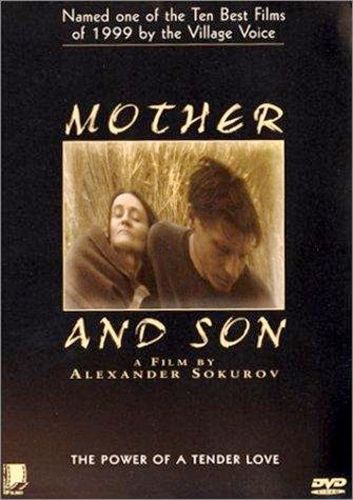
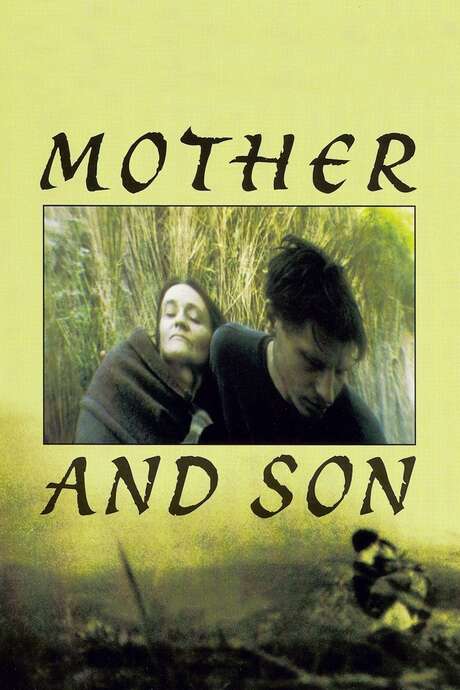
Apart from the eye-filling black-and-white video Oriental Elegy, Russian filmmaker Alexander Sokurov’s painterly, visionary side has seldom been more evident than in this gorgeous 1997 contemplation of a son caring for his dying mother. The story is minimal, but the color images are so breathtaking that there’s never a lax moment; even when the already slow action is reduced to a virtual standstill, Sokurov’s intensity insures that something is always happening, both on the screen and inside us. (This is only 73 minutes long, but if you’re hungry for plot, it will seem like an eternity.) In his taste and his patience, Sokurov may be our only truly 19th-century avant-gardist — which means in effect that his works are timeless. Music Box, Friday through Thursday, February 20 through 26.
Written for the January/February 2012 Film Comment. — J.R.
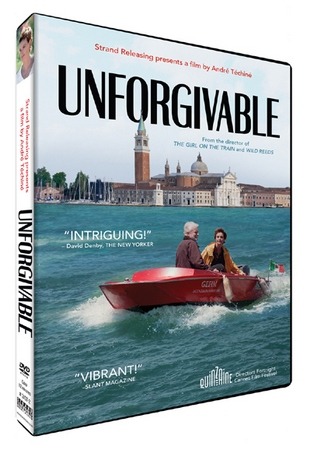
Unforgivable (André Téchiné, France) Téchiné’s best films (Wild Reeds, My Favorite Season, Thieves, Unforgivable) have two major signifying traits: all the characters are major fuck-ups, and the co-writer-director loves them all equally. Some of those in his latest film, set in and around Venice, include a macho novelist (André Dussollier), his flighty daughter (Mélanie Thierry), his real-estate agent and subsequent wife (Carole Bouquet), and one of her former lovers, a detective (an especially memorable Adriana Asti), whom he hires to go looking for his daughter. The multiple crisscrossed emotions and lives are every bit as intricately and beautifully plotted and tracked as those in Thieves.—Jonathan Rosenbaum