From the Chicago Reader (May 1, 1991). — J.R.

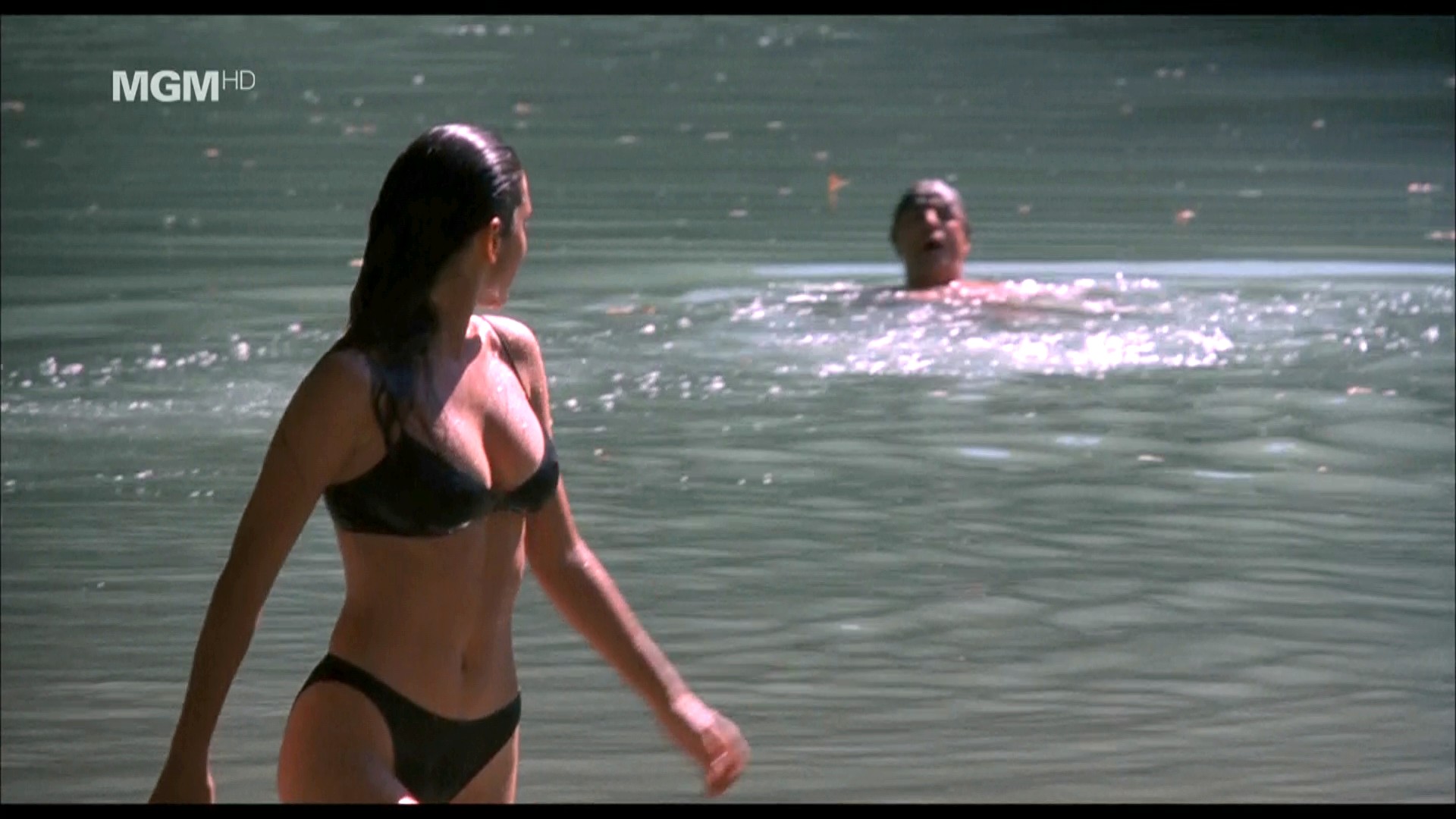
Considering that the script for this 1990 movie (by the late Charles Williams and his wife Nora Tyson, adapted from Williams’s novel Hell Hath No Fury) was in development for about 30 years and that the film is Dennis Hopper’s worst as a director, this is still pretty enjoyable as a piece of campy sleaze — especially for the first half hour, before the storytelling starts to dawdle. There’s a score by John Lee Hooker and Miles Davis, who pursue waspy duets, and Hopper’s eye for color and composition is as sharp as ever. But even if one overlooks the noirish misogyny (no easy matter), the story is still an overheated hoot. Just when one hopes that the scumbag characters — including a footloose hustler (Don Johnson) who sidles into a job as a car salesman in a sleepy Texas town, his boss’s sexpot wife (Virginia Madsen), and a seedy, bemused banker (Jack Nance) — will develop beyond their cliches, they become even sillier. And the apparently innocent accountant (Jennifer Connelly) who becomes entangled in the morass isn’t any more believable. Some may view the film’s liabilities (e.g. the inexpressive Johnson filling the foreground like a block of wood) as assets and coast along with the steamy sex, but it’s still pretty slim pickings from the man who once made Out of the Blue. Read more
From the October 6, 1995 Chicago Reader. — J.R.

Seven
*** (A must-see)
Directed by David Fincher
Written by Andrew Kevin Walker
With Morgan Freeman, Brad Pitt, Gwyneth Paltrow, Richard Roundtree, R. Lee Ermey, John McGinley, Julie Araskog, Mark Boone Junior, and Kevin Spacey.

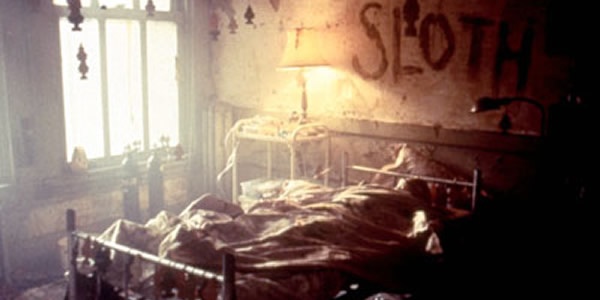
Since when have designer vomit, mannerist rot, and other chic signifiers of gloom, doom, and decline become such comforting mainstays of movies? I’m thinking not only about Hollywood but about Western cinema generally. What brings on all the driving, dirty rain in Satantango (Bela Tarr’s seven-hour Hungarian black comedy, which showed at last year’s Chicago International Film Festival) as well as in Seven, a stylish and affecting (albeit gory) metaphysical serial-killer movie? The facile solution would be to trace the gloom back to Blade Runner, film noir, maybe even to Prague school surrealism, though this would omit the Calvinist/expressionist vision of urban filth and the post-Vietnam psychopathology of Taxi Driver. In point of fact, it’s much more important to figure out the reasons for the strange allure of this grim sensibility than to worry pedantically about where it came from.
I’d ascribe at least part of this taste to the current inability to believe in or try to effect political change — a form of paralysis that in America is related to an incapacity to accept that we’re no longer number one. Read more