From the Chicago Reader (October 26, 1987). — J.R.
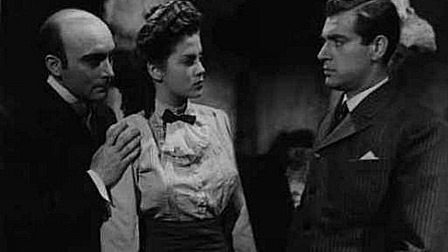
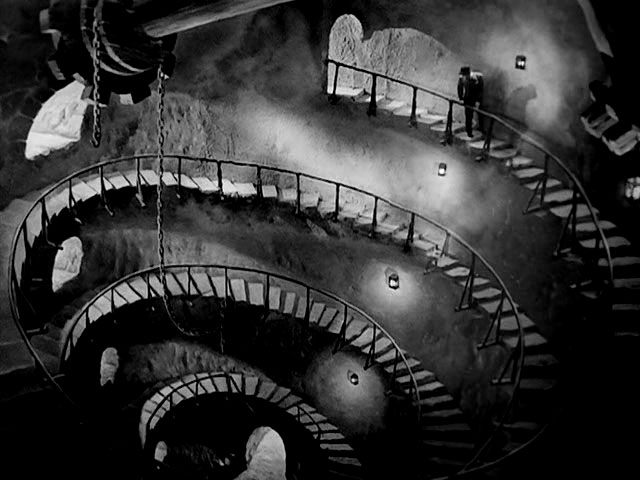
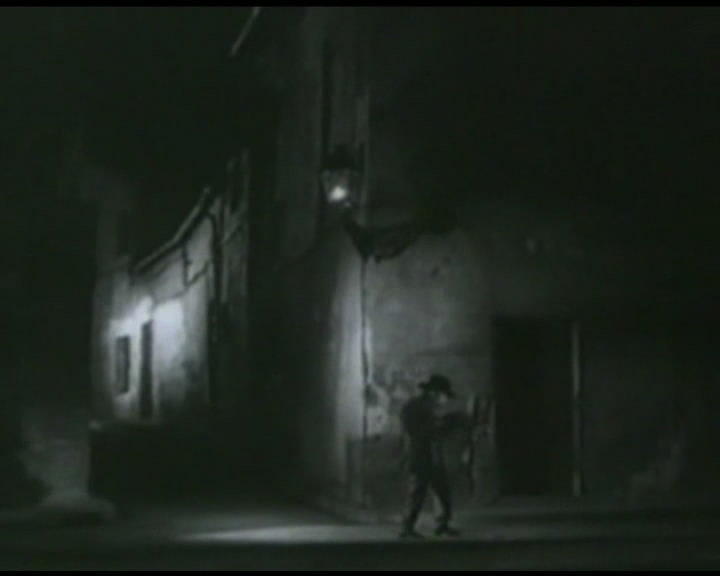
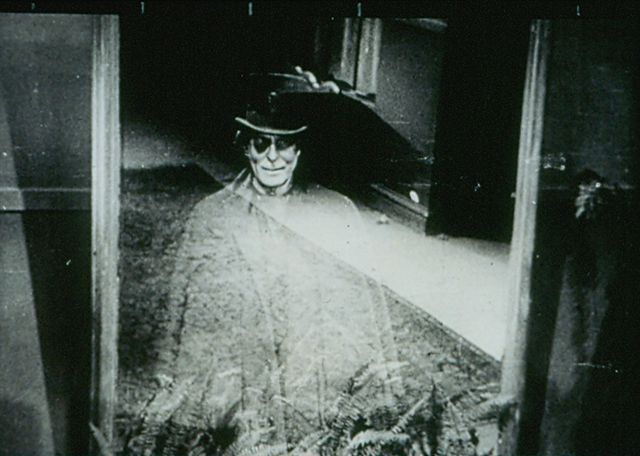
Edgar Neville — an aristocratic Republican filmmaker and writer who was friends with everyone from Lorca and Chaplin to Ortega y Gasset and Lacan — is one of the great undiscovered auteurs of the Spanish cinema. This remarkable turn-of-the-century fantasy, which suggests an eerie encounter between the tales of Borges and the early melodramas of Feuillade and Lang, starts off as a supernatural mystery as the hero (Antonio Casal) is persuaded by a one-eyed ghost to solve the case of his murder. This leads him first to the ghost’s niece (Isabel de Pomes) and eventually to a hidden underground city beneath the old section of Madrid that contains an ancient synagogue and is presided over by hunchbacked counterfeiters. Based on a novel by Emilio Carrere, this hallucinatory fiction ends rather abruptly and never manages to account for all the mysteries it uncovers, but as pure, primal storytelling it is as creepy a spellbinder as one could wish for (1944). (JR)

On November 27, 2017 I received the following email, sent from Spain:
You refer to Edgar Neville in your online review of TOWER OF THE SEVEN HUNCHBACKS as a “Republican”. He was actually one of the other guys, if you know what I mean.
Read more
Written in November 2017 for my “En movimiento” column in Caimán Cuadernos de Cine. — J.R.
En movimiento: The Crimes of Harvey Weinstein
Although we routinely assume that social trends have a rational basis, the processes by which irrational forms of displacement also affect those trends are no less routinely ignored. For instance, it’s commonly thought that the Watergate scandal leading to Richard Nixon’s resignation as U.S. President was merely a matter of exposing his crimes, but it could also be argued that many of these crimes were already evident to U.S. citizens before Nixon won his last Presidential election. As Mary McCarthy would later theorize, it was because the public needed a scapegoat for the U.S. debacle in Vietnam that the Watergate crimes belatedly became important. And one might similarly theorize that the recent public exposure and condemnation of producer-distributor Harvey Weinstein as a sexual predator, which has led to many similar exposures of predatory sexual behavior by others in the film world (such as James Toback and Kevin Spacey) as well as in separate fields, has been a displaced response to the debacle of Donald Trump’s Presidency, not to mention his own primitive sexual politics, which were exposed by the release of a private tape during the Presidential campaign. Read more