
Review of FOR THE LOVE OF CINEMA
From the Spring 2018 issue of Cineaste. — J.R.
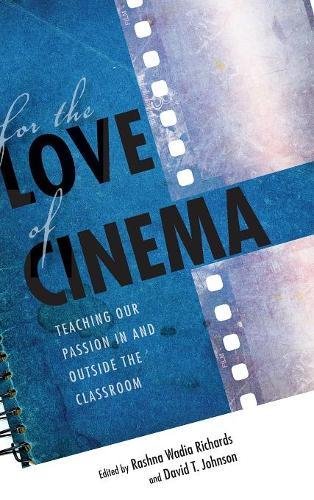
For the Love of Cinema: Teaching Our Passion In and Outside the Classroom. Edited by Rashna Wadia Richards and David T. Johnson. Bloomington: Indiana University Press, 2017. 244 pp., illus. Hardcover: $80.00 and Paperback: $32.00.
As a cinephile who periodically teaches film courses, I might be considered an ideal reader of this collection of essays, but in fact I’m not. In order to fully qualify, I’d also have to be an academic. Being a confirmed outsider to that world, however, without the sort of degrees to ensure my survival there, I have to approach this volume more as a scavenger, looking for what I think I can use, rather than as a member of the particular community that this book addresses, someone speaking their language and sharing their issues. More specifically, my best and most recent teaching experience has been four two-week stints at Béla Tarr’s Film Factory between 2013 and 2015, when the academic Sarajevo Film Academy still allowed it to function and before it withdrew its financial support for a school, as well as a training ground and production facility for young filmmakers. At the Film Factory, cinephilia was most often a given rather than a desired condition to be generated or propagated, and films more than grades or diplomas were the desired objectives. Read more