From the July-August 2005 issue (NLR 34) of New Left Review.
An English translation of the first Daney collection cited below came out this year. — J.R.
Serge Daney,
La Maison cinéma et le monde, Volume 1: Le Temps des Cahiers, 1962-1981
P. O. L.: Paris 2001
Serge Daney,
La Maison cinéma et le monde, Volume 2: Les années Libé, 1981-1985
P. O. L.: Paris 2002
We could postulate three periods for the extraordinary flourishing of film culture brought about by the French New Wave: Before, During and After. André Bazin, of course, epitomized the first, as a founding editor of the Cahiers du Cinéma in 1951, a crucial contributor to auteur theory, and champion of postwar American films and Italian neo-realism against a stale French ‘quality cinema’. The Young Turks whom Bazin nurtured at the Cahiers — Jean-Luc Godard, Jacques Rivette, Claude Chabrol, Eric Rohmer, François Truffaut, and the somewhat younger Luc Moullet — mainly defined the second period: teenage iconoclasts who picked up the camera to become the stellar practitioners of the following decades.
Serge Daney (1944–92), who started out as a disciple of the New Wave crowd and described himself as a Bazinian early on, stands as the most original commentator of the third period, which he helped to usher in and continued to redefine up until his death from aids in 1992.
Read more
Written for MUBI Notebook in April 2020. — J.R.
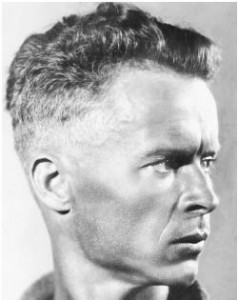
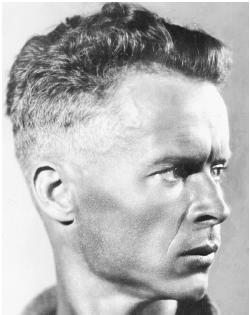
It’s disconcerting that the collected writings in English of one of the world’s greatest filmmakers currently sells for $852 on Amazon — or a whopping $980, if you opt for the paperback — while the only American book about him downgrades his work’s artistic value in its very title (Vance Kepley’s 1985 In the Service of the State: The Cinema of Alexander Dovzhenko). Look him up on Wikipedia, and you find that his name is shared by a poker player and a psychiatrist — hardly fit company for the epic, poetic Alexander Dovzhenko (1894-1956), a pagan mystic whose masterful films look as wildly experimental, as dreamlike, as hysterically funny, as fiercely tragic, and as beautiful today as they did a century ago.
A Cold War casualty, often defined in the West as a Russian Communist and in Russia as a turncoat, this Ukrainian nationalist lived under KGB surveillance for most of his life — which may help to explain why his devoted second wife Julia Solntseva, who filmed many of his unrealized scripts after his death, had joined the KGB herself, possibly in order to protect her husband. And as one of his better Western explicators, Ray Uzwyshyn, has pointed out, “With regard to the non-Russian republics (i.e. Read more