Written for the May 2016 Artforum. — J.R.
Although Jacques Rivette was the first of the Cahiers du Cinéma critics to embark on filmmaking, he differed from his colleagues—Claude Chabrol, Jean-Luc Godard, Eric Rohmer, François Truffaut—in remaining a cult figure rather than an arthouse staple. His career was hampered by various false starts, delays, and interruptions, and then it abruptly ended in 2009 with the onset of Alzheimer’s disease, six years before his recent death. But his legacy is immense.
His career can easily be divided into two parts, although it’s not so easy to pinpoint a precise dividing line between them. And for those who knew him well or even casually, as I did, it’s hard to prefer the first portion to the second without feeling somewhat guilty.
Common to both parts is a preoccupation with mise-en-scène and the mysterious aspects of collective work, offset by the more solitary and dictatorial tasks of plotting and editing. Rivette’s own collective work was frequently enhanced by improvisation—with actors, with onscreen or offscreen musicians, or with dialogue written just prior to shooting (either by actors or screenwriters)—while the more solitary work of plotting and editing emulated the Godardian paradigm of converting chance into destiny. Read more
The following interview with Alessandro Stellino appeared, in Italian, in filmidee #15, along with Italian translations of three of my essays –- “Entertainment as Oppression,” “In Defense of Non-Masterpieces,” and “Work and Play in the House of Fiction”. What follows is an imperfect and approximate version of this interview in its original English — respecting the structure of the Italian version, although in a few cases reconstructing my answers when I managed to lose the original emails. The interview was conducted over many emails, and I brought it to a close when I declined to reply to the question, “If you could teach a course on film history with the most possible freedom in rewriting the canon, how would your program be?”, which effectively would have obliged me to create an entire syllabus. -– J.R.
In the introduction to Goodbye Cinema, Hello Cinephilia, a book that has been particularly relevant for the founding of our magazine, you state: “It’s a strange paradox that about half of my friends and colleagues think that we’re currently approaching the end of cinema as an art form and the end of film criticism as a serious activity, while the other half believe that we’re enjoying some form of exciting resurgence and renaissance in both areas”. Read more
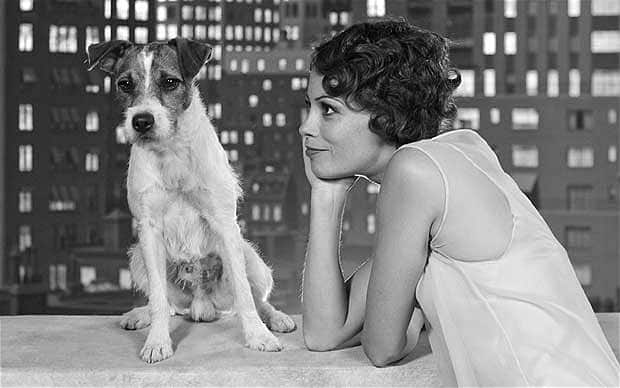
Okay, even though I’ve refused to place The Artist on any of my lists of end-of-the-year favorites, I’ve just finished reseeing it, and I have to admit that if I were a member of the Academy and could offer write-ins, Uggie the dog would be somewhere near the top.
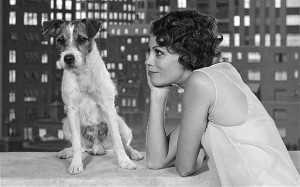
Let’s be frank: we all have different thresholds when it comes to shameless bids for our affection, and these thresholds are invariably matters of taste. While I haven’t been able to forgive The Artist for pilfering and then brandishing a sizable chunk of Bernard Herrmann’s Vertigo score near its closing stretches to impart a sense of tragedy — even after I’ve forgiven Michel Hazanavicius for all his other outrageous breaches of period and silent movie syntax (in short, his diverse and mutifaceted ahistorical outrages), not to mention his abject appropriations of diverse narrative chunks from Singin’ in the Rain, A Star is Born, and Citizen Kane — I’m still periodically won over by some of his audiovisual ideas as acts of audacity and stylistic flourishes in their own right.
Above all, I’m flabbergasted by the performance of Uggie the dog, mutt extraordinaire, which has got to be one of the best canine turns in the history of cinema. Read more