Daily Archives: March 11, 2026

Hope Springs Eternal [The Best Films of 1999]

From the Chicago Reader (January 7, 2000). — J.R.

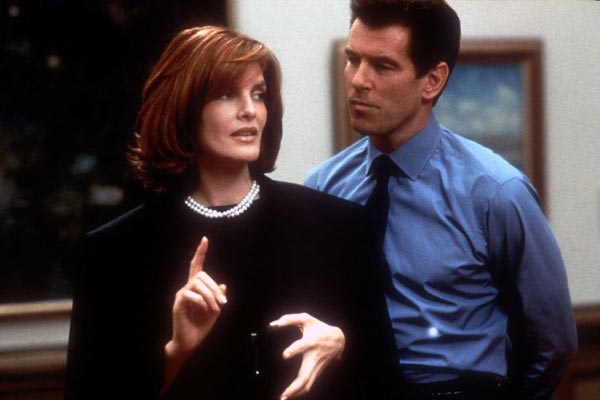
I find critics’ near unanimity about hits and favorites a bit of a bore, even when I agree with some of their choices. Disputes are far more interesting, because they make artistic and political differences clearer and more meaningful. Perhaps because I’m drawn to cinema that can theoretically change the world — and me — I can’t see much purpose in commemorating movies whose prime aim seems to be to make me forget the world outside the theater. The remake of The Thomas Crown Affair and an evening of channel surfing, no matter how enjoyable either might be, are of roughly equal irrelevance.
Nineteen ninety-nine was a pivotal year in movies, clarifying where a lot of people stood and who they were. This kind of definition was encouraged by the existential stocktaking that came with the end of the millennium — the compiling of more best-film lists than usual (of the 90s, of the century) and more generalized meditating on the state of the art and the medium. (After finishing my own best-of-the-90s list for the last issue of the year, I discovered that all but one of the movies had an interesting trait in common: they hadn’t been reviewed in the New Yorker. Read more
Dialogue Between Shigehiko Hasumi and Jonathan Rosenbaum on Howard Hawks and Yasuzo Masumura (Tokyo, 3 December 1999)

This dialogue is part of a section called “Two Auteurs: Masumura and Hawks,” included in Movie Mutations: The Changing Face of World Cinephilia (2003), a volume I co-edited with Adrian Martin. It was preceded by my essay, “Discovering Yasuzo Masumura: Reflections on Work in Progress,” and, before the “epilogue,” it was followed by Hasumi’s own essay, “Inversion/ Exchange/Repetition: The Comedy of Howard Hawks”. — J.R.

Jonathan Rosenbaum: When did you first write about Howard Hawks?

Shigehiko Hasumi: In 1977, just after he died. At that time, Hawks was so underestimated in Japan that no film magazine wanted an article on him. I published it in a literary magazine.

JR: And is there a particular period in his career that you prefer?

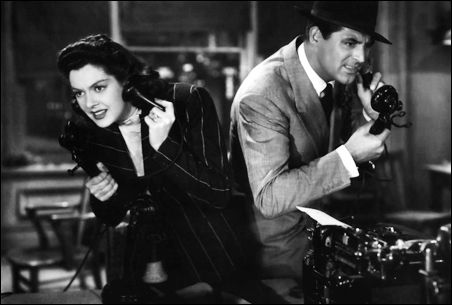
SH: Yes, from Bringing Up Baby (1938) to His Girl Friday (1940). Of course, his two films noirs with Lauren Bacall and Humphrey Bogart, To Have and Have Not (1944) and The Big Sleep (1946), impress me deeply. But the comedies in this period seem to me the highest accomplishment of his mise en scène. For me, Hawks is essentially a filmmaker of comedy. In that sense, I could say also that my preference goes to the period between Twentieth Century (1934) and Monkey Business (1952). Read more