Daily Archives: March 5, 2026

The Aesthetics and Politics of Fear

Commissioned by the Portuguese quarterly Electra for its fall 2025 issue, devoted to Fear.

In their original forms as novels, Mary Shelley’s sophisticated novel of ideas, Frankenstein (1818) and Bram Stoker’s simpler and pulpier Dracula (1897) were published almost eighty years apart. Although only the second of these appeared during the Victorian era (1837-1901), it doesn’t seem like a stretch to associate both novels with the repressions and displacements of what we regard today as Victorian.

By contrast, the releases of the movie adaptations of these novels made at Universal studios in 1931 were only a little over eight months apart. An earlier, unauthorized film adaptation of Dracula called Nosferatu (1922) is also worth mentioning, as are other early silent German features that belong to the horror genre (e.g., The Golem in 1915 and The Cabinet of Dr. Caligari in 1920). But the commercial successes of Dracula and Frankenstein, both of which drew on elements from silent German films, were arguably what established horror as an ongoing international genre, working with both repression and its subsequent unleashing and/or explosive consequences. At least since the 1950s in the U.S., when teenagers were first identified as a social class and a market, horror movies have been commonly viewed as the ideal “date” movies for teenagers, largely because the fear they provoke can draw couples closer together for mutual comfort and assurance. Read more
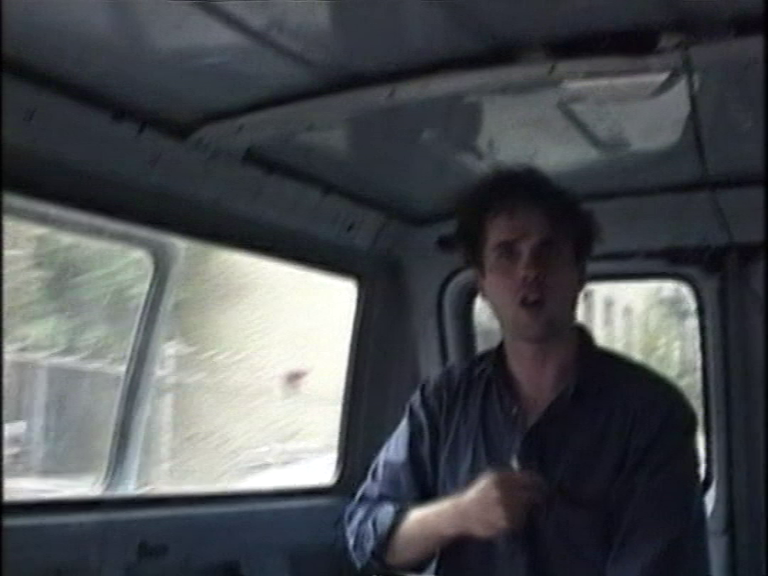
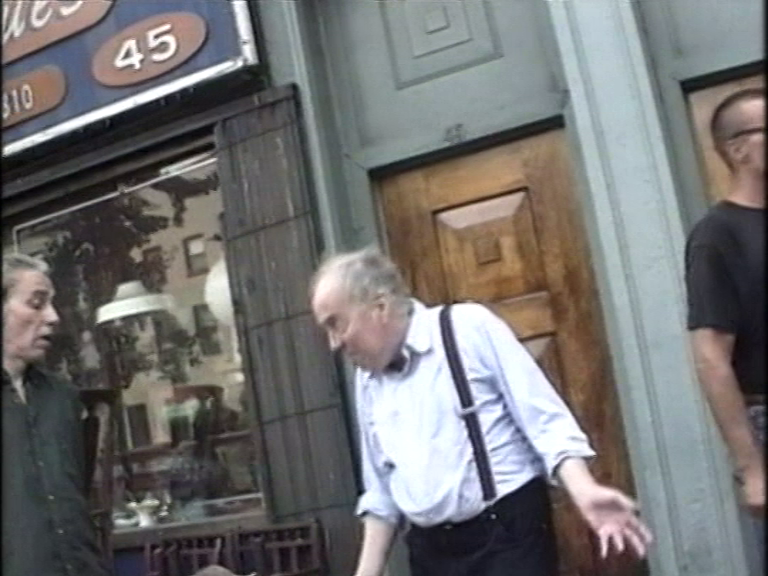
Robert Frank’s ONE HOUR (1990)

Commissioned by and published in Frank Films: The Film and Video Work of Robert Frank, a 2009 German retrospective catalogue published in English. You can see a few brief glimpses of the video in the fascinating recent documentary Don’t Blink — Robert Frank. It was produced by Philippe Grandrieux for French television. — J.R.

“I’ve seen La chouette aveugle seven times,” Luc Moullet once wrote of Raúl Ruiz’s intractable masterpiece, “and I know a little less about the film with each viewing.” Apart from being both intractable and a masterpiece, I can’t say Robert Frank’s One Hour [also sometimes known as Sixty Minutes)  has anything in common with the Ruiz film, yet what makes it a masterpiece and intractable is the same paradox: the closer I come to understanding it, the more mysterious it gets.

My first look at this single-take account of Frank and actor Kevin O’Connor either walking or riding in the back of a mini-van through a few blocks of Manhattan”s Lower East Side — shot between 3:45 and 4:45 pm on July 26, 1990 — led me to interpret it as a spatial event capturing the somewhat uncanny coziness and intimacy of New York street life, the curious experience of eavesdropping involuntarily on strangers that seems an essential part of being in Manhattan, an island where so many people are crammed together that the existential challenge of everyday coexistence between them seems central to the city’s energy and excitement. Read more