Who could have guessed that Frederick Wiseman’s second fiction feature –- a mesmerizing, meditative masterpiece made at age 92, only two months after the death of his wife of 66 years, Zipporah Batshaw Wiseman (whose first name has served as the name of his production company) –- would resemble in some particulars some of the late works of Jean-Marie Straub? It’s an audiovisual fugue consisting of (a) a monologue performed by Nathalie Boutefeu, adapted by Boutefeu and Wiseman from diary entries and letters written by Leo Tolstoy’s wife Sophia about her estrangement from her husband and (b) the vibrant settings she wanders through, a lush seaside garden on the French island Belle-Île off the coast of Brittany. It even features “the wind in the trees” that D.W. Griffith found missing from modern cinema but which Straub has placed front and center in his own landscape art. But of course the differences from Straub are every bit as pertinent as the similarities: a devastating personal autocritique by a documentarist who has devoted his career to what he has called “reality fictions”, his ravishing widescreen compositions, and the services of a skilled professional actress (whose credits include Irma Vep and Kings and Queens). Read more
My column for the Spring 2022 issue of Cinema Scope. — J.R.
My pandemic home-viewing choices are invariably and inescapably matters of chance and accident—basically, what turns up and when. In different ways, all of the dozen items discussed below are examples of what I mean.
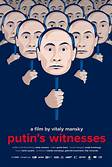
On its own initiative, Icarus Video sends mePrisms and Portraits: The Films of Rosine Mbakam, a four-disc DVD box set. Three of the four discs fall out of the box as soon as I open it, and I decide to start with Prism (2021). But the disc turns out to be a 2018 documentary by Vitaly Mansky, Putin’s Witnesses, a different Icarus release that has been accidentally affixed with a Prism label, so I watch that instead.
I’m glad that I did. Mansky was an official videographer of Putin’s during the latter’s first year in power, and this lesson in statecraft is valuable not only for its use of outtakes, but also for Mansky’s retrospective and critical voiceovers attached to some of the material he was expected to shoot. The most striking (apparent) outtakes consist of Mansky’s dialogues with Putin about his understandable objections to Putin reinstating the Soviet national anthem to replace the Russian one, and Putin about a year later expressing to Mansky a seemingly sincere preference for democracy over monarchy and autocracy, saying that he foresees and even looks forward to eventually becoming a private citizen again. Read more