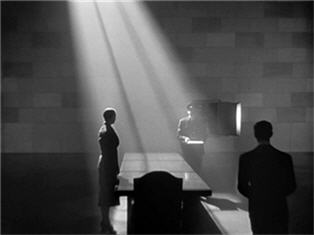
Written for the January/February 2011 Film Comment. — J.R.
Dave Brubeck: In His Own Sweet Way
(Bruce Ricker, U.S.)
Ironically, the most popular American jazz musician is also one of the most undervalued among the cognoscenti. As the leading distributor of jazz documentaries (and Clint Eastwood’s jazz consultant), Bruce Ricker may be the ideal filmmaker to re-introduce Brubeck to a wider public. Although he regrettably doesn’t include a full performance of any song before the final credits, Ricker conveys what a wonderful person Brubeck is and gives a fine notion of some of the richness of his music.—Jonathan Rosenbaum
Read more
From the Chicago Reader (February 11, 2000). — J.R.
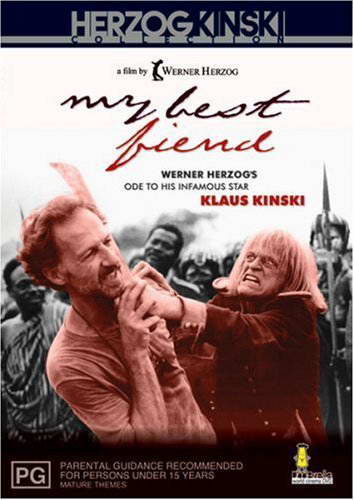
My Best Fiend
Rating * Has redeeming facet
Directed and written by Werner Herzog.
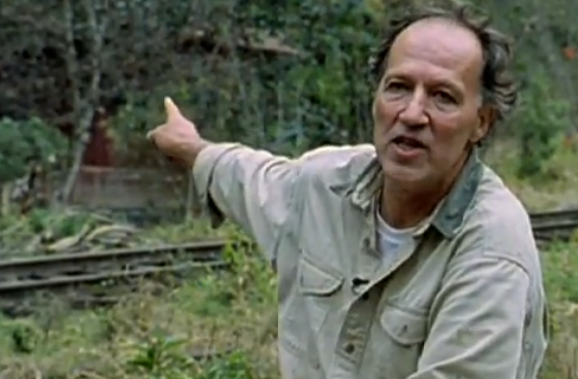
What’s the difference between artistry and bravado? This isn’t a question I generally feel inclined to ask, but I’m compelled by the work of Werner Herzog, who scrambles the two until it’s difficult to tell which is which. My Best Fiend — Herzog’s documentary feature about his tumultuous collaborations with Klaus Kinski, the mad actor with whom he made some of his most notable films — also compels questions about Kinski’s bravado and artistry, and suggests that it might not always be easy to distinguish his from Herzog’s.
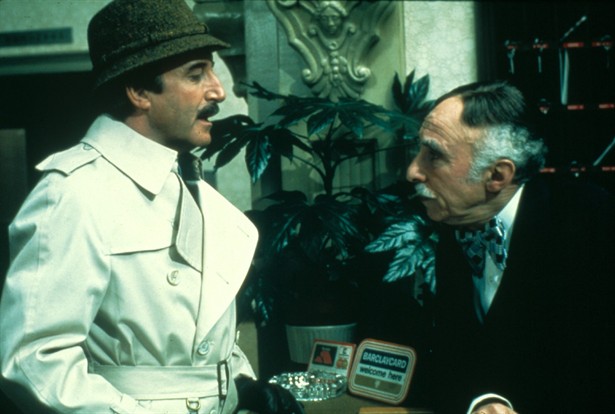
One might call My Best Fiend, which is playing this week at Facets, the art-movie equivalent of writer-director Blake Edwards’s Trail of the Pink Panther. Edwards and Peter Sellers reportedly were at each other’s throats throughout their many collaborations on Pink Panther comedies — largely, it appears, because of Sellers’s hyperbolically neurotic behavior. Herzog and Kinski had a similarly volatile relationship, which ended only after Kinski died, in 1991. Herzog got his revenge by releasing outtakes of his difficult star, much as Edwards continued to fiddle around with unreleased footage of Sellers as Inspector Clouseau in Trail of the Pink Panther. Read more
Jean Grémillon remains one of the major French filmmakers whose films are most egregiously unavailable on DVD, especially when it comes to versions with English subtitles — although I’m delighted to report that Criterion’s Eclipse brought out three of his greatest ones, all made during the Occupation, including the two that are discussed here and Remorques. This article appeared in the October 25, 2002 issue of the Chicago Reader. –— J.R.
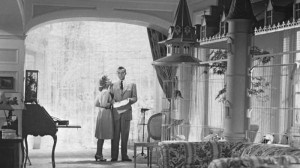
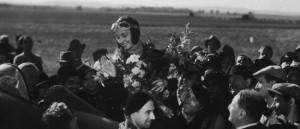
Lumière d’été **** (Masterpiece)
Directed by Jean Grémillon
Written by Jacques Prévert and Pierre Laroche
With Madeleine Renaud, Pierre Brasseur, Madeleine Robinson, Paul Bernard, Georges Marchal, and Marcel Lévesque.
Le ciel est à vous **** (Masterpiece)
Directed by Jean Grémillon
Written by Albert Valentin and Charles Spaak
With Madeleine Renaud, Charles Vanel, Jean Debucourt, Léonce Corne, Albert Rémy, and Robert le Fort.

A friend and colleague, critic and teacher Nicole Brenez, says that the best film criticism consists of films critiquing one another. This may sound a mite abstract, but two very different masterpieces by the great, neglected Jean Grémillon, Lumière d’été and Le ciel est à vous, seem to offer a concrete example of this, as a critique of Jean-Luc Godard’s In Praise of Love, which I wrote about last week. Read more
From Cinema Scope #46 (Spring 2011). — J.R.
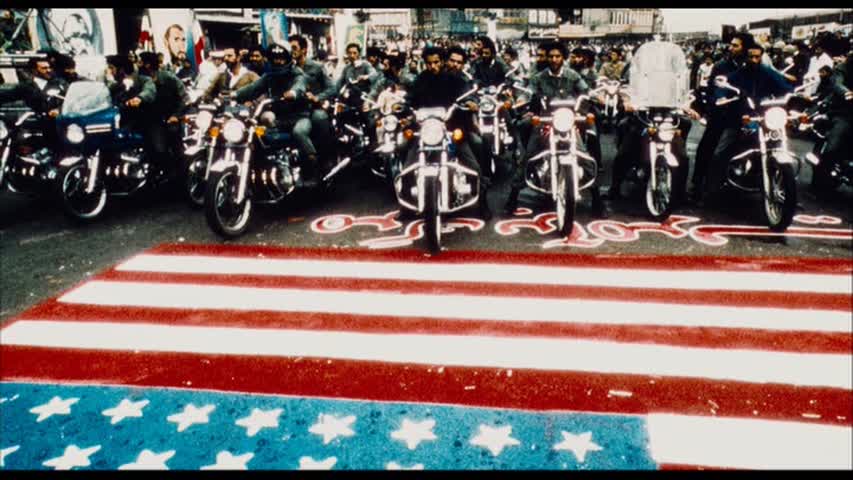
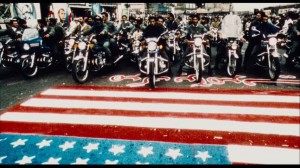
Underneath the Persian credits, over heavy metal music, the camera roams around inside a colour photograph, grazing over pointillist surfaces and male faces — finally pulling back to reveal the Islamic Revolution Guard Corps in 1983, getting ready to drive their motorcycles over a huge replica of the American flag on the pavement in front of them. Cut to black and the film’s title, The Hunter.
Cut to a highway tunnel, then to a rifle being loaded in the woods, then to the same title hero (played by the writer-director, Rafi Pitts) holding the rifle in front of a raging campfire at night. Cut to an overhead shot of a busy Tehran freeway — then to a sinister carwash that seems to be located in the general vicinity of Hell, smoky fumes rising from the spray. And finally to the hero being told by a potential employer that as a convict he doesn’t qualify for a day job, he has to take the night shift. But as we discover a little later, his wife Sara already has a day job, meaning that when he takes the night watchman job, he’ll have little time to spend with her and their six-year-old daughter. Read more
From the Chicago Reader (March 13, 1992). This film can now be accessed online. — J.R.
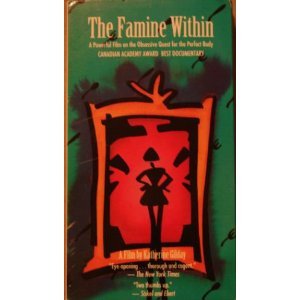
THE FAMINE WITHIN
*** (A must-see)
Directed and written by Katherine Gilday.
Some theorists believe it is the larger North American society that needs healing, that women’s bodies today are the symbolic area in which a larger drama of cultural values is played out. — narrator, The Famine Within
Siskel and Ebert, among others, have been arguing that the documentary nominating committee of the Academy Awards needs a major revamping. Their beef is that the most popular and widely discussed documentaries of the past few years — like The Thin Blue Line, Paris Is Burning, Roger & Me, and Hearts of Darkness: A Filmmaker’s Apocalypse — never get nominated. Implicit in this argument is the notion that the most popular movies are usually the best, a notion that the awarding of most of the remainder of the Oscars is predicated upon. To accept any serious challenge to this sacred premise would be to undermine our faith in distributors, exhibitors, critics, publicists — the film industry itself. Perish the thought: if we lost our faith in all of the above, we might actually have to start thinking for ourselves. Read more
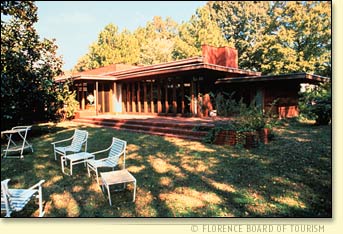
Cruising on the Internet, I just accessed on the PBS website a photograph that purports to be an exterior view of the Usonian house that I grew up in, designed by Frank Lloyd Wright, in Florence, Alabama. I got there by following a link on the Wikipedia entry for “Stanley Rosenbaum Residence”—an entry that incidentally includes an accurate view of the exterior, reproduced directly below:

I know my memory isn’t playing tricks on me—not only because I know the house by heart, after living there for the first 16 years of my life, but also because I visited it quite recently, earlier this month. The first photograph is clearly the exterior of another, albeit quite similar, Wright house, and I’m sorry that I’m not enough of a Wright expert (as my brother Alvin is) to be able to identify it precisely. If you look closely at the row of glass doors on the left in the second photograph, you can barely see the thin line of a stone terrace just underneath them that is remarkably similar to the one seen much more clearly in the top photograph that juts to the right in a diagonal line and then ends, with three steps just below it. Read more

HEAVEN’S MY DESTINATION by Thornton Wilder (New York: Harper Perennial), 2003, 240 pp.
In fact, the copy that I’ve just reread with pleasure for the second time is a first edition (New York/London: Harper & Brothers, 1935). But Wilder as a novelist is so unfashionable that there’s nothing very pricey about this book in any shape or form. I persist in regarding Heaven’s My Destination as one of the truly great American novels, and I’ve pretty much felt this way ever since I first encountered it in the 1960s — and not just an archetypal middle-American road farce with memorable period settings (including trains, cars, hotels, campsites, boarding houses, bordellos, restaurants, and movie theaters) but also the potential basis for a great movie. It concerns a 23-year-old textbook salesman and devout Baptist from Michigan named George Brush, moving through Texas, Oklahoma, Kansas, Missouri, and Arkansas during the height of the Depression, spreading havoc and consternation wherever he goes with his hilarious and maddening fanaticism. (A key line towards the end: “`Isn’t the principle of a thing more important than the people that live under the principle?'”)
I can’t really fathom why this incredible mini-epic has never been canonized — shunned by the Library of America, ignored by Alfred Kazin. Read more
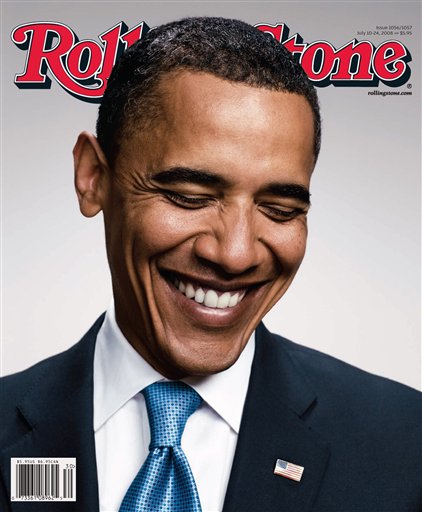
www.guardian.co.uk/commentisfree/cifamerica/2010/oct/24/obama-never-room-for-radical-change
This piece by Gary Younge appeared a little over a week ago but is still relevant. Here are two particularly salient passages:
It is not unrealistic to believe that a country as wealthy as the US should be able to provide healthcare for all, a dignified life for its elderly, an infant mortality rate better than Cuba’s, a life expectancy higher than Bosnia’s, a foreign policy that does not hinge on military aggression, and an economy where fewer than one in seven live in poverty. What is unrealistic is to believe that any of those things can be achieved, or even seriously tackled, with just a single vote.

Republicans will head to the polls to elect people who will actually cut jobs and support bankers. Democrats may well stay at home because their candidate has not made things better, and in so doing make things worse. Neither disaffection nor rage are electoral strategies. But in the absence of an alternative, frustration has political consequences.
November 3: American voters have spoken, and the message appears to be to leave Tomorrowland for Frontierland while remaining in the same Disney theme park, albeit this time without any tickets. Read more
From the Chicago Reader (October 26, 2001). — J.R.
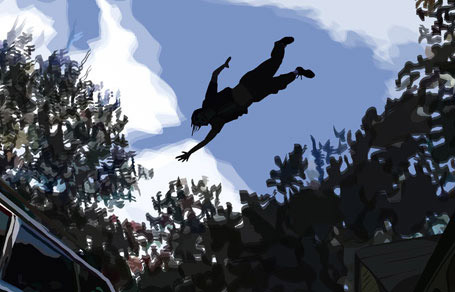
Waking Life
****
Directed and written by Richard Linklater.
The cinema is an antiuniverse where reality is born out of a sum of unrealities. –Jean Epstein
I must have come across this statement by Epstein, a French theorist and filmmaker (1897-1953), in the late 60s or early 70s, but I no longer remember where. I’ve scanned his writings on several occasions since, but I haven’t found the quote. Sometimes I wonder if I read or heard about it in a dream — making it one of the unrealities Epstein is referring to.
Wherever the quote comes from, it applies beautifully to the animated feature by Richard Linklater that premiered at Sundance early this year and is currently playing at the Music Box. The movie is a string of paradoxes and reflections about what’s real and what’s not, about when you’re dreaming and when you’re awake, and the unusual way it’s put together seems calculated to complicate all of the issues it raises rather than resolve any of them. Over 25 days Linklater, one of his coproducers, and a sound person shot a first version of everything we see in this movie with two relatively low-tech digital video cameras in and around Austin and in San Antonio and New York — basically taping a lot of people talking and walking, as well as listening and sitting. Read more
This comes from my Spring 2010 DVD column in Cinema Scope. — J.R.

Hipsters/Stilyagi. I include the Russian as well as the English title of this big-budget, post-modernist 2008 Russian musical about teenagers, directed by Valery Todorovsky, because as far as I know, the Russian DVD, sans subtitles, is the only version available, at least on Amazon. This movie was the opening night attraction at the Tromsø International Film Festival in the northernmost reaches of Norway, which was celebrating its 20th anniversary in January, and I must confess that I didn’t expect to enjoy it nearly as much as I did, especially because it could be described with fair accuracy as the Russian equivalent of Rob Marshall at his cheesiest, set in 1950s Moscow, and is full of preposterous plot developments. But then again, shame on me, I also enjoyed watching Daniel Day-Lewis in Nine, even after loathing every minute of Chicago, so maybe you shouldn’t trust me. All I can say is that I sufficiently enjoyed Hipsters, partly for its curiosity value and partly for its sheer pizzazz — without ever imagining that it had anything to do with Russian history or the history of the musical, Russian or otherwise — to order the unsubtitled version of it from Amazon. Read more
Published under a different title in the online Barnes and Noble Review (May 18, 2010). — J.R.
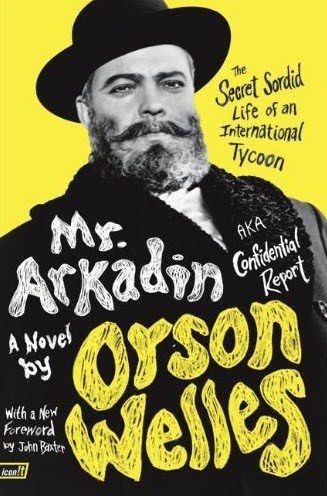
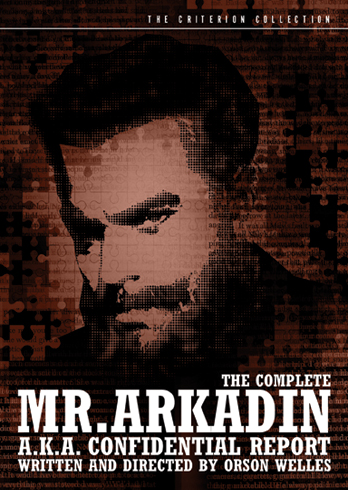
John Baxter’s new Foreword to the 1956 novelization of Orson Welles’s Mr. Arkadin, aptly called “No Pilot Known,” correctly discloses on its penultimate page that the novel was actually written in French by one Maurice Bessy, who adapted Welles’s original screenplay. This fact is verified by the recent recovery in France of the correspondence between Welles and Arkadin’s producer, Louis Dolivet. But none of this has prevented the novel’s latest edition, like all the previous ones, from trumpeting the name of Orson Welles as sole author on its cover.
This should come as no surprise. How can a publisher expect to sell the uncredited English translation of a French novelization of an unfinished film, especially if the novel was written by a forgotten film critic? For starters, it has to assume, contrary to Welles, that the film is (or was) finished. This is also why the Criterion box set, released in 2006, insists on calling itself The Complete Mr. Arkadin, even though Welles wasn’t able to complete any single version of it.
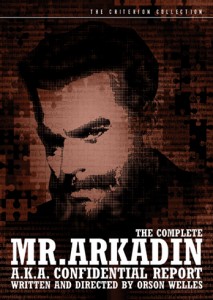
The task of rationalizing Welles’s idiosyncratic working methods and fractured film career in consumerist, marketplace terms has invariably led to many obfuscations. Read more
From the September 13, 1996 issue of the Chicago Reader. This film was probably the most popular of the dozen features I showed to MA students in my World Cinema Workshop at Film.Factory in Sarajevo (September 15-19, 2014). — J.R.
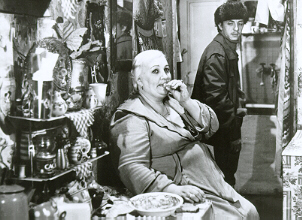
The Asthenic Syndrome
Rating **** Masterpiece
Directed by Kira Muratova
Written by Sergei Popov, Alexander Chernych, and Muratova
With Popov, Olga Antonova, Natalya Busko, Galina Sachurdaewa, Alexandra Ovenskaya, and Natalya Rallewa.

Every time I am asked what the film is about, I reply, quite honestly, “It’s about everything.” — Kira Muratova, 1990
Seven years have passed since I first saw Kira Muratova’s awesome The Asthenic Syndrome at the Toronto film festival, and while waiting for it to find its way to Chicago I’ve had plenty of time to speculate about why a movie of such importance should be so hard for us to see. Insofar as movies function as newspapers, this one has more to say about the state of the world in the past decade than any other new film I’ve seen during the same period, though what it has to say isn’t pretty. So maybe the reason it’s entitled to only one local screening — at the Film Center this Sunday — is the movie business’s perception that it must offer only pretty pictures. Read more
From Cineaste 22, no. 3, 1996; reprinted with further comments in Discovering Orson Welles. — J.R.
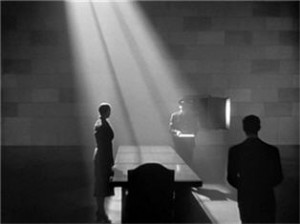
Biographies of Orson Welles reviewed in this article:
Orson Welles: The Road to Xanadu, by Simon Callow (New York: Viking, 1995). 640 pp.
Rosebud: The Story of Orson Welles, by David Thomson (New York: Alfred A. Knopf, 1996). 461 pp.
Orson Welles, revised and expanded edition, by Joseph McBride (New York: Da Capo, 1996). 243 pp.
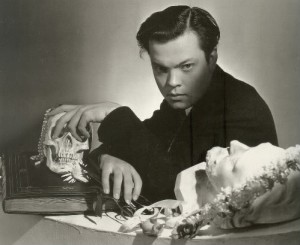
Two prevailing and diametrically opposed attitudes seem to dictate the way most people currently think about Orson Welles. One attitude, predominantly American, sees his life and career chiefly in terms of failure and regards the key question to be why he never lived up to his promise — “his promise” almost invariably being tied up with the achievement of Citizen Kane. Broadly speaking, this position can be compared to that of the investigative reporter Thompson’s editor in Citizen Kane, bent on finding a single formula for explaining a man’s life. The other attitude — less monolithic and less tied to any particular nationality, or to the expectations aroused by any single work — views his life and career more sympathetically as well as inquisitively; this position corresponds more closely to Thompson’s near the end of kane when he says, “I don’t think any word can explain a man’s life.” Read more
From the Chicago Reader (January 23, 1998). Today I would probably rank this movie much higher. — J.R.
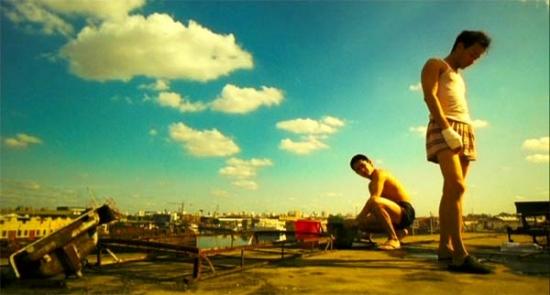
Happy Together
Rating ** Worth seeing
Directed and written by Wong Kar-wai
With Tony Leung, Leslie Cheung, and Chang Chen.
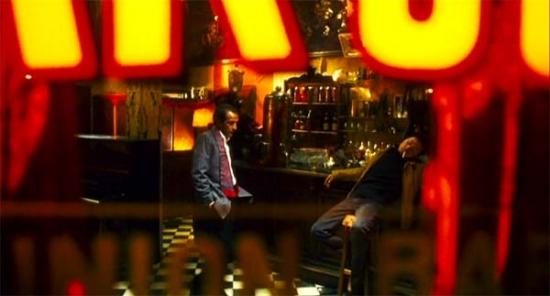
At some point in the mid-90s Wong Kar-wai’s exciting and hyperbolic style lost its moorings. Whether this happened between Days of Being Wild (1990) and Chungking Express (1994), during the two years it took to make Ashes of Time (1994), or between the latter two films and Fallen Angels (1995), Wong’s powerful organic flow, which makes Days of Being Wild his only masterpiece to date, has atrophied into a slag heap of individual set pieces.
Many of these set pieces are thrilling enough in their own right. Fallen Angels has plenty of them, spaced out like showstoppers in a vaudeville revue, though their effectiveness tends to diminish, their frenetic intensity ultimately becoming monotonous. Like the mannerist tics comprising Wong’s style — the use of different characters as narrators; the momentary freeze-frames punctuating Christopher Doyle’s slowed, slurred, or speeded-up cinematography; the shifts between color and black and white; and the bumpy transitions between garish forms of lighting and visual texture — his set pieces always provide a lively surface activity. Read more
 Read more