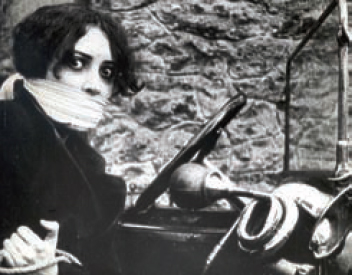
This beautiful photograph, which I’m told has never been published before, was given to me by his maternal niece Rina Chakravarti in Toronto, at the Lightbox, shortly before I gave an introduction to a restored, gorgeous print of Ghatak’s 1960 masterpiece, The Cloud-Capped Star. It was taken taken in 1946 in Baikunthapur, Madhya Pradesh.

As one can (arguably) see from the photo below, of Niranjan Roy — the male lead of The Cloud-Capped Star, who plays the character Sanat — there’s a certain resemblance. [9-11-12]

Read more
From Scenario, Spring 1999, Vol. 5, No. 1. -– J.R.
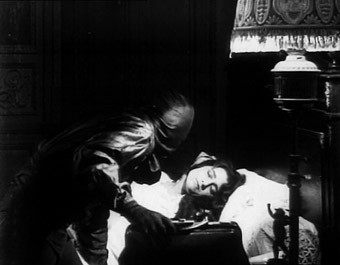
The recent video release and cable premiere of Louis Feuillade’s silent French serial Les Vampires (1915- 1916), making it widely available in the United States for the first time in 80-odd years, clarifies the origins of the paranoid thriller in a particularly acute way. All the basic elements that we associate with movie conspiracies are fully present in Les Vampires, at least in some rudimentary form: high-tech surveillance techniques, secret lairs, hidden wall panels, intricately concealed weapons, elaborate disguises, diverse forms of mind and memory control.
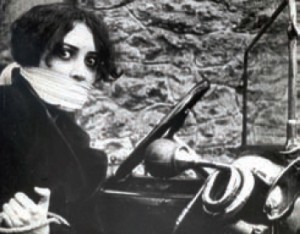
This arsenal of paraphernalia and technology, suggesting that the ordinary world isn’t quite what it appears to be and that everyday life is full of concealed plots and hidden dangers, is surely a staple of this century that didn’t have to wait for video surveillance or the digital revolution before it took over people’s imaginations. Though the political casts of the designated villains fluctuate wildly according to the ideology of the country and period — ranging from the anarchist Vampire gang to the red spies of Cold War thrillers, to the nearly invisible capitalist tycoons of Cutter’s Way (1981), to the smug government bureaucrats in the significantly titled Enemy of the State — the evil designs remain more or less the same. Read more
From American Film (September 1979). –- J.R.
Academic film conferences in the United States seem to be growing more plentiful every year. But there’s only one that can properly be called a theory conference, where theorists congregate, report on works in progress, and generally talk shop. It takes place in Milwaukee, at the University of Wisconsin’s Center for Twentieth Century Studies, usually when there’s still snow on the ground. A few avant-garde filmmakers also traditionally turn up to show their latest wares and join in the discussions.
For academics, the conference functions as a combined brainstorming session, trade fair, and social gathering. For an interested outside observer, it can offer still another way of keeping up — by serving as a kind of barometer of intellectual currents in both films and film studies.
Last year the topic was “The Cinematic’ Apparatus: Technology as Historical and Ideological Form,” and the main attraction was papers by and discussions with many of the reputed superstars of film theory, ranging from Jean-Louis Comolli and Christian Metz [see below] to Stephen Heath and Laura Mulvey. This year the title was “Cinema and Language,” and although there was a lot of both to be squeezed into four days, it was the movies shown that left the strongest impression. Read more
From the Summer 2015 Artforum.(This version is slightly different.) — J.R.


Doctor (off): Has this happened to you before?
Ventura: It will happen again, yes it will.
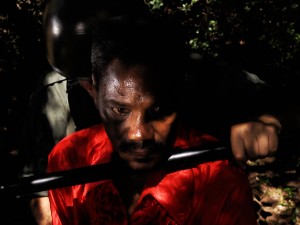
Trying to rationalize Pedro Costa’s Horse Money in terms of a synopsis is ultimately a fool’s game, but connecting it to recent Portuguese history is a necessity. The April 25, 1974 military coup known today as the Carnation Revolution, led by the leftwing MFA and ending the Estado Novo dictatorship that lasted almost half a century, took place when Costa was in his early teens. Ventura, Costa’s slightly older principal protagonist in practically all of his other recent films — a Cape Verdean immigrant and construction worker, always playing himself and scripting his own dialogue — was around in Lisbon too. But as Costa told Mark Peranson in an interview in Cinema Scope, Ventura’s experience of the same events was radically different:
I was very lucky to have been a young man in a revolution, really lucky….And I was discovering a lot of things, music and politics and film and girls, everything at the same time, and I was happy and anarchist and shouting in the streets and occupying factories and things like that — I was 13 so I was a bit blind. Read more
Prior to the more recently held retrospectives in the U.S. devoted to Jean-Marie Straub and the late Danièle Huillet, the only previous such retrospective was held on November 2-14, 1982, at New York’s Public Theater. I curated this event, which also included a selection of films by others made by Jean-Marie and Danièle to show with their own. For the occasion, I also edited a 20-page, tabloid-sized catalogue, long out of print, and what follows are (1) the full program as planned and (2) my introduction. Regarding (1), I recall now that there was one last-minute addition, their recently completed short film En rachâchant (see second photograph below), as well as some last-minute omissions or substitutions that are noted in the text below. Regarding (2), I should emphasize that a lot has changed and developed over the past three decades, both in myself and in Straub-Huillet’s work –- in both cases, I’d like to think, for the better. It’s cheering to note that no less than three very substantial books have appeared devoted to their work, two in English — their Writings (as translated and edited by Sally Shafto, published in New York by Sequence Press), and an excellent critical collection edited by Ted Fendt for the Austrian Filmmuseum — and a mammoth collection in French, Internationale Straubienne, published jointly by Editions de l’Oeil and the Centre Pompidou (to accompany their own retrospective). Read more
From the Chicago Reader (May 18, 1990). — J.R.
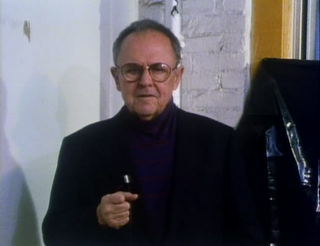
MR. HOOVER AND I
**** (Masterpiece)
Directed and written by Emile de Antonio.
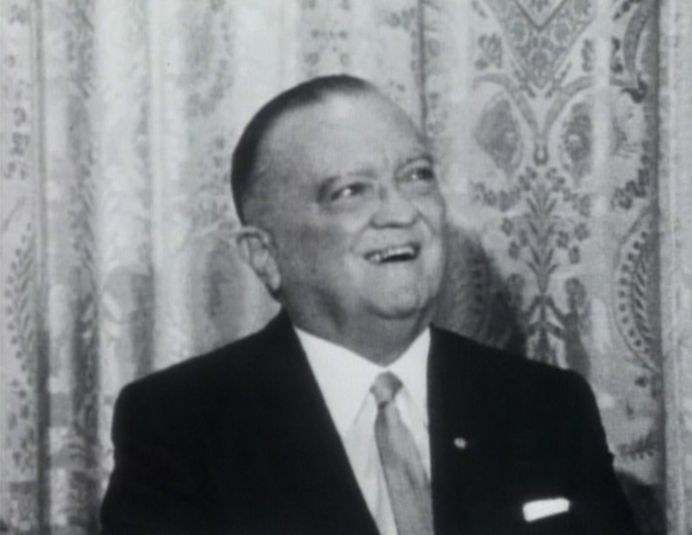
1. “Born Pennsylvania U.S.A., in intellectual surroundings and coal mines. Went to Harvard. Became, and still is, a Marxist, without party or leader. Started making films at age of 40 after having avoided films most of his life. Favorite film is L’age d’or.” Emile de Antonio’s self-description was written around 1977 for a poll organized by the Royal Film Archive of Belgium and eventually published in book form as The Most Important and Misappreciated American Films. Under the category of most important American films, de Antonio listed, in order, The Birth of a Nation, It’s a Gift, A Night at the Opera, The Cure, The Immigrant, One A.M., The Kid, Big Business, The Navigator, and Foolish Wives, and added the following comment:
“Most American films were and are like Fords. They are made on assembly lines. John Ford is not an artist any more than Jerry Ford is a statesman. Harry Cohn said it all and the Capras jumped.
“Comedy was spared all that. Irreverence was possible because the booboisie didn’t know it was being laughed at. Read more
From the Chicago Reader (May 31, 2002). I’m pleased to remember that Studs Terkel, who knew Nick Ray, wrote me a friendly letter about this review shortly after it appeared — and that, years earlier (1995), when my first collection, Placing Movies, came out, he invited me to appear as a guest on his radio show. — J.R.
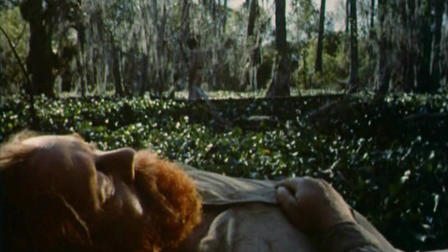
A kind of litmus test for auteurists, this philosophical adventure story set in turn-of-the-century Florida (1958, 93 min.) was Nicholas Ray’s penultimate Hollywood assignment, though he was fired before the end of shooting and barred from the final editing by screenwriter Budd Schulberg (On the Waterfront, A Face in the Crowd), who produced the film with his brother Stuart. (In his introduction to the published screenplay, Schulberg doesn’t even mention Ray.) An ecological parable, it pits an earnest schoolteacher turned game warden (Christopher Plummer) against a savage poacher of wild birds (Burl Ives) heading a grungy gang in the swamps. Ray’s masterful use of color and mystical sense of equality between the antagonists (also evident in Rebel Without a Cause and Bitter Victory) are made all the more piquant here by his feeling for folklore and outlaw ethics as well as his cadenced mise en scene. Read more
From the Chicago Reader (May 22, 1992). — J.R.
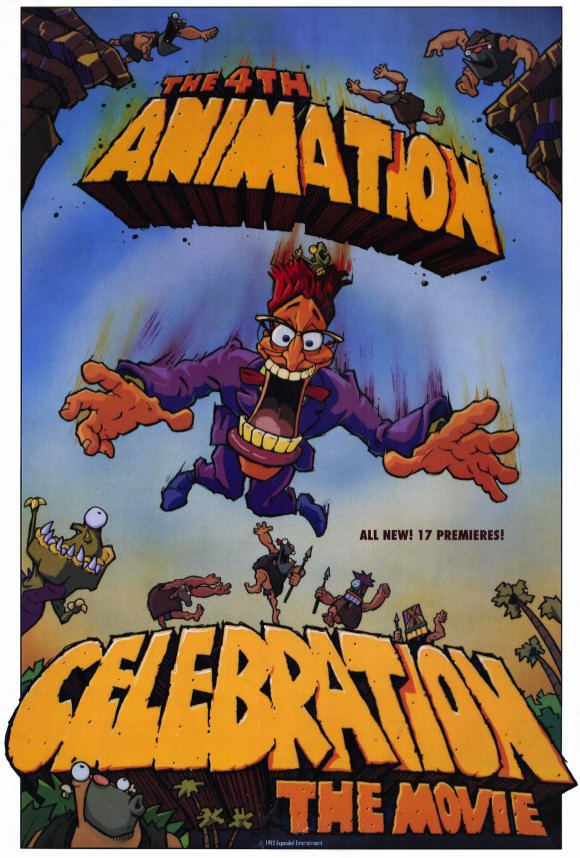
THE 4TH ANIMATION CELEBRATION: THE MOVIE
*** (A must-see)
Finding out what’s happening in the world these days is no easy matter. Turn to a newspaper and we may learn what American business wants to know — or thinks it wants to know — but not much else; check out what’s on TV and chances are that the state of the world will get less attention than the current Hollywood releases. Even when there is expanded coverage we often can’t be sure that the journalists understand what they’re reporting or that what they’re saying encompasses all that they understand.
I suppose this has always been true to some extent, and maybe it only seems worse nowadays because we no longer have newsreels. Recently some fascinating “March of Time” shorts have come out on video — newsreel “essays” produced by Time-Life and released in movie theaters by Twentieth Century-Fox in the 30s, 40s, and 50s. What seems most quaint and touching about them is how easily people (both famous and ordinary) were induced by the camera to play fictional versions of themselves that they and everyone else were persuaded to think of as real. Read more
From Monthly Film Bulletin, February 1977. — J.R.
U.S.A., 1968
Director: (not credited)
Dist–TCB. p.c–Drew Associates. For the Bell System. p–Robert Drew, Mike Jackson. assoc. p–Harry Moses. p. co-ordinator–Jean Swain. sc–(not credited). ph–Abbot Mills, Juliana Wang, Ralph Weisinger. asst. ph–Bill Hanson. In color. ed–Naomi Mankbwitz. m.d–Donald Voorhees. songs–fragments of “When the Saints Go Marching fn”, “Hello Dolly”, “Rose”, “The Kinda Love Song” by George Weiss, performed by Louis Armstrong; “Con Alma”, “Swing Low, Sweet Cadillac” performed by Dizzy Gillespie; “I’m in a Dancing Mood” performed by Dave Brubeck; “Light in the Wilderness” by Dave Brubeck; “Forest Flower”, performed by Charles Lloyd. sd–Dave Blumgart, Stan Agol. narrator–Don Morrow. with–Louis Armstrotrg, Dave Brubeck, Paul Desmond, Joe Morello, Eugene Wright, Iola Brubeck, Matthew Brubeck, Michael Brubeck, Catherine Brubeck, Christopher Brubeck, David Brubeck, Darius Brubeck, Charles Lloyd, Keith Jarrett, Dizzy Gillespie, James Moody, George Weiss. 1,921 ft. 53 mins. (16 mm.).
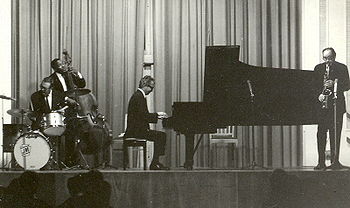
Interviews with Louis Armstrong, Dizzy Gillespie, Dave Brubeck and Charles Lloyd, interspersed with snatches of their music in rehearsal or performance.
An appalling example of how appreciation of jazz can be summarily crushed in the process of supposedly trying to promote the music, this American TV documentary follows the fatal course of rarely letting the music speak for itself for more than a few bars at a time, while encouraging each of the four musicians to pontificate at length about his life and art. Read more
From the Chicago Reader (January 20, 1995). — J.R.
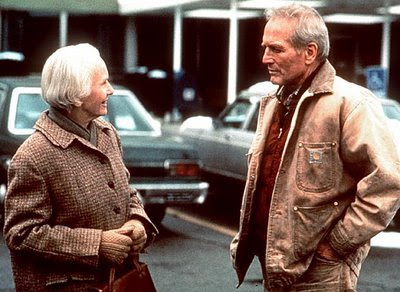
NOBODY’S FOOL
Rating *** A must see
Directed and written by Robert Benton
With Paul Newman, Jessica Tandy,
Bruce Willis, Melanie Griffith,
Dylan Walsh, Pruitt Taylor Vince,
Gene Saks, Josef Sommer,
and Philip Seymour Hoffman.
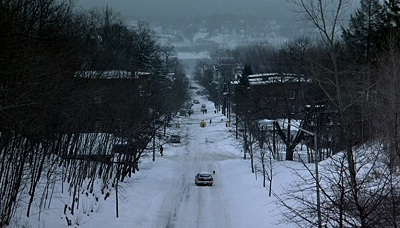
Since most Hollywood movies of the 90s offer unabashed fantasies, the hero’s success has become something of a given. Regardless of the odds against him (seldom her), one feels sure that he’ll emerge unscathed — triumphant over his enemies, often rolling in wealth, and with the lady of his choice at his side. Of course people often go to movies in order to bask in a universe of wish fulfillment, and most of our contemporary films are roughly akin to the fantasies of opulence and goodwill offered to Depression audiences 60-odd years ago (though it’s hard to think of many recent parallels, apart from a few TV docudramas, to Warner Brothers’ gritty, socially conscious melodramas of that period).
So when a Hollywood movie about failure comes along, it has the unexpected ring of authenticity: for all its sentimental safety nets, Nobody’s Fool looks and feels a good deal like much of U.S. life as it’s currently being lived: virtually everyone qualifies as an ornery fuck-up, complains incessantly about his or her lot, and sees no practical way out of life’s morass of everyday complications. Read more
From Monthly Film Bulletin, February 1977 (Vol. 44, No. 517). This is a movie I clearly went overboard about, even though I still might be inclined to defend it today, and I suspect now that I simply missed the boat by ignoring the screenwriter, Joel Schumacher — who, on the evidence of the subsequent D.C. Cab, surely qualified more as the auteur here than Michael Schultz. — J.R.

U.S.A., 1976
Director: Michael Schultz
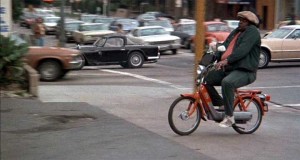
Los Angeles. Lonnie arrives to open the gates of the Dee-Luxe Car Wash. Other workers turn up, including fancy dresser T.C. (“Fly”), who has a crush on Mona, a waitress at the restaurant across the street; Scruggs, who has just spent the night with another woman and is afraid to call his wife Charlene; Lindy, a flamboyant homosexual; and Hippo, Justin, Chuko and Goody. After Duane, an angry militant worker, arrives later, the white owner Mr. B drives up with his hippy son Irwin. A hooker escapes from a cab without paying her fare and hides in the ladies’ room. Irwin is ridiculed for hIs Maoist pretensions when he insists on joining the workers, and Calvin, a kid on a skateboard, turns up to pester everyone. Read more
From Monthly Film Bulletin, February 1977. — J.R.
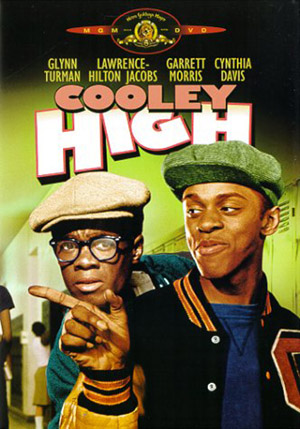
Cooley High
U.S.A.,1975
Director: Michael Schultz
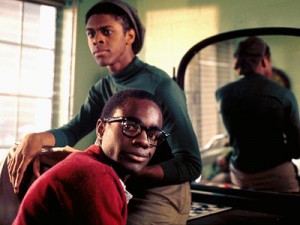
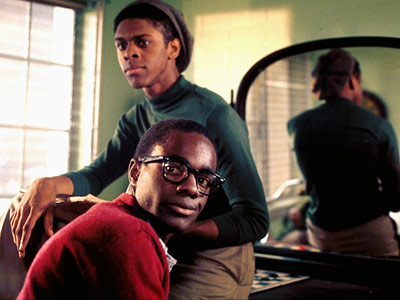
Chicago, 1964. Cochise, Preach, Pooter and another friend, students at Edwin G. Cooley Vocational High School, sneak out of class one Friday and visit the Lincoln Park Zoo; afterwards they play basketball, and Preach, who has been dating Sandra, flirts with the aloof Brenda. At home, Preach finds a letter informing him that he has received a scholarship; that night, he attends a party with his friends and re-encounters Brenda, who warms to him when she discovers his interest in poetry. After the party is broken up by a fight provoked by Damon, Preach and Cochise join Stone and Robert to go joyriding in a stolen car; Preach takes the wheel and drives recklessly, eluding the police after an extended chase. On Saturday, Preach and his friends study briefly for a history exam before going to the movies, fleeing the cinema after Pooter unwittingly provokes a fight. On Sunday, Preach takes Brenda home and they make love; after he casually lets drop that he bet Cochise money that he could sleep with her, she runs away and the next day at school kisses him in front of Sandra. Read more
From Monthly Film Bulletin, February 1977. — J.R.
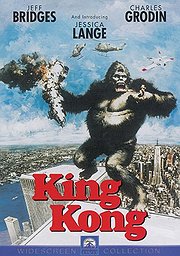

King Kong
U.S.A., 1976
Director: John Guillermin
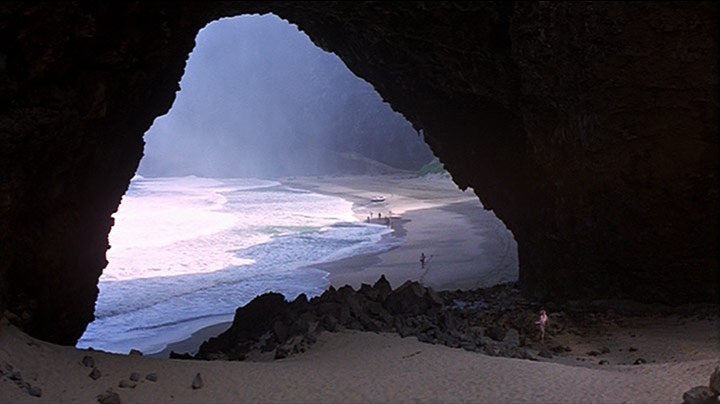
The Petrox Oil Company sends an expedition by ship into Micronesia, hoping to find petroleum deposits on uncharted Skull Island. Group leader Fred Wilson and scientist Bagley believe that the vapor surrounding the island may come from oil, but Princeton University paleethnologist Jack Prescott — a stowaway — suggests animal respiration, and talks of ancient accounts of Kong, a prehistoric monster. Dwan, a prospective starlet and sole survivor of an explosion that destroyed a film producer’s boat en route to Hong Kong, is picked up before the ship reaches the island. Ashore, Wilson, Bagley, Jack and Dwan come upon an enormous wall and a native ritual in which a girl is about to be sacrificed. That night, as Dwan is about to keep a sexual rendezvous with Jack, she is kidnapped by natives and offered as an altar gift to Kong, a forty-foot ape who arrives and carries her away. While Jack penetrates the jungle with a rescue team, Wilson learns from Bagley that the island’s oil deposits won’t be usable for another 10,000 years, and begins to think of capturing Kong for use in Petrox publicity. Read more
From Monthly Film Bulletin, November 1976 (Vol. 43, No. 514). –- J.R.

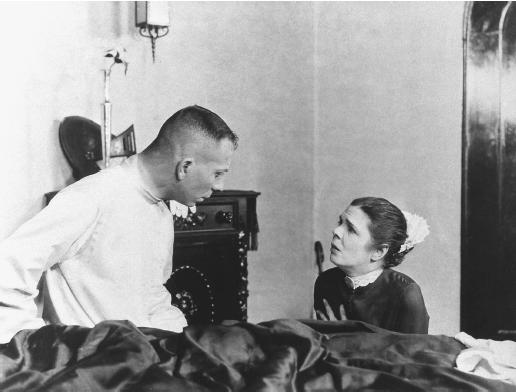
Foolish Wives
U.S.A., 1922
Director: Erich von Stroheim
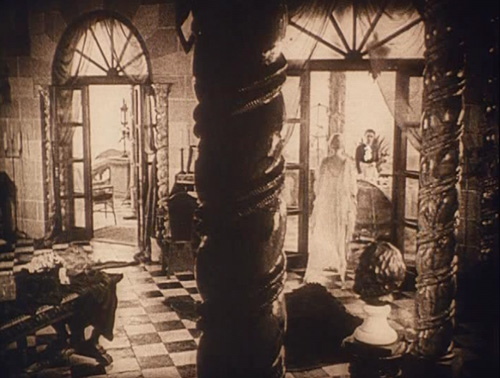
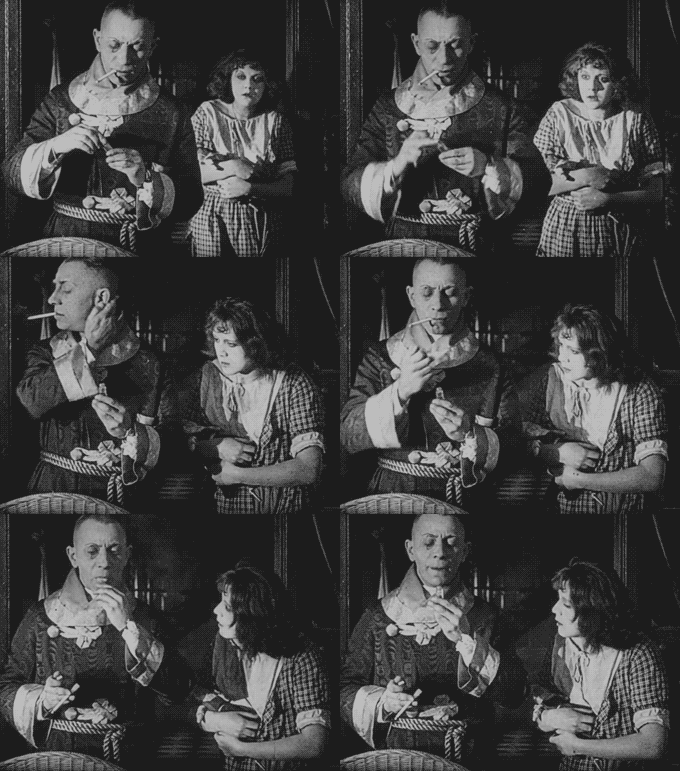
Cert—A. dist–BFI. p.c–Universal Super Jewel. p–Carl Laemrnle. asst. d–Edward Sowders, Jack R. Proctor, Louis Germonprez. special asst. to Stroheim–Gustav Machaty. sc–Erich von-Stroheim. ph–Ben Revnolds, William Daniels. illumination and lighting effects—Harry J. Brown. ed–Erich von Stroheim, (release version: Arthur D. Ripley). a.d—E. E. Sheeley, Richard Day. scenic artist—Van Alstein [Alstyn]. technical d–William Meyers, James Sullivan, George Williams. sculpture–Don Jarvis. master of properties–C. J. Rogers. m—[original score by Sigmund Romberg]. cost–Western Costuming Co., Richard Day, Erich von Stroheim. titles–Marian Ainslee, Erich von Stroheim. research asst-J . Lambert. l.p—Rudolph Christians/Robert Edenson (Andrew J. Hughes), Miss Du Pont [Patsy Hannen] (Helen Hughes), Maude George (“Princess”Olga Petschnikoff), Mae Busch (“Princess” Vera Petschnikoff), Erich von Stroheim (“Count” Sergei Karamzin), Dale Fuller (Maruschka), Al Edmundsen (Pavel Pavlich, the Butler), Cesare Gravina (Signor Gaston), Malvina Polo (Gaston’s Daughter [Marietta]), Louis K. Webb (Dr. Judd), Mrs. Kent (Mrs, Judd), C.J. Allen (Albert I, Prince of Monaco), Edward Reinach (Secretary of State of Monaco). Read more
From Monthly Film Bulletin, January 1975 (Vol. 42, No. 492). — J.R.
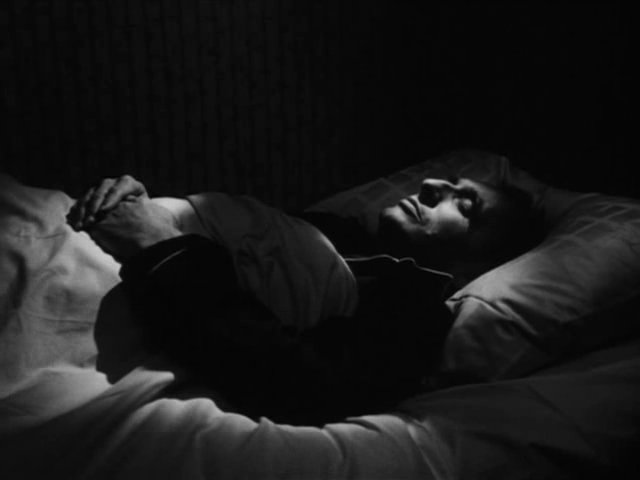
Machorka-Muff
West Germany/Monaco, 1963 Director: Jean-Marie Straub
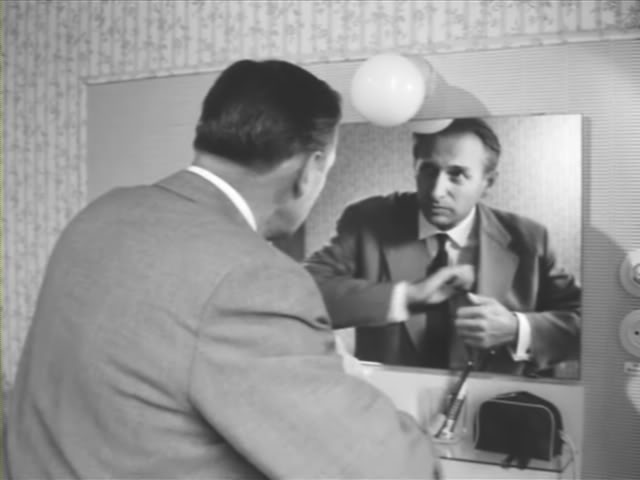
Germany, in the early 1950s. Colonel Machorka-Muff arrives in
Bonn to see his mistress Inn and continue his efforts to clear the
name of General Hürlanger-Hiss from disgrace after his retreat at
Schwichi-Schwalache during World War II. At his hotel the next
morning, after meeting and exchanging pleasantries with a lower
rank officer he commanded, he also sees Murcks-Maloche from the
Ministry, who informs the Colonel that he is to give the dedication
address at the foundation-laying ceremony to inaugurate the
Hürlanger-Hiss Academy of Military Memories. After the Colonel
spends the morning walking through Bonn, Inn picks him up in her
Porsche and they drive to her flat and make love. She wakes him a
few hours later to announce the arrival of the Minister of Defense,
who presents him with a general’s uniform and drives him to the
ceremony; there Machorka-Muff announces in his dedication that
Hürlanger-Hiss made his retreat after losing 14,700 men, not “only”
8,500 as previously-thought. At mass the next morning, Inn
recognizes the second, fifth and sixth of her seven former husbands,
and Machorka-Muff announces that he will be the eighth; afterwards,
the priest explains that there will be no problem in having a church
wedding because all of her former marriages were Protestant ones. Read more