
On Ozu
This is the first thing I ever wrote about Ozu’s films. I’ve subsequently come to value Hen in the Wind much more than I did in 1972, above all as an expression of Japanese’s humiliation after the end of the war and during the American occupation. — J.R.
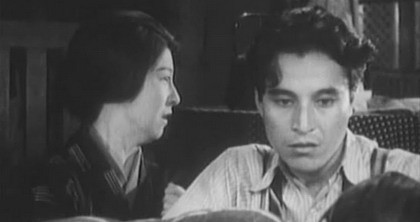
From Paris Journal, Film Comment, Summer 1972 (excerpt):
A recent screening of eight Ozu films at the Cinémathèque was, for Paris, an event of some importance. To date, not a single film by Ozu has received distribution in France, and local ignorance about his work extends to such places as Cahiers du Cinéma and Positif, which in their combined 368 issues have failed to publish a single article about him.
A particular revelation was WIFE FOR A NIGHT, which contradicted at least half of the received ideas that have been circulating about Ozu elsewhere. One of the ten silent films that he made in 1930, this remarkable American-style thriller begins and ends mainly in exteriors: a desperate robbery and escape at night, the criminal being led away at dawn. Virtually all of the intervening action is contained in the robber’s one-room flat, where he, his ailing daughter, his wife, and a policeman stand nervous vigil over one another for the night’s duration. Read more