Posted on Film Comment‘s blog, February 2, 2016. — J.R.

Consider the lengths of time between Jean Vigo’s death and the first appearances of Zéro de conduite and L’Atalante in the U.S. (thirteen years), or between the first screening of Jacques Rivette’s Out 1 and its recent appearances on Blu-Ray (forty-five years), and it becomes obvious that the popular custom of listing the best films of any given year is unavoidably a mythological undertaking. By the same token, film history in the present should be divided between important filmmakers skilled and successful in hawking their own goods, from Alfred Hitchcock to Spike Lee to Lars von Trier, and those who, for one reason or another, aren’t — a less definitive roll call that includes, among many others, Charles Burnett, Ebrahim Golestan, Luc Moullet, Peter Thompson, Orson Welles, and John Gianvito.
I haven’t seen Gianvito’s early shorts, one of which is called What Nobody Saw (1990), but its very title seems emblematic of his career — as does the epigraph from Cesare Pavese opening the first part of his first feature, The Mad Songs of Fernanda Hussein (2001), which introduced me to his work and remains my favorite: “Everywhere there is a pool of blood that we step into without knowing it.” Read more
An email interview with Federico Casal in June 2017 for the online Uruguayan film magazine Revista Film. Casal has kindly provided me with this English version. — J.R.
EXCHANGE WITH JONATHAN ROSENBAUM
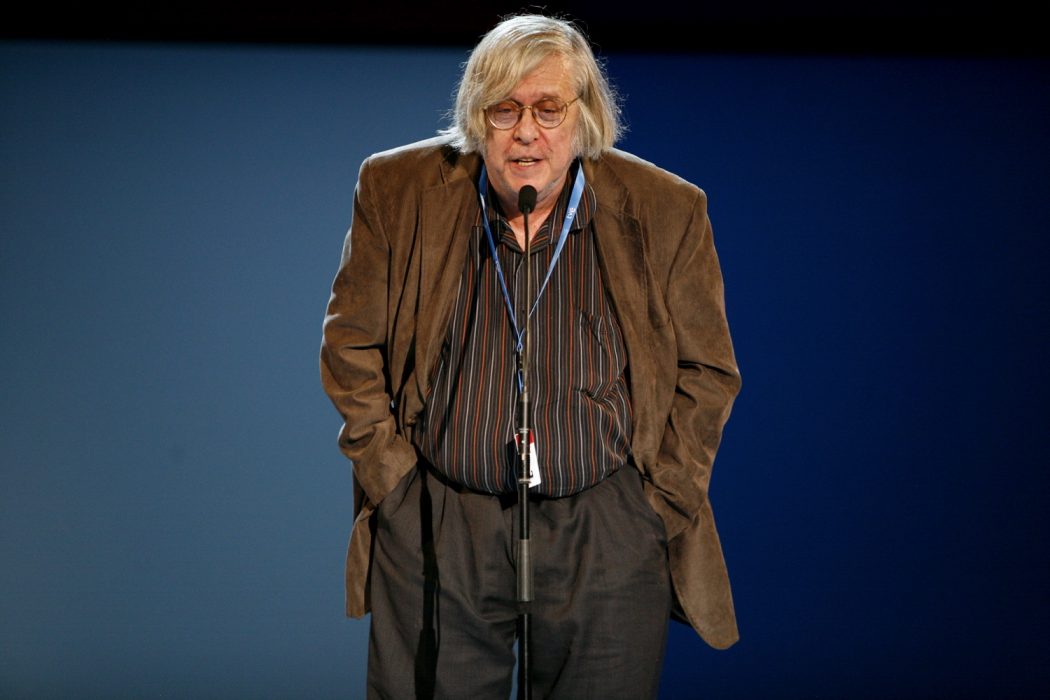
“I miss the experience of communal and theatrical filmgoing.”
Jonathan Rosenbaum (born February 27, 1943 in Alabama, United States) is an American film critic with more than 50 years of experience. He has written thousands of articles and reviews, as the head critic of the Chicago Reader between 1987 and 2008, and collaborator in The Village Voice, Film Comment, Sight & Sound, Cahiers du Cinéma, Trafic, Film Quarterly, Criterion Collection, among others. He studied literature at Bard College in New York—there he met his most influential teacher, Heinrich Blücher, the German philosopher and second husband of Hanna Arendt. In 1969 he moved to Paris, shortly after which he became Jacques Tati’s assistant for a while and appeared as an extra in Robert Bresson’s Four nights of a dreamer (1971). From Paris he moved to London and then to California. Currently, he lives in Chicago. He has published numerous books on cinema, most recently Goodbye Cinema, Hello Cinephilia, Essential Cinema: On the Necessity of Film Cannons and Movie Wars: How Hollywood and the Media Limit What Films We Can See, and others about Orson Wells, Jacques Rivette and Abbas Kiarostami. Read more
